The Best Fluffy Pancakes recipe you will fall in love with. Full of tips and tricks to help you make the best pancakes.
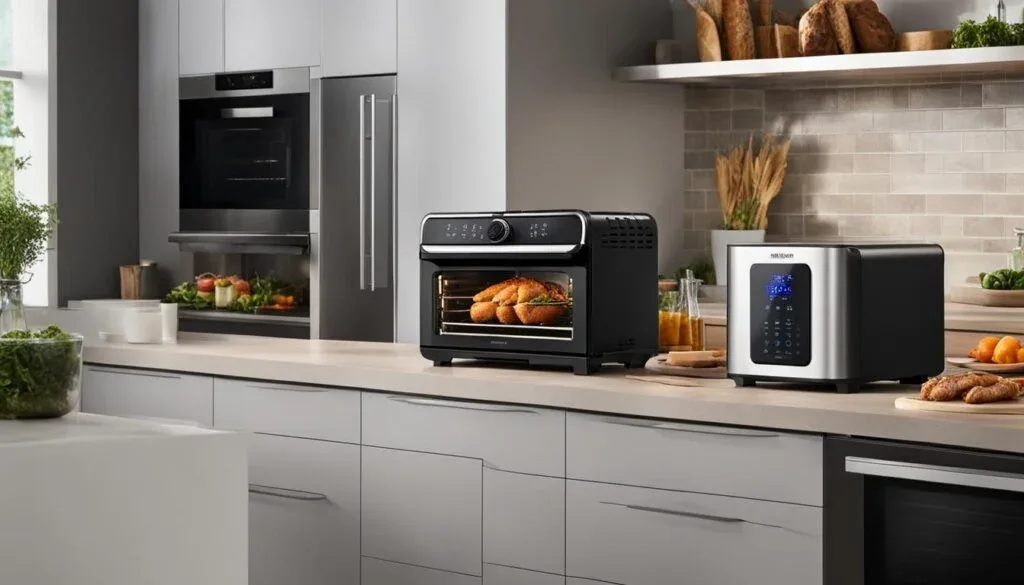
Choosing the Right Countertop Oven: The No-Nonsense Buyer’s Guide for 2025
Let me start with a confession: I’ve owned six countertop ovens in the last decade. Six. That’s not a flex, it’s an admission of poor planning, impulse purchases, and at least three regrettable attempts to “air fry” a frozen burrito at 2 a.m. The first one was a $40 “mini oven” that couldn’t even toast bread evenly. The second was a “premium” model with so many presets I needed a manual just to make popcorn. By the third, I’d accepted that I was in a toxic relationship with countertop appliances. But here’s the thing: the right countertop oven can be a game-changer. It can replace your toaster, air fryer, and even your full-size oven for 80% of your cooking. The wrong one? It’ll collect dust next to your George Foreman grill from 2008.
So why am I writing this? Because after years of trial, error, and at least one minor kitchen fire (long story), I’ve learned what actually matters when choosing a countertop oven. This isn’t just a list of “best picks”-it’s a framework for thinking about what you reallyeed. We’ll cover the specs that matter (and the ones that don’t), the hidden trade-offs no one talks about, and how to avoid the mistakes I made. Whether you’re a home cook tired of heating up your entire kitchen for a sheet of cookies, a small-business owner outfitting a break room, or just someone who wants to stop burning their frozen waffles, this guide is for you.
And look, I get it, reading a 2,000-word guide on ovens isn’t exactly thrilling. But think of it this way: the time you spend now will save you from the soul-crushing disappointment of realizing your “high-end” oven can’t fit a 9-inch pie plate. Let’s dive in.
-
The Brutally Honest Truth About Countertop Ovens (And Why You Probably Don’t Need Half the Features)
1. The Great Countertop Oven Lie: “More Features = Better”
Walk into any big-box store or scroll through Amazon, and you’ll see countertop ovens marketed like Swiss Army knives. Air fry! Dehydrate! Proof dough! Rotisserie a whole chicken! Here’s the reality: most people use their countertop oven for three things: toasting, baking, and reheating. That’s it. The rest is marketing fluff designed to justify a higher price tag.
I fell for this with my fourth oven, a sleek, stainless-steel beast with 17 preset functions. Did I ever use the “bagel” setting? No. The “pizza” setting? Once, and it burned the crust while leaving the cheese cold. The “slow cook” function? Not when I already own a Crock-Pot. Here’s what I’ve learned: focus on the 20% of features you’ll use 80% of the time. For most people, that’s:
- Even toasting (no more burnt edges with raw centers)
- Consistent baking (cookies that don’t come out half raw)
- Fast preheating (because no one has 20 minutes to wait for an oven to heat up)
- Easy cleaning (if it’s a pain to clean, you won’t use it)
Everything else is gravy. And if you’re paying extra for a “yogurt-making” function, ask yourself: When was the last time I made yogurt?
2. The Size Paradox: Bigger Isn’t Always Better (But Too Small Is a Disaster)
This is where most people mess up. You’d think a bigger oven is always better, but here’s the catch: the larger the oven, the longer it takes to preheat, and the more energy it uses. My first “large capacity” oven could fit a 12-inch pizza, but it took 15 minutes to preheat and turned my tiny apartment kitchen into a sauna. Meanwhile, my friend’s compact oven heats up in 3 minutes but can’t fit a standard baking sheet.
So how do you choose? Ask yourself:
- What’s the largest thing I’ll cook? If it’s a 12-inch pizza or a whole chicken, you need at least 0.6 cubic feet of interior space. For most people, though, 0.4–0.5 cubic feet is plenty (enough for a 9×13-inch pan or 4 slices of toast).
- Where will it live? Measure your countertop space. A 20-inch-wide oven might seem compact until you realize it blocks your coffee maker.
- Do I need to stack trays? Some ovens come with double racks, but if the height is too short, you’ll be limited to single-layer cooking.
Pro tip: If you’re torn between sizes, go slightly larger than you think you need. You can always cook small items in a big oven, but you can’t cram a turkey into a toaster oven.
3. The Heating Element Conspiracy (Why Some Ovens Cook Evenly and Others Don’t)
Ever notice how some ovens brown food perfectly while others leave cold spots? That’s all about heating element placement. Cheaper ovens often have a single heating element at the bottom, which leads to uneven cooking (great for burning the bottom of your cookies while the tops stay doughy). Better models have:
- Top and bottom elements (for even baking)
- A rear fan (for convection cooking, which circulates hot air)
- Quartz or halogen elements (heat up faster than traditional coil elements)
Here’s the kicker: convection isn’t just for “fancy” cooking. It makes everything from roasted veggies to frozen fries crispier and faster. If you’re choosing between two ovens and one has convection, get the convection model. You won’t regret it.
But, and this is important-ot all convection is created equal. Some ovens have a weak fan that barely moves air, while others (like the Breville Smart Oven) have powerful convection that can cut cooking times by 20–30%. If convection is a priority, look for models with high-wattage fans (usually 1500W or more).
4. The Temperature Trap: Why Your Oven Might Be Lying to You
Here’s a dirty secret: many countertop ovens don’t heat to the temperature they claim. I tested this with an oven thermometer (a $10 tool every cook should own) and found that my “350°F” oven was actually running at 325°F. That’s why your cookies spread too much or your casserole takes forever to cook.
How to avoid this?
- Look for ovens with precise temperature control (e.g., ±5°F accuracy). Brands like Breville and Cuisinart are usually more reliable here.
- Check reviews for “temperature swing” complaints. If multiple people say the oven runs hot or cold, believe them.
- Calibrate it yourself. Even expensive ovens can be off. Use an oven thermometer to test and adjust.
And while we’re on the topic: preheating matters. Some ovens take 10+ minutes to reach temperature, while others (like the Ninja Foodi) heat up in under 3 minutes. If you’re impatient (like me), prioritize fast preheating.
5. The Material Matters: Stainless Steel vs. Plastic (And Why One Will Make You Regret Your Life Choices)
I once bought a countertop oven with a “sleek plastic exterior” because it was cheap and came in a fun color. Within a year, the plastic was stained, warped from heat, and looked like it had survived a zombie apocalypse. Meanwhile, my stainless-steel Breville still looks brand new after 5 years.
Here’s the breakdown:
- Stainless steel: More durable, easier to clean, and looks professional. Downside? It’s heavier and usually more expensive.
- Plastic: Lighter and cheaper, but it stains, scratches, and can warp over time. If you go plastic, make sure it’s BPA-free and heat-resistant.
- Glass doors: Look nice but can get cloudy over time. Some models have double-pane glass, which stays cooler to the touch (a plus if you have kids).
My rule: If you plan to use the oven daily, spend the extra money on stainless steel. If it’s just for occasional use, plastic is fine, but set your expectations accordingly.
6. The Cleaning Nightmare: How to Avoid an Oven You’ll Dread Scrubbing
Let’s be real: if an oven is a pain to clean, you won’t use it. I’ve had ovens with on-removable crumb trays (a crime against humanity) and others where grease would bake onto the walls like industrial glue. Here’s what to look for:
- Removable crumb tray: Should slide out easily for quick cleaning. If it’s fixed, run.
- Non-stick interior: Not all non-stick coatings are equal. Look for ceramic or PTFE-free coatings if you’re avoiding chemicals.
- Dishwasher-safe parts: Racks, trays, and pans should be dishwasher-safe. If they’re not, you’ll be hand-washing them forever.
- Easy-access interior: Some ovens have tight corners where grease builds up. A rounded interior is easier to wipe down.
Pro tip: Line the bottom with aluminum foil (just don’t cover the heating elements). It catches drips and makes cleanup a breeze. Also, avoid “self-cleaning” ovens, they’re usually gimmicks that don’t work as well as a damp sponge.
7. The Power Struggle: Watts, Voltage, and Why Your Kitchen Might Not Be Ready
Countertop ovens range from 800W to 1800W. More watts = faster heating and better performance, but also more strain on your electrical system. Here’s what you need to know:
- 1500W–1800W: Ideal for serious cooking (convection, roasting, etc.). But check your outlet, some older homes can’t handle multiple high-wattage appliances on one circuit.
- 1000W–1400W: Good for basic toasting and baking. Won’t trip your breaker but may struggle with convection cooking.
- Under 1000W: Only for light use (toasting, reheating). Avoid if you plan to bake.
Also, voltage matters. Most countertop ovens are 120V (standard US outlet), but some commercial-grade models require 240V. If you’re outfitting a small business or food truck, double-check your power setup.
And a word on cord length: Some ovens have laughably short cords (like 2 feet). Measure the distance from your outlet to where the oven will sit. You don’t want to be stuck using an extension cord (a fire hazard with high-wattage appliances).
8. The Preset Paradox: When “Smart” Features Are Actually Dumb
I used to think presets were a bonus. “Oh, it has a ‘cookie’ setting! How convenient!” Then I realized the ‘cookie’ setting was just 350°F for 10 minutes, which is what I’d do anyway. Worse, some presets are overly aggressive. My old oven’s “toast” setting would incinerate bread unless I babysat it.
Here’s the truth about presets:
- Useful presets: Toast, bake, broil, convection. Maybe pizza if it’s well-calibrated.
- Useless presets: “Waffle,” “bagel,” “dehydrate,” “slow cook.” These are usually just marketing.
- Dangerous presets: Some “air fry” settings run so hot they’ll burn food before it cooks through. Test carefully.
My advice? Ignore the presets. Learn how your oven behaves at different temperatures and times. A good oven will have manual controls so you can dial in exactly what you need.
9. The Noise Factor: Why Your Oven Might Sound Like a Jet Engine
Convection ovens have fans, and some fans are loud. My first convection oven sounded like a hairdryer on full blast. If you’re sensitive to noise (or live in a small space), look for models with quiet fans (usually advertised as “whisper-quiet” or “low-decibel”).
Also, some ovens beep obnoxiously when they’re done. If that drives you crazy, check reviews for “beep volume” complaints. (Yes, this is a real issue. I once had an oven whose alarm could wake the dead.)
10. The Brand Battle: Who Actually Makes a Reliable Countertop Oven?
After testing (and returning) more ovens than I care to admit, here’s my honest take on brands:
- Breville: The gold standard. Expensive, but their Smart Oven line is worth it for serious cooks. Precise temperature control, powerful convection, and durable build.
- Cuisinart: Great mid-range option. Their TOA-60 is a solid air fryer-toaster oven combo. Not as durable as Breville but half the price.
- Ninja: Best for speed and versatility. The Foodi Digital Air Fry Oven heats up insanely fast and does a great job with air frying.
- Hamilton Beach: Budget-friendly but inconsistent. Some models are great; others feel flimsy. Read reviews carefully.
- Black+Decker: Hit or miss. Their TO1313SB is a decent budget pick, but quality control varies.
- Commercial brands (e.g., Waring, Star): Overkill for home use but worth it for food trucks or small businesses. Built like tanks but expensive.
My personal pick? If budget isn’t an issue, Breville Smart Oven Pro. If you want a great air fryer combo, Ninja Foodi Digital Air Fry Oven. For a tight budget, Cuisinart TOA-60.
-
The Countertop Oven Litmus Test: 5 Questions to Ask Before You Buy
Still unsure? Here’s a quick checklist to narrow it down:
- What will I cook most often? (Toast? Pizza? Whole chickens?)
- How much counter space do I have? (Measure twice, buy once.)
- Do I need convection? (If you bake or roast, yes.)
- How much am I willing to spend? ($100 vs. $300 makes a big difference in quality.)
- Will I actually clean this thing? (If not, prioritize easy-clean features.)
And one final piece of advice: read the return policy. Even with research, sometimes an oven just doesn’t work for your kitchen. Make sure you can return it if it’s a dud.
-
Final Verdict: The Oven I’d Buy Today (And the Ones I’d Avoid)
If I were buying a countertop oven today, here’s what I’d do:
Best Overall: Breville Smart Oven Pro (BOV845BSS). It’s pricey ($300–$350), but it’s the only oven I’ve owned that actually replaces a full-size oven. The convection is powerful, the temperature is accurate, and it’s built to last. If you bake, roast, or cook daily, it’s worth the investment.
Best Air Fryer Combo: Ninja Foodi Digital Air Fry Oven (SP101). Heats up in under 3 minutes, air fries beautifully, and is half the price of the Breville. The downside? The interior is a bit smaller, and the build quality isn’t as premium.
Best Budget Pick: Cuisinart TOA-60. Around $200, it’s a great middle ground with solid convection and a spacious interior. Not as durable as Breville, but a fraction of the cost.
Avoid: Any oven with:
- Only a single heating element (uneven cooking)
- No convection option (unless you ever bake)
- Plastic exterior (unless you’re okay with it looking beat-up in a year)
- Terrible reviews for temperature accuracy (check Amazon for “runs hot/cold” complaints)
And if you’re still on the fence? Ask yourself this: Will I use this oven at least 3 times a week? If yes, invest in a good one. If no, save your money and get a basic toaster oven.
-
FAQ: Your Burning (Pun Intended) Countertop Oven Questions
Q: Can a countertop oven really replace my full-size oven?
A: For most people, yes-if you choose the right one. A high-end model like the Breville Smart Oven can handle everything from cookies to roasted chickens. The limitations? You won’t fit a Thanksgiving turkey, and large sheet pans might not work. But for daily cooking, it’s more than enough. I haven’t used my full-size oven in months.
Q: Is convection worth the extra cost?
A: Absolutely. Convection circulates hot air, which means faster cooking and crispier results. It’s especially useful for baking, roasting, and air frying. If you’re choosing between two ovens and one has convection, always pick convection.
Q: How do I clean the interior of my countertop oven?
A: First, ever use abrasive cleaners or steel wool-they’ll scratch the non-stick coating. For everyday cleaning:
- Let the oven cool completely.
- Remove the racks and crumb tray (soak them in warm, soapy water).
- Wipe the interior with a damp cloth and mild dish soap. For stuck-on grease, use a paste of baking soda and water.
- Dry thoroughly before using again.
Pro tip: Line the bottom with aluminum foil (cut to fit) to catch drips. Just don’t cover the heating elements!
Q: Can I use metal pans in a countertop oven?
A: Yes, but with caveats:
- Avoid pans that are too large (they can block airflow and cause uneven cooking).
- Dark metal pans (like cast iron) absorb more heat and may require lower temperatures.
- Always use oven mitts, countertop ovens get hotter on the outside than you’d expect.
I use my regular baking sheets in my countertop oven all the time, but I stick to half-sheet pans (13×18 inches) or smaller.
@article{choosing-the-right-countertop-oven-the-no-nonsense-buyers-guide-for-2025-from-someone-whos-burned-too-many-pizzas,
    title   = {Choosing the Right Countertop Oven: The No-Nonsense Buyer’s Guide for 2025 (From Someone Who’s Burned Too Many Pizzas)},
    author  = {Chef's icon},
    year    = {2025},
    journal = {Chef's Icon},
    url     = {https://chefsicon.com/choosing-the-right-countertop-oven-buyers-guide/}
}