The Best Fluffy Pancakes recipe you will fall in love with. Full of tips and tricks to help you make the best pancakes.
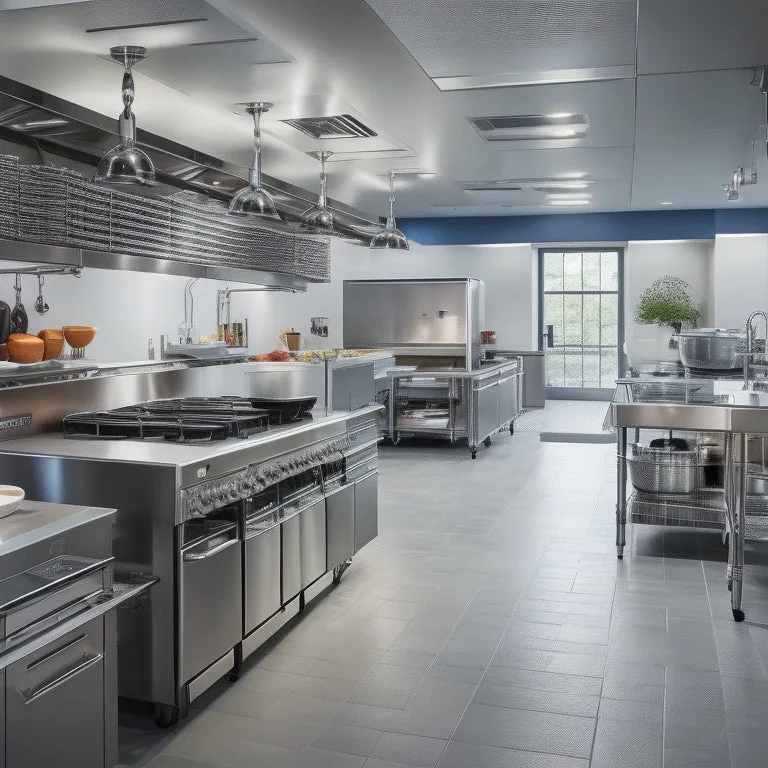
Optimizing Commercial Kitchen Design: Why Your Layout Could Be Costing You Thousands (And How to Fix It)
Let me tell you about the first time I walked into a restaurant kitchen that was *supposed* to be “state-of-the-art.” The owner had just dropped $250K on shiny new equipment, custom stainless steel counters, and what he called “the Rolls-Royce of ventilation systems.” Yet six months later, he was ready to sell the place. Why? Because his staff spent more time dodging each other in the prep area than actually cooking, orders backed up like a Nashville traffic jam during a Titans game, and his utility bills were higher than my mortgage. That’s when I realized: optimizing commercial kitchen design isn’t about how much you spend, it’s about how smart you spend it.
I’ve since toured dozens of kitchens, from Michelin-starred temples of gastronomy to food trucks serving the best damn tacos this side of the Mississippi, and here’s the uncomfortable truth: most commercial kitchens are designed by people who’ve never actually worked in one. Architects focus on aesthetics, equipment reps push what’s in stock, and owners get sold on buzzwords like “modular” and “ergonomic” without understanding what those terms actually mean in the trenches. The result? A kitchen that looks good in a brochure but falls apart during Saturday night rush.
In this guide, we’re going to strip away the fluff and dive into the nitty-gritty of optimizing commercial kitchen design. You’ll learn how to:
- Map out a workflow that actually matches how your team cooks (not how a textbook says they should)
- Avoid the 5 most common layout mistakes that kill efficiency
- Choose equipment that saves space *and* money (without sacrificing performance)
- Design for safety and compliance without turning your kitchen into a bureaucratic nightmare
- Future-proof your space so you’re not tearing out walls in two years
Fair warning: This isn’t one of those generic listicles that recycles the same advice you’ve read a hundred times. I’m going to challenge some of the conventional wisdom about kitchen design, call out the BS that gets passed off as “best practices,” and maybe even make you question a few of your own assumptions. Is this the *only* way to design a commercial kitchen? Hell no. But it’s the approach I’ve seen work in real-world kitchens, from high-volume catering operations to cozy neighborhood bistros, and it’s the one I wish someone had shared with me before I wasted years learning the hard way.
The Foundation: Understanding the 5 Key Principles of Optimizing Commercial Kitchen Design
1. The Workflow Triangle (And Why It’s More Like a Pentagon)
You’ve probably heard of the “kitchen work triangle”-the idea that the sink, stove, and refrigerator should form a neat little triangle for maximum efficiency. It’s a nice theory. It’s also completely outdated for most commercial kitchens. Here’s why:
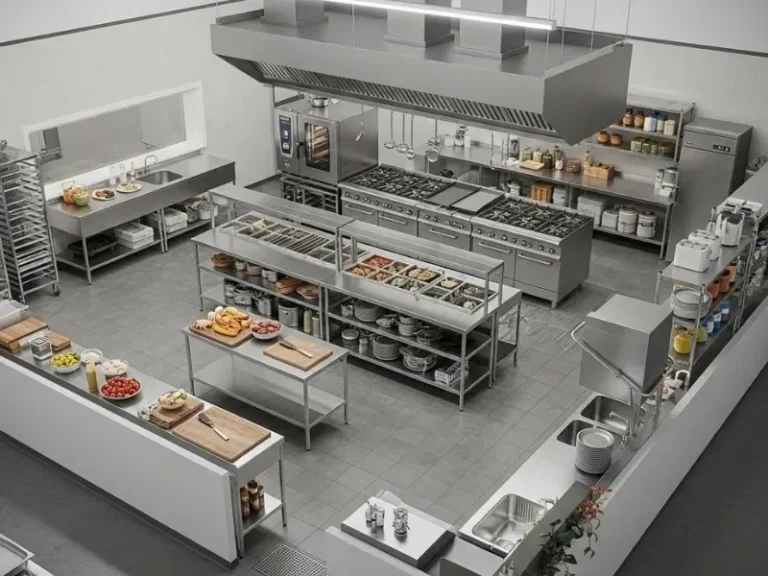
In a home kitchen, you might move between those three points a dozen times while cooking dinner. In a commercial kitchen, you’re dealing with multiple stations, multiple cooks, and a constant stream of orders that don’t follow a linear path. That’s why I prefer to think in terms of workflow zones rather than a simple triangle. These zones typically include:
- Receiving and Storage: Where ingredients come in and get put away (or tossed, if your supplier screwed up *again*).
- Prep: Chopping, mixing, marinating, basically where the magic (or the mess) happens.
- Cooking: The heart of the operation, where raw ingredients become edible art (or at least edible).
- Plating and Service: Where dishes get their final touches before hitting the pass.
- Cleaning and Waste: The often-overlooked zone where dishes get washed and garbage gets handled.
The key to optimizing commercial kitchen design is arranging these zones so that:
- Ingredients and dishes flow logically from one zone to the next (no backtracking, no crossing paths).
- Each zone has enough space for the people working in it (but not so much space that they’re walking miles during a shift).
- High-traffic areas (like the path between prep and cooking) are wide enough to handle multiple people moving at once.
- Zones that interact frequently (like prep and cooking) are close together, while zones that don’t (like receiving and plating) can be farther apart.
I’ll be honest: getting this right takes some trial and error. What works for a pizzeria won’t work for a sushi bar, and what works for a 50-seat café won’t work for a 300-cover banquet hall. But here’s a rule of thumb I’ve found useful: if your kitchen feels like a game of Frogger during rush hour, your workflow is probably screwed up.
2. The 20% Rule (Or: Why More Space Doesn’t Always Mean More Efficiency)
Here’s a dirty little secret of the restaurant industry: most commercial kitchens waste at least 20% of their space. And no, I’m not talking about the walk-in fridge that’s half-empty because your produce order got delayed (again). I’m talking about dead space, areas that serve no purpose other than making your kitchen look bigger on paper.
I once consulted for a restaurant where the owner insisted on a massive island in the middle of the kitchen because he’d seen it in a cooking show. The problem? His staff had to walk around it every time they needed to grab something from the walk-in, adding hundreds of unnecessary steps during a shift. We ended up replacing it with a compact prep station that actually got used, and suddenly the kitchen felt twice as spacious, even though we’d technically reduced the square footage.
When optimizing commercial kitchen design, ask yourself:
- Is this space being used for *active* work (prepping, cooking, plating), or is it just a place for stuff to pile up?
- Could this area serve multiple purposes? (Example: a counter that doubles as a prep station and a pass-through to the dining room.)
- Are there any “bottlenecks” where people or dishes get backed up? (If so, that’s a sign the space isn’t working.)
- Does the layout force staff to take unnecessary steps? (Every extra step adds up, literally. A cook who walks an extra 100 steps per hour during a 10-hour shift walks *a mile* in wasted motion.)
Pro tip: Before finalizing your layout, tape out the floor plan on the actual kitchen floor. Have your staff walk through it during a mock service. If they’re bumping into each other or complaining about the flow, it’s back to the drawing board.
3. The Equipment Paradox (How to Avoid Buying Too Much, or Too Little)
Here’s the thing about commercial kitchen equipment: it’s expensive, it takes up space, and if you get it wrong, it’ll haunt you for years. I’ve seen kitchens with $50K combi ovens that never get used because the staff doesn’t know how to operate them, and I’ve seen kitchens where the lack of a single piece of equipment (like a proper fryer) creates a bottleneck that costs thousands in lost sales.
When optimizing commercial kitchen design, you need to strike a balance between:
- Capacity: Can the equipment handle your peak volume? (Example: If you’re serving 200 covers on a Friday night, your fryer better be able to keep up.)
- Versatility: Can the equipment do more than one thing? (Example: A tilting skillet can braise, sauté, steam, and even bake, saving you from buying multiple pieces of equipment.)
- Footprint: Does the equipment fit in your space without crowding out other essentials?
- Future-proofing: Can the equipment adapt if your menu changes? (Example: A range with interchangeable burners lets you switch between high-BTU wok burners and low-BTU simmer burners.)
I’m torn on this one, but I’ll say it anyway: don’t automatically default to the biggest, most expensive equipment. I’ve seen too many kitchens where the owner bought a massive 6-burner range because they “might need it someday,” only to have it sit unused while the staff struggles with a cramped prep area. Start with what you *know* you’ll need, and leave room to add more later if necessary.
One more thing: don’t forget about the “invisible” equipment. Things like shelving, carts, and storage racks might not be as sexy as a brand-new charbroiler, but they’re just as important for keeping your kitchen running smoothly. I once worked with a chef who insisted on custom-built stainless steel shelving that cost $15K, only to realize later that standard wire shelving would’ve worked just as well (and left him with $12K to spend on other things).
4. The Safety Illusion (Why Compliance Doesn’t Always Equal Safety)
Let’s talk about safety for a second. Not the kind of safety that keeps the health inspector off your back (though that’s important too), but the kind that keeps your staff from getting burned, cut, or worse. I’ve been in kitchens that technically met all the codes but were still dangerous as hell, like the one with a slippery tile floor that sent at least one person to the ER every month, or the one where the fryer was placed right next to the walk-in, creating a fire hazard that kept me up at night.
When optimizing commercial kitchen design for safety, consider:
- Non-slip flooring: This is non-negotiable. If your floor gets wet (and it will), it needs to be slip-resistant. Epoxy coatings, rubber mats, and textured tiles are all good options.
- Ergonomics: Counters and prep stations should be at a height that doesn’t force your staff to hunch over or reach too high. (Pro tip: If your tallest cook is comfortable, your shortest cook probably isn’t. Adjustable-height stations are a game-changer.)
- Fire safety: Keep flammable materials (like paper towels and cardboard boxes) away from heat sources. Make sure your fire suppression system is up to code *and* that your staff knows how to use it.
- Ventilation: A good hood system isn’t just about removing smoke, it’s about keeping the air breathable and preventing grease buildup, which is a fire hazard.
- First aid: Your kitchen should have a well-stocked first aid kit (including burn gel) and a clear path to it. Bonus points if you have an eyewash station near the prep area.
Here’s the thing about safety: it’s not just about avoiding lawsuits. A safe kitchen is an efficient kitchen. When your staff isn’t worried about slipping on a wet floor or burning themselves on a poorly placed fryer, they can focus on what they’re supposed to be doing: cooking great food.
5. The Flexibility Factor (Or: How to Avoid Painting Yourself Into a Corner)
I get it. You’ve got a vision for your kitchen. Maybe it’s a sleek, modern space with induction cooktops and sous vide stations. Maybe it’s a rustic, wood-fired setup with a massive hearth oven. Whatever your dream is, I’m not here to crush it, but I *am* here to tell you that your kitchen needs to be able to adapt.
Why? Because the restaurant industry changes fast. One day you’re serving avocado toast, the next you’re pivoting to plant-based burgers. One year you’re a dine-in hotspot, the next you’re doing 80% takeout. If your kitchen can’t keep up, you’re going to be stuck with a space that’s either too small, too big, or just plain wrong for your needs.
When optimizing commercial kitchen design for flexibility, think about:
- Modular equipment: Can your prep stations be reconfigured for different tasks? Can your shelving be moved if you need to make room for a new piece of equipment?
- Multi-purpose spaces: Could your dishwashing area double as a prep station during slow periods? Could your walk-in fridge be divided to store both ingredients and finished dishes?
- Future expansion: Are there walls you can knock out later if you need more space? Are your utilities (gas, water, electricity) set up in a way that makes it easy to add new equipment?
- Menu adaptability: Does your kitchen layout support different cooking styles? (Example: If you decide to add a wood-fired pizza oven later, do you have the space and ventilation for it?)
I’ll give you an example. A few years ago, I worked with a café that wanted to add a full bakery to their operation. Their original kitchen was designed for light prep and sandwich-making, so when they decided to start baking bread and pastries, they had to gut the entire space. If they’d planned for flexibility from the beginning, say, by installing a larger hood system and leaving room for a deck oven, they could’ve saved tens of thousands of dollars.
Is this the best approach? Let’s consider: flexibility costs money upfront. Modular equipment is often more expensive than fixed equipment, and designing for future expansion might mean spending more on utilities than you need right now. But in my experience, it’s almost always worth it. Because the alternative, being stuck with a kitchen that can’t keep up with your business, is a lot more expensive.
Putting It All Together: A Step-by-Step Guide to Optimizing Your Commercial Kitchen Design
Step 1: Audit Your Current Kitchen (Or Start from Scratch If You’re New)
Before you start buying equipment or tearing down walls, you need to understand how your kitchen *actually* works (or how you want it to work). This means:
- Mapping your workflow: Where do ingredients come in? Where do they get stored? Where do they get prepped? Where do they get cooked? Where do they get plated? Where do the dishes go? Draw it out, literally. Use a whiteboard, a napkin, or a fancy software program. Just get it on paper.
- Identifying pain points: What’s slowing your team down? Is it a cramped prep area? A fryer that’s too far from the pass? A walk-in that’s always overcrowded? Make a list of everything that’s not working.
- Talking to your staff: Your cooks and dishwashers are the ones who live in the kitchen every day. Ask them what’s driving them crazy. (Pro tip: Do this over a beer or two. People are more honest when they’re relaxed.)
- Measuring everything: Get exact measurements of your space, including doors, windows, and any immovable fixtures (like support columns or plumbing stacks).
Maybe I should clarify: this isn’t just about fixing what’s broken. It’s about understanding how your kitchen functions as a system. Because when you’re optimizing commercial kitchen design, every change you make will have ripple effects. Move the fryer, and suddenly the prep station is too far away. Add a new oven, and suddenly the hood system isn’t big enough. You need to see the big picture before you start making changes.
Step 2: Define Your Must-Haves (And Your Nice-to-Haves)
Now that you’ve audited your kitchen, it’s time to make a list of what you *need* versus what you *want*. This is harder than it sounds, because let’s be honest: we all want the $20K espresso machine and the custom-built wood-fired oven. But if those things don’t fit your workflow or your budget, they’re just going to be expensive paperweights.
Here’s how I approach this:
- Start with your menu: What equipment do you *need* to execute your menu? If you’re serving burgers, you need a grill. If you’re serving sushi, you need a rice cooker and a prep station with good lighting. Make a list of the essentials.
- Think about volume: How many covers do you serve during peak hours? Your equipment needs to be able to keep up. (Example: If you’re serving 100 covers in two hours, you probably need more than one fryer.)
- Consider your staff: How many people will be working in the kitchen at once? Do you need multiple prep stations? Multiple plating areas?
- Don’t forget the basics: Things like shelving, storage racks, and handwashing stations are easy to overlook, but they’re just as important as the big-ticket items.
- Leave room for growth: If you plan to expand your menu or increase your volume in the future, make sure your kitchen can handle it.
I’m torn between two schools of thought here. On one hand, I believe in investing in quality equipment-it lasts longer, performs better, and often saves you money in the long run. On the other hand, I’ve seen too many restaurants go bankrupt because they overspent on equipment they didn’t need. My advice? Start with the essentials, and add the nice-to-haves later.
Step 3: Sketch Your Layout (And Then Sketch It Again)
Now comes the fun part: designing your kitchen. This is where you get to play architect, chef, and efficiency expert all at once. Here’s how I do it:
- Start with the workflow: Remember those zones we talked about earlier? (Receiving, prep, cooking, plating, cleaning.) Arrange them in a way that makes sense for your operation. For most kitchens, this means a linear flow from receiving to prep to cooking to plating to cleaning. But don’t be afraid to get creative if your space demands it.
- Place your equipment: Start with the big-ticket items (like ranges, ovens, and fryers) and work your way down to the smaller stuff (like prep stations and shelving). Make sure everything fits and that there’s enough space for people to move around.
- Think about traffic patterns: Where will people be walking? Are there any areas where they’ll be crossing paths? If so, can you adjust the layout to minimize collisions?
- Don’t forget the details: Things like handwashing stations, fire extinguishers, and first aid kits need to be easily accessible. Make sure they’re included in your layout.
- Test it out: Once you’ve got a rough sketch, tape out the floor plan in your actual kitchen (or a similar space). Have your staff walk through it and give you feedback. If something doesn’t work, go back to the drawing board.
Pro tip: Use software if you can. Programs like SketchUp, AutoCAD, or even simple tools like Google SketchUp (which is free) can help you visualize your layout in 3D. It’s a game-changer for spotting potential problems before you start moving equipment.
Step 4: Choose Your Equipment (Without Going Broke)
This is where things get expensive. Commercial kitchen equipment isn’t cheap, and if you’re not careful, you can easily blow your entire budget on a few big-ticket items. Here’s how to make smart choices:
- Buy used (but be smart about it): Used equipment can save you a ton of money, but only if it’s in good condition. Look for reputable dealers, ask for maintenance records, and always inspect the equipment before buying. (Pro tip: If it looks like it’s been through a war, it probably has.)
- Lease instead of buy: Leasing equipment can free up cash for other expenses, and it often includes maintenance and repairs. Just make sure the lease terms are favorable (i.e., you’re not paying way more than the equipment is worth).
- Prioritize versatility: The more a piece of equipment can do, the less you’ll need to buy. (Example: A tilting skillet can replace a range, a griddle, and a steam table.)
- Don’t overlook the small stuff: Things like shelving, carts, and storage racks might not be as exciting as a new oven, but they’re just as important for keeping your kitchen running smoothly.
- Think about energy efficiency: Energy-efficient equipment might cost more upfront, but it’ll save you money on utility bills in the long run. Look for ENERGY STAR-rated appliances and consider induction cooktops, which are more efficient than gas or electric.
I’ll be honest: this is the part of optimizing commercial kitchen design where I see the most mistakes. People get starry-eyed over shiny new equipment and forget to ask the hard questions: Do I really need this? Will it save me time or money? Will my staff actually use it? Before you buy anything, ask yourself those questions. If the answer isn’t a resounding “yes,” keep looking.
Step 5: Plan for Safety and Compliance (Without Going Crazy)
I get it. No one likes dealing with codes and regulations. They’re confusing, they’re constantly changing, and they can feel like a giant pain in the ass. But here’s the thing: ignoring them can cost you your business. A single health code violation can shut you down, and a fire or injury can lead to lawsuits that bankrupt you. So let’s make this as painless as possible.
Here’s what you need to consider:
- Health codes: These vary by location, but they typically cover things like food storage temperatures, handwashing stations, and pest control. Check with your local health department to make sure you’re in compliance.
- Fire codes: Your kitchen needs to have a fire suppression system (usually a hood system with chemical extinguishers), fire extinguishers, and clear paths to exits. Again, check with your local fire department for specifics.
- ADA compliance: If your kitchen is open to the public (or if you have employees with disabilities), you’ll need to make sure it’s accessible. This might mean wider doorways, lower counters, or accessible restrooms.
- OSHA regulations: The Occupational Safety and Health Administration sets standards for workplace safety, including things like ventilation, ergonomics, and first aid. Make sure you’re familiar with the basics.
- Building codes: These cover things like electrical wiring, plumbing, and structural integrity. If you’re doing any major renovations, you’ll need to make sure they’re up to code.
Pro tip: Hire a consultant if you’re not sure. A good kitchen designer or consultant can help you navigate the maze of codes and regulations, and they can often save you money by pointing out potential problems before they become expensive fixes.
I’m not going to lie: this part of the process can be overwhelming. There’s a lot to keep track of, and it’s easy to feel like you’re drowning in red tape. But here’s the good news: most of these requirements are common sense. If you’re designing a kitchen that’s safe, clean, and efficient, you’re probably already 90% of the way there.
Step 6: Future-Proof Your Kitchen (So You’re Not Tearing It Apart in Two Years)
Remember what I said earlier about flexibility? This is where it pays off. The restaurant industry is always changing, and if your kitchen can’t keep up, you’re going to be stuck with a space that’s either too small, too big, or just plain wrong for your needs. Here’s how to future-proof your kitchen:
- Leave room to grow: If you plan to expand your menu or increase your volume in the future, make sure your kitchen can handle it. This might mean leaving extra space for new equipment or installing larger utility lines (like gas or water) than you currently need.
- Choose modular equipment: Modular equipment (like prep stations and shelving) can be reconfigured as your needs change. This is especially useful if you’re not sure what your future menu will look like.
- Plan for technology: The kitchen of the future is going to be more connected than ever. Make sure your kitchen is wired for things like smart appliances, digital ordering systems, and energy management software.
- Think about sustainability: Sustainability isn’t just a buzzword, it’s a business imperative. Design your kitchen with energy efficiency, water conservation, and waste reduction in mind. This might mean installing LED lighting, low-flow faucets, or a composting system.
- Don’t forget the little things: Things like extra electrical outlets, additional storage space, and flexible lighting can make your kitchen more adaptable in the future.
I’ll give you an example. A few years ago, I worked with a restaurant that wanted to add a wood-fired pizza oven to their menu. Their original kitchen was designed for light prep and sandwich-making, so when they decided to start baking pizza, they had to gut the entire space. If they’d planned for flexibility from the beginning, say, by installing a larger hood system and leaving room for a deck oven, they could’ve saved tens of thousands of dollars.
Is this the best approach? Let’s consider: future-proofing costs money upfront. Modular equipment is often more expensive than fixed equipment, and designing for future expansion might mean spending more on utilities than you need right now. But in my experience, it’s almost always worth it. Because the alternative, being stuck with a kitchen that can’t keep up with your business, is a lot more expensive.
Step 7: Get Feedback (And Then Get More Feedback)
You’ve done the hard work: you’ve audited your kitchen, sketched your layout, chosen your equipment, and planned for safety and compliance. Now it’s time to get some outside perspective. Because here’s the thing: you’re not the one who’s going to be working in this kitchen every day. Your staff is. And if they hate the layout, it doesn’t matter how “optimized” it is on paper, it’s not going to work.
Here’s how to get feedback:
- Talk to your staff: Show them your layout and ask for their input. What do they like? What don’t they like? What would they change? (Pro tip: Do this over a meal or a drink. People are more honest when they’re relaxed.)
- Consult with experts: If you’re working with a kitchen designer, contractor, or consultant, ask them for their thoughts. They’ve seen what works (and what doesn’t) in hundreds of kitchens, and they can often spot potential problems before they become expensive fixes.
- Test it out: If possible, set up a mock version of your kitchen in a similar space. Have your staff walk through it and give you feedback. If something doesn’t work, go back to the drawing board.
- Get a second opinion: If you’re not sure about something, ask someone else. This could be a fellow restaurant owner, a chef, or even a trusted customer. Sometimes an outside perspective can make all the difference.
I’ll be honest: this is the part of the process where I see the most resistance. People get attached to their ideas, and they don’t want to hear that something isn’t working. But here’s the thing: it’s better to find out now than after you’ve spent thousands of dollars on equipment and renovations. So keep an open mind, and be willing to make changes if something isn’t working.
Step 8: Finalize Your Design (And Then Double-Check Everything)
You’ve done the research, you’ve gotten feedback, and you’ve made the necessary adjustments. Now it’s time to finalize your design. This is where you’ll create a detailed blueprint that includes:
- Exact measurements of your space
- The location of every piece of equipment
- The placement of utilities (gas, water, electricity)
- Traffic patterns and workflow
- Safety and compliance features
Pro tip: Hire a professional to create your blueprint. A good kitchen designer or architect can create a detailed, accurate blueprint that will save you time and money in the long run. Plus, they can often spot potential problems that you might have missed.
Once you’ve got your blueprint, double-check everything. Measure twice, cut once, as they say. Make sure every piece of equipment fits, that there’s enough space for people to move around, and that all the utilities are in the right place. It’s a lot of work, but it’s worth it to avoid costly mistakes down the road.
Step 9: Start Building (And Be Prepared for the Unexpected)
Now comes the fun (and stressful) part: building your kitchen. This is where all your planning pays off, or where things go completely off the rails. Here’s how to keep things on track:
- Hire the right contractor: Not all contractors are created equal. Look for someone with experience in commercial kitchens, and make sure they’re licensed, insured, and reputable. (Pro tip: Ask for references, and check them.)
- Get everything in writing: Your contract should include a detailed scope of work, a timeline, a payment schedule, and a warranty. Don’t start work until you’ve got all of this in writing.
- Stay involved: Visit the site regularly to check on progress. If something doesn’t look right, speak up. It’s easier to fix problems now than after the work is done.
- Be prepared for delays: Construction is unpredictable. There will be delays. There will be unexpected problems. Try to build some flexibility into your timeline so you’re not scrambling at the last minute.
- Keep an eye on the budget: It’s easy for costs to spiral out of control during construction. Keep track of your spending, and be prepared to make adjustments if something comes in over budget.
- Start with the basics: Make sure everyone knows how to use the equipment, where things are stored, and how the workflow works. This might seem obvious, but you’d be surprised how many restaurants skip this step.
- Do a dry run: Before you open for business, do a mock service. This will give your staff a chance to practice their roles and work out any kinks in the workflow.
- Provide ongoing training: Training isn’t a one-and-done thing. As your menu changes and your staff grows, you’ll need to provide ongoing training to make sure everyone is on the same page.
- Encourage feedback: Your staff is on the front lines every day. Ask them what’s working and what’s not, and be open to making changes if something isn’t working.
- Lead by example: If you want your staff to work efficiently, you need to show them how it’s done. Be hands-on, and don’t be afraid to get in the weeds with them.
I’ll be honest: this is the part of the process where I see the most stress. There’s a lot of money on the line, and it’s easy to feel like things are spinning out of control. But here’s the thing: if you’ve done your planning, you’re already ahead of the game. Yes, there will be bumps in the road. But if you’ve got a solid plan, you’ll be able to handle them.
Step 10: Train Your Staff (And Then Train Them Again)
You’ve built your dream kitchen. Now it’s time to make sure your staff knows how to use it. This is where a lot of restaurants drop the ball. They spend all this time and money on optimizing commercial kitchen design, and then they don’t train their staff properly. The result? A kitchen that’s less efficient than it could be, and a staff that’s frustrated and overwhelmed.
Here’s how to train your staff effectively:
Pro tip: Make training fun. Turn it into a game, offer incentives, or make it a team-building exercise. The more engaged your staff is, the more they’ll get out of the training.
I’ll be honest: this is the part of the process where I see the most resistance from owners. They’ve spent all this time and money on their kitchen, and they just want to open for business. But here’s the thing: a well-trained staff is the key to making your kitchen work. If your staff doesn’t know how to use the equipment or follow the workflow, all your planning will have been for nothing.
The Bottom Line: Optimizing Commercial Kitchen Design Is About More Than Just Efficiency
Let me circle back to where we started. When I walked into that “state-of-the-art” kitchen years ago, I thought the problem was the equipment. But it wasn’t. The problem was that the kitchen had been designed by people who didn’t understand how it would actually be used. The equipment was top-of-the-line, but the layout was a disaster, the workflow was inefficient, and the staff was miserable.
That’s the thing about optimizing commercial kitchen design: it’s not just about efficiency. It’s about creating a space that works for the people who use it every day. It’s about balancing cost and quality, flexibility and focus, aesthetics and function. It’s about building a kitchen that doesn’t just look good on paper, but that actually helps your business thrive.
So here’s my challenge to you: Don’t just design a kitchen. Design a kitchen that works. A kitchen that makes your staff’s lives easier, not harder. A kitchen that saves you money, not costs you more. A kitchen that can adapt as your business grows and changes. Because at the end of the day, that’s what optimizing commercial kitchen design is really about: building a foundation for success.
And if you take nothing else away from this guide, remember this: The best kitchen is the one that gets used. Not the one with the fanciest equipment, or the most expensive finishes, or the biggest square footage. The one that works. The one that makes sense. The one that helps your staff do their jobs better, faster, and safer.
So go forth and design. And when you’re done, invite me over for a meal. I’ll be the guy in the corner, quietly judging your workflow.
FAQ: Your Burning Questions About Optimizing Commercial Kitchen Design
Q: How much does it cost to optimize a commercial kitchen design?
A: The cost varies widely depending on the size of your kitchen, the equipment you need, and whether you’re starting from scratch or renovating an existing space. A small café might spend $50K–$100K, while a large restaurant could spend $250K or more. The key is to focus on smart spending-prioritize the changes that will have the biggest impact on efficiency and safety, and don’t overspend on equipment or features you don’t need.
Q: What’s the biggest mistake people make when designing a commercial kitchen?
A: The biggest mistake is focusing on aesthetics over function. I’ve seen too many kitchens that look amazing in photos but are a nightmare to work in. Another common mistake is ot involving the staff in the design process. Your cooks and dishwashers are the ones who’ll be using the kitchen every day, they know what works and what doesn’t. Ignore their input at your peril.
Q: How do I know if my kitchen layout is efficient?
A: The best way to test your kitchen’s efficiency is to observe it in action. During a busy service, watch how your staff moves. Are they bumping into each other? Are there bottlenecks where dishes or ingredients get backed up? Are they taking unnecessary steps? If the answer to any of these questions is “yes,” your layout probably needs some tweaking. Another good test is to time how long it takes to complete a typical order. If it’s taking longer than it should, that’s a sign your workflow isn’t optimized.
Q: What’s the most underrated piece of equipment in a commercial kitchen?
A: Hands down, it’s the tilting skillet. Most people think of it as just a big frying pan, but it’s so much more than that. A tilting skillet can braise, sauté, steam, bake, and even act as a griddle or a steam table. It’s the Swiss Army knife of commercial kitchen equipment, and it can save you from buying multiple pieces of equipment. Another underrated piece? Good shelving. It’s not sexy, but it’s essential for keeping your kitchen organized and efficient.
@article{optimizing-commercial-kitchen-design-a-no-nonsense-guide-to-efficiency-safety-and-profitability,
    title   = {Optimizing Commercial Kitchen Design: A No-Nonsense Guide to Efficiency, Safety, and Profitability},
    author  = {Chef's icon},
    year    = {2026},
    journal = {Chef's Icon},
    url     = {https://chefsicon.com/optimizing-commercial-kitchen-design/}
}