The Best Fluffy Pancakes recipe you will fall in love with. Full of tips and tricks to help you make the best pancakes.
I’ll admit it, I’ve spent more time than I’d like to confess rearranging my kitchen utensils just to shave off a few seconds between chopping onions and tossing them into a pan. There’s something almost meditative about the rhythm of cooking, the way your body moves between the sink, stove, and fridge without even thinking. But when that flow gets disrupted, say, by a poorly placed trash can or an awkwardly positioned spice rack, it’s like hitting a speed bump in the middle of a smooth drive. Frustrating. Inefficient. And, if you’re anything like me, the kind of thing that nags at you until you fix it.
That’s where the work triangle comes in. You’ve probably heard of it, the idea that the three main work areas in a kitchen (the sink, stove, and refrigerator) should form a triangle to create an efficient workflow. It’s one of those design principles that’s been around since the 1940s, back when kitchens were smaller, appliances were bulkier, and the idea of a “smart kitchen” was something out of The Jetsons. But here’s the question that’s been gnawing at me: Does the work triangle still hold up in modern kitchens? With open-concept layouts, multiple cooks, and appliances that do everything but wash the dishes for you, is this classic principle still the gold standard, or is it time to rethink how we design our culinary workspaces?
In this deep dive, I’m going to explore the origins of the work triangle, how it’s evolved (or not) over the decades, and whether it’s still relevant in today’s kitchens. We’ll look at real-world examples, common pitfalls, and practical ways to optimize your kitchen, whether you’re remodeling, building from scratch, or just trying to make the most of the space you’ve got. By the end, you’ll have a clearer idea of whether the work triangle is a timeless rule or a relic of a bygone era. And who knows? Maybe you’ll even find yourself rearranging your utensils by the time we’re done.
The Birth of the Work Triangle: A Brief History
How a 1940s Study Changed Kitchen Design Forever
Let’s rewind to the 1940s. Post-war America was booming, and with that boom came a shift in how people lived. Houses were getting smaller, families were growing, and the kitchen, once a utilitarian space relegated to the back of the house, was starting to take center stage. Enter the University of Illinois School of Architecture, which conducted a series of studies on kitchen efficiency. Their goal? To figure out how to make the kitchen more functional for the average homemaker (yes, the language of the time was very much of its era).
The researchers observed how people moved in the kitchen, tracking the most common tasks: prepping food, cooking, cleaning, and storing ingredients. What they found was almost embarrassingly simple: the three most frequented areas were the sink, stove, and refrigerator. And thus, the work triangle was born. The idea was that if you arranged these three points in a triangle, with each side measuring between 4 and 9 feet, you’d create an efficient workflow that minimized unnecessary steps. No more walking across the kitchen to grab a pot while your onions burned on the stove. No more dodging family members as you tried to wash dishes. Just a smooth, logical flow.
But here’s the thing about design principles, they’re not just about efficiency. They’re about human behavior. The work triangle wasn’t just a random geometric shape; it was based on how people actually used their kitchens. And for decades, it worked. It worked so well, in fact, that it became the foundation of kitchen design, a rule of thumb that architects and designers followed religiously. But like all rules, it wasn’t without its critics. Some argued that it was too rigid, too focused on a single cook, and too dismissive of the way modern families actually use their kitchens. Which brings us to the big question: Is the work triangle still relevant today, or is it time to retire it?
The Original Rules: What the Work Triangle Actually Entailed
Before we dive into whether the work triangle still holds up, let’s get clear on what it actually is. The original guidelines were pretty straightforward:
- The three points of the triangle (sink, stove, refrigerator) should be between 4 and 9 feet apart. Too close, and you’d feel cramped. Too far, and you’d waste time and energy walking back and forth.
- The sum of the triangle’s three sides should be between 13 and 26 feet. This was the sweet spot for efficiency, according to the researchers. Any shorter, and the kitchen would feel too small. Any longer, and you’d be doing a lot of unnecessary walking.
- No major traffic paths should cross through the triangle. The last thing you want is someone walking through your workspace while you’re carrying a pot of boiling water. Safety first, folks.
- The triangle should be unobstructed. No islands, peninsulas, or other obstacles should block the direct path between the three points. The idea was to keep the workflow as smooth as possible.
At first glance, these rules seem pretty logical. But here’s where I start to question things. The work triangle was designed for a very specific type of kitchen: small, enclosed, and used by one person at a time. Today’s kitchens? Not so much. We’ve got open-concept layouts where the kitchen flows into the living room. We’ve got multiple cooks working side by side. We’ve got appliances that do everything from brew coffee to sous-vide a steak. And we’ve got storage solutions that go way beyond the fridge, like pantries, wine coolers, and pull-out spice racks. So, can the work triangle adapt, or is it time to throw it out with the dishwater?
Modern Kitchens vs. Classic Principles: The Great Divide
How Open-Concept Layouts Broke the Triangle
If you’ve walked into a home built in the last 20 years, chances are you’ve seen an open-concept layout. The kitchen isn’t a separate room anymore; it’s part of the living space, a hub where people cook, eat, socialize, and even work. And while this design is great for entertaining and keeping an eye on the kids, it completely upends the work triangle.
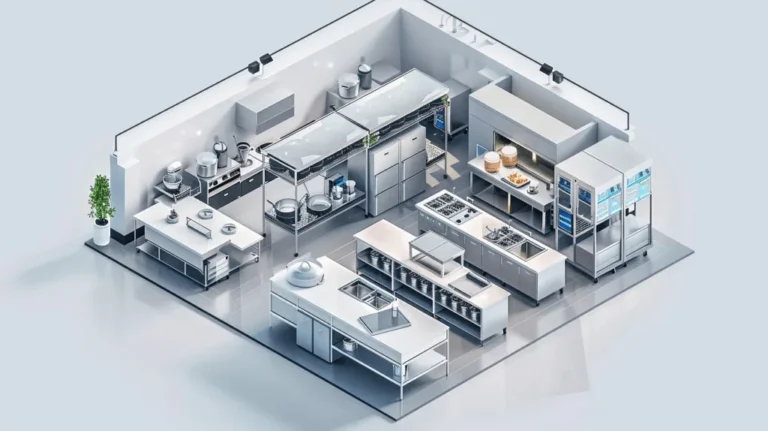
Think about it. In a traditional enclosed kitchen, the work triangle is easy to define. The sink, stove, and fridge are all within a few steps of each other, and the space is contained. But in an open-concept kitchen? Suddenly, the fridge might be on one side of the room, the sink on another, and the stove somewhere in between. The triangle gets stretched, twisted, or even broken entirely. And if you’ve got an island or a peninsula, good luck keeping that workflow unobstructed.
So, what’s a modern cook to do? Do you stick with the work triangle and try to shoehorn it into your open layout? Or do you abandon it altogether and start from scratch? I’m torn on this one. On the one hand, the work triangle was designed for efficiency, and efficiency is still important, even in an open kitchen. On the other hand, open-concept layouts are about more than just cooking, they’re about living. Maybe the work triangle isn’t the be-all and end-all anymore. Maybe it’s just one tool in a much larger toolbox.
Multiple Cooks, Multiple Problems
Here’s another wrinkle: the work triangle was designed for a single cook. But today’s kitchens? They’re often shared spaces, where couples, roommates, or families cook together. And when you’ve got more than one person in the kitchen, the work triangle can quickly turn into a work traffic jam.
Let’s say you’re making dinner with your partner. You’re at the stove, sautéing vegetables, while they’re at the sink, washing greens for a salad. If your kitchen is designed with a tight work triangle, you’re both going to be bumping elbows, reaching over each other, and generally getting in each other’s way. It’s not efficient; it’s chaotic. And if you’ve got kids running around, forget about it. The work triangle wasn’t built for this kind of multitasking.
So, how do you design a kitchen for multiple cooks? Some designers suggest creating multiple work zones-essentially, multiple triangles. For example, you might have a prep zone with a sink and cutting board, a cooking zone with the stove and oven, and a cleaning zone with the dishwasher and trash. This way, each person has their own space to work without stepping on each other’s toes. It’s a more flexible approach, but it also requires more square footage. And not everyone has the luxury of a sprawling kitchen.
Is this the best approach? Let’s consider another angle. Maybe the work triangle isn’t the problem, maybe it’s just one piece of the puzzle. If you’ve got a small kitchen, you might not have the space for multiple work zones. But you can still optimize your workflow by thinking about task adjacency. What tasks do you do most often? Where do they happen? And how can you arrange your kitchen so those tasks flow smoothly, even with multiple people? It’s not about throwing out the work triangle; it’s about adapting it to fit your needs.
The Case for the Work Triangle: Why It Still Matters
Efficiency Isn’t Dead, It’s Just Evolved
Okay, let’s take a step back. I’ve spent a lot of time talking about the limitations of the work triangle, but let’s not throw the baby out with the bathwater. At its core, the work triangle is about efficiency. And efficiency is still important, whether you’re cooking in a tiny apartment kitchen or a sprawling chef’s paradise. The question is, how do you define efficiency in a modern kitchen?
For me, efficiency isn’t just about minimizing steps. It’s about minimizing friction. It’s about creating a space where the tools you need are always within reach, where you don’t have to think about where to find the colander or the olive oil, and where you can move from task to task without interruption. The work triangle does that, when it’s done right. It creates a natural flow, a rhythm that makes cooking feel effortless. And that’s something that’s still valuable, even in today’s kitchens.
But here’s the thing: efficiency isn’t one-size-fits-all. What works for me might not work for you. Maybe you’re a baker, and your most frequented areas are the oven, the mixer, and the pantry. Maybe you’re a meal-prepper, and you spend most of your time at the cutting board and the fridge. The work triangle is a starting point, but it’s not the end-all and be-all. It’s a framework, a way to think about how you move in your kitchen. And frameworks are useful, even if you have to tweak them to fit your needs.
The Psychology of Kitchen Flow
There’s another reason the work triangle still matters, and it’s not just about efficiency. It’s about psychology. Our brains are wired to seek out patterns, to find order in chaos. And the work triangle provides that order. It creates a sense of structure, a feeling that your kitchen is a well-oiled machine, not just a random collection of appliances and cabinets.
Think about it. When you walk into a kitchen that’s designed with the work triangle in mind, it just feels right. The sink is where you’d expect it to be. The stove is within easy reach. The fridge is a few steps away. There’s a logic to it, a rhythm that makes sense. And that logic translates into a smoother, more enjoyable cooking experience. It’s like driving a car with a well-designed dashboard, everything is where it should be, and you don’t have to think about where to find the turn signal or the windshield wipers.
But here’s where it gets tricky. The work triangle isn’t just about logic; it’s also about habit. Once you get used to a certain layout, your body starts to move on autopilot. You reach for the salt without looking. You turn to the sink without thinking. And if that layout changes, say, because you moved the fridge or added an island, it can throw you off. It’s like trying to type on a keyboard with the letters rearranged. Your brain knows where the keys should be, but they’re not there, and suddenly, you’re making mistakes.
So, is the work triangle still relevant? I think it is, but not in the rigid, one-size-fits-all way it was originally conceived. It’s a guideline, a starting point. And like all guidelines, it’s meant to be adapted, tweaked, and even broken when necessary. The key is to understand why the work triangle works, not just how. Because once you understand the principles behind it, you can apply them to any kitchen, no matter how big or small, open or enclosed.
Beyond the Triangle: Modern Alternatives and Adaptations
The Work Zone Approach: A More Flexible Framework
If the work triangle feels too restrictive for your modern kitchen, you’re not alone. A lot of designers are moving toward a work zone approach, which breaks the kitchen into distinct areas based on tasks. Instead of focusing on just three points, you create multiple zones for different activities: prepping, cooking, cleaning, baking, and even socializing. Each zone has its own set of tools and appliances, so you’re not constantly running back and forth between the fridge and the stove.
Let’s say you’re a serious home cook. You might have a prep zone with a large countertop, a sink, and easy access to knives, cutting boards, and mixing bowls. Nearby, you’d have a cooking zone with the stove, oven, and pots and pans. And if you’re a baker, you might have a separate baking zone with a stand mixer, measuring cups, and a dedicated countertop for rolling out dough. The idea is to group related tasks together, so everything you need for a specific activity is within arm’s reach.
This approach is great for larger kitchens, where you’ve got the space to create multiple zones. But what if you’re working with a smaller kitchen? Maybe you don’t have room for a dedicated baking zone or a separate prep area. In that case, you can still use the work zone approach, you just have to get creative. For example, you might have a mobile prep station that you can roll out when you need it and tuck away when you don’t. Or you might use pull-out shelves and organizers to maximize your storage and keep your tools within reach.
I’m torn between the work triangle and the work zone approach. On the one hand, the work triangle is simple and elegant, it’s a single, easy-to-understand concept that works for most kitchens. On the other hand, the work zone approach is more flexible, more adaptable to modern lifestyles. Maybe the best solution is a hybrid of the two. Start with the work triangle as your foundation, and then layer in work zones based on your specific needs. That way, you get the best of both worlds: the efficiency of the triangle and the flexibility of the zones.
Technology and the Work Triangle: Friends or Foes?
Let’s talk about technology. Smart kitchens are all the rage these days, with appliances that can preheat your oven from your phone, fridges that tell you when you’re out of milk, and faucets that turn on with a wave of your hand. But how does all this tech fit into the work triangle? Does it make the concept obsolete, or does it enhance it?
On the one hand, technology can complicate the work triangle. If you’ve got a smart fridge with a touchscreen, for example, you might find yourself standing in front of it longer than you would with a traditional fridge. That extra time can throw off your workflow, especially if the fridge is positioned in a way that blocks the path between the sink and the stove. And if you’re constantly checking your phone or tablet for recipes, you might find yourself distracted, breaking the natural flow of the triangle.
But on the other hand, technology can also enhance the work triangle. Imagine a kitchen where your smart oven preheats automatically when you pull out a baking sheet, or where your smart faucet fills a pot with the exact amount of water you need for pasta. These little conveniences can save you time and energy, making your workflow even smoother. And if you’ve got a voice-activated assistant, you can ask for timers, conversions, or recipe instructions without ever leaving your spot at the stove.
So, where does that leave us? I think technology is a double-edged sword. It can make the work triangle more efficient, but it can also disrupt it if it’s not integrated thoughtfully. The key is to design your kitchen with technology in mind. Think about where you’ll place your smart appliances, how you’ll interact with them, and how they’ll fit into your workflow. And don’t forget about the basics, no amount of tech can make up for a poorly designed kitchen. The work triangle is still the foundation; technology is just the icing on the cake.
Real-World Examples: Work Triangles in Action
Case Study 1: The Tiny Apartment Kitchen
Let’s start with a real-world example: my friend Sarah’s tiny apartment kitchen in Brooklyn. Sarah’s kitchen is about as small as they come, just 70 square feet, with a single wall of cabinets, a mini-fridge, a two-burner stove, and a sink that’s barely big enough to wash a salad bowl. There’s no island, no pantry, and certainly no room for multiple work zones. So, how does the work triangle fit into this space?
Surprisingly well, as it turns out. Sarah’s sink, stove, and fridge are all within a few steps of each other, forming a tight little triangle that’s just under 10 feet in total. It’s not the most spacious setup, but it works. She can prep at the sink, turn to the stove to cook, and grab ingredients from the fridge without taking more than a step or two. The key here is compact efficiency. In a small kitchen, every inch counts, and the work triangle helps maximize the space you’ve got.
But here’s the thing: Sarah’s kitchen isn’t perfect. The fridge is a little too far from the stove, which means she has to take an extra step when she’s cooking. And the sink is right next to the stove, which can be a little awkward when she’s trying to wash dishes while something’s simmering on the burner. But overall, the work triangle works for her. It’s not about perfection; it’s about making the most of what you’ve got.
Maybe I should clarify: the work triangle isn’t a magic bullet. It’s not going to turn a tiny kitchen into a chef’s paradise. But it can help you optimize your space, even if it’s small. And in a tiny kitchen, optimization is everything.
Case Study 2: The Open-Concept Family Kitchen
Now, let’s look at the opposite end of the spectrum: my cousin Mark’s open-concept family kitchen in suburban Chicago. Mark’s kitchen is huge, over 300 square feet, with a massive island, a double oven, a walk-in pantry, and enough counter space to feed an army. It’s the kind of kitchen that’s made for entertaining, with room for multiple cooks, kids doing homework at the island, and guests sipping wine while Mark grills up burgers on the outdoor patio.
In a kitchen this big, the work triangle starts to break down. The fridge is on one side of the room, the sink is on the other, and the stove is somewhere in between. The total distance between the three points is well over 26 feet, which is way outside the recommended range. But here’s the thing: it works. Mark and his wife cook together all the time, and they’ve never complained about the layout. Why? Because they’ve adapted the work triangle to fit their needs.
Instead of one big triangle, they’ve created multiple smaller triangles. For example, the fridge, the prep sink, and the cutting board form one triangle for prepping ingredients. The main sink, the dishwasher, and the trash can form another triangle for cleaning up. And the stove, the oven, and the spice rack form a third triangle for cooking. It’s not the traditional work triangle, but it’s a system that works for them.
This is where the work triangle starts to feel a little outdated. In a large, open-concept kitchen, you can’t just rely on one triangle. You’ve got to think about multiple workflows, multiple cooks, and multiple tasks. The work triangle is still a useful concept, but it’s not the only one. You’ve got to layer in other principles, like task adjacency and work zones, to create a kitchen that’s truly efficient.
Common Mistakes and How to Avoid Them
The Overcrowded Triangle: When Too Much Is Too Much
One of the biggest mistakes people make with the work triangle is overcrowding. They try to cram too many appliances, cabinets, or obstacles into the triangle, which disrupts the workflow and makes the kitchen feel cramped. For example, I’ve seen kitchens where the trash can is smack in the middle of the triangle, or where the island is positioned in a way that blocks the path between the sink and the stove. It’s like trying to drive a car with a giant boulder in the middle of the road, you’re going to hit it every time.
So, how do you avoid this mistake? The key is to keep the triangle unobstructed. That means no major appliances, cabinets, or obstacles should block the direct path between the sink, stove, and fridge. If you’ve got an island, make sure it’s positioned in a way that doesn’t interfere with the triangle. And if you’ve got a trash can or a recycling bin, try to place it outside the triangle, where it won’t get in the way.
Another common mistake is ignoring the traffic flow. The work triangle isn’t just about the three main points; it’s also about how people move through the kitchen. If your triangle is positioned in a way that forces people to walk through it to get from the living room to the dining room, you’re going to have a problem. The last thing you want is someone walking through your workspace while you’re carrying a knife or a hot pan. So, think about the atural traffic patterns in your kitchen, and design your triangle accordingly.
The Forgotten Fourth Point: Storage and Prep Areas
Here’s another mistake I see all the time: forgetting about storage and prep areas. The work triangle focuses on the sink, stove, and fridge, but what about everything else? Where do you put your cutting boards, your knives, your spices, and your pots and pans? If these items aren’t within easy reach, you’re going to waste a lot of time and energy running back and forth between the triangle and your storage areas.
This is where the work zone approach can really shine. Instead of just focusing on the three main points, think about all the tasks you do in the kitchen and where they happen. For example, if you do a lot of baking, you might want a dedicated baking zone with a stand mixer, measuring cups, and a rolling pin. If you’re a meal-prepper, you might want a prep zone with a large cutting board, a sink, and easy access to knives and mixing bowls. The idea is to group related tasks together, so everything you need for a specific activity is within arm’s reach.
But what if you don’t have the space for multiple work zones? In that case, you can still optimize your storage and prep areas by keeping frequently used items close to the triangle. For example, you might store your spices near the stove, your knives near the cutting board, and your pots and pans near the oven. The goal is to minimize the number of steps you take between tasks, so you can focus on cooking, not running around the kitchen.
How to Optimize Your Kitchen’s Work Triangle (or Not)
Step-by-Step Guide to Assessing Your Kitchen
Alright, let’s get practical. How do you actually optimize your kitchen’s work triangle? Whether you’re remodeling, building from scratch, or just trying to make the most of the space you’ve got, here’s a step-by-step guide to assessing and improving your kitchen’s workflow.
- Measure Your Triangle: Grab a tape measure and map out the distances between your sink, stove, and fridge. Are they within the recommended 4 to 9 feet? If not, you might need to adjust your layout.
- Check for Obstructions: Look at the direct paths between the three points. Are there any obstacles, like islands, cabinets, or appliances, blocking the way? If so, consider rearranging your layout to keep the triangle unobstructed.
- Evaluate Traffic Flow: Think about how people move through your kitchen. Does the work triangle intersect with any major traffic paths? If it does, you might need to adjust your layout to keep the workflow smooth.
- Identify Your Most Frequent Tasks: What do you do most often in your kitchen? Prepping? Cooking? Cleaning? Baking? Make a list of your top three tasks, and think about how you can arrange your kitchen to make those tasks easier.
- Create Work Zones: Based on your most frequent tasks, create work zones for each activity. For example, you might have a prep zone with a sink and cutting board, a cooking zone with the stove and oven, and a cleaning zone with the dishwasher and trash. The goal is to group related tasks together, so everything you need is within reach.
- Optimize Storage: Take a look at your storage areas. Are your frequently used items within easy reach? If not, consider rearranging your cabinets or adding organizers to make your tools more accessible.
- Test Your Layout: Once you’ve made your adjustments, test your new layout. Cook a meal, wash some dishes, and see how it feels. Does the workflow feel smooth, or are there still areas that feel awkward or inefficient? If something doesn’t work, don’t be afraid to tweak it.
This process isn’t about perfection; it’s about iteration. You might not get it right the first time, and that’s okay. The goal is to create a kitchen that works for you, not the other way around. And if you find that the work triangle isn’t working for your space, don’t be afraid to adapt it or even abandon it altogether. The most important thing is to create a kitchen that feels good to you, whether that’s based on classic principles or modern innovations.
When to Break the Rules (And How to Do It Well)
Let’s be real: rules are made to be broken. And the work triangle is no exception. There are plenty of situations where the traditional triangle just doesn’t work, and that’s okay. The key is to understand why the rules exist in the first place, so you can break them intelligently.
For example, let’s say you’ve got a galley kitchen with the sink and stove on one side and the fridge on the other. The total distance between the three points is well over 26 feet, which is way outside the recommended range. But if you love your galley kitchen and it works for you, who’s to say you’re wrong? The work triangle is a guideline, not a law. If your kitchen feels efficient and comfortable, that’s what matters.
Another example: open-concept kitchens. If you’ve got a large, open space where the kitchen flows into the living room, the work triangle might not be the best fit. Instead, you might want to focus on work zones, creating distinct areas for prepping, cooking, and cleaning. This approach is more flexible, more adaptable to modern lifestyles, and it can work just as well (if not better) than the traditional triangle.
So, when should you break the rules? Here are a few scenarios where it might make sense:
- Your kitchen is too small or too large for the traditional triangle. If your kitchen is tiny, you might not have the space for a proper triangle. If it’s huge, the triangle might be stretched too thin. In both cases, it’s okay to adapt the concept to fit your space.
- You cook with multiple people. The work triangle was designed for a single cook. If you’re cooking with a partner, kids, or roommates, you might need a more flexible approach, like multiple work zones.
- Your kitchen has an unusual layout. Not all kitchens are created equal. If you’ve got a galley kitchen, a U-shaped kitchen, or an L-shaped kitchen, the traditional triangle might not work. In that case, you’ll need to get creative.
- You have specific needs or preferences. Maybe you’re a baker, and you need a dedicated baking zone. Maybe you’re a meal-prepper, and you need a large prep area. The work triangle is a starting point, but it’s not the only way to design a kitchen.
The bottom line? Don’t be afraid to break the rules. The work triangle is a tool, not a mandate. Use it if it works for you, adapt it if it doesn’t, and don’t be afraid to throw it out altogether if it’s not serving your needs. The most important thing is to create a kitchen that feels good to you, whether that’s based on classic principles or modern innovations.
Conclusion: The Work Triangle in 2026 and Beyond
So, where does that leave us? Is the work triangle still relevant in 2026, or is it time to move on? I’ll be honest, I’m still torn. On the one hand, the work triangle is a tried-and-true principle that’s stood the test of time. It’s simple, it’s logical, and it works for a lot of kitchens. On the other hand, modern kitchens are more complex than ever, with open-concept layouts, multiple cooks, and smart appliances that change the way we interact with our spaces.
But here’s what I’ve come to realize: the work triangle isn’t the problem, it’s the way we think about it. We’ve treated it like a rigid rule, a one-size-fits-all solution that can’t be broken. But the truth is, the work triangle is just a starting point. It’s a framework, a way to think about how you move in your kitchen. And like all frameworks, it’s meant to be adapted, tweaked, and even broken when necessary.
So, what’s the takeaway? If you’re designing a kitchen in 2026, don’t feel like you have to stick to the traditional work triangle. Use it as a guideline, but don’t be afraid to get creative. Think about how you actually use your kitchen, what tasks you do most often, and how you can arrange your space to make those tasks easier. And if the work triangle doesn’t work for you, that’s okay. There are plenty of other principles and approaches you can use to create a kitchen that’s efficient, comfortable, and uniquely yours.
As for me? I’m going to go rearrange my utensils one more time. Because at the end of the day, that’s what kitchen design is all about, finding what works for you, even if it means breaking a few rules along the way.
FAQ
Q: What is the work triangle in kitchen design?
A: The work triangle is a classic kitchen design principle that arranges the three main work areas, the sink, stove, and refrigerator, in a triangle to create an efficient workflow. The idea is that if these three points are between 4 and 9 feet apart, with a total distance of 13 to 26 feet, you’ll minimize unnecessary steps and create a smooth, logical flow for cooking, prepping, and cleaning.
Q: Does the work triangle still work in modern kitchens?
A: The work triangle can still work in modern kitchens, but it’s not a one-size-fits-all solution. Open-concept layouts, multiple cooks, and smart appliances have changed the way we use our kitchens, and the traditional triangle might not always fit. That said, the principles behind the work triangle, efficiency, task adjacency, and unobstructed workflows, are still valuable. The key is to adapt the concept to fit your specific needs and space.
Q: What are some common mistakes to avoid when designing a work triangle?
A: Some common mistakes include overcrowding the triangle with obstacles like islands or trash cans, ignoring traffic flow, and forgetting about storage and prep areas. To avoid these mistakes, keep the triangle unobstructed, think about how people move through your kitchen, and make sure your frequently used items are within easy reach. It’s also important to test your layout and make adjustments as needed.
Q: What are some alternatives to the work triangle for modern kitchens?
A: One popular alternative is the work zone approach, which breaks the kitchen into distinct areas based on tasks. For example, you might have a prep zone with a sink and cutting board, a cooking zone with the stove and oven, and a cleaning zone with the dishwasher and trash. This approach is more flexible and adaptable to modern lifestyles, especially in larger or open-concept kitchens. Other alternatives include creating multiple smaller triangles or focusing on task adjacency to group related activities together.
@article{work-triangle-optimization-can-classic-kitchen-principles-still-rule-in-modern-spaces,
    title   = {Work Triangle Optimization: Can Classic Kitchen Principles Still Rule in Modern Spaces?},
    author  = {Chef's icon},
    year    = {2026},
    journal = {Chef's Icon},
    url     = {https://chefsicon.com/work-triangle-optimization-classic-principles-modern-kitchens/}
}