The Best Fluffy Pancakes recipe you will fall in love with. Full of tips and tricks to help you make the best pancakes.
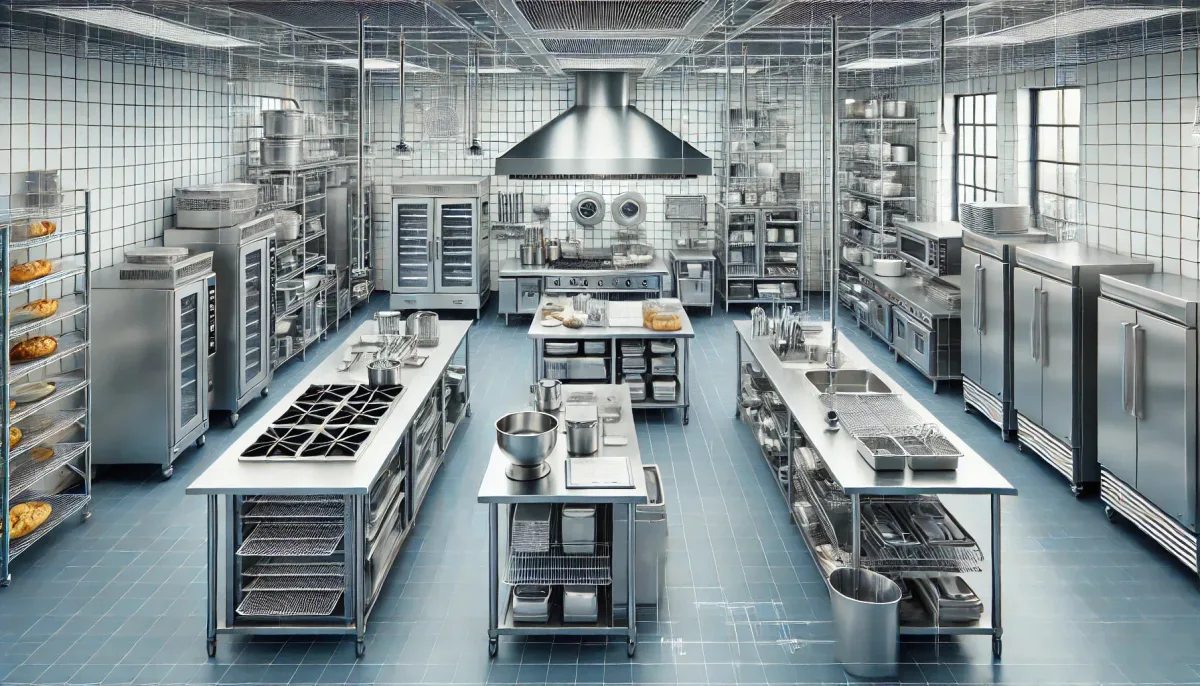
Let me tell you about the time I walked into a brand-new restaurant kitchen that looked like it had been designed by someone who’d never actually cooked a meal. The chef was standing in the middle of the space, arms crossed, looking like he’d just been told his favorite knife was getting confiscated. “Sammy,” he said, “I can’t even reach the damn walk-in without climbing over the prep table.” That’s when it hit me, layout isn’t just about cramming in the fanciest equipment. It’s about creating a flow that makes sense for the people who actually use the space every damn day.
Fast forward to today, and I’ve seen enough kitchen disasters (and triumphs) to know that modern kitchen equipment layout optimization isn’t just some buzzword, it’s the difference between a kitchen that hums like a well-oiled machine and one that grinds to a halt during the dinner rush. Whether you’re outfitting a food truck, a hotel banquet hall, or a cozy neighborhood bistro, the principles are the same: efficiency, safety, and sanity. In this guide, I’ll walk you through the nitty-gritty of designing a kitchen that actually works for you, not against you. And yeah, I’ll probably second-guess myself a few times along the way, because that’s what humans do.
By the end of this, you’ll know how to:
- Avoid the most common layout mistakes that even experienced chefs make
- Choose equipment that fits your workflow (not just your ego)
- Maximize every inch of space without turning your kitchen into a Tetris nightmare
- Future-proof your design so you’re not tearing everything out in two years
- Work with suppliers (like Chef’s Deal, who offer free kitchen design services) to get it right the first time
Sound good? Let’s dive in. And if I start rambling about something that doesn’t make sense, just yell at me in the comments, I’ll course-correct.
The Psychology of Kitchen Flow: Why Your Brain Hates Your Current Layout
How Your Kitchen’s Layout Is Secretly Sabotaging You
Here’s the thing about kitchens: they’re not just spaces where food gets made. They’re behavioral ecosystems. Every time you take an extra step to grab a pan, every time you have to turn sideways to avoid bumping into a coworker, every time you curse because the fryer is too far from the plating station, your brain is keeping score. And it’s not happy.
I remember watching a line cook at a high-end restaurant in Nashville during a Saturday night rush. The kitchen was gorgeous, stainless steel everywhere, top-of-the-line equipment, even a fancy sous vide setup. But the poor guy kept having to walk 15 feet from the grill to the reach-in cooler every time he needed to grab a protein. By the third time I saw him make that trip, he looked like he was ready to throw the whole kitchen into the Cumberland River. That’s when it clicked: efficiency isn’t about speed, it’s about reducing friction.
So why do so many kitchens get this wrong? A few reasons:
- Ego over ergonomics: Someone saw a cool piece of equipment at a trade show and insisted on cramming it in, even if it didn’t fit the workflow.
- The “we’ll figure it out” fallacy: Assuming staff will adapt to a bad layout instead of designing around their natural movements.
- Ignoring the “golden triangle”: The classic kitchen work triangle (sink, stove, fridge) is a great starting point, but modern kitchens need to think beyond it. More on that later.
- Overlooking the “invisible” tasks: Like where to put dirty dishes, where to stage prepped ingredients, or where the hell the fire extinguisher is when you need it.
Is this the best way to think about it? Maybe not. But it’s a start. Let’s consider another angle: your kitchen layout is a story. Every piece of equipment, every aisle, every workstation is a plot point. If the story doesn’t make sense, if the hero (your chef) has to backtrack or take unnecessary detours, the audience (your staff) will check out. And in a kitchen, that means mistakes, slowdowns, and maybe even a mutiny.
The Three Types of Kitchen Flow (And Which One You Should Use)
Not all kitchens are created equal. The layout that works for a fast-casual burrito joint won’t cut it for a fine-dining restaurant with a 12-course tasting menu. Here’s a quick breakdown of the three main types of kitchen flow:
- Assembly Line Flow: This is the bread and butter (pun intended) of quick-service kitchens. Think Chipotle or Subway. The food moves in a straight line from prep to plating to service. It’s efficient, predictable, and great for high-volume operations. But it’s also rigid, if your menu changes frequently, this might not be the best fit.
Pros: Fast, easy to train staff, minimal cross-traffic.
Cons: Inflexible, can feel monotonous for staff, limited menu creativity.
- Zone-Based Flow: This is where you divide the kitchen into distinct zones (e.g., prep, cooking, plating, dishwashing) and assign staff to specific areas. It’s the most common layout for full-service restaurants because it’s adaptable and scalable. The key here is making sure the zones are logically arranged so staff aren’t running marathons between them.
Pros: Flexible, scalable, good for complex menus.
Cons: Requires more space, can lead to bottlenecks if zones aren’t balanced.
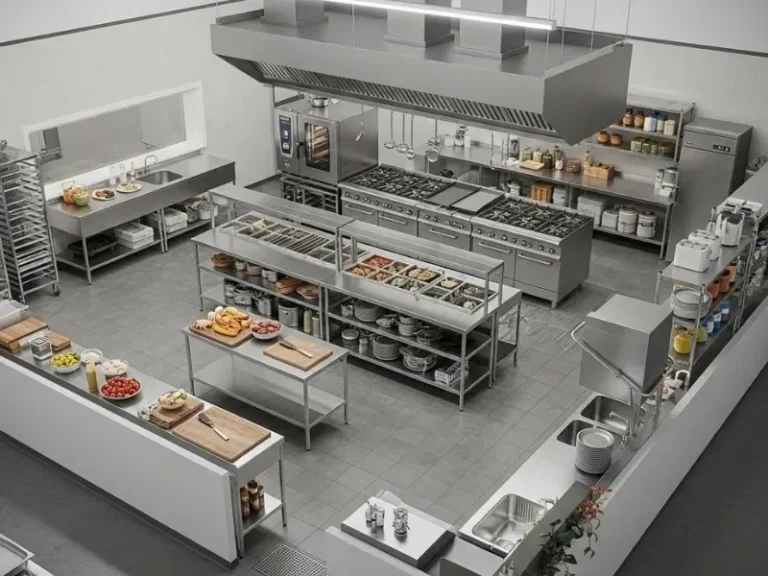
- Island Flow: This is the rockstar of kitchen layouts, literally. The cooking equipment is centralized in an “island,” with prep and plating stations arranged around it. It’s great for open kitchens where guests can see the action, but it requires a lot of space and careful planning to avoid traffic jams.
Pros: Dramatic, efficient for open kitchens, encourages teamwork.
Cons: Needs a lot of space, can get crowded, not ideal for small kitchens.
So which one should you choose? I’m torn between telling you to pick the one that fits your menu and telling you to pick the one that fits your space. Ultimately, it’s a mix of both. If you’re running a pizzeria, an assembly line might make sense. If you’re doing a modern tasting menu, zone-based is probably the way to go. And if you’re going for that “wow” factor with an open kitchen, island flow could be your ticket.
Maybe I should clarify: there’s no one-size-fits-all answer here. The best layout is the one that works for your team, your menu, and your space. And that’s where things get tricky.
Space Planning 101: How to Fit 10 Pounds of Equipment in a 5-Pound Kitchen
The Math No One Teaches You (But Should)
Let’s talk numbers. Because as much as I’d love to tell you that kitchen design is all about vibes and gut feelings, it’s not. It’s about square footage, aisle widths, and the laws of physics. Ignore these, and you’ll end up with a kitchen that’s either claustrophobic or wasteful, or worse, both.
First, the golden rule: allocate 60% of your kitchen space to production and 40% to storage, dishwashing, and support. That’s a rough guideline, but it’s a good starting point. If you’re running a high-volume operation, you might need to flip those percentages. If you’re doing a small café, you can get away with less production space.
Next, aisle widths. This is where a lot of kitchens go wrong. Too narrow, and staff will be playing bumper cars. Too wide, and you’re wasting valuable real estate. Here’s the breakdown:
- Main aisles: 4-5 feet wide. This is where the bulk of the traffic happens, so you need enough room for two people to pass comfortably.
- Work aisles: 3-4 feet wide. These are the aisles between workstations. You don’t need as much room here, but you still want to avoid a claustrophobic feel.
- Equipment aisles: 2.5-3 feet wide. This is the space between equipment and walls. You need enough room for staff to open doors and drawers without smacking into something.
And here’s where I’m going to contradict myself a little: these are guidelines, not rules. If you’re working with a tiny space, you might have to get creative. Maybe your main aisle is only 3.5 feet wide. Maybe your work aisles are 2.5 feet. That’s okay, as long as you’re not sacrificing safety or efficiency.
Now, let’s talk about the 5-foot rule. This is a handy little trick I picked up from a kitchen designer at Chef’s Deal. For every major piece of equipment, ask yourself: “Can I stand 5 feet away from this and still reach everything I need?” If the answer is no, you’re probably cramming too much into one area. This is especially important for things like ranges, grills, and fryers, where staff need room to maneuver.
Equipment Placement: The Art of Not Tripping Over Your Own Feet
Alright, let’s get into the nitty-gritty of where to put stuff. Because it’s not just about fitting everything in, it’s about putting things where they make sense. And that’s where a lot of kitchens go off the rails.
First, the big three: your range, your sink, and your refrigerator. These are the anchors of your kitchen, and they should be arranged in a way that minimizes backtracking. The classic work triangle is a good starting point, but modern kitchens need to think beyond it. Here’s how to arrange them:
- Range and sink: These should be close to each other, ideally within 4-6 feet. This is where most of the cooking and cleaning happens, so you don’t want staff running back and forth.
- Refrigerator: This should be near the prep area, but not so close that it blocks traffic. If you’re doing a lot of prep work, consider a reach-in cooler near the prep station.
- Dishwashing station: This should be near the back door (for easy trash removal) and close to the dining area (for easy bussing). But it shouldn’t be in the middle of the kitchen, dishwashing is messy, and you don’t want dirty dishes crossing paths with food prep.
Now, let’s talk about the supporting cast: your prep tables, your storage shelves, your smallwares. These are the things that often get overlooked, but they can make or break your workflow. Here’s where to put them:
- Prep tables: These should be near the refrigerator and the cooking area. If you’re doing a lot of prep work, consider a central prep station with easy access to both.
- Storage shelves: These should be near the prep area but out of the way of traffic. You don’t want staff having to walk across the kitchen to grab a cutting board.
- Smallwares: Things like tongs, ladles, and spatulas should be within arm’s reach of the cooking area. Consider wall-mounted racks or magnetic strips to keep them accessible but out of the way.
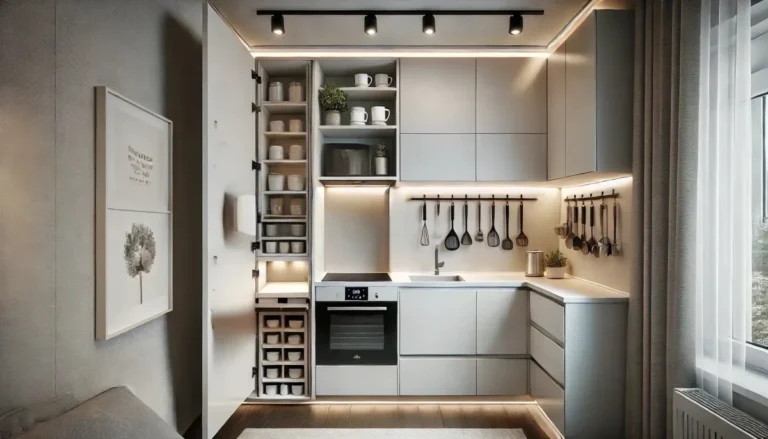
And here’s where I’m going to throw a wrench in the works: what if your kitchen is too small for all this? Maybe you’re working with a food truck, or a tiny café, or a pop-up kitchen. In that case, you’ll need to get creative. Maybe your prep table doubles as a storage shelf. Maybe your refrigerator is also your prep station. Maybe you use every inch of vertical space you can find. It’s not ideal, but sometimes you have to make do.
The Equipment You Actually Need (And the Stuff You Can Live Without)
How to Avoid the “Shiny Object Syndrome” When Buying Equipment
Let me tell you a story about a chef I know who fell in love with a $20,000 combi oven. It was sleek, it was high-tech, it could do everything from sous vide to baking to steaming. He was convinced it was the key to taking his restaurant to the next level. Fast forward six months, and that combi oven was sitting in the corner, gathering dust, while the staff continued to use the old-school convection oven because “it just works.”
This is what I call shiny object syndrome, and it’s the bane of kitchen designers everywhere. It’s easy to get seduced by the latest and greatest equipment, but if it doesn’t fit your workflow, it’s just a very expensive paperweight. So how do you avoid it?
First, start with your menu. What are you actually cooking? If you’re running a burger joint, you probably don’t need a pasta cooker. If you’re doing a vegan tasting menu, you might not need a grill. Make a list of every dish you serve, then figure out what equipment you need to make it. Be ruthless, if you’re not using something at least 80% of the time, it’s probably not worth the space.
Second, think about versatility. The more a piece of equipment can do, the better. That’s why combi ovens are so popular, they can replace a steamer, a convection oven, and even a sous vide setup. But versatility comes at a cost, both in terms of money and space. So ask yourself: is the versatility worth the trade-off?
Third, consider your staff. Are they trained to use the equipment you’re considering? If not, are you willing to invest the time and money to train them? A high-tech piece of equipment is useless if your staff doesn’t know how to use it. And let’s be real, some staff members will resist change, no matter how great the new equipment is.
Finally, think about maintenance. Some equipment is a nightmare to clean and maintain. Others are relatively low-maintenance. If you’re running a high-volume kitchen, you don’t want to be dealing with finicky equipment that breaks down every other week. Talk to other chefs, read reviews, and do your homework before you buy.
The Essential Equipment Checklist (And the Stuff You Can Skip)
Alright, let’s get down to brass tacks. What equipment do you actually need in a modern kitchen? Here’s a checklist to get you started. And remember, this isn’t one-size-fits-all. Your mileage may vary.
Cooking Equipment
- Range: The workhorse of the kitchen. Gas or electric? That’s a whole other debate, but gas is still the gold standard for most chefs.
- Oven: Convection, deck, or combi? Again, depends on your menu. Convection is the most versatile, but deck ovens are great for bread and pizza.
- Grill: If you’re doing any kind of grilled meats or veggies, you’ll need one. Charcoal, gas, or electric? Gas is the most common in commercial kitchens.
- Fryer: If you’re frying anything, you’ll need one. Or two. Or three. Just make sure you have enough space for them.
- Steamer: Great for veggies, seafood, and even some desserts. Can be standalone or part of a combi oven.
- Sous vide setup: If you’re doing any kind of precision cooking, this is a game-changer. But it’s not cheap, and it takes up space.
Prep Equipment
- Prep tables: Stainless steel is the gold standard. Make sure you have enough surface area for your needs.
- Food processor: A must-have for any kitchen doing a lot of chopping or slicing.
- Mixers: If you’re doing any kind of baking or dough work, you’ll need one. Stand mixers are the most common in commercial kitchens.
- Slicers: Great for meats, cheeses, and veggies. But they’re also a safety hazard, so make sure your staff is trained to use them.
- Knives and cutting boards: Don’t skimp on these. Good knives and cutting boards are the backbone of any kitchen.
Refrigeration
- Walk-in cooler: If you’re storing a lot of perishables, you’ll need one. Make sure it’s big enough for your needs.
- Reach-in cooler: Great for frequently used ingredients. Consider one near the prep area for easy access.
- Freezer: Same as the cooler, but for frozen goods. Make sure it’s big enough for your needs.
- Undercounter refrigeration: Great for small kitchens or as a supplement to larger units.
Dishwashing
- Commercial dishwasher: A must-have for any kitchen. High-temp or low-temp? High-temp is more common, but low-temp is gentler on dishes.
- Three-compartment sink: For manual dishwashing and sanitizing. Make sure it’s big enough for your needs.
- Pre-rinse station: A must-have for any kitchen with a dishwasher. Makes the dishwashing process much faster.
The Stuff You Can Probably Skip
- Specialty equipment for one-off dishes: If you’re only making something once a week, is it worth the space?
- Overly complicated gadgets: If it takes 10 minutes to explain how to use it, it’s probably not worth it.
- Equipment that’s too big for your space: If it doesn’t fit comfortably, it’s not worth the hassle.
- Trendy equipment you’ll never use: That $10,000 ice cream machine might look cool, but if you’re not selling ice cream, it’s just taking up space.
I’m torn between telling you to invest in the best equipment you can afford and telling you to be frugal. Ultimately, it’s about finding the right balance. You don’t want to skimp on essentials, but you also don’t want to blow your budget on stuff you don’t need.
Ergonomics: Because Your Staff Shouldn’t Need a Chiropractor After a Shift
Why Your Kitchen Is Giving Your Staff Back Problems (And How to Fix It)
Let’s talk about ergonomics. Because if your kitchen isn’t designed with the human body in mind, you’re going to end up with staff who are exhausted, sore, and maybe even injured. And that’s bad for business.
I remember walking into a kitchen where the prep tables were so low that the cooks had to hunch over like Quasimodo just to chop an onion. By the end of the shift, their backs were killing them, and their productivity had dropped by half. That’s when it hit me: ergonomics isn’t just about comfort, it’s about efficiency.
So how do you design a kitchen that doesn’t turn your staff into a bunch of aching, grumbling zombies? Here are a few key principles:
- Adjustable heights: Not all staff members are the same height, so why should your workstations be? Adjustable prep tables, cutting boards, and even sinks can make a huge difference.
- Anti-fatigue mats: Standing on concrete or tile for hours is a recipe for disaster. Anti-fatigue mats can reduce the strain on your staff’s legs and backs.
- Easy-to-reach storage: If your staff has to stretch, bend, or climb to reach something, you’re doing it wrong. Keep frequently used items within arm’s reach.
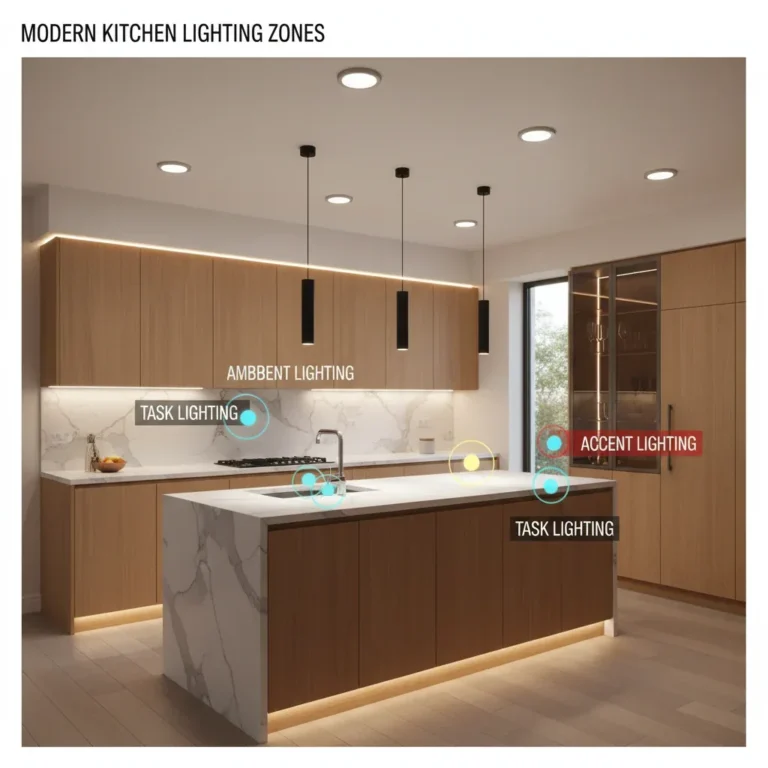
- Proper lighting: Dim lighting is a safety hazard and a productivity killer. Make sure your kitchen is well-lit, especially in prep and cooking areas.
- Noise reduction: Kitchens are loud, but that doesn’t mean they have to be deafening. Consider sound-absorbing materials for walls and ceilings, and invest in quiet equipment where possible.
And here’s where I’m going to get a little controversial: ergonomics isn’t just about physical comfort, it’s about mental comfort too. A kitchen that’s poorly designed can be a source of stress and frustration for your staff. And that’s not good for morale or productivity.
So how do you create a kitchen that’s mentally comfortable? A few ideas:
- Clear sightlines: Staff should be able to see what’s happening in the kitchen without having to crane their necks. This reduces stress and improves communication.
- Logical workflow: If your kitchen is a maze of backtracking and cross-traffic, your staff is going to be frustrated. Design a layout that makes sense.
- Personal space: No one likes feeling cramped. Make sure your staff has enough room to work comfortably.
- Easy access to tools: If your staff has to hunt for a spatula every time they need one, they’re going to be annoyed. Keep tools organized and within reach.
Maybe I should clarify: ergonomics isn’t just about preventing injuries, it’s about creating a kitchen that your staff actually wants to work in. And that’s good for everyone.
The Little Things That Make a Big Difference
Alright, let’s talk about the little things, the stuff that doesn’t get as much attention but can make a huge difference in your staff’s day-to-day experience. Because let’s be real: it’s often the small annoyances that drive people crazy.
First, knobs and handles. This might seem like a minor detail, but it’s not. If your equipment has tiny, hard-to-grip knobs, your staff is going to struggle with them, especially if they’re wearing gloves. Look for equipment with large, easy-to-grip handles and knobs.
Second, drawer and door slides. If your drawers and doors don’t slide smoothly, your staff is going to get frustrated. Look for soft-close slides that glide effortlessly.
Third, storage organization. This is a big one. If your storage shelves are a mess, your staff is going to waste time hunting for things. Invest in organizers, labels, and a logical system for storing things.
Fourth, trash and recycling. This is another one that often gets overlooked. If your trash cans are too small, too far away, or hard to access, your staff is going to be annoyed. Make sure you have enough trash and recycling bins, and that they’re in convenient locations.
Fifth, handwashing stations. This is a big one for hygiene and safety. Make sure you have enough handwashing stations, and that they’re in convenient locations. And for the love of all that is holy, make sure they have soap and paper towels.
And finally, break areas. This is another one that often gets overlooked. Your staff needs a place to take a break, eat a meal, and recharge. Make sure you have a comfortable break area with seating, a fridge, and a microwave.
Is this the best approach? I don’t know. But it’s a start. The key is to think about your kitchen from your staff’s perspective. What’s going to make their lives easier? What’s going to reduce their stress? What’s going to make them actually want to come to work?
Safety and Compliance: Because the Health Inspector Is Not Your Friend
How to Avoid the Dreaded “Red Tag” (And Worse)
Let’s talk about safety and compliance. Because if your kitchen isn’t up to code, you’re not just risking fines, you’re risking your business. And trust me, the health inspector is not the kind of person you want to piss off.
I remember walking into a kitchen that was so obviously out of compliance that I was surprised it was still open. The walk-in cooler was leaking, the grease trap was overflowing, and the fire suppression system looked like it hadn’t been inspected since the Reagan administration. The owner was sweating bullets, and for good reason, the health inspector was due any day. That’s when it hit me: safety and compliance aren’t optional, they’re the foundation of your business.
So how do you make sure your kitchen is up to code? Here are a few key things to keep in mind:
- Fire safety: This is a big one. Make sure you have a working fire suppression system, and that it’s inspected regularly. Also, make sure your staff knows how to use it.
- Ventilation: A good ventilation system is essential for removing smoke, grease, and odors. Make sure yours is up to code and well-maintained.
- Grease management: Grease traps and interceptors need to be cleaned and maintained regularly. If they’re not, you’re risking clogs, backups, and even fires.
- Food safety: This is another big one. Make sure you’re following all the food safety guidelines, from proper storage to proper cooking temperatures.
- Accessibility: Your kitchen needs to be accessible to people with disabilities. This includes things like wheelchair-accessible workstations and sinks.
- Electrical and gas safety: Make sure your electrical and gas systems are up to code and well-maintained. This includes things like proper grounding, proper ventilation, and regular inspections.
And here’s where I’m going to get a little preachy: safety and compliance aren’t just about avoiding fines, they’re about protecting your staff and your customers. A kitchen that’s not up to code is a kitchen that’s at risk of accidents, injuries, and even lawsuits. And that’s not good for anyone.
So how do you make sure your kitchen is safe and compliant? A few tips:
- Work with a professional: If you’re not sure about something, don’t guess. Work with a professional who knows the codes and regulations.
- Stay up to date: Codes and regulations change all the time. Make sure you’re staying up to date on the latest requirements.
- Train your staff: Safety and compliance aren’t just the responsibility of the owner or manager. Your staff needs to be trained on the rules and regulations too.
- Inspect regularly: Don’t wait for the health inspector to find problems. Inspect your kitchen regularly and fix any issues as soon as they arise.
Maybe I should clarify: safety and compliance aren’t just about following the rules, they’re about creating a culture of safety in your kitchen. And that starts with you.
The Most Common Safety Violations (And How to Avoid Them)
Alright, let’s get into the nitty-gritty of safety violations. Because if you know what the health inspector is looking for, you can avoid the dreaded “red tag.” And trust me, you don’t want one of those.
Here are some of the most common safety violations, and how to avoid them:
- Improper food storage: This is a big one. Make sure you’re storing food at the proper temperatures, and that raw and cooked foods are kept separate.
- Inadequate handwashing: This is another big one. Make sure you have enough handwashing stations, and that they’re stocked with soap and paper towels.
- Cross-contamination: This is a major no-no. Make sure you’re using separate cutting boards and utensils for raw and cooked foods, and that you’re cleaning and sanitizing surfaces regularly.
- Improper cooling: If you’re not cooling food properly, you’re risking bacterial growth. Make sure you’re using shallow pans and ice baths to cool food quickly.
- Inadequate ventilation: A good ventilation system is essential for removing smoke, grease, and odors. Make sure yours is up to code and well-maintained.
- Improper waste disposal: This is another big one. Make sure you’re disposing of waste properly, and that your grease traps and interceptors are cleaned and maintained regularly.
- Inadequate pest control: Pests are a major health hazard. Make sure you’re taking steps to prevent them, and that you’re working with a professional pest control company.
And here’s where I’m going to get a little controversial: some health inspectors are more lenient than others. That doesn’t mean you should cut corners, but it does mean you should be aware of the inspector’s reputation. If you know they’re a stickler for handwashing, make sure your handwashing stations are spotless. If they’re more concerned about food storage, make sure your walk-in cooler is organized and up to code.
Is this the best approach? I don’t know. But it’s a start. The key is to be proactive about safety and compliance. Don’t wait for the health inspector to find problems, inspect your kitchen regularly and fix any issues as soon as they arise.
Future-Proofing Your Kitchen: Because You Don’t Want to Do This Again in Two Years
How to Design a Kitchen That Won’t Be Obsolete Tomorrow
Let’s talk about future-proofing. Because the last thing you want is to spend a ton of money on a kitchen that’s obsolete in two years. And trust me, it happens more often than you’d think.
I remember walking into a kitchen that had just been renovated a year earlier. The owner was already talking about tearing it out and starting over. Why? Because the equipment was outdated, the layout didn’t work for their new menu, and they were already running out of space. That’s when it hit me: future-proofing isn’t just about buying the latest and greatest equipment, it’s about designing a kitchen that can adapt to change.
So how do you future-proof your kitchen? Here are a few key principles:
- Flexibility: Design a kitchen that can adapt to changes in your menu, your staff, and your business. This might mean leaving extra space for new equipment, or designing a layout that can be reconfigured easily.
- Scalability: Make sure your kitchen can handle growth. This might mean investing in equipment that can handle higher volumes, or designing a layout that can accommodate more staff.
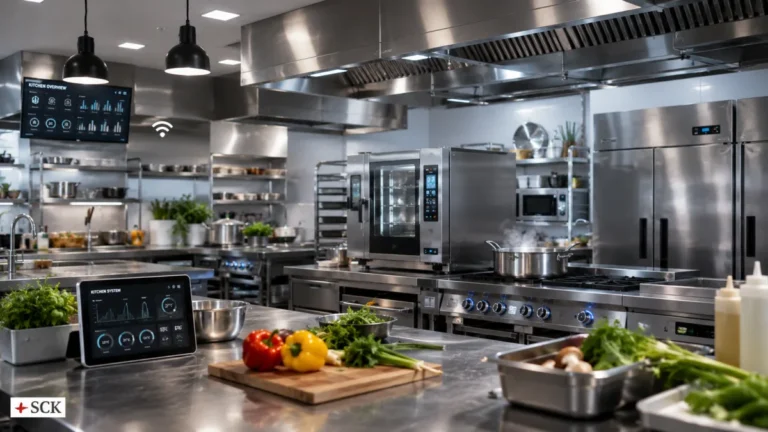
- Technology: Invest in technology that can grow with your business. This might mean smart equipment that can be updated with new software, or a digital kitchen management system that can scale with your needs.
- Sustainability: Design a kitchen that’s sustainable and energy-efficient. This might mean investing in energy-efficient equipment, or designing a layout that minimizes waste.
- Durability: Invest in equipment that’s built to last. This might mean spending a little more upfront, but it’ll save you money in the long run.
And here’s where I’m going to get a little preachy: future-proofing isn’t just about saving money, it’s about saving time and stress. A kitchen that’s not future-proof is a kitchen that’s going to cause you headaches down the road. And that’s not good for anyone.
So how do you future-proof your kitchen? A few tips:
- Work with a professional: If you’re not sure about something, don’t guess. Work with a professional who knows the industry and can help you make informed decisions.
- Think long-term: Don’t just think about what you need today, think about what you’ll need in five years. This might mean investing in equipment that’s a little more expensive, but it’ll save you money in the long run.
- Stay up to date: The restaurant industry is always changing. Make sure you’re staying up to date on the latest trends, technologies, and best practices.
- Be adaptable: Don’t get too attached to your current menu or workflow. Be willing to adapt and change as your business grows.
Maybe I should clarify: future-proofing isn’t about predicting the future, it’s about being prepared for it. And that starts with a flexible, scalable, and sustainable kitchen design.
The Role of Smart Technology in Modern Kitchens
Alright, let’s talk about smart technology. Because if you’re not at least considering it, you’re missing out. Smart technology can make your kitchen more efficient, more sustainable, and more profitable. But it’s not without its challenges.
First, the good news: smart technology can help you:
- Monitor equipment performance: Smart sensors can alert you to potential problems before they become major issues.
- Reduce energy consumption: Smart equipment can adjust its energy usage based on demand, saving you money on utilities.
- Improve food safety: Smart sensors can monitor temperatures and alert you to potential food safety issues.
- Streamline operations: Smart kitchen management systems can help you track inventory, manage orders, and even predict demand.
- Enhance the customer experience: Smart technology can help you personalize the dining experience, from digital menus to interactive ordering systems.
Now, the bad news: smart technology can be expensive, complex, and even a little creepy. Here are a few things to keep in mind:
- Cost: Smart technology can be expensive, both in terms of upfront costs and ongoing maintenance.
- Complexity: Smart technology can be complex, and it requires training and support to use effectively.
- Security: Smart technology can be vulnerable to hacking and other security threats.
- Reliability: Smart technology can be unreliable, and it’s not always clear who’s responsible when something goes wrong.
- Privacy: Smart technology can raise privacy concerns, especially when it comes to customer data.
So how do you decide if smart technology is right for your kitchen? A few questions to ask yourself:
- What problem are you trying to solve?
- How much are you willing to spend?
- How much training and support will your staff need?
- How will you handle security and privacy concerns?
- How will you handle maintenance and repairs?
I’m torn between telling you to embrace smart technology and telling you to proceed with caution. Ultimately, it’s about finding the right balance. You don’t want to be left behind, but you also don’t want to jump on every new trend that comes along.
Maybe I should clarify: smart technology isn’t a magic bullet. It’s a tool, and like any tool, it’s only as good as the person using it. So if you’re going to invest in smart technology, make sure you’re also investing in training, support, and maintenance.
Working with Suppliers: Because You Can’t Do This Alone
How to Find a Supplier Who Won’t Drive You Crazy
Let’s talk about suppliers. Because unless you’re building your kitchen from scratch (and let’s be real, who has the time or expertise for that?), you’re going to need to work with someone. And not all suppliers are created equal.
I remember working with a supplier who promised the moon and delivered a lump of coal. The equipment was late, the installation was a mess, and the customer service was non-existent. That’s when it hit me: choosing the right supplier is just as important as choosing the right equipment.
So how do you find a supplier who won’t drive you crazy? Here are a few things to look for:
- Experience: Look for a supplier with experience in your type of kitchen. If you’re running a pizzeria, you don’t want a supplier who specializes in fine-dining equipment.
- Reputation: Check online reviews, ask for references, and talk to other chefs. A good supplier should have a solid reputation in the industry.
- Customer service: This is a big one. Look for a supplier who’s responsive, helpful, and easy to work with. If they’re slow to respond to your inquiries, that’s a red flag.
- Warranty and support: Make sure the supplier offers a good warranty and ongoing support. You don’t want to be left high and dry if something goes wrong.
- Financing options: If you’re on a tight budget, look for a supplier who offers financing options. This can make a big difference in your cash flow.
- Installation services: Some suppliers offer installation services, which can save you time and hassle. If you’re not comfortable installing equipment yourself, this is a big plus.
And here’s where I’m going to plug Chef’s Deal a little. They’re a notable supplier in the industry, and they offer a few things that set them apart:
- Free kitchen design services: They’ll help you design your kitchen layout, so you don’t have to figure it out on your own.
- Professional installation services: They’ll install your equipment, so you don’t have to worry about it.
- Expert consultation and support: They’ll work with you to choose the right equipment for your needs, and they’ll be there to support you after the sale.
- Competitive pricing and financing options: They offer competitive pricing and financing options, so you can get the equipment you need without breaking the bank.
Is this the best supplier for everyone? I don’t know. But they’re definitely worth considering, especially if you’re looking for a one-stop shop for your kitchen needs.
How to Negotiate Like a Pro (Without Being a Jerk)
Alright, let’s talk about negotiation. Because if you’re not negotiating with your supplier, you’re leaving money on the table. And trust me, no one wants to do that.
First, a disclaimer: I’m not a negotiation expert. But I’ve been around the block a few times, and I’ve picked up a few tips along the way. So take this with a grain of salt, and adjust as needed.
Here’s how to negotiate like a pro:
- Do your homework: Before you start negotiating, do your research. Know what you want, what you’re willing to pay, and what the market rate is for the equipment you’re looking for.
- Be clear about your needs: Don’t be afraid to tell the supplier exactly what you’re looking for. The more specific you are, the easier it will be for them to give you a quote.
- Ask for discounts: This might seem obvious, but a lot of people are afraid to ask. Don’t be. The worst they can say is no.
- Bundle your purchases: If you’re buying multiple pieces of equipment, ask for a discount. Suppliers are often willing to give you a better deal if you’re buying in bulk.
- Ask about financing: If you’re on a tight budget, ask about financing options. Some suppliers offer 0% financing for a certain period, which can be a game-changer.
- Be willing to walk away: This is the hardest part, but it’s also the most important. If the supplier isn’t willing to work with you, be willing to walk away. There are plenty of other suppliers out there.
- Get everything in writing: Once you’ve agreed on a price, get everything in writing. This includes the price, the payment terms, the delivery date, and any warranties or guarantees.
And here’s where I’m going to get a little controversial: don’t be afraid to play hardball. If you’re a serious buyer, the supplier should be willing to work with you. If they’re not, that’s a red flag.
But, and this is a big but, don’t be a jerk. Negotiation is a two-way street, and you want to build a relationship with your supplier, not burn bridges. So be firm, but be fair. And remember: the goal is to get a good deal, not to screw the supplier over.
Maybe I should clarify: negotiation isn’t about winning, it’s about finding a solution that works for both parties. So be open to compromise, and be willing to walk away if the deal isn’t right for you.
Putting It All Together: A Step-by-Step Guide to Optimizing Your Kitchen Layout
Step 1: Assess Your Needs (And Be Honest About Them)
Alright, let’s get practical. How do you actually optimize your kitchen layout? It starts with a brutally honest assessment of your needs. And I mean brutally honest. No wishful thinking, no “we’ll figure it out later.” Just the facts.
Here’s what you need to ask yourself:
- What’s your menu?: What are you actually cooking? What equipment do you need to make it?
- What’s your volume?: How many covers are you doing per night? How much prep work is involved?
- What’s your space?: How much square footage do you have to work with? What are the constraints (e.g., plumbing, electrical, ventilation)?
- What’s your staff?: How many people will be working in the kitchen? What are their roles?
- What’s your budget?: How much can you afford to spend? What’s your timeline?
And here’s where I’m going to get a little personal: don’t skip this step. I’ve seen too many kitchens fail because the owner didn’t take the time to assess their needs properly. They either overestimated what they could do, or they underestimated the challenges. Either way, it’s a recipe for disaster.
So take your time. Talk to your staff. Talk to your suppliers. Do your research. And be honest with yourself. If you’re not sure about something, ask for help. There’s no shame in admitting that you don’t have all the answers.
Step 2: Sketch It Out (And Then Sketch It Again)
Alright, now that you’ve assessed your needs, it’s time to start sketching. And I mean sketching-this doesn’t have to be a work of art. Grab a piece of paper, a pencil, and start drawing.
Here’s how to do it:
- Start with the big stuff: Draw in your major pieces of equipment (range, oven, fridge, etc.).
- Add the aisles: Make sure you have enough room for traffic flow. Remember the guidelines from earlier: 4-5 feet for main aisles, 3-4 feet for work aisles, 2.5-3 feet for equipment aisles.
- Add the support stuff: Draw in your prep tables, storage shelves, and smallwares.
- Add the “invisible” stuff: Don’t forget about things like handwashing stations, trash cans, and fire extinguishers.
- Test it out: Walk through the layout in your mind. Can you reach everything you need? Can you move around comfortably? Are there any bottlenecks?
- Revise, revise, revise: Don’t be afraid to start over. The first sketch is rarely the best one.
And here’s where I’m going to get a little old-school: don’t rely on software for this. Sure, there are plenty of kitchen design programs out there, and they can be helpful. But there’s something about sketching by hand that forces you to think critically about the layout. It’s slower, it’s messier, but it’s also more intuitive.
That said, if you’re not comfortable sketching by hand, there are some great tools out there. Chef’s Deal offers free kitchen design services, which can be a huge help if you’re feeling overwhelmed. They’ll work with you to create a layout that fits your needs, and they’ll even provide 3D renderings so you can visualize the space.
Step 3: Get Feedback (And Then Ignore Some of It)
Alright, now that you have a sketch, it’s time to get feedback. And I mean feedback-not just from your friends and family, but from the people who will actually be using the kitchen every day.
Here’s who you should talk to:
- Your staff: They’re the ones who will be using the kitchen, so their input is invaluable. Ask them what works, what doesn’t, and what they would change.
- Your suppliers: They’ve seen a lot of kitchens, and they know what works and what doesn’t. Ask them for their input.
- Other chefs: If you know other chefs in the industry, ask them for their feedback. They might have insights you haven’t considered.
- Your customers: Okay, this one might sound weird, but hear me out. If you’re designing an open kitchen, your customers will be able to see the action. Ask them what they think of the layout. Do they like the flow? Does it look efficient?
And here’s where I’m going to get a little controversial: don’t take all the feedback to heart. Some of it will be helpful, some of it will be noise. It’s up to you to filter out the good from the bad.
For example, your line cook might say, “I want the fryer closer to the grill.” That’s helpful. Your sous chef might say, “I want a bigger walk-in cooler.” That’s also helpful. But your dishwasher might say, “I want a TV in the break room.” That’s noise. Use your judgment.
Step 4: Finalize the Layout (And Then Second-Guess Yourself)
Alright, now that you’ve gotten feedback, it’s time to finalize the layout. This is where things get real. You’re making decisions that will affect your business for years to come, so it’s okay to feel a little nervous.
Here’s how to do it:
- Incorporate the feedback: Take the feedback you’ve received and incorporate it into your layout. This might mean moving things around, adding or removing equipment, or tweaking the flow.
- Double-check the measurements: Make sure everything fits. This is where a 3D rendering can be helpful. If you’re working with Chef’s Deal, they can provide one for you.
- Think about the details: Don’t forget about the little things, like where to put the fire extinguisher, where to stage prepped ingredients, and where to put the trash cans.
- Get sign-off from your staff: Before you finalize the layout, get sign-off from your staff. Make sure they’re on board with the changes.
- Second-guess yourself: This is the hardest part, but it’s also the most important. Take a step back and ask yourself: Does this layout make sense? Is it efficient? Is it safe? Is it future-proof? If the answer to any of these questions is no, go back to the drawing board.
And here’s where I’m going to get a little philosophical: designing a kitchen is like writing a story. Every piece of equipment, every aisle, every workstation is a plot point. If the story doesn’t make sense, if the hero (your chef) has to backtrack or take unnecessary detours, the audience (your staff) will check out. So make sure your story is compelling, logical, and efficient.
Conclusion: The Kitchen of Your Dreams (And How to Get There)
Alright, let’s wrap this up. Because if you’ve made it this far, you’re either really committed to optimizing your kitchen layout, or you’re really bored. Either way, I appreciate you sticking with me.
Here’s the thing about kitchen design: it’s not rocket science, but it’s also not easy. It’s a mix of art and science, intuition and data, creativity and practicality. And the best kitchens, the ones that hum like well-oiled machines, are the ones that get this balance right.
So where do you go from here? A few actionable steps:
- Assess your needs: Be brutally honest about what you need, what you can afford, and what your space can handle.
- Sketch it out: Start with a rough sketch, and don’t be afraid to revise it. If you’re feeling overwhelmed, consider working with a supplier like Chef’s Deal, who offers free kitchen design services.
- Get feedback: Talk to your staff, your suppliers, and other chefs. Filter out the noise and focus on the feedback that matters.
- Finalize the layout: Incorporate the feedback, double-check the measurements, and think about the details. And don’t be afraid to second-guess yourself.
- Future-proof it: Design a kitchen that can adapt to change. Invest in flexible, scalable, and sustainable equipment.
- Work with a supplier: Choose a supplier who’s experienced, reputable, and easy to work with. And don’t be afraid to negotiate.
And here’s where I’m going to leave you with a challenge: don’t settle for a kitchen that’s just “good enough.” Push yourself to create a space that’s efficient, safe, and inspiring. Because at the end of the day, your kitchen is more than just a collection of equipment, it’s the heart of your business. And it deserves to be treated as such.
So go forth, design with intention, and may your kitchen be forever free of bottlenecks, backtracking, and back pain. And if you get stuck, remember: there’s no shame in asking for help. Whether it’s from your staff, your suppliers, or even a random blogger in Nashville, we’re all in this together.
FAQ
Q: What’s the most common mistake people make when designing a kitchen layout?
A: The most common mistake is prioritizing aesthetics over functionality. It’s easy to get seduced by sleek equipment or a “wow” factor, but if the layout doesn’t make sense for your workflow, you’re setting yourself up for failure. Always start with the basics: efficiency, safety, and ergonomics. The pretty stuff comes later.
Q: How much space should I allocate for each workstation?
A: It depends on your menu and volume, but here’s a rough guideline: allocate at least 4-5 feet of width for main aisles, 3-4 feet for work aisles, and 2.5-3 feet for equipment aisles. For workstations, aim for at least 3 feet of counter space per person, and make sure there’s enough room for staff to move around comfortably. If you’re unsure, suppliers like Chef’s Deal offer free kitchen design services that can help you maximize your space.
Q: Is it worth investing in smart kitchen technology?
A: It depends. Smart technology can make your kitchen more efficient, more sustainable, and more profitable, but it’s not without its challenges. It can be expensive, complex, and even a little creepy. Before you invest, ask yourself: What problem are you trying to solve? How much are you willing to spend? And how much training and support will your staff need? If you’re running a high-volume kitchen, smart technology might be worth the investment. If you’re running a small café, you might be better off sticking with the basics.
Q: How do I choose the right supplier for my kitchen equipment?
A: Look for a supplier with experience in your type of kitchen, a solid reputation, and good customer service. Ask for references, check online reviews, and talk to other chefs. And don’t be afraid to negotiate, suppliers are often willing to work with you on pricing, financing, and installation. Companies like Chef’s Deal stand out because they offer comprehensive solutions, including free kitchen design services, professional installation, and ongoing support. But ultimately, the right supplier is the one who understands your needs and is willing to work with you to meet them.
@article{the-ultimate-modern-kitchen-equipment-layout-optimization-guide-work-smarter-not-harder,
    title   = {The Ultimate Modern Kitchen Equipment Layout Optimization Guide: Work Smarter, Not Harder},
    author  = {Chef's icon},
    year    = {2026},
    journal = {Chef's Icon},
    url     = {https://chefsicon.com/modern-kitchen-equipment-layout-optimization-guide/}
}