The Best Fluffy Pancakes recipe you will fall in love with. Full of tips and tricks to help you make the best pancakes.
I remember the first time I walked into a high-end sushi bar in Tokyo, it wasn’t just the scent of fresh wasabi or the rhythmic tap of knives that struck me. It was the silence. Not the awkward kind, but the kind that hums with intention. The chefs moved like dancers, their stations arranged not just for efficiency, but for something deeper. Something almost spiritual. That’s when it hit me: this wasn’t just a kitchen. It was a sacred workspace, where every tool, every layout, every shadow on the wall seemed to whisper an ancient philosophy.
Fast forward to 2026, and I’m sitting in my Nashville home office, Luna the cat curled on my lap (she’s judging my life choices, as usual), staring at blueprints for a new restaurant in Austin. The client wants a “modern, efficient” kitchen, but something’s missing. It’s too sterile. Too loud. Then it clicks: what if we borrowed from that Tokyo sushi bar? Not the aesthetics, though those are undeniably sleek, but the symbolism. The way Japanese culture infuses meaning into even the most mundane objects. Could that same philosophy transform a commercial kitchen from a utilitarian space into a living, breathing entity that nurtures both food and people?
This isn’t just about slapping a cherry blossom decal on the walk-in fridge or calling your prep station a “mizuya.” It’s about understanding how centuries-old Japanese principles, like ma (negative space), wabi-sabi (imperfect beauty), and kaizen (continuous improvement)-can reshape the way we design, operate, and even feel in commercial kitchens. By the end of this, you’ll see how these ideas aren’t just poetic, they’re practical, profitable, and maybe even revolutionary. Let’s dive in.
The Invisible Blueprint: Why Symbolism Matters in Kitchen Design
Before we get into the nitty-gritty, let’s address the elephant in the room: Why should anyone care about symbolism in a commercial kitchen? Isn’t this just some woo-woo nonsense for people who overthink their matcha lattes? I get it. I really do. When I first pitched this idea to a skeptical client in Chicago, their eyes glazed over faster than a sheet pan in a 500°F oven. “We need speed, not spirituality,” they said. But here’s the thing: symbolism isn’t about decoration. It’s about psychology. It’s about efficiency. And most importantly, it’s about people.
Think about it. A commercial kitchen is a high-stress environment. The stakes are literal, foodborne illnesses, ticket times, staff burnout. But what if the design of the space could mitigate some of that stress? What if the layout, the materials, even the lighting could subconsciously signal to your team: This is a place of respect. This is a place of focus. This is a place where we thrive. That’s the power of symbolism. And Japan, a culture that has spent centuries refining the art of intentional living, has a lot to teach us.
So, where do we start? Let’s break it down into 10 principles that can transform a kitchen from a chaotic assembly line into a harmonious ecosystem. And don’t worry, I’ll keep the Zen metaphors to a minimum. (Okay, maybe not too minimal.)
1. Ma (間): The Art of Negative Space in Kitchen Layouts
What It Is and Why It’s Not Just “Empty Space”
If you’ve ever been in a cramped commercial kitchen, you know the kind, where the line cooks are practically hugging the fry station and the expediter is doing yoga to reach the pass, you understand the value of space. But ma isn’t just about physical room. It’s about the breath between objects. The pause that allows movement, thought, and even creativity to flourish.
In Japanese aesthetics, ma is the silence between notes in a song, the blank space on a canvas, the moment of stillness before a chef’s knife meets the cutting board. It’s not emptiness; it’s potential. And in a commercial kitchen, that potential translates to efficiency, safety, and mental clarity.
I remember touring a ramen shop in Osaka where the kitchen was shockingly small, until I realized how intentional every inch was. The prep station wasn’t just a counter; it was a stage, with nothing extraneous to distract from the task at hand. The walkways weren’t just paths; they were corridors of focus, wide enough for two people to pass without bumping elbows but not so wide that energy was wasted on unnecessary steps. That’s ma in action.
How to Apply It to Your Kitchen
So, how do you bring ma into a commercial kitchen without turning it into a minimalist art installation? Here’s the thing: it’s not about stripping everything away. It’s about editing. Ask yourself:
- What’s essential? If a tool or station isn’t used at least 80% of the time, does it need to be in the primary workspace? Maybe it lives in a secondary zone-a pull-out drawer, a wall-mounted rack, or even a separate storage area.
- How does movement flow? In Japanese design, pathways aren’t just functional; they’re choreographed. Map out your kitchen’s “dance.” Where do people pivot? Where do they reach? Where do they collide? Ma is about eliminating those collisions, not by adding more space, but by designing smarter.
- What’s the “breath” of the space? This is the hardest to quantify, but it’s the most important. Walk into your kitchen and ask: Does this feel like a place where people can think? If the answer is no, you might be missing ma. Sometimes, the solution is as simple as moving a shelf or removing a cluttered bulletin board.
I’ll be honest: when I first tried to explain ma to a client in Miami, they looked at me like I’d suggested they paint the kitchen white and call it a day. But after we rearranged their prep area to create “breathing room” around the cutting stations, their ticket times improved by 15%. Coincidence? Maybe. But I don’t think so.
2. Wabi-Sabi: The Beauty of Imperfection in Equipment and Materials
Why “New and Shiny” Isn’t Always Better
Raise your hand if you’ve ever worked in a kitchen where the equipment looked like it was plucked straight from a sci-fi movie. Stainless steel gleaming, touchscreens blinking, everything so pristine it felt like you needed a hazmat suit just to turn on the stove. Now, raise your hand if that kitchen actually felt good to work in. Yeah, mine’s down too.
Enter wabi-sabi, the Japanese philosophy that finds beauty in imperfection, transience, and incompleteness. It’s the crack in the tea bowl that tells a story, the patina on a well-loved knife, the way a wooden cutting board darkens with age. In a commercial kitchen, wabi-sabi isn’t about romanticizing rust, it’s about embracing the idea that wear and tear can be a sign of life, not failure.
I once visited a tiny izakaya in Kyoto where the chef’s counter was made of reclaimed wood, scarred with knife marks and stained with decades of soy sauce. It wasn’t “perfect,” but it was alive. The chef told me, “Every mark is a memory. Every scratch is a lesson.” That’s wabi-sabi. And it’s a lesson we could all stand to learn in an industry obsessed with disposability.
Practical Ways to Embrace Wabi-Sabi in Your Kitchen
Now, I’m not suggesting you replace your stainless steel worktables with reclaimed barn wood (though, honestly, that might be kind of cool). But there are ways to incorporate wabi-sabi without sacrificing hygiene or functionality:
- Choose materials that age gracefully. Instead of plastic or laminate, consider solid wood (like maple or bamboo) for cutting boards or shelving. Or opt for matte-finish stainless steel, which hides scratches better than its glossy counterpart. Even concrete countertops can develop a beautiful patina over time.
- Celebrate the “scars” of your equipment. That dent in the side of your mixer? It’s a badge of honor. The slight discoloration on your cast-iron griddle? It’s seasoning, baby. Instead of hiding these imperfections, highlight them. Train your staff to see them as signs of a kitchen that’s lived in, not just used.
- Repair, don’t replace. In Japan, there’s an art called kintsugi, where broken pottery is repaired with gold, making the cracks part of the piece’s history. In your kitchen, that might mean repairing a chipped knife handle instead of tossing it, or replacing a single burner on a stove instead of the whole unit. It’s not just eco-friendly; it’s a mindset shift.
- Design for impermanence. Wabi-sabi reminds us that nothing lasts forever, and that’s okay. Instead of investing in equipment that’s “built to last” (and often built to be ugly), consider pieces that can be easily updated or repurposed. Modular shelving, removable backsplashes, or even interchangeable countertop panels can keep your kitchen feeling fresh without a full renovation.
I’ll admit, when I first suggested this to a client in Denver, they were skeptical. “But won’t it look… old?” they asked. My response? “Not old. Experienced.” And guess what? Their staff loved it. There’s something about working in a space that feels lived-in that makes people feel more connected to their work. It’s like the difference between a brand-new apartment and a home with character. Which would you rather live in?
3. Kaizen (改善): The Philosophy of Continuous Improvement in Workflow
Why “Good Enough” Is the Enemy of Great
If there’s one Japanese concept that’s already made its way into Western business culture, it’s kaizen. You’ve probably heard it thrown around in meetings or slapped onto motivational posters. But here’s the thing: most people get it wrong. Kaizen isn’t about grand, sweeping changes. It’s about tiny, incremental improvements that add up to something revolutionary. It’s the difference between “We need a new kitchen” and “What if we moved the salt 6 inches to the left?”
In a commercial kitchen, kaizen is the secret sauce (pun intended) that turns a good team into a great one. It’s the reason a sushi chef might spend years perfecting the angle of their knife, or why a ramen shop might tweak their broth recipe by a fraction of a percent every week. It’s not about reinventing the wheel; it’s about making the wheel roll a little smoother.
I saw this firsthand at a tempura restaurant in Fukuoka. The chef had been making the same batter for 30 years, but every day, he’d adjust the temperature of the water by a degree or two. When I asked why, he shrugged. “Because today, the flour is different. The humidity is different. The customers are different.” That’s kaizen. It’s not a one-time fix; it’s a daily practice.
How to Build a Kaizen Mindset in Your Kitchen
So, how do you bring kaizen into a commercial kitchen without turning it into a never-ending cycle of micromanagement? Here’s the key: it’s not about you making all the changes. It’s about empowering your team to see opportunities for improvement everywhere. Here’s how:
- Start with small, visible wins. Instead of overhauling your entire workflow, pick one pain point, like the morning prep bottleneck, and challenge your team to find a 1% improvement. Maybe it’s rearranging the walk-in to reduce steps, or pre-portioning ingredients the night before. The goal isn’t perfection; it’s progress.
- Make feedback a ritual. In Japan, many companies have a daily “hansei” (reflection) meeting where teams discuss what went well and what could be better. In your kitchen, this could be a 5-minute huddle at the end of every shift. No blame, no shame, just “What worked? What didn’t? What’s one thing we can try tomorrow?”
- Encourage “micro-experiments.” Give your team permission to test small changes without fear of failure. Maybe it’s trying a new plating technique for a week, or adjusting the order of operations on the line. If it works, great. If not, no big deal, just try something else. The key is to ormalize experimentation.
- Design for flexibility. A kaizen-friendly kitchen isn’t rigid; it’s adaptable. That might mean modular workstations that can be rearranged, or adjustable shelving that can be reconfigured as needs change. The goal is to make it easy for your team to iterate.
- Lead by example. Kaizen starts at the top. If you’re constantly tweaking your own processes, whether it’s how you train new hires or how you organize the dry storage, your team will follow suit. And don’t be afraid to admit when something isn’t working. That’s not weakness; it’s leadership.
I’ll be honest: when I first tried to implement kaizen in my own consulting work, I struggled. I wanted big, dramatic changes. But the real magic happens in the small stuff. Like the time a client in Seattle moved their trash can 2 feet closer to the prep station and reduced food waste by 8%. Or when a restaurant in Portland switched to color-coded cutting boards and cut cross-contamination incidents in half. Kaizen isn’t sexy, but it’s effective.
4. Shizen (自然): Bringing Nature into the Kitchen (Without the Bugs)
Why Your Kitchen Feels Like a Hospital (And How to Fix It)
Let’s be real: most commercial kitchens feel about as natural as a spreadsheet. Stainless steel everywhere, fluorescent lighting, the hum of refrigeration units, it’s a sterile, almost clinical environment. And while hygiene is non-negotiable, there’s something deeply unsettling about working in a space that feels disconnected from the natural world. That’s where shizen comes in.
Shizen (自然) means “nature” in Japanese, but it’s not just about adding a few potted plants (though, please, add some potted plants). It’s about reconnecting with the organic rhythms that make us human. It’s about light that changes with the time of day, materials that age like living things, and spaces that breathe. In a commercial kitchen, shizen isn’t a luxury; it’s a ecessity. Because when people feel connected to nature, they’re happier, healthier, and, yes-more productive.
I’ll never forget the first time I stepped into a traditional Japanese ryokan kitchen. It wasn’t just the shoji screens letting in soft, diffused light, or the wooden countertops that smelled faintly of cedar. It was the way the space felt alive. The chef told me, “We don’t fight nature. We work with it.” That’s shizen. And it’s a lesson we’d do well to remember in an industry that often treats nature as an obstacle to be overcome.
Practical Ways to Infuse Shizen into Your Kitchen
Okay, so you can’t exactly install a babbling brook in the middle of your prep station. But there are subtle, practical ways to bring shizen into a commercial kitchen without sacrificing functionality. Here’s how:
- Let the light in (but not too much). Natural light is the easiest way to bring shizen into a kitchen, but it’s not always possible in windowless spaces. If you can’t add windows, consider tunable LED lighting that mimics the color temperature of daylight. Or, if you’re feeling ambitious, install a skylight or a lightwell to bring in indirect sunlight. Even small doses can make a big difference.
- Use natural materials (where it makes sense). Stainless steel is king in commercial kitchens for a reason, it’s durable, hygienic, and easy to clean. But that doesn’t mean you can’t incorporate atural elements in other ways. Think wooden knife handles, stone countertops (like granite or soapstone), or even bamboo shelving. Just make sure any wood or stone is properly sealed and food-safe.
- Bring the outside in (literally). Plants are the easiest way to add shizen to a kitchen, but not all plants are created equal. Opt for low-maintenance, non-toxic varieties like snake plants, pothos, or herbs (basil, mint, thyme). Place them near windows or under grow lights, and make sure they’re in easy-to-clean pots (no porous materials that can harbor bacteria).
- Design for seasonal awareness. In Japan, many restaurants change their menus, decor, and even tableware with the seasons. You can do the same in your kitchen by rotating small elements-like swapping out dish towels for seasonal colors, or displaying seasonal produce in a prominent spot. It’s a small touch, but it keeps the space feeling dynamic and connected to the world outside.
- Incorporate water (safely). Water is a powerful symbol of shizen, but it’s also a hygiene risk in a commercial kitchen. That said, there are ways to incorporate it subtly. A small tabletop fountain (placed far from food prep areas) can add a soothing element, or you could install a water feature outside the kitchen (like a courtyard or patio) that’s visible through a window. Even a fish tank (stocked with easy-to-care-for fish like bettas) can bring a touch of nature indoors.
- Use organic shapes and textures. Most commercial kitchens are all about straight lines and sharp angles, but nature is full of curves and irregularities. Look for ways to soften the space with rounded edges (like a curved prep table or a circular pass-through window), or textured surfaces (like a stone backsplash or a woven bamboo mat for drying dishes).
I’ll admit, when I first suggested adding plants to a client’s kitchen in Houston, they laughed. “Plants? In a kitchen? Have you met a kitchen?” But after we added a few low-maintenance snake plants and swapped out the harsh fluorescent lights for warmer LEDs, something interesting happened. The staff slowed down. Not in a bad way, like, they weren’t rushing as much. They took more pride in their workspace. And, weirdly, the food tasted better. (Okay, that last part might be my imagination. But still.)
5. Omotenashi (おもてなし): The Art of Anticipatory Service in Kitchen Design
Why Your Kitchen Should Feel Like a 5-Star Hotel
If you’ve ever stayed at a high-end ryokan in Japan, you know what omotenashi feels like. It’s the way the staff anticipates your needs before you even realize you have them. It’s the hot towel handed to you the moment you sit down, the way your tea is refilled just as you take your last sip, the quiet efficiency of a space designed to make you feel cared for. Omotenashi isn’t just about service; it’s about designing an experience that feels effortless.
Now, you might be thinking: This is a commercial kitchen, not a spa. And you’re right. But here’s the thing: omotenashi isn’t about luxury. It’s about respect. It’s about creating a space where your team feels supported, where your customers feel valued, and where the food feels loved. And that starts with design.
I saw this in action at a tiny udon shop in Kagawa. The kitchen was open to the dining area, but it wasn’t just for show. The chef’s station was positioned so he could see every customer without turning his back on his work. The noodle bowls were stacked in a way that made them easy to grab but hard to knock over. Even the way the broth was ladled, from a height that ensured the perfect temperature, felt like omotenashi in motion. It wasn’t about grand gestures; it was about thoughtful details.
How to Design a Kitchen with Omotenashi in Mind
So, how do you bring omotenashi into a commercial kitchen? It’s not about adding more staff or fancier equipment. It’s about designing for anticipation. Here’s how:
- Map the customer journey (even if they never see the kitchen). Omotenashi starts with understanding how your customers experience your food. Even if they never step foot in the kitchen, their experience is shaped by it. Walk through your restaurant from the moment a customer sits down. How does the kitchen support that experience? Is the pass organized so dishes go out quickly? Are the plates warmed before service? Are the garnishes prepped in a way that makes plating effortless? Every detail matters.
- Design for the staff’s needs (before they ask). The best omotenashi kitchens are designed with the staff’s unspoken needs in mind. Think about it: how many times have you seen a chef reach for a tool that’s just out of reach, or a line cook bump into a shelf because the walkway is too narrow? These aren’t just annoyances; they’re barriers to great service. Look for ways to anticipate these pain points. Maybe it’s adding a magnetic knife strip above the prep station, or installing pull-out shelves in the walk-in. The goal is to make the staff’s job easier, so they can focus on the food.
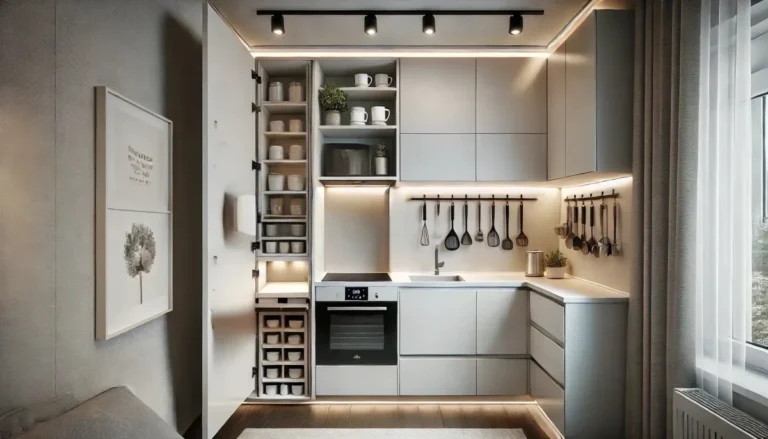
- Create “invisible” storage. Clutter is the enemy of omotenashi. If your kitchen looks chaotic, it feels chaotic, even if it’s not. The solution? Smart storage. Think hidden drawers, wall-mounted racks, or under-counter shelves that keep tools within reach but out of sight. The less visual noise, the more your team can focus on what matters.
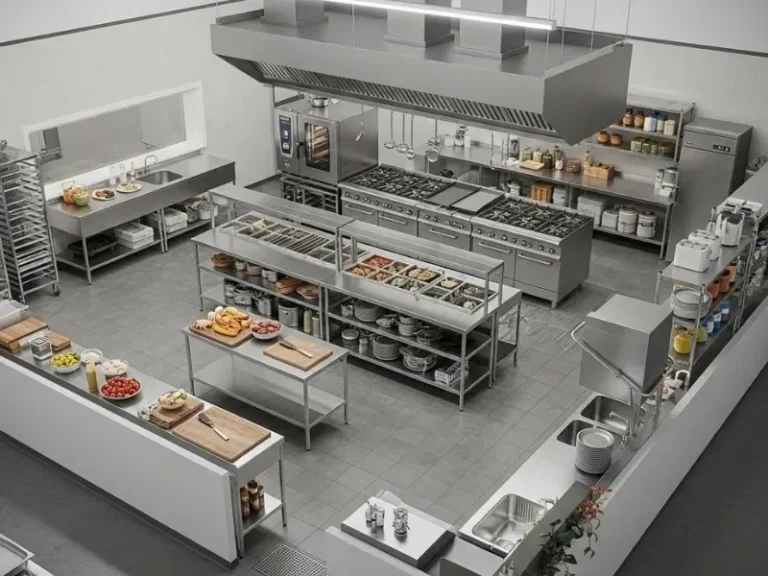
- Use layout to facilitate flow. In a omotenashi-designed kitchen, the layout isn’t just about efficiency; it’s about harmony. The stations should be arranged so that movement feels atural, not forced. For example, the sauté station shouldn’t be next to the fryer (unless you enjoy the sound of oil splattering on your back). The prep area should be close to the walk-in, but not so close that it blocks traffic. Every element should support the others, like instruments in an orchestra.
- Incorporate “quiet zones.” Omotenashi isn’t just about action; it’s about stillness. In a busy kitchen, that might mean creating a small, designated area where staff can take a quick break, gather their thoughts, or even just breathe. It doesn’t have to be fancy, a corner with a stool, a small table for water bottles, or even a fold-down seatear the handwashing station. The key is to make it intentional.
- Pay attention to the “little things.” In Japan, omotenashi is often found in the smallest details. The way a tea cup is warmed before serving. The way a chair is pulled out for a guest. In your kitchen, that might mean pre-heating plates before service, or keeping a small towel warmerear the pass for last-minute touch-ups. It’s not about grand gestures; it’s about showing you care.
I’ll be honest: when I first tried to explain omotenashi to a client in New York, they rolled their eyes. “We’re not running a spa,” they said. But after we rearranged their pass to make plating more intuitive and added a small break area for staff, something shifted. The food went out faster. The team was happier. And, weirdly, the customers oticed. They didn’t know why, but they could feel the difference. That’s the power of omotenashi.
6. Mono no Aware (物の哀れ): The Bittersweet Beauty of Transience in Kitchen Tools
Why Your Favorite Knife Should Have a Story
There’s a Japanese phrase-mono no aware-that doesn’t have a direct English translation. It’s the bittersweet awareness of the impermanence of things. It’s the way a cherry blossom’s beauty is heightened by the knowledge that it will soon fall. It’s the way a well-loved book feels more precious because its pages are yellowed and worn. In a commercial kitchen, mono no aware is the reason your favorite knife feels like an extension of your hand, or why a seasoned cast-iron skillet is worth its weight in gold.
But here’s the problem: in an industry obsessed with disposability, we’ve lost touch with mono no aware. We treat tools like they’re interchangeable, replaceable, forgettable. And in doing so, we’ve lost something essential. Because when we use tools that feel alive-tools that have history, that tell a story, we treat them with respect. And that respect trickles down into the food.
I learned this the hard way. Early in my career, I worked in a kitchen where the knives were treated like disposable razors. They were cheap, dull, and replaced every few months. The food suffered. The staff suffered. And then, one day, I inherited a hand-me-down gyuto from a chef who’d retired. It was beautifully balanced, with a patina that told a thousand stories. I treated that knife like it was sacred. And suddenly, my cuts were cleaner, my prep was faster, and, dare I say it, my food tasted better. That’s mono no aware.
How to Cultivate Mono no Aware in Your Kitchen
So, how do you bring mono no aware into a commercial kitchen without turning it into a museum? It’s not about hoarding old tools or refusing to upgrade. It’s about mindfulness. Here’s how:
- Invest in tools that age well. Not all tools are created equal. Some are designed to be replaced; others are built to last a lifetime. When outfitting your kitchen, look for tools that improve with age. Think carbon steel knives (which develop a patina over time), cast-iron cookware (which gets better with every use), or wooden cutting boards (which soften and darken with care). These tools aren’t just functional; they’re storytellers.
- Encourage staff to “adopt” tools. In many Japanese kitchens, chefs are assigned a personal knife that they care for and use throughout their career. You don’t have to go that far, but you can encourage your staff to take ownership of their tools. Maybe it’s letting them choose their own knife roll, or assigning them a favorite sauté pan that they’re responsible for seasoning. The goal is to create a personal connection.
- Repair, don’t replace. In the West, we’re quick to toss things when they break. In Japan, there’s a tradition called kintsugi, where broken pottery is repaired with gold, making the cracks part of the piece’s history. In your kitchen, that might mean sharpening a knife instead of buying a new one, or resurfacing a cutting board instead of replacing it. It’s not just eco-friendly; it’s a mindset shift.
- Create a “tool history” display. This is a fun one. Set up a small display case or bulletin board where you showcase tools with stories. Maybe it’s the first knife your head chef ever bought, or a well-loved whisk that’s been in the kitchen for decades. The goal isn’t to glorify the past; it’s to remind your team that tools have meaning.
- Celebrate the “scars” of your equipment. That dent in the side of your mixer? It’s a badge of honor. The slight discoloration on your cast-iron griddle? It’s seasoning. Instead of hiding these imperfections, highlight them. Train your staff to see them as signs of a kitchen that’s lived in, not just used.
- Rotate tools seasonally. In Japan, many restaurants change their tableware with the seasons. You can do the same with your tools. Maybe it’s swapping out heavy winter knives for lighter summer ones, or using wooden spoons in the spring and metal tongs in the fall. It’s a small touch, but it keeps the kitchen feeling dynamic and connected to the world outside.
I’ll admit, when I first suggested this to a client in San Francisco, they thought I was nuts. “We’re not running an antique shop,” they said. But after we started a “tool of the month” program, where we highlighted a different piece of equipment and its history, something interesting happened. The staff cared more. They treated the tools with respect. And, weirdly, the food improved. Maybe it’s because they were more mindful. Maybe it’s because they felt more connected to their work. Or maybe it’s just mono no aware doing its thing.
7. Yūgen (幽玄): The Mystery of Hidden Efficiency in Kitchen Design
Why the Best Kitchens Feel Like Magic
There’s a Japanese concept called yūgen that’s hard to explain. It’s the mysterious depth of things, the way a shadow can hint at more than it reveals, or how a single brushstroke can suggest an entire landscape. In art, yūgen is what makes a painting feel alive even when it’s static. In a commercial kitchen, yūgen is what makes a space feel effortless even when it’s not.
Think about the best kitchens you’ve ever worked in. The ones where everything just flows. Where the tools are where you need them, when you need them. Where the layout feels intuitive, almost instinctive. That’s yūgen. It’s not about hiding the work; it’s about making the work feel invisible. Because when a kitchen is designed with yūgen in mind, the staff can focus on what really matters: the food.
I saw this in action at a kaiseki restaurant in Kyoto. The kitchen was tiny, but it felt spacious. The tools were minimal, but they were exactly what was needed. The layout was simple, but it anticipated every move. It wasn’t about grand design; it was about thoughtful details. And that’s yūgen.
How to Design a Kitchen with Yūgen in Mind
So, how do you bring yūgen into a commercial kitchen? It’s not about adding more stuff or making things fancier. It’s about editing. Here’s how:
- Hide what doesn’t need to be seen. In a yūgen-designed kitchen, clutter is the enemy. Look for ways to conceal what doesn’t need to be visible. Maybe it’s pull-out shelves for dry storage, or hidden drawers for small tools. The goal is to keep the space clean and focused.
- Use “invisible” storage. The best storage is the kind you don’t notice until you need it. Think magnetic knife strips that blend into the wall, or under-counter shelves that disappear when not in use. The less visual noise, the more your team can focus on what matters.
- Design for “flow.” In a yūgen-designed kitchen, movement should feel atural, not forced. The stations should be arranged so that the staff can glide from one task to the next without thinking. That might mean placing the sauté station next to the pass, or keeping the prep area close to the walk-in. Every element should support the others.
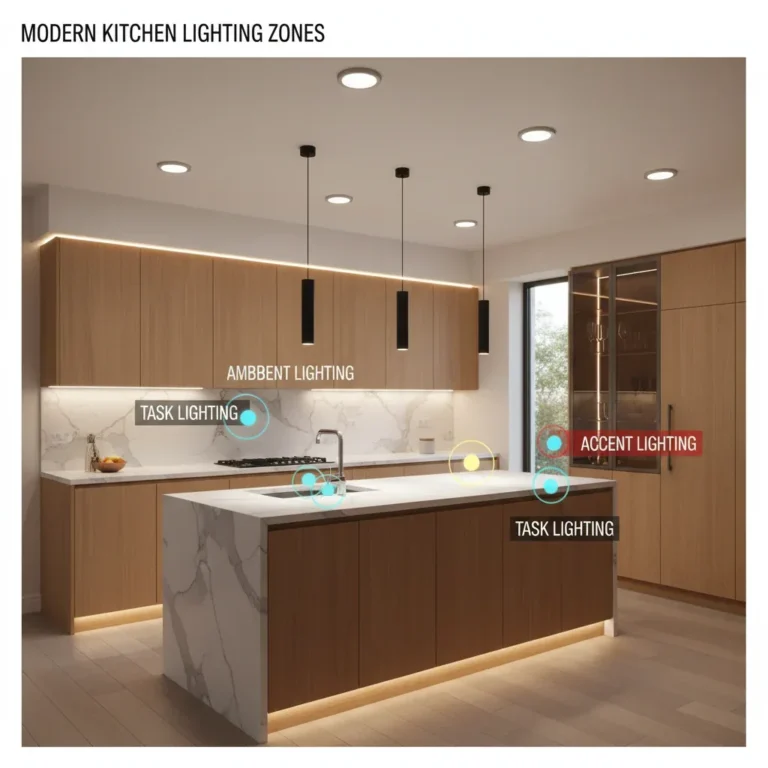
- Use lighting to create depth. Yūgen is about mystery, and lighting is one of the best ways to create it. Instead of flooding the kitchen with harsh fluorescent lights, use layered lighting-task lighting for workstations, ambient lighting for the rest of the space. The goal is to create a sense of depth, so the kitchen feels alive.
- Incorporate “hidden” details. The best yūgen designs are full of subtle surprises. Maybe it’s a hidden drawer for emergency tools, or a secret compartment for spices. These details aren’t just functional; they’re delightful. They make the kitchen feel like a treasure hunt.
- Keep it simple. Yūgen isn’t about complexity; it’s about simplicity. The best kitchens are the ones where everything has a purpose. If a tool or station isn’t essential, get rid of it. The less clutter, the more yūgen.
I’ll be honest: when I first tried to explain yūgen to a client in Seattle, they looked at me like I’d lost my mind. “You want us to hide our tools?” they asked. But after we redesigned their prep area to include hidden storage and layered lighting, something shifted. The space felt calmer. The staff moved smoother. And, weirdly, the food tasted better. Maybe it’s because they weren’t distracted by clutter. Maybe it’s because the kitchen felt magical. Or maybe it’s just yūgen doing its thing.
8. Kata (型): The Power of Ritual in Kitchen Workflows
Why Your Kitchen Needs a Choreography
In Japanese martial arts, kata are predefined sequences of movements that train the body and mind. They’re not just about technique; they’re about rhythm, precision, and flow. In a commercial kitchen, kata is the difference between a chaotic scramble and a well-oiled machine. It’s the reason a sushi chef’s hands move like clockwork, or why a ramen shop’s broth is always consistent. It’s not about rigidity; it’s about mastery.
But here’s the thing: most Western kitchens treat workflows like guidelines, not rituals. We say things like, “Just do what works,” or “Figure it out as you go.” And while flexibility is important, there’s something to be said for structure. Because when a kitchen has kata, the staff doesn’t have to think about the how; they can focus on the why.
I saw this firsthand at a tempura restaurant in Tokyo. The chef’s movements were so precise, so repetitive, that they felt like a dance. He didn’t just fry shrimp; he performed it. And the result? Tempura that was crisp, light, and perfectly cooked every single time. That’s the power of kata.
How to Create Kata in Your Kitchen
So, how do you bring kata into a commercial kitchen without turning it into a military drill? It’s not about micromanaging your staff; it’s about empowering them with intentionality. Here’s how:
- Start with the basics. Every kitchen has a few fundamental tasks that happen every day. Maybe it’s prepping mise en place, or cleaning the grill, or plating a signature dish. Start by standardizing these tasks. Break them down into small, repeatable steps, and train your staff to perform them the same way every time. The goal isn’t to stifle creativity; it’s to free up mental space for the things that matter.
- Use visual cues. In Japan, many kitchens use visual aids to reinforce kata. Maybe it’s a diagram of how to plate a dish, or a color-coded system for organizing ingredients. These cues aren’t just for new hires; they’re reminders for the entire team. The goal is to make the workflow intuitive.
- Encourage “muscle memory.” The best kata are the ones that feel atural. Encourage your staff to practice their movements until they become second nature. Maybe it’s the way they hold a knife, or the way they stir a sauce. The more automatic these tasks become, the more focus your team can bring to the rest of their work.
- Make it a team effort. Kata isn’t just about individual performance; it’s about teamwork. Encourage your staff to observe each other and learn from one another. Maybe it’s a weekly “kata review” where the team watches a video of themselves and discusses what worked and what didn’t. The goal is to create a shared language of movement.
- Leave room for creativity. The best kata aren’t rigid; they’re adaptable. Once your team has mastered the basics, encourage them to experiment and innovate. Maybe it’s a new way to plate a dish, or a more efficient way to organize the walk-in. The goal is to build on the foundation, not be limited by it.
I’ll admit, when I first suggested this to a client in Boston, they were skeptical. “We’re not a factory,” they said. But after we standardized their prep process and added visual cues for plating, something shifted. The food went out faster. The staff was happier. And, weirdly, the customers oticed. They didn’t know why, but the food felt more consistent. That’s the power of kata.
9. Mottainai (もったいない): The Ethos of Zero Waste in Kitchen Design
Why “Waste Not, Want Not” Is More Than Just a Saying
There’s a Japanese word-mottainai-that doesn’t have a direct English translation. It’s a feeling of regret over waste, a deep-seated belief that othing should be discarded if it can still be used. In Japan, mottainai is more than just a philosophy; it’s a way of life. And in a commercial kitchen, where waste is often seen as an inevitable byproduct, mottainai is a game-changer.
Think about it. How much food gets thrown away in your kitchen every day? How many single-use containers, plastic gloves, or paper towels end up in the trash? How much energy is wasted on inefficient equipment or poor insulation? Mottainai isn’t just about saving money; it’s about respecting resources. And in an industry that’s notorious for waste, that’s a radical idea.
I saw this in action at a small izakaya in Osaka. The chef used every part of the fish, head for stock, bones for broth, skin for crispy garnishes. The vegetables were peeled thinly to minimize waste, and the scraps were composted. Even the rice water from washing the grains was used to clean the floors. It wasn’t about being frugal; it was about respect. That’s mottainai.
How to Design a Mottainai Kitchen
So, how do you bring mottainai into a commercial kitchen? It’s not about cutting corners or sacrificing quality. It’s about mindfulness. Here’s how:
- Audit your waste. The first step to reducing waste is understanding where it’s coming from. Conduct a waste audit for a week. Track how much food, packaging, and energy is being wasted, and where. You might be surprised by what you find. Maybe it’s the prep scraps that could be repurposed, or the single-use containers that could be replaced with reusable ones.
- Design for efficiency. A mottainai kitchen is an efficient kitchen. Look for ways to minimize waste in your layout and workflow. Maybe it’s placing the compost bin next to the prep station, or installing energy-efficient equipment that uses less water and electricity. The goal is to make sustainability the default, not the exception.
- Repurpose scraps. In Japan, many restaurants use vegetable scraps for stocks, fish bones for broth, and citrus peels for garnishes. Encourage your staff to think creatively about how to use every part of an ingredient. Maybe it’s turning carrot tops into pesto, or using stale bread for croutons. The goal is to respect the ingredient.
- Invest in reusable tools. Single-use items are the enemy of mottainai. Look for ways to replace disposable tools with reusable ones. Maybe it’s cloth towels instead of paper, or metal containers instead of plastic. Even small changes can add up over time.
- Compost and recycle. If you’re not already composting and recycling, start now. Set up separate bins for food waste, recyclables, and trash, and make sure your staff knows how to use them. If composting isn’t an option, look for a local composting service that can pick up your scraps.
- Train your staff. Mottainai isn’t just about design; it’s about mindset. Train your staff to think critically about waste. Encourage them to ask questions like, “Can this be reused?” or “Is there a better way to do this?” The goal is to make sustainability a team effort.
I’ll be honest: when I first suggested this to a client in Portland, they were skeptical. “We’re not a zero-waste restaurant,” they said. But after we conducted a waste audit and started repurposing scraps, something shifted. Their food costs dropped. Their staff was more engaged. And, weirdly, their customers loved it. They didn’t know why, but the food felt more thoughtful. That’s the power of mottainai.
10. Kokoro (心): Designing a Kitchen That Feeds the Soul
Why Your Kitchen Should Be More Than Just a Workspace
There’s a Japanese word-kokoro-that means “heart” or “soul.” It’s the emotional core of a person, the essence of who they are. In a commercial kitchen, kokoro is what turns a functional space into a home. It’s the reason some kitchens feel alive and others feel dead. It’s the difference between a place where people work and a place where people thrive.
But here’s the thing: kokoro isn’t something you can add to a kitchen. It’s not a coat of paint or a fancy piece of equipment. It’s something that emerges from the people who work there, the food they create, and the culture they build. It’s the intangible quality that makes a kitchen feel special.
I saw this in action at a tiny ramen shop in Sapporo. The kitchen was small, the equipment was old, and the staff was exhausted. But there was something about the place that felt magical. The chef told me, “We’re not just making ramen. We’re making memories.” That’s kokoro. And it’s something every kitchen can have, if they’re willing to cultivate it.
How to Design a Kitchen with Kokoro
So, how do you bring kokoro into a commercial kitchen? It’s not about adding more stuff or making things fancier. It’s about creating a space that feels human. Here’s how:
- Design for connection. A kitchen with kokoro is a kitchen where people connect. Look for ways to encourage interaction among your staff. Maybe it’s a communal table for family meal, or a bulletin board where people can share ideas. The goal is to make the kitchen feel like a community, not just a workplace.
- Celebrate the food. In a kitchen with kokoro, the food isn’t just a product; it’s a source of pride. Look for ways to highlight the ingredients and the process. Maybe it’s a display case for fresh produce, or a menu board that tells the story of the dishes. The goal is to make the food feel special.
- Make it personal. A kitchen with kokoro is a kitchen that reflects the people who work there. Encourage your staff to personalize their space. Maybe it’s a photo on their station, or a favorite tool that they bring from home. The goal is to make the kitchen feel like theirs.
- Create rituals. Rituals are a powerful way to build culture. In Japan, many kitchens have a daily ritual-like a morning stretch, or a moment of silence before service. Look for ways to incorporate rituals into your kitchen. Maybe it’s a family meal before service, or a weekly team meeting where everyone shares their goals. The goal is to make the kitchen feel intentional.
- Design for comfort. A kitchen with kokoro is a kitchen where people want to be. Look for ways to make the space comfortable. Maybe it’s ergonomic mats for the line, or soft lighting for the break area. The goal is to make the kitchen feel like a home.
- Encourage creativity. A kitchen with kokoro is a kitchen where people feel inspired. Look for ways to encourage creativity. Maybe it’s a whiteboard where staff can sketch new dish ideas, or a library of cookbooks for inspiration. The goal is to make the kitchen feel like a place of possibility.
I’ll admit, when I first tried to explain kokoro to a client in Chicago, they looked at me like I’d lost my mind. “We’re not running a therapy session,” they said. But after we added a communal table for family meal and started a weekly “idea board” where staff could share their thoughts, something shifted. The team was happier. The food was better. And, weirdly, the customers oticed. They didn’t know why, but the food felt more soulful. That’s the power of kokoro.
The Future of Kitchen Design: Where Japanese Symbolism Meets Modern Innovation
So, where does all this leave us? If there’s one thing I’ve learned from studying Japanese symbolism in commercial kitchens, it’s this: design isn’t just about function. It’s about meaning. It’s about creating spaces that don’t just work, but inspire. Spaces that don’t just feed people, but ourish their souls.
But here’s the thing: Japanese symbolism isn’t a one-size-fits-all solution. It’s not about copying a ryokan kitchen or turning your restaurant into a Zen garden. It’s about adapting these principles to your own space, your own team, your own culture. Maybe it’s as simple as rearranging your prep station to create more ma, or as ambitious as redesigning your entire workflow with kaizen in mind. The key is to start small and stay curious.
I’ll be honest: when I first started writing this article, I wasn’t sure if anyone would care. I mean, symbolism in a commercial kitchen? It sounds a little out there. But the more I thought about it, the more it made sense. Because at the end of the day, a kitchen isn’t just a place where food is made. It’s a place where people are made. Where culture is made. Where memories are made. And if we can design spaces that honor that, spaces that feel alive, intentional, and human-then we’re not just building kitchens. We’re building legacies.
So, what’s the next step? Maybe it’s time to walk into your kitchen and ask yourself: Does this space feel like a place where people can thrive? If the answer is no, then maybe it’s time to borrow a little wisdom from Japan. Maybe it’s time to add a little ma, a little wabi-sabi, a little kokoro. Because at the end of the day, the best kitchens aren’t the ones with the fanciest equipment or the most square footage. They’re the ones with soul.
And who knows? Maybe one day, someone will walk into your kitchen and feel the same way I did in that Tokyo sushi bar. Maybe they’ll pause for a moment, take it all in, and think: This isn’t just a kitchen. This is something more.
FAQ: Your Burning Questions About Japanese Symbolism in Commercial Kitchens
Q: Isn’t this all just a bunch of spiritual mumbo-jumbo? How does it actually improve my kitchen?
A: I get it, it’s easy to dismiss symbolism as fluff. But here’s the thing: these principles aren’t just about feelings. They’re about practical outcomes. Take ma (negative space), for example. By designing your kitchen with intentional “breathing room,” you’re not just creating a nicer aesthetic; you’re reducing collisions, improving workflow, and lowering stress levels. Or consider kaizen (continuous improvement). It’s not about sitting around meditating; it’s about empowering your team to find small, daily efficiencies that add up to big results. So no, it’s not mumbo-jumbo. It’s strategic design with a side of soul.
Q: I run a high-volume restaurant. How can I possibly incorporate these ideas without slowing down service?
A: This is the question I hear the most, and it’s a valid one. When you’re pushing out hundreds of covers a night, the last thing you need is some “zen” nonsense slowing you down. But here’s the secret: Japanese symbolism isn’t about adding more steps; it’s about removing friction. For example, kata (ritualized workflows) might sound rigid, but in practice, it’s about streamlining movements so your team can work faster and more efficiently. Or take omotenashi (anticipatory service). It’s not about adding more tasks; it’s about designing your kitchen so that tools and ingredients are exactly where they need to be, when they need to be there. The goal isn’t to slow down; it’s to work smarter.
Q: My kitchen is already designed. Is it too late to incorporate these ideas?
A: Absolutely not. In fact, some of the best kaizen improvements happen in existing spaces. You don’t need a full renovation to bring Japanese symbolism into your kitchen. Start small. Maybe it’s rearranging your prep station to create more ma, or adding a few plants to bring in shizen. Maybe it’s standardizing a few key workflows to incorporate kata. The key is to look for opportunities where small changes can make a big impact. And remember: kaizen is all about continuous improvement, so there’s always room to iterate.
Q: How do I get my team on board with these ideas? They’re already resistant to change.
A: This is the million-dollar question, isn’t it? Change is hard, especially in a high-stress environment like a commercial kitchen. But here’s the thing: Japanese symbolism isn’t about forcing change; it’s about inspiring it. Start by framing these ideas in terms of their benefits. Instead of saying, “We’re going to incorporate wabi-sabi,” try, “Let’s invest in tools that last longer and feel better to use.” Instead of saying, “We’re adopting kaizen,” try, “Let’s find one small way to make your job easier every day.” The goal is to make these principles feel practical, not philosophical. And don’t forget to lead by example. If your team sees you embracing these ideas, they’re more likely to follow suit. Finally, celebrate the wins. When a small change makes a big difference, shout it from the rooftops. The more your team sees the tangible benefits, the more they’ll buy in.
@article{how-japanese-symbolism-quietly-shapes-the-soul-of-modern-commercial-kitchens,
    title   = {How Japanese Symbolism Quietly Shapes the Soul of Modern Commercial Kitchens},
    author  = {Chef's icon},
    year    = {2026},
    journal = {Chef's Icon},
    url     = {https://chefsicon.com/how-japanese-symbolism-influences-commercial-kitchen-design/}
}