The Best Fluffy Pancakes recipe you will fall in love with. Full of tips and tricks to help you make the best pancakes.
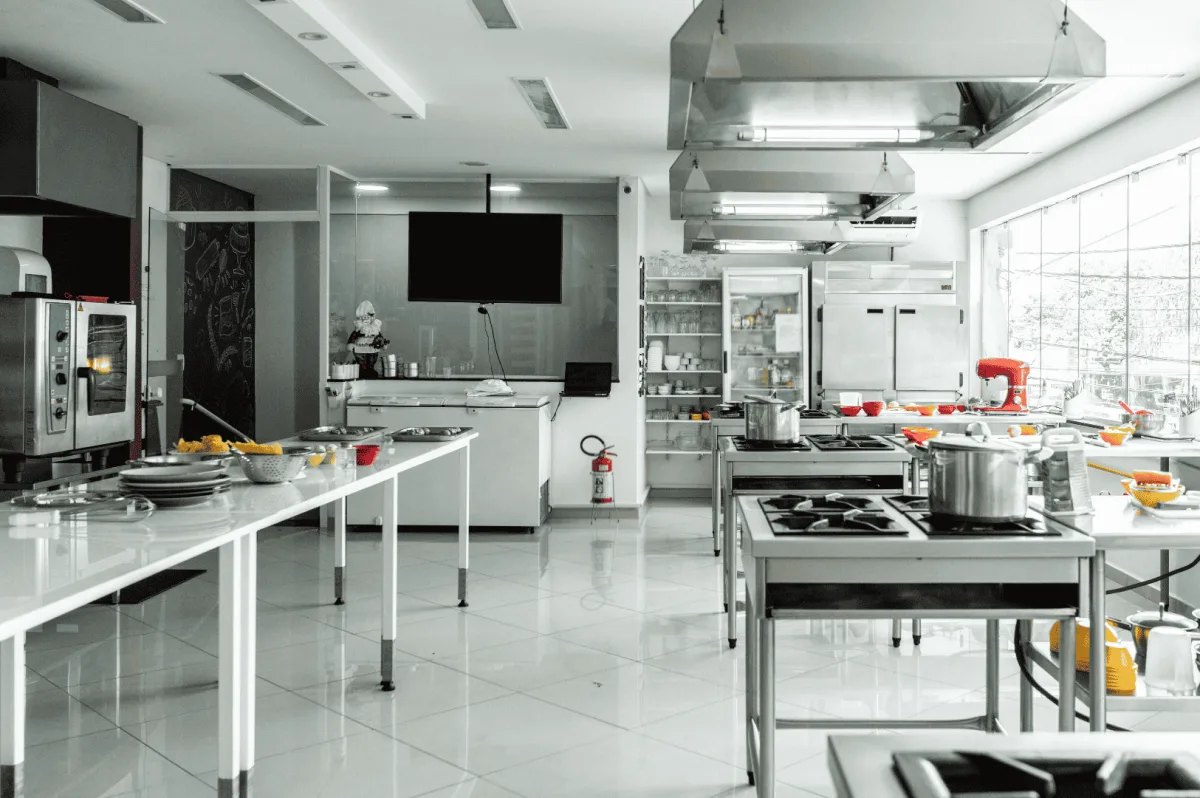
I remember walking into my first commercial kitchen like it was yesterday. The chef de cuisine, a grizzled veteran with a permanent scowl, handed me a peeler and pointed to a mountain of potatoes. “You’ve got 20 minutes,” he barked. What followed was 20 minutes of pure chaos, dodging servers, reaching across prep stations, and contorting my body into positions that would make a yoga instructor wince. By the end, my back ached, my wrists throbbed, and I’d barely made a dent in the pile. That day, I learned two things: first, I was not cut out for line cooking, and second, kitchen ergonomics isn’t just a buzzword, it’s the difference between a smooth service and a disaster.
Fast forward to today, and I’ve spent years studying how commercial kitchens function (or don’t) from the inside out. Whether you’re running a bustling restaurant, a hospital cafeteria, or a food truck, the way your kitchen is laid out directly impacts your staff’s efficiency, safety, and morale. And here’s the kicker: most kitchens get it wrong. Not because they don’t care, but because they don’t realize how deeply ergonomics and workflow design are intertwined. This isn’t just about making things “comfortable”-it’s about shaving seconds off every task, reducing injuries, and keeping your team sharp during the dinner rush. So, let’s dive into the nitty-gritty of commercial kitchen layout ergonomics. By the end, you’ll see your kitchen in a whole new light, and maybe even save your staff from the same fate as my poor, potato-peeling wrists.
Before we jump in, let me clarify something: this isn’t a one-size-fits-all guide. Every kitchen has its quirks, whether it’s the space constraints of a food truck or the high-volume demands of a hotel banquet hall. But the principles we’ll cover? They’re universal. Think of them as the ergonomic DNA of a well-oiled kitchen. And if you’re starting from scratch or renovating, companies like Chef’s Deal offer free kitchen design services that can help tailor these principles to your specific needs, because let’s face it, not all of us have the budget for a full-time kitchen consultant.
The Psychology of Movement: Why Your Kitchen Layout is Making Your Staff Slower
How Your Brain (and Body) React to Kitchen Chaos
Here’s something most kitchen designers don’t talk about: your staff’s brains are working against them before they even step onto the line. The human brain is wired to conserve energy, which means it’s constantly looking for the path of least resistance. In a poorly designed kitchen, that path often involves awkward movements, unnecessary steps, or even risky shortcuts. For example, if your prep station is 10 feet away from the cooking line, your staff will inevitably start storing ingredients on the counter next to them, creating clutter, increasing the risk of cross-contamination, and slowing down service when they run out mid-rush.
But it’s not just about distance. The way your kitchen is laid out affects cognitive load-the mental effort required to complete a task. A cluttered or disorganized kitchen forces your staff to make constant decisions: Where did I put the salt? Is the fryer oil hot enough? Did the server already grab that order? Multiply that by the hundreds of tasks performed during a shift, and you’ve got a recipe for burnout. Studies in workplace ergonomics show that reducing cognitive load can improve efficiency by up to 30%. That’s not just a number, it’s the difference between a smooth service and a kitchen meltdown.
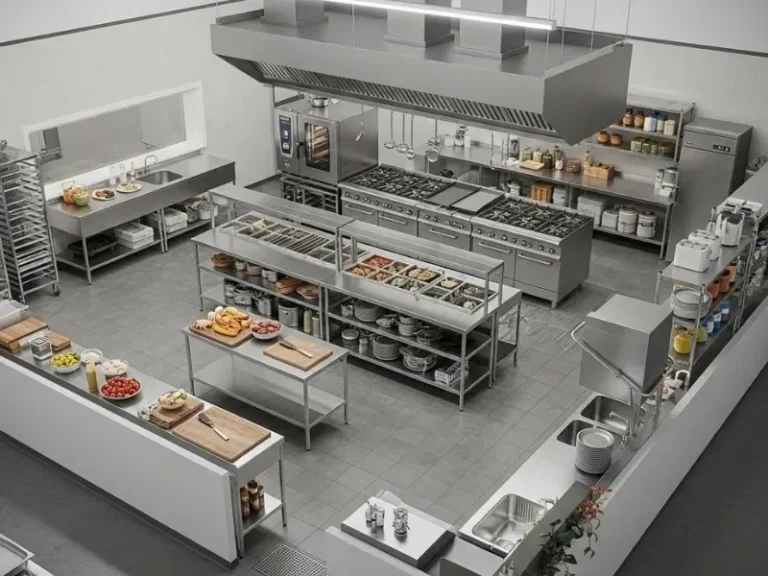
So, how do you design a kitchen that works with your staff’s brains, not against them? It starts with understanding the golden triangle-a concept borrowed from home kitchen design but often overlooked in commercial spaces. In a commercial kitchen, the golden triangle becomes the workflow triangle, connecting the three most critical areas: prep, cooking, and plating. The goal? Minimize the distance between these points while keeping traffic flows separate. Sounds simple, right? Yet, I’ve seen kitchens where the walk-in freezer is on the opposite side of the building from the prep station, forcing staff to trek back and forth like it’s a marathon. Is this the best approach? Let’s consider the alternatives.
The Hidden Costs of Poor Ergonomics
When I talk to kitchen managers about ergonomics, the first pushback I usually get is, “We don’t have time for this, we’re too busy.” But here’s the thing: poor ergonomics isn’t just an inconvenience, it’s a silent profit killer. Let’s break it down:
- Increased labor costs: If your staff is moving inefficiently, you’re paying for wasted time. A study by the National Restaurant Association found that inefficient kitchen layouts can add up to 15% to labor costs. That’s like paying for an extra employee you don’t need.
- Higher turnover: Kitchen work is already physically demanding. Add in repetitive strain injuries or chronic back pain, and you’ve got a recipe for high turnover. Replacing a line cook can cost up to $5,000 when you factor in training and lost productivity. Multiply that by the number of staff you lose in a year, and suddenly ergonomics doesn’t seem like such a “soft” issue.
- Food waste: Ever notice how much food gets dropped or spoiled when staff are rushing or reaching awkwardly? Poor ergonomics leads to more accidents, which means more waste. In a high-volume kitchen, that can add up to thousands of dollars a year.
- Slower service: This one’s obvious, but it bears repeating. Every extra step, every awkward reach, every moment spent searching for a tool adds up. During peak hours, those seconds can mean the difference between a happy customer and a negative Yelp review.
Now, I’m not saying you need to gut your kitchen and start from scratch. Small changes can make a big difference. For example, rearranging your prep station to keep frequently used ingredients within arm’s reach can save your staff hours of cumulative time over a week. Or, investing in adjustable-height worktables can reduce strain on your team’s backs and wrists. The key is to observe your staff in action and identify the pain points. Where are they reaching too far? Where are they doubling back? Where are they getting in each other’s way? These are the areas where ergonomics can make the biggest impact.
The 5 Zones of an Ergonomic Commercial Kitchen
1. The Receiving and Storage Zone: Where Efficiency Begins
Most people don’t think of the receiving area as part of the kitchen’s ergonomic equation, but it’s where the journey begins. A poorly designed receiving zone can set the tone for the entire shift. Imagine this: your delivery truck arrives, and your staff has to carry heavy boxes up a flight of stairs or across a crowded kitchen to reach the walk-in. By the time they start prepping, they’re already exhausted, and the shift hasn’t even begun.
Here’s how to optimize this zone:
- Proximity to storage: The receiving area should be as close as possible to your dry storage, walk-in cooler, and walk-in freezer. If you’re working with a tight space, consider using a dock leveler to make unloading easier. Companies like Chef’s Deal offer a range of loading dock equipment that can streamline this process, especially for kitchens with limited space.
- Clear pathways: Ensure there’s a wide, unobstructed path from the receiving area to storage. This isn’t just about efficiency, it’s about safety. A cluttered pathway is an accident waiting to happen, especially when staff are carrying heavy or awkward loads.
- Ergonomic tools: Invest in dollies, hand trucks, and pallet jacks to reduce the physical strain of moving heavy items. It’s a small upfront cost that pays off in reduced injuries and faster unloading times.
- Organization: Use shelving and labeling systems to keep storage areas organized. The less time your staff spends searching for ingredients, the more time they can spend on prep and cooking. This is where kitchen design services can be invaluable, companies like Chef’s Deal can help you create a storage system that’s tailored to your menu and workflow.
I’ll admit, I used to overlook the receiving area. It wasn’t until I worked in a kitchen where the walk-in was on the opposite side of the building from the loading dock that I realized how much time and energy was wasted just moving ingredients from point A to point B. It’s one of those things you don’t notice until it’s a problem, and by then, it’s costing you money.
2. The Prep Zone: The Heart of the Kitchen
If the receiving zone is where the journey begins, the prep zone is where the magic happens. This is where ingredients are chopped, mixed, and assembled into the dishes that will eventually make it to the customer’s plate. A well-designed prep zone can make or break your kitchen’s efficiency. So, what does an ergonomic prep zone look like?
First, let’s talk about work surfaces. The height of your prep tables is critical. If they’re too low, your staff will be hunched over all day, leading to back pain and fatigue. If they’re too high, they’ll be reaching up constantly, which can cause shoulder strain. The ideal height? It depends on the task. For general prep work, a height of 36 to 38 inches is standard, but for tasks that require more force (like kneading dough), a lower height of 30 to 34 inches may be better. Adjustable-height tables are the gold standard here, but they can be pricey. If that’s not in the budget, consider using risers or platforms to customize the height for different tasks.
Next, let’s talk about tool placement. The tools and ingredients your staff use most frequently should be within easy reach. This is where the concept of the work triangle comes into play. In a prep zone, the triangle connects the cutting board, the sink, and the trash bin. These three points should form a compact, efficient workspace where your staff can move seamlessly between tasks. For example, if your trash bin is on the other side of the kitchen, your staff will waste time walking back and forth. Similarly, if the sink is too far from the cutting board, they’ll be carrying wet, slippery ingredients across the kitchen, another safety hazard.
Here are a few more tips for optimizing your prep zone:
- Ingredient organization: Use clear, labeled containers for frequently used ingredients like salt, pepper, and spices. This not only speeds up prep but also reduces the risk of cross-contamination.
- Task-specific stations: If your menu includes a lot of chopping, consider a dedicated vegetable prep station. If you’re making pizzas, a dough prep station with a mixer and proofing area is essential. The more you can specialize your prep zones, the more efficient your staff will be.
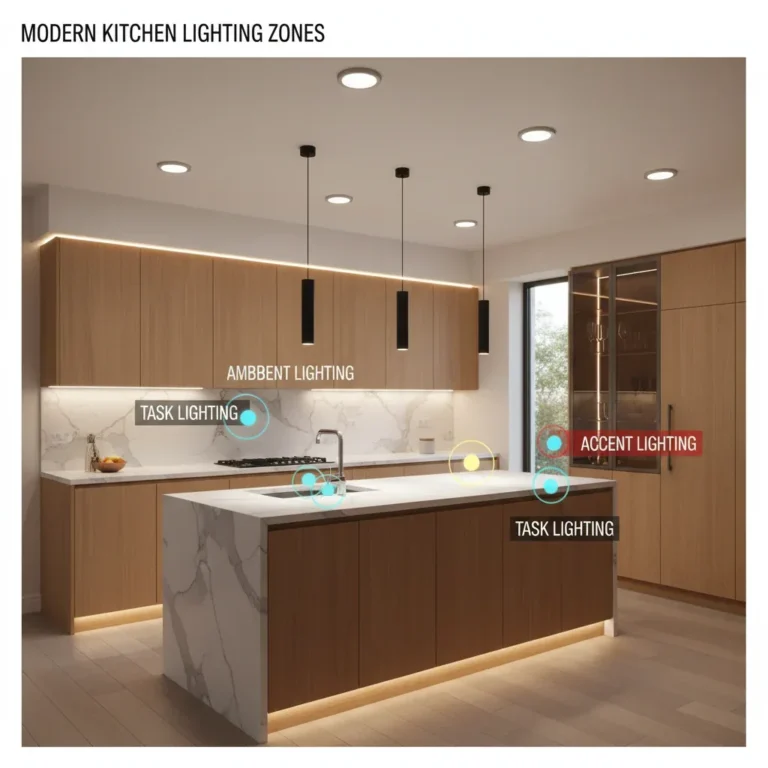
- Lighting: Good lighting is often overlooked in kitchen design, but it’s critical for both safety and efficiency. Poor lighting can lead to mistakes, injuries, and eye strain. Make sure your prep area is well-lit, with task lighting over work surfaces.
- Anti-fatigue mats: Standing on a hard floor for hours can take a toll on your staff’s feet, legs, and back. Anti-fatigue mats provide cushioning and support, reducing fatigue and improving comfort. They’re a small investment that can make a big difference in your team’s energy levels.
I’m torn between recommending a fully customizable prep zone and keeping things simple. On one hand, a specialized prep area can drastically improve efficiency. On the other, not every kitchen has the space or budget for multiple dedicated stations. Maybe I should clarify: start with the basics, good lighting, ergonomic work surfaces, and a well-organized tool layout, and build from there. The key is to observe your staff and see where the bottlenecks are. Are they constantly reaching for the same tool? Is there a lot of backtracking? These are the areas where small changes can make a big difference.
3. The Cooking Zone: Where Speed Meets Precision
The cooking zone is where the heat is, literally. This is where your staff will be spending most of their time during service, so it’s critical to get the ergonomics right. A poorly designed cooking zone can lead to slow service, inconsistent food quality, and even injuries. So, what does an ergonomic cooking zone look like?
First, let’s talk about equipment placement. The goal is to create a linear workflow, where food moves seamlessly from one station to the next. For example, if you’re running a full-service restaurant, your cooking line might look something like this: grill → sauté station → fryer → expediter. Each station should be close enough that staff can communicate easily but far enough apart to avoid collisions. The distance between stations will depend on your kitchen’s size and layout, but a good rule of thumb is to keep them within arm’s reach of each other.
Next, let’s talk about equipment height. Just like with prep tables, the height of your cooking equipment matters. For example, if your grill is too low, your staff will be bending over constantly, leading to back strain. If it’s too high, they’ll be reaching up, which can cause shoulder pain. The ideal height for cooking equipment is around 36 inches, but this can vary depending on the type of equipment and the height of your staff. Adjustable-height equipment is ideal, but if that’s not an option, consider using platforms or risers to customize the height.
Here are a few more tips for optimizing your cooking zone:
- Tool organization: Keep frequently used tools like tongs, spatulas, and ladles within easy reach. Use magnetic strips or tool racks to keep them organized and accessible.
- Ingredient placement: Store frequently used ingredients like oil, salt, and spices near the cooking stations. This reduces the need for staff to walk back and forth to the prep area.
- Ventilation: Good ventilation is critical in the cooking zone. Poor ventilation can lead to heat exhaustion, respiratory issues, and even fires. Make sure your hood system is properly sized and maintained.
- Safety features: Install non-slip flooring, fire suppression systems, and emergency shut-off valves to keep your staff safe. Safety isn’t just about preventing injuries, it’s also about giving your staff the confidence to work quickly and efficiently.
I’ve seen kitchens where the cooking zone is a free-for-all, with equipment scattered haphazardly and no clear workflow. It’s chaos, and it’s a recipe for disaster. On the other hand, I’ve seen kitchens where the cooking zone is a well-oiled machine, with each station perfectly positioned for maximum efficiency. The difference? Planning. If you’re starting from scratch, companies like Chef’s Deal can help you design a cooking zone that’s tailored to your menu and workflow. If you’re working with an existing kitchen, take the time to observe your staff and see where the bottlenecks are. Are they constantly reaching for the same tool? Is there a lot of backtracking? These are the areas where small changes can make a big difference.
4. The Plating and Expediting Zone: The Final Frontier
The plating and expediting zone is where the magic happens, where raw ingredients are transformed into beautiful, delicious dishes. But it’s also one of the most overlooked areas when it comes to ergonomics. A poorly designed plating zone can lead to slow service, inconsistent food quality, and even food waste. So, what does an ergonomic plating zone look like?
First, let’s talk about work surfaces. The plating zone should have a large, uncluttered work surface where staff can assemble dishes quickly and efficiently. The height of the work surface is critical, too low, and your staff will be hunched over all day; too high, and they’ll be reaching up constantly. The ideal height is around 36 inches, but this can vary depending on the height of your staff. Adjustable-height tables are ideal, but if that’s not an option, consider using risers or platforms to customize the height.
Next, let’s talk about tool placement. The tools and ingredients your staff use most frequently should be within easy reach. This includes things like garnishes, sauces, and plating tools. Use clear, labeled containers to keep ingredients organized and accessible. For example, if you’re plating a lot of salads, keep the dressing bottles within arm’s reach. If you’re plating entrees, keep the garnishes and sauces nearby.
Here are a few more tips for optimizing your plating zone:
- Lighting: Good lighting is critical in the plating zone. Poor lighting can lead to mistakes, inconsistent plating, and eye strain. Make sure your plating area is well-lit, with task lighting over work surfaces.
- Organization: Keep the plating zone organized and clutter-free. Use trays, racks, and shelves to keep tools and ingredients within easy reach. The less time your staff spends searching for things, the faster they can plate dishes.
- Workflow: The plating zone should be close to the cooking zone, so staff can move dishes seamlessly from one station to the next. If your plating zone is on the other side of the kitchen, your staff will waste time walking back and forth.
- Communication: The plating zone is where the expediter communicates with the kitchen staff. Make sure there’s a clear line of sight between the expediter and the cooking line, so they can communicate easily.
I’ll admit, I used to think the plating zone was just about aesthetics. But after working in a kitchen where the plating area was a disaster, cluttered, poorly lit, and far from the cooking line, I realized how much it affects efficiency. A well-designed plating zone can shave seconds off every dish, which adds up to faster service and happier customers. If you’re not sure where to start, companies like Chef’s Deal offer kitchen design services that can help you create a plating zone that’s tailored to your menu and workflow.
5. The Cleaning Zone: The Unsung Hero of Kitchen Efficiency
The cleaning zone is often the last thing on a kitchen manager’s mind, but it’s one of the most critical areas when it comes to ergonomics. A poorly designed cleaning zone can lead to slow dishwashing, increased labor costs, and even injuries. So, what does an ergonomic cleaning zone look like?
First, let’s talk about equipment placement. The cleaning zone should be close to the dining area, so servers can drop off dirty dishes quickly and easily. It should also be close to the storage area, so clean dishes can be put away without a lot of backtracking. The goal is to create a linear workflow, where dirty dishes come in one end and clean dishes go out the other.
Next, let’s talk about ergonomic tools. The cleaning zone is one of the most physically demanding areas of the kitchen, so it’s critical to provide your staff with the tools they need to work efficiently and safely. This includes things like:
- Adjustable-height sinks: Sinks that can be adjusted to different heights reduce the need for staff to bend or reach, reducing strain on the back and shoulders.
- Dish racks and carts: These make it easier to move dirty and clean dishes, reducing the risk of injuries and speeding up the cleaning process.
- Non-slip flooring: The cleaning zone is one of the wettest areas of the kitchen, so it’s critical to have non-slip flooring to prevent falls.
- Automated dishwashers: These can significantly reduce the physical strain of dishwashing, as well as speed up the cleaning process. If you’re in the market for a new dishwasher, companies like Chef’s Deal offer a range of options to fit any budget or kitchen size.
Here are a few more tips for optimizing your cleaning zone:
- Organization: Keep the cleaning zone organized and clutter-free. Use shelves, racks, and carts to keep dirty and clean dishes separate and easy to access.
- Lighting: Good lighting is critical in the cleaning zone. Poor lighting can lead to mistakes, injuries, and eye strain. Make sure your cleaning area is well-lit, with task lighting over work surfaces.
- Ventilation: The cleaning zone can get hot and humid, so good ventilation is critical. Make sure your exhaust system is properly sized and maintained.
- Safety features: Install non-slip flooring, handrails, and emergency shut-off valves to keep your staff safe. Safety isn’t just about preventing injuries, it’s also about giving your staff the confidence to work quickly and efficiently.
I’ll be honest, I used to think the cleaning zone was just a necessary evil. But after working in a kitchen where the dishwashing area was a disaster, cramped, poorly lit, and far from the dining area, I realized how much it affects efficiency. A well-designed cleaning zone can make the difference between a smooth service and a kitchen meltdown. If you’re not sure where to start, consider reaching out to a kitchen design service. Companies like Chef’s Deal can help you create a cleaning zone that’s tailored to your kitchen’s needs.
The Role of Technology in Kitchen Ergonomics
Smart Kitchens: The Future of Ergonomics?
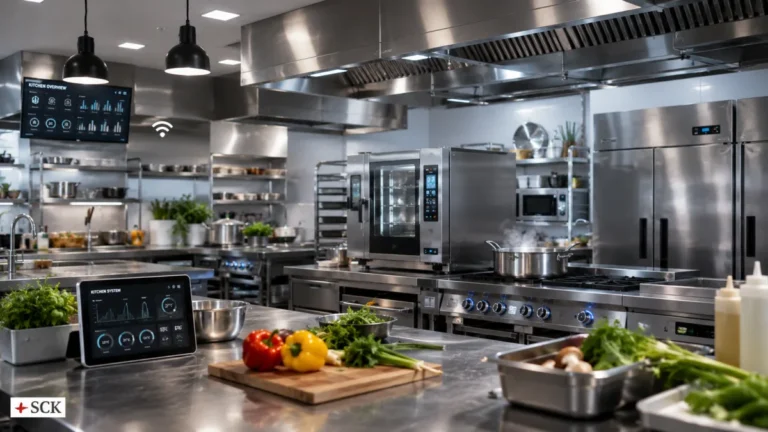
When I first heard about “smart kitchens,” I’ll admit I was skeptical. The idea of sensors, automation, and AI in a commercial kitchen sounded like something out of a sci-fi movie. But after seeing the technology in action, I’m a believer. Smart kitchens aren’t just about gadgets, they’re about using technology to enhance ergonomics, improve efficiency, and reduce the physical strain on your staff.
So, what does a smart kitchen look like? It starts with automation. For example, automated fryers can reduce the need for staff to manually lower and raise baskets, reducing the risk of burns and injuries. Smart ovens can be programmed to cook dishes to perfection, reducing the need for staff to constantly check on them. And automated dishwashers can significantly reduce the physical strain of dishwashing, as well as speed up the cleaning process.
But smart kitchens aren’t just about automation. They’re also about data. Sensors can track everything from equipment usage to staff movement, providing valuable insights into how your kitchen is functioning. For example, sensors can alert you when a piece of equipment is malfunctioning, reducing the risk of downtime. They can also track staff movement, helping you identify bottlenecks and inefficiencies in your workflow.
Here are a few more ways technology can enhance kitchen ergonomics:
- Voice-activated controls: These can reduce the need for staff to touch screens or buttons, reducing the risk of cross-contamination and speeding up tasks.
- Augmented reality (AR): AR can be used to train staff, providing real-time feedback and guidance. It can also be used to visualize kitchen layouts, helping you optimize your space before making any physical changes.
- Predictive maintenance: Sensors can track the performance of your equipment, alerting you when it’s time for maintenance or repairs. This can reduce downtime and extend the life of your equipment.
- Inventory management: Smart inventory systems can track ingredient usage, alerting you when it’s time to reorder. This can reduce waste and ensure you always have the ingredients you need on hand.
I’m torn between embracing smart kitchen technology and keeping things simple. On one hand, the benefits are clear: improved efficiency, reduced injuries, and better data. On the other, the upfront cost can be prohibitive, especially for smaller kitchens. Maybe I should clarify: you don’t need to overhaul your entire kitchen to take advantage of smart technology. Start small, maybe with an automated dishwasher or a smart oven, and build from there. The key is to identify the areas where technology can make the biggest impact and start there.
The Human Factor: Balancing Technology and Tradition
As much as I’m excited about the potential of smart kitchens, I’m also wary of losing the human touch. There’s something special about a kitchen where staff work together like a well-oiled machine, communicating with nothing more than a nod or a shout. Technology can enhance that experience, but it can’t replace it.
So, how do you strike the right balance between technology and tradition? It starts with training. Your staff needs to understand how to use the technology effectively, as well as when to rely on their instincts and experience. For example, a smart oven can cook a dish to perfection, but it can’t tell when a customer has a special request or when a dish needs a little extra love.
It’s also important to involve your staff in the decision-making process. If you’re considering a new piece of technology, ask your staff for their input. What are their pain points? What would make their jobs easier? The more you involve them, the more likely they are to embrace the technology and use it effectively.
Here are a few more tips for balancing technology and tradition:
- Start small: You don’t need to overhaul your entire kitchen to take advantage of smart technology. Start with one or two pieces of equipment and build from there.
- Focus on ergonomics: The goal of smart technology is to enhance ergonomics, not replace human labor. Look for technology that reduces physical strain and improves efficiency.
- Keep it simple: The best technology is the kind that’s easy to use and integrates seamlessly into your workflow. Avoid technology that’s overly complicated or requires a lot of training.
- Stay flexible: Technology is constantly evolving, so it’s important to stay flexible and adaptable. Be open to new ideas and willing to experiment.
I’ll admit, I’m still figuring out how to strike the right balance between technology and tradition. But one thing I’ve learned is that the best kitchens are the ones that embrace both. Technology can enhance efficiency and reduce injuries, but it’s the human touch that makes a kitchen truly special. If you’re not sure where to start, consider reaching out to a kitchen design service. Companies like Chef’s Deal can help you identify the areas where technology can make the biggest impact and integrate it seamlessly into your workflow.
Common Mistakes to Avoid in Kitchen Layout Design
1. Ignoring the Workflow Triangle
I’ve seen it happen more times than I can count: a kitchen where the prep station is on one side of the room, the cooking line is on the other, and the plating zone is somewhere in between. The result? Staff are constantly walking back and forth, wasting time and energy. The workflow triangle-connecting prep, cooking, and plating, is the backbone of kitchen ergonomics. Ignore it at your peril.
So, how do you create an effective workflow triangle? It starts with observation. Watch your staff in action and see where the bottlenecks are. Are they constantly reaching for the same tool? Is there a lot of backtracking? These are the areas where small changes can make a big difference. For example, if your staff is constantly walking from the prep station to the cooking line, consider moving the prep station closer. If they’re reaching for the same tool over and over, consider relocating it to a more accessible spot.
Here are a few more tips for optimizing your workflow triangle:
- Keep it compact: The shorter the distance between stations, the more efficient your staff will be. Aim for a triangle where each side is no more than 10 feet long.
- Separate traffic flows: Make sure there’s a clear path between stations, with no obstacles or bottlenecks. This isn’t just about efficiency, it’s about safety.
- Prioritize frequently used stations: The stations your staff use most frequently should be closest to each other. For example, if you’re running a pizzeria, the dough prep station should be close to the oven.
- Consider the menu: Your workflow triangle should be tailored to your menu. For example, if you’re serving a lot of fried food, the fryer should be close to the plating zone.
I’ll admit, I’ve made this mistake myself. In my early days as a kitchen manager, I designed a kitchen where the prep station was on the opposite side of the room from the cooking line. It seemed like a good idea at the time, after all, it kept the prep area separate from the heat and chaos of the cooking line. But in practice, it was a disaster. Staff were constantly walking back and forth, wasting time and energy. It wasn’t until I moved the prep station closer to the cooking line that I saw a real improvement in efficiency.
2. Overlooking Storage Needs
Storage is one of the most overlooked aspects of kitchen design, but it’s also one of the most critical. A poorly designed storage area can lead to clutter, inefficiency, and even food waste. So, how do you create an effective storage system?
It starts with planning. Before you design your storage area, take the time to inventory your ingredients and equipment. What do you use most frequently? What can be stored out of the way? What needs to be kept at a specific temperature? The answers to these questions will help you design a storage system that’s tailored to your needs.
Here are a few more tips for optimizing your storage area:
- Use vertical space: Shelving and racks can help you maximize your storage space, especially in smaller kitchens. Just make sure they’re sturdy and easy to access.
- Keep it organized: Use clear, labeled containers to keep ingredients organized and easy to find. The less time your staff spends searching for things, the more time they can spend on prep and cooking.
- Prioritize frequently used items: The ingredients and equipment your staff use most frequently should be within easy reach. This reduces the need for staff to walk back and forth, saving time and energy.
- Consider temperature zones: Some ingredients need to be kept at a specific temperature, so it’s important to design your storage area with this in mind. For example, dairy products should be stored in a cooler, while dry goods can be stored at room temperature.
I’ve seen kitchens where the storage area is a disaster, cluttered, disorganized, and far from the prep and cooking stations. It’s a recipe for inefficiency. On the other hand, I’ve seen kitchens where the storage area is a well-oiled machine, with everything in its place and easy to access. The difference? Planning. If you’re not sure where to start, consider reaching out to a kitchen design service. Companies like Chef’s Deal can help you create a storage system that’s tailored to your kitchen’s needs.
3. Neglecting Staff Input
This is one of the biggest mistakes I see in kitchen design: neglecting staff input. Your staff are the ones who will be working in the kitchen day in and day out, so it’s critical to involve them in the design process. They know the pain points, the bottlenecks, and the inefficiencies better than anyone.
So, how do you involve your staff in the design process? It starts with communication. Ask them for their input, and really listen to what they have to say. What are their pain points? What would make their jobs easier? What do they love (or hate) about the current layout? The more you involve them, the more likely they are to embrace the new design.
Here are a few more tips for involving your staff in the design process:
- Hold a brainstorming session: Gather your staff together and ask them for their ideas. What would they change about the current layout? What would make their jobs easier?
- Create a mock-up: Use cardboard or foam board to create a mock-up of the new layout. This can help your staff visualize the changes and provide feedback.
- Test it out: If possible, test the new layout before making any permanent changes. This can help you identify any issues and make adjustments as needed.
- Keep them informed: Keep your staff informed throughout the design process. Let them know what changes are being made and why. The more they understand, the more likely they are to embrace the new design.
I’ll admit, I’ve made this mistake myself. In my early days as a kitchen manager, I designed a kitchen without involving my staff. I thought I knew what was best, but in practice, it was a disaster. The layout was inefficient, the equipment was in the wrong place, and my staff were frustrated. It wasn’t until I involved them in the design process that I saw a real improvement in efficiency and morale.
4. Underestimating the Importance of Lighting and Ventilation
Lighting and ventilation are two of the most overlooked aspects of kitchen design, but they’re also two of the most critical. Poor lighting can lead to mistakes, injuries, and eye strain, while poor ventilation can lead to heat exhaustion, respiratory issues, and even fires. So, how do you design a kitchen with good lighting and ventilation?
It starts with planning. Before you design your kitchen, take the time to assess your lighting and ventilation needs. What areas need the most light? What areas generate the most heat? The answers to these questions will help you design a lighting and ventilation system that’s tailored to your needs.
Here are a few more tips for optimizing your lighting and ventilation:
- Use task lighting: Task lighting can help you illuminate specific areas, like prep stations and cooking lines. This reduces the need for staff to strain their eyes and improves efficiency.
- Consider natural light: If possible, incorporate natural light into your kitchen design. This can improve morale and reduce the need for artificial lighting.
- Install a hood system: A good hood system is critical for removing heat, smoke, and grease from the kitchen. Make sure your hood system is properly sized and maintained.
- Use energy-efficient lighting: Energy-efficient lighting can help you save money on your utility bills, as well as reduce your carbon footprint. Consider using LED lights, which are more energy-efficient and longer-lasting than traditional bulbs.
I’ve seen kitchens where the lighting is so poor, staff can barely see what they’re doing. I’ve also seen kitchens where the ventilation is so bad, the air is thick with smoke and grease. It’s not just uncomfortable, it’s unsafe. On the other hand, I’ve seen kitchens where the lighting and ventilation are top-notch, creating a comfortable and efficient work environment. The difference? Planning. If you’re not sure where to start, consider reaching out to a kitchen design service. Companies like Chef’s Deal can help you design a lighting and ventilation system that’s tailored to your kitchen’s needs.
Putting It All Together: A Step-by-Step Guide to Redesigning Your Kitchen
Step 1: Assess Your Current Layout
Before you start making changes, take the time to assess your current layout. What’s working? What’s not? Where are the bottlenecks? Where are the inefficiencies? The more you understand about your current layout, the better equipped you’ll be to make improvements.
Here are a few questions to ask yourself:
- What are the most frequently used stations in your kitchen?
- Where are the bottlenecks?
- Where are staff getting in each other’s way?
- What equipment is used most frequently?
- What ingredients are used most frequently?
- Where are staff reaching too far or bending too much?
- What areas are cluttered or disorganized?
I’ll admit, this step can be overwhelming. There’s a lot to consider, and it’s easy to get bogged down in the details. But it’s also one of the most important steps in the process. The more you understand about your current layout, the better equipped you’ll be to make improvements. If you’re not sure where to start, consider reaching out to a kitchen design service. Companies like Chef’s Deal can help you assess your current layout and identify areas for improvement.
Step 2: Identify Your Goals
Once you’ve assessed your current layout, it’s time to identify your goals. What do you want to achieve with your new design? Do you want to improve efficiency? Reduce injuries? Increase capacity? The more specific you can be, the better equipped you’ll be to make changes that align with your goals.
Here are a few common goals to consider:
- Improve efficiency: Reduce the time it takes to complete tasks, minimize backtracking, and streamline workflow.
- Reduce injuries: Minimize the risk of strains, sprains, and other injuries by designing a kitchen that’s ergonomic and safe.
- Increase capacity: Maximize your kitchen’s capacity by optimizing your layout and equipment placement.
- Improve food quality: Design a kitchen that supports consistent food quality by minimizing mistakes and ensuring ingredients are stored properly.
- Enhance staff morale: Create a comfortable and efficient work environment that supports your staff’s well-being and job satisfaction.
I’m torn between focusing on efficiency and focusing on staff morale. On one hand, efficiency is critical for a successful kitchen. On the other, happy staff are more productive, more engaged, and less likely to leave. Maybe I should clarify: the two aren’t mutually exclusive. A well-designed kitchen can improve both efficiency and morale. The key is to keep both goals in mind as you design your new layout.
Step 3: Create a New Layout
Now that you’ve assessed your current layout and identified your goals, it’s time to create a new layout. This is where the rubber meets the road, where you take all the information you’ve gathered and turn it into a concrete plan.
Here are a few tips for creating a new layout:
- Start with the workflow triangle: The workflow triangle, connecting prep, cooking, and plating, is the backbone of kitchen ergonomics. Start by positioning these three stations in a compact, efficient triangle.
- Prioritize frequently used stations: The stations your staff use most frequently should be closest to each other. This reduces the need for staff to walk back and forth, saving time and energy.
- Separate traffic flows: Make sure there’s a clear path between stations, with no obstacles or bottlenecks. This isn’t just about efficiency, it’s about safety.
- Consider the menu: Your layout should be tailored to your menu. For example, if you’re serving a lot of fried food, the fryer should be close to the plating zone.
- Involve your staff: Your staff are the ones who will be working in the kitchen day in and day out, so it’s critical to involve them in the design process. Ask them for their input, and really listen to what they have to say.
I’ll admit, this step can be challenging. There’s a lot to consider, and it’s easy to get overwhelmed. But it’s also one of the most exciting parts of the process. This is where you get to take all the information you’ve gathered and turn it into a concrete plan. If you’re not sure where to start, consider reaching out to a kitchen design service. Companies like Chef’s Deal can help you create a layout that’s tailored to your kitchen’s needs.
Step 4: Test and Refine
Once you’ve created a new layout, it’s time to test it out. This is where you get to see how your new design works in practice, and where you’ll likely identify areas for improvement.
Here are a few tips for testing and refining your new layout:
- Create a mock-up: Use cardboard or foam board to create a mock-up of the new layout. This can help you visualize the changes and identify any issues.
- Test it out: If possible, test the new layout before making any permanent changes. This can help you identify any issues and make adjustments as needed.
- Gather feedback: Ask your staff for their feedback on the new layout. What’s working? What’s not? What would they change?
- Make adjustments: Based on the feedback you receive, make adjustments to the layout as needed. This might involve moving equipment, adjusting work surfaces, or changing traffic flows.
I’ll admit, this step can be frustrating. It’s easy to get attached to your new design, only to find out that it doesn’t work in practice. But it’s also one of the most important steps in the process. The more you test and refine your new layout, the better it will work in the long run. If you’re not sure where to start, consider reaching out to a kitchen design service. Companies like Chef’s Deal can help you test and refine your new layout, ensuring it works as efficiently as possible.
Step 5: Implement and Monitor
Once you’ve tested and refined your new layout, it’s time to implement it. This is where you get to see your new design in action, and where you’ll likely identify areas for further improvement.
Here are a few tips for implementing and monitoring your new layout:
- Communicate the changes: Make sure your staff understands the changes you’re making and why. The more they understand, the more likely they are to embrace the new layout.
- Provide training: If the new layout involves new equipment or workflows, provide training to your staff. This will help them adapt to the changes more quickly and efficiently.
- Monitor the results: Keep an eye on how the new layout is working in practice. Are there any new bottlenecks? Are staff adapting to the changes? Are there any areas for further improvement?
- Make adjustments as needed: Based on the results you observe, make adjustments to the layout as needed. This might involve moving equipment, adjusting work surfaces, or changing traffic flows.
I’ll admit, this step can be nerve-wracking. You’ve put a lot of time and effort into your new design, and now it’s time to see how it works in practice. But it’s also one of the most exciting parts of the process. This is where you get to see all your hard work pay off, and where you’ll likely identify areas for further improvement. If you’re not sure where to start, consider reaching out to a kitchen design service. Companies like Chef’s Deal can help you implement and monitor your new layout, ensuring it works as efficiently as possible.
The Bottom Line: Ergonomics is the Key to Kitchen Efficiency
At the end of the day, kitchen ergonomics isn’t just about making things “comfortable”-it’s about creating a workspace that supports your staff’s efficiency, safety, and well-being. A well-designed kitchen can shave seconds off every task, reduce injuries, and keep your team sharp during the dinner rush. And the best part? You don’t need to overhaul your entire kitchen to see results. Small changes, like rearranging your prep station or investing in adjustable-height worktables, can make a big difference.
So, where do you go from here? Start by observing your staff in action. Where are the bottlenecks? Where are they reaching too far or bending too much? These are the areas where ergonomics can make the biggest impact. And if you’re feeling overwhelmed, don’t hesitate to reach out for help. Companies like Chef’s Deal offer free kitchen design services that can help you tailor these principles to your specific needs. Because at the end of the day, a well-designed kitchen isn’t just a nicety, it’s the foundation of a successful restaurant.
Now, I’ll leave you with a question: what’s one small change you could make to your kitchen layout that would improve ergonomics and efficiency? Maybe it’s moving the trash bin closer to the prep station, or investing in anti-fatigue mats for the cooking line. Whatever it is, I challenge you to make that change, and see the difference it makes. Because in the world of commercial kitchens, every second counts.
FAQ
Q: What is the most important factor to consider when designing an ergonomic commercial kitchen?
A: The most important factor is the workflow triangle, which connects the three most critical areas of the kitchen: prep, cooking, and plating. The goal is to minimize the distance between these points while keeping traffic flows separate. This reduces unnecessary movement, saves time, and improves efficiency. However, it’s also crucial to consider the specific needs of your menu, staff, and space constraints. For example, a pizzeria will have different ergonomic needs than a sushi bar. If you’re unsure where to start, companies like Chef’s Deal offer free kitchen design services to help you optimize your layout.
Q: How can I improve ergonomics in a small commercial kitchen with limited space?
A: Small kitchens require creative solutions, but it’s absolutely possible to improve ergonomics even in tight spaces. Here are a few strategies:
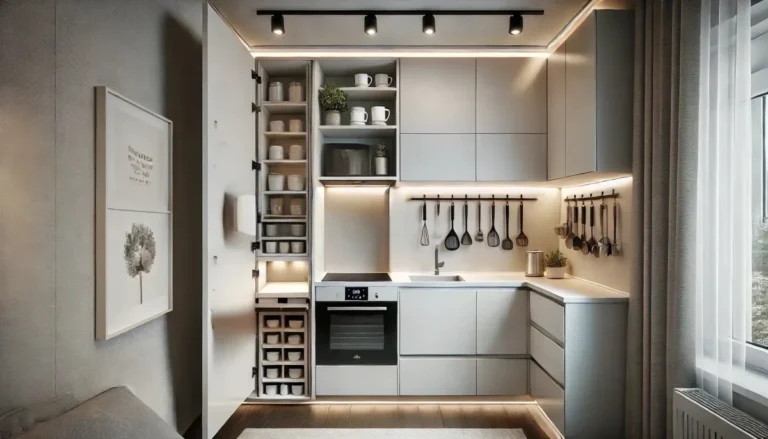
- Prioritize vertical space: Use wall-mounted shelves, magnetic strips for tools, and hanging racks to free up counter space.
- Multi-functional equipment: Invest in equipment that can perform multiple tasks, like a combi oven that can bake, steam, and roast.
- Compact workstations: Use mobile or foldable workstations that can be tucked away when not in use.
- Optimize traffic flow: Designate specific paths for staff to move through the kitchen to avoid collisions and bottlenecks.
- Adjustable-height tables: These can be customized for different tasks, reducing strain on your staff.
If you’re working with a small kitchen, it’s also worth exploring modular kitchen designs, which can be tailored to your space. Companies like Chef’s Deal specialize in designing compact, efficient kitchens that maximize every square foot.
Q: What are some common ergonomic mistakes in commercial kitchens, and how can I avoid them?
A: Some of the most common ergonomic mistakes in commercial kitchens include:
- Ignoring the workflow triangle: This leads to unnecessary movement and wasted time. To avoid it, position prep, cooking, and plating stations in a compact triangle.
- Poor equipment placement: Equipment that’s too far apart or in awkward positions forces staff to reach, bend, or walk excessively. To avoid this, keep frequently used equipment within arm’s reach and ensure it’s at a comfortable height.
- Overlooking storage needs: Disorganized or distant storage areas lead to clutter and inefficiency. To avoid this, use clear, labeled containers and keep frequently used ingredients close to prep stations.
- Neglecting lighting and ventilation: Poor lighting causes eye strain and mistakes, while poor ventilation leads to heat exhaustion and respiratory issues. To avoid this, invest in task lighting and a properly sized hood system.
- Not involving staff in the design process: Your staff know the pain points better than anyone. To avoid this, ask for their input and involve them in the design process.
If you’re unsure how to address these issues, consider consulting with a kitchen design expert. Companies like Chef’s Deal can help you identify and correct ergonomic mistakes in your kitchen layout.
Q: How can I measure the success of my kitchen’s ergonomic improvements?
A: Measuring the success of ergonomic improvements requires a mix of quantitative and qualitative data. Here are a few ways to track your progress:
- Time studies: Track how long it takes to complete specific tasks before and after the changes. For example, measure how long it takes to prep a salad or plate an entree. If the time decreases, it’s a sign that your changes are working.
- Injury reports: Monitor the number and severity of injuries before and after the changes. A reduction in injuries is a clear sign of improved ergonomics.
- Staff feedback: Ask your staff for their input. Are they feeling less fatigued? Are tasks easier to complete? Their feedback can provide valuable insights into the effectiveness of your changes.
- Food waste: Track the amount of food waste before and after the changes. A reduction in waste can indicate improved efficiency and fewer mistakes.
- Customer feedback: Monitor customer reviews and feedback. Faster service and consistent food quality are often reflected in positive reviews.
- Labor costs: Track your labor costs before and after the changes. If your staff is working more efficiently, you may see a reduction in labor costs.
It’s also a good idea to set specific, measurable goals before making changes. For example, you might aim to reduce prep time by 10% or decrease injuries by 20%. Having clear goals will make it easier to measure your success. If you’re not sure how to set these goals, consider working with a kitchen design service. Companies like Chef’s Deal can help you identify key metrics and track your progress over time.
@article{the-hidden-science-of-commercial-kitchen-layout-ergonomics-how-small-changes-can-transform-staff-efficiency,
    title   = {The Hidden Science of Commercial Kitchen Layout Ergonomics: How Small Changes Can Transform Staff Efficiency},
    author  = {Chef's icon},
    year    = {2026},
    journal = {Chef's Icon},
    url     = {https://chefsicon.com/commercial-kitchen-layout-ergonomics-for-staff-efficiency/}
}