The Best Fluffy Pancakes recipe you will fall in love with. Full of tips and tricks to help you make the best pancakes.
Let me set the scene: It’s 3 AM, the dinner rush is finally over, and you’re left with the aftermath, stacks of dirty sheet pans, a 50-pound bag of flour that somehow ended up on the floor, and a walk-in cooler that needs reorganizing before the morning crew arrives. You bend down, grip the edge of that industrial mixer, and hoist it back into place. The next morning? You wake up feeling like you’ve been hit by a truck. Every muscle screams, your arms feel like lead, and even the thought of lifting a spatula makes you wince. Congratulations, you’ve just met delayed onset muscle soreness, or DOMS, the uninvited guest of every chef who’s ever moved heavy kitchen equipment.
I’ve been there, more times than I’d like to admit. Back when I first started working in commercial kitchens, I thought DOMS was just part of the job. A badge of honor, even. If you weren’t sore, were you even working hard enough? Spoiler alert: That’s a myth, and a dangerous one at that. Over time, I’ve learned that DOMS isn’t just uncomfortable; it’s a sign that your body is struggling to recover from the stress you’ve put it under. And in a kitchen, where efficiency and safety are everything, being sidelined by soreness isn’t just annoying, it’s a liability.
So, how do you lift heavy kitchen equipment without paying for it the next day? Is there a way to prevent DOMS, or at least minimize it? The answer is yes, but it’s not as simple as chugging a protein shake or stretching for 30 seconds before you start. Preventing DOMS when lifting heavy in the kitchen requires a mix of proper technique, smart preparation, and post-lift recovery strategies. In this guide, I’ll break down everything I’ve learned, from the science behind DOMS to the practical tips that have saved my back (and arms, and legs) more times than I can count. By the end, you’ll have a toolkit to keep you moving smoothly, whether you’re rearranging a walk-in or lugging a 60-quart mixer across the kitchen.
Fair warning: Some of this might feel like overkill at first. Do I really need to warm up before moving a stack of sheet pans? Should I really be foam rolling after a shift? I get it, I’ve had those same doubts. But trust me, once you experience the difference between waking up sore and waking up ready to tackle another day, you’ll never skip these steps again. Let’s dive in.
The Science Behind DOMS: Why Your Muscles Hate You (And How to Change Their Minds)
What Exactly Is DOMS, Anyway?
DOMS stands for delayed onset muscle soreness, and it’s the achy, stiff feeling that sets in 24 to 48 hours after intense or unfamiliar physical activity. It’s not the same as the immediate burn you feel during a workout or the sharp pain of an injury. Instead, DOMS is your body’s way of saying, “Hey, what the heck did you just make me do?” It’s a sign that your muscles have undergone microscopic damage, tiny tears in the muscle fibers that occur when they’re pushed beyond their usual limits. This damage triggers an inflammatory response, which is why you feel sore, swollen, and sometimes even weaker for a few days.
Now, you might be thinking, “Isn’t muscle damage a bad thing?” Not necessarily. In fact, this process is a normal part of muscle adaptation. When your muscles repair themselves, they grow back stronger and more resilient. The problem with DOMS in a kitchen setting isn’t the soreness itself, it’s the timing. If you’re lifting heavy equipment day after day without giving your body a chance to recover, that soreness can snowball into chronic pain, fatigue, or even injury. And let’s be real: No one wants to be the chef who can’t lift a stockpot because their arms are too sore from yesterday’s deep clean.
So, what causes DOMS in the first place? The short answer is eccentric muscle contractions. These are the lengthening contractions that happen when you’re lowering something heavy, like setting down a cast-iron skillet or controlling a stack of plates as you place them on a shelf. Eccentric movements create more tension in your muscles than concentric (shortening) contractions, which is why they’re the primary culprit behind DOMS. Think about it: When you’re lifting a heavy mixer, the real work isn’t in picking it up, it’s in setting it down safely. That’s when your muscles are under the most stress, and that’s when the damage (and subsequent soreness) occurs.
Why Kitchens Are a DOMS Nightmare
If you’ve ever worked in a commercial kitchen, you know it’s not exactly a controlled environment. Unlike a gym, where you can plan your workouts, use proper form, and take rest days, a kitchen is chaotic. You’re lifting, twisting, reaching, and bending in all directions, often with awkward or heavy objects. Here’s why kitchens are particularly brutal when it comes to DOMS:
- Unpredictable loads: One minute you’re lifting a 20-pound bag of onions, the next you’re wrestling with a 100-pound sack of rice. There’s no consistency, which means your muscles are constantly being surprised.
- Poor ergonomics: Most kitchen equipment isn’t designed with lifting in mind. Think about how you have to bend, twist, or reach to move a stand mixer or a stack of sheet pans. These awkward positions put extra strain on your muscles and joints.
- Long hours on your feet: Even if you’re not lifting, standing for hours on hard floors can fatigue your legs and lower back, making them more susceptible to DOMS when you do lift something heavy.
- No warm-up or cool-down: Let’s be honest, how often do you stretch before moving a stack of plates? Probably never. And that’s a big part of the problem.
- Repetitive motions: Even if you’re not lifting anything heavy, repetitive tasks like chopping or stirring can lead to overuse injuries, which compound the effects of DOMS.
So, what’s the takeaway here? DOMS isn’t just an inevitable part of working in a kitchen. It’s a sign that your body is working harder than it’s used to, and if you don’t address it, it can lead to bigger problems down the line. The good news? There are ways to prevent or minimize DOMS without sacrificing productivity. It just takes a little planning and a willingness to break some old habits.
Pre-Lift Prep: How to Get Your Body Ready for Heavy Lifting
Why Warming Up Isn’t Just for Gym Rats
I’ll admit it: The first time someone told me to warm up before lifting a stack of sheet pans, I rolled my eyes. “I’m not running a marathon,” I thought. “I’m just moving some metal trays.” But here’s the thing, your muscles don’t care whether you’re lifting weights in a gym or a 50-pound bag of flour in a kitchen. They still need to be prepared for the work ahead. Skipping a warm-up is like trying to start a car in subzero temperatures without letting the engine idle first. It might work, but it’s not going to be pretty.
A good warm-up does a few key things:
- Increases blood flow: This delivers oxygen and nutrients to your muscles, making them more pliable and less prone to injury.
- Raises your core temperature: Warm muscles are more elastic and can handle stress better than cold, stiff ones.
- Activates your nervous system: A warm-up primes your brain and muscles to work together more efficiently, improving coordination and reaction time.
- Mentally prepares you: Lifting heavy objects in a kitchen isn’t just physical, it’s mental. A warm-up gives you a chance to focus and plan your movements before you start.
So, what does a kitchen-friendly warm-up look like? It doesn’t have to be complicated or time-consuming. In fact, you can do a solid warm-up in 5 to 10 minutes. Here’s a simple routine I use before any heavy lifting session:
- March in place (1-2 minutes): Start by marching in place to get your blood flowing. Swing your arms and lift your knees to engage your core and legs.
- Arm circles (30 seconds forward, 30 seconds backward): This loosens up your shoulders, which are going to take a beating if you’re lifting anything overhead.
- Bodyweight squats (10 reps): Squats activate your glutes, quads, and hamstrings, all the muscles you’ll use for lifting. Keep your weight in your heels and go as low as you comfortably can.
- Torso twists (10 reps each side): Twist your upper body from side to side to loosen up your spine and obliques. This is especially important if you’ll be twisting while lifting.
- Shoulder rolls (30 seconds): Roll your shoulders forward and backward to release tension in your upper back and neck.
- Dynamic stretches (2-3 minutes): Focus on movements that mimic the actions you’ll be doing. For example, if you’re lifting something overhead, do some arm reaches or light shoulder presses with no weight.
Is this the most scientific warm-up ever? Probably not. But it’s practical, it’s quick, and it works. The key is to tailor your warm-up to the task at hand. If you’re about to move a stack of heavy plates, focus on your shoulders and arms. If you’re reorganizing a walk-in cooler, prioritize your legs and lower back. And if you’re short on time, even 2 minutes of marching in place and arm circles is better than nothing.
The Power of Proper Hydration (And No, Coffee Doesn’t Count)
Here’s a hard truth: Most of us are chronically dehydrated, especially in a kitchen. Between the heat, the long hours, and the fact that we’re often too busy to drink water, it’s easy to let hydration fall by the wayside. But dehydration is a major contributor to muscle soreness and fatigue. When you’re dehydrated, your muscles don’t get the oxygen and nutrients they need to recover, which means DOMS hits harder and lasts longer.
How much water should you be drinking? The general recommendation is about half your body weight in ounces per day. So, if you weigh 160 pounds, that’s 80 ounces of water. But in a kitchen, where you’re sweating more and working harder, you might need even more. Here are a few tips to stay hydrated:
- Start early: Drink a glass of water as soon as you wake up. This jumpstarts your hydration for the day and helps flush out toxins.
- Keep a water bottle nearby: If it’s within arm’s reach, you’re more likely to drink it. I keep a 32-ounce bottle at my station and refill it at least twice during a shift.
- Add electrolytes: Water alone isn’t always enough, especially if you’re sweating a lot. Add a pinch of salt or a splash of coconut water to your bottle to replenish electrolytes.
- Avoid sugary drinks: Soda, energy drinks, and even some sports drinks are loaded with sugar, which can dehydrate you further. Stick to water, herbal tea, or electrolyte-enhanced drinks.
- Monitor your urine: Yeah, it’s not glamorous, but the color of your urine is a good indicator of your hydration levels. Pale yellow is ideal; dark yellow means you need more water.
I know what you’re thinking: “I don’t have time to drink water, I’m too busy.” Trust me, I’ve been there. But dehydration doesn’t just make DOMS worse; it also impairs your focus, coordination, and reaction time. And in a kitchen, where one wrong move can lead to a serious injury, that’s a risk you can’t afford to take. So, make hydration a priority. Your muscles (and your future self) will thank you.
Fueling Up: What to Eat Before Heavy Lifting
You wouldn’t drive a car on an empty tank, so why would you lift heavy equipment without fueling up first? What you eat before a lifting session can make a huge difference in your energy levels, performance, and recovery. The goal is to eat something that provides sustained energy without weighing you down. Here’s what I’ve found works best:
- Carbohydrates: Carbs are your body’s primary energy source, especially for short, intense bursts of activity like lifting. Opt for complex carbs like oatmeal, whole-grain bread, or sweet potatoes, which release energy slowly and keep you fueled longer.
- Protein: Protein helps repair and build muscle, which is key for preventing DOMS. A small amount of lean protein, like eggs, Greek yogurt, or chicken, can go a long way.
- Healthy fats: Fats provide long-lasting energy and help keep you full. Avocados, nuts, and nut butters are great options.
- Timing: Aim to eat 1 to 2 hours before lifting. This gives your body enough time to digest the food and convert it into energy. If you’re short on time, a small snack like a banana with peanut butter or a protein bar can work in a pinch.
Here are a few pre-lift meal ideas that have worked for me:
- Oatmeal with banana and almond butter: A classic for a reason. The oats provide slow-release carbs, the banana gives you quick energy, and the almond butter adds protein and healthy fats.
- Greek yogurt with granola and berries: The yogurt is packed with protein, the granola provides carbs, and the berries add antioxidants to help with recovery.
- Whole-grain toast with avocado and eggs: The toast gives you carbs, the avocado provides healthy fats, and the eggs add protein. Plus, it’s easy to make and eat on the go.
- Smoothie with spinach, banana, protein powder, and almond milk: If you’re really short on time, a smoothie is a great way to get all your nutrients in one go. The spinach adds vitamins, the banana provides carbs, and the protein powder helps with muscle repair.
What about caffeine? I’m a coffee lover, so I get the appeal. A little caffeine can boost your energy and focus, but too much can dehydrate you and make you jittery. If you’re going to have coffee or tea before lifting, stick to one cup and make sure you’re drinking extra water to compensate.
Lifting Techniques: How to Move Heavy Equipment Without Wrecking Your Body
The Golden Rules of Lifting (That Everyone Ignores)
Let’s talk about lifting technique. I know, I know, this isn’t exactly groundbreaking stuff. You’ve probably heard the basics a million times: lift with your legs, not your back; keep your core engaged; don’t twist while lifting. But here’s the thing: Most of us know these rules, and most of us ignore them. Why? Because in the moment, it’s easier to just bend over and grab whatever you need. But that’s how injuries happen, and that’s how DOMS becomes a chronic problem.
So, let’s go over the on-negotiable rules of lifting heavy kitchen equipment. These aren’t just suggestions, they’re the difference between waking up sore and waking up ready to go.
- Plan your lift: Before you even touch the equipment, take a second to assess the situation. Where are you moving it? Is the path clear? Do you need help? Rushing into a lift is a recipe for disaster.
- Get close: The closer the object is to your body, the less strain you’ll put on your back. Avoid reaching or leaning to grab something, move your feet instead.
- Bend at the knees and hips: This is the big one. Squat down by bending your knees and hips, not your back. Keep your chest up and your back straight. If you’re bending at the waist, you’re doing it wrong.
- Engage your core: Before you lift, take a deep breath and tighten your abdominal muscles. This stabilizes your spine and protects your lower back.
- Lift with your legs: Drive through your heels and use the power of your legs to stand up. Your arms should just be along for the ride, they’re not doing the heavy lifting (literally).
- Keep the load close: Once you’ve lifted the object, hold it close to your body. The farther it is from your center of gravity, the harder your muscles have to work.
- Don’t twist: If you need to change direction, pivot your feet instead of twisting your torso. Twisting while lifting is one of the most common causes of back injuries.
- Set it down carefully: Lower the object the same way you lifted it, by bending your knees and hips, not your back. Remember, the eccentric (lowering) phase is where most of the muscle damage (and DOMS) happens.
I’ll be the first to admit that following these rules isn’t always easy, especially in a fast-paced kitchen. There have been plenty of times when I’ve skipped steps because I was in a hurry or thought I could handle it. And you know what? Those are the times I’ve paid for it later. DOMS isn’t just about the weight of what you’re lifting, it’s about how you lift it. A 20-pound bag of flour can leave you sore for days if you lift it wrong, while a 50-pound sack of rice might not bother you at all if you use proper form.
When to Ask for Help (And How to Do It Without Looking Weak)
Here’s a confession: I used to think asking for help was a sign of weakness. If I couldn’t lift something on my own, I wasn’t strong enough, right? Wrong. Dead wrong. Asking for help isn’t a sign of weakness, it’s a sign of intelligence. Lifting something too heavy on your own is how you end up with a herniated disc or a torn rotator cuff. And trust me, those injuries will sideline you for a lot longer than the few seconds it takes to ask for a hand.
So, how do you know when to ask for help? Here’s a simple rule of thumb: If you’re not 100% confident you can lift something safely on your own, don’t. That’s it. No overthinking, no ego, no “I’ll just try it and see.” If there’s even a chance you might hurt yourself, ask for help. Here are a few scenarios where you should always get assistance:
- The object is awkwardly shaped or bulky (e.g., a stack of sheet pans, a large stockpot).
- You’re lifting something overhead (e.g., placing a heavy tray on a high shelf).
- The path isn’t clear (e.g., you have to navigate around obstacles or tight spaces).
- You’re already fatigued or sore from earlier in the day.
- The object weighs more than 50 pounds (this is a general guideline, adjust based on your strength and experience).
Now, I know what you’re thinking: “But what if no one’s around to help?” First, try to plan ahead. If you know you’ll need to move something heavy, ask for help in advance. If that’s not an option, here are a few workarounds:
- Use a dolly or hand truck: If the equipment is on wheels or can be placed on a dolly, use it. This takes the strain off your body and makes the job easier.
- Break it down: Can you move the object in smaller pieces? For example, if you’re lifting a stack of sheet pans, take them one at a time instead of all at once.
- Slide it: If the object is on a smooth surface, can you slide it instead of lifting it? This works well for things like stockpots or large containers.
- Wait for help: If all else fails, wait until someone is available to assist you. It’s better to delay a task than to risk an injury.
And here’s the thing about asking for help: Most people are happy to lend a hand. In a kitchen, teamwork isn’t just encouraged, it’s essential. If you’re struggling with something, chances are someone else has been there too, and they’ll be more than willing to help. Plus, asking for help builds camaraderie and trust among your team. It’s a win-win.
Tools and Equipment to Make Lifting Easier
Let’s talk about tools. No, not knives and spatulas, I’m talking about the lifting aids that can save your back, arms, and sanity when you’re moving heavy kitchen equipment. These tools aren’t just for lazy people; they’re for smart people who want to work efficiently and safely. Here are a few of my favorites:
- Dollies and hand trucks: These are a game-changer for moving heavy objects like kegs, sacks of flour, or stacks of plates. A good dolly can handle hundreds of pounds and takes the strain off your body. Pro tip: Look for a dolly with pneumatic tires-they’re easier to maneuver over uneven surfaces like kitchen floors.
- Lifting straps: These straps wrap around your hands and the object you’re lifting, giving you a better grip and reducing strain on your fingers and wrists. They’re especially useful for lifting awkwardly shaped items like large stockpots or bags of ice.
- Pallet jacks: If your kitchen uses pallets for deliveries, a pallet jack is a must. It allows you to move heavy pallets without lifting them, which is a huge back-saver.
- Adjustable height worktables: If you’re constantly bending over to lift things, an adjustable height table can be a lifesaver. Set it to the right height for the task at hand, and you’ll reduce the need to bend or reach.
- Grip gloves: These gloves have textured palms that improve your grip on slippery or heavy objects. They’re especially useful for lifting wet or greasy items, like large containers of oil or bags of ice.
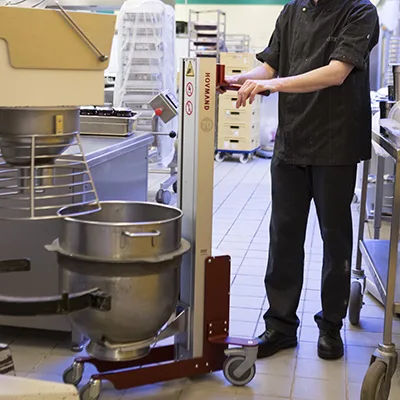
- Portable lifts: For really heavy equipment, like industrial mixers or large refrigeration units, a portable lift can be a worthwhile investment. These lifts use hydraulics to raise and lower heavy objects, taking the strain off your body.
I know what you’re thinking: “Do I really need all this stuff?” Probably not. But even investing in one or two of these tools can make a huge difference in your comfort and safety. For example, a dolly might cost you $50, but it’ll save you from a $5,000 back injury. That’s a no-brainer.
Here’s another tip: If you’re working in a kitchen that doesn’t have these tools, advocate for them. Talk to your manager or chef about the benefits of lifting aids. Frame it in terms of safety, efficiency, and cost savings. Fewer injuries mean fewer workers’ comp claims, less downtime, and happier employees. It’s a win for everyone.
Post-Lift Recovery: How to Minimize DOMS After the Fact
The Importance of Cooling Down (Yes, Really)
You’ve just finished moving that 100-pound mixer, and all you want to do is collapse into a chair and call it a day. I get it. But before you do, take 5 minutes to cool down. A proper cool-down helps your body transition from work mode to recovery mode, which can significantly reduce DOMS. It’s like giving your muscles a heads-up that the hard work is over and it’s time to start repairing.
A good cool-down should include:
- Light cardio (2-3 minutes): This could be walking in place, marching, or even just pacing around the kitchen. The goal is to keep your blood flowing and help flush out metabolic waste products that build up during exercise.
- Static stretching (3-5 minutes): Focus on the muscles you used during the lift. Hold each stretch for 20-30 seconds, and don’t bounce. Here are a few stretches to try:
- Hamstring stretch: Sit on the edge of a chair and extend one leg straight out in front of you. Lean forward slightly until you feel a stretch in the back of your thigh. Switch legs.
- Quad stretch: Stand on one leg and pull your other foot toward your glutes. Keep your knees close together and your back straight. Switch legs.
- Shoulder stretch: Bring one arm across your chest and use your other arm to gently pull it closer. Switch arms.
- Lower back stretch: Lie on your back and pull your knees to your chest. Hold for 20-30 seconds.
- Deep breathing (1-2 minutes): Take slow, deep breaths to lower your heart rate and relax your nervous system. Inhale for 4 seconds, hold for 4 seconds, and exhale for 6 seconds.
I’ll be honest: Cooling down is one of those things that’s easy to skip, especially when you’re tired. But it’s also one of the most effective ways to prevent DOMS. Think of it like this: You wouldn’t turn off a computer by unplugging it, right? You’d shut it down properly to avoid damaging the system. Your body is the same way. A cool-down is like a proper shutdown sequence, it helps your muscles transition smoothly into recovery mode.
Hydration and Nutrition: The Recovery One-Two Punch
We talked about hydration and nutrition before lifting, but they’re just as important after you’ve finished. In fact, what you do in the hours following a heavy lifting session can make or break your recovery. Here’s what you need to know:
- Rehydrate: You lost a lot of fluids during your lift, so it’s important to replenish them. Aim to drink at least 16-24 ounces of water within the first hour after lifting. If you sweated a lot, add electrolytes to your water to replace what you lost.
- Refuel with protein: Protein is essential for muscle repair, so make sure you’re getting enough after a lift. Aim for 20-30 grams of protein within 30-60 minutes of finishing. Good sources include:
- Grilled chicken or fish
- Greek yogurt
- Cottage cheese
- Protein shake
- Eggs
- Tofu or tempeh (for plant-based options)
- Carbs for recovery: Carbs replenish your glycogen stores, which are depleted during exercise. Opt for complex carbs like sweet potatoes, quinoa, or brown rice, which provide sustained energy.
- Healthy fats: Fats help reduce inflammation, which is key for preventing DOMS. Avocados, nuts, seeds, and olive oil are all great options.
- Antioxidants: Foods rich in antioxidants, like berries, dark leafy greens, and dark chocolate, help combat oxidative stress and reduce muscle soreness.
Here’s a simple post-lift meal idea: Grilled chicken with quinoa and roasted vegetables. The chicken provides protein, the quinoa gives you carbs, and the vegetables add fiber and antioxidants. Plus, it’s easy to make in bulk and reheat later.
What about supplements? There’s no magic pill for preventing DOMS, but a few supplements can help support recovery:
- Creatine: Creatine helps replenish ATP, your body’s primary energy source, which can speed up recovery. It’s one of the most well-researched supplements for muscle recovery.
- Omega-3s: Omega-3 fatty acids, found in fish oil or algae supplements, help reduce inflammation and muscle soreness.
- Magnesium: Magnesium plays a key role in muscle relaxation and recovery. Many people are deficient in magnesium, so supplementing can help.
- Tart cherry juice: Some studies suggest that tart cherry juice can reduce muscle soreness and inflammation. It’s worth a try if you’re looking for a natural option.
Before you start popping supplements, though, remember that they’re not a substitute for a healthy diet. Focus on getting your nutrients from whole foods first, and use supplements to fill in the gaps if needed.
Active Recovery: Why Rest Doesn’t Always Mean Doing Nothing
When you’re sore, the last thing you probably want to do is move. But here’s the thing: complete rest can actually make DOMS worse. That’s because movement increases blood flow to your muscles, which helps flush out waste products and deliver nutrients for repair. The key is to engage in active recovery-low-intensity activities that keep you moving without adding stress to your muscles.
Here are a few active recovery ideas that work well for chefs:
- Walking: A 20-30 minute walk is one of the best things you can do for sore muscles. It’s low-impact, it gets your blood flowing, and it’s easy to fit into your day. Plus, it’s a great way to clear your head after a long shift.
- Swimming or water aerobics: Water provides resistance without impact, making it ideal for active recovery. Even just floating or doing gentle laps can help.
- Yoga: Yoga combines stretching, strength, and relaxation, all of which are great for recovery. Focus on gentle, restorative poses like Child’s Pose, Cat-Cow, and Downward Dog.
- Foam rolling: Foam rolling, or self-myofascial release, helps break up knots and adhesions in your muscles, improving blood flow and reducing soreness. It can be uncomfortable at first, but it’s incredibly effective. Here’s how to do it:
- Start with light pressure and gradually increase as your muscles relax.
- Roll slowly, spending 20-30 seconds on each muscle group.
- Focus on the muscles you used during your lift (e.g., quads, hamstrings, glutes, back, shoulders).
- Avoid rolling directly on joints or bones.
- Light cycling: If you have access to a stationary bike, a 10-15 minute easy ride can help loosen up your legs and improve circulation.
I know what you’re thinking: “I don’t have time for this.” But active recovery doesn’t have to be time-consuming. Even 10 minutes of stretching or foam rolling can make a difference. And the best part? You can do it while watching TV, listening to a podcast, or even during a break at work. For example, I keep a foam roller in my living room and use it while I’m watching the news. It’s a small investment of time that pays off big in terms of recovery.
Here’s a simple active recovery routine you can do at home:
- Foam roll your quads, hamstrings, glutes, and back (2-3 minutes each).
- Do some gentle yoga poses, like Child’s Pose, Cat-Cow, and Downward Dog (5 minutes).
- Go for a 10-15 minute walk.
- Stretch your major muscle groups (hamstrings, quads, shoulders, back) for 20-30 seconds each.
Is this the most exciting routine ever? No. But it works. And the more consistent you are with active recovery, the less DOMS you’ll experience over time.
Long-Term Strategies: How to Build a Body That Resists DOMS
Strength Training: The Secret Weapon Against DOMS
If you want to prevent DOMS in the long run, you need to build a stronger body. Strength training might seem counterintuitive, won’t lifting weights make me more sore? but it’s actually one of the best ways to protect yourself from DOMS. Here’s why:
- Improved muscle resilience: Strength training increases the size and strength of your muscle fibers, making them more resistant to damage. This means less soreness after lifting heavy equipment.
- Better joint stability: Strong muscles support your joints, reducing the risk of injury. This is especially important for your shoulders, knees, and lower back, which take a beating in the kitchen.
- Enhanced recovery: Strength training improves your body’s ability to repair and adapt to stress, which means you’ll bounce back faster from heavy lifting sessions.
- Increased endurance: The stronger you are, the less effort it takes to lift heavy objects. This means less fatigue and less soreness over time.
So, what kind of strength training should you do? Focus on compound movements-exercises that work multiple muscle groups at once. These movements mimic the actions you do in the kitchen and build functional strength. Here are a few to try:
- Squats: Squats strengthen your legs, glutes, and core, which are essential for lifting. Start with bodyweight squats, then progress to goblet squats or barbell squats as you get stronger.
- Deadlifts: Deadlifts are one of the best exercises for building a strong back and legs. They teach you how to lift with proper form, which is crucial for preventing injuries in the kitchen. Start with light weights and focus on technique.
- Overhead press: This exercise strengthens your shoulders and arms, which are key for lifting objects overhead. Start with dumbbells or a barbell, and make sure to engage your core.
- Rows: Rows strengthen your upper back and improve posture, which is important for preventing shoulder and neck pain. You can do rows with dumbbells, a barbell, or even resistance bands.
- Farmer’s carries: This exercise involves carrying heavy weights (like dumbbells or kettlebells) for a set distance. It builds grip strength, core stability, and endurance, all of which are useful in the kitchen.
How often should you strength train? Aim for 2-3 sessions per week, with at least one rest day between sessions. Each session should include 3-4 exercises, with 3-4 sets of 8-12 reps per exercise. Start with light weights and focus on form, then gradually increase the weight as you get stronger.
I’ll be honest: Strength training isn’t always fun. It’s hard work, and it can be intimidating if you’re new to it. But the payoff is worth it. A few months of consistent strength training can transform your body, making you stronger, more resilient, and less prone to DOMS. Plus, it’s a great way to blow off steam after a long shift. There’s something incredibly satisfying about lifting heavy weights and knowing that you’re building a body that can handle anything the kitchen throws at you.
Mobility Work: The Missing Link in Your Recovery Routine
Strength is important, but it’s only half the equation. If you want to prevent DOMS and stay injury-free, you also need to work on your mobility. Mobility is your ability to move freely and easily through a full range of motion. It’s what allows you to squat down to pick up a heavy pot, reach overhead to grab a tray, or twist to grab something from the back of a shelf. And if you’re lacking in mobility, you’re more likely to compensate with poor form, which can lead to injuries and DOMS.
So, how do you improve your mobility? The key is to incorporate dynamic and static stretching into your routine. Here’s a simple mobility routine you can do a few times a week:
- Dynamic stretches (5 minutes): These are active movements that take your joints through their full range of motion. Do these before your strength training sessions or at the start of your day. Examples include:
- Leg swings (forward and side-to-side)
- Arm circles
- Torso twists
- Hip circles
- Walking lunges with a twist
- Static stretches (5-10 minutes): These are passive stretches where you hold a position for 20-30 seconds. Do these after your strength training sessions or at the end of the day. Focus on the muscles you use most in the kitchen:
- Hamstrings (seated or standing hamstring stretch)
- Quads (standing quad stretch)
- Hips (pigeon pose or butterfly stretch)
- Shoulders (cross-body shoulder stretch or doorway stretch)
- Lower back (child’s pose or cat-cow)
In addition to stretching, you can also use tools like foam rollers, lacrosse balls, or massage sticks to work on tight areas. For example, if your shoulders are tight from lifting, you can use a lacrosse ball to massage the muscles around your shoulder blades. This helps release tension and improve mobility.
Here’s a pro tip: Mobility work is most effective when it’s consistent. You can’t expect to see results from one session, you need to make it a habit. Aim to do mobility work at least 3-4 times a week, and more if you can. Even 5-10 minutes a day can make a big difference over time.
I know what you’re thinking: “I don’t have time for this.” But mobility work doesn’t have to be time-consuming. You can do it while you’re watching TV, waiting for the oven to preheat, or even during a break at work. For example, I keep a foam roller in my living room and use it while I’m watching my favorite shows. It’s a small investment of time that pays off big in terms of comfort and performance.
Sleep: The Ultimate Recovery Tool
If there’s one thing that can make or break your recovery, it’s sleep. Sleep is when your body repairs itself, builds muscle, and consolidates memories. It’s also when your brain processes the events of the day and prepares for the next. And if you’re not getting enough sleep, your body doesn’t have the time or resources it needs to recover from heavy lifting. This means more DOMS, slower recovery, and a higher risk of injury.
So, how much sleep do you need? The general recommendation is 7-9 hours per night, but the exact amount varies from person to person. Some people function well on 6 hours, while others need 10. The key is to listen to your body and prioritize sleep as much as you prioritize work, exercise, and nutrition.
Here are a few tips to improve your sleep quality:
- Stick to a schedule: Try to go to bed and wake up at the same time every day, even on weekends. This helps regulate your body’s internal clock and makes it easier to fall asleep and wake up.
- Create a bedtime routine: A relaxing routine before bed can signal to your body that it’s time to wind down. This could include reading, taking a warm bath, or doing some gentle stretching.
- Optimize your sleep environment: Make sure your bedroom is cool, dark, and quiet. Invest in a good mattress and pillows, and consider using blackout curtains or a white noise machine if needed.
- Avoid screens before bed: The blue light emitted by phones, tablets, and TVs can interfere with your body’s production of melatonin, a hormone that regulates sleep. Try to avoid screens for at least an hour before bed.
- Limit caffeine and alcohol: Both caffeine and alcohol can disrupt your sleep. Try to avoid caffeine in the afternoon and evening, and limit alcohol to a few drinks per week.
- Manage stress: Stress and anxiety can make it hard to fall asleep and stay asleep. Try relaxation techniques like deep breathing, meditation, or journaling to calm your mind before bed.
I know what you’re thinking: “Easier said than done.” And you’re right. In a job where long hours and late nights are the norm, getting enough sleep can be a challenge. But it’s not impossible. Even small changes, like going to bed 30 minutes earlier or creating a bedtime routine, can make a big difference in your sleep quality and recovery.
Here’s a personal example: I used to be a night owl, staying up late to watch TV or scroll through my phone. But after a few months of waking up exhausted and sore, I decided to make a change. I started going to bed at the same time every night, turning off my screens an hour before bed, and reading a book instead. At first, it was tough, I’d lie in bed, staring at the ceiling, wondering why I couldn’t fall asleep. But after a few weeks, my body adjusted. I started falling asleep faster, sleeping more deeply, and waking up feeling refreshed. And the best part? My DOMS improved dramatically. I wasn’t as sore after lifting, and I recovered faster. It was a game-changer.
Putting It All Together: A Day in the Life of a DOMS-Free Chef
Alright, let’s recap. We’ve covered a lot of ground, from the science of DOMS to pre-lift prep, lifting techniques, post-lift recovery, and long-term strategies. But how do you put all of this into practice? What does a DOMS-free day look like for a chef who’s constantly lifting heavy equipment? Here’s a sample day to give you an idea:
Morning: Prep for the Day
- 6:30 AM: Wake up and drink a glass of water. This jumpstarts your hydration for the day.
- 6:45 AM: Do a quick 5-minute warm-up (marching in place, arm circles, bodyweight squats, torso twists).
- 7:00 AM: Eat a balanced breakfast (e.g., oatmeal with banana and almond butter). This fuels your body for the day ahead.
- 7:30 AM: Head to the kitchen and do a quick mobility routine (leg swings, arm circles, hip circles). This loosens up your joints and prepares your body for lifting.
Midday: Heavy Lifting Session
- 12:00 PM: You need to move a 60-quart mixer from one side of the kitchen to the other. Before you lift, you:
- Assess the situation: The path is clear, but the mixer is heavy and awkwardly shaped.
- Ask for help: You grab a coworker to assist with the lift.
- Use proper form: You squat down, engage your core, and lift with your legs, keeping the mixer close to your body.
- Set it down carefully: You lower the mixer the same way you lifted it, avoiding twisting or jerking motions.
- 12:15 PM: After the lift, you do a quick cool-down (walking in place, static stretching).
- 12:30 PM: You drink 16 ounces of water and eat a protein-rich snack (e.g., Greek yogurt with granola). This supports muscle recovery.
Afternoon: Active Recovery
- 3:00 PM: You take a 10-minute break to foam roll your quads, hamstrings, and back. This helps reduce soreness and improve mobility.
- 5:00 PM: You go for a 20-minute walk after your shift. This keeps your blood flowing and helps flush out waste products from your muscles.
Evening: Wind Down
- 7:00 PM: You eat a balanced dinner (e.g., grilled chicken with quinoa and roasted vegetables). This provides the nutrients your body needs to recover.
- 8:30 PM: You do a 10-minute mobility routine (static stretching, deep breathing). This helps relax your muscles and prepare your body for sleep.
- 9:30 PM: You turn off your screens and read a book. This signals to your body that it’s time to wind down.
- 10:00 PM: You go to bed at the same time every night, aiming for 7-9 hours of sleep. This gives your body the time it needs to repair and recover.
Is this routine perfect? No. Will it work for everyone? Probably not. But it’s a starting point, a framework you can adapt to fit your schedule and needs. The key is to be consistent. DOMS isn’t something you can prevent with one good lift or one great recovery day. It’s about making small, sustainable changes to your routine that add up over time.
Here’s the thing: Preventing DOMS isn’t just about avoiding soreness. It’s about taking care of your body so you can do your job safely and effectively. It’s about waking up feeling strong and energized, not stiff and sore. And it’s about building a body that can handle the demands of a career in the kitchen, without breaking down along the way.
So, where do you go from here? Start small. Pick one or two strategies from this guide and commit to them for a week. Maybe it’s warming up before you lift, or drinking more water throughout the day. Maybe it’s strength training twice a week or going to bed 30 minutes earlier. Whatever it is, give it a try and see how you feel. Chances are, you’ll notice a difference, and that difference will motivate you to keep going.
And remember: You don’t have to be perfect. There will be days when you skip the warm-up, or forget to hydrate, or stay up too late. That’s okay. What matters is that you keep trying. Because every time you prioritize your body, you’re investing in your future, both in and out of the kitchen.
Final Thoughts: The DOMS-Free Kitchen Is Within Reach
Let me leave you with this: DOMS isn’t inevitable. It’s not a rite of passage for chefs, and it’s not something you just have to live with. It’s a sign that your body is working harder than it’s used to, and with the right strategies, you can minimize or even prevent it.
I won’t lie, it takes effort. You’ll have to break old habits, try new things, and be consistent. There will be days when you don’t feel like warming up, or stretching, or drinking enough water. But here’s the thing: The more you do these things, the easier they become. Eventually, they’ll just be part of your routine, like sharpening your knives or preheating the oven.
And the payoff? It’s huge. Less soreness, faster recovery, fewer injuries, and more energy. You’ll be able to work longer, lift heavier, and feel better doing it. Plus, you’ll set an example for your team. When they see you taking care of your body, they’ll be more likely to do the same. And that’s how you build a stronger, healthier, more resilient kitchen.
So, what’s your next move? Maybe it’s buying a foam roller, or committing to a 5-minute warm-up before your next shift. Maybe it’s asking for help the next time you need to lift something heavy. Whatever it is, I challenge you to take one step today toward a DOMS-free kitchen. Your body will thank you.
FAQ: Your Burning Questions About DOMS and Heavy Lifting
Q: Is DOMS a sign that I’m out of shape?
A: Not necessarily. DOMS is more about unfamiliarity than fitness level. Even elite athletes experience DOMS when they try a new exercise or push themselves harder than usual. That said, if you’re consistently sore after light activity, it might be a sign that you need to build more strength and endurance. The good news? The more you lift with proper form and recovery, the less DOMS you’ll experience over time.
Q: Can I still lift if I’m already sore?
A: It depends. If your soreness is mild and doesn’t affect your range of motion, you can probably lift, but you should reduce the intensity and focus on proper form. If your soreness is severe or affects your movement, it’s better to take a rest day or engage in active recovery (like walking or yoga). Pushing through severe DOMS can lead to injury and prolong your recovery.
Q: How long does DOMS usually last?
A: DOMS typically peaks 24-48 hours after exercise and can last up to 72 hours. However, the duration varies depending on factors like your fitness level, the intensity of the activity, and how well you recover. If your soreness lasts longer than 72 hours or is accompanied by swelling, bruising, or sharp pain, it might be a sign of an injury, and you should see a doctor.
Q: Are there any supplements that can help prevent DOMS?
A: While no supplement can completely prevent DOMS, some can help reduce its severity and duration. Here are a few that have been shown to be effective:
- Creatine: Helps replenish ATP, your body’s primary energy source, which can speed up recovery.
- Omega-3s: Reduce inflammation and muscle soreness. Found in fish oil or algae supplements.
- Magnesium: Plays a key role in muscle relaxation and recovery. Many people are deficient in magnesium, so supplementing can help.
- Tart cherry juice: Some studies suggest it can reduce muscle soreness and inflammation.
- Protein powder: Helps repair and build muscle, which is key for recovery.
Before you start taking any supplements, though, remember that they’re not a substitute for a healthy diet. Focus on getting your nutrients from whole foods first, and use supplements to fill in the gaps if needed. And always talk to your doctor before starting a new supplement regimen.
@article{how-to-prevent-doms-when-lifting-heavy-kitchen-equipment-a-chefs-guide-to-staying-pain-free,
    title   = {How to Prevent DOMS When Lifting Heavy Kitchen Equipment: A Chef’s Guide to Staying Pain-Free},
    author  = {Chef's icon},
    year    = {2026},
    journal = {Chef's Icon},
    url     = {https://chefsicon.com/how-to-prevent-doms-when-lifting-heavy-kitchen-equipment/}
}