The Best Fluffy Pancakes recipe you will fall in love with. Full of tips and tricks to help you make the best pancakes.
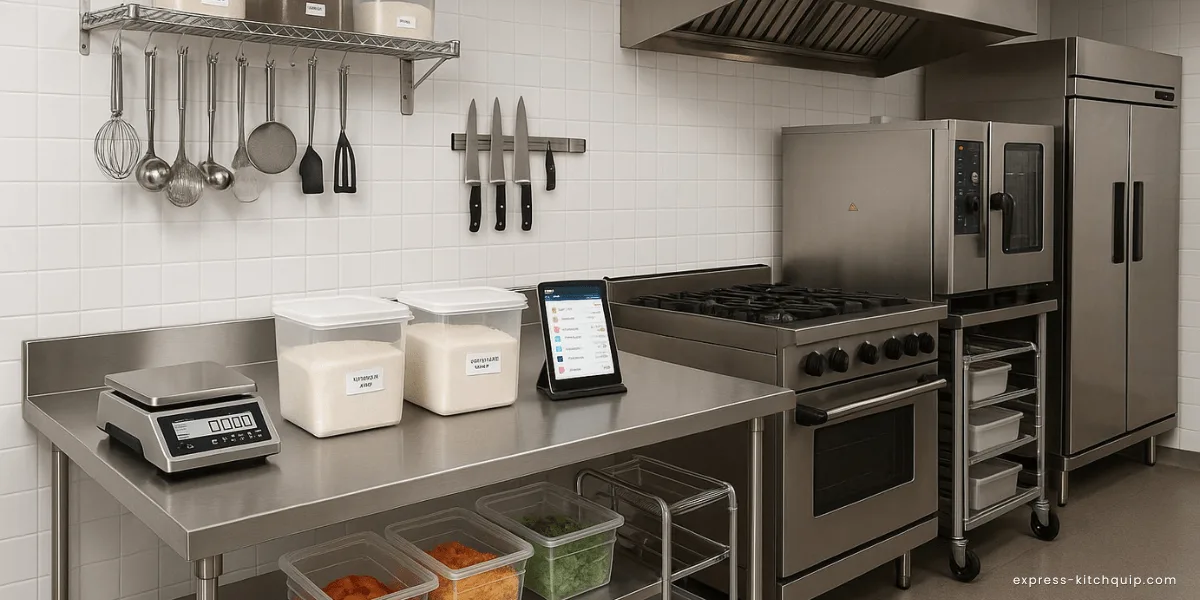
You know that moment when you walk into a high-end catering event, and the crudité platter looks so pristine it could be a centerpiece at the Met? Yeah, that doesn’t happen by accident. Behind every perfectly julienned carrot, every uniformly sliced bell pepper, and every crisp radish fan lies a carefully curated arsenal of commercial kitchen tools for large-scale crudité prep. And if you’re reading this, chances are you’re either trying to level up your catering game or you’ve just been handed the unenviable task of prepping 200 crudité platters for a corporate event tomorrow. (No judgment, we’ve all been there.)
I remember my first time tackling a large-scale crudité order. It was for a Nashville music festival, and I thought I could wing it with a couple of chef’s knives and a mandoline I’d picked up at a garage sale. Spoiler alert: I ended up with a mountain of unevenly sliced veggies, a blister the size of a quarter, and a newfound respect for the tools that make this kind of prep not just possible, but *efficient*. That’s when I realized that large-scale crudité prep isn’t just about speed, it’s about precision, consistency, and, frankly, sanity. So, let’s dive into the tools that’ll save you time, your hands, and your reputation.
By the end of this guide, you’ll know:
- Why commercial-grade tools are non-negotiable for large-scale prep
- The must-have equipment for slicing, dicing, and shaping vegetables like a pro
- How to organize your workflow to avoid bottlenecks (and meltdowns)
- The hidden costs of cutting corners, and when it’s actually okay to do so
- Tips for maintaining your tools so they last longer than your patience on a Monday morning
Sound good? Let’s get into it.
The Underrated Art of Large-Scale Crudité Prep
Before we talk tools, let’s talk about why crudité prep is such a big deal in the first place. It’s not just about throwing some veggies on a plate, it’s about presentation, texture, and freshness. A well-prepped crudité platter is a study in contrasts: the snap of a fresh cucumber, the sweetness of a perfectly ripe cherry tomato, the earthy crunch of a radish. But when you’re prepping for 200 people, those details can get lost in the chaos if you’re not equipped properly.
I’ve seen too many kitchens treat crudité prep as an afterthought, only to scramble when they realize that hand-slicing 50 pounds of carrots takes *forever*. And let’s be real, no one wants to be the caterer whose veggies look like they were hacked apart by a toddler with a butter knife. So, what’s the solution? Investing in the right commercial kitchen tools for large-scale crudité prep. But where do you even start?
Is this the best approach? Let’s consider: maybe the real secret isn’t just the tools themselves, but how you use them. But we’ll get to that later. For now, let’s break down the essential categories of tools you’ll need to tackle this beast.
1. The Foundation: Cutting Boards That Can Take a Beating
You might think a cutting board is just a cutting board, but in a commercial kitchen, it’s the unsung hero of crudité prep. The wrong board can dull your knives, slow you down, and, worst of all, contaminate your veggies. So, what should you look for?
First, size matters. You need a board that’s large enough to handle bulk prep without sending veggies flying every time you make a cut. I’ve found that 24×18-inch boards are the sweet spot for most commercial kitchens. They’re big enough to hold a decent amount of product but not so large that they become unwieldy. And if you’re working with a team, having multiple boards of this size allows you to assign different veggies to different stations, which speeds up the process.
Next, material. Plastic boards are the go-to for most commercial kitchens because they’re lightweight, easy to sanitize, and won’t dull your knives as quickly as harder surfaces. But not all plastic is created equal. Look for high-density polyethylene (HDPE) boards, they’re durable, resistant to deep grooves (which can harbor bacteria), and can withstand the wear and tear of daily use. Wooden boards, while beautiful, are a no-go in commercial settings because they’re porous and harder to sanitize. Save those for your home kitchen.
And here’s a pro tip: color-code your boards. Use green for veggies, red for raw meat, blue for seafood, etc. It’s a small step that can prevent cross-contamination and save you from a health inspector’s wrath. Trust me, you don’t want to be the person who serves salmonella-laced crudité at a wedding.
2. Knives: The Workhorses of Crudité Prep
If cutting boards are the foundation, then knives are the engines of your crudité operation. But not all knives are created equal, and using the wrong one for the job is like trying to chop wood with a butter knife, it’s just not going to end well. So, let’s talk about the must-have knives for large-scale crudité prep.
First up: the chef’s knife. This is your all-purpose workhorse, the knife you’ll reach for 80% of the time. For crudité prep, you’ll want an 8- to 10-inch chef’s knife with a high-carbon stainless steel blade. Why? Because high-carbon steel holds an edge longer, which means you won’t have to stop and sharpen it every 10 minutes. And trust me, when you’re prepping 50 pounds of carrots, every second counts.
But a chef’s knife isn’t the only tool in your arsenal. You’ll also want:
- A paring knife for detail work, like peeling and trimming. A 3- to 4-inch blade is ideal.
- A serrated knife for slicing tomatoes and other delicate veggies without crushing them. A 10-inch bread knife works surprisingly well for this.
- A nakiri knife, which is a Japanese-style vegetable knife designed specifically for chopping. It’s like a chef’s knife but with a flatter blade, which makes it perfect for push-cutting veggies without the rocking motion. If you’ve never used one, it’s a game-changer.
Now, here’s where I might ruffle some feathers: don’t cheap out on knives. I know, I know, commercial kitchen tools can be expensive, and it’s tempting to grab the $20 chef’s knife from the big-box store. But here’s the thing: a good knife will last you years, if not decades, and it’ll make your job *so* much easier. A cheap knife, on the other hand, will dull quickly, require constant sharpening, and might even snap mid-use. And nothing kills your flow like a broken knife at 3 PM on a Friday.
Oh, and one more thing: keep your knives sharp. A dull knife is more dangerous than a sharp one because it requires more force to cut, which increases the risk of slipping and injuring yourself. Invest in a good sharpening stone or honing rod, and use it regularly. Your hands (and your veggies) will thank you.
3. Mandolines: The Secret Weapon for Uniform Slices
If you’ve ever tried to slice 20 pounds of cucumbers by hand, you know the pain. Your arm feels like it’s about to fall off, your slices are uneven, and you start questioning all your life choices. Enter the mandoline, the unsung hero of large-scale crudité prep.
A good mandoline will give you uniform slices every time, which is crucial for presentation. No one wants a crudité platter where the zucchini slices are paper-thin in some spots and thick enough to build a log cabin in others. But not all mandolines are created equal. Here’s what to look for:
- Adjustable thickness settings: You’ll want a mandoline that can handle everything from paper-thin slices to thicker batons. Look for one with at least 5-6 thickness options.
- Safety features: Mandolines have a reputation for being dangerous (and for good reason). Look for models with a hand guard or food holder to protect your fingers. Some even come with cut-resistant gloves, which is a nice touch.
- Durability: Commercial mandolines should be made of stainless steel or high-quality plastic. Avoid flimsy models that feel like they’ll snap in half if you look at them wrong.
- Ease of cleaning: Let’s be real, no one wants to spend 20 minutes scrubbing a mandoline after a long day of prep. Look for models that are dishwasher-safe or at least easy to disassemble and clean by hand.
Now, I’ll admit, mandolines can be intimidating. The first time I used one, I was convinced I was going to lose a finger. But once you get the hang of it, it’s like riding a bike, except instead of a bike, it’s a sharp metal blade that could take off your fingertip if you’re not careful. So, start slow, use the hand guard, and for the love of all things holy, don’t rush.
And here’s a pro tip: practice with potatoes first. They’re cheap, they’re forgiving, and if you mess up, no one has to know. Once you’re comfortable, move on to trickier veggies like cucumbers or bell peppers.
4. Food Processors: The Heavy Lifters of Crudité Prep
If mandolines are the secret weapon, then food processors are the heavy lifters. These machines can handle everything from slicing and shredding to dicing and julienning, and they’re a godsend when you’re prepping large quantities of veggies. But not all food processors are created equal, and choosing the wrong one can leave you with a pile of unevenly chopped veggies and a machine that sounds like it’s about to take off into orbit.
So, what should you look for in a commercial-grade food processor? First, capacity. You’ll want a machine that can handle at least 3-4 quarts for most large-scale prep tasks. If you’re prepping for events with 200+ people, you might even want to consider a 6-quart or larger model. But keep in mind that bigger isn’t always better, if you’re only prepping small batches, a massive food processor can be overkill and take up valuable counter space.
Next, power. Commercial food processors should have a strong motor (at least 600-700 watts) to handle tough veggies like carrots and beets without bogging down. If the motor isn’t powerful enough, you’ll end up with uneven cuts and a machine that overheats. And trust me, nothing kills your flow like a food processor that shuts off mid-job because it’s overheating.
Then there’s the blade selection. Most food processors come with a standard S-blade for chopping, but for crudité prep, you’ll want additional blades for slicing, shredding, and julienning. Look for a model that comes with a thin slicing blade (for cucumbers, tomatoes, etc.) and a julienne blade (for carrots, zucchini, etc.). Some higher-end models even come with adjustable slicing blades, which give you more control over the thickness of your cuts.
And here’s a tip: don’t overload the bowl. It’s tempting to stuff as many veggies as possible into the food processor to save time, but overloading can lead to uneven cuts and put unnecessary strain on the motor. Instead, work in batches and give the machine a break between runs. Your food processor (and your veggies) will thank you.
5. Vegetable Peelers: Small but Mighty
You might be thinking, “A vegetable peeler? Really?” But hear me out, when you’re prepping 50 pounds of carrots, a good peeler can be the difference between a smooth workflow and a hand cramp that lasts for days. And let’s be real, no one wants to spend hours peeling veggies by hand when there’s a tool that can do it in a fraction of the time.
So, what makes a good commercial vegetable peeler? First, durability. You’ll want a peeler that’s made of stainless steel or high-quality plastic and can withstand daily use without breaking. Flimsy peelers might work for home cooks, but in a commercial kitchen, they’ll just slow you down.
Next, ergonomics. Look for a peeler with a comfortable grip that won’t slip out of your hand, even when it’s wet. Some models even have non-slip handles or ergonomic designs to reduce hand fatigue. And if you’re prepping for long periods, this can make a *huge* difference.
There are a few different types of peelers to consider:
- Swivel peelers: These are the most common type and are great for most veggies. They have a sharp blade that swivels as you move the peeler, making it easy to follow the contours of the vegetable.
- Y-peelers: These have a Y-shaped design and are great for peeling larger veggies like potatoes and carrots. They’re also less likely to clog with peelings, which is a nice bonus.
- Fixed-blade peelers: These have a fixed blade and are great for peeling tough-skinned veggies like butternut squash. They’re less versatile than swivel peelers but can be a lifesaver for certain tasks.
And here’s a pro tip: keep your peelers sharp. A dull peeler is just as frustrating as a dull knife, and it’ll slow you down just as much. Most peelers can be sharpened with a steel or sharpening stone, but if you’re not comfortable doing it yourself, you can always buy a new one. They’re cheap enough that it’s not worth the hassle of using a dull peeler.
6. Commercial-Grade Mixing Bowls: The Unsung Heroes
You might not think of mixing bowls as a commercial kitchen tool for large-scale crudité prep, but trust me, they’re essential. When you’re prepping large quantities of veggies, you need somewhere to store them before they go on the platter. And that’s where mixing bowls come in.
But not just any mixing bowls will do. In a commercial kitchen, you need bowls that are durable, stackable, and easy to clean. Here’s what to look for:
- Material: Stainless steel bowls are the gold standard in commercial kitchens. They’re durable, easy to clean, and won’t absorb odors or stains. Plastic bowls are a cheaper alternative, but they’re not as durable and can crack or warp over time.
- Size: You’ll want a variety of sizes, from small (1-2 quarts) to large (12 quarts or more). This way, you can use smaller bowls for prepped veggies and larger bowls for soaking or washing.
- Stackability: In a commercial kitchen, space is at a premium. Look for bowls that nest inside each other when not in use to save space.
- Non-slip bases: Nothing’s worse than a bowl that slides around on the counter while you’re trying to work. Look for bowls with non-slip bases or rubberized bottoms to keep them in place.
And here’s a tip: use bowls with lids. If you’re prepping veggies ahead of time, lidded bowls will keep them fresh and prevent cross-contamination. Plus, they’re great for transporting veggies to off-site events. Just make sure the lids are airtight to keep your veggies crisp.
7. Storage Containers: Keeping Your Prep Fresh
Once you’ve prepped your veggies, you need somewhere to store them until it’s time to assemble the platters. And that’s where storage containers come in. But not just any containers will do, you need ones that are durable, airtight, and stackable.
First, material. Plastic containers are the most common in commercial kitchens because they’re lightweight, durable, and easy to clean. Look for food-grade plastic that’s BPA-free and dishwasher-safe. Some higher-end models are even microwave-safe, which can be a nice bonus if you’re reheating sauces or dips.
Next, size. You’ll want a variety of sizes, from small (for herbs and garnishes) to large (for bulk veggies). And if you’re prepping for large events, consider half- and full-size hotel pans, which are great for storing and transporting large quantities of veggies.
Then there’s the lid. Look for containers with airtight lids to keep your veggies fresh and prevent cross-contamination. Some lids even have built-in vents for storing hot foods, but for crudité prep, you’ll want lids that seal tightly to keep your veggies crisp.
And here’s a pro tip: label everything. In a busy kitchen, it’s easy to lose track of what’s in each container, especially if they’re all the same color. Use masking tape and a marker to label your containers with the contents and the date. This way, you’ll know exactly what’s in each container and how long it’s been stored. And trust me, nothing’s worse than opening a container of wilted veggies the day of an event because you forgot to label it.
8. Workflow Optimization: The Key to Large-Scale Prep
Now that we’ve covered the tools, let’s talk about workflow optimization. Because let’s be real, even the best tools won’t save you if your workflow is a mess. When you’re prepping large quantities of crudité, every second counts, and a disorganized workflow can lead to bottlenecks, wasted time, and a whole lot of frustration.
So, how do you optimize your workflow? First, break the prep into stages. For example:
- Washing and trimming: Start by washing and trimming all your veggies. This is a great task for less experienced staff members, as it doesn’t require much skill but is essential for the final product.
- Peeling: Once the veggies are washed and trimmed, move on to peeling. This is where those commercial vegetable peelers come in handy.
- Slicing and dicing: Next, slice and dice the veggies using your mandoline, food processor, or knives. This is where the bulk of the work happens, so make sure you have enough staff and tools to keep things moving.
- Storage: Finally, store the prepped veggies in airtight containers until it’s time to assemble the platters.
And here’s a tip: assign tasks based on skill level. For example, less experienced staff members can handle washing and trimming, while more experienced staff members can handle slicing and dicing. This way, everyone is working at their own pace, and no one is stuck doing a task they’re not comfortable with.
Another key to workflow optimization is organization. Keep your tools and ingredients within easy reach, and make sure your workspace is clean and clutter-free. Nothing slows you down like having to dig through a pile of utensils to find the right knife or having to move a stack of bowls to get to the veggies you need.
And finally, communicate. Make sure everyone on your team knows what they’re responsible for and how their tasks fit into the bigger picture. This way, everyone is on the same page, and there’s less chance of mistakes or miscommunication.
9. The Hidden Costs of Cutting Corners
I get it, commercial kitchen tools can be expensive, and it’s tempting to cut corners to save a few bucks. But here’s the thing: cutting corners can end up costing you more in the long run. Cheap tools break faster, slow you down, and can even put your staff at risk. And when you’re prepping for a large event, the last thing you want is a tool that fails mid-job.
Take knives, for example. A cheap knife might save you $50 upfront, but it’ll dull quickly, require constant sharpening, and might even snap mid-use. And nothing kills your flow like a broken knife at 3 PM on a Friday. On the other hand, a high-quality chef’s knife might cost $150, but it’ll last you years, hold an edge longer, and make your job *so* much easier.
Or take mandolines. A cheap mandoline might seem like a good deal, but it’ll likely be flimsy, hard to clean, and dangerous to use. A commercial-grade mandoline, on the other hand, will be durable, easy to clean, and safe to use, even for large-scale prep.
And then there’s the time factor. Cheap tools slow you down, which means you’ll spend more time prepping and less time on other tasks. And in a commercial kitchen, time is money. So, while it might seem like you’re saving money by buying cheap tools, you’re actually costing yourself more in the long run.
That said, there are times when it’s okay to cut corners. For example, if you’re only prepping small batches of crudité, a mid-range food processor might be all you need. Or if you’re on a tight budget, you might opt for a less expensive mandoline and upgrade later. The key is to weigh the pros and cons and make an informed decision based on your needs and budget.
10. Maintenance: Keeping Your Tools in Top Shape
You’ve invested in the best commercial kitchen tools for large-scale crudité prep, and now you want to make sure they last. That’s where maintenance comes in. Proper maintenance not only extends the life of your tools but also ensures they perform at their best. And let’s be real, no one wants to deal with a dull knife or a clogged mandoline mid-prep.
First, clean your tools regularly. This might seem obvious, but it’s easy to let cleaning slide when you’re in the middle of a busy prep day. But dirty tools can harbor bacteria, dull blades, and even damage your veggies. So, make it a habit to clean your tools after each use. For knives and peelers, a quick wash with soap and water is usually enough. For mandolines and food processors, disassemble them and clean each part thoroughly. And don’t forget to dry your tools completely before storing them, moisture can lead to rust and other damage.
Next, sharpen your knives regularly. A dull knife is not only frustrating to use but also dangerous. It requires more force to cut, which increases the risk of slipping and injuring yourself. Invest in a good sharpening stone or honing rod, and use it regularly to keep your knives sharp. If you’re not comfortable sharpening your knives yourself, consider taking them to a professional. It’s a small investment that can make a big difference in your prep.
Then there’s storage. Proper storage can extend the life of your tools and keep them in top condition. For knives, use a knife block or magnetic strip to keep them safe and accessible. For mandolines and peelers, store them in a dry, cool place to prevent rust and other damage. And for food processors, make sure all the parts are dry before storing them to prevent mold and bacteria growth.
And finally, inspect your tools regularly. Check for signs of wear and tear, like dull blades, loose screws, or cracks. If a tool is damaged, repair or replace it as soon as possible. It’s better to spend a few bucks on a new peeler than to risk injuring yourself or ruining your prep.
Oh, and one more thing: train your staff. Make sure everyone on your team knows how to use and maintain the tools properly. This way, you’ll avoid unnecessary damage and ensure that your tools last as long as possible.
Putting It All Together: A Crudité Prep Workflow That Works
So, you’ve got the tools, you’ve optimized your workflow, and you’re ready to tackle that large-scale crudité order. But how do you put it all together? Here’s a step-by-step workflow that’ll help you prep like a pro:
- Plan ahead: Before you start prepping, make a list of all the veggies you’ll need and how much of each. This way, you’ll know exactly what you’re working with and can avoid last-minute trips to the grocery store.
- Wash and trim: Start by washing and trimming all your veggies. This is a great task for less experienced staff members, as it doesn’t require much skill but is essential for the final product.
- Peel: Once the veggies are washed and trimmed, move on to peeling. Use your commercial vegetable peelers to save time and reduce hand fatigue.
- Slice and dice: Next, slice and dice the veggies using your mandoline, food processor, or knives. Work in batches to avoid overloading your tools, and make sure your slices are uniform for presentation.
- Store: Once the veggies are prepped, store them in airtight containers until it’s time to assemble the platters. Label each container with the contents and the date to keep track of what’s inside.
- Assemble: Finally, assemble the platters. Arrange the veggies in an aesthetically pleasing way, and don’t forget the dips! A well-assembled crudité platter is a work of art, so take your time and make it look as good as it tastes.
And here’s a tip: practice makes perfect. If you’re new to large-scale crudité prep, start with smaller orders and work your way up. This way, you’ll get a feel for the tools and the workflow, and you’ll be able to tackle larger orders with confidence.
Oh, and one more thing: don’t forget the garnishes. A sprinkle of fresh herbs or a drizzle of high-quality olive oil can take your crudité platter from good to great. So, don’t skimp on the finishing touches, they make all the difference.
Final Thoughts: The Future of Crudité Prep
So, there you have it, the ultimate guide to commercial kitchen tools for large-scale crudité prep. But here’s the thing: the world of commercial kitchen tools is always evolving. New gadgets and gizmos hit the market every year, promising to make our lives easier and our prep faster. And while it’s tempting to jump on every new trend, the key is to focus on the tools that work for you.
I’m torn between embracing the latest tech and sticking with the tried-and-true methods. On one hand, I love the idea of a smart food processor that can slice, dice, and julienne with the push of a button. On the other hand, there’s something to be said for the simplicity of a good chef’s knife and a mandoline. Maybe the future of crudité prep lies somewhere in between, where technology meets tradition, and efficiency meets elegance.
But one thing’s for sure: no matter how advanced our tools get, the fundamentals will always matter. Sharp knives, durable tools, and a well-organized workflow will never go out of style. So, whether you’re prepping for a small event or a large-scale catering job, remember that the right tools can make all the difference. And who knows? Maybe one day, your crudité platters will be so pristine, they’ll be mistaken for works of art.
Now, go forth and prep like a pro. And if anyone asks, tell them Sammy sent you.
FAQ
Q: What’s the most important tool for large-scale crudité prep?
A: It’s hard to pick just one, but if I had to choose, I’d say a high-quality chef’s knife is the most important. It’s the tool you’ll use the most, and a good one will make your prep faster, safer, and more efficient. That said, a mandoline and a food processor are also essential for large-scale prep, as they’ll save you time and ensure uniform slices.
Q: How do I keep my veggies fresh after prepping them?
A: The key is proper storage. Once your veggies are prepped, store them in airtight containers with a damp paper towel to keep them crisp. You can also soak certain veggies, like carrots and celery, in ice water for a few minutes before storing them to revive their crunch. And don’t forget to label your containers with the contents and the date to keep track of what’s inside.
Q: What’s the best way to prevent cross-contamination when prepping crudité?
A: Color-coding is your best friend. Use different colored cutting boards, knives, and containers for different types of veggies to prevent cross-contamination. For example, use a green board for veggies, a red board for raw meat, and a blue board for seafood. It’s a small step that can make a big difference in food safety.
Q: How do I train my staff to use commercial kitchen tools safely?
A: Start with hands-on training. Show your staff how to use each tool properly, and have them practice under your supervision. Make sure they know how to hold the tool, how to position their hands, and how to avoid common mistakes. And don’t forget to emphasize the importance of safety-sharp tools can be dangerous, so it’s crucial to use them correctly.
@article{the-ultimate-guide-to-commercial-kitchen-tools-for-large-scale-crudite-prep-efficiency-meets-elegance,
    title   = {The Ultimate Guide to Commercial Kitchen Tools for Large-Scale Crudité Prep: Efficiency Meets Elegance},
    author  = {Chef's icon},
    year    = {2026},
    journal = {Chef's Icon},
    url     = {https://chefsicon.com/commercial-kitchen-tools-for-large-scale-crudite-prep/}
}