The Best Fluffy Pancakes recipe you will fall in love with. Full of tips and tricks to help you make the best pancakes.
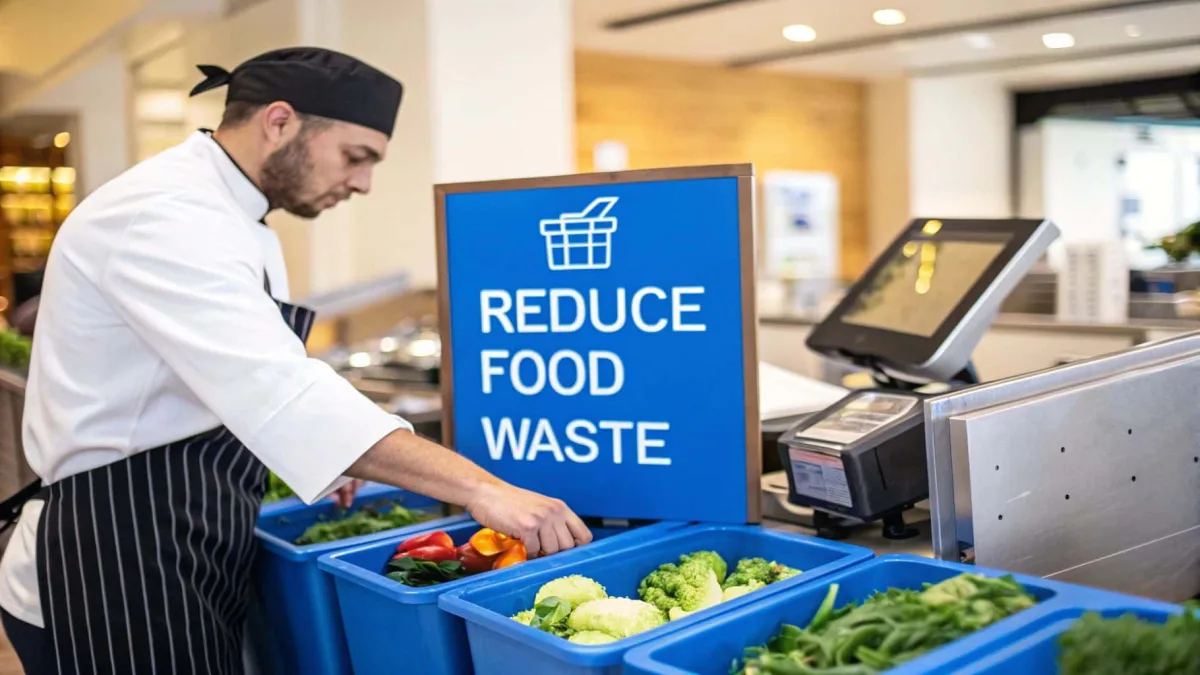
Let me tell you about the first time I realized how much food we were wasting in our kitchen. It was a Tuesday evening, always a slow night, and I was doing inventory after the dinner rush. There, sitting in the walk-in, were three full trays of roasted vegetables that no one had touched. Three trays. That’s roughly 15 pounds of perfectly good food, just waiting to be tossed. And that was just one night. One item. One kitchen.
I remember standing there, staring at those trays, thinking, How did we get here? We’re not some massive corporate chain with a supply chain the size of a small country. We’re a mid-sized restaurant in Nashville with a menu that changes with the seasons. We care about food. We care about sustainability. And yet, there it was, waste, plain and simple. That night, I made a promise to myself: we were going to do better. But how? That’s when I started digging into our import logs data, and honestly? It changed everything.
If you’re reading this, chances are you’ve had a similar moment. Maybe you’ve stood in front of a dumpster filled with food that could’ve fed a family. Maybe you’ve watched as your profit margins shrink because of over-ordering or spoilage. Or maybe you’re just tired of the guilt that comes with throwing away food when so many people go hungry. Whatever brought you here, I’m glad you’re exploring this. Because here’s the thing: reducing food waste isn’t just about doing the right thing, it’s about running a smarter, more profitable business. And one of the most underutilized tools in your arsenal? Your import logs data.
In this guide, I’m going to walk you through how to use that data to cut waste, save money, and maybe even sleep a little better at night. We’ll cover everything from understanding what import logs actually are to turning raw numbers into actionable insights. And don’t worry, I’m not here to lecture you or make you feel bad. This is about practical, real-world solutions that work in the chaos of a busy kitchen. So grab a coffee (or a beer, no judgment), and let’s get started.
The Hidden Goldmine in Your Import Logs
First, let’s talk about what import logs data actually is. If you’re like me, you might’ve heard the term thrown around in meetings or seen it in your inventory software, but never really stopped to think about what it means. Simply put, import logs data is a record of everything that comes into your kitchen, every order, every delivery, every ingredient that crosses your threshold. It’s not just a list of what you bought; it’s a timestamped, detailed account of your supply chain in action.
Think about it: every time a truck pulls up to your back door, someone (hopefully) is logging what’s inside. The quantity, the supplier, the date, the price, it’s all there. And when you start to look at that data over time, patterns emerge. Patterns that can tell you when you’re over-ordering, when suppliers are shorting you, or when certain ingredients are consistently going to waste. But here’s the catch: most kitchens aren’t using this data to its full potential. They’re treating it like a receipt, something to file away and forget about, when it should be treated like a roadmap to efficiency.
So why aren’t more kitchens using this data? I’ve got a few theories. For one, it can feel overwhelming. Spreadsheets full of numbers aren’t exactly the most exciting thing to dig into, especially when you’re already juggling a million other tasks. There’s also a learning curve. Not everyone is comfortable with data analysis, and that’s okay. But here’s the thing: you don’t need to be a data scientist to make this work. You just need to know what to look for and how to turn those insights into action. And that’s exactly what we’re going to cover.
Before we dive in, let’s address the elephant in the room: why should you care? Beyond the obvious moral and environmental reasons, reducing food waste is one of the easiest ways to improve your bottom line. The average restaurant wastes between 4% and 10% of the food it purchases before it even reaches the customer. That’s money, real money, going straight into the trash. And it’s not just about the cost of the food itself. There’s also the labor cost of prepping it, the energy cost of storing it, and the disposal cost of getting rid of it. When you start to add it all up, the numbers get pretty staggering.
But here’s the good news: even small changes can make a big difference. And that’s where your import logs data comes in. By analyzing this data, you can identify where waste is happening and take steps to prevent it. It’s not about making drastic cuts or overhauling your entire operation. It’s about making smarter, more informed decisions. And the best part? The data is already there. You just have to know how to use it.
Step 1: Getting Your Data in Order
Alright, let’s start with the basics. Before you can analyze your import logs data, you need to make sure you actually have that data, and that it’s accurate. This might sound obvious, but you’d be surprised how many kitchens are working with incomplete or outdated records. I’ve seen it firsthand: handwritten invoices stuffed in a drawer, digital logs that haven’t been updated in months, or worse, no logs at all. If that’s where you’re at, don’t panic. We’ll get you set up.
First things first: where is your import logs data stored? For most kitchens, this data lives in one of three places:
- Your inventory management software: If you’re using a system like Toast, Upserve, or MarketMan, your import logs are likely already being tracked digitally. The key here is to make sure you’re actually using the software consistently. It’s not enough to just have it, you need to log every delivery, every order, and every adjustment. If you’re not doing that, your data won’t be accurate, and you won’t be able to trust the insights it provides.
- Spreadsheets: Maybe you’re old-school and prefer to track everything in Excel or Google Sheets. That’s fine, but it requires discipline. You’ll need to create a system for logging every delivery, including the date, supplier, item, quantity, and price. The upside? You have full control over the data. The downside? It’s easy to let things slip through the cracks, especially on busy days.
- Paper records: If you’re still using paper invoices and logs, it’s time to make a change. Paper records are prone to errors, they’re hard to analyze, and they’re easy to lose. That said, if you’re not ready to go fully digital, at least make sure you’re storing your paper records in a consistent, organized way. And consider scanning them or transcribing the data into a spreadsheet so you can start analyzing it.
Once you’ve identified where your data is stored, the next step is to clean it up. This is where things can get a little tedious, but trust me, it’s worth it. You want your data to be as accurate and complete as possible. That means:
- Filling in gaps: Go through your records and look for missing entries. Did a delivery come in that wasn’t logged? Did someone forget to record a return or a credit? Fill in those blanks.
- Correcting errors: Typos, mislabeled items, incorrect quantities, these things happen. But they can throw off your analysis. Take the time to correct any mistakes you find.
- Standardizing formats: If you’re using spreadsheets, make sure everything is formatted consistently. That means using the same date format, the same units of measurement (e.g., pounds vs. ounces), and the same naming conventions for ingredients. This will make it easier to analyze the data later.
Now, I know what you’re thinking: This sounds like a lot of work. And you’re right, it is. But here’s the thing: you don’t have to do it all at once. Start with the most recent few months of data and work backward. Or focus on one category of ingredients at a time (e.g., produce, dairy, proteins). The goal isn’t to have a perfect dataset, it’s to have a dataset that’s good enough to start drawing insights from. And once you get into the habit of logging everything consistently, it’ll become second nature.
One more thing: if you’re using inventory management software, take advantage of any automation features it offers. For example, some systems can automatically log deliveries when they’re received, or flag discrepancies between what was ordered and what was delivered. These features can save you a ton of time and reduce the risk of human error. If your software has them, use them.
Step 2: Understanding What Your Data Is Telling You
Okay, so you’ve got your data cleaned up and ready to go. Now what? This is where things get interesting. Your import logs data isn’t just a record of what you’ve bought, it’s a story about how your kitchen operates. And like any good story, it has patterns, themes, and plot twists. Your job is to figure out what those are and what they mean for your business.
Let’s start with the basics. At its core, your import logs data can tell you three key things:
- What you’re buying: This is the most obvious one. Your logs show you what ingredients you’re purchasing, how much you’re buying, and from which suppliers. But dig a little deeper, and you can start to see trends. Are you buying more of certain ingredients during certain times of the year? Are there items you’re consistently over-ordering? Are there suppliers that are more reliable than others?
- When you’re buying it: The timing of your orders can reveal a lot about your kitchen’s efficiency. For example, are you placing orders at the last minute, leading to rushed deliveries and potential waste? Are you ordering too far in advance, leading to spoilage? Are there certain days of the week when you’re consistently overstocked?
- How much you’re wasting: This is the big one. By comparing your import logs to your actual usage (we’ll get into how to track that later), you can start to see where waste is happening. Are you consistently throwing out expired dairy? Are you over-ordering produce that spoils before you can use it? Are there ingredients that are frequently damaged in transit?
Let’s break this down with an example. Say you’re looking at your import logs for the past six months, and you notice that you’re consistently ordering 50 pounds of tomatoes every week. But when you compare that to your actual usage, you realize that you’re only using about 30 pounds per week. The other 20 pounds? They’re either spoiling in the walk-in or getting tossed because they’re past their prime. That’s a clear sign that you’re over-ordering, and it’s costing you money.
But here’s where it gets tricky: not all waste is created equal. Some waste is unavoidable. For example, you’re always going to have some trimmings when you prep vegetables. That’s just part of the process. But other waste is preventable, and that’s what you want to focus on. The key is to distinguish between the two.
So how do you do that? Start by asking yourself a few questions:
- Is this waste consistent? If you’re throwing out the same ingredient week after week, that’s a red flag. It means there’s a systemic issue that needs to be addressed.
- Is this waste seasonal? Some ingredients are more prone to spoilage during certain times of the year. For example, leafy greens might go bad faster in the summer heat. If you notice seasonal patterns, you can adjust your ordering accordingly.
- Is this waste tied to a specific supplier? If you’re consistently receiving damaged or low-quality ingredients from a particular supplier, it might be time to switch.
- Is this waste tied to a specific menu item? If a certain dish isn’t selling well, it might be contributing to waste. Maybe it’s time to tweak the recipe or remove it from the menu.
Now, I’ll be the first to admit: this part can feel a little overwhelming. There’s a lot of data to sift through, and it’s not always clear what’s important and what’s just noise. That’s why it’s helpful to start with a specific question in mind. For example:
- Why are we wasting so much bread?
- Are we over-ordering proteins?
- Is there a better way to manage our dairy inventory?
By focusing on one question at a time, you can avoid getting lost in the data. And remember, you don’t have to have all the answers right away. This is a process, and it’s okay to take it one step at a time.
Step 3: Tracking Actual Usage (The Missing Piece)
Here’s the thing about import logs data: it only tells you half the story. To really understand where waste is happening, you need to know not just what’s coming in, but also what’s going out. That means tracking your actual usage-how much of each ingredient you’re actually using in your kitchen.
This is where a lot of kitchens drop the ball. They track their orders religiously, but they don’t have a good system for tracking what’s being used. And without that piece of the puzzle, it’s impossible to know where waste is happening. So how do you track actual usage? There are a few different approaches, and the right one for you will depend on your kitchen’s size, budget, and workflow.
Option 1: Manual Tracking
If you’re a smaller kitchen or you’re just getting started with this, manual tracking might be the way to go. This involves keeping a log of how much of each ingredient is used on a daily or weekly basis. You can do this with a simple spreadsheet or even a notebook. The key is to be consistent. Every time you prep an ingredient, log how much you’re using. Every time you throw something out, log that too.
Here’s a simple way to set it up:
- Create a spreadsheet with columns for the date, ingredient, quantity used, and notes (e.g., “used in pasta dish,” “spoiled in walk-in”).
- Assign someone on your team to be responsible for logging this information. It doesn’t have to be the same person every day, but it should be someone who understands the importance of accuracy.
- At the end of each week, compare your usage logs to your import logs. This will give you a clear picture of where waste is happening.
Now, I know what you’re thinking: This sounds like a lot of work. And you’re right, it is. But here’s the thing: the more you do it, the easier it gets. And once you start seeing the insights it provides, you’ll realize it’s worth the effort. Plus, there are ways to make it less tedious. For example, you can create templates for common prep tasks (e.g., “prep 10 pounds of onions for soup”) to speed up the logging process.
Option 2: Digital Tracking
If you’re using inventory management software, you might already have the tools you need to track actual usage. Many of these systems allow you to log usage directly in the app, which can save you a ton of time. For example, when you prep an ingredient, you can scan it or enter the quantity used, and the system will automatically update your inventory levels.
The advantage of digital tracking is that it’s faster, more accurate, and less prone to human error. It also makes it easier to generate reports and analyze your data. The downside? It can be expensive, and there’s a learning curve. But if you’re already using inventory software, it’s worth exploring whether it has this feature.
Option 3: Hybrid Approach
If you’re not ready to go fully digital, you can take a hybrid approach. For example, you can use a spreadsheet to log usage but also take advantage of some digital tools to make the process easier. For instance, you can use a barcode scanner to log ingredients as they’re used, or you can use a mobile app to record waste on the fly.
One tool I’ve seen work well in smaller kitchens is a waste log. This is a simple sheet of paper or a whiteboard where staff can quickly jot down what’s being thrown out. For example, if someone tosses a tray of spoiled lettuce, they can write down the date, the ingredient, the quantity, and the reason (e.g., “spoiled,” “damaged in transit,” “over-prepped”). At the end of the day, someone can transfer this information to your spreadsheet or inventory system.
No matter which approach you take, the key is to make it as easy as possible for your team. The more friction there is in the process, the less likely people are to do it consistently. So think about your kitchen’s workflow and design a system that fits seamlessly into it.
Step 4: Identifying Patterns and Red Flags
Alright, so you’ve got your import logs data cleaned up, and you’re tracking your actual usage. Now it’s time to start digging into the numbers and looking for patterns. This is where the real magic happens. When you start to see the story your data is telling, you’ll begin to identify opportunities to reduce waste and improve efficiency.
Let’s start with some of the most common red flags to look for in your data:
1. Over-Ordering
This is one of the biggest culprits when it comes to food waste. It’s easy to fall into the trap of ordering more than you need, especially if you’re worried about running out. But over-ordering leads to spoilage, and spoilage leads to waste. So how do you know if you’re over-ordering? Look for ingredients where your import quantity consistently exceeds your usage quantity. For example, if you’re ordering 50 pounds of chicken every week but only using 30 pounds, that’s a clear sign you’re over-ordering.
But here’s the thing: over-ordering isn’t always obvious. Sometimes it’s hidden in the details. For example, you might be ordering the right amount of an ingredient overall, but you’re ordering it too frequently, leading to spoilage. Or you might be ordering the right amount for your current menu, but you’re not accounting for seasonal fluctuations in demand. That’s why it’s important to look at your data over time and compare it to your actual usage.
2. Under-Utilized Ingredients
This is another common issue. You order an ingredient for a specific dish, but that dish doesn’t sell as well as you expected, and suddenly you’re stuck with a surplus. Or maybe you order an ingredient because it’s on sale, but you don’t have a plan for how to use it. Either way, the result is the same: waste.
To identify under-utilized ingredients, look for items where your usage is significantly lower than your imports. For example, if you ordered 20 pounds of truffle oil but only used 2 pounds, that’s a red flag. It might be time to rethink how you’re using that ingredient or whether it’s worth keeping on your menu.
3. Spoilage
Spoilage is a major source of waste in commercial kitchens. It happens when ingredients go bad before you have a chance to use them. This can be due to over-ordering, poor storage practices, or simply not using ingredients quickly enough. To identify spoilage in your data, look for ingredients where your waste logs show a high percentage of spoilage relative to usage. For example, if you’re throwing out 20% of your dairy products due to spoilage, that’s a problem.
But spoilage isn’t always about the ingredient itself. Sometimes it’s about how you’re storing it. For example, are you storing your produce in the right conditions? Are you rotating your stock properly (i.e., first in, first out)? Are you using the right containers to keep ingredients fresh? These are all things to consider when you’re analyzing your spoilage data.
4. Supplier Issues
Not all waste is your fault. Sometimes it’s the result of poor-quality ingredients or unreliable suppliers. For example, if you’re consistently receiving damaged or spoiled ingredients from a particular supplier, that’s a problem. To identify supplier issues in your data, look for patterns in your waste logs. Are certain ingredients consistently being thrown out due to damage or spoilage? Are there suppliers that are frequently shorting you or delivering late?
If you identify a supplier issue, it’s time to have a conversation. Maybe they need to improve their quality control, or maybe it’s time to switch to a different supplier. Either way, your data can give you the leverage you need to make a change.
5. Menu Mismatches
Sometimes waste isn’t about the ingredients, it’s about the menu. If a dish isn’t selling well, it can lead to waste, especially if it uses perishable ingredients. To identify menu mismatches, look for dishes where your sales data doesn’t align with your usage data. For example, if you’re prepping 20 portions of a dish every day but only selling 5, that’s a problem. It might be time to rethink the dish or remove it from the menu.
But menu mismatches aren’t always about sales. Sometimes they’re about portion sizes. For example, if you’re consistently throwing out uneaten portions of a dish, it might be a sign that your portions are too large. That’s an easy fix: just reduce the portion size and adjust your pricing accordingly.
Step 5: Turning Insights into Action
Alright, so you’ve identified some patterns in your data. Now what? This is where the rubber meets the road. It’s time to turn those insights into action. But here’s the thing: data is only as good as the actions it inspires. If you don’t do anything with your insights, they’re just numbers on a page. So how do you make sure your data leads to real change?
Let’s start with some concrete steps you can take to reduce waste based on your data:
1. Adjust Your Ordering
If you’ve identified that you’re over-ordering certain ingredients, the solution is simple: order less. But how do you know how much to order? This is where your usage data comes in. By looking at how much of an ingredient you’re actually using, you can adjust your orders to match your needs. For example, if you’re using 30 pounds of chicken per week, there’s no need to order 50 pounds.
But it’s not just about reducing your orders. It’s also about timing them better. For example, if you’re ordering an ingredient too far in advance, it might spoil before you have a chance to use it. In that case, you might need to adjust your ordering schedule to ensure you’re receiving ingredients closer to when you need them.
One tool that can help with this is a par level system. This is a simple way to determine how much of an ingredient you should have on hand at any given time. For example, if your par level for chicken is 30 pounds, you know you need to order more when your inventory drops below that level. This can help you avoid over-ordering and reduce waste.
2. Improve Your Storage Practices
If you’ve identified that spoilage is a major issue, it might be time to take a closer look at your storage practices. Are you storing ingredients in the right conditions? Are you rotating your stock properly? Are you using the right containers to keep ingredients fresh?
Here are a few storage tips to keep in mind:
- First in, first out (FIFO): This is a basic principle of inventory management. It means using the oldest ingredients first to ensure nothing goes to waste. Make sure your team is trained on this and that your storage areas are set up to make it easy to follow.
- Proper temperature control: Different ingredients require different storage temperatures. For example, dairy products need to be kept at a lower temperature than produce. Make sure your walk-ins and refrigerators are set to the right temperatures and that they’re functioning properly.
- Airflow and humidity: Some ingredients, like leafy greens, need airflow to stay fresh. Others, like root vegetables, need to be stored in a cool, dark place. Make sure you’re storing each ingredient in the right conditions.
- Containers and packaging: The right containers can make a big difference in how long your ingredients stay fresh. For example, airtight containers can help keep produce fresh longer, while vacuum-sealed bags can extend the shelf life of proteins.
If you’re not sure how to store a particular ingredient, do some research or ask your supplier. They’ll often have recommendations for how to keep their products fresh.
3. Rethink Your Menu
If you’ve identified that certain dishes are contributing to waste, it might be time to rethink your menu. This doesn’t mean you have to overhaul your entire menu, just make some strategic adjustments. For example:
- Remove underperforming dishes: If a dish isn’t selling well and it’s using perishable ingredients, consider removing it from the menu. This can help reduce waste and simplify your operations.
- Adjust portion sizes: If you’re consistently throwing out uneaten portions of a dish, it might be a sign that your portions are too large. Reduce the portion size and adjust your pricing accordingly.
- Repurpose ingredients: If you have ingredients that are consistently going to waste, think about how you can repurpose them. For example, if you have leftover vegetables, you can use them in soups, stocks, or specials.
- Offer daily specials: Specials are a great way to use up ingredients that are nearing their expiration date. They can also help you test new dishes and keep your menu fresh.
When you’re rethinking your menu, it’s also a good idea to consider cross-utilization. This is the practice of using the same ingredient in multiple dishes. For example, if you use chicken in both your salad and your pasta dish, you can order it in bulk and reduce waste. The key is to design your menu in a way that maximizes the use of each ingredient.
4. Train Your Team
Reducing waste isn’t just about systems and data, it’s also about people. Your team plays a crucial role in how much food your kitchen wastes. If they’re not trained on proper storage practices, portion control, or waste reduction techniques, they’re more likely to contribute to waste. That’s why it’s important to train your team on these topics.
Here are a few things to cover in your training:
- Proper storage techniques: Make sure your team knows how to store each ingredient properly. This includes things like FIFO, temperature control, and airflow.
- Portion control: Teach your team how to portion ingredients correctly. This can help reduce waste and ensure consistency in your dishes.
- Waste tracking: If you’re using a waste log, make sure your team knows how to use it. The more consistent they are with logging waste, the more accurate your data will be.
- Repurposing ingredients: Encourage your team to think creatively about how to use up ingredients that are nearing their expiration date. For example, they can turn leftover vegetables into soups or stocks, or use overripe fruit in desserts.
Training doesn’t have to be a one-time thing. Make it an ongoing part of your kitchen’s culture. For example, you can hold regular meetings to discuss waste reduction strategies, or you can create a waste reduction challenge to encourage your team to think creatively about how to reduce waste.
5. Work with Your Suppliers
If you’ve identified that supplier issues are contributing to waste, it’s time to have a conversation. Your suppliers are a crucial part of your supply chain, and they can play a big role in helping you reduce waste. Here are a few things to discuss with them:
- Quality control: If you’re consistently receiving damaged or spoiled ingredients, ask your supplier about their quality control processes. Maybe they need to improve their packaging or their handling practices.
- Order flexibility: If you’re struggling with over-ordering, ask your supplier if they offer more flexible ordering options. For example, can you order smaller quantities more frequently? Can you adjust your orders based on your actual usage?
- Delivery schedules: If you’re receiving ingredients too far in advance, ask your supplier if they can adjust their delivery schedule. For example, can they deliver more frequently or on specific days of the week?
- Sustainability practices: If you’re committed to reducing waste, ask your supplier about their sustainability practices. Do they have programs in place to reduce waste in their own operations? Can they help you find ways to reduce waste in yours?
Remember, your suppliers are your partners. If you’re having issues with waste, they should be willing to work with you to find solutions. And if they’re not? It might be time to find a new supplier.
Step 6: Setting Up a Waste Reduction Plan
Alright, so you’ve analyzed your data, identified some patterns, and taken some initial steps to reduce waste. Now it’s time to put it all together into a waste reduction plan. This is a document that outlines your goals, strategies, and action steps for reducing waste in your kitchen. It doesn’t have to be fancy, just a simple plan that everyone on your team can follow.
Here’s what to include in your waste reduction plan:
1. Goals
Start by setting some clear, measurable goals. For example:
- Reduce food waste by 20% over the next six months.
- Cut spoilage rates for dairy products in half.
- Decrease over-ordering of proteins by 15%.
Your goals should be specific, achievable, and tied to your data. For example, if your data shows that you’re wasting 10% of your dairy products due to spoilage, a goal to cut that rate in half is realistic and measurable.
2. Strategies
Next, outline the strategies you’ll use to achieve your goals. For example:
- Adjust ordering: Use your usage data to determine par levels for each ingredient and adjust your orders accordingly.
- Improve storage: Implement FIFO practices, ensure proper temperature control, and use the right containers to keep ingredients fresh.
- Rethink the menu: Remove underperforming dishes, adjust portion sizes, and repurpose ingredients to reduce waste.
- Train the team: Hold regular training sessions on waste reduction techniques and encourage creative thinking about how to use up ingredients.
- Work with suppliers: Discuss quality control, order flexibility, and delivery schedules with your suppliers to reduce waste in your supply chain.
3. Action Steps
For each strategy, outline the specific action steps you’ll take. For example:
- Adjust ordering:
- Review usage data for each ingredient and set par levels.
- Train the team on how to use the par level system.
- Monitor inventory levels and adjust orders as needed.
- Improve storage:
- Label all storage containers with the date and ingredient name.
- Train the team on FIFO practices.
- Check walk-in temperatures daily and ensure they’re within the correct range.
4. Responsibilities
Assign responsibilities to specific team members. For example:
- Chef: Review usage data and adjust par levels.
- Kitchen manager: Monitor inventory levels and place orders.
- Line cooks: Log waste in the waste log and follow FIFO practices.
By assigning responsibilities, you ensure that everyone knows what they’re supposed to do and that nothing falls through the cracks.
5. Timeline
Set a timeline for implementing your plan. For example:
- Week 1: Review usage data and set par levels.
- Week 2: Train the team on the par level system and FIFO practices.
- Week 3: Begin monitoring inventory levels and adjusting orders.
- Week 4: Hold a waste reduction challenge to encourage creative thinking about how to use up ingredients.
A timeline helps keep you on track and ensures that you’re making progress toward your goals.
6. Measurement and Review
Finally, outline how you’ll measure your progress and review your plan. For example:
- Track waste: Continue logging waste in your waste log and compare it to your baseline data.
- Review goals: Every month, review your goals and adjust your strategies as needed.
- Hold team meetings: Every quarter, hold a team meeting to discuss progress, challenges, and new ideas for reducing waste.
Measurement and review are crucial for ensuring that your plan is working and that you’re making progress toward your goals. They also give you an opportunity to celebrate your successes and make adjustments as needed.
Step 7: Using Technology to Streamline the Process
Let’s be real: tracking import logs data, monitoring usage, and analyzing waste can be time-consuming. But here’s the good news: there are tools and technologies out there that can make the process a whole lot easier. If you’re serious about reducing food waste, it’s worth exploring some of these options.
Inventory Management Software
If you’re not already using inventory management software, now’s the time to consider it. These systems can automate a lot of the work involved in tracking imports, usage, and waste. For example:
- Toast: Toast’s inventory management system allows you to track imports, usage, and waste in real time. It also integrates with your POS system, so you can see how your sales data aligns with your inventory data.
- Upserve: Upserve offers a robust inventory management system that includes features like automated ordering, waste tracking, and detailed reporting.
- MarketMan: MarketMan is designed specifically for restaurants and includes features like supplier management, order tracking, and waste reduction tools.
The advantage of these systems is that they can save you a ton of time and reduce the risk of human error. They also make it easier to generate reports and analyze your data. The downside? They can be expensive, and there’s a learning curve. But if you’re serious about reducing waste, they’re worth the investment.
Waste Tracking Apps
If you’re not ready to invest in full-blown inventory management software, there are also waste tracking apps that can help. These apps are designed specifically to help kitchens track and reduce waste. For example:
- Leanpath: Leanpath is a waste tracking system that uses a scale and a tablet to log waste in real time. It provides detailed reports and insights to help you reduce waste.
- Winnow: Winnow is another waste tracking system that uses AI to identify patterns in your waste data. It provides recommendations for reducing waste and can help you save money.
- Too Good To Go: While not a waste tracking app per se, Too Good To Go is a platform that connects restaurants with customers who want to buy surplus food at a discount. It’s a great way to reduce waste and generate some extra revenue.
These apps are more affordable than full-blown inventory management systems, and they’re designed to be easy to use. They’re a great option for smaller kitchens or those that are just getting started with waste reduction.
Data Analytics Tools
If you’re comfortable with data analysis, you can also use data analytics tools to dig deeper into your import logs data. For example:
- Excel or Google Sheets: These are the most basic tools, but they’re also the most accessible. You can use them to create pivot tables, charts, and graphs to visualize your data and identify patterns.
- Tableau: Tableau is a more advanced data visualization tool that can help you create interactive dashboards and reports. It’s a great option if you want to take your data analysis to the next level.
- Power BI: Power BI is another advanced data analytics tool that integrates with Excel and other Microsoft products. It’s a good option if you’re already using Microsoft tools in your kitchen.
These tools can help you uncover insights that you might not see with a simple spreadsheet. They’re also great for creating reports to share with your team or stakeholders.
Automation Tools
Finally, there are automation tools that can help streamline the process of tracking imports, usage, and waste. For example:
- Barcode scanners: Barcode scanners can make it easier to log ingredients as they’re used or thrown out. They’re a great option if you’re using a digital inventory system.
- Smart scales: Smart scales can automatically log the weight of ingredients as they’re used or thrown out. They’re a great option if you’re using a waste tracking app like Leanpath or Winnow.
- IoT sensors: IoT sensors can monitor things like temperature, humidity, and airflow in your walk-ins and refrigerators. They can alert you if conditions are outside the optimal range, helping you prevent spoilage.
These tools can save you a ton of time and reduce the risk of human error. They’re a great option if you’re looking to automate parts of your waste reduction process.
Step 8: Overcoming Common Challenges
Let’s be honest: reducing food waste isn’t always easy. There are challenges, some expected, some not, that can make it difficult to stick to your plan. But here’s the thing: every kitchen faces these challenges, and the ones that succeed are the ones that find ways to overcome them. So let’s talk about some of the most common challenges and how to tackle them.
Challenge 1: Resistance from the Team
Change is hard, and not everyone on your team is going to be excited about new waste reduction initiatives. Some might see it as extra work, while others might be skeptical that it will make a difference. So how do you get buy-in from your team?
First, lead by example. If your team sees you taking waste reduction seriously, they’re more likely to follow suit. Second, make it easy for them. The more friction there is in the process, the less likely they are to participate. For example, if you’re asking them to log waste, make sure the waste log is easily accessible and easy to use.
Third, communicate the why. People are more likely to get on board if they understand why waste reduction is important. Explain how it benefits the kitchen, the environment, and even their own jobs (e.g., less waste means more profit, which could lead to bonuses or raises). Finally, celebrate small wins. When you hit a milestone, like reducing waste by 10%, make a big deal out of it. This can help motivate your team and keep them engaged.
Challenge 2: Inconsistent Data
Inconsistent data is one of the biggest challenges when it comes to analyzing import logs. If your data is incomplete, inaccurate, or inconsistent, it’s hard to draw meaningful insights from it. So how do you ensure your data is reliable?
First, standardize your processes. Make sure everyone on your team is logging data in the same way. For example, if you’re using a spreadsheet, create a template with clear instructions for how to log each entry. Second, train your team. Make sure everyone knows how to log data correctly and understands the importance of accuracy. Third, audit your data regularly. Set aside time each week to review your logs and correct any errors or inconsistencies.
Finally, use technology to your advantage. Tools like barcode scanners, smart scales, and inventory management software can help reduce human error and ensure your data is consistent.
Challenge 3: Supplier Reliability
Even if you’re doing everything right on your end, unreliable suppliers can throw a wrench in your waste reduction efforts. Late deliveries, damaged ingredients, and inconsistent quality can all lead to waste. So how do you deal with unreliable suppliers?
First, communicate your expectations. Let your suppliers know that reliability is important to you and that you expect them to deliver on time and in good condition. Second, hold them accountable. If a supplier consistently delivers late or provides damaged ingredients, don’t be afraid to call them out. Third, have a backup plan. If a supplier lets you down, make sure you have a backup supplier you can turn to. Finally, consider switching suppliers. If a supplier isn’t meeting your needs, it might be time to find a new one.
Challenge 4: Seasonal Fluctuations
Seasonal fluctuations in demand can make it difficult to manage your inventory. For example, you might sell a lot more salads in the summer than in the winter, which means you need to adjust your ordering accordingly. So how do you account for seasonal fluctuations?
First, look at historical data. If you’ve been tracking your imports and usage for a while, you can use that data to identify seasonal patterns. For example, if you notice that you sell more ice cream in the summer, you can adjust your orders accordingly. Second, plan ahead. If you know that demand for a certain ingredient is going to increase or decrease, plan your orders accordingly. Third, be flexible. Seasonal fluctuations can be unpredictable, so it’s important to be able to adjust your orders on the fly.
Challenge 5: Menu Changes
Menu changes can also make it difficult to manage your inventory. If you introduce a new dish that uses a lot of a particular ingredient, you might find yourself with a surplus. Conversely, if you remove a dish from the menu, you might be left with ingredients you can’t use. So how do you manage menu changes?
First, plan ahead. If you’re introducing a new dish, think about how it will affect your inventory. Do you have a plan for using up any surplus ingredients? Second, phase out old dishes gradually. If you’re removing a dish from the menu, try to use up any remaining ingredients before you stop ordering them. Third, be creative. If you’re left with surplus ingredients, think about how you can repurpose them. For example, you can use them in specials, soups, or staff meals.
Step 9: Measuring Your Success
Alright, so you’ve put in the work. You’ve analyzed your data, identified patterns, and implemented a waste reduction plan. Now it’s time to measure your success. But how do you know if your efforts are paying off? Here are a few key metrics to track:
1. Waste Reduction Percentage
This is the most straightforward metric. It tells you how much you’ve reduced your waste compared to your baseline. To calculate it, use the following formula:
Waste Reduction Percentage = ((Baseline Waste – Current Waste) / Baseline Waste) * 100
For example, if your baseline waste was 100 pounds per week and your current waste is 80 pounds per week, your waste reduction percentage is 20%. This is a great metric to track over time to see how your efforts are paying off.
2. Cost Savings
Reducing waste isn’t just about doing the right thing, it’s also about saving money. To calculate your cost savings, multiply the amount of waste you’ve reduced by the cost per unit of that ingredient. For example, if you’ve reduced your waste of chicken by 20 pounds per week and chicken costs $3 per pound, your weekly cost savings is $60. Over a year, that adds up to $3,120.
Tracking cost savings is a great way to demonstrate the financial impact of your waste reduction efforts. It can also help you make the case for investing in tools or technologies that can help you reduce waste even further.
3. Spoilage Rates
Spoilage is a major source of waste in commercial kitchens. To track your spoilage rates, divide the amount of an ingredient that spoils by the total amount of that ingredient you receive. For example, if you receive 100 pounds of lettuce and 10 pounds spoil, your spoilage rate is 10%.
Tracking spoilage rates can help you identify which ingredients are most prone to spoilage and take steps to reduce it. For example, you might need to adjust your ordering, improve your storage practices, or switch to a more reliable supplier.
4. Over-Ordering Rates
Over-ordering is another major source of waste. To track your over-ordering rates, divide the amount of an ingredient you order by the amount you actually use. For example, if you order 50 pounds of tomatoes but only use 30 pounds, your over-ordering rate is 66%.
Tracking over-ordering rates can help you identify which ingredients you’re consistently over-ordering and adjust your orders accordingly. It can also help you identify opportunities to improve your forecasting and ordering processes.
5. Customer Satisfaction
Finally, don’t forget to track customer satisfaction. Reducing waste isn’t just about saving money, it’s also about improving the quality of your food and the experience you provide to your customers. If you’re using fresher ingredients, offering more consistent portions, or creating less waste, your customers are likely to notice.
You can track customer satisfaction through surveys, online reviews, or simply by talking to your customers. If you notice an improvement in satisfaction, it’s a good sign that your waste reduction efforts are paying off.
Step 10: Scaling Your Efforts
Alright, so you’ve made some progress. You’ve reduced waste, saved money, and maybe even improved customer satisfaction. Now what? It’s time to think about how you can scale your efforts and take your waste reduction to the next level. Here are a few ideas:
1. Expand to Other Locations
If you have multiple locations, consider rolling out your waste reduction plan to all of them. This can help you reduce waste across your entire operation and save even more money. But be careful: not all locations are the same. What works in one kitchen might not work in another. So take the time to tailor your plan to each location’s unique needs and challenges.
Don’t keep your success a secret. Share it with your team, your customers, and even your competitors. The more people know about what you’re doing, the more they’ll be inspired to do the same. You can share your success through social media, blog posts, or even case studies. The key is to show that waste reduction is possible and that it can have a real impact on your business.
3. Collaborate with Other Businesses
Reducing waste isn’t just about what you do in your own kitchen, it’s also about what you do in your community. Consider collaborating with other businesses to reduce waste even further. For example, you can partner with local farms to compost your food waste, or you can work with other restaurants to share surplus ingredients. The possibilities are endless.
4. Advocate for Change
Finally, consider using your success to advocate for change in the industry. The more businesses that prioritize waste reduction, the bigger the impact we can have on the environment and the economy. You can advocate for change by speaking at industry events, writing articles, or even lobbying for policy changes. The key is to use your voice to make a difference.
Putting It All Together: A Real-World Example
Alright, let’s bring this all together with a real-world example. Imagine you’re the chef at a mid-sized restaurant in Nashville (sound familiar?). You’ve been tracking your import logs data for the past six months, and you’ve noticed a few patterns:
- You’re consistently over-ordering chicken. You order 50 pounds per week, but you’re only using 30 pounds.
- Your spoilage rates for dairy products are high. About 15% of your dairy products spoil before you can use them.
- Your sales data shows that your salmon dish isn’t selling well, but it uses a lot of perishable ingredients.
Based on these insights, you decide to take the following actions:
- Adjust your chicken orders: You reduce your weekly chicken order from 50 pounds to 35 pounds. You also implement a par level system to ensure you’re not over-ordering in the future.
- Improve your dairy storage: You train your team on proper dairy storage techniques, including FIFO practices and temperature control. You also invest in airtight containers to keep dairy products fresh longer.
- Rethink your salmon dish: You remove the salmon dish from your menu and replace it with a new dish that uses ingredients you already have on hand. You also start offering daily specials to use up any surplus ingredients.
After three months, you review your data and find that:
- Your chicken waste has decreased by 30%.
- Your dairy spoilage rates have dropped to 5%.
- Your overall food waste has decreased by 20%.
Not bad, right? And the best part? You didn’t have to make any drastic changes. You just used your data to make smarter, more informed decisions. That’s the power of import logs data.
Final Thoughts: Why This Matters
Let’s circle back to where we started. Remember those three trays of roasted vegetables I found in the walk-in? That was just one night, one ingredient, one kitchen. But when you multiply that by the thousands of restaurants across the country, the numbers become staggering. The food service industry wastes an estimated 11.4 million tons of food every year. That’s enough to fill the Empire State Building 18 times over. And that’s not just a moral or environmental issue, it’s a business issue. Every pound of food that goes to waste is money down the drain.
But here’s the thing: it doesn’t have to be this way. With the right tools, the right data, and the right mindset, we can make a difference. We can reduce waste, save money, and maybe even sleep a little better at night knowing we’re doing our part. And the best part? It’s not as hard as it seems. It’s about paying attention, asking the right questions, and being willing to make small changes that add up to big results.
So where do you go from here? Start small. Pick one ingredient, one dish, or one supplier to focus on. Track your data, identify patterns, and take action. And don’t be afraid to experiment. Not every idea is going to work, and that’s okay. The key is to keep learning, keep improving, and keep pushing forward.
And remember: you’re not alone in this. There are thousands of chefs, managers, and kitchen staff out there who are facing the same challenges and asking the same questions. We’re all in this together. So let’s share our successes, learn from our failures, and keep pushing the industry forward. Because at the end of the day, reducing food waste isn’t just about saving money, it’s about creating a better, more sustainable future for all of us.
So what do you say? Are you ready to dive into your import logs data and see what it can tell you? I promise you, it’s worth the effort. And who knows? Maybe one day, we’ll look back on this moment as the turning point, the moment we decided to do better, to be better, and to make a real difference. Let’s get to work.
FAQ
Q: I’m just getting started with tracking import logs data. Where should I begin?
A: Start by cleaning up your existing data. Make sure your import logs are complete, accurate, and consistently formatted. Then, begin tracking your actual usage, how much of each ingredient you’re actually using in your kitchen. Compare your import logs to your usage data to identify patterns and red flags, like over-ordering or spoilage. Don’t try to tackle everything at once; focus on one ingredient or category at a time.
Q: How often should I review my import logs data?
A: It depends on your kitchen’s size and volume, but a good rule of thumb is to review your data at least once a week. This will help you catch issues early and make adjustments before they become bigger problems. For example, if you notice you’re over-ordering a particular ingredient, you can adjust your next order to prevent waste. For larger kitchens or those with high turnover, you might want to review your data daily or even in real time using inventory management software.
Q: What’s the easiest way to track actual usage in a busy kitchen?
A: The easiest way is to use a waste log-a simple sheet of paper or a whiteboard where staff can quickly jot down what’s being thrown out. At the end of the day, someone can transfer this information to a spreadsheet or inventory system. If you want to streamline the process, consider using a waste tracking app like Leanpath or Winnow, which use scales and tablets to log waste in real time. The key is to make it as easy as possible for your team to participate.
Q: How can I get my team on board with waste reduction efforts?
A: Start by communicating the why. Explain how reducing waste benefits the kitchen, the environment, and even their own jobs (e.g., less waste means more profit, which could lead to bonuses or raises). Make it easy for them to participate by providing clear instructions and minimizing friction. For example, if you’re asking them to log waste, make sure the waste log is easily accessible and easy to use. Finally, celebrate small wins. When you hit a milestone, like reducing waste by 10%, make a big deal out of it. This can help motivate your team and keep them engaged.
@article{how-to-reduce-food-waste-using-import-logs-data-a-practical-guide-for-commercial-kitchens,
    title   = {How to Reduce Food Waste Using Import Logs Data: A Practical Guide for Commercial Kitchens},
    author  = {Chef's icon},
    year    = {2026},
    journal = {Chef's Icon},
    url     = {https://chefsicon.com/how-to-reduce-food-waste-using-import-logs-data/}
}