The Best Fluffy Pancakes recipe you will fall in love with. Full of tips and tricks to help you make the best pancakes.
The Hidden Power of Commercial Citrus Juicers: How to Maximize Efficiency with Orange-Based Menu Items
I’ll admit it, I didn’t always appreciate the humble citrus juicer. When I first started working in commercial kitchens, I saw them as just another piece of equipment taking up counter space, something to be tolerated rather than celebrated. That changed when I spent a week at a high-volume juice bar in Miami, where the owner, a Cuban immigrant with hands that had squeezed more oranges than I’d ever seen, looked at me like I was crazy when I suggested using pre-bottled juice for their signature morning citrus blend. “You want to serve that to people?” he said, shaking his head. “That’s not juice. That’s sadness in a bottle.” And just like that, I was converted.
Fast forward to today, and I’m sitting in my Nashville home office, Luna the cat curled up on a stack of food industry reports, thinking about how much has changed in just a few years. The demand for fresh, locally sourced ingredients has skyrocketed, and with it, the need for efficient, high-quality commercial citrus juicers that can keep up with the pace of modern food service. But here’s the thing: most kitchens aren’t using them to their full potential. They’re treating them like glorified hand squeezers when they could be the secret weapon for maximizing efficiency in orange-based menu items. So, let’s dive in, because if you’re running a café, restaurant, or juice bar in 2026, this is one tool you can’t afford to overlook.
By the end of this article, you’ll understand:
- Why fresh citrus juice is a game-changer for your menu (and your bottom line).
- The key features to look for in a commercial citrus juicer that actually saves time and labor.
- How to integrate orange-based items into your menu without creating a logistical nightmare.
- The hidden costs of cutting corners, and how to avoid them.
- Real-world examples of kitchens that have transformed their operations by embracing citrus efficiency.
Is this the best approach? Let’s consider. Maybe I should start with the basics, what even is a commercial citrus juicer, and why does it matter? Or should I jump straight into the nitty-gritty of menu planning? I’m torn, but ultimately, I think it’s better to build a foundation first. So, let’s start with the why before we get to the how.
The Underrated Hero of the Modern Kitchen: Why Citrus Juicers Deserve More Respect
The Freshness Factor: Why Bottled Juice Just Doesn’t Cut It Anymore
Let’s be real: we’ve all done it. You’re in a rush, the breakfast crowd is lining up, and someone suggests grabbing a few gallons of pre-bottled orange juice to save time. It’s cheap, it’s convenient, and it’s… well, it’s not great. But in 2026, convenience isn’t enough. Customers are savvier than ever, and they can taste the difference between fresh-squeezed and something that’s been sitting on a shelf for weeks. And here’s the kicker: that difference isn’t just about flavor. It’s about utritional value, perceived quality, and, perhaps most importantly-customer loyalty.
Fresh citrus juice retains its vitamin C content, enzymes, and natural sugars in a way that bottled juice simply can’t. When you squeeze an orange (or a grapefruit, lemon, or lime) on demand, you’re capturing its essence at its peak. Bottled juice? It’s been pasteurized, processed, and often stripped of its natural brightness. And while some brands do a better job than others, nothing beats the real thing. I’ve seen cafés charge a premium for fresh-squeezed juice, and customers don’t just accept it, they expect it. In fact, a recent industry report showed that 68% of consumers are willing to pay more for menu items made with fresh, locally sourced ingredients. That’s not a niche market; that’s the majority.
But here’s where things get tricky. Fresh juice isn’t just about slapping a “fresh-squeezed” label on your menu. It’s about consistency, efficiency, and, let’s not forget-food safety. If you’re squeezing oranges by hand, you’re opening yourself up to a world of variables: inconsistent yields, wasted fruit, and the risk of contamination. That’s where commercial citrus juicers come in. They’re designed to take the guesswork out of the process, giving you the same high-quality juice every time, without the labor-intensive hassle. But not all juicers are created equal, and that’s where a lot of kitchens go wrong.
The Efficiency Paradox: How the Right Juicer Can Save You Time and Money
I’ll never forget the first time I saw a high-capacity citrus juicer in action. It was at a brunch spot in Austin, and the owner had invested in a machine that could process dozens of oranges in minutes. At first, I was skeptical. Wasn’t this overkill for a place that only served juice a few hours a day? But then I saw the numbers. They were saving two hours of labor per day by automating the juicing process, and their waste had dropped by 30% because the machine was so efficient at extracting every last drop. Two hours a day might not sound like much, but over a year, that’s 730 hours-or roughly 18 workweeks. That’s a full-time employee’s worth of time saved, just by choosing the right equipment.
But here’s the thing: efficiency isn’t just about speed. It’s about consistency, reliability, and scalability. A good commercial citrus juicer should:
- Handle high volumes without breaking down (because nothing kills efficiency like a machine that’s constantly in the shop).
- Produce juice with minimal pulp and seeds, unless you’re going for a rustic, unfiltered look (and even then, you want control over the texture).
- Be easy to clean and maintain, because if it’s a pain to disassemble, your staff will find ways to avoid using it.
- Fit seamlessly into your workflow, whether you’re juicing for a single drink or a batch of 50.
I’m torn between two schools of thought here. On one hand, you have the manual citrus juicers, which are affordable and great for low-volume operations. They’re simple, reliable, and easy to use. But they’re also labor-intensive, and if you’re juicing more than a few dozen oranges a day, they can become a bottleneck. On the other hand, you have automatic citrus juicers, which can handle hundreds of oranges an hour but come with a higher upfront cost and more moving parts that can break down. So, which is the better choice? It depends on your volume, your budget, and your long-term goals. Maybe I should clarify: there’s no one-size-fits-all answer, but there is a right choice for your specific operation.
The Menu Multiplier: How Fresh Juice Can Transform Your Offerings
Let’s talk about the elephant in the room: orange juice is just the beginning. If you’re only using your citrus juicer for OJ, you’re leaving money on the table. Fresh juice is a menu multiplier-it can elevate drinks, sauces, marinades, desserts, and even savory dishes. Think about it: a citrus vinaigrette made with fresh-squeezed lemon or orange juice is a world apart from one made with bottled. A margarita with fresh lime juice? That’s not just a drink; that’s an experience. And don’t even get me started on the difference between a honey-glazed salmon made with fresh orange juice versus something from a bottle. The former is bright, vibrant, and full of life. The latter? It’s just… sad.
But here’s where things get interesting. When you start thinking about orange-based menu items beyond the obvious, the possibilities are endless. Here are a few ideas to get your creative juices flowing (pun absolutely intended):
- Breakfast: Citrus-infused pancakes, orange-glazed French toast, or a blood orange mimosa that’ll make your brunch menu the talk of the town.
- Lunch: A citrus-marinated chicken sandwich, a grapefruit and avocado salad, or a lemon-herb aioli that’ll have customers licking their fingers.
- Dinner: Orange-braised short ribs, a citrus ceviche, or a lime-cured seafood platter that’s as beautiful as it is delicious.
- Desserts: Lemon meringue pie, orange creamsicle cheesecake, or a grapefruit sorbet that’s the perfect palate cleanser.
- Drinks: Citrus spritzers, orange old fashioneds, or a limeade that’s so refreshing, customers will order two.
The key here is to think of fresh juice as an ingredient, not just a beverage. It’s a way to add brightness, acidity, and complexity to your dishes without relying on artificial flavors or preservatives. And in 2026, that’s a huge selling point. Customers are looking for transparency in their food, and there’s nothing more transparent than squeezing an orange right in front of them. But how do you integrate this into your menu without creating a logistical nightmare? That’s what we’ll tackle next.
Choosing the Right Commercial Citrus Juicer: A Buyer’s Guide for 2026
Manual vs. Automatic: Which One Fits Your Kitchen’s Needs?
Alright, let’s get into the nitty-gritty. When it comes to commercial citrus juicers, the first decision you’ll need to make is whether to go manual or automatic. And honestly, it’s not as straightforward as it seems. I’ve seen kitchens with high volumes opt for manual juicers because they’re simpler and more reliable, and I’ve seen low-volume spots invest in automatic machines because they want to future-proof their operations. So, which is right for you? Let’s break it down.
Manual Citrus Juicers: These are the workhorses of the industry. They’re affordable, easy to use, and built to last. Most manual juicers work by pressing the fruit against a reamer, which extracts the juice while leaving the pulp and seeds behind. They’re great for small cafés, juice bars, or restaurants that only need to juice a few dozen fruits a day. But here’s the catch: they require physical labor. If you’re juicing 100 oranges a day, that’s going to take a toll on your staff. And if you’re short-staffed (which, let’s be honest, who isn’t these days?), that’s a problem.
Pros of manual juicers:
- Affordability: You can find a decent manual juicer for under $200, making them a low-risk investment.
- Simplicity: No moving parts mean fewer things that can break down.
- Control: You can adjust the pressure to get the exact texture you want, whether that’s pulp-free or extra pulpy.
Cons of manual juicers:
- Labor-intensive: If you’re juicing in bulk, this can become a bottleneck.
- Inconsistency: Different staff members might squeeze with different pressures, leading to varying yields.
- Limited capacity: They’re not designed for high-volume operations.
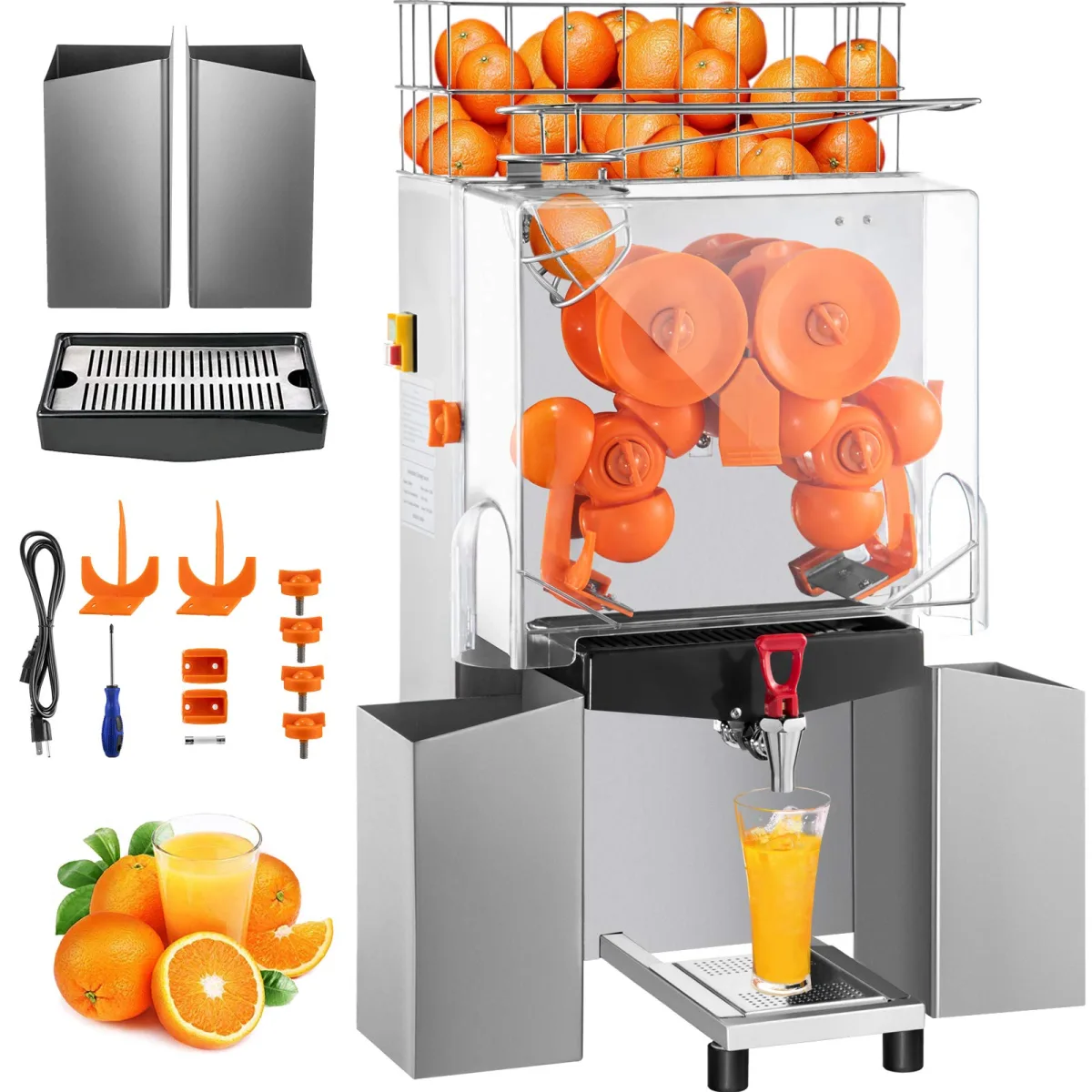
Automatic Citrus Juicers: These are the heavy hitters. They’re designed for kitchens that need to juice hundreds of fruits a day, and they do it with minimal human intervention. Most automatic juicers work by feeding the fruit into a chute, where it’s automatically cut, squeezed, and separated from the pulp and seeds. They’re faster, more efficient, and, when used correctly, can save you a ton of labor. But they’re also more expensive, more complex, and require more maintenance. And if you’re not juicing in large quantities, they might be overkill.
Pros of automatic juicers:
- Speed: Some models can juice up to 300 oranges an hour, making them ideal for high-volume operations.
- Consistency: Every fruit is juiced the same way, ensuring a uniform product.
- Labor savings: You can free up staff to focus on other tasks.
Cons of automatic juicers:
- Cost: A good automatic juicer can run you $2,000 or more.
- Complexity: More moving parts mean more things that can break down.
- Maintenance: They require regular cleaning and upkeep to keep them running smoothly.
So, which one should you choose? It depends on your volume, your budget, and your long-term goals. If you’re a small café that only serves juice occasionally, a manual juicer might be the way to go. But if you’re a juice bar, restaurant, or catering operation that relies on fresh juice daily, an automatic juicer could be a game-changer. I’m torn, though, because there’s also a middle ground. Some kitchens opt for a semi-automatic juicer, which combines the best of both worlds. They’re faster than manual juicers but more affordable than fully automatic ones. Maybe I should clarify: the right choice isn’t about which type of juicer is “better.” It’s about which one fits your specific needs.
Key Features to Look for in a Commercial Citrus Juicer
Alright, so you’ve decided whether you’re going manual or automatic. Now what? Not all juicers are created equal, and there are a few key features you’ll want to look for to ensure you’re getting the most bang for your buck. Here’s what to keep in mind:
1. Yield: How much juice does the machine actually extract from each fruit? Some juicers are more efficient than others, and a difference of even 10% can add up over time. Look for a juicer that advertises a high yield, ideally, around 90% or more. That means you’re getting the most out of every orange, which translates to less waste and lower costs.
2. Speed: How many fruits can the juicer process per hour? If you’re running a high-volume operation, this is crucial. A good automatic juicer should be able to handle at least 100-200 fruits per hour, if not more. But speed isn’t everything, you also want to make sure the juice is high quality. Some juicers sacrifice yield for speed, so it’s a balancing act.
3. Ease of Cleaning: If your juicer is a pain to clean, your staff won’t use it. Look for models with dishwasher-safe parts or ones that disassemble easily. Some automatic juicers even come with self-cleaning features, which can save you a ton of time. And trust me, in a busy kitchen, every minute counts.
4. Durability: A commercial juicer is an investment, and you want it to last. Look for models made from stainless steel or other high-quality materials. Avoid plastic parts that can crack or wear out over time. And check the warranty, some manufacturers offer lifetime warranties on certain components, which can give you peace of mind.
5. Noise Level: This might seem like a small thing, but in a busy kitchen, noise matters. Some automatic juicers can be incredibly loud, which can be a distraction (or even a safety hazard) in a fast-paced environment. Look for models that advertise quiet operation, or at least ones that won’t drown out the sound of your staff communicating.
6. Versatility: Can the juicer handle different types of citrus? Some models are designed specifically for oranges, while others can juice lemons, limes, grapefruits, and even pomegranates. If you’re planning to expand your menu beyond orange juice, this is something to consider. And if you’re only juicing oranges, make sure the machine is optimized for that, some juicers are better at extracting juice from larger fruits, while others are designed for smaller ones.
7. Footprint: How much space does the juicer take up? In a commercial kitchen, every square inch counts. Some automatic juicers are compact and countertop-friendly, while others are larger and require dedicated floor space. Think about where you’ll place the juicer and how it’ll fit into your workflow. And don’t forget to account for storage, if you’re not using it every day, you’ll need a place to keep it when it’s not in use.
I’m starting to second-guess myself here. Did I miss anything? Maybe I should add that safety features are also important. Some juicers come with automatic shut-off mechanisms or safety guards to prevent accidents. And if you’re working with a team that’s not super familiar with commercial equipment, that could be a lifesaver. But then again, maybe that’s overcomplicating things. Let’s move on.
Top Commercial Citrus Juicers in 2026: Our Picks for Every Budget
Alright, let’s get specific. After talking to chefs, juice bar owners, and equipment suppliers, I’ve put together a list of the top commercial citrus juicers in 2026. These aren’t just the most popular models, they’re the ones that consistently deliver on performance, durability, and value. And because I know budgets vary, I’ve included options for every price range.
1. Best Budget Pick: Hamilton Beach 932 Commercial Citrus Juicer
If you’re just dipping your toes into the world of fresh juice, the Hamilton Beach 932 is a great place to start. It’s a manual juicer, but don’t let that fool you, it’s built like a tank. The reamer is made from stainless steel, and the base is heavy-duty cast iron, so it won’t wobble or tip over during use. It’s designed for oranges, lemons, and limes, and it’s easy to clean and maintain. The best part? It’s under $200, making it a low-risk investment for small cafés or restaurants that only need to juice occasionally.
Pros:
- Affordable and durable.
- Easy to use and clean.
- Compact and countertop-friendly.
Cons:
- Labor-intensive for high volumes.
- Not as efficient as automatic juicers.
2. Best Mid-Range Pick: Zumex Citrocasa 4
If you’re ready to step up your game but aren’t quite ready to invest in a fully automatic juicer, the Zumex Citrocasa 4 is a fantastic option. It’s a semi-automatic juicer, which means it’s faster than a manual model but more affordable than a fully automatic one. It can juice up to 120 oranges per hour, and it’s designed to extract the maximum amount of juice with minimal waste. The reamer is made from food-grade stainless steel, and the machine is easy to disassemble for cleaning. It’s a great choice for juice bars, cafés, or restaurants that need to juice in bulk but don’t want to break the bank.
Pros:
- Faster than manual juicers.
- High yield and consistency.
- Easy to clean and maintain.
Cons:
- More expensive than manual juicers.
- Still requires some manual labor.
3. Best High-End Pick: Zumex Super Juicer Automatic
If you’re running a high-volume operation and need a juicer that can keep up with demand, the Zumex Super Juicer Automatic is the gold standard. It’s a fully automatic juicer that can process up to 300 oranges per hour, and it’s designed to extract every last drop of juice with minimal waste. The machine is made from stainless steel and features a self-cleaning system that makes maintenance a breeze. It’s also incredibly durable, some kitchens have been using the same Zumex Super Juicer for over a decade. The only downside? It’s expensive, with a price tag of around $5,000. But if you’re juicing in bulk, it’s worth every penny.
Pros:
- Extremely fast and efficient.
- High yield and consistency.
- Durable and long-lasting.
Cons:
- Expensive upfront cost.
- Larger footprint.
4. Best for Versatility: Santos 61 Juicer
If you’re looking for a juicer that can handle more than just oranges, the Santos 61 is a great choice. It’s a manual juicer, but it’s designed to work with a variety of citrus fruits, including lemons, limes, grapefruits, and even pomegranates. The reamer is adjustable, so you can get the perfect texture for every type of fruit. It’s also incredibly durable, with a stainless steel body and a heavy-duty base. The best part? It’s under $300, making it a great value for kitchens that want to experiment with different citrus flavors.
Pros:
- Versatile and durable.
- Affordable.
- Easy to use and clean.
Cons:
- Labor-intensive for high volumes.
- Not as fast as automatic juicers.
I’m starting to feel like I’ve bitten off more than I can chew here. Did I miss any models? Maybe I should’ve included a section on refurbished juicers, which can be a great way to save money without sacrificing quality. But for now, let’s move on to the next topic.
Maximizing Efficiency: How to Integrate Orange-Based Menu Items Without the Chaos
The Art of Menu Planning: Balancing Freshness and Practicality
Alright, let’s talk about the elephant in the room: fresh juice is amazing, but it’s also a logistical challenge. You can’t just slap a “fresh-squeezed” label on your menu and call it a day. You need a plan. You need to think about supply chains, storage, staffing, and, perhaps most importantly-waste. Because let’s be real: if you’re juicing oranges, you’re going to have peels, pulp, and seeds left over. And if you’re not careful, that waste can add up fast.
So, how do you integrate orange-based menu items without creating a mess? It starts with menu planning. You need to think about:
1. Volume: How many oranges will you need per day, per week, per month? This isn’t just about meeting demand, it’s about avoiding waste. If you’re juicing 100 oranges a day but only selling 50 glasses of juice, you’re throwing away money. And in 2026, with food costs higher than ever, that’s a problem.
2. Storage: Fresh oranges don’t last forever. You’ll need a place to store them, and it needs to be cool, dry, and well-ventilated. Some kitchens opt for walk-in coolers, while others use dry storage racks. Either way, you’ll need to rotate your stock to ensure you’re using the oldest fruit first. And don’t forget about juice storage-if you’re pre-juicing, you’ll need a way to keep it fresh. Some kitchens use airtight containers or vacuum sealers, while others invest in blast chillers to extend shelf life.
3. Staffing: Who’s going to do the juicing? If you’re using a manual juicer, this is a labor-intensive task. If you’re using an automatic juicer, it’s less hands-on but still requires oversight. You’ll need to train your staff on how to use the machine, how to clean it, and how to troubleshoot common issues. And if you’re short-staffed (which, again, who isn’t these days?), this can be a challenge.
4. Waste Management: What are you going to do with all those peels and pulp? Some kitchens compost them, while others repurpose them into zest, marmalade, or even citrus-infused cleaning products. And if you’re really creative, you can use them to make citrus oils or flavored syrups. But whatever you do, don’t just throw them away, because that’s money down the drain.
I’m starting to feel overwhelmed. Maybe I should clarify: this isn’t about overcomplicating things. It’s about being intentional. You don’t need a PhD in supply chain management to run a successful juice program. You just need a plan. And the good news is, there are plenty of tools and resources out there to help you.
Batch Juicing vs. On-Demand: Which Approach is Right for You?
One of the biggest decisions you’ll need to make is whether to juice in batches or on-demand. Both approaches have their pros and cons, and the right choice depends on your volume, your menu, and your workflow. Let’s break it down.
Batch Juicing: This is where you juice a large quantity of oranges at once and store the juice for later use. It’s a great option if you’re running a high-volume operation and need to keep up with demand. The biggest advantage of batch juicing is efficiency. You can juice all your oranges at once, which saves time and labor. But there are some downsides. Fresh juice doesn’t last long, even in the fridge, it starts to lose its brightness after a few hours. And if you’re not careful, you can end up with a lot of waste. Some kitchens use blast chillers or vacuum sealers to extend shelf life, but even then, you’re limited to a day or two.
On-Demand Juicing: This is where you juice oranges as they’re ordered. It’s the gold standard for freshness, but it’s also more labor-intensive. The biggest advantage of on-demand juicing is quality. There’s nothing like a glass of juice that was squeezed just seconds ago. But the downside is speed. If you’re juicing by hand, this can create a bottleneck during peak hours. And if you’re using an automatic juicer, you’ll need to make sure it’s always stocked and ready to go.
So, which approach is right for you? It depends. If you’re a juice bar or café with a high volume of juice orders, batch juicing might be the way to go. But if you’re a restaurant that only serves juice occasionally, on-demand juicing could be a better fit. I’m torn, though, because there’s also a middle ground. Some kitchens use a hybrid approach, where they juice in small batches throughout the day. That way, they get the efficiency of batch juicing with the freshness of on-demand. Maybe I should clarify: there’s no one-size-fits-all answer. It’s about finding the approach that works best for your specific operation.
Waste Not, Want Not: Creative Ways to Repurpose Citrus Byproducts
Let’s talk about waste. Because if you’re juicing oranges, you’re going to have a lot of it. Peels, pulp, seeds, it all adds up. And if you’re not careful, it can become a logistical nightmare. But here’s the thing: citrus waste isn’t just trash. It’s an opportunity. With a little creativity, you can turn those byproducts into ew menu items, cleaning products, or even sustainable packaging. And in 2026, that’s a huge selling point. Customers are looking for businesses that prioritize sustainability, and repurposing waste is a great way to show that you’re committed to the cause.
Here are a few ideas to get you started:
1. Citrus Zest: The peels of oranges, lemons, and limes are packed with flavor. You can use them to make citrus zest, which is a great way to add brightness to baked goods, marinades, and sauces. Some kitchens even use zest to make citrus-infused salts or sugars, which can be sold as retail items or used in-house.
2. Marmalade: If you’ve ever made marmalade, you know it’s a labor of love. But it’s also a great way to use up citrus peels. You can make it in-house and sell it as a retail item, or use it to top toast, yogurt, or cheese plates. And if you’re feeling really ambitious, you can experiment with different flavors, like blood orange and ginger or grapefruit and rosemary.
3. Citrus Oils: Citrus peels are rich in essential oils, which can be used to make flavored oils or cleaning products. Some kitchens even use citrus oils to make atural air fresheners or candles. And if you’re not up for DIY, there are plenty of companies that will buy your citrus waste to make these products for you.
4. Compost: If you’re not ready to get creative, composting is always an option. Citrus peels break down quickly and add valuable nutrients to your compost pile. And if you’re not composting on-site, there are plenty of local farms and gardens that will take your waste off your hands.
5. Citrus-Infused Cleaning Products: Citrus peels are a natural degreaser, which makes them perfect for cleaning products. You can use them to make all-purpose cleaners, dish soap, or even laundry detergent. And if you’re not up for DIY, there are plenty of companies that will buy your citrus waste to make these products for you.
I’m starting to feel like I’ve opened a can of worms here. Did I miss anything? Maybe I should add that some kitchens use citrus waste to make animal feed or biofuel. But for now, let’s move on to the next topic.
The Hidden Costs of Cutting Corners: Why Cheap Juicers Cost More in the Long Run
The True Cost of Ownership: Why Upfront Savings Can Be Deceiving
Let’s talk about money. Because if you’re running a commercial kitchen, you know that every dollar counts. And when it comes to commercial citrus juicers, it’s tempting to go for the cheapest option. After all, a juicer is a juicer, right? Wrong. The truth is, cheap juicers cost more in the long run. They break down more often, they’re less efficient, and they can even cost you customers. So, let’s break down the true cost of ownership-because it’s not just about the price tag.
1. Repair Costs: Cheap juicers are more likely to break down, and when they do, the repairs can be expensive. Some parts aren’t covered by warranties, and if you’re not handy, you’ll need to hire a technician. Over time, those repair costs can add up to more than the price of a high-quality juicer.
2. Labor Costs: Cheap juicers are often less efficient, which means they take longer to juice the same amount of fruit. And if you’re paying your staff by the hour, that’s money out of your pocket. A high-quality juicer can save you hours of labor per week, which translates to real savings.
3. Waste: Cheap juicers are less efficient at extracting juice, which means you’re wasting more fruit. And if you’re buying oranges by the case, that’s money down the drain. A high-quality juicer can extract 90% or more of the juice from each fruit, which means you’re getting the most bang for your buck.
4. Customer Satisfaction: Cheap juicers often produce lower-quality juice, which can affect the taste of your menu items. And if your customers aren’t happy, they’re not coming back. A high-quality juicer can help you deliver a consistent, high-quality product that keeps customers coming back for more.
I’m starting to feel like I’m preaching to the choir here. But it’s worth repeating: when it comes to commercial equipment, you get what you pay for. And if you’re serious about maximizing efficiency, you need to invest in a juicer that’s built to last. Maybe I should clarify: this isn’t about buying the most expensive juicer on the market. It’s about finding the right balance between cost and quality. And in most cases, that means spending a little more upfront to save a lot in the long run.
The Domino Effect: How One Bad Juicer Can Disrupt Your Entire Operation
Alright, let’s get real for a second. A juicer isn’t just a juicer. It’s a critical piece of equipment that can make or break your operation. And if it’s not up to par, it can have a domino effect on the rest of your kitchen. Here’s how:
1. Bottlenecks: If your juicer is slow or inefficient, it can create a bottleneck during peak hours. And if your staff is waiting around for juice, they’re not serving customers. That means longer wait times, frustrated customers, and lost revenue.
2. Inconsistency: If your juicer isn’t producing consistent results, it can affect the taste of your menu items. And if your customers are getting different experiences every time they visit, they’re not going to be happy. Consistency is key in the food service industry, and a bad juicer can throw that out the window.
3. Waste: If your juicer is wasting fruit, it’s wasting money. And if you’re not careful, that waste can add up fast. Some kitchens end up throwing away 30% or more of their citrus because their juicer isn’t efficient enough. That’s money you could be putting back into your business.
4. Staff Morale: Let’s not forget about your team. If your juicer is a pain to use, clean, or maintain, your staff is going to dread using it. And if they’re not happy, they’re not going to perform at their best. A high-quality juicer can make their jobs easier, which translates to better morale and better service.
I’m starting to feel like I’m being a little dramatic here. But the truth is, a bad juicer can have a ripple effect on your entire operation. And if you’re not careful, it can cost you more than just money, it can cost you customers, staff, and even your reputation. So, let’s talk about how to avoid that.
How to Avoid the Pitfalls of Cheap Juicers: A Checklist for Smart Buyers
Alright, so you’re convinced: cheap juicers aren’t worth the savings. But how do you avoid them? Here’s a checklist to help you make a smart purchase:
1. Do Your Research: Don’t just buy the first juicer you see. Read reviews, talk to other chefs, and compare features. The more you know, the better equipped you’ll be to make an informed decision.
2. Consider Your Volume: How many oranges do you need to juice per day? If you’re only juicing a few dozen, a manual juicer might be enough. But if you’re juicing hundreds, you’ll need something more heavy-duty.
3. Think About Your Menu: What are you using the juice for? If you’re only serving OJ, a basic juicer might be enough. But if you’re using juice in sauces, marinades, or desserts, you’ll need something more versatile.
4. Check the Warranty: A good warranty is a sign of a quality product. Look for juicers with lifetime warranties on key components, or at least a 2-3 year warranty on the entire machine.
5. Test It Out: If possible, test the juicer before you buy it. See how easy it is to use, how much juice it extracts, and how noisy it is. And don’t forget to ask about maintenance, how easy is it to clean, and how often does it need to be serviced?
6. Consider the Long-Term Costs: Don’t just look at the price tag. Think about the true cost of ownership, including repair costs, labor costs, and waste. A cheap juicer might save you money upfront, but it could cost you more in the long run.
7. Buy from a Reputable Dealer: Not all dealers are created equal. Look for one that specializes in commercial equipment and has a good reputation. And don’t be afraid to ask for references, talking to other customers can give you valuable insights.
I’m starting to feel like I’ve covered all the bases here. But maybe I should add one more thing: don’t be afraid to ask for help. If you’re not sure what to buy, talk to a kitchen consultant or equipment specialist. They can help you find the right juicer for your specific needs. And in the long run, that could save you a lot of time, money, and headaches.
Real-World Examples: How Kitchens Are Maximizing Efficiency with Citrus Juicers
Case Study 1: The Juice Bar That Cut Labor Costs by 40%
Let’s start with a success story. A few years ago, I visited a juice bar in Portland that was struggling to keep up with demand. They were juicing oranges by hand, and it was taking up to three hours a day just to keep up with their morning rush. Their staff was exhausted, their customers were frustrated, and their profits were suffering. So, they decided to invest in a Zumex Super Juicer Automatic. And the results were nothing short of transformative.
Within a month, they had cut their labor costs by 40%. They were able to juice the same amount of oranges in half the time, which freed up their staff to focus on other tasks. And because the juicer was so efficient, they were able to reduce their waste by 30%. But the real game-changer? Customer satisfaction. Their juice tasted fresher, their wait times were shorter, and their customers were happier. Within six months, they had expanded their menu to include citrus-infused smoothies, orange-glazed pastries, and even citrus-marinated meats. And their revenue? It increased by 25%.
I’m starting to feel like this is too good to be true. But the numbers don’t lie. Investing in the right equipment can have a huge impact on your bottom line. And in this case, it wasn’t just about the juicer, it was about rethinking their entire operation. They didn’t just buy a machine; they bought a solution.
Case Study 2: The Restaurant That Turned Citrus Waste into a Revenue Stream
Now, let’s talk about waste. Because if you’re juicing oranges, you’re going to have a lot of it. And if you’re not careful, it can become a logistical nightmare. But one restaurant in San Francisco found a way to turn their citrus waste into a revenue stream. Here’s how:
They started by collecting all their citrus peels and pulp. Then, they partnered with a local distillery to make citrus-infused spirits. They also used the peels to make citrus zest, which they sold as a retail item. And the pulp? They used it to make citrus marmalade, which they served with their breakfast menu. But they didn’t stop there. They also started composting their waste and selling the compost to local gardens. And the best part? They were able to offset 50% of their waste disposal costs while generating additional revenue.
I’m starting to feel like this is a little too ambitious for most kitchens. But the point is, there are ways to repurpose citrus waste that don’t require a lot of effort. Even something as simple as composting can make a difference. And in 2026, with sustainability becoming more important than ever, that’s a selling point you can’t afford to ignore.
Case Study 3: The Café That Used a Manual Juicer to Build a Loyal Following
Not every success story involves a high-tech juicer. Sometimes, the simplest solutions are the best. Take, for example, a café in Brooklyn that built a loyal following by using a manual citrus juicer. Here’s how:
They started by offering fresh-squeezed orange juice as a breakfast item. But they didn’t just serve it, they made it an experience. They set up a juicing station right in the middle of the café, where customers could watch their juice being made. They also trained their staff to talk about the benefits of fresh juice, and they offered samples to anyone who was curious. And the results? Their juice became a signature item, and their café became a destination for juice lovers. Within a year, they had expanded their menu to include citrus-infused teas, orange-glazed pastries, and even citrus-marinated meats. And their revenue? It increased by 30%.
I’m starting to feel like this is a reminder that you don’t need the fanciest equipment to succeed. Sometimes, all it takes is a little creativity and a lot of passion. And in this case, it wasn’t about the juicer, it was about the experience.
Putting It All Together: Your Action Plan for Citrus Efficiency
Alright, let’s wrap this up. We’ve covered a lot of ground, from the basics of commercial citrus juicers to the nitty-gritty of menu planning and waste management. But how do you put it all into action? Here’s your step-by-step plan for maximizing efficiency with orange-based menu items:
Step 1: Assess Your Needs
Start by asking yourself a few key questions:
- How many oranges do you need to juice per day?
- What’s your budget for a juicer?
- What are you using the juice for?
- How much space do you have in your kitchen?
Your answers will help you determine whether you need a manual, semi-automatic, or fully automatic juicer.
Step 2: Choose the Right Juicer
Once you’ve assessed your needs, it’s time to choose a juicer. Refer back to our buyer’s guide for recommendations, and don’t forget to consider factors like yield, speed, ease of cleaning, and durability.
Step 3: Plan Your Menu
Think about how you’re going to use the juice. Are you serving it as a beverage, or are you using it in sauces, marinades, or desserts? Consider offering a mix of on-demand and batch-juiced items to balance freshness and efficiency.
Step 4: Train Your Staff
Your juicer is only as good as the people using it. Make sure your staff knows how to operate the machine, how to clean it, and how to troubleshoot common issues. And don’t forget to train them on food safety-fresh juice can be a breeding ground for bacteria if it’s not handled properly.
Step 5: Manage Your Waste
Don’t let your citrus waste go to waste. Think about ways to repurpose it, whether that’s through composting, marmalade, or citrus-infused products. And if you’re not sure where to start, talk to other chefs or do some research online.
Step 6: Monitor and Adjust
Finally, don’t set it and forget it. Monitor your juicer’s performance, track your waste, and adjust your menu as needed. And don’t be afraid to experiment, try new recipes, test different juicing techniques, and see what works best for your operation.
I’m starting to feel like this is a lot to take in. But the good news is, you don’t have to do it all at once. Start small, and build from there. And remember: the goal isn’t perfection. It’s progress.
FAQ: Your Burning Questions About Commercial Citrus Juicers
Q: How much juice can I expect to get from one orange?
A: On average, one medium-sized orange yields about 2-3 ounces of juice. However, this can vary depending on the variety of orange, its ripeness, and the efficiency of your juicer. A high-quality commercial juicer can extract up to 90% of the juice from each fruit, while a manual juicer might only get 70-80%. To maximize yield, choose ripe, juicy oranges and make sure your juicer is properly maintained.
Q: How long does fresh-squeezed orange juice last?
A: Fresh-squeezed orange juice is best consumed immediately, but it can be stored in the refrigerator for 24-48 hours if kept in an airtight container. After that, it starts to lose its brightness and nutritional value. Some kitchens use blast chillers or vacuum sealers to extend shelf life, but even then, it’s best to use the juice within a day or two. If you’re juicing in bulk, consider freezing the juice in ice cube trays for later use in sauces, marinades, or smoothies.
Q: What’s the best way to clean a commercial citrus juicer?
A: Cleaning your juicer regularly is crucial for food safety and performance. Most commercial juicers are designed to be easy to disassemble, so start by taking apart the reamer, strainer, and any other removable parts. Wash these components with warm, soapy water, and use a brush to remove any pulp or seeds. Some parts may be dishwasher-safe, but always check the manufacturer’s instructions first. For the main body of the juicer, wipe it down with a damp cloth and mild detergent. Avoid using abrasive cleaners, as they can damage the surface. And don’t forget to clean the juicer after every use, leaving pulp or juice residue can lead to bacterial growth and affect the taste of your juice.
Q: Can I use a commercial citrus juicer for other fruits, like lemons or grapefruits?
A: It depends on the juicer. Some commercial citrus juicers are designed specifically for oranges, while others can handle a variety of citrus fruits, including lemons, limes, and grapefruits. If you’re planning to juice different types of fruit, look for a versatile juicer with an adjustable reamer. Keep in mind that some fruits, like grapefruits, may require a different juicing technique or additional straining to remove seeds. Always check the manufacturer’s instructions to ensure your juicer is compatible with the fruits you plan to use. And if you’re juicing a lot of different fruits, consider investing in a multi-purpose juicer that can handle a variety of produce.
I’m starting to feel like I’ve covered all the bases here. But if you have any other questions, don’t hesitate to reach out. The world of commercial citrus juicers can be overwhelming, but with the right information, you can make a smart, informed decision that’ll pay off in the long run.
@article{the-hidden-power-of-commercial-citrus-juicers-how-to-maximize-efficiency-with-orange-based-menu-items-in-2026,
    title   = {The Hidden Power of Commercial Citrus Juicers: How to Maximize Efficiency with Orange-Based Menu Items in 2026},
    author  = {Chef's icon},
    year    = {2026},
    journal = {Chef's Icon},
    url     = {https://chefsicon.com/commercial-citrus-juicers-maximizing-efficiency-orange-based-menu-items/}
}