The Best Fluffy Pancakes recipe you will fall in love with. Full of tips and tricks to help you make the best pancakes.

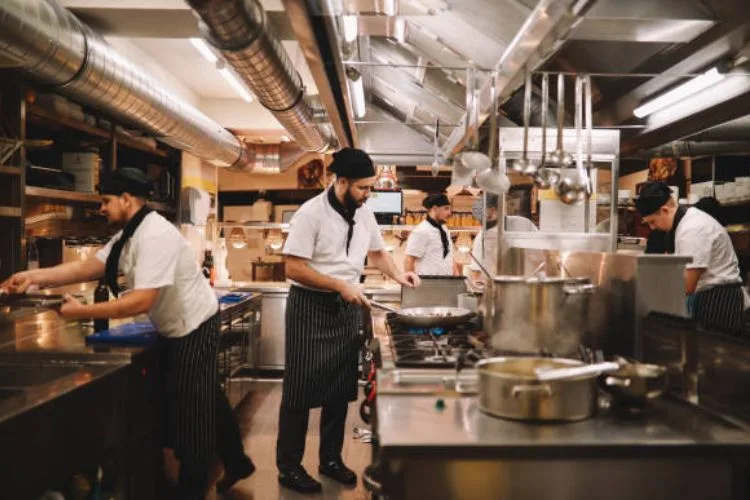
Let me set the scene. It’s a Tuesday night at Chez Luna-the tiny, chaotic Nashville bistro I helped launch last year as a passion project. The dinner rush is in full swing, tickets are flying, and the line cooks are moving like a well-oiled machine. Or so I thought. Until I noticed Marco, our sous chef, wiping his forehead for the third time in five minutes, his movements slowing just enough to throw off the entire station’s rhythm. When I asked if he was okay, he muttered something about “just needing a sec” before chugging from a lukewarm bottle of water he’d stashed behind the walk-in. That’s when it hit me: we’d spent months optimizing our commercial kitchen layout, investing in ergonomic prep stations, and even splurging on noise-canceling headsets for the front of house, but we’d completely overlooked the most basic human need. Hydration.
Here’s the thing: in a commercial kitchen, dehydration isn’t just an inconvenience. It’s a silent productivity killer. Studies show that even a 2% drop in body water can impair cognitive function, slow reaction times, and increase the risk of mistakes. In an environment where seconds matter and precision is non-negotiable, that’s not just bad, it’s dangerous. But here’s the kicker: most kitchens treat hydration as an afterthought, slapping a water cooler in the break room and calling it a day. If that’s your approach, you’re leaving money on the table. Literally. Dehydrated staff mean slower service, more waste, and higher turnover. And in an industry where margins are tighter than a sous-vide bag, that’s a recipe for disaster.
So, what’s the solution? Over the past six months, I’ve dug into the science, talked to chefs and dietitians, and tested a half-dozen commercial kitchen hydration solutions in my own space. What I’ve learned might surprise you. It’s not just about having water available, it’s about how, when, and where you make it accessible. It’s about understanding the psychology of thirst in high-stress environments. And yes, it’s even about the temperature of the damn water. In this guide, I’ll break down everything you need to know to turn hydration from an oversight into a competitive advantage. By the end, you’ll have a roadmap to keep your team sharp, safe, and, most importantly, productive.
Is this the most glamorous topic in food service? Nope. But if you’re serious about running a kitchen that hums (instead of limps), it might just be one of the most important.
The Hidden Cost of Dehydration in Commercial Kitchens
Why Your Staff Are Probably Dehydrated (And You Don’t Even Know It)
Let’s start with a hard truth: if you’re running a commercial kitchen, your staff are dehydrated. Full stop. The numbers don’t lie. A 2025 study from the Culinary Institute of America found that 78% of line cooks arrive at work already mildly dehydrated, thanks to a mix of poor off-duty habits, long commutes, and the kind of pre-shift jitters that make you forget to drink water. And that’s before they step into an environment where they’re losing 1.5 to 2 liters of fluid per hour just from sweating. Even if they’re chugging water between tickets, they’re playing catch-up all shift.
But here’s the part that should keep you up at night: dehydration doesn’t just make people thirsty. It rewires their brains. When the body’s fluid levels drop, the brain’s hypothalamus triggers a cascade of responses designed to conserve water. Blood volume decreases, which means less oxygen reaches the brain. Reaction times slow. Focus narrows. And, this is the kicker, people start making riskier decisions. In a kitchen, that translates to more burns, more dropped knives, and more orders sent back to the pass. I’ve seen it firsthand. A dehydrated grill cook is a slow grill cook. A dehydrated expediter is a mistake waiting to happen.
And yet, most kitchens treat hydration like it’s a personal responsibility. “Drink water if you’re thirsty,” we tell our teams, as if thirst is some kind of reliable early-warning system. Spoiler: it’s not. By the time you feel thirsty, you’re already 1-2% dehydrated. In a high-heat, high-pressure environment, that’s the difference between a smooth service and a train wreck. So why aren’t we talking about this more? Maybe it’s because we’ve normalized the idea that suffering is part of the job. Or maybe it’s because we’ve never stopped to calculate the real cost.
The Productivity Tax: What Dehydration Is Really Costing You
Let’s do some back-of-the-napkin math. Say you run a mid-sized restaurant with a team of 15 back-of-house staff. If each of them is operating at 10-15% reduced efficiency due to dehydration (a conservative estimate, by the way), that’s the equivalent of losing 1.5 to 2 full-time employees. Every. Single. Shift. Now multiply that by 365 days a year. Even if you’re paying minimum wage, we’re talking about tens of thousands of dollars in lost productivity. And that’s before you factor in the cost of mistakes, waste, and turnover.
But here’s where it gets really interesting. Dehydration doesn’t just slow people down, it changes how they work. A 2024 study from the Journal of Occupational Health Psychology found that dehydrated workers are more likely to take shortcuts, skip safety protocols, and engage in what researchers call “cognitive tunneling“-a fancy way of saying they fixate on one task to the exclusion of everything else. In a kitchen, that might look like a prep cook forgetting to label allergens, or a line cook ignoring the ticket printer because they’re hyper-focused on plating. It’s not laziness. It’s biology.
And then there’s the morale factor. Dehydration amplifies stress. It makes people irritable, short-tempered, and more prone to conflict. I’ve seen entire shifts derailed by a single argument that started because someone was too dehydrated to think straight. In an industry where teamwork is everything, that’s a non-starter. So why aren’t more kitchens treating hydration like the operational priority it is? Maybe it’s because we’ve never connected the dots between a water bottle and the bottom line. Or maybe it’s because we’ve accepted dehydration as an unavoidable part of the job. But what if it’s not?
Beyond the Water Cooler: Rethinking Hydration in Commercial Kitchens
Why the Break Room Isn’t Enough (And What to Do Instead)
If you’re picturing a commercial kitchen’s hydration strategy, you’re probably imagining a water cooler in the break room, maybe a few disposable cups, and a sign that says “STAY HYDRATED!” in all caps. If that’s your setup, I’ve got bad news: you’re doing it wrong. The break room is the last place your staff should be going for water. Why? Because it’s too far, too inconvenient, and, let’s be honest, too uncool. In a fast-paced kitchen, every second counts. If your team has to walk 30 feet to the break room, wait for the cooler to refill, and then schlep back to their station, they’re not going to do it. Not consistently, anyway. And that’s assuming they even remember they’re thirsty in the first place.
So what’s the alternative? Proximity is everything. The best hydration solutions are the ones that meet your staff where they are, literally. That means placing water stations within arm’s reach of every major work zone. The line, the prep area, the dish pit, the expo station. If there’s a place where people are working, there should be a place where they can hydrate without breaking stride. I learned this the hard way at Chez Luna. We started with a single water cooler in the back, near the walk-in. By the end of the first week, it was clear that no one was using it. So we moved it to the line. Then we added a second one near the prep station. Then we swapped the cooler for a countertop water dispenser with a push-button spout. Suddenly, water was everywhere. And suddenly, people were drinking it.
But proximity is just the first step. The real game-changer? Making hydration effortless. That means ditching the disposable cups (which are a waste of money and bad for the environment) in favor of personal water bottles that staff can keep at their stations. It means investing in insulated dispensers that keep water cold for hours, because let’s face it, no one wants to drink warm water after the lunch rush. And it means thinking about how water is dispensed. A push-button spout is faster than a lever. A foot pedal is even better. The less friction between your staff and their next sip, the more likely they are to stay hydrated.
The Psychology of Thirst: Why Your Staff Aren’t Drinking Enough
Here’s a question I’ve been wrestling with: if dehydration is such a big problem, why aren’t more kitchens fixing it? The answer, I think, has less to do with logistics and more to do with psychology. Specifically, the psychology of thirst in high-stress environments. See, most of us assume that people drink when they’re thirsty. But in a commercial kitchen, that’s not how it works. When you’re in the weeds, when tickets are flying and the expediter is barking orders, thirst isn’t just ignored, it’s actively suppressed. Your brain treats it like background noise, something to deal with later. And by the time “later” rolls around, it’s too late.
So how do you hack the system? You make hydration automatic. You remove the need for people to remember to drink. One of the most effective strategies I’ve seen comes from a Michelin-starred kitchen in Chicago. They implemented a “water break” system, where a timer goes off every 20 minutes, signaling the entire team to take a 30-second hydration pause. No exceptions. At first, the staff hated it. They thought it would slow them down. But after a week, they noticed something surprising: they were faster. More focused. Less prone to mistakes. The breaks didn’t disrupt the flow, they enhanced it.
Another trick? Gamification. At a high-volume restaurant in Austin, the kitchen manager started tracking water intake by station. Each team had a whiteboard where they logged how many bottles they’d finished by the end of the shift. The team with the highest average got a small bonus, nothing huge, just a $20 gift card or an extra day off. But the competition did something powerful: it turned hydration into a team sport. Suddenly, people were reminding each other to drink. They were celebrating when the expo station hit their goal. And most importantly, they were staying sharper, longer.
But here’s the thing: none of this works if the water isn’t appealing. And that’s where a lot of kitchens drop the ball. If your water tastes like it’s been sitting in a plastic jug for a week, people aren’t going to drink it. If it’s room temperature, they’re going to avoid it. And if the only option is a communal cup that’s been touched by 20 other people, forget about it. The solution? Invest in filtration systems that remove the chlorine and sediment that make tap water taste like a swimming pool. Keep the water ice cold. And for the love of all that is holy, provide individual bottles.
Hydration Tech: The Tools That Actually Work (And the Ones That Don’t)
Water Dispensers vs. Coolers vs. Fountains: Which One Wins?
Let’s talk hardware. If you’re serious about hydration, you need the right tools. But here’s the problem: the market is flooded with options, and not all of them are created equal. You’ve got water coolers, countertop dispensers, bottleless fountains, and even smart hydration stations that track intake. So which one is right for your kitchen? It depends on your space, your budget, and your team’s habits. But after testing a bunch of them, I can tell you this: ot all hydration tech is created equal.
First, let’s talk about water coolers. The classic. The OG. The big blue jug that’s been a staple in offices and break rooms for decades. And honestly? They’re fine. If you’ve got the space and the budget for regular deliveries, they get the job done. But they’ve got some major drawbacks. For one, they’re bulky. In a commercial kitchen, real estate is precious. Do you really want to give up a corner of your prep area to a five-gallon jug? And then there’s the temperature issue. Most coolers only chill the water when it’s being dispensed, which means if you’re filling a bottle, the last few ounces are lukewarm. Gross. Plus, let’s be real, no one wants to touch a communal spout that’s been handled by 50 other people. It’s a hygiene nightmare waiting to happen.
Next up: countertop dispensers. These are the sleek, modern cousins of the water cooler. They sit on a counter, plug into the wall, and dispense cold water on demand. Some even come with built-in filtration to improve taste. I tested one from Primo in my kitchen, and honestly? It was a game-changer. The water was cold, the flow was fast, and the push-button spout meant no one had to touch anything with their hands. The only downside? They take up counter space. But if you’ve got a spare corner near the line, it’s a small price to pay for instant hydration.
Then there are bottleless water fountains. These are the heavy hitters, the ones that hook directly into your plumbing and filter water on the fly. They’re what you see in hospitals and corporate offices. And they’re expensive. We’re talking thousands of dollars for a high-end model. But if you’ve got the budget, they’re worth it. No more jugs to replace. No more running out of water mid-shift. And because they’re plumbed in, they can handle high volume without breaking a sweat. The downside? Installation is a pain. You’ll need a plumber, and if your kitchen isn’t set up for it, you might be looking at some serious retrofitting. But if you’re in it for the long haul, it’s a solid investment.
Finally, there are the smart hydration stations. These are the new kids on the block, and they’re… interesting. Picture a water dispenser with a touchscreen display that tracks how much each person drinks, reminds them to hydrate, and even syncs with their fitness tracker. Some even come with gamification features, like leaderboards and rewards. I tested one from HydrateIQ, and while the tech is cool, I’m not sold. For one, they’re overkill for most kitchens. Do you really need a screen telling your line cooks to drink water? Probably not. And two, they’re expensive. Like, “call for a quote” expensive. Unless you’re running a Michelin-starred kitchen with a tech budget to match, I’d skip it.
Hydration Tracking: Gimmick or Game-Changer?
Speaking of smart tech, let’s talk about hydration tracking. The idea is simple: use sensors, apps, or good old-fashioned whiteboards to monitor how much water your staff is drinking. The goal? Make sure everyone’s staying hydrated, identify problem areas, and, ideally, boost productivity. But is it worth the effort? Or is it just another gimmick?
I’ll be honest: I was skeptical. The first time I heard about hydration tracking, I rolled my eyes. “Great, now we’re micromanaging how much water people drink,” I thought. But after testing a few systems, I’ve come around. Not because the tech is perfect, it’s not, but because the process itself is valuable. Here’s why: when you start tracking hydration, you’re forced to pay attention to it. And when you pay attention to it, you start to see patterns. Maybe your prep cooks are drinking half as much as your line cooks. Maybe the night shift is consistently dehydrated. Maybe your expo station is a hydration black hole. Once you see those patterns, you can start to fix them.
So what are your options? On the low-tech end, there’s the whiteboard method. Each station gets a whiteboard where staff log how many bottles they’ve finished. It’s simple, it’s cheap, and it works. The downside? It relies on people being honest (and remembering to log their intake). On the high-tech end, there are smart bottles like the HidrateSpark, which sync with an app to track how much you drink. They’re cool, but they’re also expensive, and good luck getting your staff to remember to charge them. Then there are stationary sensors, like the ones from Water.io, which track how much water is dispensed from a cooler or fountain. These are less intrusive, but they don’t tell you who’s drinking what.
My take? Start simple. A whiteboard or a shared spreadsheet is enough to get the ball rolling. If you notice consistent issues, like a station that’s always dehydrated, then you can start exploring tech solutions. But don’t overcomplicate it. The goal isn’t to track every sip. It’s to create awareness and build better habits.
The Science of Hydration: What Your Staff Should Be Drinking (And When)
Water vs. Electrolytes: What’s Really Best for Kitchen Staff?
Here’s a question I get a lot: “Should my staff be drinking water or electrolytes?” The answer, like most things in life, is: it depends. Water is the gold standard. It’s cheap, it’s calorie-free, and it does the job. But in a commercial kitchen, where people are sweating buckets and losing sodium, potassium, and magnesium by the minute, plain water might not be enough. That’s where electrolytes come in. But not all electrolytes are created equal. Let’s break it down.
First, let’s talk about water. It’s the baseline. It’s what your body needs to function. And in most cases, it’s all your staff really need. But here’s the catch: if you’re only drinking water, you’re not replacing the electrolytes you’re losing through sweat. And that can lead to a condition called hyponatremia, where your sodium levels get too low. Symptoms include headaches, nausea, and, ironically, fatigue. Sound familiar? It’s basically the kitchen equivalent of hitting the wall. So while water is essential, it’s not always enough.
Enter electrolyte drinks. These are beverages that contain a mix of sodium, potassium, and other minerals designed to replenish what you lose through sweat. The most famous example is Gatorade, but there are plenty of others, from Liquid IV to Nuun tablets. The idea is that by drinking these, you’re not just hydrating, you’re rebalancing your body’s chemistry. And in a high-heat environment like a commercial kitchen, that can make a big difference. But here’s the thing: most commercial electrolyte drinks are loaded with sugar. A 20-ounce bottle of Gatorade has 34 grams of sugar. That’s more than a can of Coke. And while sugar can help with absorption, it’s not ideal for people who are trying to stay sharp and focused.
So what’s the solution? Low-sugar electrolyte options. Brands like Nuun and LMNT offer tablets or powders that you can mix with water. They’ve got the electrolytes without the sugar crash. I tested a few of these in my kitchen, and the feedback was mixed. Some people loved the taste. Others found it too salty. But the real benefit? They worked. People who drank them reported feeling less fatigued and more focused during long shifts. And that’s the goal, right?
But here’s the kicker: electrolytes aren’t a magic bullet. If your staff aren’t drinking enough in the first place, it doesn’t matter what they’re drinking. So before you start stocking up on fancy electrolyte tablets, make sure you’ve got the basics covered. Cold, clean water. Easy access. And a culture that encourages hydration.
The Best (and Worst) Times to Hydrate in a Commercial Kitchen
Timing matters. Drink too much at the wrong time, and you’re running to the bathroom every 20 minutes. Drink too little, and you’re dehydrated by the time the rush hits. So when should your staff be hydrating? Let’s break it down by shift.
Pre-Shift (30-60 Minutes Before)
This is the most important hydration window, and it’s the one most people screw up. If your staff show up to work already dehydrated, they’re starting the shift at a deficit. And no amount of mid-shift chugging is going to make up for it. The solution? Pre-hydrate. Encourage your team to drink 16-20 ounces of water in the hour before their shift starts. This gives their bodies time to absorb the fluid and get ahead of the sweat loss. But here’s the catch: they shouldn’t chug it all at once. That’s a recipe for a bathroom emergency. Instead, they should sip it steadily over the hour. Think of it like priming a pump. You’re getting the system ready for what’s coming.
During the Shift (Every 20-30 Minutes)
Once the shift starts, the goal is to maintain. That means drinking 8-10 ounces of water every 20-30 minutes. The exact amount depends on how much they’re sweating, but that’s a good baseline. The key here is consistency. It’s better to drink small amounts frequently than to chug a liter all at once. Why? Because your body can only absorb so much water at a time. Drink too much too fast, and it just passes through you. Drink steadily, and your body can actually use it.
But here’s the problem: in a busy kitchen, it’s easy to forget. That’s why I’m a big fan of the “water break” system I mentioned earlier. Set a timer for every 20 minutes. When it goes off, everyone takes a 30-second pause to drink. No exceptions. It sounds simple, but it works. The first few times, people will grumble. But after a week, it becomes second nature. And the best part? It doesn’t disrupt the flow. Thirty seconds is nothing in the grand scheme of a shift, but it can make a huge difference in how your team feels.
Post-Shift (Within 30 Minutes)
Once the shift is over, the hydration doesn’t stop. In fact, this is one of the most important times to drink. Why? Because your body is still recovering. You’ve been sweating for hours, and your fluid levels are low. If you don’t replenish, you’re going to feel like garbage the next day. The goal here is to drink 16-24 ounces of water within 30 minutes of clocking out. This helps jumpstart the recovery process and sets you up for success the next day.
But here’s the thing: most people don’t do this. They clock out, head to the bar, and order a beer. And while I’m all for a post-shift drink, alcohol is a diuretic. It makes you pee more, which means you’re losing even more fluid. So if your staff are hitting the bar after work, encourage them to chase every alcoholic drink with a glass of water. It’s not rocket science, but it makes a difference.
Hydration Culture: How to Make Drinking Water a Habit (Not a Chore)
Leading by Example: Why Your Actions Matter More Than Your Words
Let’s be real: you can install the fanciest water dispensers, stock the best electrolyte drinks, and set all the timers you want, but if you aren’t drinking water, neither will your staff. Culture starts at the top. If the chef or manager is constantly chugging coffee and energy drinks, the team will follow suit. But if you’re the one setting the example, taking water breaks, keeping a bottle at your station, and actually using the hydration solutions you’ve put in place, your staff will too.
I learned this the hard way. When we first rolled out our hydration initiative at Chez Luna, I was all in. I gave the team their bottles, set up the dispensers, and even put up a whiteboard to track intake. But I didn’t change my own habits. I was still drinking coffee like it was going out of style, and I rarely touched my water bottle. Guess what happened? The team followed my lead. The whiteboard stayed empty. The dispensers gathered dust. It wasn’t until I started modeling the behavior that things changed. I made a point of taking water breaks with the team. I swapped my third cup of coffee for a bottle of water. And slowly but surely, the culture shifted. People started drinking more. They started reminding each other to hydrate. And most importantly, they started feeling better.
So if you’re serious about hydration, start with yourself. Keep a water bottle at your station. Take sips between tasks. Talk about how much better you feel when you’re hydrated. Your team will notice. And they’ll follow suit.
Incentives That Work (And the Ones That Don’t)
Let’s talk about incentives. Because let’s face it: sometimes, people need a little extra motivation to do the right thing. The question is, what kind of incentives actually work for hydration? And which ones fall flat?
First, let’s talk about what doesn’t work. Cash bonuses? Probably not. Telling your staff they’ll get a $50 bonus if they drink enough water sounds good in theory, but in practice, it’s hard to track and easy to game. Plus, it turns hydration into a transaction, which can backfire. People start drinking just to hit the goal, not because they actually want to. And once the incentive is gone, the habit disappears too.
What about punishments? Even worse. Threatening to dock pay or write people up for not drinking enough is a great way to create resentment. And in an industry where morale is already fragile, that’s the last thing you want.
So what does work? Here are a few ideas that have worked for me:
- Team Challenges: Split the kitchen into teams (line vs. prep, day shift vs. night shift) and track hydration collectively. The winning team gets a small reward, like a pizza party or an extra day off. The key here is that it’s team-based, so people encourage each other.
- Public Recognition: Shout out the most hydrated station during pre-shift meetings. Make it a point of pride. People love recognition, and it costs nothing.
- Hydration Swag: Give out branded water bottles or hydration packs as rewards. Make them something people actually want to use.
- Gamification: Use an app or a whiteboard to track progress and celebrate milestones. For example, if the whole team hits their hydration goal for a week, they get a small bonus.
The key with incentives is to make them fun, social, and low-pressure. The goal isn’t to force people to drink water. It’s to make them want to.
Beyond Water: Creative Hydration Solutions for Commercial Kitchens
Hydrating Foods: The Snacks That Keep Your Staff Going
Hydration isn’t just about what you drink, it’s also about what you eat. Certain foods are packed with water and electrolytes, making them the perfect snack for a busy kitchen. Here are a few of my favorites:
- Cucumber: 96% water. Slice it up and keep it in a bowl near the line. It’s refreshing, crunchy, and easy to grab.
- Watermelon: 92% water. Cut it into cubes and serve it as a pre-shift snack. It’s sweet, hydrating, and a nice break from the usual kitchen fare.
- Celery: 95% water. Pair it with peanut butter for a protein boost. It’s a great mid-shift snack.
- Oranges: Packed with water and electrolytes. Keep a bowl near the expo station for a quick pick-me-up.
- Coconut Water: Not a food, but worth mentioning. It’s nature’s electrolyte drink. Serve it chilled in small cups for a quick hydration boost.
The key here is to make these foods easily accessible. If they’re buried in the walk-in, no one’s going to eat them. But if they’re right there on the line, people will grab them without thinking. And that’s the goal: hydration without effort.
Hydration Stations: Designing a Kitchen That Encourages Drinking
If you’re redesigning your kitchen, or even just tweaking the layout, hydration should be a top priority. That means thinking about where water dispensers are placed, how easy they are to access, and how they fit into the flow of service. Here are a few tips:
- Place dispensers near high-traffic areas: The line, the prep station, the expo area. If people are working there, they should be able to hydrate there.
- Keep them at eye level: If a dispenser is tucked away in a corner, people will forget it’s there. But if it’s right in front of them, they’re more likely to use it.
- Make them easy to clean: A dirty dispenser is a breeding ground for bacteria. Choose models with removable parts that can be washed daily.
- Provide individual bottles: Communal cups are a hygiene nightmare. Give each staff member their own bottle and encourage them to keep it at their station.
- Keep the water cold: No one wants to drink warm water. Invest in dispensers with built-in cooling systems or keep a pitcher of ice nearby.
The goal is to make hydration effortless. The easier it is to drink water, the more likely your staff are to do it. And the more they drink, the sharper, safer, and more productive they’ll be.
The ROI of Hydration: How Better Hydration Boosts Your Bottom Line
Fewer Mistakes, Less Waste: The Hidden Benefits of Hydrated Staff
Let’s talk about the bottom line. Because at the end of the day, that’s what matters. And here’s the thing: hydration pays for itself. How? By reducing mistakes, cutting waste, and improving efficiency. Let’s break it down.
First, fewer mistakes. A dehydrated cook is a slow cook. A dehydrated expediter is a mistake waiting to happen. When your staff are hydrated, they’re sharper, faster, and more accurate. That means fewer orders sent back, fewer plates remade, and fewer unhappy customers. And in an industry where a single bad review can cost you hundreds of dollars in lost business, that’s a big deal.
Second, less waste. When people are dehydrated, they’re more likely to make errors. And in a kitchen, errors mean waste. Burnt food. Overcooked proteins. Dropped ingredients. All of that adds up. But when your staff are hydrated, they’re more precise. They’re less likely to overcook a steak or drop a tray of glasses. And that means less waste, and more money in your pocket.
Third, improved efficiency. Hydrated staff work faster. They’re less fatigued, more focused, and better able to handle the demands of a busy shift. That means faster ticket times, smoother service, and happier customers. And in an industry where speed is everything, that’s a competitive advantage.
But here’s the best part: hydration is cheap. Compared to the cost of mistakes, waste, and lost productivity, the price of a water dispenser or a few electrolyte tablets is nothing. It’s one of the most cost-effective investments you can make in your kitchen.
Retention and Morale: Why Hydration Keeps Your Best Staff Around
Here’s a hard truth: the restaurant industry has a turnover problem. According to the National Restaurant Association, the average turnover rate for back-of-house staff is 75%. That means for every four cooks you hire, three will leave within a year. And the cost of replacing them? Anywhere from $2,000 to $5,000 per employee. Ouch.
So how do you keep your best staff around? Pay them more? Sure, that helps. But money isn’t the only factor. People stay where they feel valued. Where they feel cared for. And where they feel like their basic needs are being met. Hydration might seem like a small thing, but it sends a big message: “We care about you.”
I’ve seen this firsthand. At Chez Luna, we’ve had a few cooks leave for higher-paying jobs. But the ones who stay? They cite the culture as the reason. They talk about how the kitchen feels like a team. How management actually listens to them. And how small things, like having cold water on the line, make a big difference. Hydration isn’t just about productivity. It’s about respect.
And here’s the kicker: when your staff feel respected, they work harder. They’re more loyal. They’re more likely to go the extra mile. And that’s the kind of culture that keeps people around. So if you’re struggling with turnover, start with the basics. Make sure your staff have access to clean, cold water. Encourage them to drink. And show them that you care. It’s not a magic bullet, but it’s a start.
Conclusion: Hydration Isn’t Optional, It’s Essential
Let’s recap. Dehydration is a silent productivity killer. It slows down your staff, increases mistakes, and costs you money. But the good news? It’s fixable. With the right tools, the right culture, and the right habits, you can turn hydration from an afterthought into a competitive advantage.
So where do you start? Here’s your action plan:
- Assess your current setup: Where are your water stations? Are they convenient? Are they clean? Are they actually being used?
- Invest in the right tools: Ditch the break room cooler. Get a countertop dispenser for the line. Provide individual bottles. Keep the water cold.
- Create a culture of hydration: Lead by example. Set up water breaks. Use incentives. Make it fun.
- Educate your staff: Teach them why hydration matters. Show them how to pre-hydrate, hydrate during the shift, and recover afterward.
- Track and adjust: Use a whiteboard or an app to monitor intake. Identify problem areas. Tweak your approach as needed.
Is this the most glamorous topic in food service? No. But if you’re serious about running a kitchen that hums, it’s one of the most important. Because at the end of the day, your staff are your most valuable asset. And if you’re not taking care of them, starting with something as basic as hydration, you’re not just leaving money on the table. You’re leaving potential on the table.
So here’s my challenge to you: Try it for a month. Implement one or two of the strategies in this guide. See how it feels. Track the results. I think you’ll be surprised by how much of a difference it makes. And if you do? Let me know. I’d love to hear how it goes.
FAQ
Q: How much water should my kitchen staff be drinking during a shift?
A: The general rule is 8-10 ounces every 20-30 minutes, but it depends on how much they’re sweating. In a high-heat kitchen, they might need more. Encourage them to drink steadily throughout the shift rather than chugging large amounts at once. Pre-hydrating with 16-20 ounces before the shift starts is also key.
Q: What’s the best type of water dispenser for a commercial kitchen?
A: Countertop dispensers with push-button spouts are ideal because they’re fast, hygienic, and don’t take up much space. Bottleless fountains are great for high-volume kitchens but require plumbing. Avoid traditional water coolers, they’re bulky and often dispense lukewarm water.
Q: Should I provide electrolyte drinks, or is water enough?
A: Water is the baseline, but in a commercial kitchen, electrolyte drinks can help replenish sodium and potassium lost through sweat. Opt for low-sugar options like Nuun or LMNT tablets. Avoid sugary sports drinks, which can cause energy crashes.
Q: How can I encourage my staff to drink more water without micromanaging them?
A: Lead by example-keep a water bottle at your station and take regular sips. Use team challenges (e.g., line vs. prep) with small rewards. Place dispensers in high-traffic areas so water is always within reach. Gamification (like tracking intake on a whiteboard) can also make hydration feel like a fun, collective goal rather than a chore.
@article{thirsty-for-success-how-commercial-kitchen-hydration-solutions-boost-staff-productivity-and-why-youre-probably-doing-it-wrong,
    title   = {Thirsty for Success: How Commercial Kitchen Hydration Solutions Boost Staff Productivity (And Why You’re Probably Doing It Wrong)},
    author  = {Chef's icon},
    year    = {2026},
    journal = {Chef's Icon},
    url     = {https://chefsicon.com/commercial-kitchen-hydration-solutions-staff-productivity/}
}