The Best Fluffy Pancakes recipe you will fall in love with. Full of tips and tricks to help you make the best pancakes.
Let me tell you about the time my favorite fryer decided to call it quits, mid-service, no less. It was a Friday night, the kind where the dining room was packed, tickets were flying, and the kitchen was a symphony of sizzling, chopping, and the occasional (okay, frequent) shout of “Behind!” Then, without warning, the fryer just… stopped. No error code, no smoke alarm, not even a dramatic sputter. Just silence. And suddenly, we were down a critical piece of equipment, scrambling to reroute orders, and watching our ticket times creep up like a slow-motion horror movie.
That night cost us more than just a few frustrated customers. It cost us time, money, and, let’s be honest, a little bit of our sanity. And here’s the thing: it didn’t have to happen. Not like that, at least. What if I told you there’s a way to see these breakdowns coming *before* they ruin your night? What if your kitchen equipment could, in a sense, *tell* you when it’s about to fail, giving you the chance to fix it on your terms, not Murphy’s Law’s? That’s where AI-powered predictive maintenance for commercial kitchen equipment comes in. And no, it’s not some far-off sci-fi fantasy. It’s here, it’s real, and it’s changing the game for kitchens of all sizes.
Now, I’ll admit, when I first heard about AI in the kitchen, I had my doubts. I pictured robots flipping burgers (which, don’t get me wrong, is cool) or some faceless algorithm telling me how to run my line. But predictive maintenance? That’s different. It’s not about replacing the human touch, it’s about giving chefs and kitchen managers the tools to work *smarter*, not harder. It’s about turning reactive chaos into proactive control. And after digging into this for the past few months, I’m convinced it’s one of the most practical, game-changing applications of AI we’ve seen in the foodservice industry yet.
In this article, we’re going to break down everything you need to know about AI-powered predictive maintenance for commercial kitchens. We’ll cover what it is (and what it isn’t), how it works, why it matters, and, most importantly, how you can start implementing it in your own kitchen without needing a degree in computer science. We’ll also tackle the big questions: Is this just another overhyped tech trend? Can it really save you money? And what does it mean for the future of kitchen work? By the end, you’ll have a clear picture of whether this is the right move for your operation, and if it is, how to take the first steps.
The Basics: What Is AI-Powered Predictive Maintenance, Anyway?
Let’s start with the obvious question: what the heck is predictive maintenance, and how is AI involved? At its core, predictive maintenance is exactly what it sounds like, using data to predict when equipment is likely to fail so you can fix it *before* it breaks. It’s the difference between waiting for your car to break down on the highway and getting a warning light that says, “Hey, your oil’s low, and your brakes are wearing thin. Maybe get that checked out soon.”
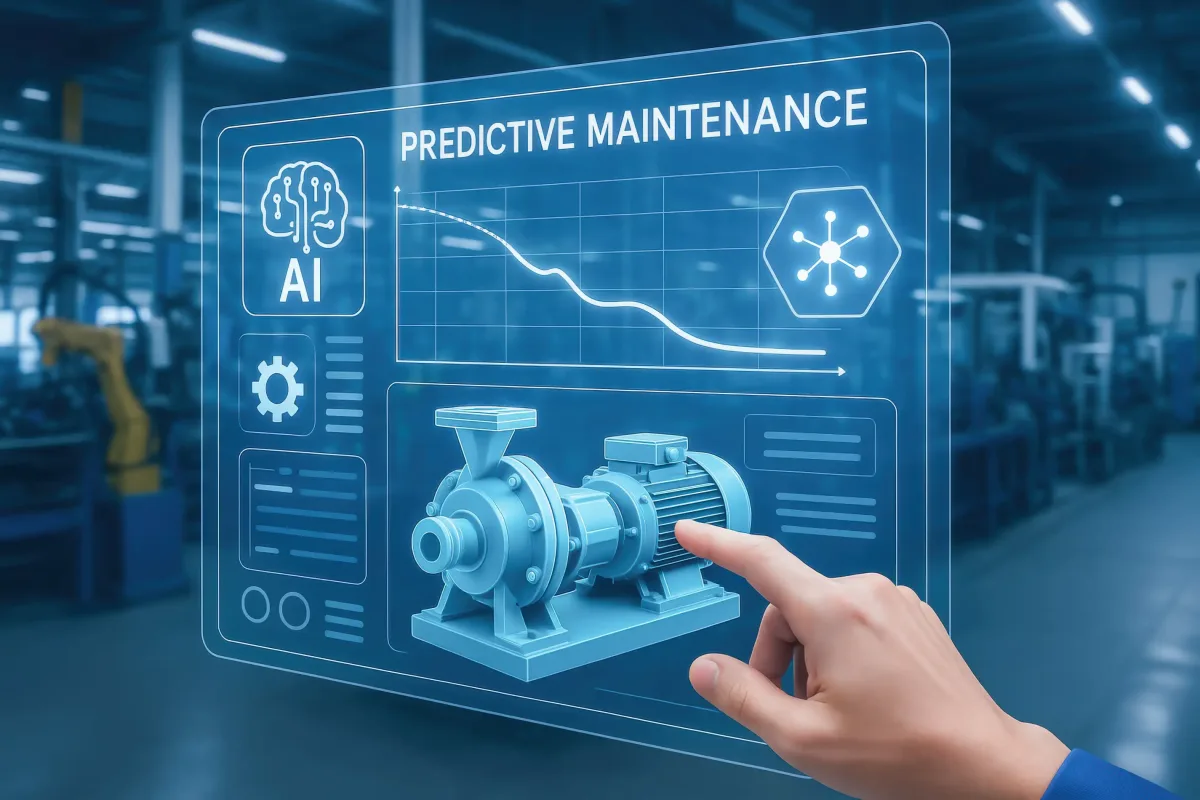
In a commercial kitchen, this means using sensors, software, and, yes, AI to monitor your equipment in real time. Think of it like giving your fryers, ovens, refrigeration units, and even your exhaust hoods a constant “check-up.” These systems track things like temperature fluctuations, vibration patterns, energy consumption, and even subtle changes in performance that might indicate a problem. Then, using machine learning (a type of AI), the system learns what “normal” looks like for each piece of equipment and flags anything that deviates from that baseline.
But here’s where it gets interesting. Traditional preventive maintenance, like scheduling regular tune-ups for your equipment, is a step in the right direction, but it’s still a bit like playing whack-a-mole. You’re fixing things on a set schedule, whether they need it or not, and you’re still at the mercy of unexpected breakdowns. Predictive maintenance, on the other hand, is like having a crystal ball that tells you *exactly* when something’s about to go wrong. It’s not about guessing; it’s about knowing.
Now, I know what you’re thinking: “That sounds great, but isn’t this just for big corporations with deep pockets?” Not anymore. The technology has become way more accessible in the last couple of years, and there are solutions out there for kitchens of all sizes, from food trucks to multi-location restaurant groups. The key is understanding how it works and what to look for when you’re evaluating options. So let’s dive a little deeper.
How Does AI Fit Into the Picture?
AI is the secret sauce that makes predictive maintenance so powerful. Without it, you’d just have a bunch of data points with no way to make sense of them. Imagine trying to read a novel by looking at individual words without any context, it’d be impossible to understand the story. AI is what turns raw data into actionable insights.
Here’s how it works in practice: Sensors attached to your equipment collect data on things like temperature, vibration, pressure, and energy use. This data is then fed into an AI model that’s been trained to recognize patterns. Over time, the model learns what “normal” operation looks like for each piece of equipment. When something starts to drift from that baseline, say, your walk-in cooler’s compressor is working harder than usual to maintain temperature, the AI flags it as a potential issue.
But AI doesn’t just stop at flagging problems. It also gets smarter over time. The more data it processes, the better it becomes at predicting failures. For example, if a particular model of fryer tends to fail after 500 hours of use when the oil temperature fluctuates by more than 10 degrees, the AI will start to recognize that pattern and alert you before it happens. It’s like having a seasoned kitchen veteran who’s seen it all and can spot trouble before it starts.
I’ll be honest, when I first started researching this, I was skeptical about how accurate these predictions could really be. After all, kitchens are chaotic places, and no two pieces of equipment are exactly alike. But the more I dug into it, the more I realized that AI isn’t trying to predict the future with 100% certainty. It’s about reducing uncertainty and giving you a heads-up when something *might* go wrong. And in a high-stakes environment like a commercial kitchen, even a little bit of warning can make a huge difference.
Why Your Kitchen Needs Predictive Maintenance (And It’s Not Just About Avoiding Breakdowns)
Okay, so predictive maintenance can help you avoid those heart-stopping moments when a critical piece of equipment goes down. But the benefits go way beyond just preventing breakdowns. Let’s talk about the real reasons why this technology is a game-changer for commercial kitchens.
1. Save Money (Like, *Actually* Save Money)
Let’s start with the obvious: equipment failures are expensive. There’s the cost of emergency repairs, which are almost always more expensive than planned maintenance. There’s the cost of lost revenue when you’re down a key piece of equipment during peak hours. And then there’s the cost of wasted food, because when your walk-in goes down, that’s a lot of inventory you can’t use. According to a study by the National Restaurant Association, equipment failures are one of the top causes of unexpected costs in restaurants, with the average failure costing anywhere from $1,000 to $10,000 depending on the severity.
But here’s the thing: predictive maintenance doesn’t just save you money by preventing breakdowns. It also helps you extend the lifespan of your equipment. Think about it, when you’re constantly putting out fires (sometimes literally), you’re not giving your equipment the care it needs to last. Predictive maintenance lets you address small issues before they become big problems, which means your equipment stays in better shape for longer. And that means you can delay those big-ticket replacements for years.
I talked to a kitchen manager in Chicago who implemented predictive maintenance last year, and he told me something that stuck with me: “It’s not about avoiding one big expense. It’s about avoiding a thousand little ones.” That’s the real power of this technology. It’s not just about the catastrophic failures, it’s about the slow, steady drain of inefficiency that adds up over time.
2. Reduce Downtime (Because Every Minute Counts)
In a commercial kitchen, downtime isn’t just inconvenient, it’s a disaster. Every minute your equipment is down is a minute you’re not serving customers, not generating revenue, and not meeting your ticket times. And let’s be real: in today’s fast-paced foodservice industry, customers aren’t exactly known for their patience. If their food takes too long, they’re not coming back.
Predictive maintenance helps you minimize unplanned downtime by giving you the chance to schedule repairs during off-peak hours. Instead of scrambling to fix a broken oven at 7 PM on a Saturday, you can address the issue during a slow weekday afternoon. That means no lost sales, no frustrated customers, and no stressed-out staff.
But here’s the thing I didn’t fully appreciate until I started talking to people who’ve used this technology: predictive maintenance doesn’t just reduce downtime, it also improves overall efficiency. When your equipment is running at peak performance, it uses less energy, cooks food more evenly, and requires less manual intervention. That means faster ticket times, lower utility bills, and less wear and tear on your staff.
3. Improve Food Safety (Because No One Wants a Health Code Violation)
Let’s talk about something that keeps every kitchen manager up at night: food safety. Equipment failures aren’t just an inconvenience, they can be a serious health risk. A walk-in cooler that’s not maintaining temperature? That’s a breeding ground for bacteria. A fryer that’s not heating oil evenly? That’s a recipe for undercooked food. And let’s not even get started on the nightmare of a failed exhaust hood in a grease-heavy kitchen.
Predictive maintenance helps you catch potential food safety issues before they become problems. For example, if your refrigeration unit is struggling to maintain temperature, the AI can alert you before it falls into the danger zone. Or if your oven’s heating elements are wearing out, you’ll know before it starts cooking food unevenly. This isn’t just about avoiding health code violations, it’s about protecting your customers and your reputation.
I’ll never forget the time I worked in a kitchen where our walk-in cooler failed overnight. By the time we realized it, hundreds of dollars’ worth of food had to be thrown out. And worse, we had to shut down for a day to get it fixed and pass a health inspection. That’s the kind of nightmare predictive maintenance can help you avoid.
4. Make Life Easier for Your Staff (Because Happy Staff = Better Food)
Let’s be real: working in a commercial kitchen is hard. Long hours, high stress, and the constant pressure to perform can take a toll on even the most seasoned staff. And when equipment fails, it doesn’t just create more work, it creates frustration, resentment, and burnout.
Predictive maintenance can reduce the stress and chaos that comes with unexpected breakdowns. When your staff knows that the equipment is being monitored and maintained proactively, they can focus on what they do best, cooking great food, instead of constantly putting out fires. And when they’re not dealing with the fallout of a failed fryer or a broken oven, they’re happier, more productive, and more likely to stick around.
I talked to a chef in Nashville who implemented predictive maintenance in his kitchen, and he put it this way: “It’s not just about the equipment. It’s about the people. When my staff isn’t constantly dealing with broken gear, they’re more creative, more engaged, and more excited to come to work.” And let’s be honest, anything that makes life easier for your staff is a win for your business.
The Nuts and Bolts: How AI-Powered Predictive Maintenance Actually Works
Okay, so we’ve talked about *why* predictive maintenance is a big deal. Now let’s get into the *how*. How does this technology actually work in a commercial kitchen? And what do you need to know to implement it in your own operation?
First things first: predictive maintenance isn’t a one-size-fits-all solution. There are different approaches, different technologies, and different levels of complexity. But at its core, it all comes down to three key components: sensors, data, and AI. Let’s break it down.
1. Sensors: The Eyes and Ears of Your Equipment
Sensors are the foundation of any predictive maintenance system. These are small devices that attach to your equipment and collect data on things like temperature, vibration, pressure, and energy use. Think of them like the vital signs monitors in a hospital, they’re constantly checking the “health” of your equipment and sending that data to the AI.
There are a few different types of sensors you might encounter:
- Temperature sensors: These monitor the temperature of your equipment, whether it’s a fryer, oven, or refrigeration unit. They can detect when temperatures are fluctuating outside of normal ranges, which could indicate a problem.
- Vibration sensors: These measure the vibration patterns of your equipment. Changes in vibration can signal issues like worn-out bearings, misaligned parts, or other mechanical problems.
- Energy sensors: These track how much energy your equipment is using. If a piece of equipment starts using more energy than usual, it could be a sign that it’s working harder than it should be.
- Pressure sensors: These are often used in refrigeration systems to monitor things like refrigerant levels and compressor performance.
The good news is that you don’t need to be an expert in sensors to use predictive maintenance. Most systems come with pre-installed sensors that are designed to work with specific types of equipment. The key is choosing a system that’s compatible with the equipment you already have.
Now, I’ll admit, I was a little skeptical about how reliable these sensors could be. After all, kitchens are messy, chaotic places. What’s to stop a sensor from getting knocked loose or covered in grease? But the more I learned, the more I realized that modern sensors are built to withstand the rigors of a commercial kitchen. They’re durable, easy to clean, and designed to keep working even in tough conditions.
2. Data: The Fuel That Powers Predictive Maintenance
Sensors are great, but they’re only as useful as the data they collect. And this is where things get really interesting. Predictive maintenance systems don’t just collect data, they analyze it in real time to identify patterns and predict potential failures.
Here’s how it works: The sensors on your equipment collect data and send it to a central system (usually cloud-based). That system then uses AI to analyze the data and look for anomalies. For example, if your fryer’s temperature sensor detects that the oil is heating up more slowly than usual, the AI might flag that as a potential issue with the heating element. Or if your refrigeration unit’s energy sensor shows that it’s using more power than normal, the AI might predict that the compressor is starting to fail.
But here’s the thing: AI doesn’t just look at individual data points. It looks at patterns over time. For example, it might notice that your oven’s heating elements tend to fail after 1,000 hours of use when the temperature fluctuates by more than 5 degrees. Or it might detect that your walk-in cooler’s compressor is more likely to fail when the ambient temperature in the kitchen rises above 85 degrees. These patterns aren’t always obvious to the human eye, but AI can spot them and use them to make predictions.
I was curious about how accurate these predictions really are, so I talked to a data scientist who works with predictive maintenance systems. He told me something that surprised me: “It’s not about being 100% accurate. It’s about reducing uncertainty. Even if we can predict a failure with 80% accuracy, that’s still a huge improvement over not knowing at all.” And in a high-stakes environment like a commercial kitchen, even a little bit of warning can make a big difference.
3. AI: The Brain Behind the Operation
We’ve talked a lot about AI, but what does it actually *do* in a predictive maintenance system? At its core, AI is what turns raw data into actionable insights. It’s the difference between having a bunch of numbers and actually understanding what they mean.
Here’s a simple way to think about it: Imagine you’re trying to predict when your car’s tires will wear out. You could look at the tread depth every few months and make an educated guess, or you could use a system that tracks things like mileage, driving conditions, and tire pressure to predict exactly when you’ll need new tires. That’s what AI does for your kitchen equipment, it takes all the data from your sensors and uses it to make predictions about when something might fail.
But AI isn’t just about making predictions. It’s also about learning and improving over time. The more data the AI processes, the better it gets at recognizing patterns and making accurate predictions. For example, if a particular model of fryer tends to fail after 500 hours of use when the oil temperature fluctuates by more than 10 degrees, the AI will start to recognize that pattern and alert you before it happens. It’s like having a seasoned kitchen veteran who’s seen it all and can spot trouble before it starts.
Now, I know what you’re thinking: “This all sounds great, but isn’t AI complicated and expensive?” The truth is, it *can* be. But the good news is that you don’t need to be an AI expert to use predictive maintenance. Most systems are designed to be user-friendly, with dashboards that make it easy to see what’s going on with your equipment. And as the technology has become more mainstream, the cost has come down significantly. There are even solutions out there that are designed specifically for small and mid-sized kitchens.
The Challenges: What’s Holding Predictive Maintenance Back (And How to Overcome Them)
Okay, so predictive maintenance sounds great in theory. But let’s be real, no technology is perfect, and this one comes with its own set of challenges. If you’re considering implementing predictive maintenance in your kitchen, it’s important to know what you’re getting into. So let’s talk about the potential roadblocks and how to overcome them.
1. The Upfront Cost (Because Nothing Good Comes Cheap)
Let’s start with the elephant in the room: cost. Predictive maintenance systems aren’t free. There’s the cost of the sensors, the cost of the software, and the cost of installation. And depending on the size of your kitchen and the complexity of your equipment, that can add up quickly.
But here’s the thing: while the upfront cost might seem daunting, it’s important to think about the long-term savings. Remember that study by the National Restaurant Association? It found that the average equipment failure costs between $1,000 and $10,000. And that’s not even counting the lost revenue from downtime, the cost of wasted food, or the hit to your reputation. When you look at it that way, predictive maintenance starts to look like a smart investment.
I talked to a kitchen manager in Austin who was hesitant to invest in predictive maintenance at first. But after doing the math, he realized that the system would pay for itself in less than a year. “It’s not just about avoiding one big expense,” he told me. “It’s about avoiding a thousand little ones. And when you add it all up, the savings are huge.”
If you’re worried about the upfront cost, there are a few things you can do to make it more manageable. First, start small. You don’t need to outfit your entire kitchen with sensors all at once. Start with your most critical equipment, like your refrigeration units or your fryers, and expand from there. Second, look for financing options. Many predictive maintenance providers offer payment plans or leasing options that can help spread out the cost. And third, don’t forget to factor in the potential savings. A good predictive maintenance system should pay for itself in a relatively short amount of time.
2. The Learning Curve (Because Change Is Hard)
Another common challenge is the learning curve. Let’s be honest, most kitchen staff aren’t exactly tech-savvy. And introducing a new system, no matter how user-friendly it is, can be a bit of a shock to the system.
The key here is training and communication. You can’t just install a predictive maintenance system and expect your staff to figure it out on their own. You need to take the time to train them on how to use it, explain why it’s important, and address any concerns they might have. And let’s be real, there will be concerns. Some staff might see it as a threat to their jobs, or they might be skeptical about whether it will actually work.
I talked to a chef in San Francisco who went through this process, and he had some great advice: “Start by explaining the *why*. Don’t just tell them what the system does, tell them how it will make their lives easier. Show them how it will reduce the stress of unexpected breakdowns, how it will help them cook better food, and how it will make their jobs more enjoyable. Once they see the benefits, they’ll be much more open to it.”
It’s also important to choose a system that’s user-friendly. Look for a dashboard that’s intuitive and easy to navigate, with clear alerts and actionable insights. And make sure the system integrates with the tools your staff already use, like your POS system or your kitchen management software. The easier it is to use, the more likely your staff will be to embrace it.
3. Data Overload (Because Too Much Information Is a Real Thing)
One of the biggest challenges with predictive maintenance is data overload. When you’re collecting data from dozens of sensors across multiple pieces of equipment, it’s easy to get overwhelmed. And if you’re not careful, you can end up with a system that’s generating so many alerts that you don’t know what to pay attention to.
The key here is to focus on the most critical alerts. Not every anomaly is a cause for concern, and not every alert requires immediate action. Work with your predictive maintenance provider to set up a system that prioritizes the most important issues and filters out the noise. For example, you might want to be alerted immediately if your walk-in cooler’s temperature starts to rise, but you might not need to know every time your fryer’s oil temperature fluctuates by a degree or two.
It’s also important to set clear thresholds for what constitutes a problem. For example, you might decide that a 5-degree fluctuation in your oven’s temperature is normal, but a 10-degree fluctuation is a cause for concern. By setting these thresholds, you can reduce the number of false alarms and focus on the issues that really matter.
I talked to a kitchen manager in New York who struggled with this at first. “We were getting so many alerts that we started ignoring them,” he told me. “It was like the boy who cried wolf. We had to step back and figure out what was actually important. Once we did that, the system became a lot more useful.”
4. Integration (Because No One Wants Another Silo)
Finally, there’s the challenge of integration. Predictive maintenance systems don’t exist in a vacuum, they need to work with the other tools and systems you’re already using in your kitchen. And if they don’t integrate seamlessly, they can end up creating more problems than they solve.
For example, if your predictive maintenance system isn’t integrated with your POS system, you might not be able to see how equipment failures are affecting your sales. Or if it’s not integrated with your inventory management system, you might not be able to track how equipment issues are impacting your food costs. The key is to choose a system that plays well with others and can be easily integrated into your existing workflow.
I talked to a restaurant owner in Denver who learned this the hard way. “We installed a predictive maintenance system that didn’t integrate with our POS,” he told me. “So when our fryer went down, we had no way of knowing how many orders were affected or how much revenue we lost. It was a nightmare. We ended up switching to a different system that integrated with everything, and it made a huge difference.”
The good news is that most modern predictive maintenance systems are designed to integrate with other tools. But it’s still important to do your homework and make sure the system you choose will work with the tools you already have. Ask your provider about their integration capabilities, and if possible, test the system in a real-world environment before committing to it.
Getting Started: How to Implement AI-Powered Predictive Maintenance in Your Kitchen
Okay, so you’re convinced. Predictive maintenance is the future, and you want to bring it into your kitchen. But where do you start? How do you go from “this sounds cool” to “this is actually working in my kitchen”? Let’s break it down into a step-by-step guide.
Step 1: Assess Your Needs (Because Not All Kitchens Are Created Equal)
Before you start shopping for a predictive maintenance system, it’s important to assess your needs. What equipment do you have? What are your biggest pain points? What are your goals for implementing predictive maintenance?
Start by making a list of your most critical equipment. These are the pieces that, if they failed, would have the biggest impact on your operation. For most kitchens, this includes things like refrigeration units, fryers, ovens, and exhaust hoods. But it could also include things like your dishwasher, your ice machine, or even your HVAC system.
Next, think about your biggest pain points. Are you constantly dealing with unexpected breakdowns? Are you spending too much on emergency repairs? Are you worried about food safety? By identifying your biggest challenges, you can choose a system that’s tailored to your needs.
Finally, think about your goals. What do you hope to achieve with predictive maintenance? Are you looking to reduce downtime? Save money on repairs? Improve food safety? Having clear goals will help you choose the right system and measure its success.
I talked to a kitchen manager in Miami who skipped this step and ended up with a system that wasn’t a good fit for his operation. “We just went with the first system we found,” he told me. “But it turned out to be overkill for our needs. We ended up spending a lot of money on features we didn’t need, and we didn’t see the ROI we were hoping for. If I could do it over again, I would have taken the time to assess our needs first.”
Step 2: Research Your Options (Because Not All Systems Are Created Equal)
Once you’ve assessed your needs, it’s time to research your options. There are a lot of predictive maintenance systems out there, and they’re not all created equal. Some are designed for large, multi-location restaurant groups, while others are tailored to small, independent kitchens. Some focus on specific types of equipment, while others are more general. And some are more user-friendly than others.
Start by making a list of the features you need. For example, if you’re worried about food safety, you might want a system that includes temperature monitoring for your refrigeration units. If you’re focused on reducing downtime, you might want a system that integrates with your POS so you can see how equipment failures are affecting your sales.
Next, read reviews and talk to other kitchen managers who’ve used the systems you’re considering. What do they like about it? What do they wish was different? What kind of ROI have they seen? This is one of the best ways to get a sense of whether a system will work for you.
Finally, don’t be afraid to ask for demos. Most predictive maintenance providers will be happy to give you a demo of their system so you can see how it works in action. This is a great way to get a feel for the user interface, the alerts, and the overall usability.
I talked to a chef in Seattle who did his homework before choosing a system, and it paid off. “I read a ton of reviews and talked to a bunch of other chefs,” he told me. “And I ended up choosing a system that was a perfect fit for our needs. It’s saved us a ton of money and made our lives a lot easier.”
Step 3: Start Small (Because Rome Wasn’t Built in a Day)
Once you’ve chosen a system, it’s time to start small. You don’t need to outfit your entire kitchen with sensors all at once. In fact, it’s often better to start with just one or two pieces of equipment and expand from there. This will give you a chance to get comfortable with the system and see how it works in your kitchen before you commit to a larger rollout.
Start with your most critical equipment, the pieces that, if they failed, would have the biggest impact on your operation. For most kitchens, this includes things like refrigeration units, fryers, and ovens. Once you’ve got those up and running, you can start adding sensors to other pieces of equipment.
It’s also a good idea to pilot the system in one location before rolling it out to multiple sites. This will give you a chance to work out any kinks and make sure the system is a good fit for your operation.
I talked to a restaurant owner in Chicago who started small and saw great results. “We started with our walk-in cooler and our fryer,” he told me. “Within a few weeks, we were already seeing the benefits. We caught a problem with our cooler before it failed, and we were able to schedule a repair during off-peak hours. It was a game-changer.”
Step 4: Train Your Staff (Because a System Is Only as Good as the People Using It)
Once you’ve installed the system, it’s time to train your staff. This is one of the most important steps in the process, because a predictive maintenance system is only as good as the people using it. If your staff doesn’t know how to use the system or doesn’t understand why it’s important, it won’t do you any good.
Start by explaining the *why*. Don’t just tell them what the system does, tell them how it will make their lives easier. Show them how it will reduce the stress of unexpected breakdowns, how it will help them cook better food, and how it will make their jobs more enjoyable. Once they see the benefits, they’ll be much more open to it.
Next, walk them through the system. Show them how to access the dashboard, how to read the alerts, and how to take action when something goes wrong. Make sure they know who to contact if they have questions or run into issues.
Finally, make sure the system is user-friendly. If the dashboard is clunky or the alerts are confusing, your staff won’t use it. Look for a system that’s intuitive and easy to navigate, with clear alerts and actionable insights.
I talked to a chef in Nashville who made the mistake of not training his staff properly. “We installed the system and just assumed they would figure it out,” he told me. “But they didn’t. They ignored the alerts, and we ended up with a major breakdown that could have been prevented. It was a wake-up call. Now, we make sure everyone is trained and comfortable with the system.”
Step 5: Monitor and Adjust (Because No System Is Perfect)
Once the system is up and running, it’s important to monitor and adjust. No predictive maintenance system is perfect, and you’ll likely need to make some tweaks along the way. Maybe you’re getting too many alerts, or maybe the system isn’t catching issues as early as you’d like. Whatever the case, it’s important to stay on top of it and make adjustments as needed.
Start by reviewing the alerts on a regular basis. Are you getting too many false alarms? Are you missing important issues? Work with your provider to adjust the thresholds and filters so you’re only getting the most critical alerts.
Next, track your results. Are you seeing a reduction in downtime? Are you saving money on repairs? Are you improving food safety? By tracking your results, you can see what’s working and what’s not, and make adjustments accordingly.
Finally, don’t be afraid to ask for help. If you’re not seeing the results you were hoping for, reach out to your provider. They should be able to help you troubleshoot and make adjustments to the system.
I talked to a kitchen manager in Los Angeles who made the mistake of not monitoring the system closely enough. “We installed it and just assumed it would work,” he told me. “But we weren’t seeing the results we were hoping for. It wasn’t until we started monitoring the alerts and adjusting the thresholds that we really saw the benefits.”
The Future of AI-Powered Predictive Maintenance (And Why It’s Just the Beginning)
So, where does this all go from here? What’s the future of AI-powered predictive maintenance for commercial kitchens? And how will it continue to evolve in the coming years?
First, let’s talk about advancements in AI. As AI technology continues to improve, predictive maintenance systems will become even more accurate and reliable. We’re already seeing systems that can predict failures with 90% accuracy, and that number is only going to go up. In the future, we might see systems that can not only predict failures but also automatically order replacement parts or even schedule repairs without any human intervention.
Second, let’s talk about integration. As predictive maintenance systems become more mainstream, we’ll see them integrate with other tools and systems in the kitchen. For example, we might see systems that integrate with inventory management software to automatically adjust orders when equipment fails. Or systems that integrate with labor management tools to adjust staffing levels based on equipment performance. The possibilities are endless.
Third, let’s talk about cost. As the technology becomes more widely adopted, the cost of predictive maintenance systems will continue to come down. We’re already seeing solutions that are affordable for small and mid-sized kitchens, and that trend is only going to continue. In the future, predictive maintenance might be as common as a POS system, something that every kitchen has, regardless of size.
Finally, let’s talk about the human element. One of the biggest concerns I hear about AI in the kitchen is that it will replace human jobs. But the truth is, predictive maintenance isn’t about replacing people, it’s about empowering them. It’s about giving chefs and kitchen managers the tools they need to work smarter, not harder. And as the technology continues to evolve, I believe it will only enhance the human experience in the kitchen, not diminish it.
I’ll be honest, I’m excited about the future of predictive maintenance. But I’m also a little cautious. Because with any new technology, there’s always the risk of overhype. I’ve seen too many “revolutionary” kitchen tools come and go, promising to change the game but failing to deliver. So while I believe predictive maintenance has real potential, I also think it’s important to approach it with a healthy dose of skepticism.
That said, I’ve talked to enough chefs, kitchen managers, and restaurant owners who’ve seen real results with predictive maintenance to know that this isn’t just another fad. It’s a tool that’s already making a difference in kitchens across the country, and it’s only going to get better from here.
Final Thoughts: Is AI-Powered Predictive Maintenance Right for Your Kitchen?
So, after all this, the big question remains: is AI-powered predictive maintenance right for your kitchen? The answer, as with most things in life, is: it depends.
If you’re constantly dealing with unexpected breakdowns, if you’re spending too much on emergency repairs, or if you’re worried about food safety, then predictive maintenance is definitely worth considering. It’s a tool that can help you reduce downtime, save money, and improve efficiency, all while making life easier for your staff.
But if you’re running a small operation with minimal equipment, or if you’re not seeing a lot of issues with your current maintenance plan, then predictive maintenance might not be the right fit, at least not yet. The technology is still evolving, and it’s not a one-size-fits-all solution. It’s important to assess your needs, do your research, and choose a system that’s tailored to your operation.
At the end of the day, predictive maintenance isn’t about replacing the human touch, it’s about enhancing it. It’s about giving chefs and kitchen managers the tools they need to work smarter, not harder. And in an industry as fast-paced and high-stakes as foodservice, that’s a game-changer.
So, is this the future of commercial kitchens? I think so. But like any tool, it’s only as good as the people using it. And if you’re willing to put in the time and effort to make it work, I believe it can make a real difference in your kitchen.
Now, I’d love to hear from you. Have you tried predictive maintenance in your kitchen? What was your experience like? Or are you still on the fence? Let me know in the comments, I’m always curious to hear what other kitchen managers and chefs are thinking.
FAQ: Your Burning Questions About AI-Powered Predictive Maintenance
Q: Isn’t AI-powered predictive maintenance just for big restaurant chains with deep pockets?
A: Not anymore. While it’s true that predictive maintenance used to be a luxury reserved for large corporations, the technology has become much more accessible in recent years. There are now solutions designed specifically for small and mid-sized kitchens, with pricing models that fit a variety of budgets. The key is to start small, focus on your most critical equipment first and expand from there. Many providers also offer financing or leasing options to help spread out the cost.
Q: How accurate are these predictions, really? What if the system gives me a false alarm?
A: Predictive maintenance systems aren’t perfect, and false alarms can happen, especially in the early days as the AI learns your equipment’s normal patterns. However, most systems are designed to minimize false positives by setting thresholds for what constitutes a real issue. For example, a small temperature fluctuation might not trigger an alert, but a sustained deviation would. Over time, the AI gets better at distinguishing between normal variations and real problems. It’s also important to work with your provider to fine-tune the system based on your specific needs and equipment.
Q: Will implementing predictive maintenance disrupt my kitchen’s workflow?
A: Any new system comes with a learning curve, but the goal of predictive maintenance is to *reduce* disruption, not create it. The key is choosing a user-friendly system and taking the time to train your staff. Most predictive maintenance systems are designed to integrate seamlessly with your existing workflow, with alerts and dashboards that are easy to understand. Start with a pilot program on one or two pieces of equipment to work out any kinks before rolling it out to your entire kitchen. And remember, the short-term disruption of installation and training is nothing compared to the long-term benefits of avoiding unexpected breakdowns.
Q: What happens if the AI misses a problem? Am I still liable for food safety issues?
A: Predictive maintenance is a tool to help you manage your equipment more effectively, but it doesn’t replace your responsibility for food safety. No system is 100% foolproof, so it’s still important to follow best practices for equipment maintenance and food safety. That said, predictive maintenance can significantly reduce the risk of equipment-related food safety issues by catching potential problems early. If a failure does occur, most providers offer support to help you troubleshoot and resolve the issue. Always check with your local health department to ensure your maintenance plan meets regulatory requirements.
@article{ai-powered-predictive-maintenance-for-commercial-kitchen-equipment-the-future-of-kitchen-efficiency-and-why-its-not-as-scary-as-it-sounds,
    title   = {AI-Powered Predictive Maintenance for Commercial Kitchen Equipment: The Future of Kitchen Efficiency (And Why It’s Not as Scary as It Sounds)},
    author  = {Chef's icon},
    year    = {2026},
    journal = {Chef's Icon},
    url     = {https://chefsicon.com/ai-powered-predictive-maintenance-commercial-kitchen-equipment/}
}