The Best Fluffy Pancakes recipe you will fall in love with. Full of tips and tricks to help you make the best pancakes.
Let me start with a confession: I’ve owned three air fryers in the last four years. Not because they all broke, though one did spectacularly during a failed attempt at crispy Brussels sprouts, but because I kept second-guessing my choices. First, I thought bigger was better. Then I decided compact was key. Then I read a review that convinced me I needed a smart air fryer with Wi-Fi (spoiler: I didn’t). The point? Choosing the right small kitchen appliances isn’t just about picking the shiniest gadget on the shelf. It’s about matching your cooking habits, space constraints, and, let’s be honest, your patience for cleaning tiny, grease-covered parts.
I’ve lived in everything from a 300-square-foot studio in San Francisco (where my “kitchen” was basically a hot plate and a prayer) to my current Nashville home with actual counter space. Through all of it, I’ve learned that the wrong appliance doesn’t just waste money, it wastes time, energy, and precious real estate in your kitchen. Meanwhile, the right one can feel like unlocking a cheat code for meal prep. So how do you cut through the noise? How do you avoid ending up with a drawer full of single-use gadgets you swore you’d use daily? That’s what we’re diving into today.
By the end of this, you’ll know how to:
- Assess your actual needs (not the ones Instagram ads tell you you have)
- Navigate the space vs. function trade-off without sacrificing your sanity
- Spot the difference between gimmicks and game-changers
- Future-proof your purchases so you’re not stuck with a 2025 model that’s already obsolete
- Avoid the post-purchase regret that haunts us all (RIP, my unused spiralizer)
And because I’ve been burned one too many times, I’ll also share the questions I wish I’d asked before clicking “Add to Cart.” Let’s get into it.
The Brutal Truth About Small Kitchen Appliances (And Why You Probably Own Too Many)
Here’s the thing: small kitchen appliances are the fast fashion of the culinary world. They’re cheap(ish), trendy, and designed to make you feel like you’re upgrading your life, until they’re not. Walk into any Bed Bath & Beyond (RIP) or scroll through Amazon’s “Deals of the Day,” and you’ll find no shortage of gadgets promising to revolutionize your cooking. A mini waffle maker for “fun breakfasts”! A dedicated quesadilla press because, apparently, a skillet isn’t good enough! A banana slicer that somehow has 4.5 stars and 10,000 reviews.
But here’s the reality: most of us use about 20% of our small appliances 80% of the time. The rest? They collect dust, take up space, and make us feel guilty every time we open the cabinet. I’m not saying you shouldn’t own a stand mixer if you bake weekly, but if you’re buying a pasta extruder because you watched one TikTok, pump the brakes.
So before we dive into how to choose, let’s talk about why we choose so poorly in the first place:
- The “I’ll use it someday” fallacy: We overestimate our future selves. Newsflash: If you haven’t made homemade yogurt in the last year, that yogurt maker isn’t suddenly going to change your life.
- The influencer effect: A viral recipe makes us think we eed a specific tool. (Looking at you, air fryer bacon trend.)
- The space amnesia: We forget how little counter space we have until the ew toaster oven arrives and we’re playing Tetris with our coffee maker.
- The “it’s only $30” trap: Small prices add up. That $30 gadget becomes $300 when you realize you’ve bought 10 of them.
I’m not here to shame your avocado slicer collection. But I am here to help you ask the right questions before adding another appliance to your kitchen ecosystem. Because at the end of the day, the best small kitchen appliance is the one you’ll actually use-not the one that looks best in a Instagram Reel.
Step 1: The Ruthless Self-Assessment (Or, “Do You Actually Need This?”)
Before you even look at products, you need to audit your cooking habits. This is the step most of us skip, and it’s why we end up with a panini press we’ve used twice. Grab a notebook (or your Notes app) and track the following for a week:
What Do You Cook Most Often?
Be honest. If you’re a meal-prep warrior who roasts veggies every Sunday, an air fryer or convection toaster oven might be a game-changer. If you mostly microwave frozen dinners, maybe prioritize a better microwave instead. Ask yourself:
- Do you bake? If so, how often? (A stand mixer is worth it if you’re making bread weekly; a hand mixer suffices for occasional cookies.)
- Do you cook for one or a family? (A single-serve coffee maker vs. a 12-cup drip machine makes a difference.)
- Do you entertain? (A wine cooler or cheese melter might be justified if you host charcuterie nights.)
What’s Your Biggest Kitchen Pain Point?
Appliances should solve problems, not create them. Identify your top three frustrations:
- Is cleanup a nightmare? Look for dishwasher-safe parts.
- Is storage an issue? Prioritize stackable or multi-functional tools.
- Is speed critical? A high-speed blender or pressure cooker might be worth the investment.
For me, it was evenly cooked bacon-hence the air fryer obsession. For you, it might be perfectly brewed coffee or quick weeknight dinners.
The 80/20 Rule for Appliances
Apply the Pareto Principle: 80% of your cooking comes from 20% of your tools. What are your top three most-used appliances right now? Mine are:
- Instant Pot (for soups, rice, and hard-boiled eggs)
- Toaster oven (because I refuse to heat up my full oven for toast)
- Immersion blender (for smoothies and sauces without the bulk of a full blender)
Everything else is negotiable. If a new appliance doesn’t outperform or replace one of your top tools, it’s probably not worth the space.
I’ll admit, this step feels tedious. But it’s the difference between a kitchen that works for you and one that’s cluttered with as-seen-on-TV failures. Trust me, your future self will thank you.
Step 2: The Space vs. Function Dilemma (And How to Win It)
Unless you’re lucky enough to have a walk-in pantry or a butler’s kitchen, space is your most limited resource. The key is to maximize function per square inch. Here’s how to think about it:
Measure Twice, Buy Once
Before you buy anything, measure your counter and storage spaces. I cannot stress this enough. That 6-quart slow cooker might seem perfect until you realize it won’t fit next to your coffee maker. Pro tip:
- Use painter’s tape to outline the appliance’s footprint on your counter. Live with it for a day, does it feel intrusive?
- Check cabinet depths. Many appliances are deeper than they appear, and nothing’s worse than a food processor that won’t close properly because your cabinet is too shallow.
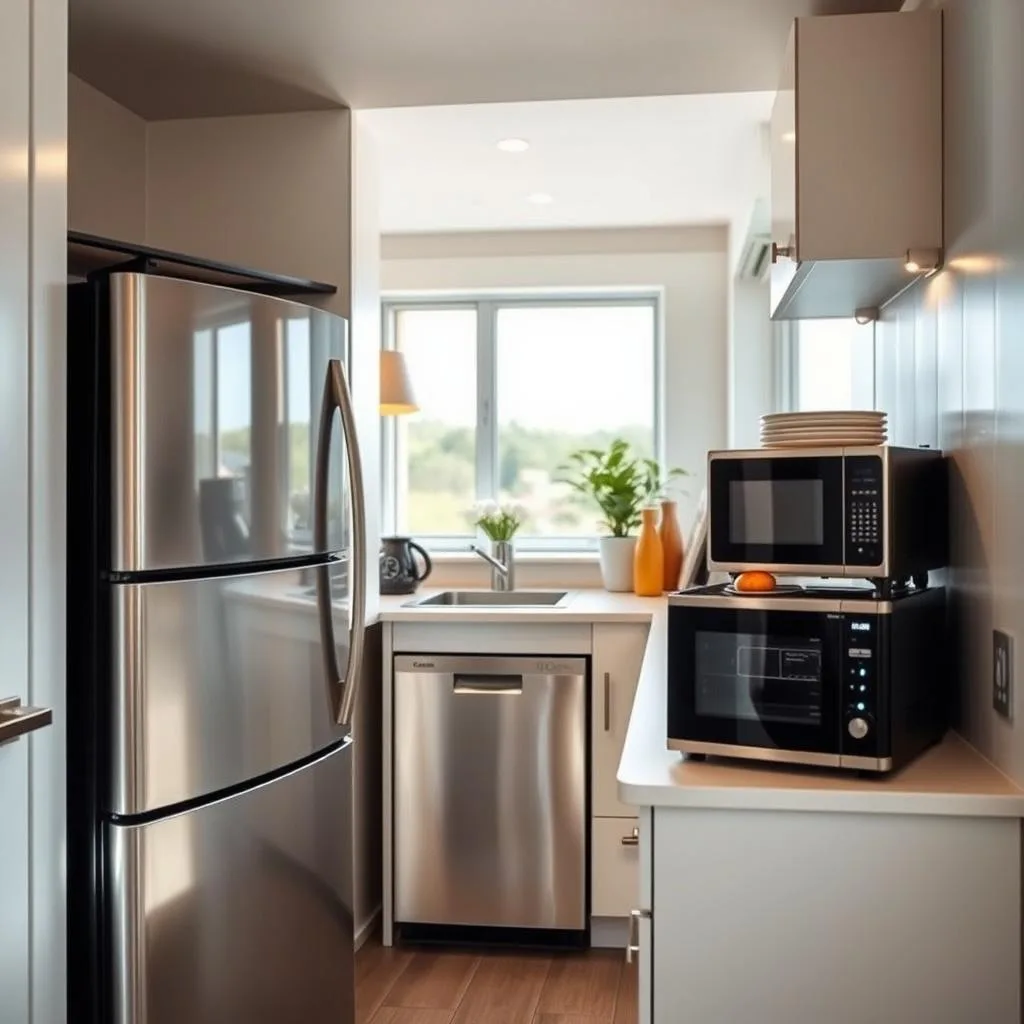
- Consider vertical space. Stackable appliances (like a toaster oven on top of a microwave) can save precious real estate.
The Multi-Functional MVP Strategy
The best small appliances do more than one thing well. Here are my top picks for versatility:
- Instant Pot/Pressure Cooker: Replaces a slow cooker, rice cooker, steamer, and even a yogurt maker (if you’re into that).
- Air Fryer Toaster Oven Combo: Acts as an air fryer, toaster, and small oven. Some models even include a dehydrator function.
- Immersion Blender: Blends soups, makes smoothies, and can even whip cream, without taking up half your cabinet.
- Food Processor with Multiple Attachments: A good one can chop, slice, shred, and even knead dough.
Avoid single-use gadgets unless they solve a very specific, frequent problem (e.g., a milk frother if you’re a latte addict).
The “One In, One Out” Rule
This is my golden rule for avoiding clutter: for every new appliance, one must go. It forces you to evaluate whether the new tool is truly an upgrade. For example:
- Replacing a basic blender with a high-speed model? Donate the old one.
- Adding an espresso machine? Maybe the French press can retire.
- Upgrading to a smart toaster? The old one goes to a friend or thrift store.
This rule also helps you realistically assess storage. If you don’t have space to store the old appliance, you don’t have space for the new one.
I’ll be honest, I’ve broken this rule more times than I’d like to admit. But when I stick to it, my kitchen feels lighter, and I use what I have more intentionally.
Step 3: The Features That Actually Matter (And the Ones That Don’t)
Ever bought an appliance because it had 17 settings, only to use two of them? Yeah, me too. Here’s how to cut through the marketing fluff and focus on what really counts.
Performance Over Bells and Whistles
Most of us don’t need a toaster with a “bagel” setting-we need a toaster that evenly browns bread without burning it. Prioritize:
- Consistent results: Read reviews for phrases like “cooks evenly” or “no hot spots.”
- Speed: If you’re always rushed, a high-wattage blender or fast-heating air fryer is worth the extra cost.
- Ease of use: If you won’t read the manual, avoid appliances with complex interfaces.
For example, my Instant Pot has a million settings, but I use “Pressure Cook” 90% of the time. The rest? Useless to me.
Cleanup: The Make-or-Break Factor
If an appliance is a pain to clean, you won’t use it. Period. Look for:
- Dishwasher-safe parts: Non-negotiable for me. If I have to hand-wash a blender pitcher with tiny crevices, it’s getting used once.
- Non-stick surfaces: Essential for air fryers, waffle makers, and griddles.
- Minimal nooks and crannies: The more parts an appliance has, the harder it is to clean. My old spiralizer had so many pieces I gave up after two uses.
Pro tip: Watch YouTube cleanup demos before buying. If it takes 10 minutes to scrub, it’s not worth it.
The “Smart” Appliance Trap
I’ll say it: Most smart kitchen appliances are gimmicks. Do you reallyeed a Wi-Fi-enabled slow cooker you can control from your phone? Unless you’re frequently away from home and need to adjust cooking times remotely, probably not. The exceptions:
- Smart scales: Useful for bakers who need precision.
- Smart coffee makers: If you love scheduling your brew, this might be worth it.
- Air fryers with app integration: Only if the app offers legitimate recipes or cooking guides you’ll use.
Otherwise, you’re paying extra for features you’ll ignore after the first week.
Durability: Will It Last?
Cheap appliances break. And replacing them every two years is worse for your wallet and the planet. Look for:
- Stainless steel or metal construction: Avoid all-plastic models, especially for high-heat appliances like toaster ovens.
- Reputable brands with good warranties: I’ve had great luck with Breville, Cuisinart, and KitchenAid for longevity.
- Replaceable parts: Can you buy a new blade for the food processor or a new carafe for the coffee maker?
I learned this the hard way when my $20 mini waffle maker died after six uses. Sometimes, spending more upfront saves you in the long run.
Step 4: The Appliances Worth the Counter Space (And the Ones That Aren’t)
Not all small appliances are created equal. Some earn their keep; others are a waste of money. Here’s my honest, no-BS breakdown of what’s worth it, and what’s not.
The All-Stars (Worth Every Penny)
These are the appliances I’d repurchase in a heartbeat:
- Instant Pot or Multi-Cooker: The ultimate set-it-and-forget-it tool. Makes everything from yogurt to pulled pork. If you only buy one appliance, make it this.
- High-Speed Blender (like a Vitamix): Yes, it’s expensive. But if you make smoothies, soups, or nut butters regularly, it’s a workhorse. Mine’s lasted 8 years and counting.
- Air Fryer Toaster Oven Combo: Why choose between an air fryer and a toaster oven when you can have both? I use mine daily for everything from toast to roasted veggies.
- Immersion Blender: Compact, easy to clean, and surprisingly versatile. Great for soups, sauces, and even milkshakes.
- Quality Coffee Maker: If you’re a coffee drinker, a good drip machine or espresso maker is worth the investment. I splurged on a Breville Barista Express and haven’t regretted it.
The Maybe Pile (Depends on Your Lifestyle)
These can be great, but only if you’ll use them:
- Stand Mixer: If you bake often, a KitchenAid is a dream. If you don’t, a hand mixer will do.
- Food Processor: Essential for chopping nuts, making pie dough, or shredding cheese. But if you only use it twice a year, skip it.
- Waffle Maker: Only if you eat waffles regularly. Otherwise, it’s a unitasker (a tool that does one thing).
- Espresso Machine: If you’re a coffee snob, yes. If you’re happy with a French press, save the money.
- Dehydrator: Great for making jerky or dried fruit, but it’s a niche appliance.
Ask yourself: Will I use this at least once a week? If not, it’s probably not worth the space.
The Overrated (Save Your Money)
Unless you have a very specific need, skip these:
- Single-Serve Coffee Pod Machines: Expensive per cup, and the pods create waste. A pour-over or AeroPress is cheaper and better for the environment.
- Pasta Makers: Fun for a project, but unless you’re making pasta weekly, it’s not worth the storage.
- Specialty Waffle Makers (e.g., heart-shaped, mini): Cute, but a standard waffle maker works fine.
- Electric Can Openers: A manual one takes 10 seconds and doesn’t break.
- Avocado Slicers: A knife works. Don’t fall for the gimmick.
I’ve owned (and regretted) most of these. Learn from my mistakes.
Step 5: Where to Splurge vs. Save (Aka How to Spend Smart)
Not all appliances deserve a big budget. Here’s where to invest and where to cut corners.
Worth the Splurge
These appliances are worth paying more for because they’ll last longer and perform better:
- Blenders: A $200 Vitamix will outlast three $50 blenders. If you use it daily, it’s worth it.
- Stand Mixers: A KitchenAid is a lifetime purchase if you bake often.
- Coffee Makers: A $150 bur grinder and drip machine will make better coffee than a $50 all-in-one.
- Air Fryers: Cheap models often have uneven heating. A $100-$150 model (like a Cosori or Ninja) is the sweet spot.
- Toaster Ovens: A $200 Breville will toast, bake, and air fry better than a $50 model.
Save Your Money Here
These appliances don’t need to be fancy:
- Hand Mixers: A $30 model works just as well as a $100 one.
- Rice Cookers: Unless you’re making rice daily, a basic $20 model is fine.
- Slow Cookers: The $40 Crock-Pot works as well as the $100 one.
- Electric Kettles: A $20 one boils water just as fast as a $80 “smart” kettle.
- Toasters: Unless you’re toasting artisanal bread daily, a $30 toaster is sufficient.
The Middle Ground
These are worth a moderate investment if you’ll use them:
- Food Processors: A $80-$120 model (like a Cuisinart) is a good balance of power and price.
- Waffle Makers: A $50 Belgian waffle maker is plenty for most people.
- Espresso Machines: If you’re serious, spend $300-$500 on a Breville or Gaggia. If not, a $100 Nespresso will do.
My rule of thumb: Splurge on what you use daily; save on what you use occasionally. And always check for refurbished or open-box deals-you can often get high-end appliances for 30-50% off.
Step 6: The Hidden Costs of Small Appliances (That No One Talks About)
When you’re comparing prices, it’s easy to focus on the upfront cost. But the true cost of an appliance includes:
Energy Usage
Some appliances are energy hogs. For example:
- A toaster oven uses less energy than a full oven.
- An air fryer is more efficient than a deep fryer.
- A pressure cooker cooks food faster, saving energy.
If you’re eco-conscious (or just want to save on bills), look for Energy Star-rated models.
Replacement Parts and Accessories
That $50 blender might seem like a steal, until you realize the replacement pitcher costs $40. Before buying, check:
- Are replacement blades/parts available?
- How much do they cost?
- Are they easy to find, or do you have to order from the manufacturer?
I once bought a cheap food processor only to find out the shredding disc was discontinued. Lesson learned.
Storage Solutions
If you don’t have a dedicated spot for an appliance, you won’t use it. Factor in the cost of:
- Cabinet organizers (to stack appliances vertically)
- Wall mounts (for items like blenders or mixers)
- Under-cabinet storage (to free up counter space)
I spent $20 on a pull-out shelf for my stand mixer, and it changed my life. Don’t underestimate the value of good storage!
The Psychological Cost
This is the big one. Every unused appliance creates:
- Guilt: “I should use this more.”
- Clutter stress: A crowded kitchen feels chaotic.
- Decision fatigue: Too many options make cooking feel overwhelming.
Before buying, ask: Will this make my life easier, or add to my mental load?
Step 7: How to Test an Appliance Before Committing (Without Buying It)
You wouldn’t buy a car without test-driving it, right? The same should go for kitchen appliances. Here’s how to “try before you buy”:
Borrow or Rent
Ask friends if you can borrow their air fryer for a week. Check out rental services like:
- Kitchen libraries: Some cities have tool libraries that include kitchen gadgets.
- Facebook Marketplace: Rent from a local for a small fee.
- Amazon Rentals: Yes, this is a thing for some appliances!
I once borrowed a pasta maker from a friend and realized within an hour that I’d never use it enough to justify buying one.
Read the Right Reviews
Not all reviews are created equal. Look for:
- Long-term reviews: Search for “[appliance] after 1 year” to see how it holds up.
- Video reviews: Watch someone use the appliance, not just unbox it.
- Negative reviews: Sort by 1- and 2-star ratings to spot dealbreakers.
- Reddit threads: Subreddits like r/BuyItForLife or r/Cooking often have brutally honest discussions.
Pro tip: Ignore reviews that say “Works great!” with no details. Look for specifics like “The on-stick coating started peeling after 6 months.”
Watch Cooking Demos
YouTube is your best friend here. Search for:
- “[Appliance] cooking test”
- “[Appliance] vs. [competitor]”
- “How to clean [appliance]” (this is crucial!)
I once avoided buying a Ninja Foodi because a demo showed how hard it was to clean the lid. Saved me $200.
Check Return Policies
Even with research, sometimes you just have to try it. Make sure the retailer has a generous return window (30+ days is ideal). Some stores to consider:
- Amazon: 30-day returns for most items.
- Bed Bath & Beyond (online): Often has 90-day return policies.
- Costco: Legendary return policy (though they’ve tightened it recently).
- Best Buy: Good for small appliances with 15-30 day returns.
I once returned a blender after realizing it couldn’t handle frozen fruit. No regrets.
Step 8: The Appliance Lifecycle, When to Upgrade, Repair, or Let Go
Even the best appliances don’t last forever. Here’s how to decide whether to fix, upgrade, or donate your small kitchen tools.
Signs It’s Time to Replace
Some appliances can be repaired, but others are beyond saving. Replace if:
- The non-stick coating is peeling (health hazard!).
- It’s no longer safe (frayed cords, sparking, etc.).
- Repairs cost more than 50% of a new model.
- It’s inefficient (e.g., your old blender takes 5 minutes to crush ice).
- You never use it (be honest!).
I held onto a broken food processor for a year because I felt guilty replacing it. Don’t be like me.
When to Repair
Some appliances are worth fixing:
- Stand mixers: A new motor or gear can extend its life for years.
- High-end blenders: Vitamix offers repairs and refurbished parts.
- Espresso machines: Often just need descaling or a new gasket.
Check the manufacturer’s website for repair options, or look for local appliance repair shops. Sometimes, a $20 fix beats a $200 replacement.
How to Responsibly Get Rid of Old Appliances
Don’t just toss them! Consider:
- Donating: Goodwill, Salvation Army, or local shelters often accept working appliances.
- Selling: Facebook Marketplace, Craigslist, or OfferUp are great for offloading gently used items.
- Recycling: Many cities have e-waste recycling programs for small appliances.
- Repurposing: An old coffee grinder can grind spices; a broken blender might work as a planter (yes, really).
I once turned an old rice cooker into a slow cooker for keeping dip warm at parties. Get creative!
Step 9: Future-Proofing Your Kitchen (Because Trends Fade)
Remember the George Foreman Grill craze? Or the Juicero debacle? Trends come and go, but a well-chosen appliance should last. Here’s how to avoid fads and invest in tools that will stay relevant.
Avoid the “As Seen on TV” Trap
If an appliance is only marketed through infomercials or Instagram ads, be skeptical. These are often:
- Poorly made
- Hard to clean
- Single-use
Stick with brands that have been around for decades (KitchenAid, Cuisinart, Breville) or tools with proven track records (Instant Pot, Vitamix).
Prioritize Timeless Functions
Some cooking methods never go out of style. Focus on appliances that handle:
- Blending (smoothies, soups, sauces)
- Baking/Roasting (toaster ovens, air fryers)
- Cooking under pressure (Instant Pots, pressure cookers)
- Brewing (coffee makers, kettles)
A dedicated margarita machine? Fun for a party, but not a long-term investment.
Modular Systems > Single-Use Gadgets
Look for appliances with swappable parts or expandable functions. For example:
- A food processor with multiple blades (slicing, shredding, dough kneading).
- A blender that comes with a personal cup attachment for smoothies.
- A stand mixer with optional attachments (pasta roller, meat grinder).
This way, you can add functions over time without buying new appliances.
The Sustainability Factor
Fast kitchen gadgets are a thing, and they’re terrible for the planet. To reduce waste:
- Choose repairable appliances (look for brands that sell replacement parts).
- Opt for stainless steel or glass over plastic when possible.
- Buy refurbished or open-box models to extend their lifespan.
- Avoid appliances with proprietary parts (like some coffee pod systems).
I’ve started prioritizing brands with recycling programs, like Breville’s trade-in offers.
Step 10: The Final Checklist Before You Buy
Before you hit “Purchase,” run through this checklist to avoid buyer’s remorse:
The Non-Negotiables
If the appliance doesn’t meet these, walk away:
- ✅ Fits in your space (measured twice!).
- ✅ Solves a real problem (not a hypothetical one).
- ✅ Easy to clean (dishwasher-safe parts are a plus).
- ✅ Within your budget (including potential accessories).
- ✅ Good reviews from long-term users (not just unboxing hype).
The “Nice to Haves” (But Not Dealbreakers)
These are bonuses, but don’t overspend for them:
- 🔹 Smart features (only if you’ll actually use them).
- 🔹 Multiple color options (unless aesthetics are crucial to you).
- 🔹 Extended warranties (often not worth it for small appliances).
- 🔹 Brand name prestige (sometimes store brands are just as good).
The Red Flags
If any of these apply, reconsider:
- ❌ No return policy (always a risk).
- ❌ Mostly 1- or 2-star reviews (especially for reliability).
- ❌ Proprietary parts that are hard to replace.
- ❌ Plastic components in high-heat areas (they’ll melt or warp).
- ❌ You can’t explain why you need it (if your reason is “it’s cute,” pause).
I keep this checklist saved in my phone’s notes. It’s saved me from at least three impulse buys this year alone.
Putting It All Together: Your Action Plan
Okay, let’s recap. Here’s your step-by-step plan to choose the right small kitchen appliances without regret:
- Audit your cooking habits for a week. What do you actually make? What’s missing?
- Measure your space. No guesswork, break out the tape measure.
- Prioritize multi-functional tools. One appliance should do at least two things well.
- Focus on performance and cleanup, not gimmicks. If it’s hard to clean, you won’t use it.
- Splurge on daily-use items, save on occasional tools.
- Test before you buy. Borrow, rent, or watch demos.
- Check return policies. Always have an exit strategy.
- Future-proof your purchase. Avoid fads and prioritize durability.
- Run through the final checklist before clicking “Buy.”
- Donate or recycle the old appliance responsibly. One in, one out!
And remember: The goal isn’t to own every gadget, it’s to own the right ones. A well-curated kitchen with five trusted appliances is better than a cluttered one with 15 single-use tools.
I’ll leave you with this thought: The best appliance is the one that disappears into your routine-the one you use without thinking, that makes cooking easier, not more complicated. For me, that’s my Instant Pot and immersion blender. For you, it might be a high-end toaster oven or a precision coffee grinder.
So before you add another gadget to your cart, ask yourself: Will this make my life better, or just my kitchen more crowded? If it’s the latter, close the tab and walk away. Your counters (and your sanity) will thank you.
FAQ
Q: I have a tiny kitchen. What’s the one appliance I should prioritize?
A: If you had to pick just one, I’d say an Instant Pot or multi-cooker. It replaces a slow cooker, rice cooker, steamer, and even a yogurt maker. For baking, a toaster oven can handle most tasks without heating up your whole kitchen. If you’re a coffee drinker, a good bur grinder and pour-over setup takes up minimal space and makes better coffee than a bulky machine.
Q: Are air fryers really worth it, or is it just a trend?
A: Air fryers are worth it if you use them regularly. They’re great for crispy foods with less oil, reheating leftovers, and even baking small batches. However, if you already have a convection toaster oven, you might not need a separate air fryer. I’d skip the tiny basket-style air fryers (they’re too limited) and opt for a toaster oven with air fryer functionality instead.
Q: How do I know if a cheap appliance will break quickly?
A: Look for these red flags in budget models:
- All-plastic construction (especially for high-heat appliances).
- Weak motors (e.g., a blender that struggles with ice).
- No warranty or terrible customer service reviews.
- Proprietary parts that are hard to replace.
Stick with brands that have a reputation for durability, even in their budget lines (like Cuisinart or Hamilton Beach). And always check long-term reviews!
Q: What’s the best way to organize small appliances to save space?
A: Here’s my system:
- Daily-use appliances stay on the counter (e.g., coffee maker, toaster).
- Weekly-use appliances go in easy-to-reach cabinets (e.g., blender, food processor).
- Occasional-use appliances get stored high or low (e.g., waffle maker, specialty tools).
- Use vertical space: Stack appliances with shelf risers or wall mounts.
- Consider a rolling cart for appliances you use often but don’t want on the counter.
I also love clear bins for grouping small appliances (e.g., all baking tools in one bin). Label everything!
@article{how-to-choose-the-right-small-kitchen-appliances-without-losing-your-mind-or-counter-space,
    title   = {How to Choose the Right Small Kitchen Appliances Without Losing Your Mind (or Counter Space)},
    author  = {Chef's icon},
    year    = {2025},
    journal = {Chef's Icon},
    url     = {https://chefsicon.com/choosing-the-right-small-kitchen-appliances/}
}