The Best Fluffy Pancakes recipe you will fall in love with. Full of tips and tricks to help you make the best pancakes.
The Ultimate Guide to Commercial Dough Sheeters: What Every Baker Needs to Know
Let me tell you something, when I first walked into a professional bakery years ago, the thing that struck me wasn’t the smell of fresh bread or the hum of mixers. It was the dough sheeter. That massive, gleaming machine rolling out perfect sheets of dough like it was nothing. I remember thinking, “Okay, that’s just a fancy rolling pin, right?” Oh, how wrong I was.
Fast forward to today, and I’ve spent more hours than I’d like to admit researching, testing, and even arguing with bakers about these machines. Whether you’re running a small pizzeria in Nashville or a high-volume bakery in Chicago, a commercial dough sheeter</’t just a tool, it’s the backbone of your operation. But here’s the thing: not all sheeters are created equal, and using one wrong can turn your dough into a disaster faster than you can say "gluten development."
So, why am I writing this? Because I’ve seen too many kitchens waste time, money, and dough on the wrong equipment or poor techniques. This guide isn’t just about buying a sheeter, it’s about understanding how to use it, maintain it, and even troubleshoot it when things go sideways (and they will). By the end, you’ll know:
- How to choose the right commercial dough sheeter for your needs (and budget)
- The science behind dough sheeters and why they’re not just “fancy rolling pins”
- Step-by-step techniques for perfect dough every time
- Common mistakes that ruin dough (and how to avoid them)
- Maintenance tips to keep your sheeter running like new
- And a whole lot more
Is this the *definitive* guide? Maybe not, baking is as much art as it is science, and I’m still learning every day. But it’s the guide I wish I’d had when I first started. So, let’s dive in.
Why Commercial Dough Sheeters Are a Game-Changer
The Problem with Manual Rolling
Let’s be real: rolling dough by hand is romantic. There’s something satisfying about pressing your palms into a ball of dough, feeling the resistance, and shaping it into something beautiful. But here’s the catch, it’s also incredibly inefficient. For small batches, sure, manual rolling works. But when you’re cranking out hundreds of croissants, pizzas, or empanadas a day? Forget it.
I remember working in a bakery where we’d spend hours rolling out dough for danishes. By the time we finished, our arms were jelly, the dough was inconsistent, and half the crew was ready to quit. Then we got a commercial dough sheeter. Suddenly, what took us four hours took one. The dough was uniform, our arms didn’t hate us, and, most importantly, our pastries were better. Why? Because a sheeter does one thing better than we ever could: control pressure and consistency.
But it’s not just about speed. Manual rolling introduces all kinds of variables, uneven pressure, temperature fluctuations from your hands, and, let’s face it, human error. A sheeter eliminates those variables. It’s like the difference between painting a wall with a brush and using a roller. Sure, the brush might give you more control in tiny corners, but for large surfaces? The roller wins every time.
How Dough Sheeters Actually Work
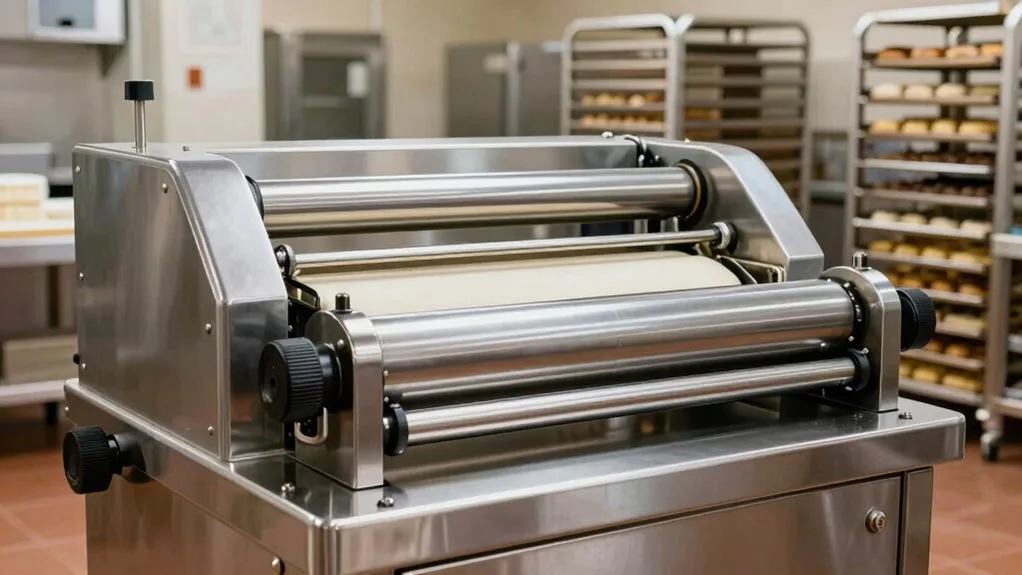
Okay, so how do these things work? At its core, a commercial dough sheeter is a machine with two rollers that press dough into a thin, even sheet. But the devil’s in the details. Here’s what’s really going on:
- Adjustable Gap: The space between the rollers determines the thickness of your dough. Most sheeters let you adjust this down to the millimeter, so you can go from thick pizza dough to paper-thin strudel with a quick tweak.
- Motorized Rollers: Unlike a manual rolling pin, the rollers on a sheeter are powered by a motor. This means consistent speed and pressure, which translates to even dough every time.
- Conveyor Belts: Many sheeters have a conveyor system that feeds the dough through the rollers automatically. This isn’t just for convenience, it reduces handling, which means less chance of overworking the dough.
- Dough Relaxation: Some high-end sheeters have settings that let the dough rest between passes. This is crucial for laminated doughs (like croissants or puff pastry), where you need to give the gluten time to relax between folds.
Now, here’s where it gets interesting. The best sheeters don’t just roll dough, they manage gluten development. When you roll dough manually, you’re constantly stretching and compressing the gluten strands. Do this too much, and your dough becomes tough. A good sheeter applies just the right amount of pressure to stretch the dough without overworking it. It’s like the Goldilocks of dough handling, not too much, not too little, just right.
But, and this is a big but, sheeters aren’t magic. They won’t fix bad dough. If your dough is too wet, too dry, or hasn’t been mixed properly, a sheeter will just expose those flaws faster. Think of it like a microscope for your dough. It doesn’t create perfection; it reveals what’s already there.
Types of Commercial Dough Sheeters: Which One’s Right for You?
Manual vs. Semi-Automatic vs. Fully Automatic
Not all sheeters are created equal, and the right one for you depends on your volume, budget, and patience. Let’s break it down:
- Manual Sheeters: These are the simplest (and cheapest) option. You feed the dough through the rollers by hand, and you adjust the thickness manually. They’re great for small bakeries or pizzerias with low volume. The downside? They’re slow, and they require more physical effort. If you’re only making a few sheets of dough a day, this might be all you need. But if you’re scaling up, you’ll outgrow it fast.
- Semi-Automatic Sheeters: These are the sweet spot for most commercial kitchens. They have motorized rollers and often a conveyor system, but you still need to feed the dough in and out manually. They’re faster than manual sheeters and more affordable than fully automatic ones. For most bakeries, this is the best balance of cost and efficiency.
- Fully Automatic Sheeters: These are the Ferraris of the dough world. They handle everything, feeding, rolling, and even cutting, with minimal input from you. They’re expensive, but if you’re producing high volumes (think industrial bakeries or large pizzerias), they’re worth every penny. The downside? They take up space, and they’re overkill for small operations.
I’m torn between recommending semi-automatic and fully automatic for most kitchens. On one hand, semi-automatic sheeters are more affordable and still give you a lot of control. On the other hand, if you’re serious about scaling, a fully automatic sheeter will save you time and labor costs in the long run. Maybe I should clarify: if you’re doing less than 50 sheets a day, go semi-automatic. If you’re doing more? Start looking at fully automatic.
Bench-Top vs. Floor Models
Size matters, especially in a commercial kitchen. Here’s how to decide between a bench-top and floor model:
- Bench-Top Sheeters: These are compact and designed to sit on a counter or table. They’re ideal for small kitchens or bakeries with limited space. The trade-off? They can’t handle as much dough at once, and they’re usually less powerful. If you’re making pastries or small batches of pizza dough, a bench-top sheeter might be perfect. But if you’re rolling out large sheets for croissants or danishes, you’ll be doing a lot of feeding and refolding.
- Floor Models: These are the heavy-duty options. They stand on their own and can handle larger quantities of dough with ease. They’re also more powerful, which means they can roll thicker doughs (like pizza or bread dough) without straining. The downside? They take up a lot of space, and they’re more expensive. If you’ve got the room and the volume, though, a floor model is the way to go.
I’ve seen too many kitchens try to squeeze a floor model into a tiny space, only to realize they can’t move around it. Measure your kitchen before you buy, trust me on this one.
Specialty Sheeters: For When You Need Something Extra
Not all dough is created equal, and sometimes you need a sheeter that’s built for a specific task. Here are a few specialty options:
- Laminating Sheeters: These are designed for laminated doughs (like croissants or puff pastry). They have features like adjustable roller gaps and built-in resting periods to help you create those perfect layers. If you’re serious about laminated doughs, this is the sheeter for you.
- Pizza Dough Sheeters: These are built to handle the thicker, stretchier dough used for pizza. They often have wider rollers and more powerful motors to deal with the extra resistance. Some even come with built-in dockers (those little rollers that poke holes in the dough to prevent bubbles).
- Tortilla Sheeters: If you’re making tortillas, you need a sheeter that can roll dough thin and fast. Tortilla sheeters are designed for high volume and often come with cutting attachments to stamp out perfect rounds.
- Ravioli Sheeters: These are niche, but if you’re making filled pastas, they’re a game-changer. They often come with attachments to create the little pockets for filling, so you’re not doing it all by hand.
Do you need a specialty sheeter? It depends. If you’re only making one type of dough (like pizza), then yes, a pizza dough sheeter will make your life easier. But if you’re making a variety of doughs, a general-purpose sheeter might be the better choice. I’m still on the fence about this one, specialty sheeters are great, but they’re also expensive and take up space. Maybe it’s worth it if you’re using it every day, but for occasional use? Probably not.
Key Features to Look for in a Commercial Dough Sheeter
Roller Width and Adjustability
The width of the rollers determines how wide a sheet of dough you can make. Most commercial sheeters have rollers between 16 and 24 inches wide. Here’s what you need to know:
- 16-18 inches: Good for small bakeries or pizzerias. You can make a decent-sized sheet of dough, but you’ll be limited if you’re making large pastries or pizzas.
- 20-24 inches: This is the sweet spot for most commercial kitchens. You can roll out large sheets of dough for croissants, danishes, or even full-size pizza dough. The downside? These sheeters are bigger and more expensive.
But width isn’t the only thing to consider. You also want adjustable rollers. The best sheeters let you fine-tune the gap between the rollers, so you can go from thick pizza dough to paper-thin strudel with ease. Look for a sheeter with a micrometer adjustment-this lets you make precise changes to the thickness, which is crucial for consistency.
I’ve seen too many bakers struggle with sheeters that only have preset thickness settings. Sure, they’re convenient, but they don’t give you the control you need for different types of dough. If you’re serious about baking, get a sheeter with adjustable rollers.
Motor Power and Speed
The motor is the heart of your sheeter, and its power determines what kind of dough you can handle. Here’s the breakdown:
- 1/3 to 1/2 HP: Good for soft doughs like pie crust or cookie dough. These motors are fine for low-volume operations, but they’ll struggle with thicker, tougher doughs like pizza or bread.
- 3/4 to 1 HP: This is the sweet spot for most commercial kitchens. A motor in this range can handle a variety of doughs, from soft pastry dough to thick pizza dough. It’s powerful enough to roll dough quickly but not so powerful that it’s overkill for small batches.
- 1.5 HP and up: These are the heavy-duty motors. They’re designed for high-volume bakeries or industrial operations. If you’re rolling out hundreds of sheets a day, this is what you need. The downside? They’re more expensive and use more energy.
But power isn’t the only thing to consider, you also want variable speed control. Some doughs (like laminated doughs) need to be rolled slowly to prevent tearing. Others (like pizza dough) can handle faster speeds. A sheeter with variable speed lets you adjust the speed to match the dough, which is crucial for consistency.
I’m still not sure about the whole “bigger is better” thing when it comes to motors. Sure, a 1.5 HP motor can handle anything, but if you’re only making a few sheets a day, it’s overkill. Maybe I should clarify: match the motor to your volume. If you’re a small bakery, a 3/4 HP motor is plenty. If you’re a high-volume operation, go bigger.
Material and Build Quality
Not all sheeters are built the same, and the materials used can make a big difference in durability and performance. Here’s what to look for:
- Stainless Steel: This is the gold standard. Stainless steel is durable, easy to clean, and resistant to corrosion. It’s also more expensive, but it’s worth it if you’re using your sheeter every day. Look for a sheeter with a stainless steel frame and rollers, it’ll last longer and perform better.
- Aluminum: Aluminum is lighter and cheaper than stainless steel, but it’s not as durable. It’s fine for low-volume operations, but if you’re using your sheeter every day, it’ll wear out faster. Some sheeters have aluminum frames with stainless steel rollers, which is a good compromise.
- Plastic: Some sheeters have plastic parts, especially in the cheaper models. Plastic is lightweight and affordable, but it’s not as durable as metal. If you’re only using your sheeter occasionally, plastic might be fine. But for daily use? Stick with metal.
But it’s not just about the materials, it’s also about the build quality. A well-built sheeter will have tight tolerances, smooth rollers, and a sturdy frame. A poorly built sheeter will wobble, vibrate, and wear out quickly. How do you tell the difference? Read reviews, ask other bakers, and, if possible, test the sheeter before you buy.
I’ve seen too many bakers skimp on build quality to save a few bucks, only to regret it later. A sheeter is an investment, and you want one that’s going to last. Don’t cut corners here.
Ease of Cleaning and Maintenance
Let’s be honest: cleaning a dough sheeter is nobody’s idea of fun. But it’s crucial for food safety and performance. Here’s what to look for:
- Removable Parts: The best sheeters have rollers, belts, and other parts that are easy to remove for cleaning. This makes it easier to get into all the nooks and crannies where dough can hide.
- Stainless Steel Construction: Stainless steel is not only durable, it’s also easy to clean. Look for a sheeter with a stainless steel frame and rollers, as these are less likely to harbor bacteria.
- Smooth Surfaces: Avoid sheeters with lots of crevices or textured surfaces, as these can trap dough and make cleaning harder. The smoother the surfaces, the easier they are to clean.
- Easy-Access Lubrication Points: Sheeters have moving parts that need to be lubricated regularly. Look for a sheeter with easy-access lubrication points, so you don’t have to disassemble the whole machine to keep it running smoothly.
But cleaning isn’t just about the machine, it’s also about your workflow. Here are a few tips to make cleaning easier:
- Clean as You Go: Don’t let dough dry on the rollers or belts. Wipe them down with a damp cloth between batches to prevent buildup.
- Use the Right Tools: A stiff brush or scraper can help remove dried dough from the rollers. Avoid metal tools, as these can scratch the surface.
- Follow the Manufacturer’s Instructions: Every sheeter is different, so follow the cleaning instructions in the manual. Some parts may be dishwasher-safe, while others need to be hand-washed.
I’ll admit it: I’ve skipped cleaning my sheeter more times than I’d like to admit. But every time I do, I regret it. Dough buildup makes the machine work harder, which can lead to breakdowns. Plus, it’s a food safety hazard. Don’t make the same mistake, clean your sheeter regularly.
How to Use a Commercial Dough Sheeter: Step-by-Step Techniques
Preparing Your Dough for Sheeting
Before you even turn on your sheeter, your dough needs to be ready. Here’s how to prep it for the best results:
- Rest Your Dough: Dough needs time to relax after mixing. If you try to sheet it right away, the gluten will be too tight, and the dough will shrink back or tear. Let it rest for at least 30 minutes (longer for laminated doughs).
- Check the Temperature: Dough that’s too cold will be stiff and hard to roll. Dough that’s too warm will be sticky and hard to handle. Aim for a dough temperature of around 68-72°F (20-22°C). If your dough is too cold, let it warm up slightly before sheeting. If it’s too warm, chill it for a few minutes.
- Divide and Weigh: For consistency, divide your dough into equal portions before sheeting. Use a scale to weigh each portion, this ensures that every sheet of dough is the same size and thickness.
- Shape the Dough: Before you feed the dough into the sheeter, shape it into a rough rectangle. This makes it easier to feed into the rollers and ensures even rolling.
But here’s the thing: not all doughs are the same. Some doughs (like pie crust) are soft and easy to roll. Others (like pizza dough) are tougher and more elastic. You’ll need to adjust your technique based on the type of dough you’re working with. Maybe I should clarify: the key is to understand your dough. If it’s too elastic, let it rest longer. If it’s too soft, chill it slightly. Experiment until you find the sweet spot.
Feeding the Dough: Dos and Don’ts
Feeding the dough into the sheeter might seem simple, but there are a few tricks to doing it right:
- Do:
- Start with a wide gap between the rollers. This makes it easier to feed the dough in without tearing it.
- Feed the dough in slowly and evenly. Let the rollers pull it through, don’t force it.
- Use both hands to guide the dough, but don’t push or pull. Let the machine do the work.
- Keep your hands clear of the rollers. Dough sheeters are powerful machines, and it’s easy to get your fingers caught.
- Don’t:
- Don’t feed the dough in at an angle. This can cause uneven rolling and tearing.
- Don’t overload the sheeter. Feed in one sheet at a time, don’t try to roll multiple sheets at once.
- Don’t use your hands to push the dough through. This can cause the dough to tear or the machine to jam.
- Don’t leave the sheeter unattended while it’s running. Always keep an eye on the dough to make sure it’s rolling evenly.
I’ve seen too many bakers try to rush the feeding process, only to end up with torn dough or a jammed machine. Take your time, it’s not a race. The goal is to get a smooth, even sheet of dough, not to finish as fast as possible.
Adjusting Thickness: The Art of the Perfect Sheet
Getting the right thickness is where the magic happens. Here’s how to do it:
- Start Wide: Begin with a wide gap between the rollers. This makes it easier to feed the dough in without tearing it.
- Gradual Reductions: After the first pass, reduce the gap slightly and run the dough through again. Repeat this process, reducing the gap a little each time, until you reach the desired thickness. Don’t try to go from thick to thin in one pass, this can cause tearing or uneven rolling.
- Flip and Rotate: After each pass, flip the dough over and rotate it 90 degrees. This ensures even rolling and prevents the dough from becoming too elastic in one direction.
- Rest Between Passes: For laminated doughs (like croissants or puff pastry), let the dough rest for a few minutes between passes. This gives the gluten time to relax, which makes it easier to roll and prevents tearing.
- Check the Thickness: Use a ruler or a dough thickness gauge to check the thickness of your dough. This ensures consistency across all your sheets.
But here’s the thing: there’s no one-size-fits-all thickness. It depends on what you’re making. Here are a few guidelines:
- Pizza Dough: 1/8 to 1/4 inch (3-6 mm)
- Croissants: 1/8 inch (3 mm) for the final sheet
- Pie Crust: 1/8 inch (3 mm)
- Empanadas: 1/16 to 1/8 inch (1.5-3 mm)
- Tortillas: 1/16 inch (1.5 mm) or thinner
Is this the best approach? Let’s consider: maybe it’s better to think of thickness in terms of your final product. If your pastries are too dense, try rolling the dough thinner. If they’re too fragile, go thicker. Baking is as much about feel as it is about measurements.
Handling Laminated Doughs: The Croissant Conundrum
Laminated doughs, like croissants, puff pastry, or danishes, are a whole different beast. They require multiple folds and rolls to create those flaky layers, and a sheeter is essential for getting it right. Here’s how to do it:
- Start with a Wide Gap: Begin with a wide gap between the rollers to avoid compressing the layers too much in the first pass.
- First Fold: After the first pass, fold the dough into thirds (like a letter). This is called a “book fold.” Rotate the dough 90 degrees and run it through the sheeter again.
- Rest: Let the dough rest for 20-30 minutes in the fridge. This gives the gluten time to relax and the butter time to firm up.
- Second Fold: Repeat the book fold, then run the dough through the sheeter again. Rest for another 20-30 minutes.
- Final Roll: After the second rest, roll the dough to the final thickness (usually around 1/8 inch). Now it’s ready to be cut and shaped.
But here’s the catch: laminated doughs are all about temperature control. If the butter gets too warm, it’ll melt and ruin the layers. If it’s too cold, it’ll tear the dough. Here’s how to manage it:
- Keep Everything Cold: Work in a cool kitchen, and chill your dough and butter between folds. If your kitchen is warm, work in short bursts and return the dough to the fridge frequently.
- Use a Thermometer: Check the temperature of your dough and butter regularly. The ideal temperature for laminated doughs is around 60-65°F (15-18°C). If it gets warmer than that, chill it before continuing.
- Don’t Overwork the Dough: Laminated doughs are delicate. Don’t roll them too thin or fold them too many times, or you’ll compress the layers and lose the flakiness.
I’m still not sure about the whole “resting” thing. Some bakers swear by long rests between folds, while others say shorter rests work just as well. Maybe it depends on the dough? I’ve had good results with 20-30 minute rests, but I’m open to experimenting. What do you think?
Common Mistakes and How to Avoid Them
Overworking the Dough
This is the most common mistake I see, and it’s a killer. Overworking the dough develops too much gluten, which makes it tough and chewy. Here’s how to avoid it:
- Don’t Roll Too Thin Too Fast: Reduce the gap between the rollers gradually. Trying to go from thick to thin in one pass will overwork the dough.
- Rest the Dough: Let the dough rest between passes. This gives the gluten time to relax, which makes it easier to roll and prevents overworking.
- Use the Right Speed: If your sheeter has variable speed control, use a slower speed for delicate doughs. Faster speeds can stretch the dough too much, leading to overworking.
- Don’t Re-Roll Scraps: If you’re making pastries, don’t re-roll the scraps. This overworks the dough and makes your pastries tough. Instead, use the scraps for something else (like crackers or breadcrumbs).
But here’s the thing: overworking isn’t always bad. Some doughs (like pizza dough) benefit from a little extra gluten development. The key is to know your dough and adjust your technique accordingly. Maybe I should clarify: if your dough is tough or chewy, you’re probably overworking it. If it’s too soft or fragile, you might not be working it enough.
Uneven Rolling: The Bane of Consistency
Uneven rolling is another common issue, and it can ruin your pastries. Here’s how to avoid it:
- Feed the Dough Evenly: Make sure the dough is evenly shaped before you feed it into the sheeter. If one side is thicker than the other, it’ll roll unevenly.
- Flip and Rotate: After each pass, flip the dough over and rotate it 90 degrees. This ensures even rolling and prevents the dough from becoming too elastic in one direction.
- Check the Rollers: Make sure the rollers are clean and free of dough buildup. Dough stuck to the rollers can cause uneven rolling.
- Use a Dough Docking Roller: If you’re making pizza or flatbreads, use a docking roller to poke holes in the dough. This prevents bubbles and ensures even baking.
But uneven rolling isn’t always a bad thing. Some pastries (like rustic breads or artisanal pies) benefit from a little unevenness. The key is to know when to embrace it and when to avoid it. Is this the best approach? Let’s consider: maybe it’s better to think of unevenness as a feature, not a bug. If you’re going for a rustic look, a little unevenness can add character. If you’re making precision pastries, aim for consistency.
Dough Sticking to the Rollers
Sticky dough is the bane of every baker’s existence. Here’s how to prevent it:
- Use Flour: Dust the dough and the rollers with flour before each pass. This creates a barrier between the dough and the rollers, preventing sticking.
- Don’t Over-Flour: Too much flour can make your dough dry and tough. Use just enough to prevent sticking, usually a light dusting is all you need.
- Use a Non-Stick Mat: Some sheeters come with non-stick mats or belts. These can help prevent sticking, especially with sticky doughs like brioche or cinnamon rolls.
- Check the Dough Temperature: Dough that’s too warm is more likely to stick. If your dough is sticky, chill it for a few minutes before rolling.
- Clean the Rollers: Dough buildup on the rollers can cause sticking. Clean the rollers regularly to prevent buildup.
But here’s the thing: some doughs are just sticky. If you’re making something like brioche or cinnamon rolls, you’ll need to accept a little sticking. The key is to manage it, not eliminate it. Maybe I should clarify: if your dough is sticking, try chilling it or using a little more flour. If that doesn’t work, it might be the dough itself, not the sheeter.
Maintaining Your Commercial Dough Sheeter: Tips for Longevity
Daily Cleaning Routine
Cleaning your sheeter isn’t just about hygiene, it’s also about performance. Dough buildup can cause the rollers to stick, the belts to slip, and the motor to overheat. Here’s how to clean it daily:
- Turn Off and Unplug: Always turn off and unplug the sheeter before cleaning. This prevents accidents and ensures your safety.
- Remove Dough Buildup: Use a stiff brush or scraper to remove dough buildup from the rollers, belts, and other parts. Be gentle, don’t scratch the surfaces.
- Wipe Down Surfaces: Use a damp cloth to wipe down the rollers, belts, and frame. Avoid using harsh chemicals, as these can damage the surfaces.
- Dry Thoroughly: After cleaning, dry all the parts thoroughly. Moisture can cause rust or corrosion, especially on metal parts.
- Lubricate Moving Parts: Check the manufacturer’s instructions for lubrication points. Apply food-grade lubricant to these points to keep the machine running smoothly.
But here’s the thing: cleaning isn’t just about the machine, it’s also about your workflow. Here are a few tips to make cleaning easier:
- Clean as You Go: Don’t let dough dry on the rollers or belts. Wipe them down with a damp cloth between batches to prevent buildup.
- Use the Right Tools: A stiff brush or scraper can help remove dried dough from the rollers. Avoid metal tools, as these can scratch the surface.
- Follow the Manufacturer’s Instructions: Every sheeter is different, so follow the cleaning instructions in the manual. Some parts may be dishwasher-safe, while others need to be hand-washed.
I’ll admit it: I’ve skipped cleaning my sheeter more times than I’d like to admit. But every time I do, I regret it. Dough buildup makes the machine work harder, which can lead to breakdowns. Plus, it’s a food safety hazard. Don’t make the same mistake, clean your sheeter regularly.
Weekly and Monthly Maintenance
Daily cleaning is crucial, but it’s not enough. You also need to perform weekly and monthly maintenance to keep your sheeter running smoothly. Here’s what to do:
Weekly Maintenance:
- Deep Clean the Rollers: Remove the rollers and clean them thoroughly with warm, soapy water. Use a soft brush to remove any dough buildup, then dry them completely before reattaching.
- Check the Belts: Inspect the belts for signs of wear or damage. If they’re cracked or frayed, replace them. Tighten any loose belts to prevent slipping.
- Lubricate Moving Parts: Apply food-grade lubricant to all moving parts, including the rollers, belts, and motor. This keeps the machine running smoothly and prevents wear.
- Inspect the Frame: Check the frame for signs of rust or corrosion. If you find any, clean it off with a wire brush and apply a rust inhibitor.
Monthly Maintenance:
- Check the Motor: Listen for any unusual noises or vibrations. If the motor is making a grinding or squealing sound, it might need to be serviced.
- Inspect Electrical Components: Check the power cord, plug, and any exposed wires for signs of damage. If you find any, replace them immediately.
- Test the Safety Features: Most sheeters have safety features like emergency stop buttons or guards. Test these to make sure they’re working properly.
- Calibrate the Rollers: Over time, the rollers can become misaligned, which can cause uneven rolling. Check the manufacturer’s instructions for calibration procedures.
But here’s the thing: maintenance isn’t just about the machine, it’s also about your team. Make sure everyone who uses the sheeter knows how to clean and maintain it. Maybe I should clarify: assign someone to be responsible for weekly and monthly maintenance. This ensures that it gets done and that the machine stays in good condition.
Troubleshooting Common Issues
Even with regular maintenance, things can go wrong. Here’s how to troubleshoot some common issues:
- Dough Tears or Sticks:
- Problem: The dough is tearing or sticking to the rollers.
- Solution: Check the dough temperature, if it’s too warm, chill it. If it’s too cold, let it warm up slightly. Dust the dough and rollers with flour to prevent sticking. If the dough is tearing, reduce the gap between the rollers gradually.
- Uneven Rolling:
- Problem: The dough is rolling unevenly, with one side thicker than the other.
- Solution: Make sure the dough is evenly shaped before feeding it into the sheeter. Flip and rotate the dough between passes to ensure even rolling. Check the rollers for dough buildup, and clean them if necessary.
- Machine Jams:
- Problem: The machine jams or stops running.
- Solution: Turn off and unplug the machine, then remove any dough or debris that’s causing the jam. Check the rollers and belts for damage, and replace them if necessary. If the motor is overheating, let it cool down before using it again.
- Unusual Noises:
- Problem: The machine is making grinding, squealing, or rattling noises.
- Solution: Check the motor and moving parts for signs of wear or damage. Lubricate the moving parts, and tighten any loose screws or bolts. If the noise persists, the machine might need to be serviced.
But here’s the thing: troubleshooting isn’t always straightforward. Sometimes, the issue isn’t with the machine, it’s with the dough. Maybe I should clarify: if you’re having problems, start by checking the dough. Is it too wet? Too dry? Too cold? Too warm? The machine might not be the problem.
Choosing the Right Commercial Dough Sheeter for Your Kitchen
Assessing Your Needs: Volume, Space, and Budget
Before you buy a sheeter, you need to assess your needs. Here’s what to consider:
- Volume: How much dough are you rolling out each day? If you’re a small bakery making a few sheets a day, a manual or semi-automatic sheeter might be enough. If you’re a high-volume operation, you’ll need a fully automatic sheeter.
- Space: How much room do you have in your kitchen? Bench-top sheeters are compact and ideal for small kitchens. Floor models take up more space but can handle larger quantities of dough.
- Budget: How much are you willing to spend? Manual sheeters are the cheapest, followed by semi-automatic and fully automatic. Don’t forget to factor in the cost of maintenance and repairs.
- Type of Dough: What kind of dough are you making? If you’re making laminated doughs (like croissants), you’ll need a sheeter with adjustable roller gaps and resting periods. If you’re making pizza dough, you’ll need a sheeter with a wider gap and more power.
But here’s the thing: assessing your needs isn’t just about the numbers. It’s also about your workflow. How do you use the sheeter in your kitchen? Do you need it to be portable? Do you need it to handle multiple types of dough? Maybe I should clarify: think about how the sheeter fits into your process. If it doesn’t integrate smoothly, it’ll just create more work.
Top Brands and Models to Consider
There are a lot of sheeters on the market, and it can be overwhelming to choose one. Here are a few top brands and models to consider:
- DoughPro:
- Model: DoughPro DP-22
- Features: 22-inch rollers, 1 HP motor, variable speed control, stainless steel construction
- Best For: High-volume bakeries and pizzerias
- Rondo:
- Model: Rondo SSO-22
- Features: 22-inch rollers, 3/4 HP motor, adjustable roller gap, stainless steel construction
- Best For: Laminated doughs and pastries
- Anets:
- Model: Anets SD-20
- Features: 20-inch rollers, 1/2 HP motor, bench-top design, aluminum construction
- Best For: Small bakeries and pizzerias
- Doyon:
- Model: Doyon LSB-20
- Features: 20-inch rollers, 1 HP motor, fully automatic, stainless steel construction
- Best For: High-volume industrial bakeries
But here’s the thing: the “best” sheeter depends on your needs. A sheeter that’s perfect for a pizzeria might not be the best choice for a bakery making croissants. Maybe I should clarify: don’t just buy the most expensive sheeter you can afford. Buy the one that fits your workflow and your budget.
New vs. Used: What’s the Best Option?
Buying a used sheeter can save you a lot of money, but it’s not without risks. Here’s what to consider:
- New Sheeters:
- Pros: Comes with a warranty, latest features, no wear and tear
- Cons: More expensive, longer lead times
- Used Sheeters:
- Pros: Cheaper, available immediately
- Cons: No warranty, potential wear and tear, outdated features
If you’re considering a used sheeter, here’s how to minimize the risks:
- Inspect the Machine: Check for signs of wear and tear, rust, or damage. Test the rollers, belts, and motor to make sure they’re working properly.
- Ask for Maintenance Records: A well-maintained sheeter will last longer. Ask the seller for maintenance records to see how the machine has been cared for.
- Test the Machine: If possible, test the sheeter with a batch of dough. This will give you a sense of how it performs and whether it’s the right fit for your needs.
- Buy from a Reputable Seller: Buy from a reputable dealer or manufacturer, not a random person on Craigslist. This ensures that you’re getting a quality machine and that you have some recourse if something goes wrong.
I’m still not sure about the whole “used vs. new” thing. On one hand, used sheeters can save you a lot of money. On the other hand, you’re taking a risk. Maybe it’s worth it if you’re on a tight budget, but if you can afford it, I’d go with new. What do you think?
Advanced Techniques: Taking Your Dough to the Next Level
Layering and Folding for Flaky Pastries
If you’re making laminated doughs (like croissants or puff pastry), layering and folding are key. Here’s how to do it:
- Start with a Wide Gap: Begin with a wide gap between the rollers to avoid compressing the layers too much in the first pass.
- First Fold: After the first pass, fold the dough into thirds (like a letter). This is called a “book fold.” Rotate the dough 90 degrees and run it through the sheeter again.
- Rest: Let the dough rest for 20-30 minutes in the fridge. This gives the gluten time to relax and the butter time to firm up.
- Second Fold: Repeat the book fold, then run the dough through the sheeter again. Rest for another 20-30 minutes.
- Final Roll: After the second rest, roll the dough to the final thickness (usually around 1/8 inch). Now it’s ready to be cut and shaped.
But here’s the catch: the number of folds depends on the type of pastry you’re making. Croissants usually require 3-4 folds, while puff pastry can require up to 6. The key is to experiment and find what works best for your dough.
I’m still not sure about the whole “resting” thing. Some bakers swear by long rests between folds, while others say shorter rests work just as well. Maybe it depends on the dough? I’ve had good results with 20-30 minute rests, but I’m open to experimenting. What do you think?
Creating Custom Thicknesses for Different Products
Not all pastries are created equal, and neither are their doughs. Here’s how to create custom thicknesses for different products:
- Pizza Dough: 1/8 to 1/4 inch (3-6 mm). Thicker dough makes for a chewier crust, while thinner dough makes for a crispier crust.
- Croissants: 1/8 inch (3 mm) for the final sheet. This ensures even layers and a flaky texture.
- Pie Crust: 1/8 inch (3 mm). This is the sweet spot for a flaky, tender crust.
- Empanadas: 1/16 to 1/8 inch (1.5-3 mm). Thinner dough makes for a crispier empanada, while thicker dough makes for a chewier one.
- Tortillas: 1/16 inch (1.5 mm) or thinner. The thinner the dough, the more pliable the tortilla.
But here’s the thing: thickness isn’t just about measurements, it’s also about feel. If your pastries are too dense, try rolling the dough thinner. If they’re too fragile, go thicker. Baking is as much about intuition as it is about precision.
Incorporating Add-Ins: Nuts, Seeds, and More
Adding nuts, seeds, or other add-ins to your dough can take your pastries to the next level. But it’s not as simple as just tossing them in. Here’s how to do it right:
- Toast the Add-Ins: Toasting nuts and seeds brings out their flavor and makes them crunchier. Spread them on a baking sheet and toast them in the oven at 350°F (175°C) for 10-15 minutes, or until golden brown.
- Chop Them Up: If you’re adding large nuts or seeds, chop them into smaller pieces. This ensures even distribution and prevents the dough from tearing.
- Mix Them In: Add the add-ins to the dough during the final stages of mixing. Don’t overmix, or you’ll break the nuts and seeds into tiny pieces.
- Roll Carefully: When rolling dough with add-ins, be gentle. The nuts and seeds can tear the dough if you’re not careful. Start with a wide gap between the rollers and reduce it gradually.
But here’s the thing: not all add-ins are created equal. Some (like nuts and seeds) are easy to incorporate, while others (like dried fruit or chocolate chips) can be trickier. The key is to experiment and find what works best for your dough.
Safety First: Operating Your Dough Sheeter Without Losing a Finger
Understanding the Risks
Let’s be real: dough sheeters are powerful machines, and they can be dangerous if you’re not careful. Here are the risks:
- Pinch Points: The rollers and belts can pinch your fingers or hands if you’re not careful. This is the most common injury with dough sheeters.
- Entanglement: Loose clothing, jewelry, or hair can get caught in the rollers or belts, pulling you into the machine.
- Electrical Hazards: Faulty wiring or damaged cords can cause electrical shocks or fires.
- Flying Debris: Dough or other debris can fly out of the machine, causing eye injuries or other accidents.
But here’s the thing: most of these risks are preventable. With the right precautions, you can operate your sheeter safely and avoid accidents.
Essential Safety Features to Look For
When buying a sheeter, look for these safety features:
- Emergency Stop Button: This lets you stop the machine immediately in case of an emergency.
- Safety Guards: These cover the rollers and belts, preventing your hands from getting caught. Make sure the guards are sturdy and easy to remove for cleaning.
- Lockout/Tagout: This prevents the machine from being turned on while it’s being cleaned or serviced.
- Non-Slip Feet: These keep the machine from sliding around on the counter or floor, preventing accidents.
- Overload Protection: This prevents the motor from overheating or burning out, which can cause fires or other hazards.
But safety isn’t just about the machine, it’s also about your team. Make sure everyone who uses the sheeter knows how to operate it safely. Maybe I should clarify: hold a training session to go over the safety features and proper operation. This ensures that everyone is on the same page and that the machine is used safely.
Training Your Team: Best Practices
Here’s how to train your team to use the sheeter safely:
- Read the Manual: Before using the sheeter, read the manual and familiarize yourself with the safety features and operating instructions.
- Wear the Right Clothing: Avoid loose clothing, jewelry, or long hair that can get caught in the machine. Wear close-fitting clothes and tie back long hair.
- Use the Safety Features: Always use the safety guards and emergency stop button. Don’t remove the guards unless you’re cleaning the machine.
- Keep Your Hands Clear: Never put your hands near the rollers or belts while the machine is running. Use a dough scraper or other tool to guide the dough.
- Turn Off and Unplug: Always turn off and unplug the machine before cleaning or servicing it.
- Report Issues: If you notice any problems with the machine (like unusual noises or vibrations), report them immediately. Don’t try to fix them yourself unless you’re trained to do so.
But here’s the thing: training isn’t a one-time thing. You need to reinforce safety practices regularly. Maybe I should clarify: hold refresher training sessions every few months to keep everyone up to date on best practices.
Wrapping Up: The Future of Dough Sheeters
So, where do we go from here? Commercial dough sheeters have come a long way in the last few decades, but there’s still room for innovation. Here are a few trends to watch:
- Smart Sheeters: Imagine a sheeter that adjusts the roller gap and speed automatically based on the type of dough. Or one that tracks your usage and alerts you when it’s time for maintenance. Smart sheeters are already hitting the market, and they’re only going to get more advanced.
- Energy Efficiency: As energy costs rise, manufacturers are looking for ways to make sheeters more energy-efficient. Look for models with energy-saving features like variable speed motors or automatic shut-off.
- Compact Designs: Space is at a premium in commercial kitchens, and manufacturers are responding with more compact sheeters. Look for models with foldable designs or smaller footprints.
- Modular Attachments: Some sheeters are now coming with modular attachments, like docking rollers or cutting blades. This lets you customize the machine for different tasks, making it more versatile.
But here’s the thing: no matter how advanced sheeters get, they’ll never replace the baker. A sheeter is a tool, and like any tool, it’s only as good as the person using it. The future of baking isn’t about machines, it’s about the people who use them to create something delicious.
So, what’s next for you? If you’re in the market for a sheeter, take your time and choose the right one for your needs. If you already have one, experiment with new techniques and push the limits of what you can create. And if you’re just starting out, don’t be intimidated. Every baker was a beginner once, and every expert started with a single sheet of dough.
I’m still learning every day, and I’m excited to see where the future takes us. Maybe one day, we’ll have sheeters that can read our minds and roll the perfect dough every time. Until then, keep experimenting, keep baking, and, most importantly, keep enjoying the process.
FAQ: Your Commercial Dough Sheeter Questions Answered
Q: How do I know if my dough is ready for sheeting?
A: Your dough is ready for sheeting when it’s relaxed, pliable, and holds its shape. If it’s too stiff, it’ll tear when you roll it. If it’s too soft, it’ll stick to the rollers. The ideal dough temperature is around 68-72°F (20-22°C). If your dough is outside this range, adjust it before sheeting. For laminated doughs, make sure the butter is firm but not too cold, if it’s too cold, it’ll tear the dough; if it’s too warm, it’ll melt and ruin the layers.
Q: Can I use a commercial dough sheeter for gluten-free dough?
A: Yes, but it’s trickier. Gluten-free dough is more fragile and less elastic than traditional dough, so you’ll need to be gentle. Start with a wide gap between the rollers and reduce it gradually. Dust the dough and rollers with gluten-free flour to prevent sticking. Some bakers find that gluten-free dough works better with a manual sheeter, as it gives them more control. If you’re making gluten-free pastries regularly, consider investing in a sheeter with adjustable speed and pressure settings.
Q: How often should I lubricate my dough sheeter?
A: It depends on how often you use it. For daily use, lubricate the moving parts (like the rollers and belts) weekly. For occasional use, lubricate them monthly. Always use food-grade lubricant, and follow the manufacturer’s instructions for application. Don’t over-lubricate, too much can attract dust and debris, which can cause the machine to jam. If you’re not sure, check the manual or consult the manufacturer.
Q: What’s the best way to store my dough sheeter when it’s not in use?
A: Store your sheeter in a clean, dry place away from direct sunlight and heat sources. If it’s a bench-top model, cover it with a dust cover to protect it from debris. If it’s a floor model, make sure it’s in a stable position where it won’t tip over. Before storing, clean the machine thoroughly and remove any dough buildup. If you’re storing it for an extended period, lubricate the moving parts to prevent rust and corrosion. Finally, unplug the machine to prevent electrical hazards.
@article{the-ultimate-guide-to-commercial-dough-sheeters-from-novice-to-pro-in-2026,
    title   = {The Ultimate Guide to Commercial Dough Sheeters: From Novice to Pro in 2026},
    author  = {Chef's icon},
    year    = {2026},
    journal = {Chef's Icon},
    url     = {https://chefsicon.com/commercial-dough-sheeters-guide/}
}