The Best Fluffy Pancakes recipe you will fall in love with. Full of tips and tricks to help you make the best pancakes.
Why Your Restaurant’s Meal Prep Is Costing You More Than It Should
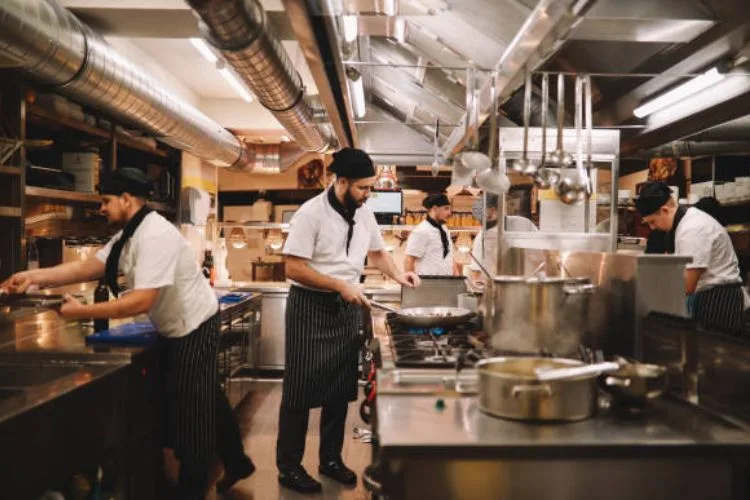
Let me tell you about the time I walked into a bustling Nashville hot chicken joint during the lunch rush. The line was out the door, the fryers were screaming, and the prep cook, let’s call him Marcus, was sweating through his apron while frantically chopping onions like his life depended on it. I watched as he grabbed a whole onion, peeled it, diced it, then moved to the next one. Rinse and repeat. Twenty minutes later, he was still at it, while the expediter was yelling for more garnishes. That’s when it hit me: this wasn’t a lack of skill, it was a lack of system.
I’ve spent the last decade working with restaurants, from tiny food trucks to Michelin-starred kitchens, and if there’s one thing I’ve learned, it’s that meal prep efficiency isn’t about working harder, it’s about working smarter. The difference between a kitchen that hums and one that grinds to a halt during service? It’s not just the talent of the staff or the quality of the equipment (though those help). It’s the invisible systems that turn chaos into clockwork. And here’s the kicker: most kitchens are leaving thousands of dollars on the table every month because they’re stuck in outdated prep routines.
In this guide, I’m going to walk you through 15 commercial kitchen meal prep efficiency hacks that’ll slash your labor costs, reduce waste, and, most importantly, keep your team from burning out. Some of these you’ve probably heard before (but aren’t using correctly). Others might make you pause and think, “Why the hell haven’t I been doing this all along?” We’ll cover everything from mise en place 2.0 to the psychology of station layouts, and yes, even how to turn your walk-in fridge into a productivity powerhouse. By the end, you’ll have a toolkit of actionable strategies, some of which you can implement today, others that’ll take a bit of planning. But here’s the thing: you don’t need to overhaul your entire kitchen to see results. Start with one or two hacks, test them, tweak them, and watch how small changes ripple into big savings.
Fair warning: I’m going to challenge some of your assumptions. Like, why are you still prepping ingredients the same way you did in culinary school? Or why is your prep station layout based on tradition instead of ergonomics and flow? And, this is the big one, are you actually measuring your prep efficiency, or just guessing? (Spoiler: if you’re not tracking it, you’re losing money.) Let’s dive in.
The Foundation: Rethinking Mise en Place for Modern Kitchens
1. The 80/20 Rule of Prep: Focus on What Actually Moves the Needle
Mise en place is sacred in kitchens. But here’s the problem: most chefs treat it like a religious ritual rather than a strategic system. They prep everything to 100% readiness, just in case. And that’s how you end up with a walk-in full of half-used containers of diced shallots that’ll go bad before they’re needed. Sound familiar?
Here’s a radical idea: not all ingredients deserve equal prep time. Apply the Pareto Principle (the 80/20 rule) to your prep list. Identify the 20% of ingredients that account for 80% of your usage. For most restaurants, this looks like:
- Onions, garlic, and celery (the holy trinity)
- Proteins (chicken, beef, fish, whatever’s in your top 3 dishes)
- Herbs (cilantro, parsley, basil, whatever you use daily)
- Sauces and dressings (especially if you make them in-house)
These are your high-impact prep items. They should be prepped in bulk, stored efficiently, and replenished on a schedule. Everything else? Prep it just in time-meaning, only when you’re running low or have downtime. I worked with a Mexican restaurant that was spending 3 hours a day prepping jalapeños, only to throw out 40% of them. The solution? They started prepping jalapeños in smaller batches, twice a day. Waste dropped to near zero, and prep time was cut in half.
But how do you know which items are your 80/20? Track your usage for a week. Literally, have your prep team log how much of each ingredient they use daily. You’ll be shocked at what you find. One Italian restaurant I consulted with realized they were prepping 10 pounds of rosemary a week, when they only used 2 pounds. The rest was going straight to the compost bin. That’s $50 a week in wasted herbs, not to mention the labor. Multiply that by 52 weeks, and suddenly, you’re looking at $2,600 a year flushed down the drain for no reason.
Is this the best approach for every kitchen? Maybe not. If you’re a high-volume steakhouse where every dish gets a sprig of thyme, then yes, prepping herbs in bulk makes sense. But for most restaurants, over-prepping is a silent profit killer. Start tracking, then adjust.
2. The “Prep Pyramid”: A Hierarchy for Smarter Ingredient Prep
Not all prep is created equal. Some tasks are high-value (they save time during service), while others are low-value (they’re easy to do on the fly). The key is to structure your prep list like a pyramid, with the most critical tasks at the top. Here’s how it breaks down:
- Tier 1: High-Value, High-Effort Prep (Do This First)
- Butchering whole proteins (e.g., breaking down whole chickens, trimming briskets)
- Making stocks, sauces, and reductions (these take time and can’t be rushed)
- Pre-cooking grains (rice, quinoa, farro, things that take 20+ minutes to cook)
- Blanching vegetables (broccoli, green beans, carrots, things that need to be par-cooked)
- Tier 2: Medium-Value Prep (Do This Second)
- Dicing onions, shallots, garlic (the holy trinity, again)
- Chopping herbs (but not too far in advance, herbs wilt and lose flavor)
- Portioning proteins (weighing out chicken breasts, steaks, etc.)
- Prepping garnishes (lemon wedges, parsley sprigs, etc.)
- Tier 3: Low-Value Prep (Do This Last or On the Fly)
- Washing and drying greens (do this the day of service, not days ahead)
- Slicing tomatoes (they get mealy if prepped too early)
- Zesting citrus (it loses flavor quickly)
- Peeling potatoes (they oxidize and turn brown)
Here’s the hack: assign your prep team to work from the top of the pyramid down. Start with Tier 1 tasks first thing in the morning, then move to Tier 2, and save Tier 3 for when you have downtime or right before service. This ensures that your most critical prep is done when your team is freshest and most focused. I’ve seen kitchens cut their prep time by 30% just by reordering their tasks this way.
But wait, what if your kitchen doesn’t have a dedicated prep team? What if it’s just you and one other cook handling everything? In that case, batch your prep. Instead of doing all your Tier 1 tasks at once, break them into smaller chunks. For example, butcher half your proteins in the morning, then finish the rest after lunch. This keeps your workflow flexible and prevents burnout.
One last thing: the pyramid isn’t set in stone. It should evolve based on your menu and volume. A pizzeria’s pyramid will look different from a sushi bar’s. The key is to audit your prep list regularly and adjust as needed. Maybe you realize that prepping pizza dough in the morning isn’t necessary because it proofs better in the afternoon. Or maybe you find that pre-portioning salad toppings actually slows you down during service. Keep tweaking until it clicks.
Equipment Hacks: Tools That’ll Change Your Prep Game
3. The Underrated Power of a Good Food Processor (And How to Use It Right)
Let’s talk about the most underutilized tool in your kitchen: the food processor. I’ve walked into countless restaurants where the food processor sits in a corner, gathering dust, while cooks slave away with knives. Why? Because most chefs don’t realize how much time this thing can save, if you use it correctly.
First, let’s clear up a myth: food processors aren’t just for sauces and purees. They’re workhorses for prep. Here’s what you should be using yours for:
- Dicing onions, shallots, and garlic: Use the pulse function to get uniform dices in seconds. No more uneven cuts or tears.
- Chopping herbs: A quick pulse gives you perfectly chopped parsley, cilantro, or basil without bruising them.
- Grating cheese: If you’re still hand-grating Parmesan, stop. A food processor will do it in a fraction of the time.
- Making breadcrumbs: Stale bread? Toss it in the food processor and pulse. Boom, instant breadcrumbs.
- Shredding vegetables: Cabbage for slaw, carrots for salads, even potatoes for hash browns. The shredding disk is a game-changer.
But here’s the catch: most kitchens use their food processors wrong. They overload them, which leads to uneven cuts and motor burnout. The rule of thumb? Fill the bowl no more than 2/3 full. And if you’re processing something wet (like tomatoes), add a little bit at a time to avoid turning it into mush.
Now, I know what you’re thinking: “But Sammy, I like the control of a knife.” And I get it. There’s something satisfying about hand-dicing an onion. But here’s the reality: during a busy service, speed matters more than perfection. If your food processor can dice 10 onions in the time it takes you to do one by hand, that’s 9 more minutes you can spend on higher-value tasks. And let’s be honest, most customers can’t tell the difference between a hand-diced onion and a machine-diced one.
Pro tip: invest in a high-quality food processor with a large capacity. The cheap ones burn out quickly and can’t handle heavy use. Look for models with at least a 14-cup bowl and a powerful motor (1 HP or more). Brands like Robot Coupe and Hobart are industry standards for a reason. Yes, they’re expensive, but they’ll pay for themselves in labor savings within months.
Is this the right move for every kitchen? Maybe not. If you’re a tiny café with minimal prep, a food processor might be overkill. But for most restaurants, it’s a no-brainer. Start using yours for just one task, say, dicing onions, and see how much time you save. I bet you’ll be hooked.
4. Why Your Walk-In Fridge Is Sabotaging Your Prep (And How to Fix It)
Your walk-in fridge is the heart of your kitchen. But if it’s not organized properly, it’s also the biggest time-waster in your prep process. How many times have you sent a cook into the walk-in to grab something, only for them to come back empty-handed because they couldn’t find it? Or worse, they spend 10 minutes digging through shelves, only to realize the ingredient they need is buried in the back, frozen solid?
Here’s the thing: most walk-ins are organized based on tradition, not efficiency. Chefs throw things wherever there’s space, and before you know it, your fridge looks like a black hole where ingredients go to die. But it doesn’t have to be this way. With a few simple tweaks, you can turn your walk-in into a prep-accelerating machine.
First, let’s talk about zoning. Your walk-in should be divided into sections based on frequency of use and prep stage. Here’s how to set it up:
- Zone 1: Daily Use (Most Accessible)
- Prepped ingredients (diced onions, chopped herbs, portioned proteins)
- Sauces and dressings
- Dairy (milk, cream, butter)
- Eggs
- Zone 2: Weekly Use (Middle Shelves)
- Whole proteins (chicken, beef, fish)
- Vegetables (carrots, celery, potatoes)
- Grains (rice, quinoa, pasta)
- Zone 3: Occasional Use (Back or Top Shelves)
- Backup inventory (canned goods, dry storage overflow)
- Specialty ingredients (truffle oil, saffron, etc.)
- Bulk items (flour, sugar, etc.)
Now, here’s the key: label everything. And I don’t mean scribbling on masking tape with a Sharpie. Invest in a label maker or use pre-printed labels with dates. Every container should have:
- The name of the ingredient
- The date it was prepped
- The date it expires (use the FIFO, First In, First Out, method)
This might seem like overkill, but trust me, it’s a game-changer. I worked with a seafood restaurant where the prep team was wasting 20 minutes a day searching for ingredients in the walk-in. After reorganizing and labeling, that time dropped to less than 2 minutes. That’s 18 minutes a day, 90 minutes a week, or 78 hours a year saved. Just from labeling.
But wait, what if your walk-in is tiny? What if you’re working with limited space? In that case, use vertical space. Install additional shelves or racks to maximize storage. And if you’re really tight on space, consider off-site storage for backup inventory. A climate-controlled storage unit can be a lifesaver for bulk items you don’t need daily.
One last thing: keep your walk-in clean. I know, I know, this sounds obvious. But how many times have you opened a walk-in door to find a puddle of mystery liquid on the floor or a shelf covered in spilled sauce? A dirty walk-in isn’t just a health code violation, it’s a productivity killer. Assign someone to clean the walk-in daily, and do a deep clean once a week. It’ll save you time (and money) in the long run.
Workflow Hacks: Systems That’ll Make Your Prep Team 2x Faster
5. The “Assembly Line” Prep Method: Why You Should Copy Chipotle
Chipotle didn’t become a fast-casual empire by accident. Their secret? The assembly line. It’s a simple concept: break down prep tasks into small, repeatable steps, and assign each step to a different person. The result? Faster prep, fewer mistakes, and less waste. And the best part? You don’t need a Chipotle-sized kitchen to make it work.
Here’s how to adapt the assembly line method to your restaurant:
- Identify your most repetitive prep tasks. For most restaurants, this includes:
- Dicing onions, peppers, and other vegetables
- Portioning proteins (chicken, beef, fish)
- Making sauces or dressings
- Assembling components for dishes (e.g., taco kits, salad bowls)
- Break each task into micro-steps. For example, if you’re prepping onions:
- Person 1: Peels and trims the onions
- Person 2: Cuts them in half and removes the core
- Person 3: Dices them using a food processor or knife
- Person 4: Portions them into containers and labels them
- Assign each step to a different person. This is where the magic happens. Instead of one person doing all the steps, each person specializes in one task. This reduces errors, speeds up the process, and makes training new hires easier.
- Use the right tools for each step. For example:
- Peeling onions? Use a commercial onion peeler (yes, these exist).
- Dicing onions? Use a food processor or a mandoline for uniform cuts.
- Portioning proteins? Use a digital scale for accuracy.
I know what you’re thinking: “But Sammy, my kitchen is too small for an assembly line.” Fair point. But here’s the thing-you don’t need a huge space to make this work. Even in a tiny kitchen, you can set up a mini assembly line at a single station. For example, if you’re prepping vegetables, assign one person to wash and trim, another to dice, and a third to portion. It’s all about dividing the labor.
Another objection: “Won’t this make my prep team bored?” Maybe. But here’s the reality: most prep cooks are already bored. They’re stuck doing the same repetitive tasks day after day. The assembly line method doesn’t make it more boring, it makes it more efficient. And if you rotate tasks every few hours, your team won’t get stuck in a rut.
One last tip: track your prep time before and after implementing the assembly line. I worked with a burger joint that cut their prep time by 40% just by switching to this method. That’s 2 hours a day they got back, time they could spend on higher-value tasks or even sending the team home early. Not bad for a simple system tweak.
6. The “Prep Station Audit”: How to Spot (and Fix) Bottlenecks
Every kitchen has bottlenecks, those invisible choke points that slow down your prep and drive your team crazy. The problem? Most chefs don’t even realize they exist. They just accept that prep takes as long as it takes, and that’s that. But here’s the truth: bottlenecks are costing you time, money, and morale. And the worst part? They’re usually easy to fix, once you know where to look.
So how do you spot a bottleneck? Start by watching your prep team in action. Grab a notebook and observe for an hour. Look for:
- Idle time: Are cooks standing around waiting for something? (e.g., waiting for the food processor to finish, waiting for the oven to preheat, waiting for someone else to finish a task)
- Double-handling: Are ingredients being moved multiple times? (e.g., prepped on one station, then moved to another, then moved again)
- Crowding: Are too many people working in the same space? (e.g., three cooks trying to use the same cutting board)
- Tool shortages: Are cooks sharing tools? (e.g., one knife for three people, one peeler for the whole team)
- Inefficient layouts: Are cooks walking back and forth between stations? (e.g., prepping vegetables on one side of the kitchen, then walking to the other side to grab a container)
Once you’ve identified the bottlenecks, it’s time to fix them. Here’s how:
- Eliminate idle time.
- If cooks are waiting for equipment, schedule prep tasks around equipment availability. For example, don’t start dicing onions until the food processor is free.
- If cooks are waiting for someone else to finish a task, reassign tasks to balance the workload. For example, if one person is always stuck peeling potatoes, have someone else help out.
- Reduce double-handling.
- Prep ingredients where they’ll be used. For example, if you’re prepping vegetables for salads, do it at the salad station, not the main prep table.
- Use the right containers. If you’re prepping ingredients that’ll be stored in the walk-in, use containers that fit the shelves. No more transferring ingredients from one container to another.
- Fix crowding.
- Assign specific stations to specific tasks. For example, designate one station for protein prep, another for vegetable prep, and another for sauces.
- Use vertical space. Install shelves or racks above stations to free up counter space.
- Address tool shortages.
- Invest in duplicates. If three cooks are sharing one knife, buy two more. The cost of a few extra knives is nothing compared to the labor savings.
- Use tool caddies. Assign a caddy to each station with all the tools needed for that task. No more hunting for a peeler or a pair of tongs.
- Optimize layouts.
- Follow the “golden triangle” rule. Arrange your prep stations so that the three most-used areas (e.g., fridge, sink, stove) form a triangle. This minimizes walking.
- Keep frequently used ingredients within arm’s reach. If you’re constantly grabbing onions from the walk-in, move them to a shelf near the prep station.
I’ll be honest, this isn’t a one-and-done fix. Bottlenecks evolve as your menu and volume change. Schedule a “prep station audit” every few months to keep things running smoothly. I worked with a diner that was struggling with slow prep times. After auditing their stations, we realized their biggest bottleneck was the walk-in, cooks were spending 10 minutes a day searching for ingredients. After reorganizing and labeling, prep time dropped by 25%. That’s 2 hours a day they got back.
One last thought: don’t overlook the human element. Sometimes, bottlenecks aren’t about tools or layouts, they’re about communication. If your prep team isn’t talking to each other, tasks get duplicated, ingredients get wasted, and time gets lost. Encourage your team to huddle up before prep starts to review the day’s tasks and assign roles. It’s a small thing, but it makes a big difference.
Tech and Automation: The Future of Meal Prep (That You Can Use Today)
7. How a $200 Scale Can Save You Thousands in Food Waste
Let me ask you a question: How much food does your restaurant waste every week? If you’re like most kitchens, the answer is “too much.” The USDA estimates that 30-40% of the food supply in the U.S. is wasted, and restaurants are a big part of that. But here’s the thing, most of that waste isn’t from spoiled ingredients or customer leftovers. It’s from over-portioning, inconsistent prep, and poor inventory management. And the solution? A digital kitchen scale.
I know, I know, a scale sounds like a basic tool. But here’s the reality: most kitchens aren’t using theirs correctly. They eyeball portions, guess at weights, and hope for the best. And that’s how you end up with 20% more chicken breast on a plate than you intended, or a sauce that’s too thick because someone added an extra cup of cream. Over time, those small inconsistencies add up to thousands of dollars in wasted food.
Here’s how to use a scale to slash your food waste and improve consistency:
- Portion proteins accurately.
- Weigh out every protein portion before service. No more guessing.
- Use the tare function to account for containers. Place the container on the scale, hit tare, then add the protein. This ensures you’re only weighing the food, not the container.
- For large cuts (e.g., briskets, whole chickens), weigh them before and after trimming to track yield. This helps you adjust orders and reduce waste.
- Measure ingredients precisely.
- Use the scale for sauces, dressings, and batters. No more “about a cup” measurements.
- For dry ingredients (e.g., flour, sugar), use the scale instead of volume measurements. A cup of flour can vary by 20% depending on how it’s packed, but 120 grams is always 120 grams.
- Weigh prepped ingredients (e.g., diced onions, chopped herbs) to ensure consistency. If a recipe calls for 100 grams of diced onions, you’ll know exactly what that looks like.
- Track inventory in real time.
- Weigh your inventory before and after prep to see how much you’re using. This helps you adjust orders and reduce overbuying.
- Use the scale to portion backup inventory. For example, if you buy a 20-pound bag of rice, portion it into 5-pound bags and label them. This makes it easier to track usage and reduces waste.
- Train your team to use the scale consistently.
- Make it a rule: if it’s not weighed, it’s not prepped. No exceptions.
- Post portion weights at each station. For example, if a chicken breast should weigh 6 ounces, put a sign at the prep station that says “6 oz chicken breast.”
- Use color-coded containers for different portion sizes. For example, red containers for 4-ounce portions, blue for 6-ounce portions, etc.
Now, I can already hear the objections: “But Sammy, we don’t have time to weigh everything.” Or “Our customers won’t notice the difference.” To the first point: you don’t have time NOT to weigh everything. The time you spend weighing ingredients is nothing compared to the time (and money) you’ll save by reducing waste and improving consistency. To the second point: your customers WILL notice. Inconsistent portions lead to inconsistent dishes, which lead to unhappy customers. And unhappy customers don’t come back.
Pro tip: invest in a high-quality digital scale with a large platform. The cheap ones are inaccurate and hard to read. Look for a scale with:
- A capacity of at least 20 pounds (for large cuts of meat and bulk ingredients)
- A tare function (to account for containers)
- A bright, easy-to-read display
- A durable, easy-to-clean surface
Brands like Escali and Taylor are great for commercial kitchens. Yes, they’re more expensive than a basic scale, but they’ll pay for themselves in a matter of weeks.
One last thing: don’t just weigh ingredients, track the data. Keep a log of how much you’re using, how much you’re wasting, and where the waste is coming from. This will help you identify patterns and adjust your prep process. For example, if you’re consistently throwing out half a case of tomatoes every week, maybe you’re ordering too much. Or if you’re running out of diced onions mid-service, maybe you’re not prepping enough. The data doesn’t lie.
8. The Rise of Smart Prep Tools: Are They Worth the Hype?
Let’s talk about smart kitchen tools. You’ve probably seen them, connected scales, Bluetooth thermometers, AI-powered inventory systems. They promise to revolutionize your prep process, but are they worth the hype? The short answer: it depends. Some are game-changers. Others are overpriced gadgets that’ll collect dust in a corner. Let’s break it down.
First, the good news: smart tools can save you time, reduce waste, and improve consistency. Here are a few worth considering:
- Smart scales: These connect to your inventory system and track usage in real time. For example, if you weigh out 10 pounds of chicken breast, the scale automatically deducts it from your inventory. No more manual tracking. Brands like PrepPad and Drop offer smart scales that integrate with inventory software.
- Bluetooth thermometers: These wireless thermometers let you monitor temperatures remotely. For example, if you’re cooking a large batch of sauce, you can set the thermometer to alert you when it reaches the right temperature. No more babysitting the stove. Brands like Meater and Thermoworks offer reliable Bluetooth thermometers.
- AI-powered inventory systems: These systems use AI to predict your inventory needs based on historical data. For example, if you typically sell 50 burgers on a Friday night, the system will suggest ordering enough beef to cover that demand. Brands like MarketMan and BlueCart offer AI-powered inventory tools.
- Automated prep tools: These are more niche, but they can be a lifesaver for high-volume kitchens. For example, automated vegetable choppers can dice onions, peppers, and other vegetables in seconds. Brands like Robot Coupe and Hobart offer commercial-grade automated prep tools.
But here’s the catch: smart tools aren’t a magic bullet. They won’t fix a broken prep process. And if your team isn’t trained to use them, they’ll just become expensive paperweights. So before you invest, ask yourself:
- What problem am I trying to solve? If you’re struggling with food waste, a smart scale might help. If you’re wasting time on manual inventory tracking, an AI-powered system could be a game-changer.
- Is my team tech-savvy? If your prep cooks are resistant to change, a smart tool might not be the best investment. Start with something simple, like a Bluetooth thermometer, and see how it goes.
- What’s the ROI? Smart tools can be expensive. Make sure the time and money you’ll save justify the cost. For example, if a smart scale costs $500 but saves you $1,000 a year in food waste, it’s worth it.
I’ll be honest-I’m torn on smart tools. On one hand, they can be incredibly useful. On the other hand, they’re not a substitute for good old-fashioned kitchen skills. For example, a smart scale won’t teach your team how to butcher a chicken or make a perfect sauce. And an AI-powered inventory system won’t fix a broken ordering process.
So where do I land? Start small. Pick one smart tool that solves a specific problem, and test it for a few weeks. If it works, great. If not, move on. Don’t fall into the trap of thinking you need to automate everything. Sometimes, the best tool is the one you already have, a sharp knife, a reliable scale, or a well-organized walk-in.
One last thought: don’t overlook the human element. Smart tools can make your prep process more efficient, but they can’t replace the creativity and intuition of a skilled chef. Use them to augment your team’s skills, not replace them. For example, a smart scale can help your team portion proteins accurately, but it won’t teach them how to cook them perfectly. That’s still up to you.
Psychology and Culture: The Human Side of Prep Efficiency
9. Why Your Prep Team Is Slow (And It’s Not Their Fault)
Let me tell you something that might surprise you: if your prep team is slow, it’s probably not their fault. It’s yours. Or, more accurately, it’s the fault of your kitchen culture and systems. Most chefs assume that slow prep is a result of lazy or unskilled cooks. But in my experience, it’s usually a sign of poor training, unclear expectations, or inefficient workflows.
Here’s the thing: prep is the backbone of your kitchen. If your prep team is slow or inconsistent, it ripples through the entire service. Dishes take longer to plate, tickets pile up, and your team gets stressed. But here’s the good news: small changes in training and culture can make a big difference. Let’s break it down.
First, let’s talk about training. Most kitchens train their prep team the same way: throw them into the deep end and hope they swim. “Here’s a knife, here’s an onion, go.” But that’s not training, that’s survival mode. If you want your prep team to be efficient, you need to train them like athletes. Here’s how:
- Break tasks into micro-steps. For example, don’t just say “dice an onion.” Break it down:
- Peel the onion.
- Cut off the root end.
- Cut the onion in half.
- Remove the core.
- Make horizontal cuts.
- Make vertical cuts.
- Dice.
- Demonstrate, then observe. Show your team how to do a task, then watch them do it. Correct mistakes in real time, and praise good technique.
- Use the “teach back” method. After demonstrating a task, ask your team to explain it back to you. This reinforces learning and ensures they understand.
- Train in batches. Don’t train one person at a time. Train a group so they can learn from each other. For example, if you’re teaching knife skills, have everyone practice together.
But training is only half the battle. The other half? Culture. Your kitchen culture sets the tone for your prep team. If your culture is chaotic, stressful, or disorganized, your prep team will reflect that. But if your culture is supportive, efficient, and empowering, your prep team will thrive. Here’s how to build a better culture:
- Set clear expectations. Your team should know exactly what’s expected of them. For example:
- “We prep 50 pounds of onions by 10 AM.”
- “All proteins are portioned and labeled by noon.”
- “The walk-in is organized and clean by the end of the day.”
- Give regular feedback. Don’t wait for the annual review. Give feedback daily, both positive and constructive. For example:
- “Great job on the knife skills today, Maria. Your dices were consistent.”
- “Next time, let’s try to portion the chicken breasts a little faster. We want to hit 100 portions by 11 AM.”
- Empower your team. Give them ownership over their tasks. For example, let them suggest improvements to the prep process. If they feel invested, they’ll work harder.
- Lead by example. If you want your team to be efficient, you need to be efficient. Show up on time, work hard, and stay organized. Your team will follow your lead.
One last thing: don’t overlook the power of recognition. Prep cooks are often the unsung heroes of the kitchen. They work hard behind the scenes, and their efforts go unnoticed. But here’s the thing: recognition is a powerful motivator. A simple “great job” or “thanks for your hard work” can go a long way. I worked with a restaurant that started a “Prep Cook of the Month” program. The winner got a $50 gift card and a shout-out in the team meeting. The result? Prep times improved by 20%, and morale skyrocketed. It’s a small thing, but it made a big difference.
So, is this the best approach for every kitchen? Maybe not. But I’ve seen it work in kitchens of all sizes, from food trucks to fine-dining restaurants. The key is to start small. Pick one area to improve, training, culture, or recognition, and build from there. Over time, you’ll see a big difference in your prep team’s efficiency and morale.
10. The “Prep Meeting”: A 10-Minute Ritual That’ll Transform Your Kitchen
Here’s a question: Does your kitchen have a daily prep meeting? If the answer is no, you’re missing out on one of the simplest and most effective efficiency hacks. A prep meeting is a 10-minute huddle at the start of each shift where your team reviews the day’s tasks, assigns roles, and sets expectations. It’s a chance to align everyone on the same page and ensure that prep runs smoothly. And the best part? It costs nothing and takes almost no time.
I know what you’re thinking: “But Sammy, we don’t have time for a meeting.” Or “Our team already knows what to do.” To the first point: you don’t have time NOT to have a meeting. Ten minutes of planning can save you hours of chaos. To the second point: your team might think they know what to do, but are they all on the same page? A prep meeting ensures that everyone knows exactly what’s expected of them.
Here’s how to run a prep meeting:
- Keep it short. Ten minutes max. Any longer, and you’ll lose your team’s attention.
- Start with a quick recap of the previous day. What went well? What could be improved? For example:
- “Yesterday, we ran out of diced onions at 7 PM. Let’s make sure we prep enough today.”
- “Great job on the knife skills, Maria. Your dices were consistent.”
- Review the day’s tasks. Go over the prep list and assign roles. For example:
- “Maria, you’re on protein prep today. We need 100 chicken breasts portioned by 11 AM.”
- “Carlos, you’re on vegetable prep. We need 50 pounds of onions diced by noon.”
- “Luis, you’re on sauces. We need 5 gallons of marinara by 2 PM.”
- Set expectations. What’s the goal for the day? For example:
- “We need to be 100% prepped by 3 PM. No exceptions.”
- “The walk-in needs to be organized and clean by the end of the day.”
- “If you finish your tasks early, help someone else.”
- End with a quick Q&A. Ask your team if they have any questions or concerns. For example:
- “Does anyone need help with a task?”
- “Does anyone see a potential bottleneck?”
That’s it. Ten minutes, tops. But here’s the thing: this meeting sets the tone for the entire day. It ensures that everyone knows what’s expected of them, and it gives your team a chance to voice concerns before they become problems. I’ve seen kitchens go from chaotic to clockwork just by implementing a daily prep meeting.
But wait, what if your team is resistant? What if they see it as a waste of time? In that case, lead by example. Show up on time, keep the meeting focused, and make it clear that this is a priority. Over time, your team will see the value. I worked with a restaurant where the prep team was initially skeptical of the daily meeting. But after a few weeks, they started to see how much smoother prep ran. One cook told me, “I used to spend 20 minutes a day figuring out what to do. Now, I know exactly what’s expected of me.”
One last tip: make it fun. Prep meetings don’t have to be dry and boring. Throw in a quick icebreaker, like “What’s your favorite dish on the menu?” or “What’s the weirdest ingredient you’ve ever worked with?” It’s a small thing, but it makes the meeting more engaging and helps your team bond.
So, is this the right move for every kitchen? Maybe not. If you’re a tiny café with a team of two, a prep meeting might be overkill. But for most restaurants, it’s a no-brainer. Start with a 10-minute huddle, and see how it goes. I bet you’ll be hooked.
Putting It All Together: Your 30-Day Prep Efficiency Plan
Alright, let’s take a step back. We’ve covered a lot of ground-15 efficiency hacks, from rethinking mise en place to implementing smart tools. But here’s the thing: knowledge is useless without action. You could read this guide a hundred times, but if you don’t implement any of the hacks, nothing will change. So let’s talk about how to put this into practice.
I’m going to give you a 30-day plan to improve your prep efficiency. This isn’t a one-size-fits-all solution, it’s a framework you can adapt to your kitchen. The key is to start small, test, and iterate. Don’t try to implement everything at once. Pick one or two hacks, see how they work, and build from there.
Here’s your plan:
Week 1: Audit and Assess
Goal: Identify your biggest prep inefficiencies.
- Day 1-2: Observe your prep team. Grab a notebook and watch how your team works. Look for bottlenecks, idle time, and double-handling. Take notes on what’s working and what’s not.
- Day 3-4: Track prep times. Time how long it takes to complete each prep task. For example, how long does it take to dice 50 pounds of onions? How long does it take to portion 100 chicken breasts? This will give you a baseline to measure against.
- Day 5-7: Interview your team. Ask your prep cooks what’s slowing them down. What tasks do they find frustrating? What tools do they wish they had? Their insights will be invaluable.
Week 2: Implement Quick Wins
Goal: Make small, high-impact changes.
- Day 8-10: Reorganize your walk-in. Use the zoning method we discussed earlier. Label everything, and make sure frequently used ingredients are easily accessible.
- Day 11-14: Implement the assembly line method. Pick one repetitive task (e.g., dicing onions) and break it into micro-steps. Assign each step to a different person and track the time savings.
Week 3: Invest in Tools and Training
Goal: Upgrade your tools and improve your team’s skills.
- Day 15-17: Invest in a high-quality food processor. If you don’t already have one, now’s the time. Use it to speed up repetitive tasks like dicing onions and chopping herbs.
- Day 18-21: Train your team on knife skills. Host a quick training session on proper knife technique. Show them how to hold a knife, how to dice an onion, and how to chop herbs without bruising them.
Week 4: Measure and Iterate
Goal: Track your progress and make adjustments.
- Day 22-24: Track prep times again. Compare your new prep times to your baseline. Are you seeing improvements? If not, what’s holding you back?
- Day 25-28: Hold a team meeting. Review what’s working and what’s not. Ask your team for feedback and suggestions. What would make their jobs easier?
- Day 29-30: Make adjustments. Based on your observations and feedback, tweak your prep process. Maybe you need to reorganize your stations, or maybe you need to invest in more tools. Whatever it is, make the changes and track the results.
That’s it, your 30-day plan. But here’s the thing: this isn’t a one-time fix. Prep efficiency is an ongoing process. You should audit your prep process every few months to ensure you’re still on track. And don’t be afraid to experiment. Try new tools, test new systems, and see what works for your kitchen.
One last thought: don’t forget the human element. Prep efficiency isn’t just about tools and systems, it’s about people. Your prep team is the backbone of your kitchen. Treat them with respect, give them the tools they need, and empower them to do their best work. If you do that, the efficiency will follow.
So, what’s your next move? Pick one hack from this guide and implement it this week. Track the results, tweak as needed, and build from there. Over time, you’ll see a big difference in your prep efficiency, and your bottom line.
FAQ: Your Commercial Kitchen Meal Prep Efficiency Questions, Answered
Q: How do I convince my team to adopt new prep methods? They’re resistant to change.
A: Start small. Pick one or two hacks that are easy to implement and have a clear benefit. For example, reorganizing the walk-in or using a food processor for dicing onions. Show your team the time savings and how it makes their jobs easier. Once they see the results, they’ll be more open to bigger changes. Also, involve them in the process. Ask for their input and let them suggest improvements. If they feel invested, they’ll be more likely to embrace the changes.
Q: What’s the biggest mistake restaurants make with meal prep?
A: Over-prepping. Most kitchens prep everything to 100% readiness, just in case. But that’s how you end up with a walk-in full of half-used containers of diced shallots that’ll go bad before they’re needed. Instead, focus on the 80/20 rule: prep the 20% of ingredients that account for 80% of your usage, and prep the rest just in time. This reduces waste and saves time. Another big mistake? Not tracking prep efficiency. If you’re not measuring it, you’re losing money.
Q: How do I balance efficiency with food quality? Won’t automation or shortcuts compromise the food?
A: It’s a valid concern, but it doesn’t have to be an either/or situation. The key is to use tools and systems to enhance quality, not replace it. For example, a food processor can dice onions faster than a knife, but it won’t teach your team how to cook them perfectly. Similarly, a smart scale can help portion proteins accurately, but it won’t replace the skill of a chef who knows how to sear a steak just right. The goal is to free up your team’s time so they can focus on the tasks that require skill and creativity. And remember: consistency is a big part of quality. If your portions are consistent, your dishes will be too.
Q: What’s the one tool every commercial kitchen should invest in for better meal prep?
A: A high-quality digital scale. It’s not sexy, but it’s a game-changer. A good scale helps you portion proteins accurately, measure ingredients precisely, and track inventory in real time. This reduces waste, improves consistency, and saves you money. Look for a scale with a capacity of at least 20 pounds, a tare function, and a bright, easy-to-read display. Brands like Escali and Taylor are great for commercial kitchens. Yes, they’re more expensive than a basic scale, but they’ll pay for themselves in a matter of weeks.
@article{15-commercial-kitchen-meal-prep-efficiency-hacks-thatll-save-your-restaurant-thousands-and-your-sanity,
    title   = {15 Commercial Kitchen Meal Prep Efficiency Hacks That’ll Save Your Restaurant Thousands (And Your Sanity)},
    author  = {Chef's icon},
    year    = {2026},
    journal = {Chef's Icon},
    url     = {https://chefsicon.com/commercial-kitchen-meal-prep-efficiency-hacks-for-restaurants/}
}