The Best Fluffy Pancakes recipe you will fall in love with. Full of tips and tricks to help you make the best pancakes.
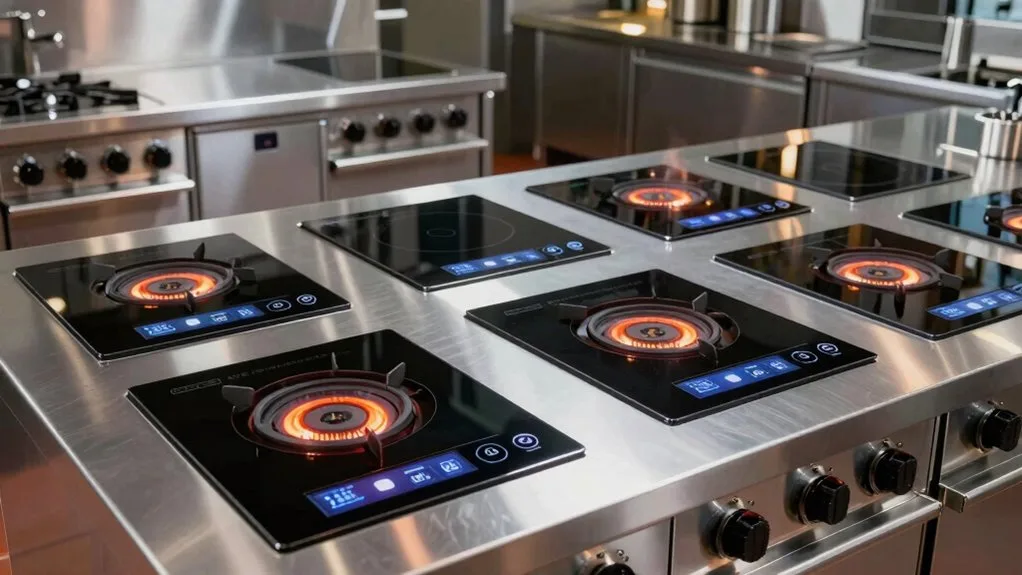
Energy-Saving Hacks for Commercial Induction Cooktops: Why Your Kitchen’s Secret Weapon Might Be Costing You More Than It Should
Let me tell you about the first time I walked into a commercial kitchen that had fully embraced induction cooktops. It was at this tiny, Michelin-recommended spot in East Nashville, somewhere between a hipster coffee joint and a farm-to-table bistro. The chef, a guy named Marco with sleeves of tattoos and a permanent five o’clock shadow, was searing scallops with the precision of a surgeon. No open flames, no billowing heat, just this sleek, glass-topped surface humming quietly under his pans. “Induction,” he said, wiping his hands on a towel, “is the future.” And then he dropped the bomb: “But it’s also a money pit if you don’t know how to use it right.”
That stuck with me. Because here’s the thing, commercial induction cooktops are incredibly efficient. They transfer about 90% of their energy directly into the cookware, compared to gas or electric coil ranges that lose up to 60% of their energy to the surrounding air. But efficiency doesn’t always translate to cost savings if you’re not optimizing how you use them. I’ve seen kitchens where induction cooktops were treated like any other piece of equipment, left on standby, used with the wrong cookware, or operated at full blast when a lower setting would do. And every time, the energy bills reflected that oversight.
So, what’s the solution? It’s not about ditching induction (far from it). It’s about working smarter. Over the past few years, I’ve talked to chefs, kitchen managers, and energy consultants to uncover the best energy-saving hacks for commercial induction cooktops. Some of these are obvious once you hear them; others are the kind of insights you only get after years of trial and error (or a painfully high utility bill). In this guide, I’ll walk you through everything from cookware selection to staff training, because saving energy isn’t just about the equipment. It’s about the people using it, too.
By the end of this, you’ll know how to cut your induction cooktop energy costs by up to 30% without sacrificing performance. Sound too good to be true? Let’s dig in.
The Hidden Costs of Induction Cooktops (And Why Efficiency Isn’t Enough)
Why Induction Cooktops Are Both a Blessing and a Budget Killer
Induction cooktops are often marketed as the holy grail of energy efficiency, and for good reason. Unlike gas or traditional electric ranges, which heat the air around the cookware, induction uses electromagnetic fields to generate heat directly in the pan. This means almost no energy is wasted. In theory, that should translate to lower energy bills. But here’s the catch: efficiency doesn’t equal cost savings if you’re not using the technology correctly.
I remember talking to a kitchen manager at a mid-sized restaurant in San Francisco who had just switched from gas to induction. He was thrilled with the performance, faster heating, precise temperature control, easier cleanup. But three months in, his energy bill had increased. Not by a little, either. We’re talking a 20% jump. When I asked him how his staff was using the new cooktops, he shrugged. “Same as the old ones,” he said. “We just turned them on and cooked.”
That’s the problem. Induction cooktops aren’t plug-and-play. They require a different approach, one that takes advantage of their unique strengths while mitigating their quirks. For example, induction cooktops heat up instantly, which means there’s no need to preheat for long periods. But if your staff is used to gas ranges, they might leave the cooktop on at full power while they prep ingredients, wasting energy. Or they might use cookware that’s not induction-compatible, forcing the cooktop to work harder to generate heat.
Then there’s the issue of phantom energy drain. Induction cooktops, like many modern appliances, consume energy even when they’re not in use. It’s not a lot, maybe 1-2 watts per hour, but in a commercial kitchen with multiple cooktops running 16+ hours a day, those watts add up. And if you’re not paying attention, you could be leaking hundreds of dollars a year in wasted energy.
So, where do we start? Let’s break it down.
The Three Biggest Energy Drains in Commercial Induction Kitchens
Before we dive into the hacks, let’s identify the biggest culprits behind high energy costs in induction kitchens. I’ve narrowed it down to three:
- Poor cookware selection: Not all pans are created equal. Induction cooktops require ferromagnetic cookware (think cast iron, stainless steel with a magnetic base, or induction-specific pans). If your cookware isn’t compatible, the cooktop has to work harder to generate heat, wasting energy.
- Inefficient cooking habits: Induction cooktops heat up instantly, but old habits die hard. Staff might leave cooktops on standby, use higher settings than necessary, or fail to take advantage of residual heat.
- Lack of maintenance: Induction cooktops are low-maintenance compared to gas ranges, but they’re not no-maintenance. Dust, grease, and food debris can build up on the surface, reducing efficiency. And if the cooktop’s ventilation isn’t properly maintained, it can overheat, forcing the system to work harder.
These might seem like small issues, but they compound over time. The good news? They’re all fixable. Let’s tackle them one by one.
Hack #1: Choose the Right Cookware (And Stop Wasting Energy on the Wrong Pans)
Why Your Cookware Might Be Sabotaging Your Energy Savings
Here’s a question I get a lot: “Does it really matter what kind of cookware I use on an induction cooktop?” The short answer? Yes. A lot.
Induction cooktops work by creating a magnetic field that induces an electric current in the cookware. This current generates heat directly in the pan. But for this to work, the cookware must be made of a ferromagnetic material-something that can conduct a magnetic field. If your pan isn’t induction-compatible, the cooktop won’t be able to generate heat efficiently. Instead, it’ll keep trying (and failing) to create a magnetic connection, wasting energy in the process.
I’ve seen kitchens where staff were using aluminum or copper pans on induction cooktops, not realizing they weren’t compatible. The result? The cooktops were running at full power, but the pans were barely heating up. Not only was this wasting energy, but it was also slowing down service, a double whammy for any commercial kitchen.
So, how do you know if your cookware is induction-compatible? Here’s a quick test: Grab a magnet. If it sticks to the bottom of the pan, you’re good to go. If not, it’s time to invest in new cookware.
The Best Cookware for Induction Cooktops (And What to Avoid)
Not all induction-compatible cookware is created equal. Some materials conduct heat better than others, which means they’ll heat up faster and use less energy. Here’s a breakdown of the best (and worst) options:
- Cast iron: The gold standard for induction cooking. Cast iron is highly ferromagnetic, which means it responds quickly to the magnetic field. It also retains heat exceptionally well, so you can often turn the cooktop down or off entirely once the pan is hot. The downside? It’s heavy, and it takes a bit longer to heat up initially. But once it’s hot, it’s a powerhouse.
- Stainless steel with a magnetic base: Many stainless steel pans are induction-compatible, but not all. Look for pans with a “sandwich” base-a layer of aluminum or copper sandwiched between two layers of stainless steel. This design improves heat distribution and reduces hot spots, which means you can cook at lower temperatures.
- Induction-specific cookware: Some brands, like All-Clad or Demeyere, make cookware specifically designed for induction cooktops. These pans often have flat, thick bases that maximize contact with the cooktop, improving efficiency. They’re not cheap, but they’re worth the investment if you’re serious about energy savings.
- Avoid: Aluminum, copper, glass, and ceramic cookware. These materials aren’t ferromagnetic, so they won’t work on induction cooktops. If you’re using them, you’re essentially running your cooktop at full power for no reason.
One more thing: Size matters. Induction cooktops are most efficient when the cookware matches the size of the burner. If your pan is too small, you’re wasting energy heating up the air around it. If it’s too large, the cooktop has to work harder to generate heat across the entire surface. Aim for a pan that’s within 1-2 inches of the burner size.
How to Test Your Cookware for Induction Compatibility
If you’re not sure whether your cookware is induction-compatible, here’s a simple test you can do in your kitchen:
- Grab a magnet. Any magnet will do, a fridge magnet works fine.
- Touch it to the bottom of the pan. If the magnet sticks, the pan is induction-compatible. If it doesn’t, it’s not.
- Check for flatness. Even if the pan is induction-compatible, it won’t work efficiently if the bottom isn’t flat. Place the pan on a flat surface and see if it wobbles. If it does, it’s not making full contact with the cooktop, which means it’s wasting energy.
If your cookware fails either of these tests, it’s time to upgrade. Trust me, the energy savings will pay for themselves in no time.
Hack #2: Master the Art of Temperature Control (And Stop Cranking the Heat)
Why Your Staff Might Be Cooking at the Wrong Temperature
Here’s a scenario I’ve seen play out in kitchens across the country: A line cook needs to sear a steak. They turn the induction cooktop to maximum heat, wait for the pan to get screaming hot, and then toss in the steak. Sounds reasonable, right? Except for one problem: induction cooktops heat up almost instantly. There’s no need to crank the heat to 10. In fact, doing so is a surefire way to waste energy.
I get it, old habits die hard. If your staff is used to gas ranges, where you have to wait for the burner to heat up, they might assume the same rules apply to induction. But induction cooktops are different. They respond immediately to changes in temperature, which means you can (and should) cook at lower settings.
Let me put it this way: If you’re cooking at 100% power on an induction cooktop, you’re probably doing it wrong. Most cooking tasks, searing, sautéing, boiling, can be done at 60-80% power. And for tasks like simmering or holding food warm, you can often drop the temperature to 30-50% power once the pan is hot.
How to Train Your Staff to Use Lower Heat Settings
This is where staff training comes in. If your team doesn’t understand how induction cooktops work, they’ll default to what they know, and that usually means higher heat settings than necessary. Here’s how to get them on board:
- Start with the basics. Explain how induction cooktops work and why they don’t need to be cranked to 10. Emphasize that lower settings often mean faster cooking because the heat is more precise.
- Demonstrate the difference. Show your staff how quickly an induction cooktop heats up. Have them touch the pan after 30 seconds at 50% power versus 100% power. The difference is eye-opening.
- Create a cheat sheet. Post a guide near the cooktops with recommended temperature settings for common tasks (e.g., 60% for searing, 40% for simmering). This gives your staff a reference point until they get the hang of it.
- Encourage experimentation. Have your staff try cooking the same dish at different heat settings and compare the results. They’ll quickly see that lower settings often yield better results (and use less energy).
One more tip: Use the residual heat. Induction cooktops cool down quickly, but they retain some heat after you turn them off. For tasks like melting butter or keeping food warm, you can often turn the cooktop off entirely and let the residual heat do the work. This is a great way to save energy without sacrificing performance.
The Science Behind Lower Heat Settings (And Why It Works)
Still not convinced that lower heat settings are the way to go? Let’s talk science for a second. Induction cooktops work by creating a magnetic field that induces an electric current in the cookware. This current generates heat directly in the pan, which means there’s almost no energy loss. But here’s the key: the amount of heat generated is directly proportional to the power setting.
In other words, if you’re cooking at 100% power, the cooktop is generating the maximum amount of heat it can. But if you’re cooking at 50% power, it’s generating half as much heat. The difference? Energy savings.
But here’s where it gets interesting: induction cooktops are so efficient that they can often achieve the same results at lower settings. For example, let’s say you’re boiling water. On a gas range, you might need to crank the heat to 10 to get the water boiling quickly. But on an induction cooktop, you can often achieve the same result at 7 or 8. Why? Because the heat is being transferred directly to the pan, not the surrounding air.
The same principle applies to other cooking tasks. Searing a steak? You might only need 70% power. Simmering a sauce? 40% power is often enough. The key is to experiment and find the sweet spot for each task.
Hack #3: Optimize Your Cooking Workflow (And Stop Wasting Energy on Standby Mode)
Why Your Cooking Workflow Might Be Costing You Hundreds a Year
Let’s talk about standby mode. You know how it goes: A cook finishes a task, turns off the cooktop, and moves on to the next one. But here’s the thing-induction cooktops don’t turn off completely when you hit the power button. They enter standby mode, where they’re still consuming a small amount of energy. It’s not a lot, maybe 1-2 watts per hour, but in a busy kitchen with multiple cooktops running 16+ hours a day, those watts add up.
I’ve seen kitchens where cooktops were left in standby mode overnight, or even over the weekend. Over the course of a year, that can add up to hundreds of dollars in wasted energy. And the worst part? It’s completely avoidable.
But standby mode isn’t the only culprit. Inefficient cooking workflows can also waste energy. For example, if your staff is constantly turning cooktops on and off between tasks, they’re not taking advantage of the cooktop’s instant heat. Or if they’re preheating pans for too long, they’re wasting energy that could be used for cooking.
How to Create an Energy-Efficient Cooking Workflow
So, how do you optimize your cooking workflow to save energy? Here are a few strategies:
- Batch your cooking tasks. Instead of turning cooktops on and off between tasks, try to group similar tasks together. For example, if you’re searing steaks and sautéing vegetables, do them back-to-back on the same cooktop. This minimizes the amount of time the cooktop is in standby mode.
- Use the residual heat. As I mentioned earlier, induction cooktops retain some heat after you turn them off. For tasks like melting butter or keeping food warm, you can often turn the cooktop off entirely and let the residual heat do the work.
- Turn off cooktops when they’re not in use. This might seem obvious, but it’s easy to forget in a busy kitchen. Make it a habit to turn off cooktops when they’re not in use, even if it’s just for a few minutes.
- Preheat pans efficiently. Induction cooktops heat up almost instantly, so there’s no need to preheat pans for long periods. A few seconds is usually enough.
One more tip: Use the cooktop’s timer function. Many induction cooktops come with a built-in timer that automatically turns the cooktop off after a set period. This is a great way to ensure that cooktops aren’t left on longer than necessary.
The Role of Kitchen Layout in Energy Efficiency
Here’s something I don’t see discussed enough: your kitchen layout can have a big impact on energy efficiency. If your cooktops are located far from your prep stations, your staff might be wasting time (and energy) walking back and forth. Or if your cooktops are crammed into a tight space, they might not be getting enough ventilation, which can reduce efficiency.
So, how do you optimize your kitchen layout for energy efficiency? Here are a few tips:
- Keep cooktops close to prep stations. This minimizes the amount of time your staff spends walking back and forth, which means cooktops are in use for less time.
- Ensure proper ventilation. Induction cooktops don’t produce as much heat as gas ranges, but they still need proper ventilation to operate efficiently. Make sure your hood system is up to code and that it’s not obstructed by other equipment.
- Avoid overcrowding. If your cooktops are too close together, they might not be getting enough airflow, which can reduce efficiency. Make sure there’s enough space between cooktops for air to circulate.
It’s a small change, but it can make a big difference in your energy bills.
Hack #4: Leverage Smart Technology (And Let Your Cooktops Do the Work for You)
Why Smart Induction Cooktops Are a Game-Changer for Energy Savings
Let’s talk about smart induction cooktops. These aren’t your average cooktops, they come with features like Wi-Fi connectivity, app control, and energy monitoring. And if you’re not using them, you’re missing out on some serious energy savings.
I’ll admit, I was skeptical at first. I mean, do we really need our cooktops to be “smart”? But after talking to a few chefs who’ve made the switch, I’m convinced. Smart induction cooktops can automatically adjust power settings based on the cookware, monitor energy usage in real-time, and even turn themselves off when they’re not in use. And the best part? They make it easy to track your energy savings over time.
Here’s an example: One kitchen I visited had installed smart induction cooktops with energy monitoring. The system tracked how much energy each cooktop was using and provided real-time feedback to the staff. Within a month, they’d reduced their energy usage by 15%-just by making small adjustments based on the data.
The Best Smart Features for Energy Savings
So, what smart features should you look for in an induction cooktop? Here are a few that can make a big difference:
- Energy monitoring: This feature tracks how much energy your cooktop is using and provides real-time feedback. It’s a great way to identify energy-wasting habits and make adjustments.
- Automatic shut-off: Some smart cooktops can automatically turn off when they’re not in use. This is a great way to eliminate standby energy waste.
- Wi-Fi connectivity: With Wi-Fi, you can control your cooktop from your phone or tablet. This makes it easy to turn the cooktop off remotely if you forget to do it in the kitchen.
- Voice control: Some smart cooktops are compatible with voice assistants like Alexa or Google Assistant. This makes it easy to adjust settings without touching the cooktop.
- Cookware recognition: Some smart cooktops can automatically adjust power settings based on the cookware. For example, if you’re using a cast iron pan, the cooktop might reduce the power setting to account for the pan’s heat retention.
If you’re in the market for a new induction cooktop, I highly recommend looking for one with these features. They’re not just gimmicks, they can significantly reduce your energy costs.
How to Get the Most Out of Your Smart Induction Cooktop
So, you’ve invested in a smart induction cooktop. Now what? Here’s how to get the most out of it:
- Set up energy alerts. Many smart cooktops allow you to set up alerts when your energy usage exceeds a certain threshold. This is a great way to catch energy-wasting habits early.
- Use the app. If your cooktop has a companion app, use it to monitor energy usage and adjust settings remotely. This makes it easy to turn the cooktop off if you forget to do it in the kitchen.
- Train your staff. Make sure your staff knows how to use the smart features. The more they understand, the more they can take advantage of them.
- Review the data. Most smart cooktops provide detailed energy usage reports. Review these reports regularly to identify trends and make adjustments.
It’s a small investment, but it can pay off big time in energy savings.
Hack #5: Maintain Your Cooktops (And Stop Letting Dust and Grease Drain Your Energy)
Why Maintenance Matters More Than You Think
Let’s talk about maintenance. I know, it’s not the most exciting topic. But if you’re not maintaining your induction cooktops, you’re probably wasting energy, and money.
Here’s the thing: induction cooktops are low-maintenance, but they’re not no-maintenance. Dust, grease, and food debris can build up on the surface, reducing efficiency. And if the cooktop’s ventilation isn’t properly maintained, it can overheat, forcing the system to work harder.
I’ve seen kitchens where cooktops were covered in a layer of grease and grime, and the staff wondered why their energy bills were so high. It’s not rocket science, if your cooktop is dirty, it’s not going to work as efficiently as it should.
How to Clean and Maintain Your Induction Cooktops
So, how do you keep your induction cooktops in tip-top shape? Here’s a quick guide:
- Clean the surface regularly. Use a on-abrasive cleaner and a soft cloth to wipe down the cooktop after each use. This prevents grease and food debris from building up.
- Check the ventilation. Make sure the cooktop’s ventilation system is clean and unobstructed. If it’s clogged with dust or grease, it can reduce efficiency.
- Inspect the cookware. Over time, cookware can warp or develop hot spots, which can reduce efficiency. Check your cookware regularly and replace it if it’s damaged.
- Schedule regular maintenance. Even if your cooktop seems to be working fine, it’s a good idea to have it inspected by a professional at least once a year. They can catch issues before they become major problems.
It’s a small effort, but it can make a big difference in your energy bills.
The Role of Ventilation in Energy Efficiency
Here’s something I don’t see discussed enough: ventilation plays a big role in energy efficiency. If your cooktop’s ventilation system isn’t working properly, it can reduce efficiency and even cause the cooktop to overheat.
So, how do you ensure your ventilation system is up to par? Here are a few tips:
- Check the filters. If your ventilation system has filters, make sure they’re clean and unobstructed. Clogged filters can reduce airflow and force the system to work harder.
- Inspect the ductwork. Over time, dust and grease can build up in the ductwork, reducing efficiency. Have a professional inspect and clean the ductwork at least once a year.
- Ensure proper airflow. Make sure there’s enough space around the cooktop for air to circulate. If the cooktop is crammed into a tight space, it might not be getting enough airflow, which can reduce efficiency.
It’s a small detail, but it can make a big difference in your energy bills.
Hack #6: Train Your Staff (And Stop Letting Bad Habits Drain Your Energy)
Why Staff Training Is the Key to Energy Savings
Let’s be real-o amount of energy-saving hacks will matter if your staff doesn’t know how to use them. That’s why staff training is one of the most important (and often overlooked) aspects of energy efficiency.
I’ve seen kitchens where the staff was using induction cooktops like gas ranges, cranking the heat to 10, leaving cooktops on standby, and using the wrong cookware. And every time, the energy bills reflected that oversight. The good news? It’s fixable. With a little training, your staff can become energy-saving pros.
How to Train Your Staff for Energy Efficiency
So, how do you train your staff to use induction cooktops efficiently? Here are a few strategies:
- Start with the basics. Explain how induction cooktops work and why they’re different from gas or electric ranges. Emphasize that lower settings often mean faster cooking because the heat is more precise.
- Demonstrate the difference. Show your staff how quickly an induction cooktop heats up. Have them touch the pan after 30 seconds at 50% power versus 100% power. The difference is eye-opening.
- Create a cheat sheet. Post a guide near the cooktops with recommended temperature settings for common tasks (e.g., 60% for searing, 40% for simmering). This gives your staff a reference point until they get the hang of it.
- Encourage experimentation. Have your staff try cooking the same dish at different heat settings and compare the results. They’ll quickly see that lower settings often yield better results (and use less energy).
- Make it a competition. Turn energy savings into a game. Challenge your staff to reduce energy usage by 10% over a month. The team with the best results gets a prize (like a pizza party or a bonus).
It’s a small investment, but it can pay off big time in energy savings.
The Role of Leadership in Energy Efficiency
Here’s something I’ve learned over the years: energy efficiency starts at the top. If your kitchen’s leadership isn’t on board, your staff won’t be either. That’s why it’s so important to make energy efficiency a priority from the top down.
So, how do you get your leadership team on board? Here are a few tips:
- Show them the numbers. Energy savings aren’t just good for the environment, they’re good for the bottom line. Show your leadership team how much money they could save by implementing these hacks.
- Make it a priority. If energy efficiency is a priority for your leadership team, it’ll become a priority for your staff. Make sure it’s part of your kitchen’s culture.
- Lead by example. If your leadership team is using induction cooktops efficiently, your staff will follow suit. Make sure they’re setting a good example.
It’s a small change, but it can make a big difference in your energy bills.
Hack #7: Use the Right Cooking Techniques (And Stop Wasting Energy on Inefficient Methods)
Why Your Cooking Techniques Might Be Costing You More Than You Think
Let’s talk about cooking techniques. I know, it sounds basic. But if your staff is using inefficient methods, they’re probably wasting energy, and money.
For example, let’s say you’re boiling water. On a gas range, you might need to crank the heat to 10 to get the water boiling quickly. But on an induction cooktop, you can often achieve the same result at 7 or 8. Why? Because the heat is being transferred directly to the pan, not the surrounding air.
The same principle applies to other cooking tasks. Searing a steak? You might only need 70% power. Simmering a sauce? 40% power is often enough. The key is to experiment and find the sweet spot for each task.
The Best Cooking Techniques for Energy Savings
So, what are the best cooking techniques for energy savings? Here are a few to try:
- Use a lid. This might seem obvious, but it’s one of the easiest ways to save energy. A lid traps heat, which means you can cook at lower temperatures and still achieve the same results.
- Cook in batches. Instead of cooking one dish at a time, try to cook multiple dishes at once. This minimizes the amount of time the cooktop is in use, which means less energy is wasted.
- Use residual heat. Induction cooktops retain some heat after you turn them off. For tasks like melting butter or keeping food warm, you can often turn the cooktop off entirely and let the residual heat do the work.
- Avoid preheating. Induction cooktops heat up almost instantly, so there’s no need to preheat pans for long periods. A few seconds is usually enough.
- Use the right pan size. Induction cooktops are most efficient when the cookware matches the size of the burner. If your pan is too small, you’re wasting energy heating up the air around it. If it’s too large, the cooktop has to work harder to generate heat across the entire surface.
It’s a small change, but it can make a big difference in your energy bills.
How to Experiment with Cooking Techniques
Still not sure which cooking techniques are best for energy savings? Here’s how to experiment:
- Pick a dish. Choose a dish that you cook frequently, like pasta or stir-fry.
- Try different techniques. Cook the dish using different techniques (e.g., with a lid, without a lid, at different heat settings).
- Compare the results. Which technique used the least energy? Which produced the best results? Use this information to refine your approach.
- Share the results. Let your staff know what you’ve learned. The more they understand, the more they can take advantage of these techniques.
It’s a small effort, but it can pay off big time in energy savings.
Hack #8: Upgrade Your Cooktops (And Stop Letting Outdated Equipment Drain Your Energy)
Why Upgrading Your Cooktops Can Save You Money in the Long Run
Let’s talk about upgrading your cooktops. I know, it’s a big investment. But if your cooktops are outdated, they’re probably wasting energy, and money.
Here’s the thing: induction cooktop technology is constantly evolving. Newer models are more efficient, more precise, and more energy-saving than ever before. And if you’re still using an older model, you’re missing out on these benefits.
I’ve seen kitchens where the cooktops were 10+ years old, and the staff wondered why their energy bills were so high. It’s not rocket science, if your cooktops are outdated, they’re not going to work as efficiently as they should.
How to Choose the Right Induction Cooktop for Energy Savings
So, how do you choose the right induction cooktop for energy savings? Here are a few things to look for:
- Energy efficiency rating. Look for cooktops with a high energy efficiency rating. The higher the rating, the more energy the cooktop will save.
- Power settings. Choose a cooktop with a wide range of power settings. This gives you more control over the heat, which means you can cook at lower temperatures and save energy.
- Smart features. As I mentioned earlier, smart features like energy monitoring, automatic shut-off, and Wi-Fi connectivity can help you save energy.
- Cookware recognition. Some smart cooktops can automatically adjust power settings based on the cookware. This is a great way to ensure you’re always using the most efficient settings.
- Size. Choose a cooktop that’s the right size for your kitchen. If it’s too small, you’ll waste energy heating up the air around it. If it’s too large, the cooktop will have to work harder to generate heat across the entire surface.
It’s a big investment, but it can pay off big time in energy savings.
How to Justify the Cost of Upgrading Your Cooktops
Still not sure if upgrading your cooktops is worth the cost? Here’s how to justify it:
- Calculate the payback period. How long will it take for the energy savings to pay for the cost of the new cooktops? In most cases, it’s a few years or less.
- Consider the long-term savings. Energy-efficient cooktops can save you hundreds (or even thousands) of dollars a year in energy costs. Over the lifetime of the cooktop, that adds up to a significant amount.
- Think about the environmental impact. Energy-efficient cooktops aren’t just good for your wallet, they’re good for the planet. By upgrading, you’re reducing your kitchen’s carbon footprint.
- Look for rebates and incentives. Many utility companies offer rebates for energy-efficient appliances. Check with your local utility company to see if you qualify.
It’s a big decision, but it’s one that can pay off in the long run.
Hack #9: Monitor Your Energy Usage (And Stop Flying Blind)
Why Monitoring Your Energy Usage Is the Key to Savings
Let’s talk about energy monitoring. I know, it sounds boring. But if you’re not monitoring your energy usage, you’re essentially flying blind. You have no idea how much energy you’re using, where it’s going, or how to save it.
Here’s the thing: energy monitoring isn’t just about saving money, it’s about gaining control. When you know how much energy you’re using, you can make informed decisions about how to reduce it. You can identify energy-wasting habits, track the impact of your energy-saving hacks, and even predict your energy costs.
I’ve seen kitchens where energy monitoring revealed that cooktops were being left on overnight, or that staff were using higher heat settings than necessary. And every time, the energy bills reflected that oversight. The good news? It’s fixable. With a little monitoring, you can take control of your energy usage and start saving.
How to Monitor Your Energy Usage
So, how do you monitor your energy usage? Here are a few strategies:
- Use a smart meter. Many utility companies offer smart meters that track your energy usage in real-time. This is a great way to see how much energy you’re using and where it’s going.
- Install energy monitoring software. There are a number of software programs that can track your energy usage and provide detailed reports. Some even allow you to set up alerts when your energy usage exceeds a certain threshold.
- Use a plug-in energy monitor. If you want to track the energy usage of a specific appliance (like your induction cooktops), you can use a plug-in energy monitor. These devices plug into the wall and track how much energy the appliance is using.
- Review your utility bills. Your utility bills provide a wealth of information about your energy usage. Review them regularly to identify trends and make adjustments.
It’s a small effort, but it can pay off big time in energy savings.
How to Use Energy Data to Save Money
So, you’ve started monitoring your energy usage. Now what? Here’s how to use the data to save money:
- Identify energy-wasting habits. Look for patterns in your energy usage. Are cooktops being left on overnight? Are staff using higher heat settings than necessary? Use this information to make adjustments.
- Track the impact of your energy-saving hacks. Are your energy-saving hacks actually working? Use your energy data to find out. If you’re not seeing the results you expected, it might be time to try something new.
- Set energy-saving goals. Use your energy data to set goals for reducing your energy usage. For example, you might aim to reduce your energy usage by 10% over the next month. Track your progress and adjust your approach as needed.
- Predict your energy costs. Use your energy data to predict your future energy costs. This can help you budget more effectively and avoid surprises.
It’s a small change, but it can make a big difference in your energy bills.
Hack #10: Think Beyond the Cooktop (And Stop Ignoring the Bigger Picture)
Why Energy Savings Isn’t Just About the Cooktop
Let’s zoom out for a second. Energy savings isn’t just about the cooktop, it’s about the bigger picture. It’s about how your kitchen is designed, how your staff is trained, and how your equipment is maintained. It’s about the culture of your kitchen and the habits of your staff. And if you’re not thinking about the bigger picture, you’re missing out on some serious energy savings.
I’ve seen kitchens where the cooktops were state-of-the-art, but the energy bills were still sky-high. Why? Because the staff was wasting energy in other ways, leaving lights on, running refrigerators at the wrong temperature, or using inefficient cooking techniques. The cooktops were just one piece of the puzzle.
How to Create an Energy-Efficient Kitchen Culture
So, how do you create an energy-efficient kitchen culture? Here are a few strategies:
- Make energy efficiency a priority. If energy efficiency is a priority for your kitchen, it’ll become a priority for your staff. Make sure it’s part of your kitchen’s culture.
- Train your staff. As I mentioned earlier, staff training is key to energy savings. Make sure your staff knows how to use induction cooktops efficiently and why it matters.
- Lead by example. If your leadership team is using induction cooktops efficiently, your staff will follow suit. Make sure they’re setting a good example.
- Encourage feedback. Ask your staff for ideas on how to save energy. They’re the ones using the equipment every day, so they might have insights you haven’t considered.
- Celebrate successes. When your kitchen hits an energy-saving milestone, celebrate it. This reinforces the importance of energy efficiency and encourages your staff to keep up the good work.
It’s a small change, but it can make a big difference in your energy bills.
How to Audit Your Kitchen for Energy Savings
Still not sure where to start? Here’s how to audit your kitchen for energy savings:
- Review your utility bills. Look for patterns in your energy usage. Are there certain times of day when your energy usage spikes? Use this information to identify energy-wasting habits.
- Walk through your kitchen. Look for areas where energy is being wasted. Are lights being left on? Are refrigerators running at the wrong temperature? Are cooktops being left in standby mode?
- Talk to your staff. Ask your staff for ideas on how to save energy. They might have insights you haven’t considered.
- Identify quick wins. Look for easy fixes that can save energy right away. For example, you might install motion-sensor lights or adjust the temperature on your refrigerators.
- Set long-term goals. Once you’ve identified the quick wins, set long-term goals for reducing your energy usage. For example, you might aim to reduce your energy usage by 20% over the next year.
It’s a small effort, but it can pay off big time in energy savings.
Putting It All Together: Your Energy-Saving Action Plan
Alright, let’s recap. We’ve covered a lot of ground, from cookware selection to staff training to energy monitoring. But how do you put it all together? Here’s your energy-saving action plan:
- Upgrade your cookware. Make sure you’re using induction-compatible cookware with flat, thick bases. If you’re not, it’s time to invest in new pans.
- Train your staff. Teach your staff how to use induction cooktops efficiently. Emphasize the importance of lower heat settings, residual heat, and proper cookware.
- Optimize your cooking workflow. Batch your cooking tasks, use the residual heat, and turn off cooktops when they’re not in use.
- Maintain your cooktops. Clean the surface regularly, check the ventilation, and inspect the cookware for damage.
- Monitor your energy usage. Use a smart meter, energy monitoring software, or plug-in energy monitors to track your energy usage. Use this data to identify energy-wasting habits and make adjustments.
- Think beyond the cooktop. Create an energy-efficient kitchen culture by making energy efficiency a priority, leading by example, and encouraging feedback.
It’s a lot to take in, I know. But if you take it one step at a time, you’ll start seeing results. And the best part? You’ll be saving money without sacrificing performance.
So, what’s the first step you’re going to take? Maybe it’s upgrading your cookware, or training your staff, or installing a smart meter. Whatever it is, I encourage you to start today. Because the sooner you start, the sooner you’ll start saving.
And who knows? Maybe in a year, you’ll look back and wonder how you ever lived without these energy-saving hacks. I know I did.
FAQ: Your Burning Questions About Energy-Saving Hacks for Commercial Induction Cooktops
Q: Do induction cooktops really save energy compared to gas or electric ranges?
A: Absolutely. Induction cooktops transfer about 90% of their energy directly into the cookware, compared to gas or electric coil ranges that lose up to 60% of their energy to the surrounding air. However, efficiency doesn’t always translate to cost savings if you’re not using the technology correctly. That’s why it’s so important to follow the energy-saving hacks in this guide.
Q: What’s the best cookware for induction cooktops?
A: The best cookware for induction cooktops is made of ferromagnetic materials, like cast iron or stainless steel with a magnetic base. Cast iron is the gold standard because it responds quickly to the magnetic field and retains heat exceptionally well. Avoid aluminum, copper, glass, and ceramic cookware, they’re not induction-compatible and will waste energy.
Q: How can I train my staff to use induction cooktops more efficiently?
A: Start by explaining how induction cooktops work and why they’re different from gas or electric ranges. Demonstrate how quickly they heat up and encourage your staff to experiment with lower heat settings. Create a cheat sheet with recommended temperature settings for common tasks, and make energy efficiency a priority in your kitchen’s culture. The more your staff understands, the more they can take advantage of these energy-saving hacks.
Q: Are smart induction cooktops worth the investment?
A: If you’re serious about energy savings, yes. Smart induction cooktops come with features like energy monitoring, automatic shut-off, and Wi-Fi connectivity, which can help you save energy and track your usage. They’re not cheap, but the energy savings can pay for themselves in a few years. If you’re in the market for a new cooktop, I highly recommend looking for one with smart features.
@article{energy-saving-hacks-for-commercial-induction-cooktops-slash-costs-without-sacrificing-performance,
    title   = {Energy-Saving Hacks for Commercial Induction Cooktops: Slash Costs Without Sacrificing Performance},
    author  = {Chef's icon},
    year    = {2026},
    journal = {Chef's Icon},
    url     = {https://chefsicon.com/energy-saving-hacks-for-commercial-induction-cooktops/}
}