The Best Fluffy Pancakes recipe you will fall in love with. Full of tips and tricks to help you make the best pancakes.
How to Choose the Right Commercial Sauté Pan for Onion Prep: Because Not All Pans Are Created Equal
Let me set the scene: It’s 5:47 AM, and I’m standing in my Nashville kitchen, coffee in hand, staring at a mountain of onions that need to be diced, sliced, and caramelized before the breakfast rush. My rescue cat, Luna, is weaving between my legs like she’s auditioning for a role in a kitchen safety PSA. The problem? My current sauté pan is doing that annoying thing where it heats unevenly, leaving half the onions raw and the other half burnt. Again. I’ve had it. If I’m going to survive another service without losing my mind, or my onions, I need the right tool for the job.
That’s when it hit me: Choosing the right commercial sauté pan for onion prep isn’t just about grabbing the first shiny thing off the shelf. It’s about understanding how heat distribution, material, size, and even the shape of the pan can make or break your workflow. And let’s be real, when you’re prepping hundreds of onions a week, even a small inefficiency can add up to hours of wasted time. So, I dove deep into the world of commercial sauté pans, talked to chefs, tested a few myself, and even burned a few onions along the way (okay, more than a few). Here’s what I learned, warts and all.
By the end of this guide, you’ll know exactly how to pick a sauté pan that won’t just survive the demands of a commercial kitchen but will make your onion prep faster, more consistent, and, dare I say, enjoyable. Well, maybe not enjoyable, but at least less soul-crushing. We’ll cover everything from the best materials for even heat distribution to why the weight of your pan might be secretly sabotaging your wrists. And yes, I’ll even touch on the eternal debate: stainless steel vs. nonstick. Spoiler alert: I’m still torn.
The Unseen Battle: Why Your Onion Prep Depends on the Right Sauté Pan
1. The Heat Distribution Dilemma
Here’s the thing about onions: They’re finicky. One minute they’re translucent and sweet, the next they’re blackened crisps that taste like regret. The difference? Heat distribution. A good commercial sauté pan should spread heat evenly across its surface, so every slice of onion gets the same treatment. No hot spots, no cold patches, just consistent, reliable cooking.
I learned this the hard way when I inherited a set of cheap, thin stainless steel pans from a previous tenant in my first commercial kitchen. They looked fine, but the moment I cranked up the heat, the center of the pan would turn into a volcanic hot spot while the edges stayed lukewarm. My onions would cook unevenly, forcing me to constantly shuffle them around like I was playing a high-stakes game of culinary Tetris. It was exhausting. And don’t even get me started on the caramelization process, half the batch would turn into a sticky, burnt mess while the other half remained stubbornly pale.
So, what’s the solution? Thickness matters. A thicker pan, typically around 3mm to 5mm, will hold and distribute heat more evenly than a thin one. But thickness alone isn’t enough. The material of the pan plays a huge role, too. Stainless steel with an aluminum or copper core is a popular choice because it combines the durability of stainless with the superior heat conductivity of aluminum or copper. But is it the best for onions? Maybe. Maybe not. Let’s hold that thought and circle back to it later.
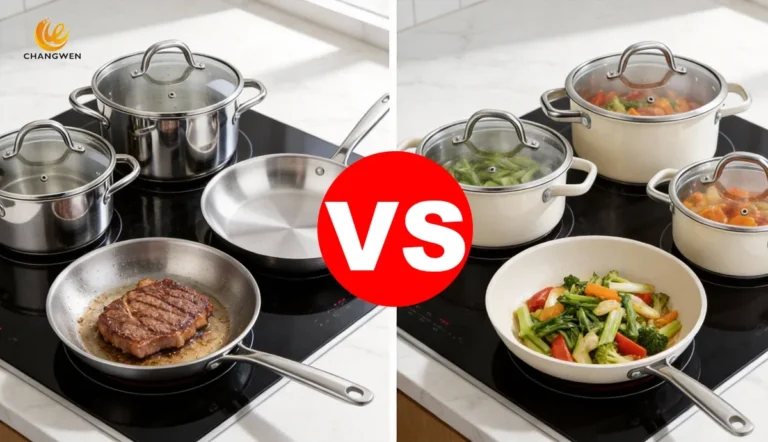
2. Material Matters: Stainless Steel vs. Nonstick vs. Cast Iron (Yes, Really)
Alright, let’s tackle the big question: What’s the best material for a commercial sauté pan when you’re prepping onions? The answer, as with most things in life, is: It depends. I’ve used all three, stainless steel, nonstick, and even cast iron, and each has its pros and cons. Let’s break it down.
Stainless Steel: This is the workhorse of commercial kitchens. It’s durable, resistant to corrosion, and can handle high heat without flinching. But here’s the catch: Stainless steel is a terrible conductor of heat on its own. That’s why most high-quality stainless steel pans have an aluminum or copper core sandwiched between layers of steel. This combo gives you the best of both worlds, durability and even heat distribution. The downside? Stainless steel isn’t nonstick, so you’ll need to use a bit more oil or butter to keep those onions from sticking. And if you’re not careful, you’ll end up with a pan full of fond that’s either a flavor bomb or a nightmare to clean, depending on your mood.
Nonstick: Ah, the siren song of easy cleanup. Nonstick pans are great for delicate foods like eggs or fish, but are they ideal for onions? Honestly, I’m on the fence. On one hand, nonstick pans require less oil, which can be a plus if you’re watching your fat intake. They’re also a dream to clean, just wipe and go. But here’s the thing: Nonstick coatings aren’t as durable as stainless steel, and they can degrade over time, especially if you’re using metal utensils or cooking at high heat. Plus, nonstick pans don’t develop fond, which means you’re missing out on those deep, caramelized flavors that make onions so magical. And let’s not forget that nonstick pans can be a pain to deglaze properly, which is a bummer if you’re making a pan sauce.
Cast Iron: Now, I know what you’re thinking: “Cast iron in a commercial kitchen? Are you crazy?” Hear me out. Cast iron is the OG of cooking vessels. It retains heat like a champ, distributes it evenly, and can go from stovetop to oven without skipping a beat. The downside? It’s heavy. Like, really heavy. And it requires seasoning to maintain its nonstick properties. But if you’re caramelizing onions for hours on end, cast iron might just be your best friend. The even heat and natural nonstick surface (once properly seasoned) can make the process almost meditative. Almost. The catch? Cast iron isn’t ideal for high-volume kitchens where you need to move quickly. It’s also not the best for acidic ingredients, which can strip the seasoning. So, if you’re making a French onion soup, you might want to reach for something else.
So, which one should you choose? If I’m being honest, I’d lean toward a high-quality stainless steel pan with an aluminum core for most onion prep. It’s durable, versatile, and can handle the demands of a commercial kitchen. But if you’re caramelizing onions for hours, cast iron might be worth the extra effort. Nonstick? Maybe for specific tasks, but it’s not my first choice. Then again, I might be biased because I once ruined a nonstick pan by accidentally leaving it on high heat for too long. Lesson learned.
3. Size and Shape: Why a 12-Inch Pan Might Be Your New Best Friend
When it comes to sauté pans, size isn’t just a number, it’s a game-changer. Too small, and you’ll be crowding your onions, leading to steaming instead of sautéing. Too large, and you’ll waste energy heating up unused space. So, what’s the sweet spot?
For most commercial kitchens, a 12-inch sauté pan is the Goldilocks of onion prep. It’s large enough to handle a decent batch of onions without overcrowding but not so large that it becomes unwieldy. But here’s where it gets tricky: The shape of the pan matters just as much as the size. A traditional sauté pan has straight sides, which are great for containing liquids and preventing spills. But if you’re prepping onions for a stir-fry or a quick sauté, you might want a pan with sloped sides, like a wok-style sauté pan. The sloped sides make it easier to toss and flip your onions without sending them flying across the kitchen.
I made the mistake of using a 10-inch pan with straight sides for a large batch of diced onions once. The result? A soggy, steamed mess that took forever to brown. It was a humbling experience, to say the least. Now, I keep a 12-inch pan with sloped sides on hand for most of my onion prep. It’s the perfect balance between capacity and maneuverability. But if you’re working with a smaller kitchen or limited storage space, a 10-inch pan might still work, just be mindful of not overcrowding it.
4. Weight: The Silent Saboteur of Your Wrists
Here’s something I never thought about until it was too late: The weight of your sauté pan can make or break your workflow. A heavy pan might distribute heat beautifully, but if it’s so heavy that your wrists ache after 10 minutes of tossing onions, it’s not doing you any favors. On the flip side, a pan that’s too light might not retain heat well, leading to inconsistent cooking.
I learned this lesson during a particularly brutal dinner service. I was using a cast iron pan that weighed a ton, and by the end of the night, my wrists were screaming. The next day, I switched to a lighter stainless steel pan with an aluminum core, and it was like night and day. My wrists thanked me, and my onions cooked more evenly. Go figure.
So, how do you find the right balance? It’s a bit of a Goldilocks situation. You want a pan that’s heavy enough to retain heat but light enough to maneuver comfortably. For most chefs, a stainless steel pan with an aluminum core strikes the right balance. It’s durable, heats evenly, and isn’t so heavy that it’ll leave you with carpal tunnel. But if you’re working with cast iron, consider investing in a pan with a helper handle. It’ll make lifting and maneuvering the pan much easier, especially when it’s full of onions.
5. Handles: The Unsung Heroes of Sauté Pans
Handles might seem like a minor detail, but trust me, they’re not. A poorly designed handle can turn a simple task like flipping onions into a safety hazard. I’ve had my fair share of close calls with pans that had handles that were too short, too thin, or just plain uncomfortable. And let’s not forget the dreaded hot handle, which can turn your sauté pan into a medieval torture device.
When choosing a commercial sauté pan, pay close attention to the handles. Here’s what to look for:
- Length: A longer handle gives you more leverage and keeps your hands farther away from the heat. But if the handle is too long, it can make the pan unwieldy. Aim for a handle that’s long enough to provide a comfortable grip but not so long that it throws off the pan’s balance.
- Material: Metal handles are durable and can withstand high heat, but they can also get scorching hot. Look for handles with a cool-touch grip or a silicone sleeve to protect your hands. Some pans even come with stay-cool handles that are designed to dissipate heat, so you can grab them without burning yourself.
- Shape: A handle with an ergonomic shape will be more comfortable to hold, especially during long prep sessions. Some handles even have a thumb rest to give you a better grip.
- Helper Handle: If you’re working with a larger pan, a helper handle on the opposite side can make lifting and maneuvering the pan much easier. This is especially useful if you’re dealing with a heavy pan or a large batch of onions.
I once used a pan with a handle that was so thin, it dug into my palm after just a few minutes of tossing onions. It was miserable. Now, I always test the handle before buying a pan. If it doesn’t feel comfortable in my hand, I move on. It’s a small detail, but it makes a big difference.
6. Lid or No Lid? The Great Debate
Here’s a question that might divide the kitchen: Do you need a lid for your sauté pan when prepping onions? Some chefs swear by it, while others think it’s unnecessary. I’ve been on both sides of this debate, and I’m still not entirely sure where I land.
On one hand, a lid can be useful if you’re steaming onions or cooking them low and slow. It traps moisture and heat, which can help soften the onions more quickly. But on the other hand, a lid can also trap too much moisture, leading to steaming instead of sautéing. And if you’re trying to caramelize onions, a lid is the last thing you want, you need that moisture to evaporate so the onions can brown properly.
So, what’s the verdict? If you’re prepping onions for a quick sauté, you probably don’t need a lid. But if you’re cooking them low and slow or steaming them, a lid can be a handy tool. Some sauté pans come with a lid, while others don’t. If you’re on the fence, consider getting a pan that’s compatible with universal lids. That way, you can use a lid when you need it and leave it off when you don’t.
I’ll admit, I don’t use a lid very often when prepping onions. But there have been times when it’s come in handy, like when I’m making a large batch of French onion soup and need to soften the onions quickly. So, while it’s not a must-have, it’s nice to have the option.
7. The Importance of a Flat Base (And Why Warping Is Your Enemy)
Here’s something you might not think about until it’s too late: A warped pan base can ruin your onion prep. A flat base ensures even heat distribution and prevents hot spots, which is crucial for consistent cooking. But if your pan warps, it can create uneven cooking surfaces, leading to some onions burning while others stay raw.
Warping is more common than you might think, especially in cheaper pans. It happens when a pan is exposed to rapid temperature changes, like going from high heat to a cold countertop. Over time, this can cause the base to warp, making the pan unstable and difficult to use. And once a pan warps, there’s no going back, it’s time to replace it.
So, how do you avoid warping? First, invest in a high-quality pan with a thick, flat base. Second, avoid subjecting your pan to rapid temperature changes. For example, don’t run a hot pan under cold water or place it on a cold surface while it’s still hot. And third, store your pans properly. Stacking them with other heavy pots and pans can cause them to warp over time. If possible, hang them or store them in a way that keeps them flat.
I learned this lesson the hard way when I bought a cheap sauté pan for my home kitchen. It worked fine for a few months, but then I noticed it wasn’t sitting flat on the burner. The base had warped, and no matter how hard I tried, I couldn’t get my onions to cook evenly. It was frustrating, to say the least. Now, I always check the base of a pan before buying it. If it’s not perfectly flat, I walk away.
8. Maintenance: How to Keep Your Sauté Pan in Top Shape
A good commercial sauté pan is an investment, and like any investment, it needs to be taken care of. Proper maintenance can extend the life of your pan and ensure it performs at its best. But here’s the thing: Maintenance isn’t one-size-fits-all. The care your pan needs depends on its material and construction.
Stainless Steel: Stainless steel is relatively low-maintenance, but it’s not indestructible. To keep your stainless steel pan in top shape, avoid using abrasive cleaners or scrubbers, as they can scratch the surface. Instead, use a soft sponge or cloth with warm, soapy water. For stubborn food residue, soak the pan in warm water before scrubbing. And if you’re dealing with burnt-on fond, a little baking soda and water can work wonders. Just be sure to rinse the pan thoroughly afterward to avoid any soapy residue.
Nonstick: Nonstick pans require a bit more care. Avoid using metal utensils, as they can scratch the coating. Instead, opt for wooden or silicone utensils. And while nonstick pans are dishwasher-safe, hand-washing is always better for longevity. If you do use the dishwasher, avoid harsh detergents and high-heat drying cycles. And if your nonstick pan starts to lose its nonstick properties, it might be time to replace it.
Cast Iron: Cast iron is the diva of the kitchen, it requires a bit more attention, but it rewards you with unbeatable performance. To maintain your cast iron pan, clean it with warm water and a stiff brush. Avoid using soap, as it can strip the seasoning. After cleaning, dry the pan thoroughly and apply a thin layer of oil to prevent rust. And if your cast iron pan starts to lose its nonstick properties, it might need to be re-seasoned. This involves coating the pan with oil and baking it in the oven to restore the seasoning.
I’ll admit, I’ve been guilty of neglecting my pans in the past. I’ve left them soaking in water, scrubbed them with abrasive pads, and even put them in the dishwasher (gasp!). But over time, I’ve learned that a little TLC goes a long way. Now, I make it a point to clean and dry my pans immediately after use. It’s a small habit, but it’s made a big difference in the longevity of my cookware.
9. Budget vs. Quality: Where to Splurge and Where to Save
Let’s talk money. Commercial sauté pans can range from $20 to $200 or more, and it’s easy to get sticker shock. But here’s the thing: A good pan is an investment. It can save you time, energy, and frustration in the long run. But that doesn’t mean you need to break the bank to get a quality pan.
So, where should you splurge, and where can you save? Here’s my take:
- Splurge on:
- Material: A high-quality stainless steel pan with an aluminum or copper core will last longer and perform better than a cheap, thin pan. It’s worth the investment.
- Construction: Look for a pan with a thick, flat base and sturdy handles. These details might seem minor, but they make a big difference in performance and durability.
- Brand Reputation: Some brands are known for their quality and durability. Do your research and invest in a pan from a reputable manufacturer.
- Save on:
- Nonstick Coatings: If you’re going to use a nonstick pan, you don’t need to spend a fortune. Just be sure to choose a pan with a durable coating and avoid cheap knockoffs.
- Accessories: Lids, utensils, and other accessories can add up. If you’re on a budget, look for pans that come with these extras or buy them separately.
- Size: If you’re not sure what size you need, start with a mid-range option, like a 12-inch pan. You can always add more sizes to your collection later.
I made the mistake of buying a cheap sauté pan early in my career. It was fine for a while, but it warped quickly and didn’t distribute heat evenly. I ended up replacing it within a year. Now, I see my pans as an investment. I’d rather spend a little more upfront and have a pan that lasts for years than save a few bucks and deal with constant replacements.
10. The Final Verdict: My Top Picks for Commercial Sauté Pans
After all this research, testing, and onion-burning, I’ve narrowed down my top picks for commercial sauté pans. These are the pans that have stood the test of time in my kitchen and earned a permanent spot in my cookware collection.
1. All-Clad D5 Brushed Stainless Steel Sauté Pan: This is my go-to pan for most onion prep. It’s made with a five-ply construction (stainless steel and aluminum), which ensures even heat distribution and durability. The flat base prevents warping, and the stay-cool handle makes it comfortable to use. It’s not cheap, but it’s worth every penny.
2. Mauviel M’Cook M250C Copper Sauté Pan: If you’re looking for the ultimate in heat control, this copper pan is a game-changer. Copper is an excellent conductor of heat, which means it responds quickly to temperature changes. The stainless steel interior makes it durable and easy to clean. The only downside? It’s heavy and expensive. But if you’re serious about your onion prep, it’s a worthy investment.
3. Lodge 12-Inch Cast Iron Skillet: For low-and-slow cooking, like caramelizing onions, this cast iron skillet is unbeatable. It retains heat beautifully and develops a natural nonstick surface over time. The helper handle makes it easier to maneuver, and the price is hard to beat. Just be prepared to put in a little extra effort to maintain it.
4. Calphalon Commercial Nonstick Sauté Pan: If you’re set on a nonstick pan, this one is a solid choice. It’s made with a heavy-gauge aluminum core and a durable nonstick coating. The sloped sides make it easy to toss onions, and the stay-cool handle is a nice touch. It’s not as durable as stainless steel, but it’s a good option if you’re looking for easy cleanup.
I’ll be honest, I don’t have a single “perfect” pan. Each of these has its strengths and weaknesses, and the best one for you depends on your specific needs. But if I had to choose just one, I’d go with the All-Clad D5. It’s versatile, durable, and performs like a dream. That said, I’m still tempted by the Mauviel copper pan. Maybe one day.
The Bottom Line: Your Onion Prep Deserves the Best
Choosing the right commercial sauté pan for onion prep isn’t just about picking the shiniest option on the shelf. It’s about understanding how heat distribution, material, size, and even the shape of the pan can impact your workflow. It’s about finding a pan that’s durable enough to withstand the demands of a commercial kitchen but comfortable enough to use for hours on end. And it’s about investing in a tool that will make your life easier, not harder.
So, where do you go from here? Start by assessing your needs. What’s your budget? What’s your cooking style? What’s the volume of onions you’re prepping on a regular basis? Once you have a clear idea of what you’re looking for, do your research. Read reviews, talk to other chefs, and if possible, test a few pans before making a decision. And remember, there’s no one-size-fits-all answer. The best pan for you is the one that fits your unique needs and preferences.
As for me, I’m sticking with my All-Clad D5 for now. It’s not perfect, but it’s the closest thing I’ve found to a perfect pan. And who knows? Maybe one day I’ll splurge on that Mauviel copper pan. Until then, I’ll keep chopping, sautéing, and caramelizing my way through piles of onions, one batch at a time. And if you take one thing away from this guide, let it be this: Don’t underestimate the power of a good sauté pan. It might just be the unsung hero of your kitchen.
FAQ: Your Burning Questions About Commercial Sauté Pans for Onion Prep
Q: Can I use a nonstick pan for caramelizing onions?
A: You can, but it’s not ideal. Nonstick pans don’t develop fond, which is where a lot of the deep, caramelized flavor comes from. Plus, nonstick coatings can degrade over time, especially if you’re cooking at high heat. If you’re set on using a nonstick pan, opt for one with a durable coating and avoid high heat. But for the best results, I’d recommend a stainless steel or cast iron pan.
Q: How do I prevent my onions from sticking to a stainless steel pan?
A: The key is to use enough fat (oil, butter, or a combination) and make sure your pan is hot before adding the onions. If your pan is properly preheated and you’re using enough fat, your onions shouldn’t stick. If they do, it might be a sign that your pan isn’t hot enough or that you’re overcrowding it. And if all else fails, a little deglazing with wine or stock can help lift any stuck-on bits.
Q: What’s the best way to clean a commercial sauté pan after prepping onions?
A: It depends on the material. For stainless steel, use warm, soapy water and a soft sponge. For stubborn residue, soak the pan in warm water before scrubbing. For nonstick pans, avoid abrasive cleaners and opt for a soft sponge or cloth. And for cast iron, clean with warm water and a stiff brush, then dry thoroughly and apply a thin layer of oil to prevent rust. No matter what type of pan you’re using, it’s best to clean it immediately after use to prevent food from sticking.
Q: How often should I replace my commercial sauté pan?
A: It depends on the material and how well you take care of it. A high-quality stainless steel pan can last for years, even decades, with proper care. Nonstick pans, on the other hand, typically need to be replaced every few years, as the coating degrades over time. Cast iron pans can last a lifetime if they’re properly maintained. The key is to inspect your pan regularly for signs of wear and tear, like warping, scratches, or a loss of nonstick properties. If your pan is no longer performing well, it might be time to replace it.
@article{how-to-choose-the-right-commercial-saute-pan-for-onion-prep-a-chefs-honest-guide,
    title   = {How to Choose the Right Commercial Sauté Pan for Onion Prep: A Chef’s Honest Guide},
    author  = {Chef's icon},
    year    = {2026},
    journal = {Chef's Icon},
    url     = {https://chefsicon.com/how-to-choose-the-right-commercial-saute-pan-for-onion-prep/}
}