The Best Fluffy Pancakes recipe you will fall in love with. Full of tips and tricks to help you make the best pancakes.
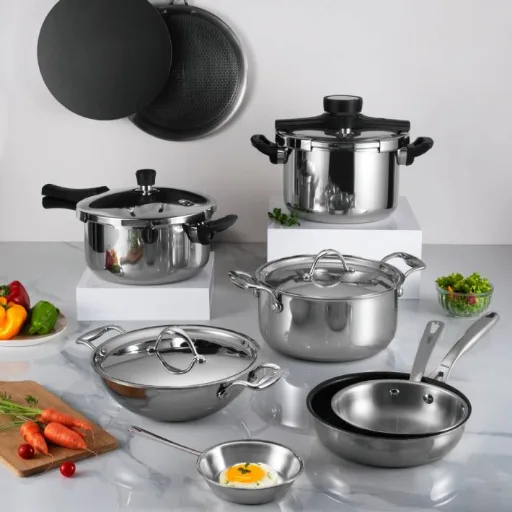
How to Choose the Right Cookware: Because Your Grandma’s Hand-Me-Downs Aren’t Cutting It Anymore
Let me set the scene: It’s 2026, and you’ve just moved into your third apartment in five years, this one’s got a “chef’s kitchen” (spoiler: it’s not). The real estate agent gushed about the “high-end appliances” (translation: a microwave that also air-fries, if you’re lucky), and you’re standing in front of your sad, half-empty cookware cabinet, wondering why your scrambled eggs stick to the pan like they’re auditioning for a horror movie. Sound familiar?
I’ve been there. Hell, I *live* there. My name’s Sammy, and I edit a food blog called Chefsicon.com where I write about the stuff that actually matters, like why your $200 nonstick pan is already peeling after three uses, or how to stop burning garlic every damn time. I’ve tested cookware in professional kitchens, tiny NYC apartments, and now my Nashville home with my rescue cat Luna, who judges me silently from the counter every time I overcook the onions. (She’s not wrong.)
Here’s the thing: Choosing the right cookware isn’t about buying the most expensive set or following some influencer’s “must-have” list. It’s about understanding what you *actually* cook, how you cook it, and what your patience level is for scrubbing baked-on cheese off a skillet at 11 PM. This guide isn’t just a list of materials and brands, it’s a deep dive into the *why* behind your choices, the trade-offs you’ll make, and the questions you should ask yourself before dropping cash on something that’ll either become your best friend or collect dust in the back of a cabinet.
By the end of this, you’ll know:
- How to decode cookware materials like a pro (and why “nonstick” isn’t always the answer)
- The questions to ask yourself *before* buying anything (hint: “Do I even like cooking?” is a valid one)
- Why your cooking style should dictate your cookware, not the other way around
- The hidden costs of “cheap” cookware (and when it’s actually okay to skimp)
- How to care for your cookware so it lasts longer than your last relationship
Let’s get into it.
The Big Questions You Should Ask Before Buying *Any* Cookware
1. What Do You Actually Cook?
This seems obvious, but hear me out. I once bought a gorgeous, heavy-bottomed copper saucepan because it looked like something a French chef would use. I used it *once*-to make a single serving of risotto, before realizing I hate making risotto. Now it lives in the cabinet, mocking me. Don’t be like me.
Ask yourself:
- Do you mostly cook eggs, stir-fries, and quick weeknight meals? You’ll want something lightweight and responsive, like nonstick or carbon steel.
- Are you a slow-cooker, braising meats and making soups? Cast iron or enameled Dutch ovens are your friends.
- Do you bake more than you sauté? You might not need a full cookware set at all, just a good baking sheet and oven-safe skillet.
- Are you a meal-prepper? Stackable, versatile pieces (like a large stainless steel sauté pan) will save you space and time.
I’m not saying you need to track your meals for a month before buying anything, but take a second to think about what ends up on your stove most often. If you’re a pasta-and-salad person, you don’t need a $300 Dutch oven. If you’re a breakfast-for-dinner obsessive, a high-quality nonstick skillet might be worth the investment.
2. How Much Time Are You Willing to Spend on Maintenance?
Here’s a hard truth: There’s no such thing as “zero-maintenance” cookware. Even nonstick pans require *some* care (like not scrubbing them with steel wool or stacking them like Jenga). The question is, how much effort are you realistically going to put in?
Let’s break it down:
- Low-maintenance: Nonstick (if you follow the rules), stainless steel (if you don’t mind scrubbing), enameled cast iron (if you’re okay with occasional deep cleaning).
- High-maintenance: Carbon steel (requires seasoning and regular oiling), bare cast iron (needs seasoning, can’t soak, and rusts if you look at it wrong), copper (needs polishing and can react with acidic foods).
I’ll be honest, I *love* cooking with carbon steel, but I also forget to season it half the time. If you’re the type of person who leaves dishes in the sink for “just a minute” (read: three days), high-maintenance cookware is going to make you miserable. Be honest with yourself.
3. What’s Your Budget (And What Are You Willing to Sacrifice)?
Cookware is one of those weird categories where price doesn’t always equal quality. You can spend $500 on a “premium” nonstick pan that’ll be garbage in a year, or $30 on a well-made stainless steel skillet that’ll last decades. The key is knowing where to splurge and where to save.
Here’s my rough guide:
- $ (Budget, ~$50 or less per piece): Basic stainless steel, aluminum nonstick, or lightweight cast iron. Good for beginners or renters who don’t want to invest too much. Downsides: May warp, wear out faster, or require more babying.
- $$ (Mid-range, $50–$150 per piece): Clad stainless steel (like All-Clad’s cheaper lines), enameled cast iron (like Lodge), or high-quality carbon steel. This is where most home cooks should land. Durable, versatile, and won’t break the bank.
- $$$ (High-end, $150+ per piece): Fully clad stainless steel (like Demeyere), copper, or artisan-crafted cast iron. Worth it if you cook a lot and care about performance, but not necessary for most people. Downsides: Heavy, expensive, and sometimes overkill.
Pro tip: If you’re on a tight budget, skip the “sets” and buy individual pieces based on what you actually need. A $200 “starter set” might seem like a deal, but if half of it sits unused, you’re better off spending that money on one *really* good pan.
4. How Much Heat Do You Really Need?
Not all cookware is created equal when it comes to heat distribution and retention. If you’re cooking on a gas stove, you’ve got more flexibility, gas flames are responsive and can handle pretty much anything. But if you’re on electric, induction, or glass-top stoves, your choices narrow a bit.
Here’s the breakdown:
- Gas stoves: Can use pretty much anything, but copper and aluminum respond fastest to heat changes. Cast iron and stainless steel work too, but they take longer to heat up.
- Electric/glass-top stoves: Need flat-bottomed pans (no warping!) and materials that distribute heat evenly, like clad stainless steel or enameled cast iron. Avoid thin aluminum, it can scorch.
- Induction: Only works with magnetic materials (cast iron, carbon steel, some stainless steel). If your cookware isn’t induction-compatible, it won’t work *at all*. (Pro tip: Bring a magnet to the store. If it sticks, you’re good.)
I made the mistake of buying a beautiful copper pan for my glass-top stove, only to realize it warped after a few uses. Don’t be like me. Check your stove type before buying.
5. Do You Care About Aesthetics (And Should You)?
Let’s talk about the elephant in the room: **Some cookware is just *pretty*. And that’s okay! If you’re the type of person who gets excited about cooking because your kitchen looks like a Pinterest board, there’s nothing wrong with investing in cookware that makes you happy. But, and this is a big but-don’t sacrifice function for looks.**
For example:
- Enameled cast iron (like Le Creuset): Gorgeous, comes in a million colors, and great for slow cooking. But it’s *heavy* and can chip if you’re not careful.
- Copper: Stunning, conducts heat like a dream, but requires polishing and can react with acidic foods.
- Stainless steel: Sleek and professional, but can be hard to clean if you don’t know what you’re doing.
If you’re the type of person who *hates* scrubbing, a pretty pan that’s a pain to clean is going to end up in the donation pile. Choose function first, then find something that makes you smile when you open the cabinet.
Cookware Materials: The Good, the Bad, and the “Why Did I Buy This?”
1. Nonstick: The Love-Hate Relationship
Nonstick cookware is like that friend who’s always late but somehow still fun to be around. It’s convenient, easy to clean, and great for delicate foods like eggs and fish. But it’s also fragile, short-lived, and sometimes downright sketchy if you don’t know what you’re buying.
The good:
- Requires little to no oil (great for low-fat cooking).
- Food slides right off, no scrubbing required.
- Lightweight and easy to handle.
The bad:
- Most nonstick coatings (especially PTFE, aka Teflon) degrade over time and can release toxic fumes if overheated (though modern coatings are much safer than old-school ones).
- Can’t use metal utensils (they’ll scratch the coating).
- Not great for high-heat cooking (searing, browning, etc.).
- Lifespan is usually 2–5 years, tops.
The ugly:
- Cheap nonstick pans can peel or flake after just a few uses, which is gross and potentially harmful if ingested.
- Some brands use PFAS chemicals (aka “forever chemicals”) in their coatings, which are bad for you and the environment. Look for PFAS-free labels if this is a concern.
Should you buy it? If you cook eggs, pancakes, or fish regularly, yes, but invest in a good one. Brands like Scanpan, GreenPan, or Made In make high-quality nonstick pans that last longer and are safer than the $20 option from the big-box store. Just don’t expect it to last forever.
2. Stainless Steel: The Workhorse of the Kitchen
If nonstick is the fun but unreliable friend, stainless steel is the steady, dependable one who’s always there when you need them. It’s durable, versatile, and, when used correctly, can handle pretty much anything you throw at it. But it’s not perfect.
The good:
- Nearly indestructible-won’t warp, rust, or react with acidic foods.
- Great for high-heat cooking (searing, browning, deglazing).
- Works on all stovetypes, including induction.
- Dishwasher-safe (though hand-washing is better for longevity).
- Can last decades if cared for properly.
The bad:
- Food sticks-especially proteins and sugars, if you don’t use enough oil or heat the pan properly.
- Not great for delicate foods like eggs or fish (unless you’re a pro).
- Can be heavy, especially fully clad pieces.
- Cheap stainless steel can warp or have hot spots.
The ugly:
- Learning to cook with stainless steel takes practice. You’ll burn a few things before you get the hang of it. (Trust me, I’ve been there.)
- Some brands use thin, low-quality steel that doesn’t distribute heat evenly. Look for fully clad (aka “tri-ply” or “5-ply”) pans, which have layers of aluminum or copper sandwiched between stainless steel for better heat distribution.
Should you buy it? Absolutely, if you’re willing to put in the effort. Stainless steel is the best all-around cookware for most home cooks. Just make sure you’re buying high-quality, fully clad pieces (like All-Clad, Demeyere, or Made In) and not the cheap stuff that’ll warp after a few uses.
3. Cast Iron: The Heavy Hitter
Cast iron is the granddaddy of cookware-it’s been around for centuries, and for good reason. It’s durable, versatile, and can handle high heat like a champ. But it’s also heavy, high-maintenance, and not for everyone.
The good:
- Retains heat like a dream-great for searing, frying, and baking.
- Naturally nonstick when properly seasoned.
- Can go from stovetop to oven with no issues.
- Nearly indestructible-can last generations if cared for.
- Adds iron to your food (which can be a pro or con, depending on your diet).
The bad:
- Heavy as hell-not great if you have wrist issues or weak arms.
- Requires seasoning (a process of coating it with oil and baking it to create a nonstick surface).
- Can rust if not dried properly.
- Reacts with acidic foods (like tomatoes or wine), which can strip the seasoning and give your food a metallic taste.
- Not great for delicate foods (eggs, fish) unless it’s *very* well-seasoned.
The ugly:
- Learning curve is steep. If you don’t season it properly, food will stick like glue. If you soak it, it’ll rust. If you use soap, some purists will judge you (though a little soap is fine, despite what your grandma says).
- Enameled cast iron (like Le Creuset) solves some of these issues (no seasoning, no rusting, no reacting with acidic foods), but it’s expensive and can chip.
Should you buy it? If you love searing steaks, baking cornbread, or making one-pan meals, cast iron is worth the effort. Start with a pre-seasoned skillet (like Lodge) and go from there. If you’re not up for the maintenance, enameled cast iron is a great alternative, just be prepared to pay for it.
4. Carbon Steel: The Underrated Middle Ground
Carbon steel is like the cool, lesser-known cousin of cast iron. It’s lighter, heats up faster, and is just as durable, but it doesn’t get the same love. If you’ve ever eaten at a French or Chinese restaurant, you’ve probably seen carbon steel in action, it’s a favorite among professional chefs for its responsiveness and versatility.
The good:
- Lighter than cast iron but just as durable.
- Heats up and cools down quickly-great for stir-fries and searing.
- Naturally nonstick when seasoned properly.
- Works on all stovetypes, including induction.
- Can handle high heat like a champ.
The bad:
- Requires seasoning (like cast iron).
- Can warp if heated or cooled too quickly.
- Reacts with acidic foods (though not as badly as cast iron).
- Not as widely available as other materials.
The ugly:
- Learning curve is real. If you don’t season it properly, food will stick. If you don’t dry it thoroughly, it’ll rust.
- Not great for slow cooking-it doesn’t retain heat as well as cast iron.
Should you buy it? If you love stir-fries, searing, or high-heat cooking and don’t mind a little maintenance, carbon steel is a fantastic choice. It’s what I reach for most often in my own kitchen. Brands like Mauviel, De Buyer, and Made In make great carbon steel pans.
5. Copper: The Showstopper
Copper cookware is the sports car of the kitchen-gorgeous, high-performance, and *expensive*. It’s what professional chefs and serious home cooks use when they want precision and control. But it’s also high-maintenance and not for the faint of heart.
The good:
- Best heat conductor on the market-responds instantly to temperature changes.
- Beautiful-if you care about aesthetics, copper is unmatched.
- Great for delicate sauces, candy-making, and high-heat cooking.
The bad:
- Expensive-a single copper pan can cost $200–$500+.
- Requires regular polishing to maintain its shine.
- Reacts with acidic foods (like tomatoes or wine), which can give your food a metallic taste. Most copper cookware is lined with stainless steel or tin to prevent this.
- Not induction-compatible unless it has a magnetic base.
- Can dent or warp if mishandled.
The ugly:
- Tin-lined copper pans (the traditional choice) wear out over time and need to be re-tinned every few years. This is a specialized, expensive process.
- Stainless steel-lined copper is more durable but doesn’t conduct heat as well.
- Heavy-not as bad as cast iron, but still substantial.
Should you buy it? Unless you’re a serious home cook or professional chef, copper is probably overkill. It’s beautiful and high-performing, but the cost and maintenance aren’t worth it for most people. If you *do* want to try it, start with a copper saucepan or sauté pan-something small and versatile.
6. Aluminum: The Budget-Friendly Workhorse
Aluminum is the unsung hero of cookware-it’s cheap, lightweight, and conducts heat like a dream. But it’s also soft, reactive, and not as durable as other materials. Still, if you’re on a budget or just starting out, aluminum is a solid choice.
The good:
- Inexpensive-you can find aluminum cookware for $10–$50 per piece.
- Lightweight and easy to handle.
- Heats up quickly and evenly.
- Great for baking sheets, cake pans, and quick-cooking tasks.
The bad:
- Reacts with acidic foods (like tomatoes or citrus), which can give your food a metallic taste and discolor the pan.
- Soft and prone to warping-not great for high-heat cooking.
- Not induction-compatible unless it has a magnetic base.
- Not as durable as stainless steel or cast iron.
The ugly:
- Anodized aluminum (a harder, non-reactive version) is better, but still not as durable as other materials.
- Not great for long-term use-if you cook a lot, you’ll likely outgrow aluminum quickly.
Should you buy it? If you’re on a tight budget or just starting out, aluminum is a decent choice. It’s what most restaurant supply stores sell for a reason, it’s cheap and gets the job done. Just don’t expect it to last forever. If you can afford it, anodized aluminum or stainless steel are better long-term investments.
Cookware Features That Actually Matter (And the Ones That Don’t)
Not all cookware features are created equal. Some are game-changers, while others are just marketing fluff. Here’s what to look for, and what to ignore.
1. What to Look For
- Fully clad construction (for stainless steel): This means the pan has layers of aluminum or copper sandwiched between stainless steel for better heat distribution. Cheap stainless steel pans are often single-ply (just one layer of steel), which leads to hot spots and warping. Look for terms like “tri-ply,” “5-ply,” or “fully clad.”
- Riveted handles: Handles that are riveted (not screwed or glued) to the pan are stronger and more durable. They’re also easier to clean because there are no gaps for food to get stuck in.
- Oven-safe: If you like one-pan meals or finishing dishes in the oven, make sure your cookware is oven-safe (most are, but check the max temperature).
- Induction-compatible: Even if you don’t have an induction stove now, magnetic cookware (like stainless steel, cast iron, or carbon steel) is more versatile. Look for the induction symbol on the box.
- Flat, heavy bottom: A flat, heavy base ensures even heat distribution and prevents warping. This is especially important for electric and glass-top stoves.
- Helper handles: Large pots and pans should have two handles-one long one for carrying and a smaller “helper” handle on the opposite side for stability. This is a safety feature as much as a convenience one.
2. What to Ignore
- “Nonstick” claims on stainless steel or cast iron: Some brands market their stainless steel or cast iron as “nonstick,” but this is misleading. These materials can become nonstick with proper seasoning and technique, but they’re not inherently nonstick like PTFE-coated pans.
- “Eco-friendly” or “green” labels: These are vague and often meaningless. If you care about sustainability, look for specific certifications (like PFAS-free, PFOA-free, or recycled materials) rather than buzzwords.
- “Dishwasher-safe” for nonstick or cast iron: Just because a pan is technically dishwasher-safe doesn’t mean you *should* put it in the dishwasher. Hand-washing will extend the life of your cookware, especially nonstick and cast iron.
- “Stay-cool” handles: These are rarely as effective as they claim. Always use oven mitts or towels when handling hot cookware, don’t trust the handle to stay cool.
- “Limited lifetime warranty”: These warranties often come with so many exclusions that they’re basically useless. Read the fine print before assuming your pan is covered.
How to Care for Your Cookware (So It Doesn’t Hate You)
You’ve spent the money, done the research, and bought the perfect cookware. Now what? If you don’t take care of it, it won’t take care of you. Here’s how to keep your pots and pans in tip-top shape.
1. Seasoning (For Cast Iron and Carbon Steel)
Seasoning is the process of coating your pan with oil and baking it to create a natural nonstick surface. It’s essential for cast iron and carbon steel, but it’s also intimidating if you’ve never done it before. Here’s how to do it right:
- Clean the pan: Wash it with hot water and a stiff brush to remove any factory coatings or rust. Dry it thoroughly (I put mine on the stove over low heat for a few minutes to evaporate all the water).
- Apply oil: Use a high-smoke-point oil (like flaxseed, grapeseed, or canola). Rub a thin, even layer all over the pan (inside and out), then wipe off any excess with a paper towel. The pan should look dry, not greasy.
- Bake it upside down: Place the pan upside down in a 450°F (230°C) oven for 1 hour. Put a sheet of aluminum foil on the lower rack to catch any drips. Let the pan cool completely in the oven.
- Repeat: For a stronger seasoning, repeat the process 2–3 times.
Pro tip: If your pan starts to look dull or food sticks, it’s time to re-season. You can also maintain the seasoning by oiling the pan lightly after each use.
2. Cleaning (Without Ruining Everything)
Cleaning cookware is not one-size-fits-all. Here’s how to clean each type without destroying it:
- Nonstick: Use a soft sponge or cloth and mild dish soap. Avoid abrasive scrubbers or steel wool-they’ll scratch the coating. If food is stuck, soak the pan in warm, soapy water before cleaning.
- Stainless steel: For light messes, use hot water and dish soap. For stuck-on food, try baking soda and water (make a paste, scrub gently, then rinse). For really stubborn stuff, fill the pan with water and a little vinegar, bring to a boil, then scrub. Avoid steel wool-it’ll scratch the surface.
- Cast iron and carbon steel: Clean with hot water and a stiff brush (no soap, unless it’s a mild one). For stuck-on food, use a chainmail scrubber or salt scrub. Dry the pan immediately (I put mine on the stove over low heat for a few minutes), then oil it lightly to prevent rust.
- Enameled cast iron: Use hot water and dish soap. For stuck-on food, soak the pan in warm, soapy water or use a baking soda paste. Avoid abrasive scrubbers-they’ll scratch the enamel.
- Copper: Use hot water and dish soap. For tarnish, use a copper cleaner (like Bar Keepers Friend) or a lemon and salt scrub. Avoid abrasive scrubbers-they’ll scratch the surface.
- Aluminum: Use hot water and dish soap. For stuck-on food, try baking soda and water. Avoid abrasive scrubbers-they’ll scratch the surface.
3. Storage (So You Don’t Regret Everything)
How you store your cookware can make or break its lifespan. Here’s how to do it right:
- Stack with care: If you must stack your cookware, put a soft cloth or paper towel between each piece to prevent scratches. For nonstick pans, use a pan protector or store them separately.
- Hang it up: If you have the space, hanging your cookware is the best way to store it. It prevents scratches, saves cabinet space, and makes it easier to access. Just make sure your hooks or racks are sturdy-no one wants a cast iron skillet falling on their head.
- Avoid moisture: Store your cookware in a dry place to prevent rust (especially cast iron and carbon steel). If you live in a humid climate, consider adding a silica gel packet to your cabinet.
- Don’t crowd it: If your cookware is jammed into a tight space, it’s more likely to scratch, dent, or warp. Give it room to breathe.
When to Replace Your Cookware (Before It Kills Your Food)
Even the best cookware doesn’t last forever. Here’s when to say goodbye to your old pots and pans:
- Nonstick pans: Replace when the coating starts to peel, flake, or scratch. If you see bare metal, it’s time to toss it. Most nonstick pans last 2–5 years, depending on usage and care.
- Stainless steel: Replace if it warps, develops hot spots, or starts to rust. A well-made stainless steel pan can last decades, but cheap ones may need replacing after 5–10 years.
- Cast iron and carbon steel: These can last generations if cared for properly. Replace if they crack, warp, or develop deep rust that can’t be removed. If the seasoning is beyond repair, you can strip and re-season the pan instead of replacing it.
- Enameled cast iron: Replace if the enamel chips or cracks. Small chips are mostly cosmetic, but large ones can expose the cast iron and lead to rust. If the enamel is stained or discolored, it’s not a safety issue, but it might be time for an upgrade.
- Copper: Replace if the lining (tin or stainless steel) wears out or the pan warps or dents beyond repair. Copper itself doesn’t “go bad,” but the lining does.
- Aluminum: Replace if it warps, develops deep scratches, or reacts with food. Aluminum cookware is cheap and short-lived, so don’t feel bad about replacing it every few years.
The Cookware Buyer’s Checklist: Don’t Leave the Store Without It
Before you buy *anything*, run through this checklist. If the cookware doesn’t meet these criteria, walk away.
- Does it match my cooking style? (If you only cook eggs, don’t buy a Dutch oven.)
- Is it compatible with my stove? (Induction users, bring a magnet.)
- Is it the right size? (Too small = overcrowded pan. Too big = wasted energy.)
- Is it the right weight? (If you can’t lift it, you won’t use it.)
- Does it have a flat, heavy bottom? (For even heat distribution.)
- Are the handles riveted? (For durability.)
- Is it oven-safe? (If you want versatility.)
- Does it come with a warranty? (Even if it’s limited, it’s better than nothing.)
- Is it within my budget? (Don’t overspend on something you won’t use.)
- Can I see myself using this in 5 years? (If not, it’s not worth it.)
Final Thoughts: Your Kitchen, Your Rules
Here’s the thing about cookware: There’s no “perfect” choice. What works for me (carbon steel and stainless steel, mostly) might not work for you. What your favorite chef swears by (copper, probably) might be overkill for your weeknight pasta dinners. The key is to **start small, experiment, and figure out what *you* like.
If you’re just starting out, I’d recommend a good stainless steel skillet and a nonstick pan for eggs. If you’re a seasoned cook, maybe it’s time to invest in a Dutch oven or carbon steel wok. And if you’re somewhere in between? Buy one piece at a time, use it until it dies, then decide if you want to upgrade.
At the end of the day, the best cookware is the stuff you actually use. Not the stuff that looks pretty in your cabinet, not the stuff your mom gave you that you’re too guilty to throw out, and definitely not the stuff some influencer told you to buy. Your kitchen, your rules.
Now go forth and cook something delicious. And for the love of all that is holy, stop using metal utensils on your nonstick pan.
FAQ: Because You Still Have Questions (And That’s Okay)
Q: Is expensive cookware really worth it?
A: It depends. If you cook a lot and care about performance, yes, high-quality cookware is worth the investment. A well-made stainless steel or cast iron pan can last decades, while cheap nonstick pans might need replacing every few years. But if you’re a casual cook or on a tight budget, mid-range cookware (like Lodge cast iron or Tramontina stainless steel) is a great compromise. Don’t overspend on something you won’t use.
Q: What’s the best cookware for induction stoves?
A: Induction stoves require magnetic cookware, so look for stainless steel, cast iron, or carbon steel. Some aluminum and copper cookware is induction-compatible if it has a magnetic base, but check the label to be sure. If you’re unsure, bring a magnet to the store-if it sticks to the pan, it’ll work on induction.
Q: How do I know if my cookware is oven-safe?
A: Most cookware is oven-safe up to a certain temperature, but it’s not always obvious. Check the manufacturer’s website or the box for the max oven temperature. If you can’t find it, assume it’s not oven-safe-better safe than sorry. Nonstick pans are usually not oven-safe above 350°F (175°C), while stainless steel, cast iron, and enameled cast iron can handle much higher temps.
Q: Can I use metal utensils on nonstick pans?
A: No. Metal utensils will scratch and damage the nonstick coating, reducing its lifespan. Stick to wooden, silicone, or plastic utensils for nonstick pans. If you’re using stainless steel, cast iron, or carbon steel, metal utensils are fine**-just be gentle to avoid scratching the surface.
@article{how-to-choose-the-right-cookware-a-no-nonsense-guide-for-home-cooks-who-actually-give-a-damn,
    title   = {How to Choose the Right Cookware: A No-Nonsense Guide for Home Cooks Who Actually Give a Damn},
    author  = {Chef's icon},
    year    = {2026},
    journal = {Chef's Icon},
    url     = {https://chefsicon.com/how-to-choose-the-right-cookware/}
}