The Best Fluffy Pancakes recipe you will fall in love with. Full of tips and tricks to help you make the best pancakes.
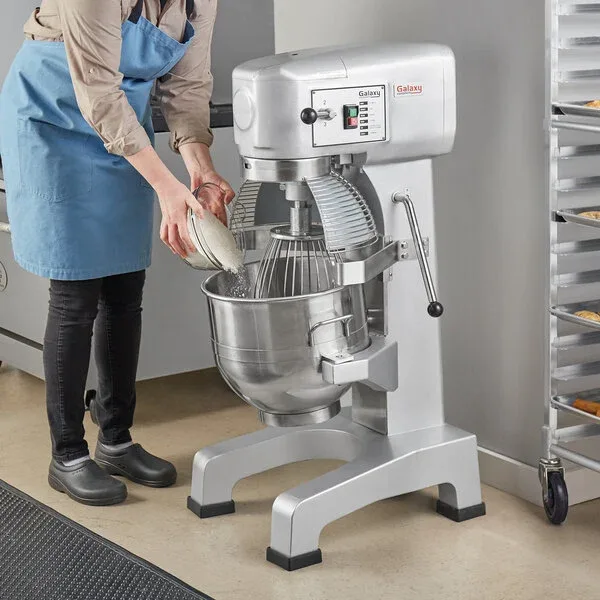
Why Your Commercial Mixer Might Be the Most Underrated Tool in Your Kitchen
Let me tell you about the time I walked into a bakery in East Nashville that was struggling with consistency. The owner, Maria, had this massive 60-quart mixer that she swore was the “best investment she ever made.” Yet every morning, her croissants came out with uneven layers, her bread dough was overworked, and her staff looked exhausted from wrestling with the beast. Turns out, she’d bought the mixer based on capacity alone, without considering how it actually fit her production needs. That’s when I realized: choosing the right commercial mixer isn’t about size, it’s about matching the machine to your specific workflow.
Now, I’ve seen this play out in dozens of kitchens, from food trucks to hotel banquet operations. The mixer that works perfectly for a pizzeria making 50 dough balls a day might be completely wrong for a bakery producing 200 loaves of sourdough. And here’s the kicker: most buyers focus so much on horsepower and bowl size that they overlook the features that actually make daily operations smoother. So today, we’re going diving deep into what really matters when selecting a commercial mixer. By the end, you’ll know exactly how to avoid Maria’s mistake, and maybe save yourself from a $10,000 paperweight.
Here’s what we’ll cover:
- How to calculate your actual capacity needs (hint: it’s not just about volume)
- The three mixer types and which one secretly runs your kitchen better
- Features that sound fancy but might be slowing you down
- Why your staff’s height could determine your next purchase
- The hidden costs of “over-spec’ing” your mixer
- How to test-drive a mixer before committing (yes, it’s possible)
Is this the most exciting topic in the world? Probably not. But when you’re staring at a mixer that costs more than my first car, getting it right matters. Let’s start with the question that trips up even experienced chefs: how much capacity do you actually need?
The Capacity Conundrum: Why Bigger Isn’t Always Better
1. The 70% Rule That Most Manufacturers Won’t Tell You
Here’s something that blew my mind when I first learned it: most commercial mixers should only be filled to 70% of their stated capacity. That 60-quart mixer Maria bought? In reality, it’s only safe to use for about 42 quarts of dough. Why? Because dough expands during mixing, and overfilling leads to uneven mixing, strain on the motor, and, most importantly-inconsistent results.
But here’s where it gets tricky. That 70% rule applies to heavy doughs like bread or pizza. For lighter batters (think cake or muffin mix), you can push it to 80-85%. And for whipped creams or meringues? You might only use 50% of the bowl’s capacity to allow for proper aeration. So when you’re looking at mixer specs, don’t just glance at the bowl size, ask yourself: what am I actually mixing most often?
Let me give you a real-world example. A friend who runs a donut shop thought he needed a 30-quart mixer for his yeast-raised donuts. After calculating his actual batch sizes (and accounting for the 70% rule), we realized a 20-quart mixer would handle his peak production with room to spare. That one change saved him $3,000 upfront and reduced his energy costs by 15%-not to mention the space he saved in his tiny kitchen.
So how do you calculate your actual needs? Start by tracking your largest batch size for each product you make. Then:
- For doughs: Multiply by 1.4 (to account for 70% fill)
- For batters: Multiply by 1.2
- For whipped products: Multiply by 2
This gives you your minimum required bowl size. But here’s where I see people go wrong: they stop here. Capacity isn’t just about volume, it’s about how that volume interacts with your production cycle.
2. The Production Cycle Trap: Why Your Busiest Hour Might Be Lying to You
Let’s say you run a bakery that does most of its mixing between 4-6 AM. You calculate that your largest batch is 30 quarts of brioche dough, so you buy a 40-quart mixer (accounting for the 70% rule). But here’s what happens:
At 4:30 AM, you’re mixing that brioche. By 5:00, it’s proofing. At 5:15, you need to mix 20 quarts of muffin batter. But your mixer is still tied up with the brioche dough, it needs to rest, and you haven’t cleaned the bowl yet. Suddenly, you’re scrambling to use a smaller mixer or hand-mix, which throws off your entire schedule.
This is what I call the production cycle trap. Your mixer’s capacity isn’t just about handling your largest batch, it’s about handling your sequence of batches within your production window. To avoid this:
- Map out your mixing schedule for your busiest day
- Note the time between batches (including cleanup and rest time)
- Identify if you’ll need to mix different products simultaneously
- Consider if you can stagger production to use one mixer more efficiently
In the bakery example above, they actually needed two mixers: a 40-quart for doughs and a 20-quart for batters. Or, if space was tight, a 30-quart with a split bowl attachment (more on attachments later). The point is: don’t let your busiest hour dictate your mixer choice without considering the bigger picture.
3. The Horsepower Hype: Why More Watts Don’t Always Mean Better Mixing
Walk into any kitchen equipment showroom, and you’ll see mixers boasting about their horsepower. A 1-horsepower motor! 2 HP! 3 HP! It’s easy to assume that more power equals better performance. But here’s the thing: horsepower is only half the story.
What really matters is torque-the twisting force that actually moves your dough or batter. A mixer with high horsepower but low torque might struggle with stiff doughs, while a mixer with lower horsepower but high torque could handle the same dough with ease. This is why you’ll see some 1/2 HP mixers outperforming 1 HP models on heavy doughs.
So how do you compare torque? Unfortunately, most manufacturers don’t list torque specs directly. Here’s what to look for instead:
- Gear-driven vs. belt-driven: Gear-driven mixers (like Hobart’s Legacy series) typically have higher torque than belt-driven models. They’re more durable but also more expensive.
- Motor type: Direct-drive motors (where the motor connects directly to the mixing attachment) usually offer better torque than belt-driven systems.
- Speed settings: Mixers with more speed options (especially in the lower RPM range) often have better torque control for different dough types.
- User reviews: Look for comments about how the mixer handles stiff doughs or large batches. If multiple users say it struggles with pizza dough, that’s a torque red flag.
Here’s a quick torque cheat sheet based on common mixer sizes:
- 5-12 quarts: 1/3 to 1/2 HP is fine for most batters and light doughs
- 20-30 quarts: 1 to 1.5 HP for doughs, 1/2 to 1 HP for batters
- 40-60 quarts: 2 to 3 HP for bread doughs, 1.5 to 2 HP for most other applications
But remember: these are guidelines, not rules. A high-torque 1 HP mixer might outperform a low-torque 2 HP model. When in doubt, ask for a demo with your actual dough recipe.
Mixer Types: The Three Personalities of Commercial Mixers
4. Planetary Mixers: The Versatile Workhorse (That Might Be Overkill)
If you’ve worked in a commercial kitchen, you’ve probably used a planetary mixer. These are the ones with the mixing attachment that rotates around the bowl while also spinning on its own axis, like a planet orbiting the sun (hence the name). They’re the most common type in bakeries, restaurants, and even some food trucks.
Pros:
- Extremely versatile, can handle everything from whipped cream to pizza dough
- Wide range of attachments (paddles, dough hooks, whips, etc.)
- Even mixing with no dead zones
- Available in a huge range of sizes (from 5 quarts to 140 quarts)
Cons:
- More expensive than spiral mixers for the same capacity
- Can overwork dough if not monitored (especially with the wrong attachment)
- Bowl scraping often required for even mixing
- Not ideal for very large batches of bread dough
Planetary mixers are the Swiss Army knives of the mixer world. If you’re making multiple products (bread, cookies, batters, fillings), this is usually your best bet. But if you’re only mixing one type of dough all day (like a pizzeria or bagel shop), you might be paying for versatility you don’t need.
One thing I wish more buyers knew: ot all planetary mixers are created equal. The angle of the attachment, the speed of rotation, and even the shape of the bowl can affect mixing performance. For example, some high-end models have a tilt-head design that makes adding ingredients easier, while others have a bowl-lift mechanism that’s better for heavy doughs.
5. Spiral Mixers: The Bread Specialist (That Most Kitchens Overlook)
Spiral mixers are the unsung heroes of the bread world. Instead of a planetary motion, they have a spiral-shaped hook that rotates in one direction while the bowl turns in the opposite direction. This creates a gentle, stretching action that’s perfect for developing gluten in bread dough.
Pros:
- Superior dough development with less heat buildup
- Faster mixing times for bread dough (often 30-50% faster than planetary)
- More energy-efficient for large dough batches
- Less strain on the motor for stiff doughs
- Often cheaper than planetary mixers of the same capacity
Cons:
- Limited versatility, mostly for bread and pizza dough
- Fewer attachment options
- Can be harder to clean (dough gets stuck in the spiral)
- Not ideal for batters or whipped products
If you’re a pizzeria, bagel shop, or artisan bakery, a spiral mixer might be your secret weapon. I’ve seen bakeries switch from planetary to spiral mixers and suddenly get more consistent crumb structure and better oven spring in their bread. The difference is especially noticeable with high-hydration doughs (like ciabatta or sourdough) that can be tricky to develop in a planetary mixer.
But here’s the catch: spiral mixers aren’t one-size-fits-all. Some models have fixed bowls, while others have removable bowls. Some have a fork-lift design that makes it easier to add ingredients, while others require you to lift the bowl manually. And the spiral hook itself comes in different shapes, some are better for soft doughs, others for stiff doughs. If you’re considering a spiral mixer, test it with your actual dough recipe before buying.
6. Vertical Cutter/Mixers (VCMs): The Speed Demons (That Can Also Be Overkill)
VCMs are the race cars of the mixer world, fast, powerful, and built for high-volume production. They’re commonly used in large-scale bakeries, food processing plants, and even some high-volume restaurants. Instead of a rotating attachment, VCMs have a high-speed blade that chops and mixes ingredients rapidly.
Pros:
- Extremely fast mixing times (can mix dough in 2-3 minutes)
- Can handle very large batches (up to 800 quarts in industrial models)
- Excellent for batters, fillings, and even chopping vegetables
- More compact than planetary mixers of the same capacity
Cons:
- Can overheat dough if not monitored
- Not ideal for delicate doughs (like croissants or laminated doughs)
- More expensive than planetary or spiral mixers
- Louder and more aggressive mixing action
- Requires more training to use properly
VCMs are ot for everyone. If you’re making 50 loaves of bread a day, you probably don’t need one. But if you’re producing 500+ loaves daily (or making large batches of cookie dough, pie fillings, or sauces), a VCM could be a game-changer. They’re also popular in commissary kitchens that supply multiple locations.
One thing to watch out for: VCMs can be too efficient. Their high-speed blades generate heat, which can affect dough temperature and gluten development. Some models have cooling jackets or temperature controls to mitigate this, but it’s still something to monitor closely.
Features That Actually Matter (And the Ones That Don’t)
7. The Bowl Scraper Debate: Worth the Hype or Just Another Gadget?
Let me tell you about the time I almost bought a mixer solely because it had a bowl scraper attachment. The sales rep made it sound like the holy grail of mixing: “No more stopping to scrape the sides! Perfectly even mixing every time!” But when I actually tested it in a bakery, I realized something: bowl scrapers aren’t as magical as they seem.
Here’s the reality:
- For batters and light doughs: Bowl scrapers can be helpful, especially for thick batters that cling to the sides. But for most applications, a quick stop to scrape with a spatula isn’t a huge time-waster.
- For heavy doughs: Bowl scrapers often struggle to move the dough effectively. They can also get in the way of the dough hook, leading to uneven mixing.
- The maintenance factor: Bowl scrapers add another part that needs cleaning and can wear out over time. Some models have scraper blades that need frequent replacement.
So when are bowl scrapers worth it? If you’re making large batches of thick batters (like muffin or cake batter) and don’t want to stop the mixer, they can save time. But for most bread and pizza doughs, they’re not essential. I’d rather see you invest in a mixer with a better bowl shape (like a slightly tapered design that naturally guides ingredients toward the center) than one with a fancy scraper.
8. Variable Speed Control: The Feature You Didn’t Know You Needed
Here’s a feature that sounds basic but makes a huge difference in daily use: variable speed control. Not all mixers are created equal here. Some have just 3 speeds, while others have infinite variability between low and high. Here’s why it matters:
- Delicate doughs: For croissants or laminated doughs, you need precise control over mixing speed to avoid overworking the dough.
- Creaming butter and sugar: The first stage of creaming should be slow to avoid splattering, then gradually increase speed.
- Whipping egg whites or cream: You want to start slow to incorporate air, then increase speed gradually.
- Folding in ingredients: Sometimes you need to pulse the mixer at low speed to avoid overmixing.
I’ve seen too many kitchens struggle with mixers that have only 3 speeds, usually labeled “low,” “medium,” and “high.” The problem? “Low” might be too fast for incorporating dry ingredients, while “medium” is too slow for whipping cream. A mixer with infinite speed control (or at least 6+ speeds) gives you the flexibility to handle any recipe.
One pro tip: look for mixers with a digital speed display. This lets you replicate mixing times and speeds exactly from batch to batch, which is crucial for consistency. Some high-end models even have programmable settings that remember your preferred speeds for different recipes.
9. The Quiet Revolution: Why Noise Level Matters More Than You Think
Let’s talk about something no one mentions in mixer brochures: oise. I once worked with a café that installed a 30-quart mixer in their open kitchen. The problem? It sounded like a jet engine taking off every time they mixed muffin batter. Customers complained, staff had to shout to be heard, and the owner ended up moving the mixer to a back room, defeating the purpose of having an open kitchen.
Noise isn’t just an annoyance, it can affect:
- Staff morale: Constant loud noise leads to fatigue and irritability.
- Communication: In a busy kitchen, you need to hear orders and instructions.
- Customer experience: Open kitchens with loud equipment can be unpleasant for diners.
- Hearing safety: Prolonged exposure to noise above 85 decibels can cause hearing damage.
So how do you choose a quieter mixer? Here’s what to look for:
- Decibel ratings: Some manufacturers list noise levels. Aim for under 75 dB for continuous use.
- Motor type: Direct-drive motors are usually quieter than belt-driven.
- Gear quality: Higher-end mixers with precision gears tend to be quieter.
- Vibration dampening: Some mixers have rubber feet or mounts to reduce vibration noise.
- Enclosure design: Mixers with enclosed motors and gears are generally quieter.
If you’re buying a mixer for an open kitchen or small space, ask for a demo-or at least watch videos of the mixer in action. That 60-quart mixer might be a steal at $5,000, but if it sounds like a construction site when running, it might not be worth the savings.
10. The Ergonomics Factor: Why Your Staff’s Height Could Break Your Mixer
This is one of those things that seems obvious in hindsight but gets overlooked all the time: ergonomics. I can’t tell you how many kitchens I’ve seen where the mixer is either too tall or too short for the staff using it. Here’s why it matters:
- Safety: A mixer that’s too tall forces staff to reach up to add ingredients, increasing the risk of spills or injuries. A mixer that’s too short means constant bending, which leads to back pain.
- Efficiency: When staff are uncomfortable, they work slower and make more mistakes.
- Cleaning: A mixer that’s hard to reach is harder to clean properly, which can lead to sanitation issues.
- Morale: No one wants to work with equipment that causes physical discomfort.
So how do you choose a mixer with good ergonomics? Here’s what to consider:
- Bowl height: The top of the bowl should be between waist and chest height for most staff. For a 5’6″ person, that’s about 36-42 inches off the ground.
- Bowl removal: Can staff easily lift the bowl in and out? Some mixers have bowl-lift mechanisms that make this easier.
- Tilt-head vs. bowl-lift: Tilt-head mixers (where the head tilts back) are easier to add ingredients to, but bowl-lift mixers (where the bowl moves up and down) are better for heavy doughs.
- Control placement: Are the speed controls and power switch easy to reach without stretching?
- Attachment changes: Can staff change attachments without straining? Some mixers have quick-release mechanisms that make this easier.
Here’s a pro tip: bring your tallest and shortest staff members to the demo. Have them try adding ingredients, changing attachments, and cleaning the mixer. If it’s comfortable for them, it’ll work for everyone.
One last ergonomic consideration: weight. If you’re buying a mixer with a removable bowl, make sure your staff can comfortably lift it when full. A 30-quart bowl of dough can weigh over 50 pounds, more than some staff can safely handle. Some mixers come with bowl dollies or lift assist mechanisms to help with this.
Making the Final Decision: A Step-by-Step Guide
Alright, let’s bring this all together. By now, you should have a good sense of what matters when choosing a commercial mixer. But how do you actually make the final decision? Here’s my step-by-step process:
Step 1: Audit Your Current (or Planned) Production
Before you even look at mixer specs, get clear on what you’re actually making:
- List every product that requires mixing
- Note the largest batch size for each
- Track how many batches you make per day/week
- Note the mixing time for each product
- Identify your busiest mixing periods
This audit will tell you whether you need one versatile mixer or multiple specialized ones.
Step 2: Calculate Your True Capacity Needs
Using the 70% rule and your production audit, calculate:
- Your minimum required bowl size
- Whether you need multiple mixers for different products
- If you can stagger production to use one mixer more efficiently
Remember: it’s better to have a mixer that’s slightly too small than one that’s too big. You can always make two batches in a smaller mixer, but you can’t make a half-batch in a mixer that’s too large.
Step 3: Match Mixer Type to Your Products
Based on your audit, decide which mixer type(s) make sense:
- Planetary mixer: Best for versatility (multiple product types)
- Spiral mixer: Best for bread/pizza dough specialists
- VCM: Best for high-volume production of batters/fillings
If you’re still unsure, lean toward a planetary mixer, it’s the most flexible option.
Step 4: Prioritize Features Based on Your Workflow
Make a list of must-have features vs. nice-to-have features. For example:
Must-have:
- Variable speed control
- Digital timer
- Ergonomic bowl height
Nice-to-have:
- Bowl scraper
- Programmable settings
- Wi-Fi connectivity
This list will help you compare models without getting distracted by flashy (but unnecessary) features.
Step 5: Set Your Budget (Including Hidden Costs)
When setting your budget, consider:
- Upfront cost of the mixer
- Cost of attachments (some mixers come with basic attachments, others charge extra)
- Installation costs (especially for large mixers that may require electrical upgrades)
- Training costs (how long will it take staff to learn the new mixer?)
- Maintenance costs (belts, gears, and motors may need replacement over time)
- Energy costs (a more efficient motor can save money long-term)
- Space costs (will you need to reconfigure your kitchen to accommodate the mixer?)
A mixer that’s $2,000 cheaper upfront might end up costing more in the long run if it’s less efficient or requires more maintenance.
Step 6: Demo, Demo, Demo
This is the most important step, and the one most buyers skip. Always test a mixer with your actual recipes. Here’s what to look for during a demo:
- How does it handle your stiffest dough or thickest batter?
- Is the mixing even, or do you need to stop and scrape?
- Is the noise level acceptable for your space?
- Are the controls intuitive for your staff?
- Is the mixer comfortable to use for your tallest and shortest staff?
- How easy is it to clean?
- Does it overheat during extended use?
If a dealer won’t let you test the mixer with your recipes, that’s a red flag. Move on to a dealer who will.
Step 7: Check Warranty and Support
Before making a final decision, check:
- Warranty length (look for at least 1 year on parts and labor)
- What’s covered (some warranties exclude certain parts)
- Availability of replacement parts
- Response time for service calls
- Training and support options
A mixer with a great warranty and responsive support can save you thousands in downtime and repairs.
Step 8: Read the Fine Print (Especially for Used Mixers)
If you’re considering a used mixer (which can be a great way to save money), be sure to:
- Check the motor hours (like mileage on a car)
- Inspect the gears and belts for wear
- Test the mixer with a heavy load
- Verify that replacement parts are still available
- Get a professional inspection if possible
A used mixer can be a smart purchase, but only if it’s in good condition. Don’t assume that because it looks fine, it is fine.
Step 9: Plan for the Future
Finally, think about where your business is headed:
- Are you planning to expand your menu?
- Will your production volume increase in the next 1-2 years?
- Are you considering adding a second location?
If growth is on the horizon, you might want to invest in a slightly larger mixer now to avoid upgrading later. But if your volume is stable, don’t overspend on capacity you won’t use.
Step 10: Make the Call (And Don’t Second-Guess Yourself)
After all this research, it’s easy to get analysis paralysis. At some point, you have to trust your gut. If a mixer checks all your boxes and feels right during the demo, it’s probably the right choice. Don’t keep searching for the “perfect” mixer, it doesn’t exist. The best mixer is the one that works for your kitchen.
The Bottom Line: It’s Not About the Mixer, It’s About Your Process
Here’s the thing I want you to remember: the mixer is just a tool. A $20,000 mixer won’t fix a flawed process, and a $3,000 mixer can produce amazing results if used correctly. The key is matching the mixer to your specific needs, not just in terms of capacity, but in terms of workflow, staff, and production style.
So before you pull the trigger on that shiny new mixer, ask yourself:
- Does this actually solve a problem in my kitchen, or am I just impressed by the specs?
- Have I tested it with my real recipes, or just with the dealer’s demo dough?
- Will my staff actually use all these features, or are they just bells and whistles?
- Does this mixer make my process easier, or am I buying it because it’s what I “should” have?
If you can answer these questions honestly, you’ll end up with a mixer that doesn’t just look good on paper, it’ll be the workhorse your kitchen actually needs. And who knows? Maybe you’ll even avoid the fate of Maria’s bakery, where a $10,000 mixer sat mostly unused because it was too big, too loud, and too complicated for the actual work being done.
Now, if you’ll excuse me, I need to go check on Luna, she’s been giving me the stink eye ever since I started writing about mixers instead of giving her treats. But before I go, let’s tackle some common questions I hear about commercial mixers.
FAQ: Commercial Mixer Questions That Keep Me Up at Night
Q: I’ve heard that stainless steel bowls are better than aluminum. Is that true?
A: It depends. Stainless steel bowls are more durable, easier to clean, and don’t react with acidic ingredients (like lemon curd or tomato sauce). But aluminum bowls are lighter, which can be a big advantage for mixers with removable bowls. For most applications, stainless steel is the better choice, but if weight is a concern (like in a food truck), aluminum might be worth considering. Just be aware that aluminum can discolor over time and may react with certain ingredients.
Q: How often should I replace the belts or gears on my mixer?
A: This varies depending on usage, but here are some general guidelines:
- Belts: Check for wear every 6 months. Replace if you see cracks, fraying, or excessive stretching. With heavy use, belts may need replacement every 1-2 years.
- Gears: High-quality gears can last 10+ years with proper maintenance. Listen for unusual noises (grinding, squealing) which can indicate wear. If you hear these sounds, have a technician inspect the gears.
- Bearings: These should last 5-10 years. If you notice excessive vibration or hear a rumbling sound, it might be time to replace them.
The best approach is to follow the manufacturer’s maintenance schedule and address any issues as soon as they arise. Regular lubrication (for gear-driven mixers) can significantly extend the life of your mixer.
Q: Can I use my commercial mixer for non-food applications, like mixing soap or lotion for my side business?
A: Technically, yes, but it’s not recommended. Here’s why:
- Cross-contamination risk: Even with thorough cleaning, there’s a chance of residue transferring between food and non-food products.
- Material compatibility: Some non-food ingredients (like certain oils or acids) can degrade the mixer’s materials over time.
- Warranty issues: Using a mixer for non-food applications may void the warranty.
- Sanitation concerns: Food-safe mixers aren’t designed for the same cleaning protocols as equipment used for cosmetics or chemicals.
If you’re making non-food products regularly, it’s worth investing in a separate mixer. Many manufacturers offer mixers specifically designed for cosmetics, chemicals, or other non-food applications. These are built with materials that can handle those ingredients safely and are easier to clean thoroughly between uses.
Q: What’s the one feature I should never compromise on when buying a commercial mixer?
A: Hands down, it’s variable speed control. Here’s why:
- Versatility: It allows you to handle everything from delicate whipped cream to stiff pizza dough with the same mixer.
- Consistency: You can replicate mixing speeds exactly from batch to batch.
- Safety: Being able to start slow reduces splattering and accidents.
- Dough development: Different doughs require different mixing speeds for optimal gluten development.
- Ingredient incorporation: Some ingredients (like chocolate chips or nuts) should be folded in at low speed to avoid breaking.
A mixer with only 3 speeds might save you a few hundred dollars upfront, but it’ll cost you in consistency, efficiency, and flexibility over time. If you’re on a tight budget, look for a mixer with at least 6 speeds or infinite variability. It’s the one feature that truly separates professional-grade mixers from consumer models.
@article{choosing-the-right-commercial-mixer-capacity-and-features-that-actually-matter,
    title   = {Choosing the Right Commercial Mixer: Capacity and Features That Actually Matter},
    author  = {Chef's icon},
    year    = {2026},
    journal = {Chef's Icon},
    url     = {https://chefsicon.com/choosing-the-right-commercial-mixer-capacity-and-features/}
}