The Best Fluffy Pancakes recipe you will fall in love with. Full of tips and tricks to help you make the best pancakes.
The Restaurant Owner’s Guide to Essential Cooking Equipment: What You Really Need (And What You Can Skip)
Let me tell you about the first time I walked into a restaurant kitchen that wasn’t mine. It was 2019, and I was in Chicago for a food bloggers’ conference. A local chef had invited us to tour his kitchen before service started. I’ll never forget the moment I stepped through those swinging doors – the organized chaos, the gleaming stainless steel, the way the line cooks moved like a well-rehearsed dance troupe. But what really stuck with me was how every piece of equipment had a purpose, a reason for being there. Nothing was just for show.
Fast forward to today, and I’ve toured dozens of restaurant kitchens – from tiny food trucks to massive hotel banquet operations. I’ve seen what works, what doesn’t, and what ends up gathering dust in the corner. If you’re opening a restaurant or upgrading your current kitchen, you’re probably feeling overwhelmed by the sheer number of equipment options out there. Should you get that $20,000 combi oven? Is a blast chiller really necessary? What about all those specialty gadgets that sales reps swear you can’t live without?
Here’s the truth: the essential cooking equipment for your restaurant isn’t about having the fanciest or most expensive tools. It’s about having the right tools for your specific menu, volume, and concept. In this guide, I’ll walk you through what you actually need, what you might want to consider, and what you can safely skip. We’ll look at everything from the backbone equipment that forms your kitchen’s foundation to the specialty items that can give you a competitive edge. And yes, we’ll talk about where to get this stuff – including suppliers like Chef’s Deal that offer more than just equipment sales.
The Foundation: Equipment Every Restaurant Kitchen Needs
1. The Heart of Your Kitchen: Ranges and Ovens
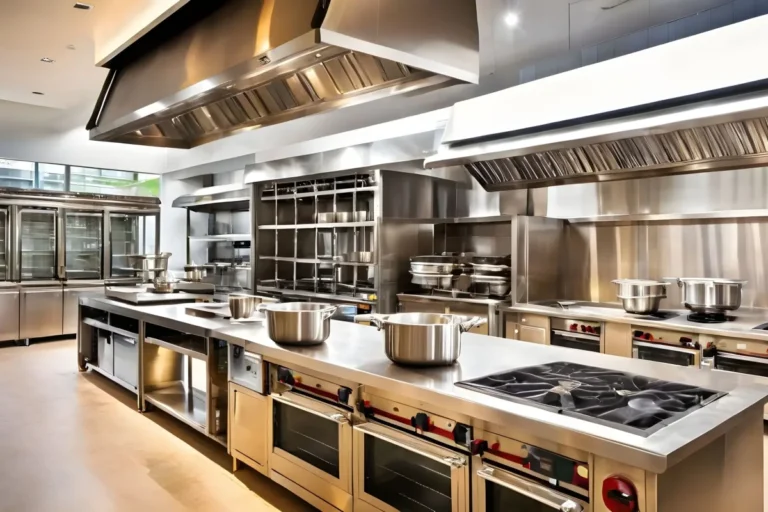
Let’s start with the obvious. You can’t have a restaurant kitchen without some way to cook food. But the type of range and oven you choose will depend heavily on your menu. Are you running a pizzeria? You’ll need something different than a fine dining establishment or a diner.
For most restaurants, a commercial gas range is the workhorse of the kitchen. These come in various configurations – six burners, ten burners, with or without griddles. The standard 36-inch range with six burners is a good starting point for many operations. But here’s where I see people make mistakes: they focus too much on the number of burners and not enough on BTU output. Higher BTUs mean faster recovery time when you’re cooking at volume. That said, if you’re not cooking with high heat (like in a bakery), you might not need all that power.
Ovens are another critical consideration. Most commercial ranges come with an oven base, but you might need additional oven capacity. Convection ovens are versatile and can handle everything from roasting vegetables to baking cookies. If you’re doing a lot of baking, you might want a deck oven. And if you’re really serious about bread or pizza, a wood-fired oven could be worth the investment – though they require more space and ventilation.
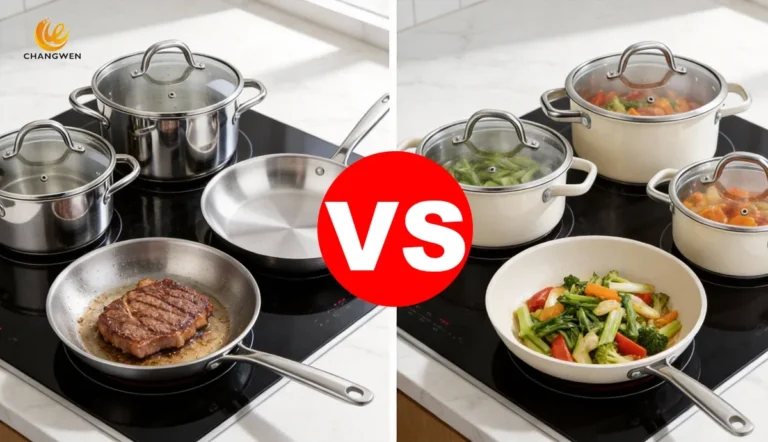
Is this the best approach? Let’s consider the alternatives. Some kitchens are moving toward induction ranges, which are more energy-efficient and cooler to work around. They’re great for open kitchens where you don’t want a lot of heat radiating into the dining area. But they require special cookware and might not be as familiar to your staff. Maybe I should clarify: there’s no one-size-fits-all solution here. Your choice should depend on your menu, your space, and your staff’s experience.
2. The Unsung Hero: Refrigeration Equipment
If you think refrigeration is boring, you’re not thinking hard enough. Poor refrigeration can ruin your food, your health inspections, and your bottom line. I’ve seen restaurants fail because they skimped on refrigeration – food spoilage, failed inspections, unhappy customers. Don’t let that be you.
At minimum, you’ll need a reach-in refrigerator and freezer. These come in various sizes, but a good rule of thumb is to have about 1.5 cubic feet of refrigerated space per meal served during your busiest shift. So if you’re serving 200 meals at dinner, you’ll want around 300 cubic feet of refrigeration. That might sound like a lot, but remember – you need space for ingredients, prepared foods, and backup stock.
But reach-ins are just the beginning. You’ll also want to consider:
- Under-counter refrigerators – These are great for keeping frequently used ingredients close at hand on the line.
- Walk-in coolers and freezers – Essential for larger operations or if you’re storing bulk ingredients.
- Prep refrigerators – These have cutting boards on top and are perfect for sandwich shops or salad stations.
- Blast chillers – These rapidly cool hot food, which is crucial for food safety and extending shelf life.
Here’s where I’m torn between practicality and budget. Blast chillers are amazing – they can cool a stockpot from 160°F to 40°F in about 90 minutes, which is way faster than leaving it on the counter. This means less risk of bacterial growth and longer shelf life for your prepared foods. But they’re also expensive, often costing $10,000 or more. For a small operation, you might be able to get by with ice baths and careful planning. But if you’re doing any significant volume of batch cooking, a blast chiller could pay for itself in reduced food waste.
3. The Workhorse: Commercial Fryers
Love them or hate them, fryers are essential for many restaurants. From French fries to fried chicken to doughnuts, a good commercial fryer can be one of your most profitable pieces of equipment. But not all fryers are created equal.
First, consider your volume. A small café that occasionally fries a few items might get by with a countertop fryer. But if you’re running a busy fish and chips shop, you’ll need something much more robust. Floor-model fryers come in various sizes, typically measured in pounds of oil capacity. A 40-pound fryer is good for moderate volume, while a 75-pound fryer can handle high-volume operations.
Next, think about fuel type. Gas fryers are more common and generally heat up faster. Electric fryers are more energy-efficient and might be a better choice if you’re in an area with high gas costs or limited ventilation. There are also pressure fryers, which cook food faster and at lower temperatures, resulting in juicier fried foods. These are popular in chicken restaurants.
One thing I can’t stress enough: don’t skimp on your fryer’s filtration system. A good filtration system extends the life of your oil, which saves you money in the long run. Some high-end fryers come with built-in filtration, while others require a separate system. Either way, make sure you have a way to filter your oil regularly.
Specialty Equipment: What You Need Based on Your Concept
4. Grills, Griddles, and More: Cooking Surfaces
The cooking surface you choose will depend largely on your menu. A charbroiler is great for steakhouses or burger joints, giving food that nice grill-marked appearance. But if you’re doing a lot of breakfast items, a griddle might be more versatile. Griddles are also great for smash burgers or anything that needs a flat cooking surface.
Here’s where I see restaurants make a common mistake: they try to do too much with one piece of equipment. A combination griddle-charbroiler might seem like a space-saver, but it often means compromising on both functions. If you need both, it’s usually better to have dedicated equipment for each.
For pizza restaurants, a pizza deck oven or conveyor oven is essential. Deck ovens give you that nice crispy crust and are great for artisanal pizzas. Conveyor ovens are more consistent and can handle higher volume, making them popular in chain restaurants.
And let’s not forget about salamanders. These overhead broilers are perfect for melting cheese, browning casseroles, or finishing off dishes. They’re not essential for every kitchen, but if you’re doing a lot of baked or gratin dishes, a salamander can be a game-changer.
5. The Prep Station: Food Processors, Mixers, and Slicers
Prep equipment might not be as glamorous as your cooking equipment, but it’s just as important. A good food processor can save you hours of chopping vegetables. A commercial mixer is essential if you’re doing any baking or making large batches of sauces or doughs. And a meat slicer is crucial if you’re serving deli meats, making sandwiches, or portioning proteins.
When choosing prep equipment, think about your volume and your menu. A small café might get by with a 5-quart mixer, but a bakery will need something much larger. Similarly, a food processor with a 1-gallon bowl might be fine for a small operation, but a high-volume restaurant will need something with more capacity.
One piece of equipment that often gets overlooked is the immersion blender. These are great for making soups, sauces, and purees right in the pot. They’re more efficient than transferring hot liquids to a blender and back, and they’re easier to clean. Plus, they take up less space than a traditional blender.
6. Holding and Warming Equipment
If you’re doing any kind of batch cooking or serving buffet-style, you’ll need equipment to keep food at the right temperature. Hot holding cabinets are essential for keeping food warm without drying it out. These come in various sizes and configurations, from small countertop units to large floor models.
For soups, sauces, and other liquids, a steam table is a must. These keep your food at a safe temperature while making it easy to serve. They come in various lengths, typically ranging from 2 to 8 feet. When choosing a steam table, think about how many pans you’ll need to hold at once and what size pans you’ll be using.
Another piece of equipment that’s often overlooked is the proofing cabinet. If you’re doing any baking, this is essential for letting your dough rise at the right temperature and humidity. A good proofing cabinet can make the difference between light, airy bread and dense, heavy loaves.
The Often-Overlooked Essentials
7. Ventilation: The Invisible Workhorse
Ventilation might not be the most exciting topic, but it’s one of the most important aspects of your kitchen. A good commercial ventilation system does more than just remove smoke and odors. It keeps your kitchen cool, removes grease from the air (which is a fire hazard), and helps maintain a comfortable working environment for your staff.
A basic ventilation system consists of a hood over your cooking equipment and an exhaust fan. But there’s more to it than that. You’ll also need make-up air systems to replace the air that’s being exhausted. Without proper make-up air, your kitchen can become negatively pressurized, which can cause problems with your HVAC system and make it difficult to open doors.
When designing your ventilation system, work with a professional who understands local codes and regulations. The size and type of hood you need will depend on your cooking equipment and your menu. For example, if you’re doing a lot of frying, you’ll need a more robust system than if you’re mostly doing light sautéing.
Here’s where I’m going to be controversial: don’t try to save money by cutting corners on ventilation. I’ve seen restaurants try to get by with inadequate systems, and it always ends badly. Poor ventilation leads to uncomfortable working conditions, higher energy costs, and potential health code violations. It’s not worth the risk.
8. Smallwares: The Little Things That Make a Big Difference
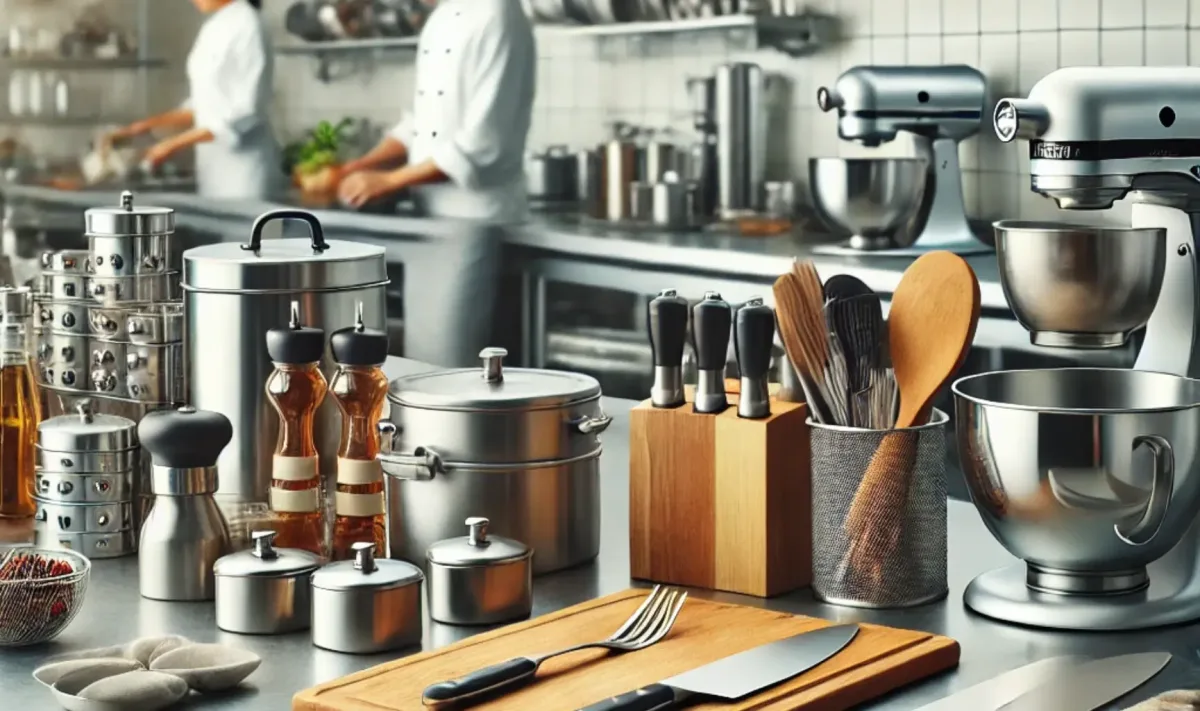
When people think about essential cooking equipment for your restaurant, they often focus on the big-ticket items. But the small stuff – the pots, pans, utensils, and other smallwares – can make just as big a difference in your day-to-day operations.
Let’s start with cookware. You’ll need a variety of pots and pans in different sizes. For most restaurants, a good starting point is:
- Stock pots (12-quart, 20-quart, 40-quart)
- Sauce pans (2-quart, 4-quart, 6-quart)
- Sauté pans (10-inch, 12-inch)
- Sheet pans (full size, half size)
- Hotel pans (full size, half size, third size)
But don’t just buy the first set you see. Think about what you’ll be cooking and choose accordingly. If you’re doing a lot of Asian cuisine, you might want a wok range and woks. If you’re doing a lot of braising, you’ll need heavy-duty braising pans.
Utensils are another area where quality matters. Cheap spatulas will warp and melt. Flimsy tongs will break. Invest in good-quality tools that will stand up to daily use. And don’t forget about storage – you’ll need a way to keep all these tools organized and within reach.
One often-overlooked category of smallwares is portioning tools. Ladles, scoops, and portion scales are essential for consistency. If you’re serving the same dish to multiple customers, you want it to look and taste the same every time. Portioning tools help ensure that consistency.
Equipment That Might Not Be Essential (But Could Be Nice to Have)
9. The Nice-to-Haves: Equipment That Can Give You an Edge
Now that we’ve covered the essentials, let’s talk about some equipment that isn’t strictly necessary but can give you a competitive edge or make your life easier. These are the items that separate the good restaurants from the great ones.
First up: combi ovens. These versatile pieces of equipment combine convection, steam, and combination cooking in one unit. They can roast, steam, poach, bake, and even sous vide. The learning curve can be steep, but once mastered, a combi oven can replace several other pieces of equipment. They’re expensive, often costing $20,000 or more, but if you have the budget and the need, they can be a game-changer.
Another piece of equipment that’s gaining popularity is the sous vide circulator. Sous vide cooking involves vacuum-sealing food and cooking it in a water bath at a precise temperature. This method results in perfectly cooked food every time, with minimal shrinkage. It’s especially popular for proteins like steak and chicken. The downside? It requires special equipment (a circulator and vacuum sealer) and takes longer than traditional cooking methods.
For restaurants that do a lot of baking, a sheeter can be a worthwhile investment. These machines roll out dough to a consistent thickness, which is essential for pastries, pies, and laminated doughs like croissants. They can save you hours of labor and ensure consistency in your baked goods.
And let’s not forget about smokers. If you’re doing any kind of barbecue or smoked meats, a commercial smoker can take your food to the next level. They come in various sizes and fuel types (wood, charcoal, electric, gas), so choose one that fits your menu and your space.
10. The Future of Restaurant Kitchens: Smart Equipment
We’re living in the age of smart technology, and restaurant kitchens are no exception. More and more equipment is coming with built-in connectivity, allowing you to monitor and control it remotely. This isn’t just about convenience – it’s about efficiency, consistency, and food safety.
Take smart ovens, for example. These ovens can be programmed with specific cooking profiles for different dishes. They can adjust temperature and humidity in real-time to ensure perfect results every time. Some even have built-in probes that monitor the internal temperature of food and adjust cooking time accordingly.
Or consider smart refrigeration. These units can monitor temperature and humidity, alerting you if there’s a problem. Some can even predict maintenance issues before they become serious problems. This can help prevent food spoilage and extend the life of your equipment.
Then there are inventory management systems that integrate with your equipment. These systems can track what you’re using, predict what you’ll need, and even place orders automatically. This can help reduce waste and ensure you never run out of key ingredients.
Is this the future of restaurant kitchens? Maybe. But it’s important to remember that technology is a tool, not a replacement for good cooking. The best kitchens will be those that combine the efficiency of smart technology with the skill and creativity of human chefs.
Putting It All Together: Designing Your Kitchen
Now that we’ve covered the essentials (and some nice-to-haves), let’s talk about how to put it all together. Designing a restaurant kitchen is about more than just cramming in as much equipment as possible. It’s about creating a space that’s efficient, safe, and comfortable for your staff.
First, think about your workflow. The classic kitchen layout is the assembly line, where food moves from storage to prep to cooking to plating in a linear fashion. This is efficient and minimizes cross-traffic. But it’s not the only option. Some kitchens use a zone layout, with different areas for different types of cooking (grill station, sauté station, fry station, etc.). Others use a pod layout, with small teams working in self-contained areas.
When designing your kitchen, think about how your staff will move through the space. You want to minimize unnecessary steps and avoid bottlenecks. This is where suppliers like Chef’s Deal can be incredibly helpful. They offer free kitchen design services, which can help you make the most of your space. A good kitchen designer will consider not just your current needs, but also your future growth.
Don’t forget about ergonomics. Your staff will be on their feet for hours at a time, so you want to make their jobs as comfortable as possible. This means placing equipment at the right height, ensuring there’s enough space to work comfortably, and providing anti-fatigue mats in areas where staff will be standing for long periods.
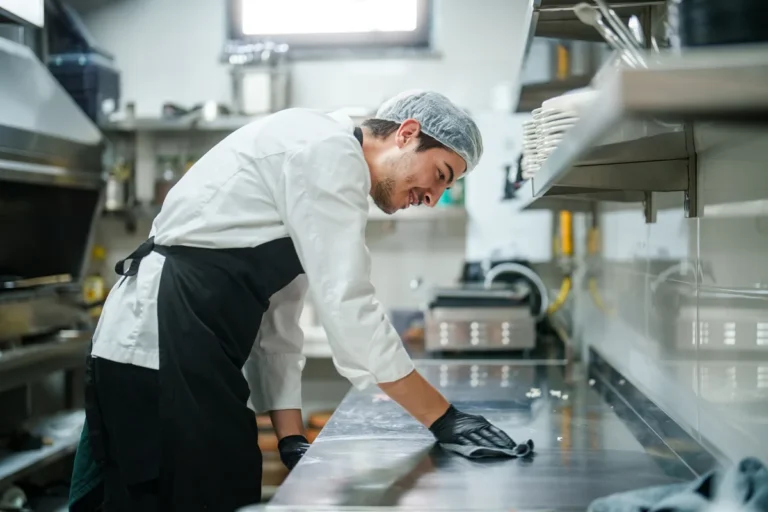
And let’s not forget about safety. Your kitchen should be designed with safety in mind. This means ensuring there’s enough space between pieces of equipment, providing non-slip flooring, and making sure there are clear paths for emergency exits. It also means following all local health and safety codes – which can vary significantly from one location to another.
Where to Buy: Choosing the Right Supplier
So you’ve figured out what equipment you need and how to arrange it. Now comes the question: where do you buy it? There are plenty of options out there, from big-box retailers to specialty suppliers. But not all suppliers are created equal.
First, consider whether you want to buy new or used equipment. New equipment comes with warranties and the latest features, but it’s also more expensive. Used equipment can save you money, but it comes with risks. You never know how well the previous owner maintained it, and there’s no guarantee it will last.
If you’re buying new, look for a supplier that offers more than just equipment sales. For example, Chef’s Deal provides comprehensive kitchen design and equipment solutions. This means they can help you not just with purchasing equipment, but also with designing your kitchen layout. They also offer professional installation services, which can save you a lot of headaches. Trying to install commercial kitchen equipment yourself is a recipe for disaster – trust me, I’ve seen it go wrong too many times.
Another thing to consider is the supplier’s expertise. Do they understand the unique needs of restaurant kitchens? Can they provide expert consultation and support? A good supplier will be able to answer your questions, provide recommendations, and help you troubleshoot problems.
Finally, think about the supplier’s reputation. Look for reviews and testimonials from other restaurant owners. Ask around in your local restaurant community. A supplier with a good reputation is more likely to provide good service and stand behind their products.
And don’t forget about financing. Commercial kitchen equipment is expensive, and not everyone has the cash to pay for it upfront. Many suppliers, including Chef’s Deal, offer competitive pricing and financing options. This can make it easier to get the equipment you need without breaking the bank.
Final Thoughts: Building Your Dream Kitchen
So there you have it – a comprehensive guide to essential cooking equipment for your restaurant. We’ve covered everything from the backbone equipment that forms your kitchen’s foundation to the specialty items that can give you a competitive edge. We’ve talked about what you absolutely need, what you might want to consider, and what you can probably skip.
But here’s the thing: there’s no one-size-fits-all solution when it comes to restaurant equipment. The right setup for your kitchen depends on your menu, your volume, your space, and your budget. What works for a high-volume burger joint won’t work for a small fine-dining restaurant. What’s essential for a bakery isn’t necessary for a sushi bar.
So where do you go from here? Start by making a list of what you absolutely need. Then, think about what would make your life easier or give you a competitive edge. Finally, consider your budget and your space constraints. And don’t be afraid to ask for help. Suppliers like Chef’s Deal have experts who can guide you through the process, from design to installation to ongoing support.
Building a restaurant kitchen is a big investment, but it’s also an exciting opportunity. The right equipment can help you create amazing food, run an efficient operation, and build a successful business. So take your time, do your research, and build the kitchen of your dreams.
And remember: the best kitchen isn’t the one with the most expensive equipment. It’s the one that helps you create great food, efficiently and consistently. Everything else is just details.
FAQ: Essential Cooking Equipment for Your Restaurant
Q: How much should I budget for restaurant kitchen equipment?
A: Budgeting for restaurant equipment can vary widely depending on your concept and size. For a small restaurant, you might spend $50,000 to $100,000 on essential equipment. Larger operations can easily spend $200,000 or more. Remember to factor in not just the cost of the equipment itself, but also installation, delivery, and any necessary modifications to your space. Many suppliers, including Chef’s Deal, offer financing options that can help spread out the cost.
Q: What’s the most important piece of equipment for a new restaurant?
A: That’s a tough question because it really depends on your menu. But if I had to pick one piece of equipment that’s essential for almost every restaurant, it would be a good commercial range with an oven. It’s versatile enough to handle a wide variety of cooking tasks, from sautéing to roasting to baking. Of course, you’ll need other equipment as well, but a range is a great place to start.
Q: Is it better to buy new or used restaurant equipment?
A: There are pros and cons to both. New equipment comes with warranties and the latest features, but it’s also more expensive. Used equipment can save you money, but it comes with risks – you never know how well the previous owner maintained it. If you do buy used, make sure to inspect the equipment thoroughly and, if possible, have it checked out by a professional. Some suppliers offer refurbished equipment, which can be a good middle ground between new and used.
Q: How do I know if a piece of equipment is right for my restaurant?
A: The best way to determine if a piece of equipment is right for your restaurant is to consider your menu, your volume, and your space. Ask yourself: Will this equipment help me prepare my menu more efficiently? Can it handle the volume I expect to serve? Does it fit in my kitchen? You should also consider the learning curve – will your staff be able to use it effectively? Finally, think about the long-term costs, including maintenance, energy usage, and potential repairs. Sometimes, a more expensive piece of equipment can save you money in the long run if it’s more efficient or durable.
@article{the-restaurant-owners-guide-to-essential-cooking-equipment-what-you-really-need-and-what-you-can-skip,
    title   = {The Restaurant Owner’s Guide to Essential Cooking Equipment: What You Really Need (And What You Can Skip)},
    author  = {Chef's icon},
    year    = {2026},
    journal = {Chef's Icon},
    url     = {https://chefsicon.com/essential-cooking-equipment-for-your-restaurant/}
}