The Best Fluffy Pancakes recipe you will fall in love with. Full of tips and tricks to help you make the best pancakes.
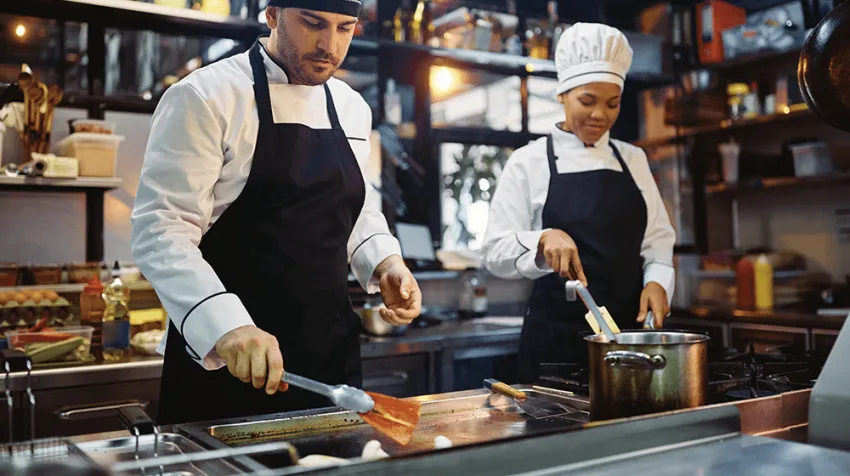
How Commercial Chefs Really Assess Cooking Skills in Hiring: What They’re *Actually* Looking For
I’ll never forget my first real kitchen interview. Not the one where I showed up in a pressed chef’s coat, reciting knife cuts from memory like some culinary robot. No, this was the *second* interview, the one where the executive chef, a grizzled New Yorker with forearms like ham hocks, slid a pile of onions across the prep table and said, “Show me.”
No warning. No script. Just me, a cutting board, and the cold sweat of realizing that every cooking skill I’d ever learned was about to be judged in real time. That moment taught me something crucial: **hiring in professional kitchens isn’t about what you *know*-it’s about what you can *do* under pressure.** And the way chefs assess those skills? It’s equal parts science, psychology, and gut instinct.
If you’re reading this, you’re probably either: a) a line cook trying to level up your career, b) a culinary student wondering if your education is actually preparing you for the real world, or c) a chef who’s realized that hiring is way harder than you thought. (Welcome to the club.) This isn’t just another listicle about “5 Skills Every Chef Needs.” This is the *unfiltered* breakdown of how commercial kitchens *actually* evaluate talent, from the subtle tells that give you away as a fraud to the quiet moments that make chefs fight to hire you.
By the end of this, you’ll know:
- Why most cooking tests are designed to fail (and how to pass them anyway)
- The three *unspoken* skills that matter more than technical perfection
- How to read a chef’s body language during an interview (and what it *really* means)
- The questions chefs ask *after* the interview to decide your fate
- Why some kitchens care more about your attitude than your knife skills (and which ones don’t)
Let’s start with the uncomfortable truth: most hiring processes in kitchens are broken. Resumes lie. Certifications can be faked. And even the most impressive culinary school pedigree doesn’t guarantee you won’t freeze when the tickets start flying. So how *do* chefs cut through the noise? They create situations where your skills, or lack thereof, can’t hide. And they’re watching *everything*.
The Hidden Psychology of Kitchen Interviews
Why Most Cooking Tests Are Set Up to Stress You Out
Here’s something they don’t teach you in culinary school: the cooking test isn’t just about your skills, it’s about how you handle stress. Think about it. A professional kitchen is one of the most high-pressure environments on the planet. Dinner service isn’t a controlled demo; it’s a war zone where tickets pile up, tickets get changed last minute, and the chef’s mood can shift faster than a line cook’s temper.
That’s why so many hiring chefs structure their tests to *simulate* that chaos. I’ve seen:
- A chef who turned up the heat in the kitchen to 90°F mid-interview to see how the candidate handled discomfort
- A sous chef who “accidentally” dropped a tray of mise en place to test reaction time
- An executive chef who gave conflicting instructions to see if the candidate would push back or just nod along
Is this fair? Maybe not. But it’s *effective*. Because here’s the thing: a cook who can execute perfectly in a calm environment might crumble when the tickets hit. And a cook who thrives under pressure? That’s the one you want when the rush hits.
So how do you prepare for a test that’s designed to stress you out? You don’t. Not really. Instead, you focus on the *one thing* you can control: your mindset. Chefs aren’t just watching *what* you do, they’re watching *how* you do it. Are you flustered? Do you freeze? Or do you adapt? That’s the real test.
The Three Unspoken Skills That Matter More Than Technical Perfection
Let’s get one thing straight: technical skills are the price of entry. If you can’t julienne an onion or sear a steak, you’re not getting past the first round. But here’s the dirty little secret of professional kitchens: *everyone* can do the basics. What separates the hires from the rejections are the skills no one talks about.
I call these the “Three Silent Killers” of kitchen interviews:
- Mise en Place Discipline: It’s not just about having your ingredients prepped, it’s about *how* you prep them. I’ve seen cooks with Michelin-star resumes get rejected because their station was a mess. Why? Because in a real kitchen, organization isn’t just efficiency, it’s safety. A cluttered station leads to cross-contamination, wasted time, and, worst of all, tickets backing up. Chefs notice *immediately* if your mise is sloppy. They’ll check if your knives are sharp (a dull knife is a red flag), if your containers are labeled, and if your trash is under control. Pro tip: If your cutting board is sliding around, you’ve already lost points.
- Adaptability Under Fire: Here’s a scenario: You’re mid-test, and the chef changes the recipe. Maybe they add a last-minute ingredient. Maybe they tell you to plate it differently. Maybe they just say, “Actually, do it this way instead.” How do you react? **The best cooks don’t just adapt, they *anticipate*. They ask clarifying questions, adjust their workflow, and keep moving. The worst? They argue. Or worse, they freeze. I’ve seen cooks with perfect knife skills get passed over because they couldn’t handle a simple pivot. Remember: Kitchens reward problem-solvers, not perfectionists.
- Communication Without Words: This one’s tricky. In a kitchen, you can’t always stop to explain yourself.** You have to communicate through action. Chefs watch for this *constantly*. Do you call out when you’re running low on an ingredient? Do you let the chef know if you’re falling behind? Do you *listen* when they’re giving instructions, or are you just waiting for your turn to talk? I once watched a cook get hired on the spot because, during a test, he noticed the chef’s station was running low on oil and *refilled it without being asked*. That’s the kind of awareness that gets you promoted.
Now, here’s the kicker: you can’t fake these skills. You either have them or you don’t. But here’s the good news: you can *develop* them. And the best way to do that? Work in a kitchen. Any kitchen. Even if it’s just a few shifts a week. Because these skills aren’t taught, they’re *caught*.
What Chefs *Actually* Watch During a Cooking Test
The First 90 Seconds: Where Most Candidates Lose the Job
You walk into the kitchen. The chef hands you a knife, a cutting board, and a pile of vegetables. What happens next? Those first 90 seconds tell chefs everything they need to know about you.
Here’s what they’re *really* watching:
- How you hold the knife: This is *basic*, but you’d be shocked how many cooks get it wrong. A chef can tell in *seconds* if you’re comfortable with a knife. Are you gripping it like a hammer? Are your fingers curled under (a safety no-no)? Or are you using a proper pinch grip? If your knife skills are weak, the chef will know before you even make your first cut.
- Your setup: Before you even touch the ingredients, are you organizing your station? Are you setting up your trash bowl? Are you checking your knife for sharpness? A cook who starts cutting without prepping their station is a cook who’s going to waste time later.
- Your breathing: This sounds weird, but it’s true. Chefs watch your body language. Are you tense? Are you breathing fast? Or are you calm and controlled? A cook who’s panicking in the first minute is a cook who’s going to crack under pressure.
I remember interviewing a cook who had worked at a two-Michelin-star restaurant. On paper, he was a dream candidate. But in the first 30 seconds, he made *three* mistakes: he didn’t check his knife for sharpness, he didn’t set up a trash bowl, and he started cutting before organizing his ingredients. The chef stopped him mid-cut and said, “You’re not getting this job.” The cook was stunned. “But my knife skills are perfect!” he protested. The chef just shook his head. **”It’s not about the cut. It’s about the *process*.”
The Mid-Test Check: Are You Falling Behind Without Realizing It?
Here’s something most candidates don’t realize: chefs don’t just watch the *end* result, they watch the *entire process*.** And the most critical moment? The *mid-test check*.
This is when the chef casually walks by your station, maybe 10-15 minutes into the test. They’re not looking at what you’ve done so far, they’re looking at *how* you’re doing it. Specifically:
- Are you pacing yourself? A cook who’s rushing will make mistakes. A cook who’s too slow will hold up the line. The best cooks find a rhythm and stick to it.
- Are you cleaning as you go? This is *huge*. A cook who leaves a mess behind is a cook who’s going to create more work for everyone else. Chefs notice if your station is cluttered or if you’re constantly stopping to wipe down.
- Are you multitasking effectively? If the test involves multiple components (e.g., a protein, a starch, and a vegetable), are you working on them in parallel? Or are you doing one thing at a time? Kitchens reward efficiency, not linear thinking.
I’ve seen cooks with *flawless* final dishes get rejected because they were disorganized mid-test. Why? Because in a real kitchen, no one cares about the perfect dish if you’re holding up the line. Chefs want cooks who can work *fast* without sacrificing quality. And the mid-test check is where they separate the wheat from the chaff.
The Final Plate: Why Presentation Matters More Than You Think
You’ve prepped your ingredients. You’ve cooked your dish. Now it’s time to plate. This is where a lot of candidates think the test is over, but **the final plate is where chefs make their *real* judgments.
Here’s what they’re looking for:
- Cleanliness: Are there smudges on the plate? Are there drips on the rim? A messy plate is a sign of a messy cook.** Chefs notice *immediately*.
- Portion control: Is the protein the right size? Is the sauce too heavy? Consistency is key in a professional kitchen. A cook who can’t plate consistently is a cook who’s going to waste food (and money).
- Attention to detail: Are the garnishes placed intentionally? Is the sauce applied with precision? The best cooks treat plating like art. The worst? They just throw it on the plate and call it a day.
But here’s the thing: chefs don’t expect perfection. They expect *effort*. I’ve seen cooks with *average* technical skills get hired because their plating showed *care*. And I’ve seen cooks with *amazing* dishes get rejected because their plating was sloppy. Why? Because plating is a reflection of your mindset. A cook who plates carefully is a cook who *cares*. And in a kitchen, that’s everything.
The Questions Chefs Ask *After* the Cooking Test
“What Would You Do Differently?” (And Why Your Answer Matters)
This is the question that *terrifies* most candidates. Because let’s be honest: no dish is perfect. There’s always something you could’ve done better. And that’s exactly why chefs ask this question.
They’re not looking for a list of flaws. They’re looking for *three* things:
- Self-awareness: Do you *know* what went wrong? Or are you just guessing? A cook who can identify their mistakes is a cook who can *learn* from them.
- Problem-solving: Do you have a *solution* for what went wrong? Or are you just pointing out problems? Chefs want cooks who can *fix* things, not just complain about them.
- Humility: Can you admit when you messed up? Or do you make excuses? A cook who can’t take criticism is a cook who’s going to be a problem.
Here’s the thing: there’s no “right” answer to this question. But there are *wrong* answers. For example:
- Wrong: “I wouldn’t change anything. It was perfect.” (This screams arrogance.)
- Wrong: “I don’t know. It looked fine to me.” (This screams lack of self-awareness.)
- Right: “I think I could’ve plated the sauce more evenly. Next time, I’d use a squeeze bottle for better control.” (This shows self-awareness *and* problem-solving.)
I’ve seen cooks with *mediocre* dishes get hired because their answer to this question was *perfect*. And I’ve seen cooks with *amazing* dishes get rejected because they couldn’t admit a single flaw. This question is the ultimate test of character.
“How Would You Handle This Scenario?” (The Kitchen Stress Test)
This is where chefs separate the *cooks* from the *professionals*. They’ll throw a hypothetical scenario at you, something like:
- “The ticket printer goes down during a rush. What do you do?”
- “A server brings back a dish because the customer says it’s overcooked. How do you handle it?”
- “You’re running low on a key ingredient mid-service. What’s your move?”
These questions aren’t about the *specific* answer. They’re about *how* you think. Chefs are looking for:
- Calm under pressure: Do you panic? Or do you stay focused?
- Teamwork: Do you involve others? Or do you try to handle it alone?
- Problem-solving: Do you have a *plan*? Or are you just winging it?
Here’s the thing: there’s no “right” way to handle these scenarios. But there are *wrong* ways. For example:
- Wrong: “I’d tell the customer they’re wrong and send the dish back out.” (This screams ego.)
- Wrong: “I’d just remake the dish and hope no one notices.” (This screams lack of accountability.)
- Right: “I’d check the dish first to see if it’s actually overcooked. If it is, I’d remake it and let the chef know so we can adjust the ticket times.” (This shows accountability *and* teamwork.)
I’ve seen cooks with *years* of experience fail these questions because they couldn’t think on their feet. And I’ve seen *brand-new* cooks get hired because their answers showed *maturity* and *adaptability*. **This is the question that reveals who you *really* are in the kitchen.
The Red Flags That Get You Rejected (Even If Your Food Is Perfect)
Attitude Over Aptitude: The Silent Killer
Here’s a hard truth: a bad attitude will get you fired faster than bad knife skills.** And chefs *know* this. That’s why they’re *constantly* watching for red flags, even during the interview.
Here are the *biggest* attitude red flags:
- Complaining: About the ingredients, the equipment, the test itself. A cook who complains is a cook who’s going to be a problem.
- Arguing: With the chef, with the instructions, with the process. A cook who can’t take direction is a cook who’s going to clash with the team.
- Defensiveness: When the chef gives feedback, do you get defensive? Or do you listen? A cook who can’t take criticism is a cook who can’t grow.
- Lack of enthusiasm: Do you *care* about the food? Or are you just going through the motions? A cook who’s not passionate is a cook who’s going to burn out.
I’ve seen cooks with *flawless* technical skills get rejected because they rolled their eyes when the chef gave them feedback. And I’ve seen cooks with *average* skills get hired because they *listened*, they *adapted*, and they *cared*. **Attitude isn’t everything, but it’s *close*.**
The Small Mistakes That Scream “Inexperienced”
You might think chefs only care about the *big* stuff, like whether your sauce is properly emulsified or your steak is cooked to the right temperature. But here’s the thing: **chefs notice the *small* stuff just as much.** Because the small stuff? That’s what separates the *pros* from the *amateurs*.
Here are the *tiny* mistakes that get you rejected:
- Not tasting as you go: A cook who doesn’t taste their food is a cook who doesn’t care about flavor. Chefs *hate* this. If you’re not tasting, you’re not adjusting. And if you’re not adjusting, you’re not *cooking*-you’re just following instructions.
- Leaving tools dirty: A knife left in the sink. A cutting board not wiped down. A messy station is a sign of a messy cook. And messy cooks create more work for everyone else.
- Not communicating: If you’re running low on an ingredient, do you let the chef know? Or do you just hope no one notices? A cook who doesn’t communicate is a cook who’s going to cause problems.
- Ignoring safety: Not washing your hands. Not using a towel to grab hot pans. A cook who ignores safety is a cook who’s going to get someone hurt.
These might seem like *small* things. But in a kitchen, **the small stuff *is* the big stuff.** Because the small stuff? That’s what keeps the kitchen running. And if you can’t handle the small stuff, you’re not ready for the big stuff.
How to *Actually* Impress a Chef During a Cooking Test
The One Thing That Matters More Than Your Skills
Let’s cut to the chase: **the *one* thing that matters more than your cooking skills is *how you make the chef feel*.**
I know, I know. That sounds like some corporate BS. But hear me out. A chef isn’t just hiring a set of hands, they’re hiring a *person*. And that person? They’re going to be in their kitchen *every day*. They’re going to affect the *mood* of the kitchen. They’re going to impact the *team*.
So how do you make a chef *feel* good about hiring you? You show them:
- You’re easy to work with: You listen. You adapt. You don’t argue. You don’t complain. You make their life easier, not harder.
- You’re reliable: You show up on time. You follow instructions. You don’t cut corners. You’re someone they can count on.
- You’re passionate: You *care* about the food. You *care* about the team. You *care* about the craft. You’re not just there for a paycheck.
I’ve seen cooks with *average* skills get hired because they *connected* with the chef. And I’ve seen cooks with *amazing* skills get rejected because they *didn’t*. **Skills can be taught. Attitude? That’s *everything*.
The Secret Weapon: Kitchen Awareness
Here’s something most candidates don’t realize: chefs aren’t just watching *you*-they’re watching how you *interact* with the kitchen.**
This is what I call *kitchen awareness*. It’s the ability to *see* the kitchen as a *system*-not just a place to cook. And it’s *rare*.
Here’s how to show it:
- Notice the little things: Is the chef’s station running low on oil? Is the trash can overflowing? **A cook who notices the little things is a cook who *cares*.
- Offer to help: If you finish your test early, don’t just stand there. Ask if there’s anything else you can do. A cook who offers to help is a cook who’s *team-oriented*.
- Clean as you go: Don’t leave a mess for someone else to clean up. A cook who cleans as they go is a cook who *respects* the team.**
I’ve seen cooks get hired *on the spot* because they showed *kitchen awareness*. And I’ve seen cooks with *perfect* dishes get rejected because they *didn’t*. **This is the *secret* skill that separates the hires from the rejections.
Final Thoughts: The Uncomfortable Truth About Kitchen Hiring
Here’s the thing about hiring in professional kitchens: it’s not fair.**
It’s not fair that a cook with *amazing* skills can get rejected because of a *bad attitude*. It’s not fair that a cook with *average* skills can get hired because they *connected* with the chef. It’s not fair that the *best* candidate on paper might not be the *best* candidate for the *kitchen*.
But here’s the *other* thing about hiring in professional kitchens: **it’s not *supposed* to be fair.** Because a kitchen isn’t a *test*-it’s a *team*. And a team isn’t just about *skills*. It’s about *fit*. It’s about *trust*. It’s about *chemistry*.
So if you’re a cook trying to get hired, here’s my advice:
- Focus on the *process*, not the *perfection*. Chefs don’t care if your dish is *perfect*. They care if *you* are.
- Show *kitchen awareness*. Notice the little things. Offer to help. Clean as you go. **Be the cook who makes the kitchen *better*.**
- Be *easy* to work with. Listen. Adapt. Don’t argue. Don’t complain. Make the chef’s life easier, not harder.
And if you’re a chef trying to *hire*? Here’s my advice:
- Don’t just test *skills*-test *character*. A cook with *amazing* skills but a *bad* attitude is a *liability*.
- Watch for *kitchen awareness*. The cooks who notice the little things? Those are the ones who *care*.
- Hire for *fit*, not just *skills*. A kitchen isn’t a *test*-it’s a *team*. And a team is only as strong as its *weakest link*.
At the end of the day, **hiring in a kitchen isn’t about finding the *best* cook, it’s about finding the *right* cook.** And the *right* cook? That’s the one who makes the kitchen *better*.
FAQ
Q: What’s the *one* skill that chefs care about the most during a cooking test?
A: It’s not a *single* skill, it’s *adaptability*. Chefs want cooks who can handle stress, pivot when things go wrong, and keep moving forward. Technical skills are the *price of entry*, but adaptability? That’s what gets you *hired*.
Q: How important is plating in a cooking test?
A: Plating is *hugely* important, but not for the reasons you think. Chefs don’t care if your plate looks *perfect*. They care if it shows *effort* and *attention to detail*. A messy plate is a sign of a messy cook. And messy cooks? They don’t last long in professional kitchens.
Q: What’s the *biggest* mistake candidates make during a cooking test?
A: The *biggest* mistake is *not tasting as you go*. A cook who doesn’t taste their food is a cook who doesn’t care about flavor. And if you don’t care about flavor? You’re not *cooking*-you’re just following instructions. Chefs *hate* that.
Q: How do I stand out in a cooking test if my skills aren’t the best?
A: Focus on *kitchen awareness*. Notice the little things. Offer to help. Clean as you go. Show the chef that you’re *easy* to work with, *reliable*, and *passionate*. **Skills can be taught. Attitude? That’s *everything*.**
@article{how-commercial-chefs-really-assess-cooking-skills-in-hiring-the-unwritten-rules-of-the-kitchen,
    title   = {How Commercial Chefs Really Assess Cooking Skills in Hiring: The Unwritten Rules of the Kitchen},
    author  = {Chef's icon},
    year    = {2026},
    journal = {Chef's Icon},
    url     = {https://chefsicon.com/how-commercial-chefs-assess-cooking-skills-in-hiring/}
}