The Best Fluffy Pancakes recipe you will fall in love with. Full of tips and tricks to help you make the best pancakes.
Teaching Kids Kitchen Safety with Commercial-Grade Tools: Why It’s Worth the Risk (and How to Do It Right)
Let me set the scene: It’s a Tuesday evening, and my rescue cat Luna is perched on the counter, yes, I know, bad cat, watching as my niece, Emma, grips a chef’s knife like it’s a lightsaber. She’s 10, determined, and convinced she’s ready to julienne carrots like a pro. I’m sweating. Not because I don’t trust her, but because I’ve seen what happens when a kid’s enthusiasm outpaces their caution. And yet, here we are, standing in my Nashville kitchen, surrounded by the hum of a commercial-grade stand mixer and the sharp edges of tools that could double as props in a horror movie.
I’ve spent years writing about food culture, dissecting trends, and interviewing chefs who treat their kitchens like laboratories. But nothing prepared me for the moment I realized: teaching kids to use commercial-grade tools isn’t just about cooking, it’s about building confidence, respect, and a skill set that lasts a lifetime. Is it risky? Absolutely. Is it worth it? That’s what this article is here to explore. Because if there’s one thing I’ve learned, it’s that the kitchen is where curiosity meets responsibility. And if we’re going to hand our kids a future where they can feed themselves (and maybe even impress their friends), we’ve got to start somewhere.
By the end of this, you’ll have a roadmap for introducing commercial-grade tools to kids of all ages, from the basics of knife safety to the unspoken rules of handling a convection oven. We’ll cover the psychology behind why kids *should* learn these skills, the on-negotiable safety protocols, and the practical steps to turn fear into fun. And yes, I’ll admit it: I’m still figuring this out too. So let’s dive in.
The Case for Commercial-Grade Tools: Why Bother?
1. The Confidence Boost You Can’t Fake
I remember the first time I let Emma use a commercial-grade food processor. She’d spent years watching cooking shows, mimicking the chefs with a plastic knife and a cutting board that wobbled like a drunk flamingo. But when she finally pressed the pulse button on that beast of a machine and watched it transform whole carrots into perfect coins, her face lit up like she’d just discovered fire. There’s something about handling real tools, tools that chefs and restaurants use, that makes kids feel like they’re part of something bigger. It’s not just about the food; it’s about the ritual of creation.
But here’s the thing: confidence isn’t just about feeling good. It’s about competence. When kids learn to use commercial-grade tools safely, they’re not just learning to cook; they’re learning to problem-solve, to adapt, and to trust their instincts. And let’s be honest, those are skills that’ll serve them long after they’ve outgrown their Easy-Bake Oven. Is this the best approach? Let’s consider: Would you rather your kid learn to navigate a sharp knife in a controlled environment, or figure it out on their own when they’re 18 and living off ramen and regret?
2. The Reality of “Kid-Friendly” Tools
Walk into any big-box store, and you’ll find aisles dedicated to “kid-safe” kitchen tools. Plastic knives, dull scissors, and cutting boards that look like they were designed by a committee of toddlers. Don’t get me wrong, these tools have their place. But here’s the problem: they don’t teach kids how to handle real tools. They teach them that the real world is something to be afraid of.
I’m not saying we should hand a 5-year-old a mandoline slicer and walk away. But I *am* saying that there’s a middle ground. Commercial-grade tools are designed for efficiency, durability, and precision. When kids learn to use them under supervision, they’re learning the language of the kitchen. They’re learning that a knife isn’t just a sharp object, it’s a tool with a purpose, a rhythm, and a set of rules. And those rules? They’re the same whether you’re in a home kitchen or a Michelin-starred restaurant.
Maybe I should clarify: I’m not advocating for recklessness. But I *am* advocating for realism. Kids are smarter and more capable than we give them credit for. The question is, are we willing to meet them where they are?
3. The Long Game: Skills That Last a Lifetime
Let’s talk about the elephant in the room: most kids won’t become professional chefs. But that doesn’t mean they won’t benefit from learning to cook with commercial-grade tools. Think about it. How many adults do you know who can barely boil water? Who rely on takeout because the idea of chopping an onion sends them into a spiral of anxiety? Now, imagine if those same adults had grown up with the confidence to handle a chef’s knife, a stand mixer, or a commercial blender. Imagine if they’d learned that cooking isn’t just about following a recipe, it’s about understanding how ingredients work together, how heat transforms them, and how to troubleshoot when things go wrong.
I’m torn between two schools of thought here. On one hand, there’s the argument that kids should be kids, that they shouldn’t be burdened with the responsibilities of adulthood before they’re ready. On the other hand, there’s the reality that cooking is a life skill, not a hobby. And like any skill, it’s best learned young. So where’s the balance? Maybe it’s not about age, but about readiness. Maybe it’s about recognizing that every kid is different, and that the best way to teach them is to meet them where they are.
Safety First: The Non-Negotiables
4. The Golden Rules of Kitchen Safety (That Apply to Everyone)
Before we even think about handing a kid a commercial-grade tool, we’ve got to lay down some ground rules. These aren’t just for kids, they’re for *everyone* in the kitchen. Because let’s be real: adults are just as guilty of skipping safety steps as kids are. So here they are, the non-negotiables:
- Respect the tool, not the fear of it. A knife isn’t scary, it’s a tool with a job to do. Teach kids to respect it, not fear it.
- Always supervise. This isn’t a suggestion. If a kid is using a commercial-grade tool, an adult needs to be within arm’s reach. No exceptions.
- One task at a time. Multitasking is for computers, not for kids with sharp objects. Focus on the task at hand, and nothing else.
- Clean as you go. A cluttered kitchen is a dangerous kitchen. Teach kids to wipe spills, put tools away, and keep their workspace tidy.
- No distractions. That means no phones, no tablets, and no trying to impress their friends while holding a mandoline.
I’ll admit, I’ve broken some of these rules myself. Like the time I tried to answer an email while Emma was using the food processor. (Spoiler: It didn’t end well. The carrots won.) But here’s the thing: rules exist for a reason. And when it comes to kitchen safety, there’s no room for compromise.
5. Age-Appropriate Tools: Where to Start
Not all commercial-grade tools are created equal, and not all kids are ready for the same tools at the same age. So how do you know where to start? Let’s break it down by age group, keeping in mind that every kid is different. These are guidelines, not hard-and-fast rules.
Ages 5-7: The Basics
At this age, kids are still developing their fine motor skills, so we’re talking about low-risk, high-reward tools. Think:
- Bench scrapers: Great for moving chopped veggies or dough without touching them.
- Small whisks: Perfect for mixing batters or sauces in a bowl.
- Plastic or nylon knives: Yes, I know I said kid-friendly tools aren’t ideal, but these are a good stepping stone for learning knife skills without the risk.
- Microplane: Surprisingly safe for grating soft ingredients like cheese or chocolate, as long as they’re supervised.
Ages 8-10: Stepping It Up
This is where things get interesting. Kids in this age group can handle more responsibility, but they’re still prone to distraction. Tools to consider:
- Chef’s knife (with supervision): Start with soft ingredients like bananas or cooked potatoes. Teach them the claw grip and how to keep their fingers safe.
- Stand mixer: Great for kneading dough or mixing batters, but make sure they know to turn it off before scraping the sides.
- Immersion blender: Less risky than a countertop blender, but still requires supervision.
- Peeler: A great way to teach knife-like skills without the same level of risk.
Ages 11-13: The Intermediate Level
By now, kids should have a solid foundation in kitchen safety. This is where you can start introducing more advanced tools, like:
- Mandoline slicer: Dangerous if misused, but invaluable for teaching precision. Start with the safety guard and soft ingredients.
- Food processor: Teach them to use the pulse function and to never put their hands near the blade while it’s running.
- Convection oven: More efficient than a regular oven, but also hotter. Teach them how to set timers and check on food safely.
- Cast iron skillet: Heavy and hot, but a great way to teach heat management.
Ages 14+: The Advanced Kitchen
At this point, kids who’ve been cooking for a while should be ready for almost any tool in the kitchen. But that doesn’t mean they’re invincible. Tools to master:
- Blowtorch: Yes, really. Great for caramelizing sugar or melting cheese, but requires strict supervision.
- Deep fryer: Hot oil is no joke. Teach them to use a thermometer and never leave it unattended.
- Commercial-grade blender: More powerful than a regular blender, so they need to know how to use it safely.
- Knife sharpening tools: A dull knife is more dangerous than a sharp one. Teach them how to maintain their tools.
I’m still not sure if I’d let a 14-year-old use a blowtorch without hovering like a helicopter parent. But that’s the thing about teaching kids, you’ve got to trust them at some point. The key is to build that trust gradually.
6. The Psychology of Safety: Why Kids (and Adults) Ignore the Rules
Let’s talk about why safety rules get ignored. Because let’s be honest: we’ve all been there. We know we should use a cutting board, but the counter is right there. We know we should turn off the stove when we leave the kitchen, but we’re just stepping away for a second. So why do we do it? And more importantly, how do we teach kids to respect the rules when they see us breaking them?
Here’s the thing: safety rules aren’t just about avoiding injury, they’re about creating habits. And habits are formed through repetition, consistency, and reinforcement. So how do we make safety second nature?
- Lead by example. If you’re not following the rules, why should they? Kids are observant. They notice when we take shortcuts.
- Make it a game. Turn safety into a challenge. Who can remember to turn off the mixer first? Who can chop the most veggies without cutting themselves?
- Explain the “why.” Kids are more likely to follow rules if they understand the reasoning behind them. “We use a cutting board because it protects the knife *and* the counter.”
- Praise the process, not the outcome. Instead of saying, “Great job!” say, “I noticed you kept your fingers safe while chopping. That’s exactly how it’s done!”
I’m torn between wanting to protect kids and wanting to prepare them for the real world. Because the truth is, they *will* take shortcuts. They *will* forget the rules sometimes. The goal isn’t to create perfect little robots, it’s to give them the tools to make smart decisions, even when we’re not around.
Hands-On Learning: How to Teach Kids to Use Commercial-Grade Tools
7. Knife Skills: The Foundation of Cooking
If there’s one tool that scares parents the most, it’s the knife. And for good reason, knives are sharp, they’re everywhere, and they’re responsible for more kitchen injuries than any other tool. But here’s the thing: a knife is only as dangerous as the person holding it. Teach a kid to use a knife properly, and you’ve given them a skill that will serve them for life.
So where do you start? With the basics:
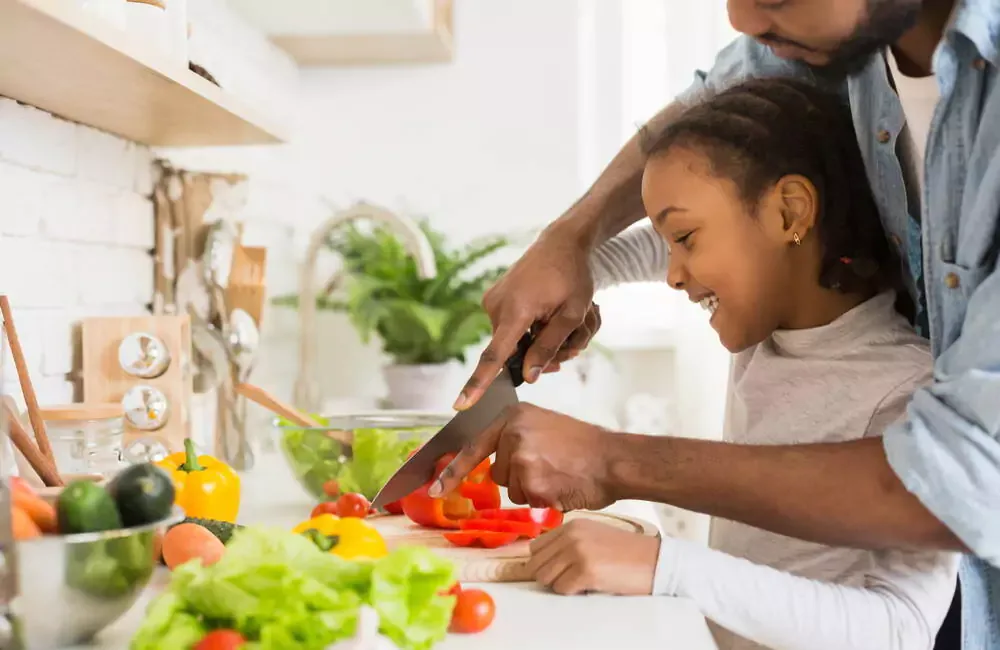
- The Grip: Teach them the claw grip for their non-dominant hand (fingers curled under, knuckles acting as a guide) and the pinch grip for the knife (thumb and index finger pinching the blade just above the handle).
- The Stance: Feet shoulder-width apart, weight balanced, and body positioned so they’re not leaning over the cutting board.
- The Motion: Up and down, like a seesaw. No sawing, no hacking. The knife should do the work.
- The Ingredients: Start with soft, easy-to-cut foods like bananas, cooked potatoes, or avocados. Save the carrots and onions for later.
I’ll never forget the first time Emma chopped an onion without crying. Not because she didn’t cry (she did), but because she did it *without cutting herself*. That’s the moment I realized: knife skills aren’t just about cooking, they’re about confidence. And confidence? That’s something you can’t fake.
8. Heat Management: The Art of Not Burning Down the Kitchen
Heat is the other big fear when it comes to teaching kids to cook. And again, for good reason. Burns hurt, fires are scary, and the idea of a kid near an open flame is enough to make any parent’s heart race. But here’s the thing: heat is a tool, just like a knife. And like any tool, it can be used safely, or dangerously.
So how do you teach kids to manage heat? Start with the basics:
- Always use oven mitts. No exceptions. Even if the pan “doesn’t feel that hot.”
- Turn handles inward. This prevents accidental bumps and spills.
- Use the back burners. They’re harder to reach, which means less risk of accidental spills.
- Teach them to respect the flame. If they’re using a gas stove, show them how to light it safely and how to adjust the flame.
- Set timers. A watched pot never boils, but an unwatched pot? That’s how you end up with a smoke alarm symphony.
I’m still not entirely comfortable with Emma using the stove without supervision. But I *am* comfortable with her understanding how heat works, how it transforms food, how to control it, and how to troubleshoot when things go wrong. Because at the end of the day, cooking is about problem-solving. And the more tools kids have in their arsenal, the better equipped they’ll be to handle whatever comes their way.
9. The Unspoken Rules: Kitchen Etiquette and Teamwork
Cooking isn’t just about the tools, it’s about the environment. And in a kitchen, that environment is all about teamwork, communication, and respect. So how do you teach kids the unspoken rules of the kitchen? Here’s what I’ve learned:
- Clean as you go. A cluttered kitchen is a dangerous kitchen. Teach kids to wipe spills, put tools away, and keep their workspace tidy.
- Communicate. If you’re moving behind someone, say “Behind you.” If you’re passing a knife, hand it handle-first. These aren’t just rules, they’re habits that keep everyone safe.
- Respect the ingredients. Food waste is a real issue, and kids need to understand that ingredients aren’t just “stuff”-they’re resources. Teach them to use what they have, to repurpose leftovers, and to appreciate the effort that goes into growing and preparing food.
- Taste as you go. Cooking is a sensory experience. Teach kids to taste their food, to adjust seasoning, and to trust their palates.
I’ll admit, I’m still working on this one myself. Luna, my rescue cat, has a habit of “helping” by knocking things off the counter. (She’s not helping.) But the point is, kitchen etiquette isn’t just about rules, it’s about creating a culture of respect. And that starts with us.
10. Troubleshooting: What to Do When Things Go Wrong
Let’s be real: things *will* go wrong. A knife will slip. A pan will overflow. A smoke alarm will go off. And when it does, the way we react will shape how our kids view cooking, for better or for worse. So how do we handle the inevitable mishaps?
First, stay calm. Kids take their cues from us. If we panic, they’ll panic. If we stay calm, they’ll learn that mistakes are part of the process.
Second, assess the situation. Is it a minor issue, like a spilled ingredient? Or is it something more serious, like a burn or a cut? Teach kids to pause, take a breath, and evaluate before reacting.
Third, fix it together. If a pan boils over, show them how to turn down the heat and clean up the mess. If a knife slips, show them how to wash the cut and apply a bandage. The goal isn’t to avoid mistakes, it’s to learn from them.
And finally, laugh it off. Cooking is messy, chaotic, and sometimes downright ridiculous. If we can’t laugh at ourselves, we’re missing the point. So go ahead, let the smoke alarm blare. Let the flour fly. Because at the end of the day, those are the moments kids remember. And who knows? Maybe one day, they’ll look back and laugh too.
The Big Picture: Why This Matters More Than You Think
I’ll be honest: teaching kids to use commercial-grade tools is exhausting. It’s messy, it’s time-consuming, and it’s not without its risks. But here’s the thing: it’s also one of the most rewarding things you can do as a parent, a mentor, or a friend. Because when you hand a kid a knife, a mixer, or a blowtorch, you’re not just teaching them to cook. You’re teaching them to think critically, to solve problems, and to trust themselves.
And maybe that’s the real value of all this. Not the meals they’ll cook, or the skills they’ll master, but the confidence they’ll carry with them long after they’ve left your kitchen. Because at the end of the day, that’s what we’re really teaching them: how to navigate the world, one tool at a time.
So here’s my challenge to you: start small. Pick one tool, one skill, one moment to introduce your kid to the world of commercial-grade cooking. And then, when they’re ready, let them take the lead. Because the kitchen isn’t just a place to make food, it’s a place to make memories. And those? Those are the things that last.
FAQ: Teaching Kids Kitchen Safety with Commercial-Grade Tools
Q: At what age can kids start using commercial-grade tools?
A: There’s no one-size-fits-all answer, but most kids can start with low-risk tools like bench scrapers or whisks as early as 5 or 6. By age 8-10, many kids are ready for supervised knife work and stand mixers. The key is to assess each child’s maturity, coordination, and willingness to follow rules. Always start with supervision and gradually increase responsibility as they prove they can handle it.
Q: What’s the safest commercial-grade knife for kids to start with?
A: A small chef’s knife (6-8 inches) with a comfortable handle is a great starting point. Look for one with a bolster (the thick part between the blade and the handle) for better control. Avoid serrated knives, as they can be harder to control. Start with soft ingredients like bananas or cooked potatoes, and always supervise closely. Teach them the claw grip and how to keep their fingers safe.
Q: How do I teach my kid to use a mandoline slicer safely?
A: A mandoline is one of the most dangerous tools in the kitchen, but it’s also incredibly useful. Start by using the safety guard and demonstrating how to hold it properly. Teach your kid to always keep their fingers curled under and to use a pusher tool for small ingredients. Start with soft foods like cucumbers or zucchini, and never let them use the mandoline without supervision. Emphasize that speed is not the goal, control is.
Q: What’s the best way to handle it if my kid gets scared or frustrated while learning?
A: First, validate their feelings. Cooking can be intimidating, and it’s okay to feel scared or frustrated. Then, break the task down into smaller, more manageable steps. If they’re struggling with a knife, start with a plastic knife and soft ingredients. If they’re frustrated with a mixer, let them practice with a whisk first. The key is to build confidence gradually. And remember: it’s okay to take a break. Cooking should be fun, not stressful.
@article{teaching-kids-kitchen-safety-with-commercial-grade-tools-a-parents-guide-to-confident-cooking,
    title   = {Teaching Kids Kitchen Safety with Commercial-Grade Tools: A Parent’s Guide to Confident Cooking},
    author  = {Chef's icon},
    year    = {2026},
    journal = {Chef's Icon},
    url     = {https://chefsicon.com/teaching-kids-kitchen-safety-commercial-grade-tools/}
}