The Best Fluffy Pancakes recipe you will fall in love with. Full of tips and tricks to help you make the best pancakes.
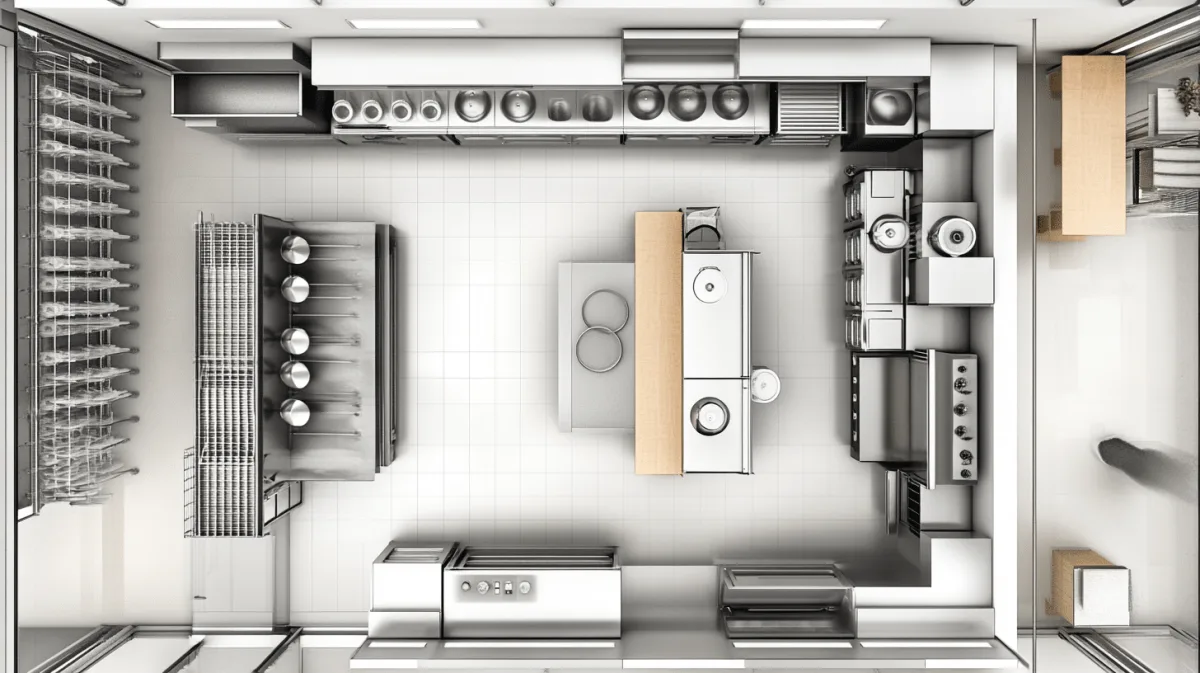
Let me tell you about the first time I walked into a cramped little café in East Nashville, the kind of place where the espresso machine hisses like it’s plotting a coup and the line for avocado toast stretches out the door. The owner, a friend of a friend, had just sunk every last dime into this dream, only to realize, three months in, that the kitchen was a disaster. Not in the “oops, spilled the soup” kind of way, but in the “we’re losing money every time someone turns around” kind of way. The prep station was wedged between the walk-in and the dish pit, the fryer was so close to the pass that tickets were getting grease stains, and the poor soul on the grill had to do a full-body twist just to grab a spatula. It was, in a word, inefficient. And in a small commercial kitchen, inefficiency isn’t just annoying, it’s expensive.
I’ve seen this story play out more times than I can count. Maybe you’re nodding along right now because you’ve lived it. Or maybe you’re in the planning stages, staring at a blank floor plan and wondering where the hell to even start. Here’s the thing: small commercial kitchen layouts aren’t just about squeezing in equipment. They’re about flow, safety, and, most importantly, keeping your sanity (and your staff’s) intact. Get it wrong, and you’re not just dealing with a cramped workspace. You’re dealing with slower service, higher labor costs, safety hazards, and a menu that’s limited by what your space can actually handle. Get it right, and suddenly that tiny kitchen feels like a well-oiled machine, even when the dinner rush hits like a tidal wave.
So, what are the biggest small commercial kitchen layout mistakes you should avoid? And more importantly, how do you fix them, or better yet, prevent them from happening in the first place? That’s what we’re diving into today. I’ll walk you through the most common pitfalls I’ve seen (and, let’s be honest, made myself early in my career), why they’re such a problem, and what you can do instead. By the end, you’ll have a clear roadmap for designing a kitchen that works with you, not against you. Sound good? Let’s get into it.
The Myth of “We’ll Make It Work” (Spoiler: You Won’t)
I get it. You’ve found the perfect location, great foot traffic, reasonable rent, that charming exposed brick wall, and suddenly, the kitchen feels like an afterthought. It’s small, sure, but you’re convinced you can make it work. After all, you’ve seen those tiny food trucks churning out gourmet meals, right? How hard can it be?
Here’s the hard truth: “making it work” is a recipe for burnout. It’s the kind of thinking that leads to a kitchen where the line cook has to step over a mop bucket to reach the reach-in, or where the only way to get from the prep station to the stove is to do a little shuffle dance. And while that might sound funny in theory, in practice, it’s a nightmare. Every extra step, every awkward reach, every time someone has to stop what they’re doing to let someone else pass, it all adds up. Over the course of a shift, those seconds turn into minutes, and those minutes turn into hours of lost productivity. Multiply that by your hourly labor cost, and suddenly, “making it work” is costing you thousands of dollars a year.
But it’s not just about money. It’s about morale. I’ve worked in kitchens where the layout was so poorly designed that the staff would groan every time a big order came in. The energy would drop, mistakes would happen, and by the end of the night, everyone was exhausted, not just from the work, but from the constant frustration of fighting against the space. A well-designed kitchen, on the other hand, feels almost invisible. Things just… flow. There’s a rhythm to it, a logic that makes sense. And when that happens, your team can focus on what really matters: making great food.
So, how do you avoid the “we’ll make it work” trap? It starts with honest assessment. Before you even think about equipment or layout, ask yourself these questions:
- What’s my menu? (And be specific. A burger joint has different needs than a sushi bar.)
- How many covers do I expect to do in a peak hour? (This will determine your throughput needs.)
- Who’s on my team? (A solo chef has different needs than a staff of five.)
- What’s my budget? (Because let’s be real, you can’t afford to fix mistakes later.)
Once you’ve answered those, you can start thinking about layout. But here’s the thing: don’t fall in love with your first idea. Sketch it out, walk through it, imagine yourself working in it. Better yet, grab a few friends and have them act out a rush. If it feels clunky, it is. And if it feels clunky now, just wait until you’re three hours into a Saturday night with a line out the door.
Ignoring the Golden Triangle (And Why It’s Still Relevant)
Okay, let’s talk about the kitchen work triangle. You’ve probably heard of it, it’s one of those concepts that gets thrown around in design circles like it’s gospel. The idea is simple: in any kitchen, the three main work areas (the sink, the stove, and the refrigerator) should form a triangle, with each side between 4 and 9 feet long. The goal? To minimize the distance you have to travel between these key stations, making your workflow as efficient as possible.
Now, I know what you’re thinking: “Sammy, that’s great for a home kitchen, but this is a commercial space. We’ve got multiple stations, a dish pit, a prep area, how does that even apply?” Fair point. The work triangle isn’t a one-size-fits-all solution, especially in a small commercial kitchen where space is at a premium. But here’s the thing: the principle behind it is still gold. The idea of minimizing movement between key tasks? That’s universal. And in a small kitchen, where every step counts, it’s even more important.
So, how do you adapt the work triangle for a commercial space? Start by identifying your three most critical tasks. For most kitchens, that’s still going to be cooking, prepping, and cleaning. But depending on your menu, it might look different. A bakery, for example, might prioritize the mixer, the oven, and the proofing area. A coffee shop might focus on the espresso machine, the grinder, and the fridge for milk. Once you’ve identified those three points, arrange them in a way that minimizes the distance between them. Ideally, you want to be able to move between them without crossing paths with other staff or having to navigate around equipment.
Here’s where things get tricky. In a small kitchen, you’re often dealing with competing priorities. You might need the stove close to the pass, but that puts it too far from the prep station. Or maybe the fridge needs to be near the prep area, but that blocks the flow to the dish pit. It’s a puzzle, and there’s no perfect solution. But here’s a pro tip: prioritize the most frequent tasks. If you’re constantly grabbing ingredients from the fridge to prep, then moving to the stove to cook, make sure those three points are as close together as possible. The dish pit can be a little farther away, you’re not using it as often, so a few extra steps won’t kill you.
And speaking of the dish pit, let’s talk about one of the biggest mistakes I see: treating it like an afterthought. In a small kitchen, the dish area is often shoved into whatever corner is left over. But here’s the thing: dishes are a constant. If your dish pit is in a hard-to-reach spot, you’re adding unnecessary steps to an already tedious task. Worse, if it’s too close to the cooking line, you’re risking cross-contamination. So, give the dish area the space it deserves. It doesn’t need to be huge, but it should be easily accessible and out of the way of the main workflow.
The Perils of Overcrowding (Or: Why More Equipment Isn’t Always Better)
Picture this: You’re standing in your brand-new kitchen, staring at the floor plan, and you realize you’ve got about 20 square feet of unused space. Your first instinct? Fill it. After all, more equipment means more capacity, right? Wrong. In a small commercial kitchen, overcrowding is the enemy of efficiency. Every extra piece of equipment is another obstacle your staff has to navigate, another surface that needs to be cleaned, another potential bottleneck in your workflow.
I learned this the hard way when I consulted for a little bistro in Germantown. The owner was convinced he needed a combi oven, a salamander, and a stand mixer, even though his menu was mostly simple, rustic dishes. He crammed all three into a corner that was already tight, and within a week, the staff was complaining. The combi oven was great for roasting vegetables, but it took up so much space that the prep cook had to work around it. The salamander was barely used, but it blocked access to the reach-in. And the stand mixer? It sat unused for months because there just wasn’t room to use it without bumping into someone.
Here’s the thing: equipment should serve your menu, not the other way around. Before you add anything to your kitchen, ask yourself:
- Do I actuallyeed this, or am I just trying to fill space?
- Will this make my workflow faster, or will it slow things down?
- Is there a multi-functional piece of equipment that can do the same job?
Take the combi oven, for example. It’s a fantastic piece of equipment, it can steam, roast, bake, and even proof dough. But if you’re not using all those functions, you’re better off with a simpler (and smaller) oven. Same goes for a stand mixer. If you’re only using it occasionally, maybe a hand mixer would do the trick. The goal is to maximize functionality without sacrificing flow.
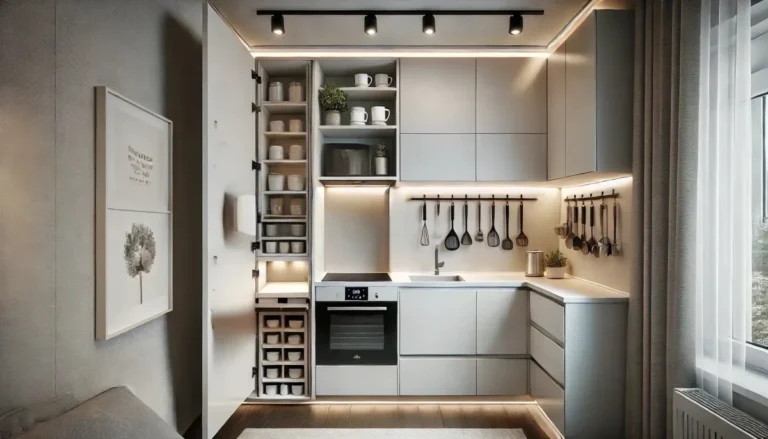
Another common mistake? Ignoring vertical space. In a small kitchen, every inch counts, and that includes the space above your head. Wall-mounted shelves, hanging racks for pots and pans, even a pegboard for utensils, all of these can free up valuable counter space. Just make sure you’re not creating a hazard. Nothing kills efficiency like a pot falling on someone’s head mid-rush.
And while we’re on the subject of equipment, let’s talk about storage. I can’t tell you how many kitchens I’ve seen where the storage is an afterthought. Dry goods are stacked on the floor, spices are scattered across three different shelves, and the walk-in is a maze of half-empty containers. Good storage isn’t just about organization, it’s about efficiency. If your staff has to dig through a pile of boxes to find the flour, or if they’re constantly running to the walk-in for ingredients, you’re wasting time. Invest in clear, labeled containers, dedicated shelves for frequently used items, and a logical system for inventory. Trust me, your future self will thank you.
Underestimating the Power of Zones (Or: Why Your Kitchen Should Have a Flow State)
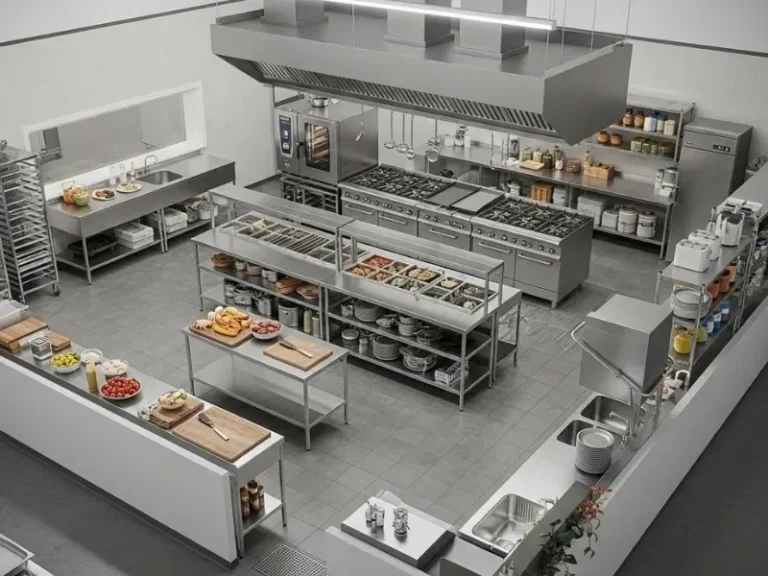
If there’s one concept that’s transformed the way I think about kitchen design, it’s zoning. The idea is simple: divide your kitchen into distinct zones based on function, and arrange them in a way that makes sense for your workflow. In a small kitchen, this is especially important because every movement counts. If your zones are poorly designed, you’re adding unnecessary steps, creating bottlenecks, and making it harder for your staff to work together.
So, what does a well-zoned kitchen look like? Let’s break it down. Most commercial kitchens can be divided into five key zones:
- Prep Zone: This is where ingredients are washed, chopped, and assembled. It should be close to the fridge and the cooking line, but not so close that it blocks traffic.
- Cooking Zone: This is the heart of your kitchen, the stove, oven, fryer, grill, etc. It should be near the pass (where food is plated and handed off to servers) and the prep zone.
- Plating Zone: This is where dishes are finished, garnished, and sent out. It should be right next to the cooking zone, with easy access to the pass.
- Cleaning Zone: This includes the dish pit, the trash, and the mop sink. It should be out of the way of the main workflow but still easily accessible.
- Storage Zone: This is where you keep dry goods, backups, and non-perishables. It should be near the prep zone but not in the way of the cooking line.
Now, in a small kitchen, you might not have the space for all five zones to be completely separate. That’s okay. The key is to group related tasks together and minimize cross-traffic. For example, your prep zone and cooking zone should be close together, but your cleaning zone should be off to the side. If you’re constantly walking through the cooking zone to get to the dish pit, you’re creating a bottleneck.
Here’s where things get interesting. The way you arrange your zones depends on your menu and service style. A fast-casual spot with a limited menu might have a linear flow: prep → cook → plate → pass. A fine-dining restaurant with a more complex menu might have a more circular flow, with multiple prep stations feeding into the cooking line. And a café with a focus on baked goods might prioritize the baking zone over everything else.
But here’s the thing: zoning isn’t just about physical space, it’s about mindset. Once you start thinking in terms of zones, you’ll notice inefficiencies you never saw before. Maybe your prep cook is constantly reaching across the cooking line to grab ingredients. Maybe your dishwasher has to walk through the plating zone to get to the trash. Maybe your storage is so far away that staff are wasting time running back and forth. These might seem like small things, but in a small kitchen, they add up fast.
So, how do you design your zones? Start by mapping out your workflow. Literally draw it out on paper. Where does food start? Where does it go next? Where does it end up? Then, arrange your zones in a way that mirrors that flow. And don’t be afraid to experiment. Try different layouts, walk through them, and see what feels natural. The best kitchens are the ones that feel intuitive, like the space itself is guiding you through the process.
The Walk-In Fridge: Your Best Friend or Your Worst Enemy?
Ah, the walk-in fridge. It’s the unsung hero of any commercial kitchen, the place where ingredients stay fresh, leftovers go to die, and staff members occasionally sneak in for a quick break. But in a small kitchen, the walk-in can also be a major source of frustration. Too small, and you’re constantly juggling ingredients. Too big, and you’re wasting valuable space. And if it’s poorly placed? Well, let’s just say you’re in for a world of pain.
I’ll never forget the first time I saw a walk-in that was too small. It was in a tiny pizzeria in SoBro, and the owner had skimped on the fridge to save money. The result? A walk-in that was barely big enough to turn around in, with shelves so packed that staff had to play Tetris just to find the mozzarella. During the dinner rush, the poor soul on the line would have to run back and forth to the walk-in every few minutes, grabbing ingredients one at a time because there was no room to store them up front. It was a disaster, and it slowed everything down.
On the flip side, I’ve seen walk-ins that were too big. In one café I consulted for, the owner had splurged on a massive walk-in, thinking it would give them room to grow. But the kitchen was so small that the walk-in took up nearly a third of the space. The result? A kitchen where the prep station was crammed into a corner, the cooking line was squeezed against the wall, and the dish pit was practically in the hallway. It was a nightmare, and it made the kitchen feel even smaller than it was.
So, how do you get it right? Here’s the thing: your walk-in should be just big enough to hold what you need, with a little room to grow. But how do you determine that? Start by auditing your inventory. What do you use the most? What do you store in bulk? What can you keep in reach-in fridges instead? Once you have a sense of your storage needs, you can start thinking about size.
As a general rule, a walk-in for a small commercial kitchen should be at least 6×8 feet, but no bigger than 8×10 feet unless you’re doing a lot of bulk storage. And here’s a pro tip: don’t skimp on shelving. Adjustable, stainless steel shelves are your best friend. They allow you to customize the space based on your needs, and they make it easier to keep things organized. Trust me, nothing slows down a kitchen like a walk-in where you have to dig through a pile of boxes to find the butter.
But size isn’t the only consideration. Placement is just as important. Ideally, your walk-in should be near the prep station but out of the way of the main workflow. If it’s too far away, you’re wasting time running back and forth. If it’s in the middle of the kitchen, you’re creating a bottleneck. And if it’s too close to the cooking line, you’re risking cross-contamination.
Here’s another thing to consider: temperature control. A walk-in that’s too close to the oven or the fryer is going to work harder to stay cool, which means higher energy bills. And if the door is constantly being opened and closed, you’re losing cold air, which means your fridge has to work even harder. So, think about insulation, door seals, and even the location of the condenser. A well-placed walk-in can save you money in the long run.
And let’s not forget about organization. A walk-in is only as good as its system. If your staff has to dig through a pile of boxes to find the heavy cream, you’re wasting time. Invest in clear, labeled containers, dedicated shelves for frequently used items, and a first-in, first-out (FIFO) system to prevent waste. And for the love of all things holy, keep the floor clean. Nothing kills efficiency like a walk-in where you have to wade through a puddle of mystery liquid to grab the tomatoes.
The Pass: Where Efficiency Goes to Die (If You’re Not Careful)
Let’s talk about the pass. It’s the heartbeat of your kitchen, the place where dishes are plated, tickets are called, and the magic (or chaos) happens. In a small kitchen, the pass is especially critical because it’s where everything comes together. Get it wrong, and you’re looking at a bottleneck that slows down service, frustrates your staff, and leaves customers waiting. Get it right, and suddenly, your kitchen feels like a well-oiled machine, even during the busiest rushes.
I’ve seen a lot of passes in my time, and let me tell you, the bad ones stick with you. Like the one in that café I mentioned earlier, where the pass was so close to the fryer that tickets were constantly getting grease stains. Or the one in a food truck where the pass was literally a cutting board balanced on a stack of milk crates. (Yes, really.) But the worst? The pass that was too small. It was in a tiny bistro in Midtown, and the owner had tried to save space by making the pass barely big enough for one plate. The result? A constant traffic jam, with dishes piling up, tickets getting lost, and the poor soul on the line looking like they were about to lose their mind.
So, what makes a good pass? Let’s start with size. In a small kitchen, you might not have room for a massive pass, but you need enough space to plate dishes comfortably. A good rule of thumb is to have at least 2 feet of counter space per person working the pass. If you’ve got two people plating, that’s 4 feet. If you’ve got one, 2 feet might be enough. But don’t skimp, you need room to work, and you need room for dishes to sit while they’re waiting to go out.
Next, let’s talk about placement. The pass should be close to the cooking line but not so close that it blocks traffic. It should also be easily accessible to servers, so they’re not walking through the kitchen to grab dishes. And here’s a pro tip: angle the pass slightly. If it’s perpendicular to the cooking line, you’re creating a natural flow that makes it easier for staff to move between the two. If it’s parallel, you’re forcing them to turn around, which wastes time.
Now, let’s talk about organization. A good pass is like a well-organized desk, everything has a place, and everything is within reach. You should have dedicated spaces for plates, garnishes, utensils, and tickets. And speaking of tickets, don’t let them pile up. Nothing slows down a kitchen like a stack of tickets that’s a foot high. If you’re using a paper ticket system, make sure there’s a place to hang them where they’re visible but not in the way. If you’re using a digital system, make sure the screen is easily visible from the pass.
And here’s something I see a lot of kitchens get wrong: the pass isn’t just for plating. It’s also a communication hub. The person working the pass should be able to see the entire kitchen, call out tickets, and direct traffic. If your pass is tucked away in a corner, you’re making it harder for them to do their job. So, think about sightlines. Can the person on the pass see the cooking line? Can they see the prep station? Can they see the servers? If not, you’re creating blind spots that can lead to mistakes.
Finally, let’s talk about equipment. The pass is a great place for things like heat lamps (to keep dishes warm), ticket holders, and even small reach-in fridges for garnishes. But don’t go overboard. The pass should be a clean, uncluttered space. If it’s covered in equipment, you’re making it harder for staff to work.
Lighting: The Overlooked Game-Changer
Let’s talk about lighting. It’s one of those things that’s easy to overlook when you’re designing a kitchen, but it can make or break your space. Bad lighting doesn’t just make it harder to see, it makes it harder to work, harder to stay safe, and harder to keep things clean. And in a small kitchen, where every detail matters, lighting is especially important.
I’ll never forget the first time I walked into a kitchen with terrible lighting. It was in a little diner in East Nashville, and the owner had tried to save money by using cheap, fluorescent bulbs. The result? A kitchen that felt like a cave, with shadows everywhere and a sickly, yellowish glow. The staff was constantly squinting, bumping into things, and making mistakes. And the worst part? It was depressing. A kitchen should be a vibrant, energetic space, not a dungeon.
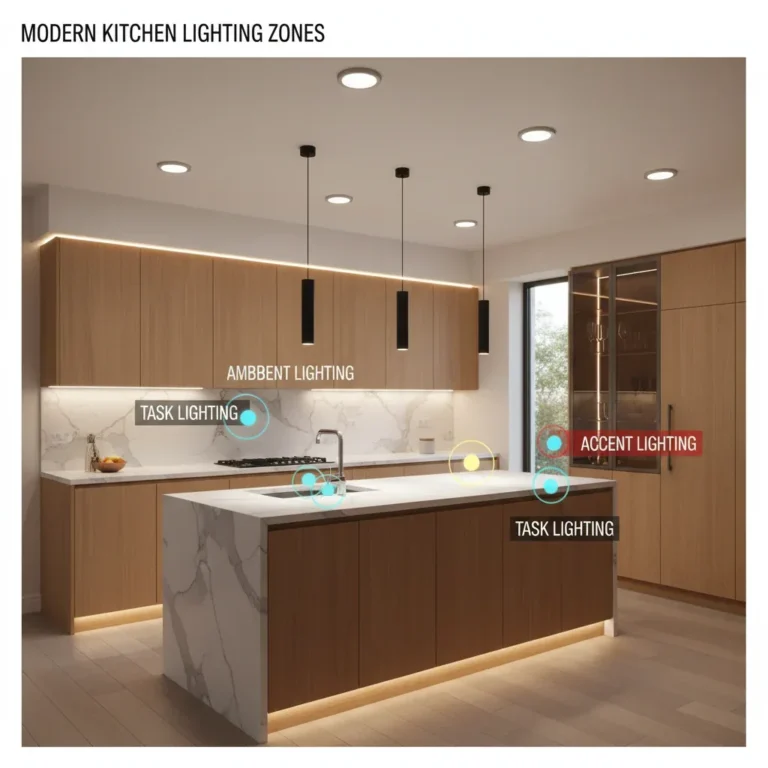
So, what makes good kitchen lighting? Let’s start with brightness. You want enough light to see what you’re doing, but not so much that it’s blinding. A good rule of thumb is to aim for 50-75 foot-candles of light in a commercial kitchen. That’s bright enough to see clearly, but not so bright that it’s overwhelming. And here’s a pro tip: use multiple light sources. A single overhead light can create shadows, but multiple lights, like under-cabinet lighting, task lighting, and ambient lighting, can create a more even, flattering glow.
Next, let’s talk about color temperature. This is where a lot of kitchens go wrong. Cheap fluorescent bulbs often have a cool, bluish tone, which can make food look unappetizing and make the kitchen feel sterile. On the other hand, warm, yellowish bulbs can make the kitchen feel cozy, but they can also make it harder to see colors accurately. The sweet spot? Neutral white light, around 3500-4100 Kelvin. It’s bright enough to see clearly, but warm enough to make the kitchen feel inviting.
Now, let’s talk about placement. In a small kitchen, you don’t have a lot of room to work with, so you need to be strategic about where you put your lights. Overhead lighting is a must, but it’s not enough. You also need task lighting-lights that are focused on specific work areas, like the prep station, the cooking line, and the pass. And here’s a pro tip: use under-cabinet lighting. It’s a great way to add light to a specific area without taking up valuable counter space.
And speaking of counter space, let’s talk about shadows. In a small kitchen, shadows can be a major problem. If your lights are placed in a way that creates shadows over your work areas, you’re making it harder for staff to see what they’re doing. So, think about light placement. Are your lights creating shadows over the prep station? Over the cooking line? If so, you might need to adjust them or add more lights.
Finally, let’s talk about energy efficiency. Commercial kitchens use a lot of energy, and lighting is a big part of that. So, think about LED bulbs. They’re more expensive upfront, but they last longer and use less energy, which can save you money in the long run. And here’s a bonus: LEDs don’t get as hot as other bulbs, which can help keep your kitchen cooler.
The Dish Pit: The Unsung Hero of Your Kitchen
Let’s talk about the dish pit. It’s not glamorous. It’s not exciting. But it’s one of the most important parts of your kitchen. A well-designed dish pit can keep your kitchen running smoothly, even during the busiest rushes. A poorly designed one? Well, let’s just say you’ll be up to your elbows in dirty dishes before you know it.
I’ve seen a lot of dish pits in my time, and let me tell you, the bad ones stick with you. Like the one in that café I mentioned earlier, where the dish pit was shoved into a corner so tight that the poor soul on dishes had to turn sideways just to load the machine. Or the one in a food truck where the dish pit was literally a bucket of soapy water. (Yes, really.) But the worst? The dish pit that was too far away. It was in a tiny bistro in Germantown, and the dish pit was all the way in the back, past the walk-in, past the prep station, and past the cooking line. The result? A constant stream of staff walking through the kitchen, creating bottlenecks and slowing everything down.
So, what makes a good dish pit? Let’s start with placement. Ideally, your dish pit should be close to the pass but out of the way of the main workflow. If it’s too far away, you’re wasting time running back and forth. If it’s in the middle of the kitchen, you’re creating a bottleneck. And if it’s too close to the cooking line, you’re risking cross-contamination.
Next, let’s talk about size. In a small kitchen, you might not have room for a massive dish pit, but you need enough space to work comfortably. A good rule of thumb is to have at least 3 feet of counter space on either side of the dish machine. That gives you room to scrape, stack, and sort dishes without feeling cramped. And here’s a pro tip: don’t skimp on the sink. A three-compartment sink is a must for washing pots and pans, and a separate hand-washing sink is required by health code in most places.
Now, let’s talk about equipment. A good dish pit should have:
- A high-temperature dish machine (for sanitizing dishes)
- A three-compartment sink (for washing pots and pans)
- A hand-washing sink (required by health code)
- A pre-rinse sprayer (for scraping dishes)
- A drying rack (for air-drying dishes)
- A trash can (for scraps and waste)
And here’s something I see a lot of kitchens get wrong: the dish pit isn’t just for dishes. It’s also a great place to store things like clean rags, sanitizer, and extra utensils. But don’t go overboard. The dish pit should be a clean, uncluttered space. If it’s covered in equipment, you’re making it harder for staff to work.
Finally, let’s talk about flow. A good dish pit should have a logical workflow. Dirty dishes should come in one side, get scraped, washed, rinsed, and sanitized, and then come out the other side clean. If your dish pit is set up in a way that forces staff to backtrack or cross paths, you’re creating a bottleneck. So, think about one-way flow. Dirty dishes go in, clean dishes come out, and there’s no crossing paths.
Ventilation: The Silent Killer (Or Savior) of Your Kitchen
Let’s talk about ventilation. It’s one of those things that’s easy to ignore when you’re designing a kitchen, but it can make or break your space. Bad ventilation doesn’t just make your kitchen hot and smoky, it makes it unhealthy, uncomfortable, and unsafe. And in a small kitchen, where space is at a premium, ventilation is especially important.
I’ll never forget the first time I walked into a kitchen with terrible ventilation. It was in a little diner in SoBro, and the owner had tried to save money by skipping the hood system. The result? A kitchen that was sweltering, smoky, and sticky. The staff was constantly wiping their brows, the air was thick with grease, and the smell of fried food lingered long after the last customer left. It was a nightmare, and it made the kitchen feel like a sauna.
So, what makes good kitchen ventilation? Let’s start with the hood system. This is the heart of your ventilation, it captures smoke, grease, and heat before they can spread through the kitchen. In a small kitchen, you might not have room for a massive hood, but you still need one that’s powerful enough to handle your cooking volume. A good rule of thumb is to aim for a hood that’s at least as wide as your cooking line, and deep enough to cover all your equipment.
Next, let’s talk about makeup air. This is the air that replaces the air that’s being sucked out by the hood. If you don’t have enough makeup air, your hood won’t work properly, and you’ll end up with a kitchen that’s stuffy, smoky, and uncomfortable. In a small kitchen, makeup air is especially important because there’s less space for air to circulate. So, think about dedicated makeup air units. They’re not cheap, but they’re worth it.
Now, let’s talk about ductwork. This is the system of pipes that carries the air from the hood to the outside. In a small kitchen, ductwork can be a challenge because there’s not a lot of room for pipes. But here’s the thing: bad ductwork can make your hood system ineffective. If your ducts are too small, too long, or too twisty, your hood won’t be able to move enough air. So, think about short, straight ducts. The less resistance, the better.
And speaking of resistance, let’s talk about filters. Your hood system should have grease filters to catch grease before it can clog your ducts. But here’s the thing: filters need to be cleaned regularly. If they’re clogged, your hood won’t work properly, and you’ll end up with a kitchen that’s smoky and greasy. So, think about easy-to-clean filters. And make sure your staff knows how to clean them.
Finally, let’s talk about oise. Hood systems can be loud, and in a small kitchen, that noise can be overwhelming. So, think about sound-dampening materials. They’re not cheap, but they can make a big difference in the comfort of your staff.
The Prep Station: Where Efficiency Is Born (Or Dies)
Let’s talk about the prep station. It’s where ingredients are washed, chopped, and assembled, where the magic happens before the cooking even starts. In a small kitchen, the prep station is especially important because it sets the tone for the entire shift. A well-designed prep station can keep your kitchen running smoothly, even during the busiest rushes. A poorly designed one? Well, let’s just say you’ll be playing catch-up all night.
I’ve seen a lot of prep stations in my time, and let me tell you, the bad ones stick with you. Like the one in that café I mentioned earlier, where the prep station was wedged between the walk-in and the dish pit. The result? A constant stream of staff walking through the prep area, creating bottlenecks and slowing everything down. Or the one in a food truck where the prep station was literally a cutting board balanced on a milk crate. (Yes, really.) But the worst? The prep station that was too small. It was in a tiny bistro in Midtown, and the owner had tried to save space by making the prep station barely big enough for one person. The result? A constant traffic jam, with ingredients piling up, staff bumping into each other, and the poor soul on prep looking like they were about to lose their mind.
So, what makes a good prep station? Let’s start with size. In a small kitchen, you might not have room for a massive prep station, but you need enough space to work comfortably. A good rule of thumb is to have at least 4 feet of counter space per person. If you’ve got two people prepping, that’s 8 feet. If you’ve got one, 4 feet might be enough. But don’t skimp, you need room to work, and you need room for ingredients to sit while they’re waiting to be used.
Next, let’s talk about placement. Ideally, your prep station should be close to the fridge and the cooking line. If it’s too far away, you’re wasting time running back and forth. If it’s in the middle of the kitchen, you’re creating a bottleneck. And if it’s too close to the dish pit, you’re risking cross-contamination. So, think about flow. Can the prep cook easily grab ingredients from the fridge? Can they easily move to the cooking line? If not, you’re creating unnecessary steps.
Now, let’s talk about equipment. A good prep station should have:
- A large, sturdy cutting board (or two, if you’ve got the space)
- A sharp knife (or three, because let’s be real, you can never have too many knives)
- A peeler, grater, and other small tools (within easy reach)
- A scale (for portioning)
- A container for scraps (so they’re not cluttering up the counter)
- A hand-washing sink (required by health code)
And here’s something I see a lot of kitchens get wrong: the prep station isn’t just for prep. It’s also a great place to store things like spices, oils, and frequently used ingredients. But don’t go overboard. The prep station should be a clean, uncluttered space. If it’s covered in equipment, you’re making it harder for staff to work.
Finally, let’s talk about organization. A good prep station should have a logical workflow. Ingredients should come in one side, get prepped, and then move to the cooking line. If your prep station is set up in a way that forces staff to backtrack or cross paths, you’re creating a bottleneck. So, think about one-way flow. Ingredients go in, get prepped, and come out the other side ready to cook.
The Walkway: The Invisible Backbone of Your Kitchen
Let’s talk about walkways. They’re not glamorous. They’re not exciting. But they’re one of the most important parts of your kitchen. A well-designed walkway can keep your kitchen running smoothly, even during the busiest rushes. A poorly designed one? Well, let’s just say you’ll be playing bumper cars with your staff before you know it.
I’ve seen a lot of walkways in my time, and let me tell you, the bad ones stick with you. Like the one in that café I mentioned earlier, where the walkway was so narrow that staff had to turn sideways just to pass each other. Or the one in a food truck where the walkway was literally a tightrope between the fridge and the stove. (Yes, really.) But the worst? The walkway that was blocked by equipment. It was in a tiny bistro in Germantown, and the owner had tried to save space by cramming equipment into every available corner. The result? A walkway that was constantly blocked by the reach-in, the prep station, and the dish pit. The staff was constantly bumping into things, dropping dishes, and looking like they were one step away from a meltdown.
So, what makes a good walkway? Let’s start with width. In a small kitchen, you might not have room for a massive walkway, but you need enough space to move comfortably. A good rule of thumb is to have at least 3 feet of clearance in your main walkways, and 2 feet in secondary walkways. That gives you enough room to pass without bumping into things, and it makes it easier to move equipment in and out.
Next, let’s talk about flow. A good walkway should have a logical path. Staff should be able to move from one station to another without crossing paths or backtracking. If your walkway is set up in a way that forces staff to zigzag through the kitchen, you’re creating a bottleneck. So, think about one-way flow. Staff should be able to move in a loop, with minimal crossing paths.
Now, let’s talk about obstacles. A good walkway should be clear of equipment, storage, and clutter. If your walkway is constantly blocked by the reach-in, the prep station, or a pile of boxes, you’re creating a hazard. So, think about dedicated storage. Keep equipment and supplies off the floor, and make sure there’s a place for everything.
And speaking of clutter, let’s talk about cleanliness. A good walkway should be clean and dry. If it’s covered in grease, water, or debris, you’re creating a slip hazard. So, think about on-slip flooring. It’s not cheap, but it’s worth it. And make sure your staff knows to clean up spills immediately.
Finally, let’s talk about accessibility. A good walkway should be easily accessible to all staff. If it’s too narrow for someone to pass, or if it’s blocked by equipment, you’re creating a barrier. So, think about universal design. Make sure your walkway is wide enough for everyone, and make sure it’s clear of obstacles.
Putting It All Together: A Checklist for Small Commercial Kitchen Success
Alright, let’s take a step back. We’ve covered a lot of ground here, zoning, equipment, ventilation, lighting, the works. It’s easy to feel overwhelmed, especially when you’re staring at a blank floor plan and wondering where to even start. So, let’s simplify things. Here’s a checklist to help you avoid the most common small commercial kitchen layout mistakes and design a space that works for you.
- Start with your menu. What are you cooking? How many covers do you expect to do in a peak hour? This will determine your equipment needs and your workflow.
- Map out your zones. Divide your kitchen into distinct zones based on function (prep, cooking, plating, cleaning, storage), and arrange them in a way that makes sense for your workflow.
- Prioritize the work triangle. Minimize the distance between your three most critical tasks (usually cooking, prepping, and cleaning).
- Avoid overcrowding. More equipment isn’t always better. Focus on multi-functional pieces that serve your menu, not the other way around.
- Maximize vertical space. Use wall-mounted shelves, hanging racks, and pegboards to free up counter space.
- Design for flow. Arrange your zones and equipment in a way that minimizes cross-traffic and backtracking. Think one-way flow.
- Don’t skimp on the walk-in. Make sure it’s big enough to hold your inventory, but not so big that it takes up valuable space. And keep it organized!
- Give the pass the space it deserves. It should be close to the cooking line, easily accessible to servers, and big enough to plate dishes comfortably.
- Light it up. Use bright, neutral white light, and think about task lighting for specific work areas. Avoid shadows and dark corners.
- Don’t forget the dish pit. It should be close to the pass but out of the way of the main workflow. And make sure it’s big enough to work comfortably.
- Ventilate properly. Invest in a good hood system, makeup air units, and easy-to-clean filters. Your staff (and your lungs) will thank you.
- Keep walkways clear. Make sure they’re wide enough to move comfortably, and keep them free of obstacles and clutter.
- Test your layout. Walk through it, act out a rush, and see what feels natural. If it’s clunky now, it’ll be a nightmare during service.
- Plan for storage. Keep frequently used items within easy reach, and invest in clear, labeled containers to minimize waste.
- Think about safety. Non-slip flooring, clear walkways, and proper ventilation aren’t just nice-to-haves, they’re essentials.
And here’s the most important thing: don’t be afraid to iterate. Your first layout might not be perfect, and that’s okay. The best kitchens are the ones that evolve over time, adapting to the needs of the staff and the demands of the menu. So, start with a solid foundation, but don’t be afraid to tweak things as you go.
Final Thoughts: The Kitchen That Works With You, Not Against You
Designing a small commercial kitchen is a lot like cooking a complex dish. You’ve got a lot of ingredients to work with, equipment, space, workflow, staff, and if you don’t balance them just right, the whole thing can fall apart. But when you get it right? It’s magic. Suddenly, that tiny kitchen feels spacious. The staff moves with purpose, the food flows out smoothly, and even during the busiest rushes, there’s a sense of calm.
I’ve been in kitchens that felt like a battle zone, where every shift was a struggle against the space. And I’ve been in kitchens that felt like a dance, where every movement was effortless and every task flowed into the next. The difference? Design. A well-designed kitchen doesn’t just save you time and money, it saves your sanity. It makes your staff happier, your customers happier, and your food better.
So, as you’re planning your kitchen, remember this: you’re not just designing a space. You’re designing an experience, for your staff, for your customers, and for yourself. And that experience starts with a layout that works with you, not against you.
Now, I’ll leave you with a question: What’s one thing you wish you’d known before designing your kitchen? Maybe it’s something you’ve learned the hard way, or maybe it’s something you’re still figuring out. Either way, I’d love to hear your thoughts. Drop a comment below, and let’s keep the conversation going.
FAQ
Q: What’s the biggest mistake people make when designing a small commercial kitchen?
A: The biggest mistake is underestimating the importance of flow. A lot of people focus on squeezing in as much equipment as possible, but they don’t think about how staff will move through the space. The result? A kitchen that’s cramped, inefficient, and frustrating to work in. The key is to design for movement-arrange your zones and equipment in a way that minimizes cross-traffic and backtracking.
Q: How much space do I really need for a small commercial kitchen?
A: It depends on your menu and your volume, but as a general rule, a small commercial kitchen should be at least 200-400 square feet. That’s enough space for a basic setup, prep station, cooking line, dish pit, and storage, without feeling too cramped. But remember, it’s not just about size, it’s about layout. A well-designed 300-square-foot kitchen can be more efficient than a poorly designed 500-square-foot one.
Q: What’s the most important piece of equipment in a small commercial kitchen?
A: It’s hard to pick just one, but if I had to choose, I’d say the hood system. A good hood system is essential for ventilation, safety, and comfort. Without it, your kitchen will be hot, smoky, and uncomfortable, no matter how well-designed the rest of the space is. Plus, a good hood system can save you money on energy costs in the long run.
Q: How can I make my small commercial kitchen feel bigger?
A: There are a few tricks to make a small kitchen feel more spacious. First, maximize vertical space-use wall-mounted shelves, hanging racks, and pegboards to free up counter space. Second, keep walkways clear-make sure they’re wide enough to move comfortably, and keep them free of obstacles and clutter. Third, use light colors-white walls, stainless steel equipment, and bright lighting can make a small space feel bigger. And finally, keep it clean-a cluttered kitchen feels smaller, so make sure everything has a place and stays there.
@article{small-commercial-kitchen-layout-mistakes-that-are-costing-you-more-than-just-space,
    title   = {Small Commercial Kitchen Layout Mistakes That Are Costing You More Than Just Space},
    author  = {Chef's icon},
    year    = {2026},
    journal = {Chef's Icon},
    url     = {https://chefsicon.com/small-commercial-kitchen-layout-mistakes-to-avoid/}
}