The Best Fluffy Pancakes recipe you will fall in love with. Full of tips and tricks to help you make the best pancakes.
The Silent Revolution: How Commercial Kitchen Equipment Monitoring is Redefining Restaurant Efficiency
I remember the first time I walked into a restaurant kitchen that actually *breathed*. Not the usual chaotic symphony of clanging pots, shouted orders, and the occasional panicked scramble when something went wrong – no, this was different. The executive chef at this Nashville hotspot had installed some kind of monitoring system on their equipment, and the difference was immediately apparent. The line cooks moved with purpose, not panic. The walk-in cooler hummed at exactly the right temperature. Even the fryers seemed… well, happier. It was like watching an orchestra where every instrument knew its part perfectly.
That was two years ago, and I’ve been obsessed with commercial kitchen equipment monitoring ever since. Not because it’s flashy or particularly glamorous – let’s be honest, most restaurant owners would rather talk about their new wood-fired oven or craft cocktail program than their refrigeration sensors. But here’s the thing: this is the technology that’s quietly revolutionizing how restaurants operate behind the scenes. It’s the difference between running a kitchen and conducting one. And in 2026, with labor costs still climbing and customer expectations higher than ever, it might just be the most important investment you’re not making yet.
So what exactly are we talking about when we say equipment monitoring systems? At its core, it’s about collecting real-time data from your kitchen appliances and using that information to make smarter decisions. We’re not just talking about whether your oven is on or off – though that’s part of it. Modern systems can track energy consumption, predict maintenance needs, optimize cooking times, and even help with food safety compliance. It’s like giving your kitchen a nervous system, where every piece of equipment can communicate its status, needs, and potential problems before they become disasters.
In this deep dive, we’re going to explore:
- Why most restaurants are still flying blind when it comes to their equipment
- The surprising ways monitoring can cut costs (hint: it’s not just about energy savings)
- How to choose a system that actually works for your specific kitchen layout
- The hidden benefits that most owners overlook
- Real-world examples of restaurants that transformed their operations
- And yes, the potential pitfalls to avoid
Is this the magic bullet that will solve all your restaurant’s problems? Probably not. But if you’re serious about efficiency, consistency, and actually sleeping through the night without worrying about whether your walk-in failed, then stick with me. This might just change how you think about your kitchen forever.
The Problem: Why Most Kitchens Are Still Operating in the Dark Ages
The Illusion of Control
Let me ask you something: How do you currently know if your kitchen equipment is working properly? If you’re like most restaurant operators, your answer probably involves some combination of:
- “The lights are on”
- “It’s making noise”
- “The food comes out cooked”
- “No one’s screaming yet”
Here’s the uncomfortable truth: that’s not monitoring. That’s hoping. And hope, as they say in the restaurant business, is not a strategy. I’ve seen too many kitchens where the only “monitoring” system is whatever poor soul is assigned to check the walk-in temperatures every four hours – a system that’s about as reliable as writing your grocery list on a napkin.
The real problem isn’t that restaurant owners don’t care about their equipment. It’s that we’ve accepted a certain level of chaos as normal. We treat kitchen appliances like cars from the 1970s – you know something’s wrong when the smoke starts pouring out. But modern commercial kitchen equipment deserves better. It deserves the same kind of attention we give to our POS systems, our inventory software, even our social media analytics. Because here’s what most operators don’t realize: your equipment isn’t just a tool. It’s your silent partner in every service, every shift, every dish that goes out to a customer.
The Cost of Flying Blind
Let’s talk numbers for a second, because I know that’s what really gets people’s attention. According to a 2025 study by the National Restaurant Association, restaurants lose an average of $12,000 per year due to equipment-related issues. That’s not counting the lost revenue from downtime, the wasted food from improper storage, or the hit to your reputation when a customer gets served undercooked chicken because your oven’s thermostat failed.
But here’s the kicker: most of these losses are invisible. They don’t show up as a single line item on your P&L. They’re buried in:
- Higher energy bills from inefficient appliances
- Increased food waste from temperature fluctuations
- Premature equipment replacement costs
- Overtime labor when things break during service
- Health code violations that could have been prevented
I once consulted for a mid-sized restaurant group that was convinced their energy costs were just “the cost of doing business.” After installing a basic monitoring system, they discovered their walk-in cooler was running 18 hours a day instead of the 12 it should have been – because the door seal was damaged and no one had noticed. That single issue was costing them $450 a month in electricity. Multiply that by all the equipment in your kitchen, and suddenly we’re talking about real money.
But the financial cost is only part of the equation. There’s also the human cost – the stress on your team when equipment fails during a busy service, the frustration of not knowing why your fryer suddenly can’t hold temperature, the exhaustion of constantly putting out fires instead of actually cooking. Equipment monitoring isn’t just about saving money. It’s about giving your team the tools they need to do their jobs well, consistently, without the constant anxiety of the unknown.
What Exactly Is Commercial Kitchen Equipment Monitoring?
Beyond the Basics: It’s Not Just About Temperature
When most people hear “equipment monitoring,” they think of those little digital thermometers you stick in your walk-in. And sure, temperature monitoring is a big part of it. But modern systems are doing so much more than that. We’re talking about smart sensors that can track:
- Energy consumption: Not just how much power your equipment is using, but when it’s using it, and whether it’s operating efficiently
- Runtime hours: How long each piece of equipment is actually in use during a shift
- Performance metrics: For ovens, this might be recovery time; for fryers, oil temperature consistency
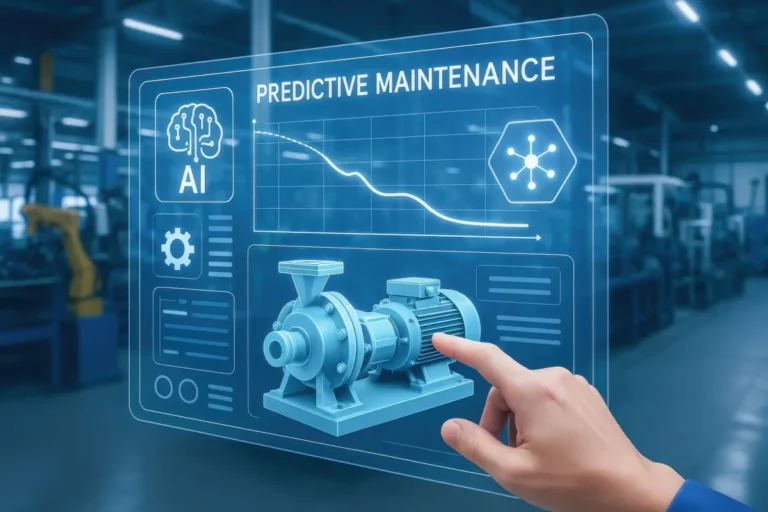
- Predictive maintenance: Using data patterns to predict when a component is likely to fail
- Food safety compliance: Automatically logging temperatures and other critical data for health inspections
- Operational efficiency: Analyzing usage patterns to optimize equipment placement and workflow
The most advanced systems I’ve seen are essentially kitchen operating systems that integrate with your POS, inventory management, and even staff scheduling. Imagine a world where your equipment can tell you not just that the oven is preheated, but that based on current ticket times, you should hold off on cooking those steaks for another seven minutes to avoid them sitting under the heat lamp. Or where your walk-in can alert you that the door has been left open for more than two minutes – and automatically adjust your inventory projections based on the temperature fluctuation.
The Technology Under the Hood
So how does all this magic actually work? At the heart of most commercial kitchen monitoring systems are IoT (Internet of Things) sensors that attach to your equipment. These can be:
- External sensors: Clamped onto existing equipment, often with no installation required
- Internal sensors: Built into new equipment or installed during maintenance
- Gateway devices: That collect data from multiple sensors and send it to the cloud
- Software platforms: That analyze the data and present it in useful ways
The sensors communicate via Wi-Fi, cellular networks, or even low-power Bluetooth, depending on the system. The data is then processed by algorithms that can detect patterns, predict issues, and provide actionable insights. Some systems use machine learning to improve their predictions over time – the more data they collect from your kitchen, the smarter they get about your specific operation.
Here’s where things get really interesting: the best systems don’t just collect data – they help you act on it. We’re talking about:
- Automated alerts sent to your phone when something needs attention
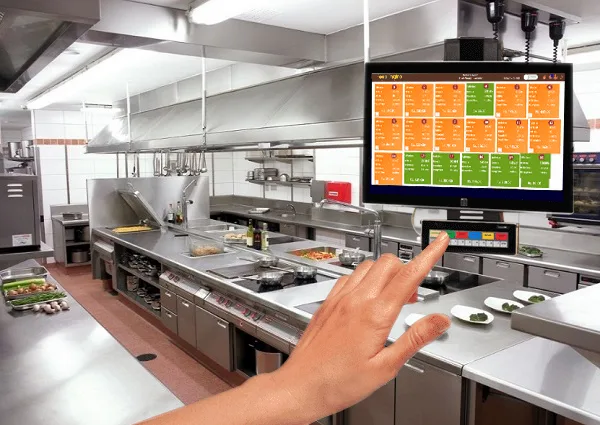
- Dashboards that show you the health of your entire kitchen at a glance
- Integration with your maintenance scheduling system
- Reports that help you make better purchasing decisions
- Even AI-powered recommendations for improving efficiency
I’ll be honest – when I first started researching this technology, I was skeptical. It all sounded a bit too much like science fiction. But after seeing it in action in several kitchens, I’m convinced this is the future. The question isn’t whether you’ll adopt this technology, but when.
The Hidden Benefits No One Talks About
1. The Labor Equation: How Monitoring Can Help With Staffing
Here’s something no one tells you about equipment monitoring systems: they can actually help with your labor challenges. I know, I know – you’re probably thinking “Great, another thing that’s going to require training and maintenance.” But hear me out.
First, these systems can reduce the need for manual checks. That means your staff spends less time walking around with clipboards and more time actually cooking. In a busy kitchen, those minutes add up. I’ve seen restaurants save 10-15 hours of labor per week just by automating temperature logs and equipment checks.
But it goes deeper than that. The data from these systems can help you optimize your staffing. For example:
- If your monitoring system shows that your fryer is only in use 60% of the time during lunch service, maybe you don’t need two fry cooks
- If your oven is consistently running at 80% capacity during dinner, maybe it’s time to add another one
- If your walk-in is being accessed 50 times during the night shift, maybe you need to reorganize your storage
There’s also the training aspect. New hires can learn the rhythms of your kitchen faster when they have data to guide them. Instead of guessing whether the grill is hot enough, they can check the dashboard. Instead of wondering if the walk-in is at the right temperature, they can see it in real-time. This reduces mistakes, improves consistency, and makes your training process more efficient.
2. The Food Waste Revelation
Here’s a statistic that should make every restaurant owner sit up straight: the average restaurant throws away 4-10% of the food it purchases before it even reaches the customer. That’s not just bad for your bottom line – it’s bad for the planet.
Equipment monitoring can help with this in several ways:
- Temperature control: Preventing spoilage from improper storage
- Cooking consistency: Reducing the number of dishes that have to be remade
- Equipment efficiency: Ensuring appliances are operating at peak performance
- Predictive maintenance: Preventing breakdowns that lead to food waste
I worked with a catering company that installed a monitoring system on their refrigerated trucks. Within a month, they discovered that one of their trucks was losing temperature during deliveries because the door seal was damaged. That single issue was causing $1,200 a month in food waste. The fix cost $200. That’s the kind of ROI that makes you wonder why you didn’t do this sooner.
3. The Compliance Advantage
Let’s talk about everyone’s favorite topic: health inspections. Or as I like to call them, “the days when you hope your walk-in logs are actually accurate.”
Here’s the thing about food safety compliance: it’s not just about avoiding fines (though that’s certainly part of it). It’s about protecting your customers – and your reputation. One bad health inspection can undo years of hard work in an instant.
Modern monitoring systems can:
- Automatically log temperatures at required intervals
- Generate reports that are ready for health inspectors
- Alert you immediately if temperatures fall outside safe ranges
- Provide documentation for HACCP plans
- Even integrate with your inventory system to track shelf life
I’ve seen restaurants go from dreading health inspections to actually looking forward to them – because they know their data is accurate, complete, and ready to present. Some systems even offer “mock inspection” features that help you identify potential issues before the real inspector arrives.
4. The Energy Savings You’re Not Seeing
Energy costs are one of those sneaky expenses that can eat into your profits without you even realizing it. Most restaurant owners look at their utility bills and think, “Well, that’s just the cost of doing business.” But what if I told you that 30-50% of the energy used in commercial kitchens is wasted?
Here’s where monitoring comes in. By tracking energy consumption in real-time, these systems can help you identify:
- Equipment that’s running when it shouldn’t be
- Appliances that are using more energy than they should
- Peak usage times when you might be able to shift operations
- Opportunities for equipment upgrades that will pay for themselves
One restaurant I visited had installed energy monitors on all their major appliances. They discovered that their broiler was using 22% more energy than similar models – because it was 15 years old and hadn’t been properly maintained. The cost to repair it? $800. The energy savings from fixing it? $2,400 per year. That’s a 300% return on investment in the first year alone.
How to Choose the Right System for Your Kitchen
The Great Debate: Standalone vs. Integrated Systems
So you’re convinced that commercial kitchen equipment monitoring is worth exploring. Now what? The first decision you’ll need to make is whether to go with a standalone system or one that integrates with your existing technology.
Standalone systems are exactly what they sound like – dedicated monitoring solutions that focus solely on your equipment. They’re typically:
- Easier to install
- Less expensive upfront
- More focused on specific equipment types
- Less likely to have compatibility issues
Integrated systems, on the other hand, connect with your POS, inventory management, scheduling, and other restaurant systems. They offer:
- A more holistic view of your operation
- Better insights through data correlation
- More automation opportunities
- The potential for AI-powered recommendations
I’m torn on this one. On one hand, integrated systems offer more potential for long-term value. On the other hand, they can be complex, expensive, and sometimes feel like overkill for smaller operations. My advice? Start with your biggest pain points. If your walk-in cooler is your biggest source of anxiety, start with a standalone refrigeration monitoring system. If you’re struggling with food waste across your entire operation, look for an integrated solution that can help track that.
Key Features to Look For
Not all monitoring systems are created equal. Here are the features I consider essential:
- Real-time alerts: You need to know about problems immediately, not after the fact. Look for systems that can send alerts via text, email, or app notifications.
- Predictive maintenance: The best systems don’t just tell you when something’s wrong – they predict when it’s likely to go wrong.
- Customizable dashboards: You should be able to see the information that’s most important to you at a glance.
- Integration capabilities: Even if you start with a standalone system, make sure it has the ability to integrate with other systems down the road.
- Mobile access: You should be able to check on your kitchen from anywhere, at any time.
- Reporting and analytics: The system should help you identify trends and make data-driven decisions.
- Scalability: Make sure the system can grow with your business.
- Ease of use: If it’s too complicated, your staff won’t use it.
Here’s a feature that often gets overlooked but is incredibly valuable: historical data analysis. The best systems don’t just show you what’s happening now – they help you understand patterns over time. For example, if your walk-in temperature spikes every Friday night, is that because of increased traffic, or is there something wrong with the equipment? Historical data can help you answer these questions.
The Installation Question: DIY vs. Professional
One of the biggest concerns I hear from restaurant owners is about installation. “I don’t want to shut down my kitchen for a week while someone installs sensors.” I get it. Downtime is the enemy in this business.
The good news is that many modern systems are designed for DIY installation. We’re talking about:
- Sensors that clip onto existing equipment
- Wireless systems that don’t require complex wiring
- Plug-and-play setups that can be up and running in hours
- Cloud-based platforms that don’t require on-site servers
That said, there are times when professional installation makes sense:
- If you’re installing sensors on complex equipment
- If you need to integrate with existing building management systems
- If you’re installing a large number of sensors across multiple locations
- If you want the peace of mind that comes with professional setup
My advice? Start small. Install a basic system yourself, see how it works, and then expand from there. Many companies offer free trials or demo units, so you can test the system before committing.
The Real-World Impact: Case Studies That Will Make You a Believer
Case Study 1: The Fast-Casual Chain That Cut Energy Costs by 30%
Let me tell you about a fast-casual chain I worked with last year. They had 12 locations across three states, and their energy bills were through the roof. The owner was convinced there was nothing they could do – after all, restaurants use a lot of energy, right?
We started by installing energy monitors on all their major equipment. Within a week, we discovered several issues:
- One location had a walk-in cooler that was running 24/7 because the door seal was damaged
- Several locations had fryers that were using 15% more energy than they should have
- One kitchen was running their ventilation system at full blast even when the equipment wasn’t in use
But here’s where it gets really interesting. The monitoring system also revealed usage patterns that allowed them to optimize their operations:
- They discovered that their ovens were only in use 60% of the time during lunch service, so they adjusted their menu to better utilize that capacity
- They found that their grills were being preheated 30 minutes earlier than necessary, wasting energy
- They identified peak energy usage times and shifted some prep work to off-peak hours
The result? A 30% reduction in energy costs across all locations, with some seeing savings of up to 40%. And that was just in the first six months. The owner told me it was the best investment they’d made in years – and they’re now rolling out the system to all their new locations.
Case Study 2: The Independent Restaurant That Saved Its Reputation
This one hits close to home. It’s about a small, family-owned Italian restaurant in Nashville that was on the verge of closing. They’d had a string of bad health inspections, customer complaints about inconsistent food quality, and their walk-in cooler had failed twice in six months – each time ruining thousands of dollars’ worth of ingredients.
The owner was skeptical about equipment monitoring. “I don’t need more gadgets,” he told me. “I need my walk-in to work.”
We started with a basic refrigeration monitoring system. Within 24 hours, it detected that the walk-in was losing temperature at night. The owner assumed it was a problem with the compressor, but the data told a different story: the door was being left open for extended periods during the night shift.
But that was just the beginning. The system also revealed:
- Their pizza oven was running 25°F hotter than it should have been, leading to inconsistent cooking
- Their prep cooler was cycling on and off too frequently, indicating a failing compressor
- Their fryer was taking 15 minutes longer than it should have to recover temperature between batches
Armed with this data, the owner was able to:
- Fix the walk-in door issue (a simple $50 repair)
- Adjust the oven temperature for more consistent results
- Schedule maintenance for the prep cooler before it failed
- Clean the fryer’s heating elements, restoring its efficiency
The result? Their next health inspection was perfect. Customer complaints about food quality dropped by 80%. And most importantly, they avoided another walk-in failure that could have put them out of business.
The owner told me something that stuck with me: “I thought this was just about fixing equipment. But it was really about fixing my restaurant.”
The Potential Pitfalls (And How to Avoid Them)
1. The Data Overload Problem
Here’s the thing about equipment monitoring systems: they generate a lot of data. And data, without context, is just noise.
I’ve seen restaurants install these systems, get excited about all the information they’re collecting, and then… do nothing with it. They’re overwhelmed by the sheer volume of data, and they end up ignoring the alerts because there are just too many of them.
How to avoid this:
- Start with clear objectives: What problems are you trying to solve? Focus on those first.
- Set up smart alerts: Not every temperature fluctuation needs your attention. Configure your system to alert you only when there’s a real problem.
- Assign responsibility: Someone on your team should be in charge of monitoring the system and acting on the data.
- Schedule regular reviews: Set aside time each week to look at the data and identify trends.
Remember: the goal isn’t to collect data. It’s to use data to make better decisions.
2. The Training Gap
Here’s a scenario I see all too often: A restaurant invests in a state-of-the-art monitoring system, installs it, and then… no one uses it. Why? Because they didn’t train their staff properly.
Equipment monitoring isn’t just for managers. Your entire team needs to understand:
- How to read the basic alerts
- What to do when they get an alert
- How the system can help them do their jobs better
- The importance of accurate data
I recommend:
- Holding a training session when the system is installed
- Creating simple reference guides for each position
- Incorporating system checks into your opening and closing procedures
- Making the system part of your regular staff meetings
One restaurant I worked with created a “Monitoring Champion” program, where they trained one staff member from each shift to be the go-to person for the system. That person was responsible for checking the dashboard at the start of each shift and reporting any issues. It worked brilliantly.
3. The False Sense of Security
Here’s a dangerous trap: thinking that because you have a monitoring system, you don’t need to do anything else. I’ve seen restaurants install these systems and then stop doing their regular equipment checks, thinking the technology will catch everything.
But here’s the reality: no system is perfect. Sensors can fail. Alerts can be missed. And some issues might not trigger an alert at all.
Monitoring systems should complement your existing procedures, not replace them. You still need to:
- Conduct regular visual inspections of your equipment
- Train your staff on proper equipment use
- Follow manufacturer-recommended maintenance schedules
- Trust your instincts – if something seems off, investigate
Think of your monitoring system like a smoke detector. It’s an essential safety tool, but you still need to check your fire extinguishers and have an evacuation plan.
4. The Cost Misconception
Let’s talk about money. Because when I bring up commercial kitchen equipment monitoring, the first question I usually get is: “How much is this going to cost me?”
Here’s the thing: yes, there’s an upfront cost. But when you look at the ROI, it’s often a no-brainer. Let me break it down:
Typical costs:
- Basic systems: $500 – $2,000 for hardware + $20 – $100/month for software
- Mid-range systems: $2,000 – $10,000 for hardware + $100 – $300/month for software
- Enterprise systems: $10,000+ for hardware + $300+/month for software
Typical savings:
- Energy savings: 10-30% on utility bills
- Reduced food waste: 5-15% of food costs
- Prevented equipment failures: $5,000 – $20,000 per major failure avoided
- Labor savings: 5-10 hours per week
- Improved efficiency: 5-20% increase in throughput
I worked with a restaurant that spent $3,500 on a monitoring system. In the first year, they saved:
- $4,200 on energy costs
- $3,800 on reduced food waste
- $2,500 on prevented equipment failures
That’s $10,500 in savings on a $3,500 investment. And that doesn’t even count the intangible benefits like improved food quality, better staff morale, and reduced stress.
But here’s the catch: you have to be willing to act on the data. A monitoring system is only as good as the decisions it helps you make.
The Future of Kitchen Monitoring: What’s Next?
AI and Machine Learning: The Next Frontier
We’re just scratching the surface of what’s possible with smart kitchen systems. The next generation of monitoring technology is going to be powered by artificial intelligence and machine learning. Here’s what that might look like:
Predictive everything: Systems that don’t just predict maintenance needs, but predict:
- When you’ll run out of ingredients based on usage patterns
- What your energy costs will be based on weather forecasts
- How long each dish will take to cook based on current equipment status
- When you’ll need to schedule staff based on predicted customer volume
Automated optimization: Imagine a system that can:
- Automatically adjust your equipment settings for maximum efficiency
- Suggest menu changes based on equipment performance
- Optimize your kitchen layout based on usage data
- Even adjust your recipes based on real-time equipment conditions
Voice integration: Why check a dashboard when you can just ask? Future systems might integrate with voice assistants to provide real-time updates and recommendations.
I’m both excited and a little terrified by this future. On one hand, the potential for efficiency is enormous. On the other hand, I worry about losing the human element in cooking. But here’s what I’ve come to realize: these systems aren’t about replacing chefs. They’re about giving chefs the tools they need to do their jobs better, with less stress and more consistency.
The Integration Revolution
The real power of equipment monitoring will come when it’s fully integrated with all the other systems in your restaurant. We’re talking about:
- POS integration: Where your equipment can adjust cooking times based on current ticket volume
- Inventory integration: Where your walk-in can tell you when you’re running low on ingredients
- Scheduling integration: Where your system can recommend staffing levels based on equipment usage
- Customer feedback integration: Where you can correlate equipment performance with customer satisfaction
Imagine a world where your kitchen is a truly connected ecosystem. Your oven knows what’s being ordered and adjusts its temperature accordingly. Your walk-in knows what ingredients you have and alerts you when something is about to expire. Your fryer knows how many batches it’s cooked and when it needs maintenance. Your ventilation system adjusts based on what equipment is in use.
This isn’t science fiction. It’s where we’re headed, and the restaurants that embrace this future will have a significant competitive advantage.
Getting Started: Your 30-Day Equipment Monitoring Challenge
Enough theory. Let’s talk about how you can actually implement commercial kitchen equipment monitoring in your restaurant. I’m going to challenge you to a 30-day experiment. Here’s how it works:
Week 1: Assessment and Planning
- Identify your pain points: What equipment issues keep you up at night? What problems are costing you the most money?
- Research systems: Look for monitoring solutions that address your specific needs. Start with the equipment that’s causing you the most problems.
- Talk to your team: Get input from your chefs, managers, and staff. What information would help them do their jobs better?
- Set clear objectives: What do you want to achieve with this system? Be specific.
Week 2: Installation and Training
- Start small: Install a basic system on your most problematic equipment. Many companies offer free trials or demo units.
- Train your team: Make sure everyone understands how to use the system and what to do with the information it provides.
- Set up alerts: Configure the system to alert you about the issues that matter most to you.
- Integrate with your workflow: Add system checks to your opening and closing procedures.
Week 3: Data Collection and Analysis
- Monitor the data: Check the system daily and look for patterns or anomalies.
- Document issues: Keep a log of any problems the system detects and how you address them.
- Calculate savings: Track any cost savings from reduced energy use, food waste, or prevented equipment failures.
- Gather feedback: Ask your team what they think of the system and how it’s helping (or not helping) them.
Week 4: Evaluation and Next Steps
- Review your objectives: Did the system help you achieve what you set out to do?
- Calculate ROI: Compare the cost of the system to the savings and benefits you’ve seen.
- Identify next steps: What other equipment could benefit from monitoring? Are there additional features you need?
- Make a decision: Based on your 30-day experiment, decide whether to expand the system, try a different solution, or go back to the drawing board.
Here’s my promise to you: if you approach this experiment with an open mind and a willingness to act on the data, you’ll see results. You might not save 30% on your energy bills in 30 days, but you’ll almost certainly identify opportunities for improvement that you didn’t know existed.
And who knows? You might just find that equipment monitoring is the secret weapon your kitchen has been missing.
Conclusion: The Kitchen of the Future is Here
Let me leave you with this thought: we’re standing at the beginning of a revolution in how restaurants operate. Commercial kitchen equipment monitoring isn’t just about fixing problems – it’s about fundamentally changing how we think about our kitchens.
For too long, we’ve accepted that restaurant kitchens are chaotic, unpredictable places where things go wrong all the time. But what if that doesn’t have to be the case? What if we could create kitchens that are efficient, consistent, and even… predictable?
I’m not saying technology is going to replace the art of cooking. Far from it. But I am saying that the restaurants that embrace these tools will have a significant advantage. They’ll be able to:
- Serve better food, more consistently
- Reduce waste and save money
- Improve working conditions for their staff
- Make data-driven decisions about their operations
- And yes, sleep better at night knowing their equipment is being monitored
The question isn’t whether you can afford to implement equipment monitoring. The question is whether you can afford not to.
So here’s my challenge to you: pick one piece of equipment in your kitchen that causes you the most headaches. It could be your walk-in cooler, your fryer, your oven – whatever keeps you up at night. Then find a monitoring solution for that single piece of equipment. Install it. Use it. And see what happens.
I think you’ll be surprised by what you discover. And who knows? You might just find that your kitchen starts to feel a little less like a war zone and a little more like the well-oiled machine it was always meant to be.
After all, in the restaurant business, knowledge isn’t just power – it’s profit.
FAQ: Your Commercial Kitchen Equipment Monitoring Questions Answered
Q: How much does a commercial kitchen equipment monitoring system typically cost?
A: Costs vary widely depending on the size of your kitchen and the features you need. Basic systems can start around $500 for hardware plus $20-$100/month for software, while comprehensive enterprise solutions can run $10,000+ with higher monthly fees. Many companies offer scalable solutions that grow with your business, and some even provide financing options. The key is to start with your biggest pain points and expand from there – you don’t need to monitor everything at once to see significant benefits.
Q: Will my staff resist using another piece of technology in the kitchen?
A: It’s a valid concern, but here’s the thing: when implemented correctly, monitoring systems actually make your staff’s jobs easier. The key is to frame it as a tool that helps them do their work better, not as another thing they have to manage. Involve your team in the selection process, provide thorough training, and make sure they understand how the system benefits them. Many restaurants find that once staff see how the system helps prevent equipment failures and reduces stress during service, they become strong advocates for the technology.
Q: How do these systems handle power outages or internet connectivity issues?
A: Most modern monitoring systems are designed with these scenarios in mind. Many include battery backups that can keep sensors running for hours during power outages, and some even have cellular connectivity as a backup to Wi-Fi. The best systems store data locally and sync to the cloud when connectivity is restored, so you don’t lose any information. When evaluating systems, ask specifically about their redundancy features – this is one area where you don’t want to cut corners.
Q: Can equipment monitoring systems help with food safety compliance?
A: Absolutely. In fact, food safety compliance is one of the most compelling reasons to implement these systems. Modern monitoring solutions can automatically log temperatures at required intervals, generate reports that are ready for health inspectors, and alert you immediately if temperatures fall outside safe ranges. Some systems even integrate with your HACCP plans and can provide documentation for all your critical control points. This not only helps you avoid violations but also protects your customers and your reputation. Many restaurants find that their health inspection scores improve significantly after implementing monitoring systems.
@article{the-silent-revolution-how-commercial-kitchen-equipment-monitoring-is-redefining-restaurant-efficiency-in-2026,
    title   = {The Silent Revolution: How Commercial Kitchen Equipment Monitoring is Redefining Restaurant Efficiency in 2026},
    author  = {Chef's icon},
    year    = {2026},
    journal = {Chef's Icon},
    url     = {https://chefsicon.com/commercial-kitchen-equipment-monitoring-for-restaurant-efficiency/}
}