The Best Fluffy Pancakes recipe you will fall in love with. Full of tips and tricks to help you make the best pancakes.
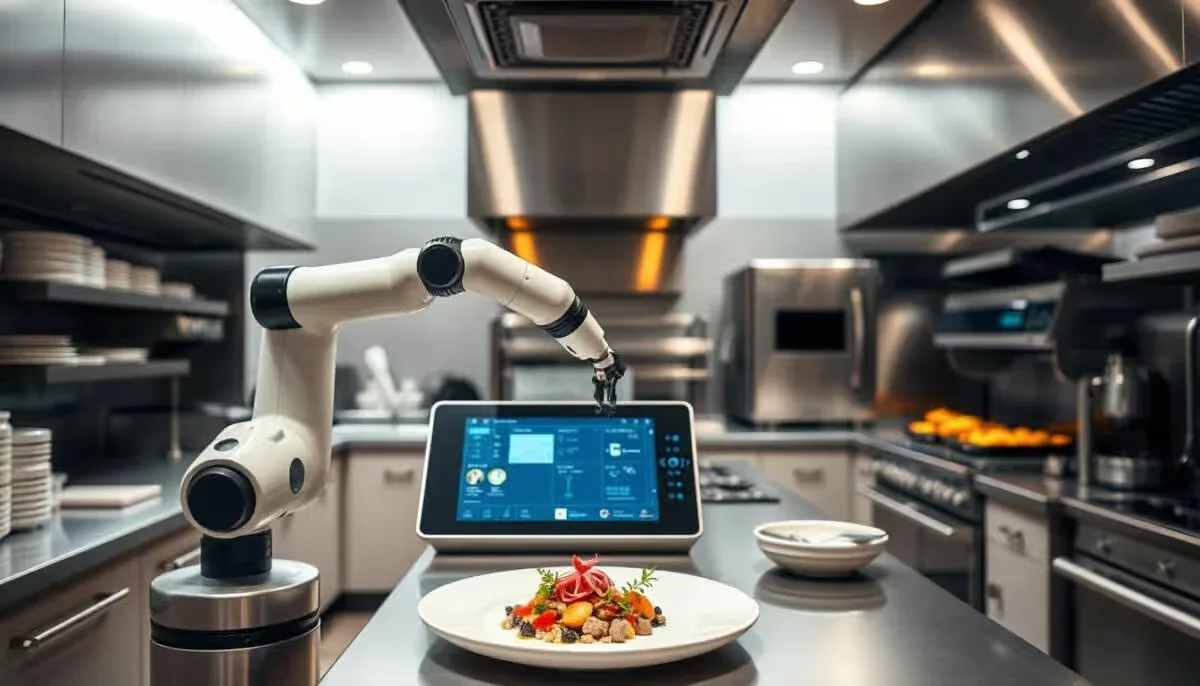
How Smart Kitchen Tech Improves Restaurant Profit Margins, Without Losing the Human Touch
Let me start with a confession: I’m not a chef. Not even close. My idea of “culinary expertise” was once limited to reheating leftovers in a microwave while praying I didn’t set off the smoke alarm. But after moving to Nashville and diving headfirst into the city’s food scene, where hot chicken joints and farm-to-table bistros thrive on razor-thin margins, I’ve become obsessed with one question: How do restaurants actually make money? And more importantly, how can technology help them keep more of it?
Here’s the thing: Running a restaurant isn’t just about serving great food. It’s about managing a thousand moving parts, labor costs, food waste, energy efficiency, customer demand, all while keeping diners happy and staff sane. And that’s where smart kitchen tech comes in. It’s not just about flashy gadgets or Instagram-worthy kitchen setups. It’s about using data, automation, and predictive analytics to squeeze every last drop of efficiency out of your operations. But does it actually work? Or is it just another expensive trend that’ll leave you with a fancy new toy and a lighter wallet?
I’ve spent the last few months talking to restaurant owners, chefs, and tech developers to separate the hype from the reality. What I found surprised me. Smart kitchen tech isn’t just improving profit margins, it’s redefining what’s possible in food service. From AI-powered inventory systems that slash food waste to energy-efficient appliances that cut utility bills, the right tools can add thousands (or even tens of thousands) to your bottom line. But, and this is a big but, it’s not a magic bullet. The key is knowing which technologies to adopt, how to implement them, and when to trust the data over your gut.
So, if you’re a restaurant owner, manager, or just someone curious about how tech is changing the food industry, stick around. We’re going to explore:
- How smart kitchen tech actually works (and why it’s not as complicated as you think)
- The biggest profit leaks in restaurants, and how tech plugs them
- Real-world examples of restaurants saving money with smart tools
- The hidden costs and pitfalls of adopting new tech
- And, most importantly, how to get started without breaking the bank
Let’s dive in.
The Profit Problem: Why Restaurants Struggle (And How Tech Helps)
The Brutal Math of Restaurant Margins
First, let’s talk numbers. According to the National Restaurant Association, the average restaurant profit margin hovers between 3% and 5%. That’s not a typo. For every $100 in sales, most restaurants keep just $3 to $5 after paying for food, labor, rent, utilities, and all the other expenses that come with running a business. To put that in perspective, a grocery store might operate with margins of 10% to 15%, while a software company could see margins of 20% or higher. So why do restaurants struggle so much?
The answer lies in the unique challenges of the industry. Restaurants deal with:
- Perishable inventory: Food spoils. If you don’t sell it, you lose it. And unlike a retail store, you can’t just put last night’s special on sale tomorrow.
- Labor-intensive operations: Cooking, serving, and cleaning require hands-on work. You can’t automate away the need for human interaction (at least not yet).
- Fluctuating demand: One night you’re packed, the next you’re half-empty. Predicting how much food to prep is more art than science.
- Thin margins on high-volume sales: You might sell hundreds of meals a day, but if your costs are even slightly off, those small inefficiencies add up fast.
This is where smart kitchen tech comes in. It’s not about replacing the human element, it’s about giving you the tools to make smarter decisions, reduce waste, and optimize every aspect of your operation. Think of it like upgrading from a flip phone to a smartphone. The basics are the same (you’re still making calls, sending texts), but the capabilities are orders of magnitude more powerful.
The Biggest Profit Leaks in Restaurants
Before we talk solutions, let’s identify the biggest profit leaks in most restaurants. These are the areas where money slips through the cracks, often without owners even realizing it. I’ve broken them down into five categories:
- Food Waste: The average restaurant throws away 4% to 10% of the food it purchases. That’s like buying 100 pounds of ingredients and tossing 10 pounds straight into the trash. For a mid-sized restaurant, that can add up to $50,000 or more per year in lost revenue. And it’s not just about the cost of the food, it’s also the labor, energy, and time spent prepping and storing ingredients that never get used.
- Overstaffing (or Understaffing): Labor is one of the biggest expenses for any restaurant, often accounting for 25% to 35% of total revenue. But scheduling is a nightmare. Overstaff on a slow night, and you’re paying employees to stand around. Understaff on a busy night, and you’re dealing with long wait times, unhappy customers, and stressed-out employees. Neither scenario is good for your bottom line.
- Energy Inefficiency: Commercial kitchens are energy hogs. Between refrigeration, cooking equipment, lighting, and HVAC, restaurants can spend $2,000 to $5,000 per month on utilities. And a lot of that energy is wasted, like keeping ovens running when they’re not in use or using inefficient appliances that guzzle electricity.
- Inventory Mismanagement: How many times have you run out of a key ingredient mid-service? Or discovered a forgotten case of tomatoes in the walk-in, now covered in mold? Poor inventory management leads to over-ordering, spoilage, and emergency last-minute purchases that cost way more than planned orders.
- Inefficient Cooking Processes: Ever watched a line cook juggle five tickets at once, trying to time everything perfectly? It’s impressive, but it’s also a recipe for inefficiency. Overcooking, undercooking, or holding food too long can lead to waste, re-fires, and unhappy customers. And every time a dish comes back to the kitchen, you’re losing money.
So, how does smart kitchen tech address these issues? Let’s break it down.
How Smart Kitchen Tech Plugs the Profit Leaks
1. Reducing Food Waste with AI-Powered Inventory Systems
Food waste is one of the most frustrating, and avoidable, profit killers in the restaurant industry. But here’s the good news: smart inventory systems can cut food waste by 30% to 50%, according to industry studies. How? By using data to predict exactly how much food you’ll need, when you’ll need it, and how to use up ingredients before they spoil.
Take Winnow Solutions, for example. Their AI-powered system uses a scale and camera to track what’s being thrown away in the kitchen. Over time, it learns your waste patterns and suggests adjustments to your ordering and prep. One UK-based restaurant group using Winnow reported saving $70,000 per year across three locations, just by reducing food waste.
But AI isn’t the only tool in the box. Simpler systems, like Toast’s inventory management software, integrate with your POS to track ingredient usage in real time. If you notice that your Tuesday special isn’t selling, the system can alert you to adjust prep quantities or offer a discount to move inventory before it spoils. It’s like having a crystal ball for your kitchen, but one that’s actually reliable.
Is this the best approach? Let’s consider the alternatives. Some restaurants still rely on manual inventory counts, which are time-consuming and prone to human error. Others use spreadsheets, which are better than nothing but still leave a lot of room for waste. AI-powered systems aren’t perfect, they require some upfront setup and training, but the long-term savings are hard to ignore.
2. Optimizing Labor Costs with Predictive Scheduling
Labor is the biggest expense for most restaurants, and scheduling is one of the trickiest parts of the job. Get it wrong, and you’re either wasting money on overstaffing or dealing with the fallout of understaffing. But what if you could predict exactly how busy you’ll be on any given day, and schedule accordingly?
That’s where predictive scheduling tools come in. These systems use historical sales data, weather forecasts, local events, and even social media trends to predict customer demand. For example, if there’s a big concert downtown, the system might recommend adding an extra server and two line cooks for the night. If it’s raining on a typically slow Tuesday, it might suggest cutting a few shifts.
One tool making waves in this space is 7shifts, which integrates with your POS to create optimized schedules based on sales forecasts. Restaurants using 7shifts report reducing labor costs by 1% to 3%, which might not sound like much, but for a restaurant with $2 million in annual sales, that’s $20,000 to $60,000 back in your pocket.
But here’s the catch: Predictive scheduling isn’t foolproof. It relies on data, and if your data is incomplete or inaccurate, the predictions will be off. For example, if your POS isn’t tracking takeout orders separately from dine-in, the system might underestimate demand on busy nights. And let’s be real, no algorithm can predict a sudden rush of customers because a local influencer raved about your brunch on Instagram.
So, should you trust the tech or your gut? I’m torn between the two. On one hand, data-driven scheduling is more accurate than guessing. On the other hand, there’s no substitute for experience. Maybe the best approach is to use the tech as a guide but leave room for human judgment. After all, you know your restaurant better than any algorithm.
3. Cutting Energy Costs with Smart Appliances
Commercial kitchens are energy vampires. Between refrigeration, cooking equipment, and HVAC, restaurants can spend $2,000 to $5,000 per month on utilities. And a lot of that energy is wasted. For example, did you know that commercial refrigerators can account for up to 40% of a restaurant’s energy use? Or that leaving an oven on standby can waste hundreds of dollars per year?
Enter smart appliances. These aren’t just your typical Energy Star-rated machines. We’re talking about appliances that use sensors, AI, and connectivity to optimize energy use in real time. For example:
- Smart refrigerators: These units monitor temperature, humidity, and door openings to adjust cooling cycles. Some even use AI to predict when the door will be opened (based on historical patterns) and pre-cool the interior to maintain temperature without overworking the compressor. Companies like True Manufacturing and Hoshizaki offer smart refrigeration units that can reduce energy use by 20% to 30%.
- Induction cooktops: Unlike gas or electric stoves, induction cooktops heat up instantly and only use energy when a pan is on the burner. They’re also more precise, which reduces the risk of overcooking (and wasting food). Plus, they’re safer and easier to clean, which can save on labor costs.
- Smart ovens: These ovens use sensors to monitor cooking progress and adjust temperature and time automatically. Some, like the Rational SelfCookingCenter, can even recognize what’s being cooked (e.g., a steak vs. a casserole) and adjust settings accordingly. This not only saves energy but also reduces the risk of human error.
But here’s the thing: Smart appliances aren’t cheap. A high-end smart oven can cost $20,000 or more, and a smart refrigerator might run you $5,000 to $10,000. So, is the investment worth it? Let’s do the math.
Say you replace an old, inefficient walk-in refrigerator with a smart model that cuts energy use by 30%. If your current fridge costs $500 per month to run, the new one could save you $150 per month. Over five years, that’s $9,000 in savings-not including potential rebates from utility companies for upgrading to energy-efficient equipment. And that’s just one appliance. If you upgrade multiple pieces of equipment, the savings add up fast.
Of course, there are other ways to cut energy costs without buying new appliances. Simple fixes like installing LED lighting, using programmable thermostats, and training staff to turn off equipment when not in use can make a big difference. But if you’re already in the market for new equipment, it’s worth considering smart options.
4. Streamlining Inventory Management with IoT Sensors
Inventory management is one of those tasks that’s easy to overlook, until it’s not. Run out of a key ingredient mid-service, and you’re scrambling to find a substitute (or disappointing customers). Over-order, and you’re stuck with spoilage. And let’s not forget the time-consuming process of manual inventory counts, which can take hours and are prone to errors.
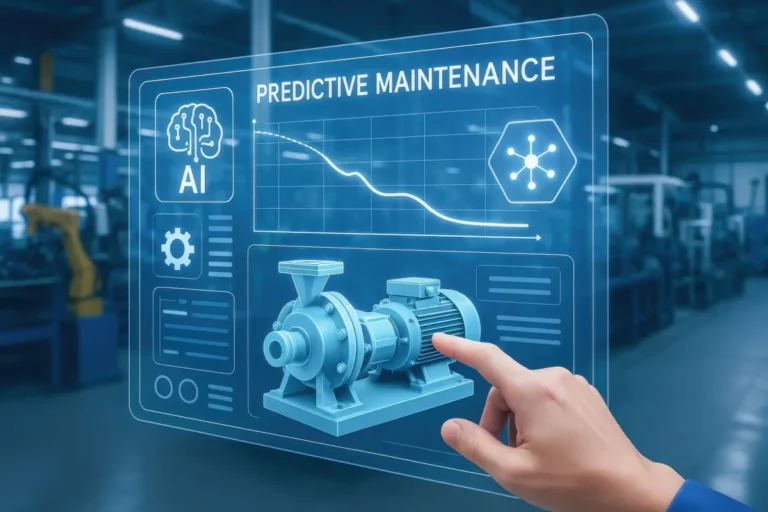
This is where IoT (Internet of Things) sensors come in. These small, wireless devices can be placed in refrigerators, dry storage, and even on individual ingredients to track temperature, humidity, and stock levels in real time. Some systems, like Enevo and Leanpath, go a step further by using AI to predict when you’ll run out of an ingredient and automatically generate purchase orders.
Here’s how it works:
- Sensors monitor stock levels: For example, a weight sensor in your walk-in fridge can track how much of a particular ingredient is left. When stock gets low, the system sends an alert.
- AI predicts usage: The system analyzes historical data to predict how much of an ingredient you’ll need in the coming days or weeks. If it notices that you’re using more tomatoes than usual, it might suggest increasing your next order.
- Automated ordering: Some systems can even place orders automatically with your suppliers, ensuring you never run out of key ingredients (or over-order).
The benefits are clear:
- Reduced food waste: By tracking stock levels in real time, you can use up ingredients before they spoil.
- Lower labor costs: Automated inventory tracking means your staff spends less time counting stock and more time on high-value tasks.
- Fewer emergency orders: Running out of an ingredient mid-service often means paying a premium for a last-minute delivery. IoT sensors help you avoid these costly situations.
- Better supplier relationships: When you order consistently and predictably, suppliers are more likely to offer discounts or favorable terms.
But like any tech, IoT sensors have their limitations. They require an upfront investment (though some systems offer subscription-based pricing), and they need to be maintained and calibrated regularly. There’s also the learning curve, your staff will need training to use the system effectively. And let’s be honest, no system is perfect. There will always be unexpected variables, like a sudden rush of customers or a supplier delay.
Still, the potential savings are hard to ignore. One restaurant using IoT sensors reported reducing food waste by 40% and cutting inventory costs by 15%. For a mid-sized restaurant, that could mean $50,000 or more in annual savings.
5. Improving Cooking Efficiency with Smart Kitchen Displays
Ever watched a line cook juggle five tickets at once, trying to time everything perfectly? It’s a high-pressure job, and even the best chefs can make mistakes, especially during a rush. Overcooking, undercooking, or holding food too long can lead to waste, re-fires, and unhappy customers. And every time a dish comes back to the kitchen, you’re losing money.
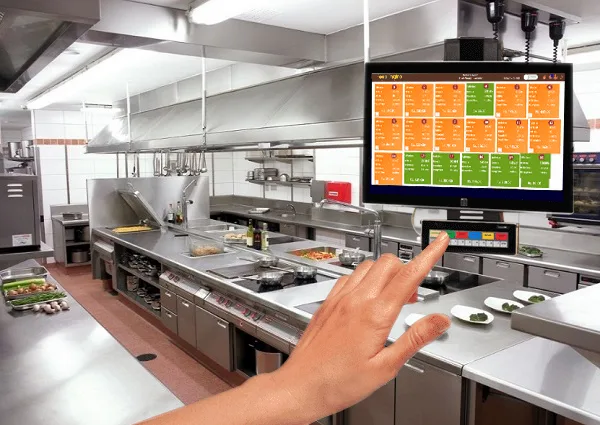
This is where smart kitchen display systems (KDS) come in. These digital screens replace traditional paper tickets and use AI to optimize cooking workflows. Here’s how they work:
- Automated ticket routing: Orders are automatically sent to the right station (e.g., grill, fryer, salad) based on the dish. This reduces the risk of tickets getting lost or misread.
- Real-time cooking timers: Each ticket includes a timer that counts down the ideal cooking time for each dish. If a dish is taking too long, the system alerts the chef.
- Priority management: The system can prioritize orders based on factors like table number, time since order, or special requests (e.g., a rare steak vs. well-done).
- Integration with POS: Smart KDS systems integrate with your POS to track order status, so front-of-house staff can see when a dish is ready to be served.
One popular option in this space is Toast’s Kitchen Display System, which is designed specifically for restaurants. Restaurants using Toast KDS report reducing ticket times by 10% to 20% and cutting food waste by 5% to 10%. That might not sound like a lot, but for a busy restaurant, it can add up to thousands of dollars in savings per year.
But here’s the thing: Smart KDS systems aren’t just about speed. They’re also about consistency. By standardizing cooking times and workflows, you can ensure that every dish meets your quality standards, whether it’s cooked by your head chef or a new hire. And that consistency is key to building a loyal customer base.
Of course, there are challenges. Smart KDS systems require an upfront investment (though many are subscription-based), and they need to be customized to your menu and kitchen layout. There’s also the learning curve, your staff will need training to use the system effectively. And let’s be real, no system can replace the skill and experience of a great chef. But for restaurants looking to improve efficiency and reduce waste, smart KDS systems are a game-changer.
The Hidden Costs of Smart Kitchen Tech (And How to Avoid Them)
1. The Upfront Investment
Let’s address the elephant in the room: smart kitchen tech isn’t cheap. Whether you’re buying new appliances, installing sensors, or subscribing to software, there’s an upfront cost that can be hard to swallow, especially for small or independent restaurants. For example:
- A smart oven: $10,000 to $25,000
- A smart refrigerator: $5,000 to $10,000
- IoT sensors: $500 to $2,000 per unit (plus subscription fees)
- Inventory management software: $50 to $200 per month
- Predictive scheduling software: $20 to $100 per month per employee
For a small restaurant, these costs can add up fast. So, is the investment worth it? The short answer is: it depends. If you’re struggling with food waste, high energy bills, or inefficient workflows, the long-term savings could outweigh the upfront costs. But if your operations are already running smoothly, the ROI might not be as clear.
Here’s how to make the math work:
- Start small: You don’t need to overhaul your entire kitchen at once. Pick one area where you’re losing the most money (e.g., food waste, energy costs) and start there.
- Look for financing options: Many equipment manufacturers and software providers offer financing or leasing options to spread out the cost. Some even offer pay-as-you-go models, where you only pay for what you use.
- Check for rebates: Utility companies and government agencies often offer rebates for upgrading to energy-efficient equipment. For example, the ENERGY STAR program offers rebates for qualifying appliances.
- Calculate the ROI: Before making a purchase, run the numbers. How much will the tech save you per month? How long will it take to recoup the investment? If the payback period is more than a few years, it might not be worth it.
2. The Learning Curve
Even the best tech is useless if your staff doesn’t know how to use it. And let’s be honest, kitchen staff aren’t always the most tech-savvy bunch. Introducing new tools can lead to resistance, frustration, and even pushback. I’ve heard stories of chefs unplugging smart appliances because they prefer the old way of doing things, or servers ignoring digital scheduling tools because they’re used to paper schedules.
So, how do you get your team on board? Here are a few tips:
- Involve them in the process: Before making a purchase, ask your staff for input. What pain points do they experience in their daily work? What tools would make their jobs easier? When employees feel heard, they’re more likely to embrace change.
- Provide training: Don’t assume your staff will figure it out on their own. Schedule dedicated training sessions and provide ongoing support. Some software providers offer free training or tutorials, take advantage of them.
- Start with a pilot: Instead of rolling out new tech to the entire kitchen at once, start with a small pilot. For example, test a smart KDS system on one station before expanding to the whole line. This gives your staff time to adjust and provides valuable feedback.
- Lead by example: If you’re excited about the new tech, your staff will be more likely to get on board. Show them how it works, highlight the benefits, and address any concerns they have.
3. The Risk of Over-Reliance on Tech
Here’s a question I’ve been wrestling with: How much should you trust the tech? On one hand, data-driven decisions are more accurate than guesswork. On the other hand, no system is perfect. Algorithms can’t account for every variable, and sometimes your gut is right. So, where do you draw the line?
I’m torn between the two. On one hand, I’ve seen restaurants save thousands of dollars by using predictive scheduling tools or AI-powered inventory systems. On the other hand, I’ve heard stories of restaurants blindly following tech recommendations and ending up with overstocked ingredients or understaffed shifts.
Maybe the best approach is to use the tech as a guide but leave room for human judgment. For example, if your predictive scheduling tool recommends cutting a shift, but you know there’s a big event in town, you might want to keep the extra staff on. Or if your inventory system suggests ordering more tomatoes, but you know your supplier is running late, you might want to hold off.
The key is to strike a balance. Use the tech to inform your decisions, but don’t let it replace your experience and intuition. After all, you know your restaurant better than any algorithm.
4. The Challenge of Integration
One of the biggest challenges of adopting smart kitchen tech is integration. Most restaurants use a patchwork of systems, POS, inventory management, scheduling, accounting, and getting them all to talk to each other can be a nightmare. For example, if your inventory system doesn’t integrate with your POS, you’ll end up manually entering data, which defeats the purpose of automation.
Here’s how to avoid integration headaches:
- Choose compatible systems: Before making a purchase, ask the vendor about integration options. Can the system connect to your POS? Your accounting software? Your payroll system? The more integrations, the better.
- Work with a consultant: If you’re not tech-savvy, consider hiring a consultant to help you choose and implement the right systems. They can save you time, money, and headaches in the long run.
- Start with an all-in-one solution: Some companies, like Toast and Square for Restaurants, offer all-in-one platforms that include POS, inventory management, scheduling, and more. These systems are designed to work together, which can simplify integration.
- Test before you commit: Before rolling out a new system, test it in a sandbox environment to make sure it works with your existing tools. This can help you catch any integration issues before they become a problem.
Real-World Examples: Restaurants Saving Money with Smart Kitchen Tech
1. The Fast-Casual Chain Cutting Food Waste by 40%
Let’s start with a success story. Sweetgreen, the fast-casual salad chain, has been a pioneer in using smart kitchen tech to improve efficiency and reduce waste. One of their biggest challenges was managing perishable ingredients, like avocados, which have a short shelf life and are prone to spoilage.
To tackle this, Sweetgreen partnered with Afresh, an AI-powered inventory management system. Afresh uses machine learning to predict demand and optimize ordering, taking into account factors like weather, local events, and historical sales data. The result? Sweetgreen reduced food waste by 40% and cut inventory costs by 15%-saving millions of dollars across their locations.
But here’s the thing: Sweetgreen didn’t just plug in the tech and call it a day. They worked closely with Afresh to customize the system for their menu and operations. They also trained their staff to use the system effectively and provided ongoing support. In other words, they treated the tech as a tool, not a replacement for human expertise.
2. The Independent Restaurant Slashing Energy Costs
Next, let’s look at a smaller operation. The Grey Plume, a farm-to-table restaurant in Omaha, Nebraska, was struggling with high energy bills. Their old equipment was inefficient, and their utility costs were eating into their already thin margins. So, they decided to invest in smart appliances.
First, they replaced their old walk-in refrigerator with a smart model from True Manufacturing. The new fridge used sensors to monitor temperature and humidity, adjusting cooling cycles to reduce energy use. They also installed induction cooktops, which are more energy-efficient than gas or electric stoves. The result? The Grey Plume cut their energy bills by 30%, saving $1,500 per month.
But the benefits didn’t stop there. The smart refrigerator also reduced food spoilage, and the induction cooktops improved cooking precision. Plus, the restaurant’s staff loved the new equipment, it was easier to use and cleaner than the old gear.
3. The Bar Saving Thousands with Predictive Scheduling
Finally, let’s talk about a bar. The Aviary, a high-end cocktail bar in Chicago, was struggling with labor costs. Their business was unpredictable, some nights were packed, others were slow, and they were constantly overstaffing or understaffing. So, they turned to predictive scheduling tools.
They implemented 7shifts, a scheduling software that uses historical sales data and local events to predict demand. The system recommended optimal staffing levels for each shift, taking into account factors like weather, holidays, and even nearby concerts. The result? The Aviary reduced labor costs by 2%, saving $20,000 per year.
But here’s the kicker: The Aviary didn’t just use the tech to cut costs. They also used it to improve employee satisfaction. By scheduling more accurately, they reduced the number of last-minute shift changes and gave their staff more predictable schedules. Happy employees mean lower turnover, which saves even more money in the long run.
How to Get Started with Smart Kitchen Tech (Without Breaking the Bank)
1. Identify Your Biggest Profit Leaks
Before you start shopping for tech, take a step back and identify your biggest profit leaks. Where are you losing the most money? Is it food waste? Labor costs? Energy bills? Once you know where the problems are, you can focus on the solutions that will have the biggest impact.
Here’s how to do it:
- Track your expenses: Look at your financial statements and identify your biggest costs. How much are you spending on food? Labor? Utilities? Where are the biggest opportunities for savings?
- Talk to your staff: Your employees are on the front lines, and they know where the inefficiencies are. Ask them what’s wasting the most time or money in their daily work.
- Audit your operations: Spend a few days observing your kitchen and front-of-house operations. Where are the bottlenecks? What’s causing delays or waste?
2. Start Small and Scale Up
You don’t need to overhaul your entire kitchen at once. In fact, it’s better to start small and scale up as you see results. Pick one area where you’re losing the most money and focus on that first. For example:
- If food waste is your biggest problem, start with an AI-powered inventory system.
- If labor costs are eating into your margins, try a predictive scheduling tool.
- If energy bills are sky-high, look into smart appliances or energy-efficient upgrades.
Once you’ve seen results in one area, you can expand to others. This approach is less overwhelming and allows you to test the tech before committing to a larger investment.
3. Look for Financing and Rebates
Smart kitchen tech isn’t cheap, but there are ways to make it more affordable. Here are a few options:
- Financing: Many equipment manufacturers and software providers offer financing or leasing options. This allows you to spread out the cost over time, making it more manageable.
- Subscriptions: Some software providers offer subscription-based pricing, where you pay a monthly fee instead of a large upfront cost. This can be a good option for small restaurants or those on a tight budget.
- Rebates: Utility companies and government agencies often offer rebates for upgrading to energy-efficient equipment. For example, the ENERGY STAR program offers rebates for qualifying appliances. Check with your local utility provider to see what’s available in your area.
4. Train Your Staff and Get Buy-In
Even the best tech is useless if your staff doesn’t know how to use it. Before rolling out a new system, make sure your team is trained and on board. Here’s how:
- Involve them in the process: Before making a purchase, ask your staff for input. What pain points do they experience in their daily work? What tools would make their jobs easier?
- Provide training: Schedule dedicated training sessions and provide ongoing support. Some software providers offer free training or tutorials, take advantage of them.
- Start with a pilot: Instead of rolling out new tech to the entire kitchen at once, start with a small pilot. For example, test a smart KDS system on one station before expanding to the whole line.
- Lead by example: If you’re excited about the new tech, your staff will be more likely to get on board. Show them how it works, highlight the benefits, and address any concerns they have.
5. Measure Your Results and Adjust
Finally, don’t just set it and forget it. Once you’ve implemented a new system, track your results and make adjustments as needed. Here’s how:
- Set benchmarks: Before implementing the tech, establish benchmarks for key metrics like food waste, labor costs, and energy use. This will give you a baseline to measure against.
- Track your progress: Use the data from your new system to track your progress. Are you seeing the savings you expected? If not, why?
- Make adjustments: If something isn’t working, don’t be afraid to make changes. Maybe you need to tweak the settings, provide additional training, or try a different approach.
- Celebrate your wins: When you see results, share them with your team. Celebrating your wins can boost morale and encourage everyone to keep using the tech effectively.
The Future of Smart Kitchen Tech: What’s Next?
So, what’s next for smart kitchen tech? Here are a few trends to watch:
1. More AI and Machine Learning
AI and machine learning are already transforming the restaurant industry, but we’re just scratching the surface. In the coming years, we’ll see even more advanced AI tools that can:
- Predict customer preferences: Imagine a system that analyzes customer data to predict what dishes will be popular on any given day. This could help you optimize your menu and reduce waste.
- Automate ordering: AI-powered systems could automatically place orders with suppliers based on predicted demand, ensuring you never run out of key ingredients.
- Optimize pricing: Dynamic pricing tools could adjust menu prices in real time based on demand, weather, and other factors. This could help you maximize revenue during peak times and move inventory during slow periods.
2. Robotics and Automation
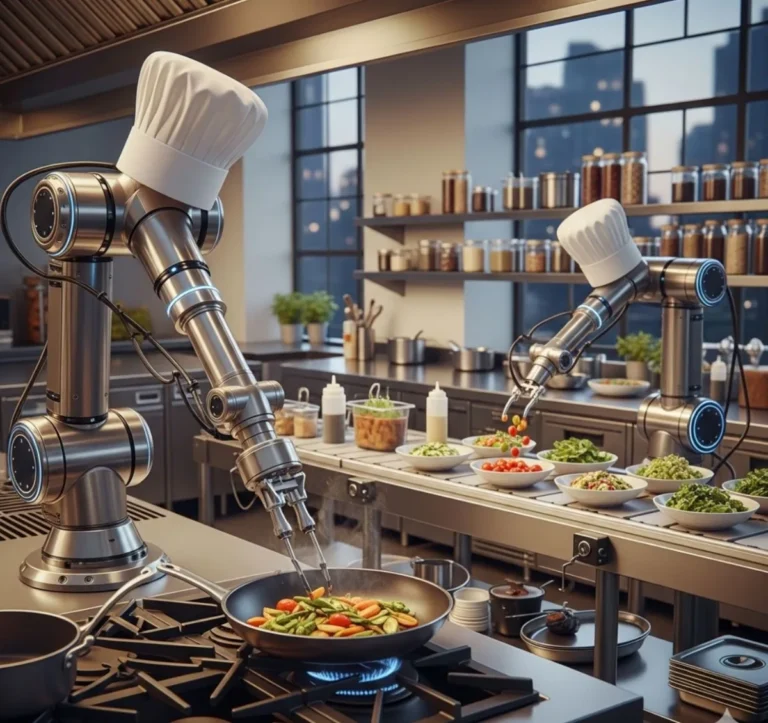
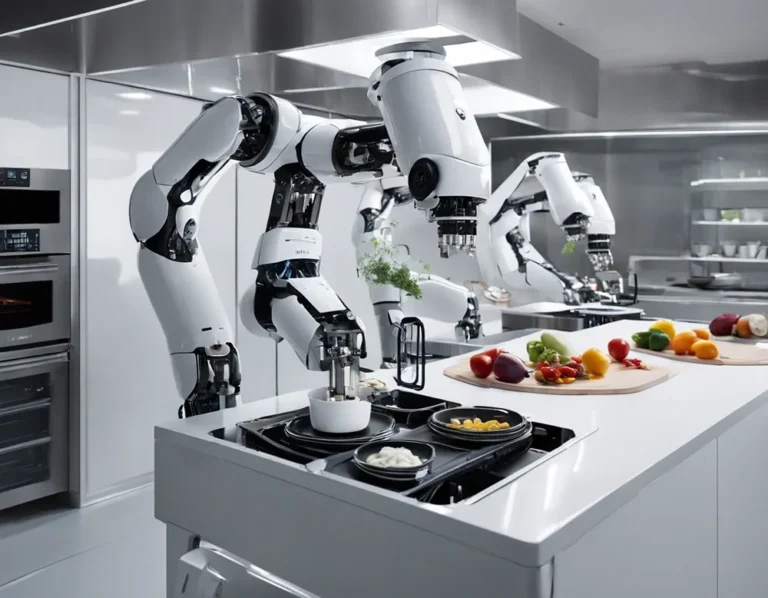
Robots in the kitchen? It’s not as far-fetched as it sounds. We’re already seeing robots flipping burgers, making pizzas, and even brewing coffee. In the coming years, we’ll see even more automation in restaurants, including:
- Automated cooking: Robots that can cook complex dishes with precision, reducing the risk of human error.
- Automated cleaning: Robots that can clean floors, dishes, and even kitchen equipment, reducing labor costs and improving hygiene.
- Automated delivery: Drones and autonomous vehicles that can deliver food to customers, reducing delivery costs and improving speed.
But here’s the thing: While automation can improve efficiency, it’s not a replacement for human interaction. Customers still want a personal touch, and employees still want to feel valued. The key is to use automation to handle repetitive tasks, freeing up your staff to focus on what they do best, creating great food and providing excellent service.
3. Sustainability and Green Tech
Sustainability isn’t just a buzzword, it’s a business imperative. Consumers are increasingly demanding eco-friendly options, and restaurants that don’t adapt risk losing customers. In the coming years, we’ll see even more green tech in kitchens, including:
- Energy-efficient appliances: Appliances that use less energy and water, reducing utility costs and environmental impact.
- Waste reduction systems: Tools that help restaurants track and reduce food waste, packaging waste, and other waste streams.
- Renewable energy: Solar panels, wind turbines, and other renewable energy sources that can power restaurants and reduce reliance on the grid.
But sustainability isn’t just about the environment, it’s also about the bottom line. By reducing waste and energy use, restaurants can save money and improve their profit margins. And in an industry with razor-thin margins, every dollar counts.
4. The Rise of the Connected Kitchen
Finally, we’re moving toward a future where every piece of equipment in the kitchen is connected and communicating with each other. Imagine a kitchen where:
- Your smart oven talks to your inventory system to predict when you’ll run out of ingredients.
- Your POS talks to your scheduling tool to adjust staffing levels based on real-time demand.
- Your refrigerator talks to your energy management system to optimize cooling cycles and reduce energy use.
This is the future of the connected kitchen, and it’s closer than you think. By integrating all your systems, you can create a seamless, efficient operation that saves time, money, and resources.
Final Thoughts: Is Smart Kitchen Tech Worth It?
So, is smart kitchen tech worth the investment? The short answer is: it depends. If you’re struggling with food waste, high energy bills, or inefficient workflows, the right tech can save you thousands of dollars per year. But if your operations are already running smoothly, the ROI might not be as clear.
Here’s what I’ve learned from my research:
- Start small: You don’t need to overhaul your entire kitchen at once. Pick one area where you’re losing the most money and focus on that first.
- Choose the right tools: Not all tech is created equal. Do your research, read reviews, and talk to other restaurant owners before making a purchase.
- Train your staff: Even the best tech is useless if your staff doesn’t know how to use it. Provide training and ongoing support to ensure everyone is on board.
- Measure your results: Track your progress and make adjustments as needed. If something isn’t working, don’t be afraid to try a different approach.
- Balance tech with human expertise: Tech is a tool, not a replacement for human judgment. Use it to inform your decisions, but don’t let it replace your experience and intuition.
At the end of the day, smart kitchen tech isn’t about replacing the human element, it’s about giving you the tools to make smarter decisions, reduce waste, and optimize every aspect of your operation. And in an industry with razor-thin margins, that can make all the difference.
So, what’s the next step? Maybe it’s time to audit your operations and identify your biggest profit leaks. Or maybe it’s time to start researching the tech that could help you plug those leaks. Either way, one thing is clear: The future of restaurants is smart. The question is, are you ready to embrace it?
FAQ
Q: How much can smart kitchen tech actually save my restaurant?
A: The savings vary depending on the tech and your specific operations, but most restaurants see significant improvements. For example, AI-powered inventory systems can reduce food waste by 30% to 50%, predictive scheduling tools can cut labor costs by 1% to 3%, and smart appliances can reduce energy use by 20% to 30%. For a mid-sized restaurant, that could add up to $50,000 or more in annual savings.
Q: What’s the easiest smart kitchen tech to implement?
A: If you’re just getting started, I’d recommend beginning with inventory management software or a smart kitchen display system (KDS). These tools are relatively easy to implement, don’t require a huge upfront investment, and can have an immediate impact on your operations. For example, a smart KDS can reduce ticket times and improve cooking efficiency, while inventory software can help you track stock levels and reduce waste.
Q: How do I get my staff on board with new tech?
A: Getting staff buy-in is crucial for the success of any new tech. Here are a few tips:
- Involve them in the process: Before making a purchase, ask your staff for input. What pain points do they experience in their daily work? What tools would make their jobs easier?
- Provide training: Schedule dedicated training sessions and provide ongoing support. Some software providers offer free training or tutorials, take advantage of them.
- Start with a pilot: Instead of rolling out new tech to the entire kitchen at once, start with a small pilot. For example, test a smart KDS system on one station before expanding to the whole line.
- Lead by example: If you’re excited about the new tech, your staff will be more likely to get on board. Show them how it works, highlight the benefits, and address any concerns they have.
Q: What’s the biggest mistake restaurants make when adopting smart kitchen tech?
A: The biggest mistake I see is over-reliance on tech without proper training or integration. Some restaurants invest in expensive new tools but don’t take the time to train their staff or integrate the tech with their existing systems. As a result, the tech doesn’t get used effectively, and the restaurant doesn’t see the expected savings. To avoid this, start small, provide training, and measure your results. And remember, tech is a tool, not a replacement for human expertise.
@article{how-smart-kitchen-tech-improves-restaurant-profit-margins-a-deep-dive-into-the-future-of-food-service,
    title   = {How Smart Kitchen Tech Improves Restaurant Profit Margins: A Deep Dive Into the Future of Food Service},
    author  = {Chef's icon},
    year    = {2026},
    journal = {Chef's Icon},
    url     = {https://chefsicon.com/how-smart-kitchen-tech-improves-restaurant-profit-margins/}
}