The Best Fluffy Pancakes recipe you will fall in love with. Full of tips and tricks to help you make the best pancakes.
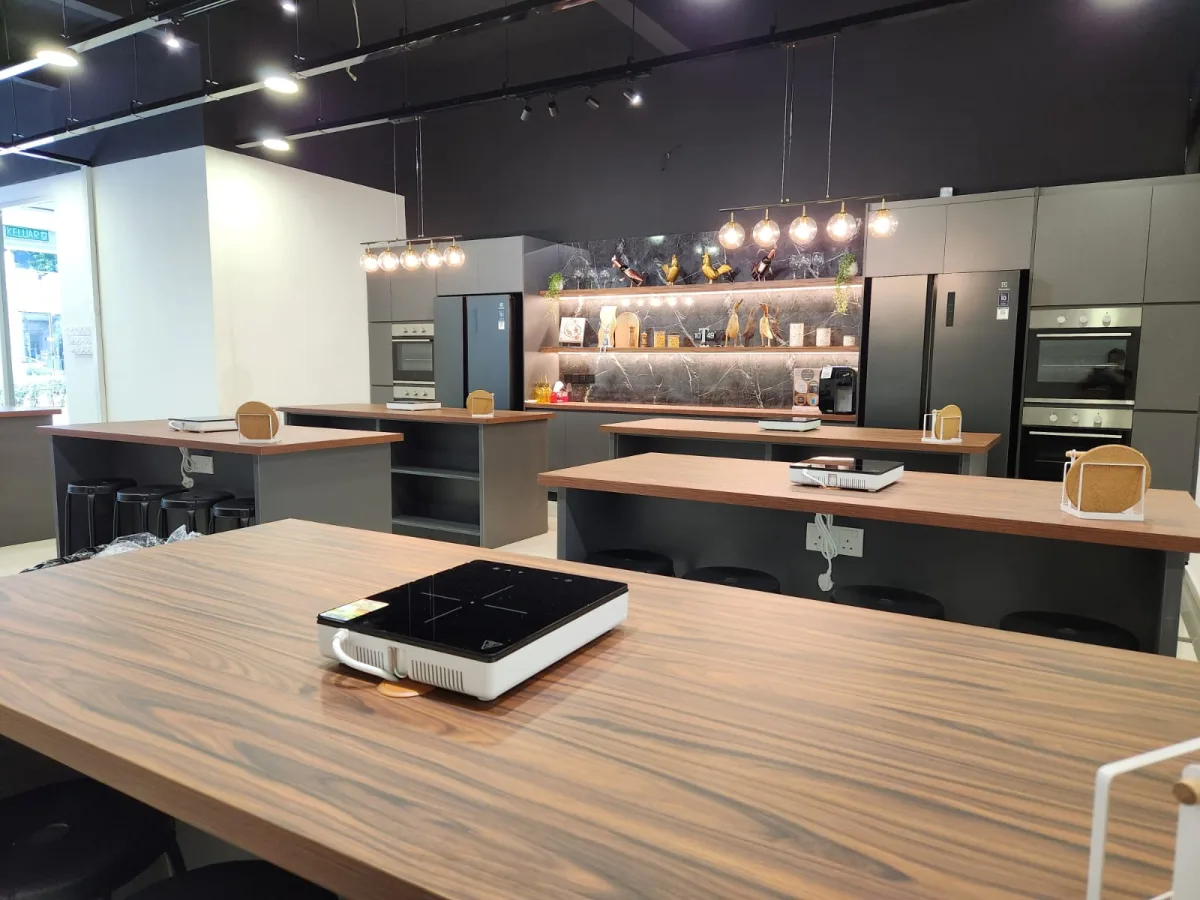
Mobile Kitchen Stands vs. Fixed Countertops: Which One’s Really Worth Your Space?
Let me set the scene: It’s 2026, and I’m standing in the middle of a brand-new commercial kitchen in Nashville, staring at a half-empty floor plan that’s supposed to house a thriving café by next month. The contractor’s just asked me the million-dollar question: “You want mobile kitchen stands or fixed countertops?” And honestly? I froze. Not because I didn’t know the basics, flexibility vs. stability, cost vs. durability, but because I’d never really *felt* the weight of that decision before. Not like this. Not when every inch of space could mean the difference between a kitchen that flows and one that fights you.
That moment stuck with me. Maybe it’s because I’ve spent years writing about kitchen design for Chefsicon, or maybe it’s just Luna, my rescue cat, judging me from the corner of my home office as I overthink yet another life choice. Either way, I realized something: this isn’t just about equipment. It’s about how you work, how your team moves, and whether your kitchen is a partner in your success or just another obstacle to overcome. So let’s break it down, no fluff, no sales pitch, just the raw, unfiltered truth about mobile kitchen stands vs. fixed countertops. By the end, you’ll know which one’s right for *your* space, budget, and sanity.
Here’s what we’re covering:
- Why this decision might be more emotional than you think (yes, really)
- The hidden costs and benefits no one talks about
- How to test-drive your choice before committing
- Real-world examples from kitchens that got it right (and wrong)
- And, of course, the nitty-gritty specs that’ll make or break your workflow
Sound good? Let’s dig in.
The Great Divide: Why This Decision Feels So Personal
It’s Not Just About Space, It’s About Identity
I’ll admit it: I’ve always been a sucker for the idea of a fixed countertop. There’s something reassuring about walking into a kitchen and seeing everything in its place, like a well-oiled machine where every tool, every ingredient, has a home. It’s efficient. It’s professional. It’s… *boring*? Wait, no, that’s not fair. But here’s the thing: fixed countertops are the monogamous relationship of kitchen design. You commit, you build your life around them, and if you ever want to change? Well, good luck. They’re permanent. They’re stable. And they’re *not* for everyone.
On the flip side, mobile kitchen stands are the free spirits of the culinary world. They’re the ones that say, “Why should I be tied down?” Need to reconfigure your prep station for a catering gig? No problem. Want to turn your kitchen into a pop-up taco stand for a weekend? Done. They’re adaptable, they’re flexible, and they’re *not* afraid of change. But, and this is a big but, they come with their own set of challenges. More on that later.
So why does this feel so personal? Because it is. Your kitchen isn’t just a workspace; it’s an extension of how you see yourself as a chef, a business owner, or even a creative. Are you the type who thrives on routine, or do you need room to pivot at a moment’s notice? Do you value tradition, or are you all about innovation? These aren’t just questions about equipment, they’re questions about who you are.
I’m torn between the two, honestly. Part of me loves the idea of a kitchen that can evolve with my menu, my team, even my mood. But another part of me craves the stability of knowing exactly where everything is, every single day. Maybe it’s because I work from home, and my own space is a constant experiment in “Where the hell did I put my coffee mug this time?” Or maybe it’s because I’ve seen too many kitchens where the wrong choice led to chaos. Either way, I’m not here to tell you which one’s better. I’m here to help you figure out which one’s better for you.
The Psychology of Kitchen Layouts: Why We Cling to What We Know
Here’s a fun fact: humans are creatures of habit. We resist change, even when it’s good for us. That’s why so many chefs and kitchen managers default to fixed countertops, they’re familiar. They’re what we grew up seeing in restaurants, in cooking shows, even in our own homes. Mobile stands? They’re the new kid on the block, and new can be scary.
But here’s the kicker: familiarity doesn’t always equal efficiency. I’ve walked into kitchens where the layout was so rigid, so unyielding, that the staff had to perform mental gymnastics just to get through a dinner rush. And I’ve seen kitchens where mobile stands were used so haphazardly that it looked like a game of culinary Tetris gone wrong. The point? Neither option is inherently better. It’s all about how you use them.
So before we dive into the pros and cons, let’s ask ourselves: What’s really holding us back from trying something new? Is it fear of the unknown? Budget constraints? Or is it just that we’ve never really thought about it before? Let’s challenge that.
The Nuts and Bolts: Mobile Kitchen Stands vs. Fixed Countertops
1. Flexibility: The Ultimate Game-Changer (or Nightmare)
Let’s start with the elephant in the room: flexibility. If you’ve ever worked in a kitchen that felt like a maze, you know how valuable it is to have options. Mobile kitchen stands are the Swiss Army knives of kitchen design, they adapt to whatever you throw at them. Need to create more prep space for a big event? Roll a stand over. Want to turn your kitchen into a cooking class for the weekend? Reconfigure in minutes. It’s like having a modular kitchen that grows and shrinks with your needs.
But, and this is a big but, flexibility comes with a price. Literally. Mobile stands are often more expensive upfront because they’re built to move. They need heavy-duty casters, reinforced frames, and sometimes even locking mechanisms to keep them in place. And let’s not forget the wear and tear that comes with constant movement. Wheels get stuck, surfaces get scratched, and if you’re not careful, your once-pristine stand can start to look like it’s been through a war.
Fixed countertops, on the other hand, are the rock-solid foundation of your kitchen. They don’t move, they don’t wobble, and they don’t require constant maintenance. But here’s the catch: they’re permanent. Once they’re in, they’re in. Want to change your layout? You’re looking at a full-scale renovation. And if you’re renting your space? Forget about it. Fixed countertops are a commitment, and not everyone’s ready for that.
So which one’s right for you? Ask yourself this: How often do I need to change my kitchen layout? If the answer is “all the time,” mobile stands might be your best friend. If it’s “almost never,” fixed countertops could save you a lot of headaches (and money).
2. Cost: The Long-Term vs. Short-Term Battle
Ah, money. The great equalizer. When it comes to cost, mobile kitchen stands and fixed countertops are like apples and oranges, they serve different purposes, and they come with different price tags. Let’s break it down.
Upfront Costs:
- Mobile Kitchen Stands: Generally more expensive upfront. Why? Because they’re built to move. You’re paying for durability, mobility, and often, customization. A high-quality mobile prep station can run you anywhere from $1,500 to $5,000, depending on the size, materials, and features. And if you’re outfitting an entire kitchen? That adds up fast.
- Fixed Countertops: Usually cheaper upfront, especially if you’re going with standard materials like stainless steel or laminate. A basic fixed countertop can cost as little as $500 to $2,000, depending on the size and material. But remember: installation costs can sneak up on you. If you’re pouring concrete or hiring a contractor to build custom cabinetry, those numbers can skyrocket.
Long-Term Costs:
- Mobile Kitchen Stands: Here’s where things get interesting. While mobile stands are pricier upfront, they can save you money in the long run. How? Because they’re reusable. If you move locations, you can take them with you. If your menu changes, you can reconfigure them. And if you decide to sell your business? They’re an asset, not a liability. But, and this is a big but, they do require more maintenance. Wheels need to be replaced, surfaces need to be refinished, and if you’re not careful, they can become a safety hazard.
- Fixed Countertops: Fixed countertops are the set-it-and-forget-it option. Once they’re installed, they’re low-maintenance. No wheels to replace, no surfaces to refinish (unless you’re dealing with wear and tear). But if you ever want to change your layout, you’re looking at a full-scale renovation. And if you move locations? You’re starting from scratch.
So which one’s the better investment? It depends. If you’re in a long-term space and you know your layout won’t change, fixed countertops might be the way to go. But if you’re in a short-term space or you like to experiment, mobile stands could save you money (and sanity) in the long run.
I should mention here that suppliers like Chef’s Deal offer some great options for both mobile and fixed solutions, and they even provide free kitchen design services to help you figure out what’s best for your space. It’s worth checking them out if you’re on the fence, sometimes an expert’s perspective can make all the difference.
3. Workflow: The Invisible Force That Makes or Breaks Your Kitchen
Here’s where things get really interesting. Your kitchen’s workflow is like a dance, every step, every movement, every tool has to be in the right place at the right time. Get it wrong, and you’re stepping on toes. Get it right, and it’s a thing of beauty. So how do mobile stands and fixed countertops affect that dance?
Mobile Kitchen Stands: These are the improvisers of the kitchen world. They allow you to create a workflow that’s tailored to your menu, your staff, even your mood. Need more prep space for a big event? Roll a stand over. Want to create a dedicated pastry station? Easy. Mobile stands give you the freedom to design your kitchen around your needs, not the other way around.
But, and this is a big but, they can also create chaos. If you’re not careful, mobile stands can turn your kitchen into a game of culinary Tetris. Too many stands, and you’re tripping over wheels. Too few, and you’re scrambling for space. And if your team isn’t on the same page? Forget about it. Mobile stands require communication, organization, and a whole lot of discipline.
Fixed Countertops: These are the choreographers of the kitchen world. They create a predictable, repeatable workflow that your team can rely on. Every tool has a home, every station has a purpose, and there’s no guesswork. For high-volume kitchens, this can be a game-changer. No wasted movement, no confusion, just pure efficiency.
But, and you knew there was a but, fixed countertops can also be inflexible. If your menu changes, if your staff grows, if you decide to add a new station, you’re stuck. You can’t just move things around. You’re locked into your layout, for better or for worse.
So which one’s better for workflow? It depends on your style. If you’re the type who thrives on structure and routine, fixed countertops might be your best friend. If you’re the type who needs flexibility and adaptability, mobile stands could be a game-changer. And if you’re somewhere in between? Well, that’s where things get interesting.
4. Durability: The Battle of the Bulk
Let’s talk about durability, because this is where the rubber meets the road (or, in this case, the wheel meets the floor). Both mobile stands and fixed countertops have their strengths and weaknesses, but they’re built for different purposes. Let’s break it down.
Mobile Kitchen Stands:
- Materials: Mobile stands are typically made from stainless steel, aluminum, or heavy-duty plastic. These materials are lightweight (for mobility) but still durable enough to handle the rigors of a commercial kitchen. Some high-end models even come with reinforced frames to prevent wobbling.
- Wheels: The wheels are the Achilles’ heel of mobile stands. Cheap wheels can break, get stuck, or even become a safety hazard. Look for stands with locking casters (so they don’t roll away when you’re using them) and high-quality bearings (so they glide smoothly).
- Surfaces: The surfaces of mobile stands need to be easy to clean and resistant to scratches, stains, and heat. Stainless steel is the gold standard here, but it’s also the most expensive. If you’re on a budget, look for stands with high-pressure laminate or epoxy-coated surfaces.
- Weight Capacity: Mobile stands need to be able to handle a lot of weight, think food processors, mixers, stacks of plates, etc. Look for stands with a weight capacity of at least 200-300 pounds (or more, if you’re dealing with heavy equipment).
Fixed Countertops:
- Materials: Fixed countertops are typically made from stainless steel, granite, quartz, or butcher block. These materials are built to last, but they’re also heavier and more expensive. Stainless steel is the most durable (and the most common in commercial kitchens), but it can be prone to scratches and dents. Granite and quartz are beautiful and durable, but they’re also heavy and expensive. Butcher block is warm and inviting, but it requires more maintenance.
- Installation: Fixed countertops are, well, fixed. They’re bolted to the floor, attached to walls, or built into cabinetry. This makes them incredibly stable, but it also means they’re permanent. If you ever want to change your layout, you’re looking at a full-scale renovation.
- Surfaces: The surfaces of fixed countertops need to be easy to clean, resistant to heat, and durable enough to handle daily wear and tear. Stainless steel is the most common choice for commercial kitchens because it’s on-porous, heat-resistant, and easy to sanitize. But if you’re going for a more upscale look, granite or quartz can be a great option.
- Weight Capacity: Fixed countertops are built to handle a lot of weight, but they’re not indestructible. If you’re planning to use heavy equipment (like a commercial mixer or a charbroiler), make sure your countertop is reinforced to handle the load.
So which one’s more durable? It depends on how you use them. If you’re looking for long-term stability, fixed countertops are the way to go. If you need flexibility and adaptability, mobile stands can be just as durable, if you invest in quality.
5. Safety: The Non-Negotiable Factor
Let’s talk about safety, because this is one area where you can’t afford to cut corners. Both mobile stands and fixed countertops come with their own set of risks, and it’s important to know what you’re getting into.
Mobile Kitchen Stands:
- Stability: The biggest safety concern with mobile stands is stability. If a stand isn’t properly locked in place, it can roll away, tip over, or even become a tripping hazard. Look for stands with locking casters (so they don’t move when you’re using them) and wide bases (so they don’t tip over).
- Weight Distribution: Mobile stands need to be properly balanced to prevent tipping. If you’re placing heavy equipment on a stand, make sure it’s centered and that the stand can handle the weight. And never, ever overload a stand, it’s a recipe for disaster.
- Wheels: The wheels on mobile stands can be a safety hazard if they’re not properly maintained. Cheap wheels can break, get stuck, or even become a tripping hazard. Look for stands with high-quality, locking casters that are designed for commercial use.
- Surfaces: The surfaces of mobile stands need to be on-slip and easy to clean. If a stand’s surface is slick or porous, it can become a breeding ground for bacteria, or worse, a slipping hazard.
Fixed Countertops:
- Stability: Fixed countertops are, well, fixed. They don’t move, they don’t wobble, and they don’t tip over. This makes them incredibly stable, but it also means they’re permanent. If you ever want to change your layout, you’re looking at a full-scale renovation.
- Edges: The edges of fixed countertops can be a safety hazard if they’re not properly designed. Sharp corners can cause injuries, and if a countertop isn’t properly secured, it can become a tripping hazard. Look for countertops with rounded edges and proper reinforcement.
- Surfaces: The surfaces of fixed countertops need to be on-slip and easy to clean. Stainless steel is the most common choice for commercial kitchens because it’s on-porous, heat-resistant, and easy to sanitize. But if you’re going for a more upscale look, make sure your material is still safe and durable.
- Weight Capacity: Fixed countertops are built to handle a lot of weight, but they’re not indestructible. If you’re planning to use heavy equipment, make sure your countertop is reinforced to handle the load. And never, ever overload a countertop, it’s a recipe for disaster.
So which one’s safer? It depends on how you use them. If you’re looking for stability and permanence, fixed countertops are the way to go. If you need flexibility and adaptability, mobile stands can be just as safe, if you invest in quality and maintain them properly.
The Hybrid Approach: Can’t Decide? Why Not Both?
When One Size Doesn’t Fit All
Here’s a thought: what if you didn’t have to choose? What if you could have the best of both worlds-the stability of fixed countertops and the flexibility of mobile stands? It’s not as crazy as it sounds. In fact, a lot of modern kitchens are taking a hybrid approach, using a mix of fixed and mobile elements to create a space that’s both functional and adaptable.
For example, you might have fixed countertops for your main prep stations (where you need stability and durability) and mobile stands for your secondary stations (where you need flexibility). Or you might have a fixed island in the center of your kitchen (for storage and prep) and mobile stands around the perimeter (for additional workspace). The possibilities are endless.
But, and this is a big but, this approach only works if you plan it carefully. You can’t just throw a bunch of mobile stands into a kitchen with fixed countertops and hope for the best. You need to think about workflow, safety, and efficiency. You need to make sure your team is on the same page. And you need to invest in high-quality equipment that can handle the demands of your kitchen.
So is the hybrid approach right for you? It depends. If you’re the type who likes to experiment and adapt, it could be a game-changer. If you’re the type who prefers structure and routine, it might be more trouble than it’s worth. Either way, it’s worth considering, especially if you’re struggling to decide between mobile and fixed.
Real-World Examples: Kitchens That Got It Right (and Wrong)
Let’s take a look at some real-world examples to see how the hybrid approach plays out in practice.
Example 1: The Food Truck That Grew Up
A few years ago, I visited a food truck in Nashville that had just expanded into a brick-and-mortar location. The owner, a former line cook with a knack for innovation, had started with a single mobile stand in his truck. When he moved into his new space, he wasn’t ready to give up the flexibility he’d grown to love. So he created a hybrid kitchen with fixed countertops for his main prep stations and mobile stands for everything else. The result? A kitchen that could adapt to his menu, his staff, even his mood. It was a thing of beauty.
But, and this is a big but, it wasn’t perfect. The mobile stands took up a lot of space, and the fixed countertops weren’t always in the right place. It took some trial and error, but eventually, he found a layout that worked. The lesson? Flexibility comes with a learning curve.
Example 2: The Restaurant That Played It Safe
On the flip side, I’ve seen kitchens that went all-in on fixed countertops, only to regret it later. One restaurant in particular comes to mind, a high-end steakhouse that had invested in a state-of-the-art kitchen with fixed countertops, custom cabinetry, and a layout that was supposed to be “the pinnacle of efficiency.” But when the chef decided to add a new menu item (a seafood tower that required a dedicated station), they were stuck. They didn’t have the space, and they didn’t have the flexibility. The result? A kitchen that was beautiful but impractical.
The lesson? Permanence comes with a price. If you’re not 100% sure about your layout, fixed countertops might not be the best choice.
Example 3: The Catering Company That Nailed It
Finally, let’s talk about a catering company that got it right. They started with a small kitchen and a handful of mobile stands. As they grew, they added fixed countertops for their main prep stations, but they kept the mobile stands for events. The result? A kitchen that could adapt to any situation. Need to prep for a wedding? Roll out the stands. Need to store extra equipment? Roll them back in. It was a masterclass in flexibility and efficiency.
The lesson? Sometimes, the best solution is the simplest one. Don’t overcomplicate things. Start with what you need, and build from there.
The Future of Kitchen Design: Where Do We Go From Here?
Smart Kitchens, Modular Designs, and the Rise of Adaptability
Let’s fast-forward a few years. It’s 2026, and the world of kitchen design is changing faster than ever. Smart kitchens are becoming the norm, with IoT-enabled appliances, automated workflows, and even AI-powered inventory management. But here’s the thing: no matter how smart your kitchen gets, it still needs to be functional. And that’s where mobile stands and fixed countertops come in.
I’ve been thinking a lot about this lately. What does the future of kitchen design look like? Will we all have modular kitchens that can adapt to our needs in real-time? Will fixed countertops become a thing of the past? Or will we see a hybrid approach that combines the best of both worlds?
Here’s my prediction: flexibility is the future. As menus change, as staff evolves, as technology advances, kitchens will need to adapt. And that means mobile stands will play a bigger role than ever. But, and this is a big but, fixed countertops aren’t going anywhere. They’re still the backbone of efficiency for high-volume kitchens, and they’re not likely to disappear anytime soon.
So where does that leave us? With a choice. A choice between stability and adaptability, permanence and flexibility, tradition and innovation. And that’s a good thing. Because at the end of the day, your kitchen should reflect who you are-not just what’s trendy.
How to Test-Drive Your Decision Before Committing
Here’s the thing: you don’t have to commit to a decision right away. In fact, I’d argue that you shouldn’t. Not until you’ve test-driven your options. So how do you do that? Here are a few ideas.
1. Rent Before You Buy:
If you’re on the fence about mobile stands, why not rent a few for a week or two? See how they fit into your workflow, how your team reacts, and whether they’re worth the investment. A lot of suppliers (including Chef’s Deal) offer rental options for commercial kitchen equipment, so you can try before you buy.
2. Create a Mock Layout:
If you’re leaning toward fixed countertops, try creating a mock layout with cardboard or tape. Walk through your daily routine, see how it feels, and make adjustments as needed. It’s a low-cost way to test your design before committing.
3. Talk to Other Chefs:
One of the best ways to learn is from others. Talk to chefs who’ve used mobile stands, fixed countertops, or a hybrid approach. Ask them what worked, what didn’t, and what they’d do differently. You’d be surprised how much you can learn from a 10-minute conversation.
4. Consult a Professional:
Finally, if you’re still unsure, consider consulting a kitchen design expert. Suppliers like Chef’s Deal offer free kitchen design services, so you can get a professional’s perspective before making a decision. It’s a small investment that could save you a lot of headaches down the road.
So there you have it, four ways to test-drive your decision before committing. Don’t rush the process. Take your time, experiment, and find what works for you.
Final Thoughts: The Choice Is Yours (But Here’s My Two Cents)
Alright, let’s bring this home. We’ve covered a lot of ground, flexibility vs. stability, cost vs. durability, workflow vs. safety. We’ve talked about the emotional side of kitchen design, the practical side, and everything in between. So where does that leave us?
Here’s my take: there’s no one-size-fits-all answer. Mobile kitchen stands and fixed countertops both have their strengths and weaknesses, and the right choice depends on your space, your budget, your menu, and your team. But if I had to give you one piece of advice, it would be this: don’t be afraid to experiment.
If you’re leaning toward mobile stands, start small. Rent a few, see how they fit into your workflow, and go from there. If you’re leaning toward fixed countertops, create a mock layout and test it out. And if you’re still unsure? Consider a hybrid approach. The goal isn’t to find the “perfect” solution, it’s to find the “right” solution for you.
And remember: your kitchen is a living, breathing space. It should evolve with you, not hold you back. So take your time, do your research, and don’t be afraid to make a change if something isn’t working. Because at the end of the day, the best kitchen is the one that works for you.
Now, if you’ll excuse me, I need to go check on Luna. She’s been giving me “the look” for the past hour, and I think she’s trying to tell me something. Maybe it’s that I’ve been overthinking this whole mobile vs. fixed debate. Or maybe it’s just that she’s hungry. Either way, I’ll take her advice over my own any day.
FAQ: Your Burning Questions, Answered
Q: Are mobile kitchen stands really as durable as fixed countertops?
A: It depends on the quality of the stand. High-end mobile stands made from stainless steel or reinforced aluminum can be just as durable as fixed countertops, but they’ll cost you. Cheaper stands might not hold up as well, especially in a high-volume kitchen. If durability is a priority, invest in quality or stick with fixed countertops.
Q: Can I mix mobile stands and fixed countertops in the same kitchen?
A: Absolutely! In fact, a lot of modern kitchens take a hybrid approach, using fixed countertops for main prep stations and mobile stands for secondary stations. The key is to plan your layout carefully to ensure workflow, safety, and efficiency. Suppliers like Chef’s Deal can help you design a hybrid kitchen that works for your space.
Q: What’s the biggest mistake people make when choosing between mobile stands and fixed countertops?
A: The biggest mistake is not considering their long-term needs. A lot of people choose fixed countertops because they’re cheaper upfront, only to regret it later when their menu or staff changes. Others choose mobile stands for the flexibility, only to realize they don’t have the space or budget to maintain them. The key is to think about how your kitchen will evolve over time, not just what you need right now.
Q: How do I know if my kitchen has enough space for mobile stands?
A: Mobile stands require clear pathways for movement, so you’ll need to make sure your kitchen has enough space for them to roll freely. A good rule of thumb is to leave at least 3 feet of clearance around each stand. You’ll also want to consider the weight and size of the stands, larger stands need more space, and heavier stands need sturdy flooring. If you’re unsure, consult a kitchen design expert (like the team at Chef’s Deal) to help you plan your layout.
@article{mobile-kitchen-stands-vs-fixed-countertops-the-ultimate-showdown-for-your-commercial-kitchen,
    title   = {Mobile Kitchen Stands vs. Fixed Countertops: The Ultimate Showdown for Your Commercial Kitchen},
    author  = {Chef's icon},
    year    = {2026},
    journal = {Chef's Icon},
    url     = {https://chefsicon.com/mobile-kitchen-stands-vs-fixed-countertops-pros-cons/}
}