The Best Fluffy Pancakes recipe you will fall in love with. Full of tips and tricks to help you make the best pancakes.
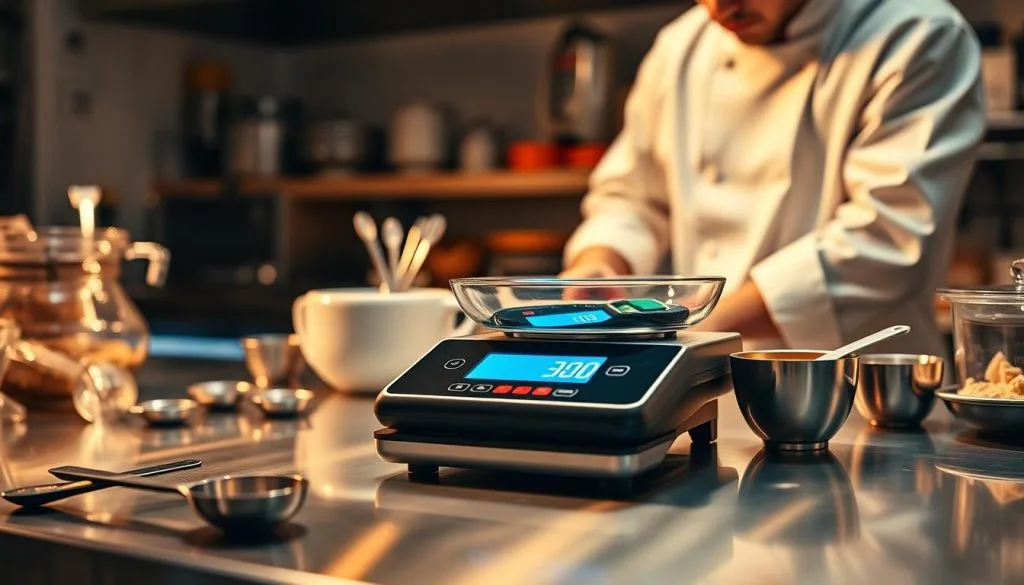
Let me tell you about the time I nearly ruined a 500-unit croissant order because my scale was off by a measly 5 grams. It was 3 AM, the dough was proofing, and I was bleary-eyed from too much coffee and too little sleep. I weighed the butter for the laminating process, patted myself on the back for being efficient, and proceeded to roll out what I thought was a perfect batch. By the time I pulled the first sheet from the oven, I knew something was wrong, the layers were uneven, the butter had leaked, and the texture was more biscuit than croissant. That’s when I realized: my scale hadn’t been calibrated in months. Five grams might not sound like much, but in baking, it’s the difference between flaky perfection and a greasy mess. Since then, I’ve made it my mission to treat scale calibration like a sacred ritual. If you’re running a commercial bakery, you already know consistency is everything. But here’s the thing, most of us underestimate just how much our scales can drift over time. Temperature changes, accidental bumps, even the vibrations from a nearby mixer can throw them off. And once they’re off, your entire production line is at risk. So, let’s talk about how to calibrate commercial baking scales for consistency, why it matters more than you think, and how to make it a habit that actually sticks.
This isn’t just about following a manual, it’s about understanding the *why* behind the steps. Because when you know why something works, you’re way more likely to actually do it. We’ll cover everything from choosing the right calibration weights to troubleshooting those weird moments when your scale just won’t cooperate. I’ll also share some of the mistakes I’ve made (and trust me, there have been plenty) so you don’t have to repeat them. By the end of this, you’ll have a step-by-step system you can implement in your bakery, whether you’re running a small artisanal operation or a large-scale production facility. And hey, if you’re anything like me, you might even start to enjoy the process. There’s something oddly satisfying about knowing your equipment is dialed in to perfection.
Before we dive in, let me clarify something: this isn’t a one-size-fits-all guide. Different scales have different quirks, and what works for a digital bench scale might not apply to a hanging spring scale. But the principles? Those are universal. We’ll focus on the most common types of commercial baking scales, digital bench scales, portion scales, and counting scales, and I’ll call out the differences where they matter. If you’re using something more specialized, like a moisture analyzer or a high-capacity floor scale, some of these steps will still apply, but you might need to consult your manufacturer’s manual for the nitty-gritty details. Alright, enough preamble. Let’s get into it.
Why Calibration Matters More Than You Think
I get it. Calibration sounds like one of those tedious tasks that gets pushed to the bottom of the to-do list. You’ve got dough to mix, ovens to preheat, and orders to fulfill. Who has time to fiddle with weights and settings? But here’s the hard truth: if your scales aren’t calibrated, nothing else in your bakery is reliable. Think about it. Every recipe you use is based on precise measurements. A cup of flour can vary by 20% depending on how it’s scooped, but a gram is a gram. When your scale is off, your ratios are off. And when your ratios are off, your product is off. It’s that simple.
Let me put it another way. Imagine you’re making a classic French macaron. The recipe calls for 100 grams of almond flour, 100 grams of powdered sugar, and 100 grams of egg whites. If your scale is under by 5%, you’re actually using 95 grams of each ingredient. That might not sound like a big deal, but macarons are notoriously finicky. Too much almond flour, and the shells will be grainy. Too little powdered sugar, and they’ll spread too much. Too few egg whites, and they won’t develop the right texture. One small calibration error, and suddenly you’ve got a batch of macarons that are lumpy, hollow, or worse, inedible. And if you’re selling these, that’s not just a waste of ingredients; it’s a hit to your reputation.
But it’s not just about the end product. Inconsistent measurements can mess with your workflow in ways you might not even realize. For example, if your scale is overestimating the weight of your dough, you might think you have enough for 12 loaves when you actually only have enough for 11. That means you’re either shorting a customer or scrambling to make up the difference at the last minute. Neither option is ideal. Or, let’s say you’re portioning cookie dough. If your scale is off, some cookies will bake faster than others, leading to uneven browning and texture. Suddenly, you’re spending extra time sorting through batches to find the ones that meet your standards. All of this adds up to wasted time, wasted ingredients, and wasted money.
And here’s something else to consider: calibration isn’t just about accuracy, it’s about repeatability. In a commercial kitchen, you’re not just making one batch of something; you’re making the same thing over and over again. Your customers expect every croissant, every cookie, every slice of bread to taste exactly like the last one they had. If your scale drifts over time, your product will drift with it. One day, your chocolate chip cookies are perfect. The next, they’re a little too cakey. The day after that, they’re a little too flat. Your customers might not know why they’re disappointed, but they’ll notice. And in today’s world, where everyone’s got a smartphone and a social media account, one bad batch can turn into a PR nightmare faster than you can say “refund.”
So, how often should you calibrate? The short answer is: more often than you probably are right now. The long answer depends on a few factors, like how frequently you use your scale, what kind of environment it’s in, and how critical precision is to your product. But as a general rule, I’d say you should be calibrating your scales at least once a week. If you’re using them multiple times a day, every day, you might want to bump that up to daily. And if you’re working with high-precision recipes (like macarons, laminated doughs, or tempered chocolate), you should be checking your scales before every single use. I know that sounds like overkill, but trust me, it’s better to spend five minutes calibrating than an hour (or more) troubleshooting a failed batch.
Understanding Your Scale: Know What You’re Working With
Before you can calibrate your scale, you need to understand what kind of scale you’re dealing with. Not all scales are created equal, and the calibration process can vary depending on the type, brand, and model. Let’s break down the most common types of commercial baking scales and what makes each one unique.
Digital Bench Scales
These are the workhorses of the commercial bakery. You’ll find them on counters, worktables, and prep stations, weighing everything from flour to chocolate to finished dough balls. Digital bench scales are popular because they’re accurate, easy to read, and often come with features like tare functions, unit conversion, and even connectivity options for data logging. Most digital bench scales use a load cell, a sensor that converts the force of the weight into an electrical signal, to determine the weight. The calibration process for these scales usually involves placing a known weight on the platform and adjusting the scale’s internal settings to match that weight.
One thing to keep in mind with digital bench scales is that they can be sensitive to environmental factors. Temperature changes, humidity, and even air currents can affect their accuracy. That’s why it’s important to calibrate them in the environment where they’ll be used. If you calibrate your scale in a cool, dry storage room but use it in a hot, humid kitchen, you might still run into accuracy issues. Also, pay attention to the scale’s capacity and readability. The capacity is the maximum weight the scale can handle, while the readability is the smallest increment it can measure. For example, a scale with a capacity of 15 kg and a readability of 1 gram can weigh up to 15,000 grams in 1-gram increments. If you’re working with small quantities, like spices or yeast, you’ll want a scale with a lower readability (e.g., 0.1 grams).
Portion Scales
Portion scales are designed for, you guessed it, portioning. They’re commonly used in bakeries to divide dough into equal pieces, weigh out cookie dough balls, or measure ingredients for individual servings. These scales are usually smaller and more portable than bench scales, with a lower capacity and higher readability. For example, a portion scale might have a capacity of 5 kg and a readability of 0.5 grams. The calibration process for portion scales is similar to that of digital bench scales, but because they’re often used for smaller quantities, precision is even more critical. A 0.5-gram error on a 50-gram dough ball is a 1% difference, which might not seem like much, but it can add up over hundreds of portions.
One thing to watch out for with portion scales is the tare function. The tare function lets you reset the scale to zero after placing a container on it, so you can weigh just the contents. But if the scale isn’t calibrated properly, the tare function can compound errors. For example, if your scale is over by 1 gram, and you tare a 100-gram container, the scale will think the container weighs 101 grams. When you add your ingredient, the scale will subtract 101 grams instead of 100, leading to a 1-gram error in your measurement. Over time, those errors can add up.
Counting Scales
Counting scales are a bit more specialized, but they’re incredibly useful in bakeries that deal with small, uniform items like nuts, seeds, or chocolate chips. These scales work by weighing a sample of the items (e.g., 10 chocolate chips) and then calculating the weight of a single item. Once the scale knows the weight of one item, it can count larger quantities by weight. For example, if you want to know how many chocolate chips are in a 1 kg bag, the scale can tell you based on the weight of a single chip. Calibrating a counting scale is a bit more involved than calibrating a bench or portion scale because you need to account for the weight of the sample items as well as the scale’s accuracy. If the scale is off by even a fraction of a gram, it can throw off the entire count.
One thing to keep in mind with counting scales is that they’re only as accurate as the sample you use. If your sample items vary in weight (e.g., some chocolate chips are bigger than others), the scale’s count will be less accurate. That’s why it’s important to use a representative sample when calibrating. Also, counting scales often have a minimum sample weight, which is the smallest quantity the scale can accurately count. If you try to count items that are too light, the scale might not be able to distinguish between them, leading to errors.
Mechanical Scales
While digital scales dominate most modern bakeries, you might still encounter mechanical scales, especially in older or more traditional operations. These scales use a system of levers and springs to determine weight, and they don’t require batteries or electricity. Calibrating a mechanical scale is a bit different from calibrating a digital scale because there are no internal settings to adjust. Instead, you’ll need to adjust the scale’s balance manually, usually by turning a calibration screw or adding/removing counterweights. Mechanical scales are less precise than digital scales, but they’re also less prone to electronic interference. That said, they can still drift over time, especially if they’re bumped or jostled. If you’re using a mechanical scale, it’s a good idea to check its accuracy regularly and recalibrate as needed.
Gathering Your Tools: What You’ll Need for Calibration
Alright, so you’re convinced that calibration is important, and you’ve got a good handle on what kind of scale you’re working with. Now it’s time to gather your tools. Calibrating a scale isn’t complicated, but it does require a few specific items. Here’s what you’ll need:
- Calibration weights: These are the most important tools in your calibration kit. Calibration weights are precisely manufactured to a specific weight, and they’re used to test and adjust your scale’s accuracy. You can buy them in sets, and they usually come in a range of weights, from milligrams to kilograms. For most baking applications, a set that includes 1 g, 5 g, 10 g, 50 g, 100 g, 500 g, and 1 kg weights should cover your bases. Make sure you’re using class F or class M weights, which are designed for testing commercial scales. Avoid using random objects (like coins or bags of sugar) as makeshift weights, they’re not precise enough for calibration.
- A soft brush or cloth: Dust, flour, and other debris can accumulate on your scale’s platform and affect its accuracy. Before you start calibrating, give the platform a good cleaning with a soft brush or cloth. Avoid using harsh chemicals or abrasive materials, as these can damage the scale’s surface.
- A level surface: Scales are designed to work on level surfaces, so make sure you’re calibrating on a stable, flat countertop or table. If the surface is uneven, the scale’s readings will be off. You can use a bubble level to check the surface, but in a pinch, you can also use a small glass of water. If the water’s surface is perfectly flat, the surface is level.
- A notepad and pen: It’s a good idea to keep a record of your calibration results, especially if you’re calibrating multiple scales. Jot down the date, the scale’s ID (if it has one), the weights you used, and the scale’s readings. This will help you track any drift over time and identify potential issues before they become problems.
- The scale’s manual: Every scale is a little different, so it’s always a good idea to have the manufacturer’s manual on hand. The manual will tell you exactly how to calibrate your specific model, including any special steps or settings you need to be aware of. If you’ve lost the manual, don’t worry, most manufacturers post digital copies on their websites.
Now, let’s talk about calibration weights for a minute. Not all weights are created equal, and using the wrong ones can lead to inaccurate results. Calibration weights are classified by their accuracy, with class F weights being the most precise and class M weights being slightly less so. For most baking applications, class F weights are overkill, class M weights will do just fine. But if you’re working with high-precision recipes (like chocolate tempering or macaron making), you might want to invest in a set of class F weights for the smaller increments.
One thing to keep in mind is that calibration weights can degrade over time. If they’re dropped, scratched, or exposed to moisture, their weight can change. That’s why it’s important to handle them with care and store them in a dry, clean environment. Most calibration weight sets come with a protective case, use it! Also, avoid touching the weights with your bare hands. The oils from your skin can add a tiny amount of weight, which can throw off your calibration. If you need to handle the weights, use a pair of tweezers or wear gloves.
If you’re on a tight budget, you can start with a basic set of calibration weights and add to it as needed. But if you’re serious about precision, it’s worth investing in a good-quality set. Trust me, it’s a lot cheaper than wasting ingredients on failed batches. And hey, if you’re anything like me, you’ll find that having a set of calibration weights on hand gives you a weird sense of satisfaction. There’s something oddly comforting about knowing your tools are dialed in to perfection.
The Step-by-Step Calibration Process
Alright, you’ve got your tools, you’ve cleaned your scale, and you’re ready to calibrate. Let’s walk through the process step by step. I’ll focus on digital bench scales, since they’re the most common in commercial bakeries, but I’ll note where the process differs for other types of scales.
Step 1: Power Up and Warm Up
First things first: turn on your scale and let it warm up. Most digital scales need a few minutes to stabilize after being powered on. This is especially true if the scale has been sitting in a cold storage room or near a drafty window. The internal components need time to reach a consistent temperature, and rushing this step can lead to inaccurate readings. While you’re waiting, take a moment to check the scale’s display. Make sure it’s clean and free of debris, and that all the segments are working properly. If you see any flickering or missing segments, that could be a sign of a deeper issue, and you might need to troubleshoot before calibrating.
Now, here’s a question I get a lot: how long should you let the scale warm up? The short answer is, it depends. Most manufacturers recommend letting the scale warm up for at least 15 minutes, but some scales might need longer. If you’re not sure, check the manual. And if you’re in a hurry, err on the side of caution. A few extra minutes of warm-up time is a small price to pay for accurate measurements.
Step 2: Check the Zero Point
Once the scale is warmed up, it’s time to check the zero point. This is the baseline reading when there’s nothing on the scale. To do this, simply press the tare or zero button to reset the scale to zero. Then, wait a few seconds and see if the reading stays at zero. If it drifts up or down, that could be a sign of a problem. A little bit of drift is normal, especially in scales that are sensitive to temperature changes, but if the reading changes by more than a few tenths of a gram, you might need to recalibrate or troubleshoot.
Here’s something to keep in mind: the zero point can be affected by environmental factors like air currents or vibrations. If you’re calibrating in a busy kitchen, try to find a quiet moment when the scale isn’t being jostled by nearby activity. And if you’re using a scale with a draft shield (a clear plastic cover that protects the platform from air currents), make sure it’s closed during this step.
Step 3: Place the Calibration Weight
Now it’s time to test the scale’s accuracy. Start with the smallest calibration weight in your set, usually 1 gram or 5 grams. Place the weight gently in the center of the scale’s platform. Avoid dropping it or sliding it, as this can cause the scale to register a false reading. Once the weight is in place, wait a few seconds for the reading to stabilize. The scale should display the exact weight of the calibration weight. If it doesn’t, that’s a sign that the scale needs to be calibrated.
Let’s say you’re using a 1-gram weight, but the scale reads 1.2 grams. That’s a 20% error, which is way too high for most baking applications. Even a 0.1-gram error can be significant if you’re working with small quantities. For example, if you’re measuring yeast for a bread recipe, a 0.1-gram error could throw off your fermentation time. So, if the scale’s reading doesn’t match the calibration weight, it’s time to move on to the next step.
Step 4: Enter Calibration Mode
This is where things can get a little tricky, because the process varies depending on the scale’s make and model. Most digital scales have a calibration mode that you can access by pressing a specific sequence of buttons. The manual should tell you exactly how to do this, but here are a few common methods:
- Press and hold the tare button for 5-10 seconds until the display changes.
- Press the mode button until you see “CAL” or “CALIBRATE” on the display.
- Press the zero and tare buttons simultaneously for a few seconds.
Once you’re in calibration mode, the scale will usually prompt you to place a specific weight on the platform. This is where your calibration weights come in. The scale might ask for a 100-gram weight, a 500-gram weight, or something else entirely. Follow the prompts and place the requested weight on the platform. The scale will then adjust its internal settings to match the weight. Once the calibration is complete, the scale will usually display a confirmation message, like “CAL DONE” or “PASS.”
Here’s something to keep in mind: some scales require you to calibrate with multiple weights. For example, you might need to calibrate with a 100-gram weight and then a 1-kilogram weight. This is especially common in scales with a wide capacity range. If your scale requires multiple calibration points, make sure you have all the necessary weights on hand before you start.
Step 5: Verify the Calibration
Once the scale has been calibrated, it’s time to verify the results. Remove the calibration weight and press the tare button to reset the scale to zero. Then, place the same calibration weight back on the platform and check the reading. It should match the weight exactly. If it doesn’t, you might need to repeat the calibration process or troubleshoot the scale.
It’s also a good idea to test the scale with a few different weights to make sure it’s accurate across its entire range. For example, if you calibrated with a 100-gram weight, test it with a 50-gram weight and a 500-gram weight to make sure the readings are consistent. If the scale is accurate at 100 grams but off at 50 grams, that could be a sign of a problem with the load cell or the scale’s internal settings.
Step 6: Record the Results
This is one of those steps that a lot of people skip, but it’s actually really important. Keeping a record of your calibration results can help you track any drift over time and identify potential issues before they become problems. Grab your notepad and jot down the following:
- The date and time of the calibration.
- The scale’s ID or location (if you have multiple scales).
- The weights you used for calibration.
- The scale’s readings before and after calibration.
- Any notes or observations (e.g., “scale was reading 1.2 g for 1 g weight before calibration”).
You can keep this record in a physical notebook or a digital spreadsheet, whatever works best for you. The important thing is to have a system in place so you can track trends over time. For example, if you notice that a particular scale is drifting more quickly than the others, that could be a sign that it needs to be serviced or replaced.
Troubleshooting Common Calibration Issues
Even if you follow the calibration process to the letter, you might run into issues from time to time. Scales are sensitive pieces of equipment, and a lot of things can throw them off. Let’s talk about some of the most common calibration issues and how to troubleshoot them.
The Scale Won’t Enter Calibration Mode
This is one of the most frustrating issues, especially if you’re in the middle of a busy production day. If your scale won’t enter calibration mode, there are a few things you can try:
- Check the batteries: If your scale is battery-powered, low batteries can prevent it from entering calibration mode. Try replacing the batteries and see if that fixes the issue.
- Check the manual: Double-check the button sequence for entering calibration mode. It’s easy to mix up the steps, especially if you’re in a hurry.
- Reset the scale: Some scales have a reset function that can help clear any glitches. Check the manual to see if your scale has this feature and how to use it.
- Contact the manufacturer: If none of the above works, there might be a deeper issue with the scale. Contact the manufacturer or a certified technician for help.
The Scale’s Readings Are Inconsistent
If your scale’s readings are jumping around or fluctuating, that’s a sign of instability. Here are a few things to check:
- Check the surface: Make sure the scale is on a stable, level surface. Even a slight tilt can cause inconsistent readings.
- Check for air currents: If you’re using a scale with a draft shield, make sure it’s closed. If your scale doesn’t have a draft shield, try moving it to a quieter location or using a makeshift shield (like a cardboard box) to block air currents.
- Check for vibrations: Vibrations from nearby equipment (like mixers or refrigerators) can cause the scale to fluctuate. Try moving the scale to a different location or placing it on a vibration-dampening mat.
- Check the load cell: If the scale’s load cell is damaged or dirty, it can cause inconsistent readings. Try cleaning the platform and the area around the load cell with a soft brush or cloth. If that doesn’t work, you might need to have the scale serviced.
The Scale Is Off by a Consistent Amount
If your scale is consistently over or under by a specific amount, that’s usually a sign that it needs to be recalibrated. But if you’ve already calibrated it and it’s still off, here are a few things to check:
- Check the calibration weights: Make sure your calibration weights are accurate and haven’t been damaged. If you’re not sure, try using a different set of weights to see if that fixes the issue.
- Check the scale’s settings: Some scales have internal settings that can affect their accuracy. For example, some scales allow you to adjust the span (the difference between the zero point and the maximum capacity) or the linearity (the scale’s accuracy across its entire range). Check the manual to see if your scale has these settings and how to adjust them.
- Check for environmental factors: Temperature changes, humidity, and even altitude can affect a scale’s accuracy. If you’re calibrating in a different environment than where the scale is used, that could be the issue. Try calibrating the scale in the environment where it will be used.
The Scale Won’t Hold a Zero Reading
If your scale won’t stay at zero when there’s nothing on the platform, that’s a sign of a zero-point issue. Here are a few things to try:
- Press the tare button: Sometimes, the scale just needs to be reset. Press the tare button to zero it out and see if that fixes the issue.
- Check for debris: Dust, flour, or other debris can accumulate on the platform and affect the scale’s zero point. Clean the platform with a soft brush or cloth and try again.
- Check the load cell: If the load cell is damaged or dirty, it can cause the scale to drift. Try cleaning the area around the load cell and see if that helps.
- Recalibrate the scale: If none of the above works, the scale might need to be recalibrated. Follow the steps in the manual to recalibrate the zero point.
Making Calibration a Habit: Tips for Long-Term Consistency
Alright, so you’ve calibrated your scale, and it’s reading like a dream. But how do you make sure it stays that way? Calibration isn’t a one-and-done task, it’s an ongoing process. Here are a few tips to help you make calibration a habit and keep your scales accurate over the long term.
Create a Calibration Schedule
The first step to making calibration a habit is to create a schedule. How often you calibrate will depend on a few factors, like how frequently you use your scale, what kind of environment it’s in, and how critical precision is to your product. But as a general rule, I recommend calibrating your scales at least once a week. If you’re using them multiple times a day, every day, you might want to bump that up to daily. And if you’re working with high-precision recipes (like macarons or tempered chocolate), you should be checking your scales before every single use.
Here’s a sample calibration schedule you can adapt for your bakery:
- Daily: Quick zero-point check before each use (especially for high-precision scales).
- Weekly: Full calibration with calibration weights.
- Monthly: Deep clean and inspection of the scale’s components.
- Quarterly: Professional servicing (if needed).
You can adjust this schedule based on your needs, but the key is to have a plan in place. Write it down, set reminders, and stick to it. The more consistent you are with calibration, the more consistent your product will be.
Assign Calibration Responsibilities
In a busy bakery, it’s easy for tasks like calibration to fall through the cracks. One way to prevent this is to assign calibration responsibilities to a specific person or team. For example, you could designate one person to handle calibration for all the scales in the bakery, or you could rotate the responsibility among your staff. The important thing is to make sure someone is accountable for it.
Here’s a tip: make calibration part of your opening or closing routine. For example, you could assign the morning shift to calibrate all the scales before production starts, or the evening shift to calibrate them at the end of the day. This way, calibration becomes part of the daily workflow, and it’s less likely to be forgotten.
Keep Your Tools Handy
One of the biggest barriers to calibration is not having the right tools on hand. If your calibration weights are buried in a storage closet or your notepad is nowhere to be found, you’re less likely to calibrate regularly. To make calibration as easy as possible, keep your tools in a designated spot near the scales. For example, you could store your calibration weights in a small case next to the scale, or keep a clipboard with your calibration log on a nearby shelf.
Here’s another idea: create a calibration kit that includes everything you need, calibration weights, a soft brush, a notepad, a pen, and the scale’s manual. Keep the kit in a convenient location, and make sure everyone knows where it is. The easier you make it to calibrate, the more likely it is to happen.
Train Your Staff
Calibration isn’t just the responsibility of the head baker or the kitchen manager, it’s something everyone on your team should be familiar with. After all, anyone who uses the scales should know how to check their accuracy and recalibrate if needed. That’s why it’s important to train your staff on the calibration process.
Here’s how to do it:
- Hold a training session: Gather your team and walk them through the calibration process step by step. Show them how to use the calibration weights, how to enter calibration mode, and how to verify the results. Encourage them to ask questions and practice on their own.
- Create a cheat sheet: Write up a quick reference guide that outlines the calibration steps. Include pictures or diagrams if it helps. Post the cheat sheet near the scales so your staff can refer to it as needed.
- Make it part of onboarding: If you have new hires, make sure calibration is part of their training. The more familiar they are with the process, the more likely they are to do it correctly.
Here’s something to keep in mind: not everyone on your team will be comfortable with calibration at first. Some people might find it intimidating or confusing, especially if they’re not used to working with scales. Be patient, and encourage your team to ask questions. The more they practice, the more confident they’ll become.
Monitor and Adjust
Finally, remember that calibration isn’t a set-it-and-forget-it task. Even if you’re calibrating regularly, it’s important to monitor your scales and adjust your process as needed. For example, if you notice that a particular scale is drifting more quickly than the others, you might need to calibrate it more frequently. Or, if you switch to a new recipe that requires higher precision, you might need to adjust your calibration schedule.
Here are a few things to keep an eye on:
- Drift over time: If a scale’s readings are consistently off by a small amount, that could be a sign that it’s drifting. Keep an eye on your calibration logs to track any trends.
- Environmental changes: If your kitchen’s temperature or humidity changes significantly, it could affect your scales’ accuracy. For example, if you move your scale from a cool storage room to a hot kitchen, you might need to recalibrate it.
- Equipment changes: If you upgrade your scales or switch to a new model, you’ll need to adjust your calibration process accordingly. Make sure you’re familiar with the new scale’s features and requirements.
And here’s a pro tip: if you’re using multiple scales in your bakery, try to standardize them as much as possible. For example, if all your scales are the same make and model, you can use the same calibration process for all of them. This makes it easier to train your staff and keep your equipment consistent.
Beyond Calibration: Other Ways to Ensure Consistency
Calibration is a critical part of maintaining consistency in your bakery, but it’s not the only thing you can do. Here are a few other strategies to help you keep your measurements accurate and your product consistent.
Use the Right Scale for the Job
Not all scales are created equal, and using the wrong scale for the job can lead to inaccurate measurements. For example, if you’re weighing small quantities of yeast or spices, you’ll want a scale with a high readability (e.g., 0.1 grams). But if you’re weighing large quantities of flour or sugar, a scale with a lower readability (e.g., 1 gram) will do just fine. Using a scale with too low a readability for small quantities can lead to errors, while using a scale with too high a readability for large quantities can be overkill.
Here’s a quick guide to help you choose the right scale for the job:
- High-precision tasks (e.g., measuring yeast, spices, or tempered chocolate): Use a scale with a readability of 0.1 grams or less.
- Medium-precision tasks (e.g., portioning dough or weighing ingredients for cookies): Use a scale with a readability of 0.5 to 1 gram.
- Low-precision tasks (e.g., weighing large quantities of flour or sugar): Use a scale with a readability of 1 gram or more.
And here’s something else to consider: the scale’s capacity. Make sure the scale you’re using can handle the maximum weight you’ll be measuring. For example, if you’re weighing 10 kg of dough, you’ll want a scale with a capacity of at least 15 kg. Using a scale with too low a capacity can damage the load cell and lead to inaccurate readings.
Standardize Your Processes
Consistency isn’t just about accurate measurements, it’s also about following the same process every time. For example, if you’re portioning cookie dough, make sure everyone on your team is using the same technique. Are they rolling the dough into balls by hand, or using a scoop? Are they weighing the dough before or after shaping? Small differences in technique can lead to big differences in the final product.
Here’s how to standardize your processes:
- Create standard operating procedures (SOPs): Write down the steps for each task, and make sure everyone on your team follows them. Include details like how to weigh ingredients, how to portion dough, and how to adjust for environmental factors.
- Use the same tools: If you’re using a specific scoop or mold for a recipe, make sure everyone is using the same one. For example, if you’re making muffins, use the same muffin tin every time to ensure consistent sizing.
- Train your staff: Make sure everyone on your team is familiar with your SOPs and knows how to use your tools correctly. Hold regular training sessions to reinforce best practices.
Monitor Your Product
Finally, don’t forget to monitor your product for consistency. Even if your scales are calibrated and your processes are standardized, things can still go wrong. For example, if your oven’s temperature is off, your product might bake differently even if your measurements are perfect. That’s why it’s important to keep an eye on your product and make adjustments as needed.
Here are a few things to monitor:
- Appearance: Does your product look the same from batch to batch? Are the colors consistent? Are the shapes uniform?
- Texture: Does your product have the same texture every time? For example, are your cookies crispy or chewy? Are your breads light and airy or dense and heavy?
- Taste: Does your product taste the same every time? Are the flavors balanced, or is something off?
- Customer feedback: Pay attention to what your customers are saying. If they’re noticing inconsistencies, that’s a sign that something needs to be adjusted.
And here’s a tip: keep a sample of your product from each batch. This way, you can compare new batches to old ones and spot any differences. For example, if your croissants are suddenly flatter than usual, you can compare them to a sample from a previous batch to see what’s changed.
Wrapping Up: The Art and Science of Precision
At the end of the day, baking is both an art and a science. The art comes from your creativity, your intuition, and your passion for food. The science comes from precision, consistency, and attention to detail. Calibration is where those two worlds meet. It’s not just about following a set of steps, it’s about understanding the why behind those steps and using that knowledge to create something truly exceptional.
I’ll be the first to admit that calibration isn’t the most exciting part of running a bakery. It’s not as glamorous as pulling a perfect loaf of sourdough from the oven, or as satisfying as piping a flawless macaron shell. But it’s the foundation that makes all of those things possible. Without accurate measurements, your artistry has no structure. Your creativity has no consistency. And your passion has no reliability. So, the next time you’re tempted to skip calibration, remember that 5-gram error that nearly ruined my croissant order. Ask yourself: is it worth the risk?
Here’s my challenge to you: this week, take 10 minutes to calibrate every scale in your bakery. Not just the ones you use for high-precision tasks, but all of them. While you’re at it, clean the platforms, check the zero points, and make sure everything’s in working order. And then, do it again next week. And the week after that. Make calibration a habit, and I promise you’ll see the difference in your product. Your customers will notice, too. Because at the end of the day, consistency isn’t just about meeting standards, it’s about exceeding expectations. And that’s what great baking is all about.
FAQ
Q: How often should I calibrate my commercial baking scales?
A: The frequency of calibration depends on how often you use your scales and how critical precision is to your product. As a general rule, I recommend calibrating your scales at least once a week. If you’re using them multiple times a day, every day, you might want to calibrate them daily. For high-precision tasks like macaron making or chocolate tempering, check your scales before every use. Environmental factors like temperature changes and vibrations can also affect accuracy, so it’s a good idea to recalibrate if your kitchen’s conditions change significantly.
Q: What’s the difference between calibration and verification?
A: Calibration and verification are related but not the same. Calibration is the process of adjusting your scale’s internal settings to match a known weight. This usually involves entering a special mode on the scale and following the manufacturer’s instructions. Verification, on the other hand, is the process of checking your scale’s accuracy without adjusting it. You do this by placing a known weight on the scale and comparing the reading to the weight’s actual value. Verification is a good way to check your scale’s accuracy between calibrations, but if the readings are off, you’ll need to calibrate the scale to fix the issue.
Q: Can I use household items like coins or bags of sugar as calibration weights?
A: While it’s tempting to use household items as makeshift calibration weights, I wouldn’t recommend it. Coins, bags of sugar, and other random objects aren’t precise enough for calibration. For example, a U.S. nickel weighs 5 grams, but its weight can vary slightly depending on wear and tear. A bag of sugar might be labeled as 1 kg, but its actual weight could be off by a few grams. Calibration weights are manufactured to precise standards, and they’re the only way to ensure your scale is accurate. If you’re on a tight budget, start with a basic set of calibration weights and add to it as needed. It’s a small investment that can save you a lot of headaches (and wasted ingredients) in the long run.
Q: My scale is reading slightly off even after calibration. What should I do?
A: If your scale is still off after calibration, there are a few things you can try. First, double-check that you’re using the correct calibration weights and that they haven’t been damaged. Next, make sure the scale is on a stable, level surface and that there are no air currents or vibrations affecting the readings. If the scale is still off, try recalibrating it with a different set of weights to rule out any issues with your calibration set. If none of these steps work, there might be a deeper issue with the scale, like a damaged load cell or a problem with the internal settings. In that case, you might need to contact the manufacturer or a certified technician for help. And if all else fails, it might be time to invest in a new scale, especially if the one you’re using is old or showing signs of wear.
@article{how-to-calibrate-commercial-baking-scales-for-consistency-a-bakers-guide-to-precision,
    title   = {How to Calibrate Commercial Baking Scales for Consistency: A Baker’s Guide to Precision},
    author  = {Chef's icon},
    year    = {2026},
    journal = {Chef's Icon},
    url     = {https://chefsicon.com/how-to-calibrate-commercial-baking-scales-for-consistency/}
}