The Best Fluffy Pancakes recipe you will fall in love with. Full of tips and tricks to help you make the best pancakes.
How to Measure Restaurant Seating for Maximum Capacity Without Sacrificing Comfort
I’ll never forget the first time I walked into a restaurant that felt *just right*-not too cramped, not too sparse, but that sweet spot where every table had enough breathing room, yet the space still hummed with energy. It was a small Italian place in Nashville’s Gulch neighborhood, and the owner, a guy named Marco, had clearly put thought into how he arranged his seating. Fast forward to my own misadventures in helping a friend redesign his café layout, and I realized how easy it is to get this wrong. Too many tables, and suddenly your servers are playing Tetris with trays. Too few, and you’re turning away customers who could’ve been regulars. So, how do you measure restaurant seating for maximum capacity *and* comfort? Let’s break it down, because trust me, it’s not as simple as eyeballing it.
This isn’t just about slapping down chairs and hoping for the best. It’s about understanding the psychology of space, the ergonomics of dining, and the logistics of service flow. And yeah, there’s math involved. But don’t worry, I’ll walk you through it in a way that won’t make you want to throw your tape measure across the room. By the end of this, you’ll know how to balance seating density, guest comfort, and operational efficiency like a pro. Ready? Let’s dig in.
Oh, and full disclosure: I’m not an architect or a professional designer. I’m just a guy who’s spent way too much time obsessing over restaurant layouts, talking to owners, and making (and learning from) my own mistakes. So if you’re looking for textbook-perfect advice, you might want to consult a pro. But if you want a practical, real-world approach that actually works? Stick around.
The Foundations: Why Measuring Seating Matters More Than You Think
1. The Illusion of Space vs. The Reality of Comfort
Here’s the thing: most restaurant owners I’ve talked to fall into one of two camps. There are the ones who cram in as many tables as possible because, hey, more seats equals more revenue, right? Then there are the ones who go the opposite route, leaving so much space between tables that the restaurant feels like a library reading room. Both approaches miss the mark. Why? Because seating capacity isn’t just about numbers, it’s about experience.
Think about the last time you sat in a restaurant where the tables were so close you could hear your neighbor’s entire life story. Awkward, right? Or maybe you’ve been to a place where the tables were so far apart that the vibe felt sterile, like you were dining in a museum. Neither scenario makes you want to linger (or come back). The goal is to find that Goldilocks zone-not too tight, not too loose, but just right. And that starts with understanding the minimum space requirements for comfort.
So, what’s the magic number? Well, it depends. But generally, you’re looking at 24 to 30 inches of table edge space per person for a comfortable dining experience. That’s the distance from the edge of one person’s plate to the edge of the next. Go much lower than 24 inches, and you’re entering the “elbow wars” territory. Much higher than 30, and you’re wasting valuable real estate. But we’ll get into the nitty-gritty of measurements later.
Is this the best approach? Let’s consider: what if your restaurant has a specific theme or vibe? A cozy bistro might get away with tighter seating, while a fine-dining spot needs more breathing room. Maybe I should clarify, these numbers aren’t one-size-fits-all. They’re a starting point. Your restaurant’s brand identity and target audience play a huge role here. A college hangout can pack ‘em in tighter than a Michelin-starred spot. But even then, there’s a limit to how much you can squeeze before comfort (and your Yelp reviews) take a hit.
2. The Hidden Costs of Poor Seating Layouts
I once helped a friend redesign his bar’s seating layout. He was convinced that adding four more bar stools would boost his nightly sales. Spoiler: it didn’t. In fact, his servers’ efficiency dropped because they were constantly bumping into each other, and customers complained about feeling cramped. The lesson? More seats don’t always mean more revenue. Sometimes, they mean more headaches.
Here’s what happens when you prioritize capacity over comfort:
- Service slows down: Tight spaces make it harder for servers to navigate, which means longer wait times for drinks, food, and checks. And let’s be real, nobody likes waiting 20 minutes for a cocktail because the server is stuck behind a chair.
- Customer satisfaction drops: People don’t just come to restaurants for food. They come for the experience. If they feel like sardines, they’re not coming back. And in the age of social media, one bad review can do serious damage.
- Turnover rates suffer: Ever tried to bus a table in a space that’s too tight? It’s a nightmare. Dirty dishes pile up, and the next guests are left waiting. Slow turnover means fewer covers per night, which means less revenue.
- Safety hazards increase: Tight spaces are a fire marshal’s worst nightmare. If an emergency happens, you need clear pathways for evacuation. Plus, crowded dining rooms can lead to accidents, think spilled drinks, tripping servers, or even lawsuits.
On the flip side, if you go too sparse, you’re leaving money on the table. Literally. Fewer seats mean fewer customers, which means lower revenue. It’s a delicate balance, and that’s why measuring correctly is so crucial. But how do you even start?
I’m torn between two schools of thought here. One says to follow the industry standards to a T, stick to the recommended measurements and call it a day. The other says to trust your gut and adjust based on your restaurant’s unique needs. Ultimately, I think it’s a mix of both. Start with the standards, then tweak based on your observations. Which brings me to my next point: the tools you’ll need to get this right.
The Tools of the Trade: What You’ll Need to Measure Like a Pro
3. Gathering Your Measuring Arsenal
Before you start rearranging tables, you’ll need a few essential tools. Some of these might seem obvious, but trust me, skipping them will cost you time and frustration later. Here’s what you should have on hand:
- A laser measure: This is your best friend. Unlike a tape measure, a laser measure lets you quickly and accurately measure distances without stretching a tape across the room. It’s a game-changer, especially in larger spaces.
- A good old-fashioned tape measure: Even with a laser measure, a tape measure is handy for smaller spaces or when you need to measure around corners. Get one that’s at least 25 feet long.
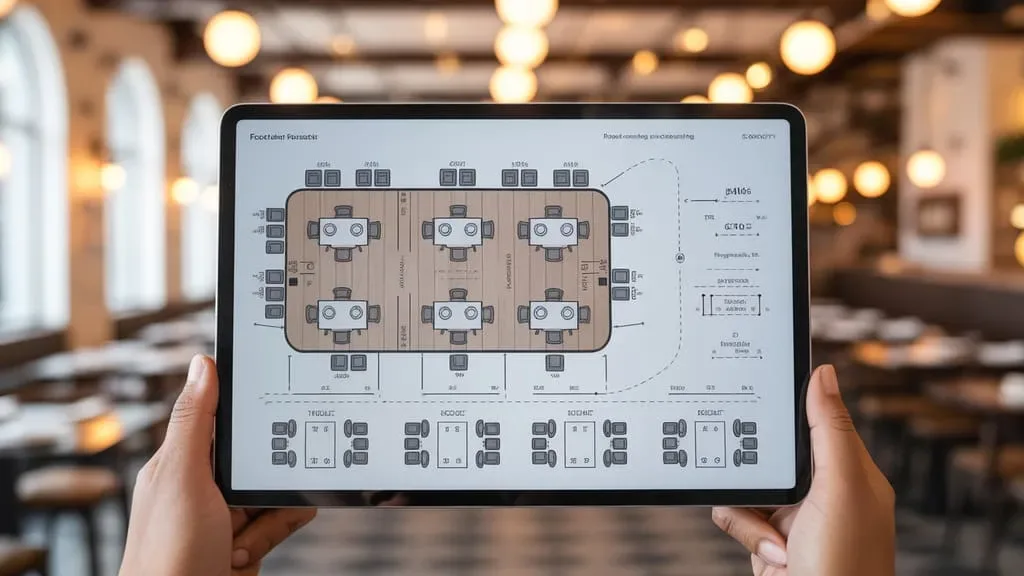
- Graph paper or a digital floor plan tool: You’ll need a way to sketch out your layout. Graph paper works if you’re old-school, but digital tools like SketchUp, RoomSketcher, or even Canva can make the process easier. Some of these tools even let you drag and drop furniture to visualize your layout.
- Painter’s tape: This is for marking out table and chair placements on the floor. It’s low-tack, so it won’t damage your flooring, and it’s easy to remove.
- A notebook or digital note-taking app: You’ll want to jot down measurements, ideas, and observations as you go. I like using Notion or Google Keep because I can access my notes from anywhere.
- A camera: Take photos of your current layout from multiple angles. This will help you visualize changes and compare before-and-after scenarios.
- A friend or colleague: Measuring alone is doable, but having a second set of hands (and eyes) makes the process smoother. Plus, they can offer feedback on what works and what doesn’t.
Now, I know what you’re thinking: “Do I really need all this?” Maybe not. But if you’re serious about getting this right, these tools will save you time and headaches in the long run. And hey, if you’re on a budget, start with the basics, a tape measure, graph paper, and painter’s tape. You can always upgrade later.
Oh, and one more thing: wear comfortable shoes. You’re going to be on your feet a lot, moving furniture, crouching down to measure, and stepping back to assess the space. Trust me, your feet will thank you.
4. Understanding Your Restaurant’s Footprint
Before you can measure for seating, you need to understand the total usable space in your restaurant. This isn’t just about square footage, it’s about how that space is allocated. Here’s how to break it down:
- Measure the total square footage: Start by measuring the length and width of your dining area. Multiply these numbers to get your total square footage. For example, if your dining area is 40 feet by 50 feet, you’ve got 2,000 square feet to work with.
- Subtract non-dining spaces: Not all of that space is usable for seating. You’ll need to account for:
- The host stand (usually 4×4 feet or larger)
- The bar area (if applicable)
- The server stations (typically 3×3 feet each)
- The waiting area (if you have one)
- The restrooms
- The kitchen pass-through
- Any structural elements like columns, pillars, or built-in features
- Calculate your net dining area: Subtract the square footage of these non-dining spaces from your total square footage. This is the space you have left for tables and chairs.
For example, let’s say your 2,000-square-foot dining area includes: – A 100-square-foot host stand – A 300-square-foot bar – Two 20-square-foot server stations – A 150-square-foot waiting area – 100 square feet for restrooms – 50 square feet for structural elements
That’s 720 square feet of non-dining space. Subtract that from your total, and you’re left with 1,280 square feet for seating. That’s your starting point.
But here’s where it gets tricky. Not all of that 1,280 square feet is created equal. Some areas might be better suited for larger tables, while others might work better for two-tops or bar seating. You’ll need to consider the flow of traffic, the placement of exits, and the location of high-traffic areas (like the kitchen or restrooms). We’ll dive deeper into this later, but for now, just know that understanding your footprint is step one.
I’m starting to realize how much I’ve overlooked this step in the past. It’s easy to get excited about rearranging tables, but if you don’t account for the non-dining spaces, you’re setting yourself up for failure. Maybe I should’ve paid more attention to this when I helped my friend with his café. Live and learn, right?
The Nitty-Gritty: How to Measure for Different Types of Seating
5. Standard Table Sizes and Their Space Requirements
Not all tables are created equal. A two-top (a table for two) takes up less space than a six-top, but how much less? And how much space do you need around each table for chairs, servers, and guests to move comfortably? Let’s break it down by table size.
Here’s a quick reference guide for standard table sizes and their minimum space requirements (including chairs and walkways):
| Table Type | Table Dimensions | Space per Person | Total Space Required (Including Walkways) |
|---|---|---|---|
| Two-top (round) | 30″ diameter | 24-30″ per person | 36-42″ diameter (including chairs) |
| Two-top (square) | 30″ x 30″ | 24-30″ per person | 60″ x 60″ (including chairs and walkway) |
| Four-top (round) | 42-48″ diameter | 24-30″ per person | 60-66″ diameter (including chairs) |
| Four-top (rectangular) | 30″ x 48″ | 24-30″ per person | 60″ x 78″ (including chairs and walkway) |
| Six-top (round) | 60″ diameter | 24-30″ per person | 78-84″ diameter (including chairs) |
| Six-top (rectangular) | 30″ x 72″ | 24-30″ per person | 60″ x 102″ (including chairs and walkway) |
| Eight-top (rectangular) | 30″ x 96″ | 24-30″ per person | 60″ x 126″ (including chairs and walkway) |
Now, these are minimum requirements. If you can afford to give your guests a little extra space, do it. The more comfortable they are, the longer they’ll stay (and the more they’ll spend). But if you’re working with a tight space, these numbers will help you maximize capacity without sacrificing comfort.
One thing I’ve learned the hard way: round tables take up more space than rectangular ones for the same number of people. For example, a four-top round table requires a 60-66″ diameter, while a four-top rectangular table only needs 60″ x 78″. That’s a difference of about 10 square feet. If you’re tight on space, rectangular tables might be the way to go.
But wait, what about booths? They’re a whole different beast. Let’s talk about those next.
6. Booth Seating: The Space-Saving Superhero
Booths are the unsung heroes of restaurant seating. They take up less space than tables and chairs, they create a cozy, intimate atmosphere, and they’re great for maximizing capacity. But they’re not without their challenges. Here’s what you need to know:
- Space requirements: A standard booth seat is about 24 inches deep (from the back of the seat to the edge of the table). The table itself should extend about 18 inches from the seat, giving guests enough legroom. So, for a single booth seat, you’re looking at a total depth of 42 inches. For a double booth (seating four), that’s 84 inches (or 7 feet) deep.
- Width per seat: Each person in a booth needs about 24 inches of width. So, a four-person booth should be at least 96 inches wide (8 feet).
- Walkway space: You’ll need at least 36 inches of walkway space in front of the booth for servers and guests to move comfortably. So, a four-person booth with a 36-inch walkway will take up about 8 feet deep by 11 feet wide (including the walkway).
- Back-to-back booths: If you’re placing booths back-to-back, you’ll need at least 48 inches between them to give guests enough privacy and comfort. This is especially important in diners or casual restaurants where booths are the primary seating option.
Booths are great for maximizing capacity because they allow you to fit more people into a smaller footprint. But they’re not ideal for every restaurant. Here’s when to use them:
- Casual dining: Booths are perfect for diners, family-style restaurants, and casual spots where guests want a cozy, relaxed vibe.
- High-traffic areas: If your restaurant gets busy during peak hours, booths can help you squeeze in more guests without feeling cramped.
- Limited space: If you’re working with a small dining area, booths can help you make the most of your square footage.
And here’s when to avoid them:
- Fine dining: Booths can feel too casual for upscale restaurants. If you’re going for a more formal vibe, stick with tables and chairs.
- Flexible seating: Booths are fixed, so they’re not ideal if you need to rearrange your layout frequently (e.g., for private events).
- Accessibility concerns: Booths can be difficult for guests with mobility issues to access. Make sure you have a mix of seating options to accommodate everyone.
I’m starting to think booths might be the answer for my friend’s café. He’s got a long, narrow space, and booths could help him fit more guests without making the place feel like a sardine can. But I’m not entirely sold, what if his customers prefer the flexibility of tables and chairs? Maybe I should suggest a mix of both. Hmm.
7. Bar Seating: The High-Efficiency Option
Bar seating is another great way to maximize capacity, especially in smaller restaurants or spaces with an open kitchen. It’s efficient, it encourages social interaction, and it can even boost your bar sales. But like booths, it’s not for everyone. Here’s what you need to know:
- Space per stool: Each bar stool needs about 24 inches of width. So, if you’ve got a 10-foot bar, you can fit about 5 stools (10 feet = 120 inches, divided by 24 inches per stool = 5 stools).
- Depth requirements: The bar itself should be about 24 inches deep (from the edge to the back counter). You’ll also need at least 36 inches of walkway space behind the stools for servers and guests to move comfortably. So, a 10-foot bar with stools will take up about 5 feet of depth (24 inches for the bar + 36 inches for the walkway).
- Height considerations: Standard bar stools are about 30 inches tall, so your bar counter should be about 42 inches high. If you’re going for a more casual vibe, you might opt for counter-height stools (24-26 inches tall) with a 36-inch-high counter.
- Overhang: The bar counter should overhang the base by about 12 inches. This gives guests enough legroom and makes it easier for them to slide in and out of their stools.
Bar seating is ideal for:
- Small spaces: If you’re working with a tight footprint, bar seating can help you fit more guests without overcrowding the dining area.
- Social atmospheres: Bars encourage interaction between guests, which can create a lively, energetic vibe.
- Happy hour crowds: If your restaurant gets busy during happy hour, bar seating can help you accommodate more guests without needing extra tables.
But it’s not ideal for:
- Families with kids: Bar stools aren’t the most comfortable for young children, and parents might prefer tables and chairs.
- Fine dining: Like booths, bar seating can feel too casual for upscale restaurants.
- Accessibility concerns: Bar stools can be difficult for guests with mobility issues to access. Make sure you have alternative seating options.
One thing I’ve noticed: bar seating can feel impersonal if it’s not done right. If your bar is just a row of stools along a wall, it can feel cold and unwelcoming. But if you angle the bar or create a more dynamic layout, it can feel like a destination in itself. For example, a U-shaped bar can create a more intimate, social atmosphere than a straight bar.
I’m torn between recommending bar seating for my friend’s café. On one hand, it could help him fit more guests. On the other hand, his space is already narrow, and adding a bar might make it feel even tighter. Maybe a small bar in the corner would work? Or maybe I should just stick to tables and booths. Ugh, decisions, decisions.
Putting It All Together: Designing Your Layout
8. The Art of Zoning: Dividing Your Space for Maximum Efficiency
Now that you’ve got a handle on the space requirements for different types of seating, it’s time to start designing your layout. The key here is zoning-dividing your dining area into distinct sections based on function, traffic flow, and guest experience. Here’s how to do it:
- Identify high-traffic areas: These are the spots where servers, guests, and staff will be moving frequently. Think about:
- The path from the kitchen to the dining area
- The route to the restrooms
- The area around the host stand
- The space near the bar (if applicable)
- Create clear pathways: You’ll need at least 36 inches of walkway space in high-traffic areas. In lower-traffic areas, you can get away with 24 inches, but I’d recommend sticking to 36 inches wherever possible. This ensures that servers can move quickly and safely, even when the restaurant is busy.
- Group tables by size: Try to cluster tables of the same size together. This makes it easier for your host to seat parties efficiently and reduces the need for servers to navigate around different table sizes.
- Consider the guest experience: Think about where you want to create intimate, cozy spaces and where you want to encourage social interaction. For example, booths or small tables near the windows can create a more private, romantic vibe, while larger tables in the center of the room can foster a more communal atmosphere.
- Leave room for flexibility: If your restaurant hosts private events or large parties, make sure you have a few tables that can be pushed together to accommodate bigger groups. You don’t want to turn away a 10-top because your layout doesn’t allow for it.
Here’s a rough guide to zoning your space:
- Front of house: This is where the host stand, waiting area, and bar (if applicable) are located. It’s the first thing guests see when they walk in, so make sure it’s welcoming and uncluttered.
- Core dining area: This is the main seating area, where most of your tables will be. Try to create a mix of table sizes to accommodate different party sizes.
- Back of house: This is where the restrooms, kitchen pass-through, and server stations are located. Keep these areas out of the main dining space to minimize disruptions.
- Specialty zones: These are areas for specific purposes, like a kids’ corner, a communal table, or a private dining room. If you have the space, these can add value to your restaurant.
I’ve found that sketching out your zones on graph paper (or using a digital tool) can help you visualize the layout before you start moving furniture. It’s a lot easier to erase a line on paper than it is to move a heavy table in real life. Trust me, I’ve learned this the hard way.
One thing I’m still struggling with: how to balance aesthetics and functionality. It’s easy to get caught up in making the space look good, but if it’s not functional, it’s not going to work. Maybe I should focus on functionality first, then tweak the aesthetics later. Or maybe I’m overthinking this. What do you think?
9. The 3-Foot Rule: Ensuring Comfort and Safety
Here’s a rule of thumb I’ve picked up over the years: if you can’t fit a 3-foot-wide path between tables, you’re too tight. This is especially important in high-traffic areas, like the path from the kitchen to the dining room or the route to the restrooms. But even in lower-traffic areas, you should aim for at least 2.5 feet of walkway space to ensure comfort and safety.
Why is this so important? For starters, it’s a safety requirement. Most fire codes require at least 36 inches of clear walkway space for emergency evacuations. But even if it weren’t a legal requirement, it’s just good practice. Tight spaces make it harder for servers to navigate, which slows down service and increases the risk of accidents (think spilled drinks, dropped trays, or tripping servers).
But it’s not just about safety, it’s about guest comfort. No one wants to feel like they’re sitting in a maze. Guests should be able to get up from their table, walk to the restroom, and return without feeling like they’re playing a game of Twister. And let’s not forget about privacy. If tables are too close together, guests will feel like they’re on top of each other, which can make for an uncomfortable dining experience.
Here’s how to apply the 3-foot rule to your layout:
- Measure your walkways: Use your tape measure or laser measure to check the width of your walkways. If they’re less than 3 feet, you’ll need to adjust your layout.
- Test the flow: Once you’ve marked out your tables with painter’s tape, walk through the space as if you were a server carrying a tray. Can you move comfortably? If not, you’ll need to make some changes.
- Consider the busiest times: Think about what your restaurant looks like during peak hours. If your walkways feel tight when it’s busy, they’re too tight. You’ll need to leave extra space for when the restaurant is full.
- Don’t forget about chairs: When you’re measuring walkways, make sure to account for chairs. A chair that’s pushed out from the table can take up an extra 18 inches of space. So, if your walkway is 3 feet wide but a chair is sticking out into it, you’re effectively reducing that walkway to 1.5 feet.
I’ll admit, I’ve broken this rule in the past. When I helped my friend with his café, we were so focused on fitting in as many tables as possible that we ended up with walkways that were barely 2 feet wide. It looked fine on paper, but in practice, it was a disaster. Servers were constantly bumping into each other, and guests complained about feeling cramped. Lesson learned: don’t skimp on walkway space.
10. The Final Test: Mocking Up Your Layout
You’ve measured your space, you’ve sketched out your zones, and you’ve applied the 3-foot rule. Now it’s time for the final test: mocking up your layout. This is where you’ll bring your design to life and see if it actually works in practice. Here’s how to do it:
- Mark out your tables: Use painter’s tape to outline the placement of your tables on the floor. Make sure to include the space for chairs and walkways. If you’re using booths or bar seating, mark those out as well.
- Set up your chairs: Place chairs around your taped-out tables to get a sense of how much space each guest will have. If the chairs are overlapping or too close together, you’ll need to adjust.
- Walk through the space: Pretend you’re a server carrying a tray of drinks. Can you navigate the space comfortably? Now pretend you’re a guest. Can you get up from your table and walk to the restroom without bumping into anything? If the answer is no, you’ll need to make some changes.
- Test different scenarios: What does your layout look like when it’s half-full? What about when it’s packed? How does it handle a large party? Walk through these scenarios to see if your layout holds up.
- Get feedback: Ask your staff, friends, or even regular customers to walk through the space and give you their honest feedback. They might notice things you’ve overlooked.
- Make adjustments: Based on your tests and feedback, tweak your layout as needed. Don’t be afraid to move things around, this is the whole point of the mock-up!
Here’s a pro tip: take photos of your mock-up from multiple angles. This will help you visualize the space and compare different layouts. You can also use these photos to create a digital floor plan later on.
I can’t stress enough how important this step is. It’s one thing to design a layout on paper, it’s another to see it in real life. When I helped my friend with his café, we skipped the mock-up step and went straight to moving furniture. Big mistake. We ended up having to move everything twice because the first layout didn’t work. Save yourself the hassle and do the mock-up first.
One thing I’m still unsure about: how to handle last-minute changes. What if you realize during the mock-up that your layout isn’t working? Do you start over, or do you tweak what you’ve got? I guess it depends on how much time you have and how flexible your space is. Maybe I should just accept that this is an iterative process, you’ll never get it perfect on the first try, and that’s okay.
Wrapping It Up: The Seating Layout Checklist
Alright, let’s recap. Measuring restaurant seating for maximum capacity and comfort isn’t rocket science, but it does require some thought, planning, and a little bit of math. Here’s a quick checklist to make sure you’ve covered all your bases:
- Understand your space: Measure your total square footage and subtract non-dining areas to get your net dining space.
- Choose your seating types: Decide whether you’ll use tables and chairs, booths, bar seating, or a mix of all three.
- Know your space requirements: Familiarize yourself with the minimum space requirements for each type of seating, including walkways and guest comfort.
- Zone your space: Divide your dining area into distinct zones based on function, traffic flow, and guest experience.
- Apply the 3-foot rule: Ensure that all walkways are at least 3 feet wide for safety and comfort.
- Mock up your layout: Use painter’s tape and chairs to bring your design to life and test it in real life.
- Get feedback: Ask your staff, friends, or customers to walk through the space and give you their honest opinions.
- Make adjustments: Tweak your layout based on your tests and feedback. Don’t be afraid to start over if something isn’t working.
- Finalize your design: Once you’re happy with your layout, create a digital floor plan for future reference.
Remember, there’s no one-size-fits-all solution here. Every restaurant is unique, and what works for one might not work for another. The key is to start with the basics, then tweak based on your restaurant’s specific needs and your observations. And don’t forget to test, test, test. The more you experiment, the closer you’ll get to that perfect layout.
I’ll leave you with this: your seating layout is the backbone of your restaurant. Get it right, and everything else, service, guest experience, revenue, will fall into place. Get it wrong, and you’ll be fighting an uphill battle. So take your time, do your homework, and don’t be afraid to ask for help. And hey, if all else fails, you can always call in a professional designer. Sometimes, it’s worth the investment.
Now, I want to hear from you. What’s the biggest challenge you’ve faced when designing your restaurant’s seating layout? Have you found any creative solutions that worked for your space? Drop a comment below, I’d love to hear your thoughts.
FAQ: Your Burning Questions About Restaurant Seating
Q: How do I know if my seating layout is too tight?
A: If your servers are constantly bumping into each other, guests are complaining about feeling cramped, or you’re getting negative reviews about the dining experience, your layout is probably too tight. Another red flag? Slow service. If it’s taking longer than usual for servers to get food and drinks to tables, it might be because they’re navigating a maze. When in doubt, apply the 3-foot rule, if you can’t fit a 3-foot-wide path between tables, you’re too tight.
Q: What’s the ideal ratio of two-tops to four-tops in a restaurant?
A: There’s no one-size-fits-all answer here, but a good starting point is 60% two-tops and 40% four-tops. This ratio works well for most casual and mid-range restaurants because it allows you to accommodate both small and large parties. That said, the ideal ratio depends on your restaurant’s target audience. If you’re a date-night spot, you might want more two-tops. If you’re a family-friendly restaurant, you might want more four-tops. The key is to track your party sizes over time and adjust your ratio accordingly. For example, if you’re constantly turning away four-tops because you don’t have enough tables, it’s time to add more four-tops.
Q: How much space should I leave between a booth and the table in front of it?
A: You should leave at least 36 inches between the edge of the booth seat and the table in front of it. This gives guests enough legroom and ensures that servers can move comfortably between the booth and the table. If you’re placing booths back-to-back, you’ll need at least 48 inches between them to give guests enough privacy and comfort. And don’t forget about the walkway behind the booth, you’ll need at least 36 inches there as well.
Q: Can I mix different types of seating in the same restaurant?
A: Absolutely! In fact, mixing different types of seating can make your restaurant more versatile and appealing to a wider range of guests. For example, you might have booths along the walls for intimate dining, tables and chairs in the center for larger parties, and bar seating for solo diners or happy hour crowds. The key is to zone your space so that each type of seating has its own area. This makes it easier for your host to seat parties efficiently and reduces the need for servers to navigate around different table sizes. Just make sure that all your seating options are comfortable and accessible to all guests.
@article{how-to-measure-restaurant-seating-for-maximum-capacity-without-sacrificing-comfort-a-step-by-step-guide,
    title   = {How to Measure Restaurant Seating for Maximum Capacity Without Sacrificing Comfort (A Step-by-Step Guide)},
    author  = {Chef's icon},
    year    = {2026},
    journal = {Chef's Icon},
    url     = {https://chefsicon.com/how-to-measure-restaurant-seating-for-maximum-capacity-comfort/}
}