The Best Fluffy Pancakes recipe you will fall in love with. Full of tips and tricks to help you make the best pancakes.
Let me tell you, when I first moved to Nashville and started working with some of the city’s most innovative chefs, I thought I’d seen it all, until I walked into a 60-square-foot pantry that was somehow feeding 150 people a day. It was like watching a magician pull rabbits out of a hat, except the rabbits were 50-pound bags of rice and the hat was a glorified closet. That’s when I realized: maximizing storage in tiny commercial pantries isn’t just about organization. It’s about rethinking what a pantry can be, how it functions, and why we’ve been doing it wrong all these years.
I’ll admit, I’ve spent more nights than I’d like to count staring at my own pantry at home (which, let’s be honest, is just a sad corner of my kitchen with a few shelves and a cat who likes to knock things over) wondering how restaurants, cafes, and even food trucks manage to store enough ingredients to feed an army in spaces smaller than my bathroom. The answer? They don’t just *store* things, they *engineer* storage. And that’s what this guide is all about. Whether you’re running a food truck with a pantry the size of a broom closet or a cozy café where every inch counts, you’re about to learn how to turn your tiny commercial pantry into a storage powerhouse. No magic tricks required, just a little creativity, some smart design, and a willingness to question everything you thought you knew about where things *should* go.
By the end of this, you’ll know how to:
- Assess your pantry’s hidden potential (yes, even that awkward corner you’ve been ignoring)
- Choose storage solutions that actually work for commercial kitchens, not just home setups
- Organize ingredients in a way that saves time, reduces waste, and keeps your sanity intact
- Implement safety and compliance without sacrificing space
- Adapt your pantry for seasonal changes (because no one wants to reorganize every three months)
So, let’s dive in. And if you’re anything like me, you’ll probably read this with a measuring tape in one hand and a notepad in the other, because trust me, you’re going to want to take notes.
The Psychology of Tiny Pantries: Why We’re Doing It Wrong
Why Small Spaces Mess With Our Heads
There’s something about a tiny pantry that makes even the most organized chef throw their hands up in defeat. It’s not just the lack of space, it’s the way our brains react to it. Studies (and yes, I’ve read way too many of them) show that when we’re faced with limited storage, we tend to default to one of two extremes: hoarding (shoving everything in and hoping for the best) or paralysis (staring at the shelves like they’re a Rubik’s Cube we’ll never solve). Neither of these approaches is particularly helpful, but they’re understandable. When space is tight, our instinct is to either cram everything in or give up entirely.
But here’s the thing: tiny pantries don’t have to be a source of stress. In fact, they can be an opportunity to streamline your workflow, reduce waste, and even save money. The key is to stop thinking of your pantry as a static storage space and start treating it like a dynamic part of your kitchen ecosystem. That means asking questions like: What do I *actually* use every day? What’s taking up space but rarely gets touched? And, this is the big one, how can I make this space work *for* me, not against me?
I remember working with a café owner in East Nashville who was convinced she needed to expand her pantry. She’d sketch out floor plans, calculate square footage, and even talk to contractors about knocking down a wall. But when we actually took inventory of what she was storing, we realized she was keeping three months’ worth of backup ingredients that she’d never use. She wasn’t running out of space, she was running out of *systems*. Once we implemented a first-in, first-out (FIFO) system and swapped out her bulky shelving for modular storage, she had more room than she knew what to do with. The moral of the story? Sometimes the problem isn’t the space, it’s how we’re using it.
The Emotional Toll of a Cluttered Pantry
Let’s get real for a second. A messy pantry isn’t just an eyesore, it’s a productivity killer. I’ve seen chefs waste literal hours digging through cluttered shelves, only to come up empty-handed when they need something in a rush. And it’s not just about time. There’s an emotional component, too. A disorganized pantry can make you feel like you’re constantly playing catch-up, like your kitchen is one step behind where it needs to be. It’s exhausting, and it’s completely avoidable.
But here’s the good news: a well-organized pantry can do the opposite. It can make you feel in control, efficient, and even a little bit smug when you walk in and find exactly what you need in under 10 seconds. It’s like the difference between digging through a junk drawer and opening a neatly labeled filing cabinet. One leaves you frustrated; the other makes you feel like a productivity genius. And in a commercial kitchen, where every second counts, that feeling is priceless.
So, how do you get there? It starts with a mindset shift. Instead of seeing your pantry as a storage problem, start seeing it as a storage solution. That means treating it like a puzzle to solve, not a burden to bear. And trust me, once you start thinking that way, the ideas will start flowing.
Step 1: The Pantry Audit, What Are You *Actually* Storing?
Why You Need to Take Everything Out (Yes, Everything)
I know, I know. The idea of emptying your entire pantry sounds like a nightmare. But hear me out: you can’t organize what you don’t understand. If you’ve ever tried to “tidy up” by just shuffling things around, you know it doesn’t work. You’ll end up with a slightly neater version of the same mess, and within a week, it’ll be back to chaos. That’s why the first step in maximizing storage in tiny commercial pantries is to conduct a full audit. And yes, that means taking everything out.
I’ve done this with enough kitchens to know that the resistance is real. Chefs will say things like, “But I don’t have time for this!” or “What if I need something while it’s all out?” Here’s my response: **you don’t have time *not* to do this. The time you spend now will save you hours (and probably a few headaches) down the road. And as for needing something mid-audit? That’s why you do this during a slow period, like after closing or before opening. If you’re really worried, set up a temporary table or cart nearby so you can still access essentials.
Once everything’s out, you’ll want to sort it into categories. I like to use the following:
- Daily Essentials: Ingredients you use every single day (flour, sugar, salt, oils, etc.)
- Weekly Staples: Things you use regularly but not daily (spices, canned goods, backup proteins, etc.)
- Occasional Items: Ingredients you use monthly or seasonally (holiday specials, rare spices, etc.)
- Backup Supplies: Extra inventory that you keep on hand but don’t need immediate access to
- Expired/Waste: The stuff you forgot about and probably shouldn’t be using anyway
This is where things get interesting. In almost every pantry I’ve audited, at least 20% of the items fall into the “expired/waste” category. That’s not just wasted space, it’s wasted money. And the “occasional items”? Often, they’re taking up prime real estate when they could be stored elsewhere. The goal here isn’t just to declutter; it’s to rethink what deserves a spot in your pantry in the first place.
How to Categorize Like a Pro (Without Losing Your Mind)
Now that everything’s out, it’s time to categorize. But before you start grouping things, ask yourself this: are you categorizing based on what’s easiest for you, or what’s easiest for your kitchen’s workflow? For example, you might be tempted to group all your spices together because, well, they’re spices. But if you’re a bakery, wouldn’t it make more sense to keep your baking spices (cinnamon, nutmeg, etc.) near your flour and sugar, while your savory spices (cumin, paprika, etc.) stay closer to your prep station?
This is where the zone-based organization comes in. Instead of grouping things by type, group them by how and when you use them. Here’s how I break it down in most kitchens:
- Prep Zone: Ingredients you use during prep (flour, sugar, spices, oils, etc.)
- Cooking Zone: Items you grab while cooking (stocks, sauces, canned goods, etc.)
- Baking Zone: Everything baking-related (if applicable)
- Backup Zone: Extra inventory that doesn’t need to be front and center
- Specialty Zone: Seasonal or occasional items
The key here is to think like a chef, not a librarian. Your pantry isn’t a museum where everything has to be perfectly categorized, it’s a tool that should make your life easier. So if it makes sense to keep your olive oil next to your vinegar because you use them together all the time, do it. If your backup cans of tomatoes are easier to grab from a lower shelf because you use them weekly, don’t force them into a “canned goods” section just because it feels right. Flexibility is your friend.
And here’s a pro tip: use color-coding**. I know it sounds cheesy, but trust me, it works. Assign a color to each zone (e.g., blue for prep, red for cooking, green for baking) and use colored labels or bins to keep things organized. It’s a small thing, but it makes a huge difference when you’re in a rush and need to grab something fast.
Step 2: Measuring Your Space (Because Guesswork Won’t Cut It)
The Tools You’ll Need (Spoiler: It’s Not Just a Tape Measure)
Alright, let’s talk about measuring. I get it, it’s not the most exciting part of the process. But if you skip this step, you’re basically building a house without a blueprint. You might end up with something that *looks* functional, but it’ll collapse the second you try to use it. So grab your tape measure, a notebook, and a pencil (yes, a pencil, you’ll be erasing a lot), and let’s get started.
First, you’ll want to measure every single dimension of your pantry. That means:
- Height (from floor to ceiling)
- Width (of each wall, including any nooks or crannies)
- Depth (how far back the shelves go)
- Door clearance (if your pantry has a door, measure how much space it takes up when open)
- Obstacles (pipes, vents, electrical outlets, etc.)
But here’s the thing: a tape measure alone isn’t enough. You also need to think about how you move in the space. For example, if you’re constantly reaching for something on a high shelf, you’ll want to make sure there’s enough clearance for you to stand on your tiptoes (or use a step stool) without knocking something over. If your pantry is narrow, you’ll need to account for aisle width-because nothing’s worse than trying to squeeze past a shelf when you’re carrying a 20-pound bag of potatoes.
I learned this the hard way when I helped a food truck owner redesign his pantry. We measured everything perfectly, but we forgot to account for the fact that he was 6’4” and his shelves were too low. Every time he reached for something, he’d bang his head on the shelf above. Needless to say, we had to redo the whole thing. Measure for the people who use the space, not just the space itself.
How to Sketch a Pantry Layout That Actually Works
Now that you’ve got your measurements, it’s time to sketch a layout. You don’t need to be an artist, stick figures and basic shapes will do. The goal is to visualize how everything will fit before you start moving things around. Here’s how I do it:
- Draw the outline: Sketch the basic shape of your pantry, including doors, windows, and any obstacles.
- Mark zones: Based on your earlier categorization, draw where each zone will go. Remember, daily essentials should be the most accessible, while backup supplies can go in harder-to-reach spots.
- Plan shelving: Decide where your shelves will go. Will you use fixed shelves, adjustable ones, or a mix of both? Will you add wall-mounted racks or hooks for hanging items?
- Think vertically: Don’t just focus on floor space. Wall space and ceiling height are your best friends in a tiny pantry.
- Test it out: Before you commit, use painter’s tape to mark where shelves or storage units will go. Walk through the space and see if it feels intuitive. If something doesn’t work, adjust your sketch.
One thing I always tell people is to leave room for flexibility. Your pantry isn’t a static space, it’s going to evolve as your menu changes, your inventory shifts, and your needs grow. So while it’s great to have a plan, don’t be afraid to tweak it as you go. And if you’re really struggling, there are free online tools (like SketchUp or Roomstyler) that can help you create a 3D model of your pantry. They’re not perfect, but they’re a great way to experiment with different layouts without moving a single shelf.
Step 3: Choosing the Right Storage Solutions (Because Not All Shelves Are Created Equal)
Shelving Showdown: Wire vs. Wood vs. Metal vs. Plastic
Alright, let’s talk shelves. Because if you’re still using the same rickety wooden shelves that came with your pantry, it’s time for an upgrade. But with so many options out there, how do you choose? Let’s break it down.
- Wire Shelving: The workhorse of commercial kitchens. Wire shelves are durable, easy to clean, and allow for airflow, which is great for keeping things like potatoes and onions fresh. They’re also adjustable, so you can customize the height as your needs change. The downside? They can be a little industrial-looking, and small items (like spices or packets) can fall through the gaps. If you go this route, consider adding shelf liners to keep things in place.
- Wood Shelving: The classic choice. Wood shelves are sturdy and attractive, but they’re not ideal for commercial kitchens. They can warp over time, especially in humid environments, and they’re harder to clean than other options. That said, if you’re going for a rustic vibe (think farm-to-table café), wood can add a nice touch. Just make sure it’s sealed properly to prevent moisture damage.
- Metal Shelving: The heavy-duty option. Metal shelves are incredibly durable and can hold a ton of weight, making them ideal for storing bulk items like bags of flour or cases of canned goods. They’re also easy to clean and resistant to moisture. The downside? They can be expensive and a little cold-looking. If you go this route, look for powder-coated metal shelves-they’re more resistant to rust and scratches.
- Plastic Shelving: The budget-friendly choice. Plastic shelves are lightweight, affordable, and resistant to moisture, but they’re not as durable as other options. They’re best for lightweight items (like spices or small containers) or temporary storage. If you’re on a tight budget, plastic can be a good stopgap, but I wouldn’t recommend it for long-term use in a commercial kitchen.
So, which one should you choose? For most commercial kitchens, wire or metal shelving is the way to go. They’re durable, easy to clean, and built to last. But if you’re working with a tight budget or a very small space, don’t rule out plastic or wood entirely, just be mindful of their limitations.
Beyond Shelves: Creative Storage Hacks for Tiny Pantries
Shelves are just the beginning. If you’re serious about maximizing storage in tiny commercial pantries, you need to think outside the box (or in this case, outside the shelf). Here are some of my favorite creative storage solutions for small spaces:
- Wall-Mounted Racks: If you’ve got empty wall space, put it to work. Wall-mounted racks are perfect for spices, oils, or small containers. They keep things within reach without taking up shelf space. Just make sure they’re securely mounted-the last thing you want is a rack full of glass bottles crashing to the floor.
- Hanging Baskets: Great for produce, bags of rice, or even utensils. Hanging baskets free up shelf space and can be easily moved around as your needs change. Look for stainless steel or wire baskets-they’re durable and easy to clean.
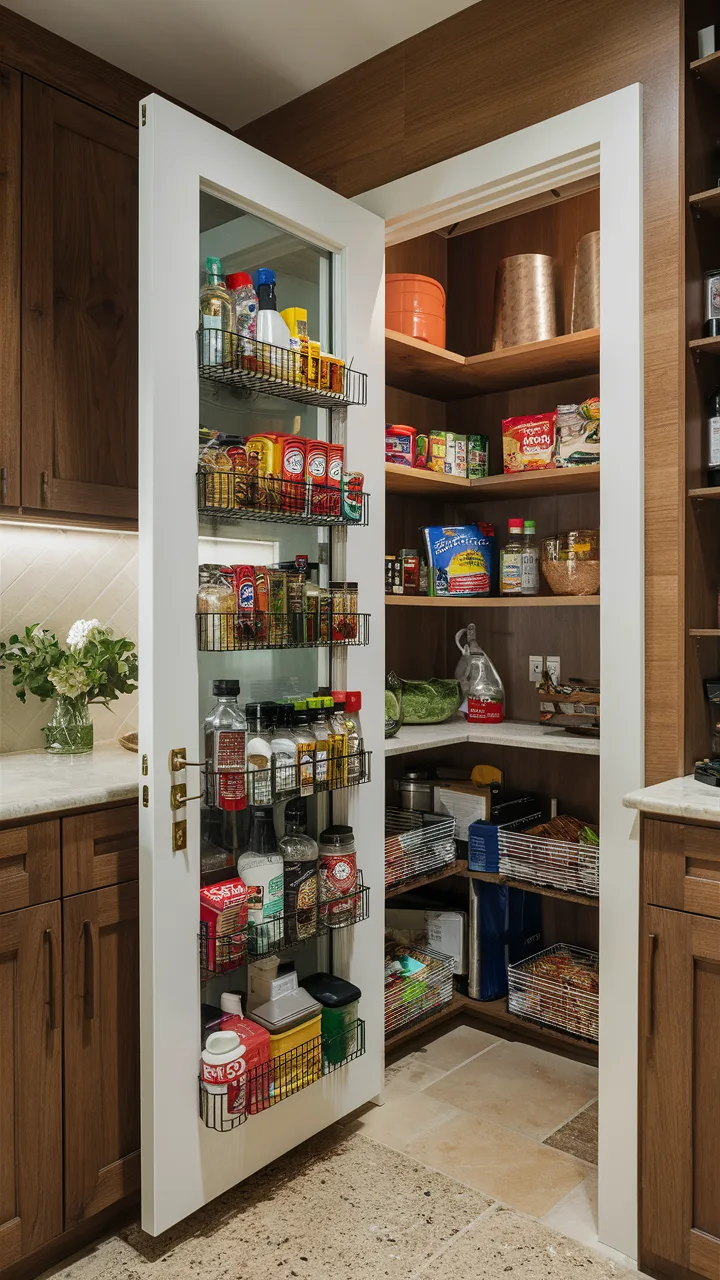
- Over-the-Door Organizers: These are a game-changer for tiny pantries. Over-the-door organizers can hold spices, packets, or small containers, and they’re perfect for spaces where every inch counts. Just make sure the door can still open and close smoothly.
- Stackable Bins: If you’re storing small items (like spices or packets), stackable bins are a lifesaver. They keep everything organized and easy to access. Look for clear bins so you can see what’s inside without opening them.
- Magnetic Strips: Yes, like the ones you use for knives. Magnetic strips can hold spice jars, small containers, or even metal utensils. They’re a great way to free up counter or shelf space.
- Pegboards: Pegboards are infinitely customizable and perfect for hanging utensils, baskets, or even shelves. They’re a bit more work to set up, but they’re worth it if you’ve got a lot of small items to store.
- Under-Shelf Baskets: These attach to the underside of your shelves and are perfect for small items (like packets or spices). They’re a great way to double your storage space without taking up any extra room.
And here’s a bonus tip: use the ceiling. If you’ve got high ceilings, consider adding overhead racks for lightweight items (like bags of chips or paper goods). Just make sure they’re securely mounted and don’t interfere with any lights or vents.
Step 4: The Art of Vertical Storage (Because You’re Not Using Your Walls Enough)
Why Vertical Storage is Your Best Friend
If you’re not using your walls for storage, you’re basically leaving money on the table. Vertical storage is one of the easiest ways to maximize space in a tiny pantry, and it’s often overlooked. Think about it: most pantries have at least 8 feet of vertical space, but how much of that are you actually using? If you’re like most people, probably not much. And that’s a shame, because walls are free real estate.
Here’s the thing: vertical storage isn’t just about adding more shelves. It’s about reimagining how you use the space. For example, instead of storing your spices on a shelf, why not mount them on the wall? Instead of keeping your oils in a cabinet, why not hang them on a rack? The possibilities are endless, and the best part is, vertical storage doesn’t take up any floor space. That means more room for you to move around, more room for other storage, and, most importantly, more room for your sanity.
I’ll never forget the first time I helped a café owner redesign her pantry using vertical storage. She was skeptical at first, she thought it would look cluttered or make the space feel smaller. But once we installed a few wall-mounted racks and pegboards, she was blown away. Not only did she double her storage space, but her pantry actually felt *bigger* because we’d freed up so much floor space. It was like magic, except it was just good design.
How to Implement Vertical Storage Without Making Your Pantry Look Like a Hardware Store
Okay, so you’re sold on vertical storage. But how do you implement it without turning your pantry into a chaotic mess? Here’s how to do it the right way:
- Start with a plan: Before you start drilling holes in the wall, sketch out where everything will go. Think about what you use most often and make sure those items are within easy reach. You don’t want to be standing on a step stool every time you need salt.
- Use the right hardware: Not all wall-mounted storage is created equal. Look for heavy-duty brackets and racks that can support the weight of your items. And if you’re mounting anything near a sink or stove, make sure it’s water- and heat-resistant.
- Keep it organized: Vertical storage can quickly become a mess if you’re not careful. Use bins, baskets, and labels to keep things tidy. And if you’re hanging multiple items, group them by category (e.g., spices, oils, utensils) so they’re easy to find.
- Leave room for growth: Your storage needs will change over time, so don’t fill every inch of wall space. Leave some room for new items or seasonal ingredients.
- Make it look good: Just because it’s functional doesn’t mean it has to be ugly. Choose stylish racks and baskets that match your kitchen’s aesthetic. And if you’re using pegboards, consider painting them a fun color to add a pop of personality.
And here’s a pro tip: use the back of the door. The back of your pantry door is prime real estate for storage. You can hang over-the-door organizers, racks, or even a pegboard to store small items. It’s an easy way to add storage without taking up any extra space.
Step 5: The FIFO System, Because No One Wants to Throw Away Expired Food
What is FIFO and Why Does It Matter?
Let’s talk about FIFO. No, it’s not a new type of sandwich, it stands for First In, First Out, and it’s one of the most important systems you can implement in your pantry. Here’s how it works: when you restock your pantry, you place new items behind the old ones. That way, the oldest items get used first, and you’re not stuck with a shelf full of expired ingredients. Simple, right? But you’d be surprised how many kitchens don’t do this.
Why does FIFO matter? Because food waste is expensive. According to the USDA, 30-40% of the food supply in the U.S. is wasted, and a lot of that waste happens in commercial kitchens. When you don’t use ingredients in the order you receive them, you end up throwing away expired food, and that’s money down the drain. FIFO helps you reduce waste, save money, and keep your pantry organized. It’s a win-win-win.
But here’s the thing: FIFO isn’t just about saving money. It’s also about food safety. Using expired ingredients can lead to foodborne illnesses, which can be disastrous for your business. And even if the ingredients aren’t technically expired, using older items first ensures that your food tastes fresh and delicious. No one wants to eat a dish made with stale spices or rancid oil, right?
How to Implement FIFO in a Tiny Pantry (Without Going Crazy)
Okay, so you’re sold on FIFO. But how do you implement it in a tiny pantry where space is already at a premium? Here’s how to do it without losing your mind:
- Label everything: The first step in FIFO is knowing when items were received. Use labels with dates (or color-coded stickers) to mark when you restocked something. That way, you can easily see which items are the oldest.
- Use clear containers: If you’re storing ingredients in containers, make sure they’re clear so you can see what’s inside. That way, you don’t have to open every container to check the expiration date.
- Designate a “new stock” zone: When you receive new inventory, don’t mix it with the old stock. Instead, designate a specific area (like a lower shelf or a separate bin) for new items. Once the old stock is used up, you can move the new items to their permanent home.
- Train your staff: FIFO only works if everyone in your kitchen follows the system. Make sure your staff knows how to restock items and where to find the oldest ingredients. You might even want to post a sign in the pantry as a reminder.
- Do regular check-ins: FIFO isn’t a “set it and forget it” system. You’ll need to check your pantry regularly to make sure items are being used in the right order. Set a reminder to do a weekly or bi-weekly audit to keep things on track.
And here’s a bonus tip: use the “one in, one out” rule. For every new item you bring into your pantry, remove an old one. This helps prevent overstocking and ensures that you’re always using the freshest ingredients. It’s a simple rule, but it makes a big difference.
Step 6: Smart Labeling, Because You’re Not a Mind Reader
Why Labeling is More Important Than You Think
Let’s be honest: labeling is boring. It’s the kind of task that gets pushed to the bottom of the to-do list, right after “clean the fridge” and “organize the spice rack.” But here’s the thing: a well-labeled pantry can save you hours of frustration. Think about it, how many times have you wasted time searching for an ingredient, only to realize it was right in front of you the whole time? Or worse, how many times have you grabbed the wrong ingredient because the container looked similar to something else?
Labeling isn’t just about knowing what’s in your pantry-it’s about knowing where things are and how to use them. A good labeling system can help you:
- Find ingredients faster: No more digging through shelves to find that one spice you need.
- Reduce waste: When you can see what you have, you’re less likely to overbuy or let ingredients expire.
- Improve food safety: Labels can include expiration dates, allergen information, and storage instructions, which are crucial in a commercial kitchen.
- Train new staff: A well-labeled pantry makes it easier to onboard new employees and keep everyone on the same page.
I’ll never forget the time I walked into a café where the owner had labeled everything-and I mean everything. The spices, the oils, the backup ingredients, even the shelves themselves had labels. At first, I thought it was overkill. But then I watched as a new employee effortlessly navigated the pantry, grabbing exactly what she needed without asking a single question. That’s when I realized: labeling isn’t just for you, it’s for your team.
How to Label Like a Pro (Without Turning Your Pantry Into a Library)
Okay, so you’re ready to label. But how do you do it without turning your pantry into a chaotic mess of sticky notes and scribbled handwriting? Here’s how to do it the right way:
- Choose the right labels: Not all labels are created equal. For a commercial kitchen, you’ll want durable, waterproof labels that can withstand heat, moisture, and frequent handling. Some good options include:
- Chalkboard labels: Great for dry ingredients like flour or sugar. You can write on them with chalk or a chalk marker, and they’re easy to update.
- Vinyl labels: Waterproof and durable, these are perfect for containers, shelves, and bins. You can write on them with a permanent marker or print custom labels.
- Magnetic labels: If you’re using metal shelves or containers, magnetic labels are a great option. They’re easy to move around and update.
- Color-coded labels: Assign a color to each category (e.g., red for spices, blue for baking, green for produce) to make things even easier to find.
- Label everything: This might sound obvious, but I’ve seen too many pantries where only *some* things are labeled. If it’s in your pantry, it should have a label. That includes:
- Containers (spices, oils, sauces, etc.)
- Shelves (so you know where things belong)
- Bins and baskets (to keep things organized)
- Backup supplies (so you know what’s what)
- Include key information: A good label doesn’t just tell you what’s inside, it tells you how to use it. Here’s what to include:
- Name of the ingredient: Be specific. Instead of “spice,” write “cumin” or “paprika.”
- Date received: This is crucial for FIFO. Use a permanent marker or label maker to write the date on the container.
- Expiration date: If the ingredient has a shelf life, include the expiration date. This helps you avoid using expired items and reduces waste.
- Allergen information: If the ingredient contains common allergens (like nuts, dairy, or gluten), make sure it’s clearly labeled. This is non-negotiable in a commercial kitchen.
- Storage instructions: Does the ingredient need to be refrigerated after opening? Should it be stored in a cool, dark place? Include this information on the label.
- Keep it consistent: Use the same labeling system throughout your pantry. That means the same font, size, and format for every label. If you’re using color-coding, make sure the colors are consistent across all categories. Consistency makes it easier to find and update labels as needed.
- Update regularly: Labels aren’t a “set it and forget it” task. You’ll need to update them regularly as you restock ingredients or change your menu. Set a reminder to do a monthly label check to make sure everything is up to date.
And here’s a bonus tip: use a label maker. I know it sounds like overkill, but trust me, it’s worth it. A label maker gives you clean, professional-looking labels that are easy to read and update. Plus, it’s way faster than writing everything by hand. If you’re on a budget, you can find affordable label makers online, or even use a free app to design and print labels.
Step 7: The Backup Plan, Where to Store What You Don’t Use Every Day
Why You Need a Backup Storage System
Let’s talk about backup storage. Because if you’re like most commercial kitchens, you’ve got a lot of stuff that you don’t use every day. Maybe it’s seasonal ingredients, like pumpkin puree for fall or peppermint extract for the holidays. Maybe it’s backup supplies, like extra cases of canned goods or bags of flour. Or maybe it’s specialty items, like truffle oil or saffron, that you only use for a few dishes. Whatever it is, it’s taking up space in your pantry, and that’s a problem.
The solution? A backup storage system. This is a separate area (or areas) where you store items that you don’t need immediate access to. It could be a storage closet, a basement, or even a rented storage unit (if you’re really tight on space). The key is to keep these items out of your pantry so you can free up space for the things you use every day.
But here’s the thing: backup storage isn’t just about freeing up space. It’s also about protecting your ingredients. Some items, like flour, sugar, and spices, can attract pests or spoil if they’re not stored properly. By keeping them in a cool, dry, and pest-free environment, you can extend their shelf life and reduce waste. Plus, if you’re storing backup supplies in a temperature-controlled space, you can prevent spoilage and save money in the long run.
I remember working with a food truck owner who was struggling with storage. His pantry was so packed that he could barely move, and he was constantly running out of space for new ingredients. When I suggested he move his backup supplies to a rented storage unit, he was skeptical. But once he did it, he was amazed at how much extra space he had. He even ended up expanding his menu because he had room to store new ingredients. The moral of the story? Backup storage isn’t a luxury, it’s a necessity.
How to Set Up a Backup Storage System That Actually Works
Okay, so you’re ready to set up a backup storage system. But how do you do it without creating a bigger mess? Here’s how to do it the right way:
- Choose the right location: Your backup storage area should be clean, dry, and pest-free. It should also be easily accessible-you don’t want to have to drive across town every time you need to grab something. Some good options include:
- A storage closet: If you’ve got extra space in your kitchen or restaurant, a storage closet is a great option. Just make sure it’s well-ventilated and pest-proof.
- A basement or attic: If you’ve got a basement or attic, it can be a good place to store backup supplies. Just make sure it’s dry and temperature-controlled-you don’t want your ingredients to spoil.
- A rented storage unit: If you’re really tight on space, a rented storage unit can be a good option. Just make sure it’s climate-controlled and secure.
- Organize by category: Just like your pantry, your backup storage area should be organized by category. That means grouping similar items together (e.g., canned goods, dry goods, backup supplies) so they’re easy to find. Use bins, baskets, and shelves to keep things tidy.
- Label everything: This is crucial. If you’re storing items in a separate location, you need to know what’s what. Use clear, durable labels to mark containers, shelves, and bins. Include expiration dates and storage instructions to keep things organized.
- Implement a tracking system: If you’re storing a lot of backup supplies, you’ll want a way to track what you have and when it expires. This could be as simple as a spreadsheet or as high-tech as a inventory management app. The key is to stay on top of your inventory so you don’t end up with expired items.
- Rotate stock regularly: Just like your pantry, your backup storage area should follow the FIFO system. When you restock your pantry, move the oldest items to the front so they get used first. This helps reduce waste and keeps your inventory fresh.
And here’s a bonus tip: use clear bins for backup storage. Clear bins let you see what’s inside without opening them, which makes it easier to find what you need. Plus, they’re stackable, so you can maximize vertical space. Just make sure they’re food-safe and pest-proof.
Step 8: Safety and Compliance, Because No One Wants a Health Code Violation
Why Safety Should Be Your Top Priority
Let’s talk about safety and compliance. Because if you’re running a commercial kitchen, this isn’t just a suggestion, it’s the law. Health code violations can lead to fines, closures, or even lawsuits, and no one wants that. But here’s the thing: safety and compliance aren’t just about avoiding penalties. They’re also about protecting your customers, your staff, and your business. A well-organized pantry isn’t just efficient, it’s safer.
So, what does safety look like in a tiny commercial pantry? It means:
- Storing food at the right temperature: Some ingredients need to be refrigerated, while others can be stored at room temperature. Make sure you’re following the FDA’s food storage guidelines to prevent spoilage and foodborne illnesses.
- Keeping food off the floor: This might sound obvious, but I’ve seen too many kitchens where bags of flour or cases of canned goods are stored directly on the floor. Not only is this a health code violation, but it’s also a pest magnet. Use shelves, racks, or pallets to keep food at least 6 inches off the ground.
- Preventing cross-contamination: If you’re storing raw ingredients (like meat or poultry) in your pantry, make sure they’re separate from ready-to-eat foods. Use separate containers, shelves, or even separate pantries to prevent cross-contamination.
- Labeling allergens: If you’re serving customers with food allergies, you need to clearly label allergens in your pantry. This includes nuts, dairy, gluten, and shellfish, among others. Make sure your staff knows how to identify and handle allergens to prevent allergic reactions.
- Keeping pests out: Pests are a nightmare in any kitchen, but they’re especially problematic in tiny pantries where space is tight. Make sure your pantry is sealed properly (no gaps in doors or walls) and use pest-proof containers to store food. Regular pest control inspections are also a good idea.
I’ll never forget the time I walked into a café where the owner was storing raw chicken next to ready-to-eat salads. When I pointed out the cross-contamination risk, he shrugged and said, “It’s fine, it’s all in the fridge.” Spoiler: it’s not fine. Cross-contamination is a serious health hazard, and it’s one of the most common reasons for health code violations. Don’t be that guy.
How to Stay Compliant Without Sacrificing Space
Okay, so you know the rules. But how do you stay compliant in a tiny pantry where space is already at a premium? Here’s how to do it without going crazy:
- Use the right containers: If you’re storing food in your pantry, make sure it’s in food-safe, airtight containers. This helps prevent spoilage, pests, and cross-contamination. Look for containers that are durable, easy to clean, and stackable to maximize space.
- Store food at the right temperature: Some ingredients (like dairy or meat) need to be refrigerated, while others (like flour or sugar) can be stored at room temperature. Make sure you’re following the FDA’s food storage guidelines to keep your ingredients fresh and safe.
- Keep food off the floor: This is a big one. No food should ever be stored directly on the floor. Use shelves, racks, or pallets to keep food at least 6 inches off the ground. If you’re tight on space, consider wall-mounted shelves or hanging racks to free up floor space.
- Label everything: Labels aren’t just for organization, they’re also for safety. Make sure every container in your pantry is clearly labeled with the name of the ingredient, the date it was received, and any allergen information. This helps prevent cross-contamination and ensures that your staff knows what they’re handling.
- Separate raw and ready-to-eat foods: If you’re storing raw ingredients (like meat or poultry) in your pantry, make sure they’re separate from ready-to-eat foods. Use separate containers, shelves, or even separate pantries to prevent cross-contamination. If space is tight, consider color-coding your containers (e.g., red for raw, green for ready-to-eat).
- Keep pests out: Pests are a major health hazard, and they’re especially problematic in tiny pantries. Make sure your pantry is sealed properly (no gaps in doors or walls) and use pest-proof containers to store food. Regular pest control inspections are also a good idea.
- Train your staff: Safety and compliance aren’t just your responsibility, they’re everyone’s responsibility. Make sure your staff knows how to store food properly, identify allergens, and prevent cross-contamination. Regular training sessions are a good way to keep everyone on the same page.
And here’s a bonus tip: keep a safety checklist. This is a simple list of safety and compliance tasks that you can check off daily, weekly, or monthly. It’s a great way to stay on top of things and ensure that nothing falls through the cracks. Some things to include on your checklist:
- Check expiration dates
- Inspect for pests
- Clean shelves and containers
- Check temperature controls
- Review allergen labels
Step 9: Seasonal Adjustments, Because Your Pantry Shouldn’t Look the Same in July and December
Why Seasonal Adjustments Matter
Let’s talk about seasonal adjustments. Because if your pantry looks the same in July as it does in December, you’re doing it wrong. Your storage needs change with the seasons, and your pantry should too. Maybe you’re a bakery that needs extra space for pumpkin puree in the fall or a café that stocks up on iced tea mix in the summer. Whatever your business, seasonal ingredients take up space, and if you’re not careful, they can quickly overwhelm your pantry.
The key to maximizing storage in tiny commercial pantries is to adapt to these changes. That means rotating your inventory, adjusting your storage solutions, and even rearranging your pantry as needed. It might sound like a lot of work, but trust me, it’s worth it. A well-organized seasonal pantry can help you reduce waste, save money, and keep your menu fresh. Plus, it’s a lot easier to find what you need when you’re not digging through a mountain of holiday decorations in the middle of July.
I remember working with a café owner who was struggling with seasonal storage. Every fall, she’d stock up on pumpkin spice syrup, apple cider, and holiday cookies, and every spring, she’d switch to lemonade, iced tea, and summer salads. But her pantry was static-it didn’t change with the seasons. That meant she was constantly shuffling ingredients around, trying to make room for new items while still keeping the old ones accessible. It was a mess, and it was costing her time and money.
When we redesigned her pantry to accommodate seasonal changes, everything changed. She added adjustable shelving, modular bins, and even a few rolling carts to make it easier to swap out ingredients. Now, when fall rolls around, she can quickly and easily make room for her holiday items without disrupting her entire workflow. And when spring comes, she can just as easily switch back to her summer setup. It’s a game-changer.
How to Adjust Your Pantry for Seasonal Changes (Without Losing Your Mind)
Okay, so you’re sold on seasonal adjustments. But how do you do it without turning your pantry into a chaotic mess? Here’s how to do it the right way:
- Plan ahead: The key to seasonal adjustments is planning. Before the season starts, take inventory of what you’ll need and make a list of what you’ll need to store. This helps you avoid overbuying and ensures that you have enough space for everything.
- Use modular storage: Modular storage (like adjustable shelving, stackable bins, and rolling carts) makes it easy to rearrange your pantry as needed. When the season changes, you can quickly and easily swap out ingredients without disrupting your entire setup.
- Rotate your inventory: Just like your regular pantry, your seasonal storage should follow the FIFO system. When you restock seasonal items, place the new items behind the old ones so the oldest items get used first. This helps reduce waste and keeps your inventory fresh.
- Label everything: This is especially important for seasonal storage. Make sure every container is clearly labeled with the name of the ingredient, the date it was received, and any storage instructions. This helps you find what you need and ensures that nothing gets lost in the shuffle.
- Store off-season items elsewhere: If you’ve got off-season items taking up space in your pantry, consider moving them to a backup storage area. This frees up space for seasonal ingredients and keeps your pantry organized.
- Do a seasonal audit: At the end of each season, do a full audit of your pantry. Take inventory of what you have left, donate or discard expired items, and reorganize as needed. This helps you start the next season with a clean slate.
And here’s a bonus tip: use clear bins for seasonal storage. Clear bins let you see what’s inside without opening them, which makes it easier to find what you need. Plus, they’re stackable, so you can maximize vertical space. Just make sure they’re food-safe and pest-proof.
Step 10: The Final Touches, Making Your Pantry Work for You
Why the Little Things Make a Big Difference
Alright, we’re in the home stretch. You’ve audited your pantry, measured your space, chosen the right storage solutions, and implemented safety and compliance measures. Now it’s time for the final touches-the little things that make a big difference in how your pantry looks, feels, and functions. Because let’s be honest: a well-organized pantry isn’t just about storage. It’s about efficiency, workflow, and even morale. And the little things? They add up.
Think about it: how much time do you waste every day searching for ingredients, digging through clutter, or reorganizing shelves? Probably more than you’d like to admit. And how much stress does a messy pantry add to your day? Probably more than you realize. The final touches are about eliminating those frustrations so you can focus on what really matters-cooking great food.
I remember working with a chef who was obsessed with efficiency. He had his pantry organized down to the last spice, but he was still frustrated. Why? Because he was wasting time opening and closing containers, searching for utensils, and rearranging shelves. When we added a few final touches-like lazy Susans for spices, magnetic strips for utensils, and clear bins for small items-his workflow completely transformed. He wasn’t just organized; he was faster, more efficient, and less stressed. And that’s the power of the final touches.
How to Add the Final Touches (Without Going Overboard)
Okay, so you’re ready to add the final touches. But how do you do it without turning your pantry into a Pinterest board? Here’s how to do it the right way:
- Add lazy Susans: Lazy Susans are game-changers for tiny pantries. They make it easy to access items in the back of shelves without having to move everything around. Use them for spices, oils, or small containers to maximize space and efficiency.
- Use magnetic strips: Magnetic strips are perfect for utensils, spice jars, or small containers. They free up shelf space and keep everything within reach. Just make sure they’re securely mounted-the last thing you want is a strip full of knives crashing to the floor.
- Install under-shelf baskets: Under-shelf baskets attach to the underside of your shelves and are perfect for small items (like packets or spices). They’re a great way to double your storage space without taking up any extra room.
- Add hooks for hanging items: Hooks are perfect for hanging utensils, bags of produce, or even aprons. They free up shelf space and keep everything within reach. Just make sure they’re securely mounted and can support the weight of your items.
- Use clear bins for small items: Clear bins are perfect for small items (like spices, packets, or utensils). They keep everything organized and easy to access. Plus, they’re stackable, so you can maximize vertical space.
- Add a whiteboard or chalkboard: A whiteboard or chalkboard is a great way to keep track of inventory, expiration dates, or special notes. You can even use it to plan your menu or jot down ideas. Just make sure it’s easy to clean and doesn’t take up too much space.
- Keep a step stool handy: If you’ve got high shelves, a step stool is a must. Make sure it’s lightweight, easy to store, and sturdy-you don’t want to be wobbling on a rickety chair every time you need something from the top shelf.
- Add lighting: If your pantry is dark or poorly lit, consider adding LED strip lights or battery-operated puck lights. Good lighting makes it easier to find what you need and keeps your pantry looking bright and inviting.
And here’s a bonus tip: keep a “quick grab” bin. This is a small bin or basket where you keep the items you use most often. It’s a great way to save time and keep your pantry organized. Just make sure it’s easy to access and doesn’t take up too much space.
Conclusion: Your Tiny Pantry, Your Secret Weapon
So, there you have it-everything you need to know about maximizing storage in tiny commercial pantries. It’s been a journey, hasn’t it? We’ve talked about auditing your pantry, measuring your space, choosing the right storage solutions, and even implementing safety and compliance measures. We’ve covered FIFO, labeling, backup storage, seasonal adjustments, and the final touches. And along the way, we’ve debunked a few myths, challenged some assumptions, and (hopefully) had a few laughs.
But here’s the thing: this isn’t just about storage. It’s about efficiency, workflow, and even your sanity. A well-organized pantry can save you time, reduce waste, and make your kitchen run smoother. It can boost morale, improve food safety, and even help you save money. And in a tiny commercial kitchen, where every inch counts, that’s priceless.
So, what’s next? It’s time to put these ideas into action. Grab your tape measure, your notebook, and your favorite pen (or pencil, no judgment here), and start auditing your pantry. Measure your space, sketch a layout, and choose the right storage solutions. Implement FIFO, labeling, and backup storage, and don’t forget the final touches. And most importantly, don’t be afraid to experiment. Your pantry isn’t set in stone, it’s a dynamic space that should evolve with your needs.
And if you’re feeling overwhelmed, that’s okay. Start small. Maybe you begin with one shelf or one category. Maybe you implement FIFO for your spices before tackling the whole pantry. Whatever you do, just start. Because the sooner you do, the sooner you’ll realize that your tiny pantry isn’t a limitation, it’s an opportunity.
So, go forth and maximize that storage. And when you’re done, come back and tell me how it went. I’ll be here, sipping my coffee (or maybe a whiskey, it’s 5 o’clock somewhere), cheering you on. Because at the end of the day, a well-organized pantry isn’t just about space, it’s about freedom. Freedom to cook, create, and thrive in a kitchen that works for you, not against you.
FAQ
Q: What’s the first step in maximizing storage in a tiny commercial pantry?
A: The first step is to conduct a full pantry audit. That means taking everything out, categorizing it, and figuring out what you *actually* need to store. It’s not the most glamorous task, but it’s the foundation of a well-organized pantry. Once you know what you’re working with, you can start planning your storage solutions.
Q: How do I choose the right shelving for my pantry?
A: The right shelving depends on your space, budget, and storage needs. For most commercial kitchens, wire or metal shelving is the best choice because it’s durable, easy to clean, and adjustable. But if you’re on a tight budget or have a very small space, plastic or wood shelving can work too, just be mindful of their limitations. And don’t forget to measure your space before you buy anything!
Q: What’s the FIFO system, and why is it important?
A: FIFO stands for First In, First Out, and it’s a system for rotating your inventory so the oldest items get used first. It’s important because it reduces waste, saves money, and improves food safety. In a tiny pantry, where space is tight, FIFO helps you avoid overstocking and keep your ingredients fresh. It’s a simple system, but it makes a big difference.
Q: How can I keep my pantry organized during seasonal changes?
A: The key to seasonal adjustments is planning and flexibility. Before the season starts, take inventory of what you’ll need and make a list of what you’ll need to store. Use modular storage solutions (like adjustable shelving or stackable bins) to make it easy to swap out ingredients. And don’t forget to label everything so you can find what you need when the season changes. Finally, do a seasonal audit at the end of each season to reorganize and declutter as needed.
Q: What are some safety tips for storing food in a tiny pantry?
A: Safety is crucial in any commercial kitchen, but it’s especially important in a tiny pantry where space is tight. Here are a few tips:
- Store food at the right temperature: Follow the FDA’s guidelines for food storage temperatures to prevent spoilage.
- Keep food off the floor: Use shelves, racks, or pallets to keep food at least 6 inches off the ground.
- Prevent cross-contamination: Store raw ingredients separately from ready-to-eat foods to avoid cross-contamination.
- Label allergens: Clearly label allergens (like nuts, dairy, or gluten) to prevent allergic reactions.
- Keep pests out: Use pest-proof containers and seal your pantry properly to prevent pests.
And don’t forget to train your staff on safety and compliance, it’s everyone’s responsibility!
@article{maximizing-storage-in-tiny-commercial-pantries-a-chefs-guide-to-doing-more-with-less-space,
    title   = {Maximizing Storage in Tiny Commercial Pantries: A Chef’s Guide to Doing More with Less Space},
    author  = {Chef's icon},
    year    = {2026},
    journal = {Chef's Icon},
    url     = {https://chefsicon.com/maximizing-storage-in-tiny-commercial-pantries/}
}