The Best Fluffy Pancakes recipe you will fall in love with. Full of tips and tricks to help you make the best pancakes.
Raw Dairy Sauces in Commercial Kitchens: When Flavor Meets Risk (And How to Handle Both)
Let me start with a confession: I once nearly ruined a dinner service because of a batch of raw cream sauce that sat too long on the pass. It wasn’t spoiled, at least, not in the way you’d expect. The texture had subtly shifted, the flavor turned just a hair too sharp, and the color lost that creamy ivory glow. It was still *technically* safe, but my gut (and my palate) told me something was off. That moment stuck with me, not because of the near-miss, but because it forced me to confront a question I’d been dodging: How much risk is acceptable when working with raw dairy in sauces?
If you’re reading this, you’re probably someone who cares about flavor as much as you care about safety. Maybe you’re a chef who’s been experimenting with raw-milk béchamel, or a kitchen manager trying to standardize protocols for your team. Or perhaps you’re just curious about why some restaurants still take the risk when pasteurized alternatives exist. Whatever brought you here, let’s get one thing straight: raw dairy sauces aren’t inherently evil, but they demand respect, knowledge, and a hell of a lot of vigilance. This isn’t about fear-mongering, it’s about understanding the stakes and making informed decisions. So grab a coffee (or, if you’re feeling bold, a glass of raw milk), and let’s dive in.
By the end of this, you’ll know:
- Why raw dairy sauces are still used in commercial kitchens despite the risks
- The specific pathogens you’re up against (and why they’re scarier than you think)
- Step-by-step safety protocols for sourcing, storing, and preparing raw dairy sauces
- How to train your team to treat raw dairy like the high-risk ingredient it is
- Legal and liability considerations (because ignorance isn’t a defense)
- Alternatives that might give you 90% of the flavor with 10% of the risk
Fair warning: This isn’t a quick read. But if you’re serious about working with raw dairy, it’s the kind of deep dive you can’t afford to skip. Let’s start with the basics, or, more accurately, the ot-so-basic basics.
The Raw Dairy Paradox: Why Chefs Still Take the Risk
The Flavor Factor: What Pasteurization Takes Away
There’s a reason why some of the world’s most revered sauces, think carbonara, alfredo, or classic French béchamel-were traditionally made with raw dairy. Heat changes dairy on a molecular level. Pasteurization, while a lifesaver in terms of food safety, alters proteins, fats, and enzymes in ways that can dull flavor and texture. Raw milk has a complexity that pasteurized milk often lacks: a subtle sweetness, a richer mouthfeel, and a depth of flavor that can elevate a sauce from good to unforgettable.
I remember the first time I tasted a raw-milk carbonara. The eggs were from a local farm, the cheese was aged in-house, and the cream? Straight from the udder, barely filtered. The sauce coated the pasta like silk, with a brightness that made the dish taste alive. It was revelatory, and terrifying. Because here’s the thing: that same complexity that makes raw dairy so magical is also what makes it a breeding ground for bacteria. The enzymes and microbes that contribute to flavor are often the same ones that can turn your sauce into a Petri dish if you’re not careful.
Is it worth it? That’s the question every chef has to answer for themselves. But if you’re going to play with fire, you’d better know how to control the flame.
The Cultural and Artisanal Appeal
There’s also a cultural dimension to raw dairy. In many parts of the world, Italy, France, parts of the Middle East, raw milk products are a point of pride. Chefs in these regions often argue that pasteurization is a modern crutch that sacrifices tradition for convenience. And let’s be honest: there’s a certain romance to working with ingredients that haven’t been sanitized into submission.
But here’s where things get messy. The U.S. has some of the strictest raw dairy regulations in the world, and for good reason. While countries like France and Italy have long histories of raw milk consumption with relatively low rates of illness, their systems for monitoring and controlling dairy production are often more rigorous than what you’ll find in many American states. That’s not to say raw dairy is inherently unsafe in the U.S., but it does mean that the margin for error is razor-thin. One bad batch, one lapse in protocol, and you’re not just risking a bad Yelp review, you’re risking lives.
So why do some chefs still do it? Part of it is ego. Part of it is the belief that they can do it better than the next guy. And part of it? It’s just damn delicious. But if you’re going to walk this line, you need to understand exactly what you’re up against.
The Pathogens You’re Up Against (And Why They’re Scarier Than You Think)
Meet Your Enemies: A Rogues’ Gallery of Dairy-Borne Pathogens
Raw dairy isn’t just milk, it’s a living ecosystem. And like any ecosystem, it’s home to both the good and the bad. The problem? The bad guys can turn your sauce into a weapon. Here’s a rundown of the most common (and most dangerous) pathogens found in raw dairy:
- Salmonella: The poster child for foodborne illness. Symptoms include fever, diarrhea, and vomiting, and in severe cases, it can be fatal. Salmonella thrives in raw dairy, especially in products that haven’t been properly chilled or handled.
- E. coli (especially O157:H7): This strain is particularly nasty, capable of causing severe kidney damage in children. It’s often linked to fecal contamination, which, yes, can happen even in the cleanest-looking dairy farms.
- Listeria monocytogenes: The silent killer. Listeria can grow at refrigerator temperatures, making it a particular threat in sauces that are prepared ahead of time. It’s especially dangerous for pregnant women, the elderly, and immunocompromised individuals.
- Campylobacter: Less well-known than Salmonella or E. coli, but just as dangerous. It’s one of the leading causes of diarrheal illness in the U.S., and raw dairy is a common vector.
- Staphylococcus aureus: This one’s a bit different. It’s not the bacteria itself that makes you sick, it’s the toxin it produces. And here’s the kicker: the toxin can survive cooking. So even if you heat your sauce, if it was contaminated with Staph, you’re still in trouble.
Now, I can already hear the pushback: “But Sammy, people have been drinking raw milk for centuries without dying!” And you’re not wrong. The human body is remarkably resilient, and for most healthy adults, a small amount of contamination might not cause any issues. But here’s the thing: you’re not just cooking for healthy adults. You’re cooking for kids, for the elderly, for people with autoimmune disorders, for pregnant women. And when it comes to food safety, the weakest link defines your standards.
The Temperature Danger Zone: Where Bacteria Throw a Party
If there’s one concept you need to tattoo on your brain when working with raw dairy, it’s the temperature danger zone. This is the range between 40°F (4°C) and 140°F (60°C) where bacteria grow most rapidly. And guess what? Most sauces spend a lot of time in this zone, whether it’s during prep, holding, or cooling.
Let’s say you’re making a raw cream sauce for a catering event. You mix the cream with your other ingredients, let it sit on the counter while you prep the rest of the dish, then hold it at room temperature until service. Sound familiar? That’s a recipe for disaster. Bacteria can double in number every 20 minutes in the danger zone. So by the time your sauce hits the table, it could be teeming with pathogens.
But here’s where it gets even trickier: ot all bacteria are killed by heat. Some, like the toxin produced by Staphylococcus aureus, are heat-stable. Others, like Listeria, can survive and even grow at refrigerator temperatures. This means that your safety protocols can’t just rely on cooking. You need a multi-layered approach that covers sourcing, storage, prep, and service.
Sourcing Raw Dairy: The First Line of Defense
How to Find a Supplier You Can Trust (And Why Most Aren’t Good Enough)
If you’re going to work with raw dairy, your supplier isn’t just a vendor, they’re your partner in food safety. And let me tell you, finding a good one is harder than finding a needle in a haystack. Most commercial kitchens don’t have the time, resources, or expertise to properly vet a raw dairy supplier, which is why so many end up cutting corners.
Here’s what you need to look for:
- Third-Party Testing: Your supplier should be testing every batch of milk for pathogens like Salmonella, E. coli, and Listeria. And I don’t mean once a month, I mean every single batch. Ask to see their test results. If they hesitate, walk away.
- On-Farm Inspections: A good supplier doesn’t just test the milk, they inspect the farm. This includes checking for cleanliness, proper animal husbandry, and adherence to food safety protocols. If your supplier can’t tell you exactly where the milk comes from, that’s a red flag.
- Cold Chain Integrity: Raw milk needs to be chilled to 40°F (4°C) or below within two hours of milking. It needs to stay at that temperature until it reaches your kitchen. Ask your supplier about their cold chain protocols. If they can’t guarantee temperature control, find someone who can.
- Transparency: A reputable supplier will be open about their processes. They’ll let you visit the farm, see their testing protocols, and answer any questions you have. If they’re evasive or defensive, that’s a sign they have something to hide.
Now, I know what you’re thinking: “Sammy, this sounds expensive.” And you’re right. High-quality raw dairy isn’t cheap, and neither is the testing and oversight required to ensure it’s safe. But here’s the thing: the cost of a foodborne illness outbreak will always be higher. We’re talking lawsuits, lost business, and, worst of all, harm to your customers. If you can’t afford to source raw dairy properly, you can’t afford to use it at all.
The Legal Landscape: What’s Allowed (And What’s Not)
Before you even think about bringing raw dairy into your kitchen, you need to know the laws in your state. In the U.S., raw milk sales are regulated at the state level, and the rules vary wildly. Some states, like California and Pennsylvania, allow the sale of raw milk in retail stores. Others, like New York and Washington, allow it only on the farm where it was produced. And some, like Iowa and Louisiana, ban it outright.
But here’s where it gets complicated: even if raw milk is legal in your state, that doesn’t mean you can use it in a commercial kitchen. Many states have additional regulations for food service establishments, including requirements for pasteurization. And if you’re serving raw dairy sauces to the public, you’re opening yourself up to a whole new level of liability.
Before you proceed, do your homework. Check with your local health department. Talk to a food safety attorney. And for the love of all things holy, don’t assume that because one restaurant is doing it, it’s legal. Ignorance of the law is not a defense, and the consequences of getting it wrong can be catastrophic.
Storage Protocols: Keeping Raw Dairy Safe Before It Hits the Saucepan
The 4-Hour Rule (And Why It’s Non-Negotiable)
You’ve sourced your raw dairy. You’ve verified its safety. Now what? Storage is where most kitchens go wrong. Raw dairy is perishable, and it doesn’t take long for it to become a hazard. The golden rule? The 4-hour rule: Raw dairy should never be left in the temperature danger zone (40°F to 140°F) for more than four hours total over its lifetime. That includes time spent during transport, storage, prep, and service.
Here’s how to apply it:
- Receiving: When your raw dairy arrives, check the temperature immediately. If it’s above 40°F (4°C), reject it. No exceptions.
- Storage: Store raw dairy at 40°F (4°C) or below. Use a dedicated refrigerator if possible, and make sure it’s calibrated regularly. Raw dairy should never be stored with ready-to-eat foods.
- Prep: Only take out what you need for the current batch. Don’t let raw dairy sit on the counter while you prep other ingredients. And if you’re interrupted, put it back in the fridge immediately.
- Holding: If you’re holding a raw dairy sauce for service, it needs to be kept at 140°F (60°C) or above. Use a thermometer to check the temperature regularly.
I know this sounds like overkill, but trust me: bacteria don’t care about your busy service. They don’t care that you’re short-staffed or that the health inspector isn’t watching. All they care about is finding a warm, moist environment to multiply. And if you give them that, they’ll take it.
FIFO, Labeling, and Other Non-Negotiables
Storage isn’t just about temperature, it’s also about organization. Here are a few more protocols to keep in mind:
- FIFO (First In, First Out): Raw dairy has a short shelf life, even when stored properly. Always use the oldest product first, and rotate your stock regularly.
- Labeling: Every container of raw dairy should be labeled with the date it was received and the date it expires. If you’re transferring it to a new container, label that too. And for God’s sake, don’t use masking tape and a Sharpie. Use proper food-safe labels.
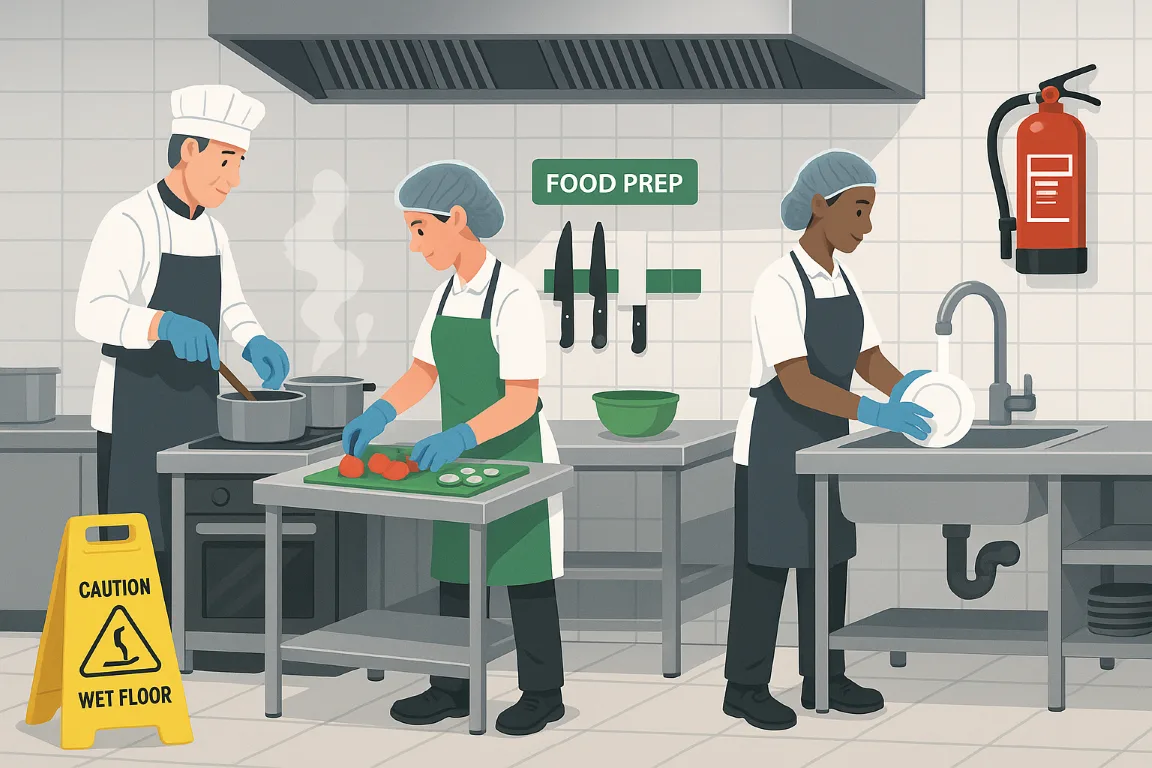
- Separation: Raw dairy should never come into contact with ready-to-eat foods. Store it on the bottom shelf of the fridge to prevent drips from contaminating other ingredients. And if you’re using it in a sauce, make sure all your utensils and equipment are sanitized before and after use.
- Dedicated Equipment: If possible, use separate cutting boards, knives, and containers for raw dairy. At the very least, sanitize everything thoroughly between uses.
I’ll be honest: This level of organization is a pain in the ass. It takes time, it takes discipline, and it takes a team that’s on board with the protocols. But here’s the thing: food safety isn’t about convenience. It’s about responsibility. And if you’re not willing to put in the work, you shouldn’t be working with raw dairy.
Preparation Protocols: Turning Raw Dairy into Safe, Delicious Sauces
The Heat Question: To Cook or Not to Cook?
Here’s where things get really contentious. Some chefs argue that if you’re going to cook a raw dairy sauce, you might as well use pasteurized dairy. After all, the heat will kill most pathogens, right? Wrong. Or at least, not entirely wrong, but not entirely right either.
Yes, heat can kill bacteria. But it’s not as simple as turning up the burner and calling it a day. Here’s what you need to know:
- Temperature Matters: Different pathogens require different temperatures to be killed. For example, Salmonella is killed at 165°F (74°C), but some strains of E. coli require 160°F (71°C) for at least 15 seconds. Listeria, on the other hand, can survive at lower temperatures and requires 165°F (74°C) for at least two minutes.
- Time Matters: It’s not just about reaching the right temperature, it’s about holding it. A sauce that reaches 165°F (74°C) for 10 seconds isn’t necessarily safe. You need to hold it at that temperature for the required time to ensure all pathogens are killed.
- Heat Distribution Matters: If your sauce isn’t stirred properly, some parts might not reach the required temperature. This is especially true for thick sauces like béchamel or alfredo, where heat can get trapped in pockets.
- Toxins Matter: Remember Staphylococcus aureus? The toxin it produces is heat-stable, meaning it can survive cooking. So even if you kill the bacteria, the toxin can still make people sick.
So what’s the takeaway? Cooking alone isn’t enough to guarantee safety. You need to combine heat with other protocols, like proper sourcing, storage, and handling. And if you’re making a sauce that won’t be cooked (like a raw cream dressing), you need to be even more vigilant.
Step-by-Step: How to Safely Prepare Raw Dairy Sauces
Alright, let’s get into the nitty-gritty. Here’s a step-by-step guide to preparing raw dairy sauces safely:
- Prep Your Workstation:
- Sanitize all surfaces, utensils, and equipment before you start.
- Use separate cutting boards and knives for raw dairy.
- Wash your hands thoroughly with soap and warm water.
- Measure Your Ingredients:
- Only take out the amount of raw dairy you need for the current batch.
- If you’re using other raw ingredients (like eggs), make sure they’re also sourced safely.
- Heat Your Sauce Properly:
- If you’re cooking the sauce, heat it to the required temperature (165°F/74°C for most pathogens) and hold it there for the required time.
- Use a thermometer to check the temperature in multiple spots, especially in thick sauces.
- Stir constantly to ensure even heat distribution.
- Cool It Quickly:
- If you’re not serving the sauce immediately, cool it as quickly as possible to below 40°F (4°C).
- Use an ice bath or a blast chiller to speed up the process.
- Divide the sauce into shallow containers to increase surface area and promote faster cooling.
- Store It Safely:
- Label the sauce with the date and time it was prepared.
- Store it at 40°F (4°C) or below.
- Use it within 24 hours, or freeze it for longer storage.
- Reheat It Properly:
- If you’re reheating the sauce, heat it to 165°F (74°C) and hold it there for at least 15 seconds.
- Stir constantly to ensure even heating.
I know this seems like a lot. And it is. But here’s the thing: every single one of these steps is non-negotiable. Skip one, and you’re rolling the dice with your customers’ health.
Training Your Team: Because Food Safety Is a Team Sport
Why Most Kitchen Staff Don’t Take Raw Dairy Seriously (And How to Change That)
Let’s be real: Most line cooks don’t wake up in the morning thinking about food safety. They’re thinking about getting through service, about the ticket that’s been sitting for 20 minutes, about the chef who’s breathing down their neck. And when it comes to raw dairy, they’re often thinking: “It’s just milk. What’s the worst that could happen?”
This is where training comes in. But not just any training-training that sticks. You can’t just hand your staff a food safety manual and call it a day. You need to make it real. You need to make it personal. And most importantly, you need to make it their responsibility.
Here’s how to do it:
- Tell Stories: People remember stories, not facts. Share real-life examples of foodborne illness outbreaks caused by raw dairy. Talk about the kids who got sick, the restaurants that went under, the chefs whose careers were ruined. Make it personal.
- Make It Visual: Show them what bacteria look like under a microscope. Show them how quickly they can multiply in the danger zone. Use thermometers to demonstrate how easy it is to misjudge temperature.
- Test Their Knowledge: Don’t just lecture, quiz them. Ask them to explain the 4-hour rule. Ask them how to properly cool a sauce. Make them demonstrate proper handwashing techniques.
- Hold Them Accountable: Food safety isn’t a one-and-done thing. It’s an ongoing process. Conduct regular audits. Reward staff who follow protocols. Discipline those who don’t.
- Lead by Example: If you’re cutting corners, your staff will too. Show them that you take food safety seriously, and they’ll follow suit.
I’ll never forget the time I caught a line cook leaving a batch of raw cream sauce on the counter while he ran to the walk-in. When I called him out on it, he shrugged and said, “It’s fine. It’s just cream.” That’s the kind of attitude that gets people sick. And it’s the kind of attitude you need to stamp out in your kitchen.
Creating a Culture of Food Safety
Training isn’t just about protocols, it’s about culture. You need to create an environment where food safety is everyone’s responsibility, not just the chef’s or the manager’s. Here’s how:
- Empower Your Staff: Give your team the authority to speak up when they see something unsafe. If a cook sees a sauce sitting in the danger zone, they should feel comfortable calling it out, even if it’s the chef who put it there.
- Make It Easy: The easier it is to follow protocols, the more likely your staff will do it. Keep thermometers within reach. Label everything clearly. Have sanitizer stations at every station.
- Reward Good Behavior: Catch your staff doing something right. Praise them in front of the team. Give them a shout-out in the pre-shift meeting. Positive reinforcement works.
- Be Consistent: Food safety isn’t something you do when the health inspector is coming. It’s something you do every single day, no matter how busy you are.
Creating a culture of food safety isn’t easy. It takes time, it takes effort, and it takes buy-in from everyone on the team. But it’s worth it. Because at the end of the day, your customers’ lives are in your hands. And that’s not a responsibility you can afford to take lightly.
The Legal and Liability Minefield: What Happens When Things Go Wrong
Why Raw Dairy Is a Lawyer’s Dream (And Your Nightmare)
Let’s talk about the elephant in the room: liability. If you’re serving raw dairy sauces in your restaurant, you’re opening yourself up to a world of legal risk. And trust me, the lawyers are waiting.
Here’s what you need to know:
- You’re on the Hook: If someone gets sick from your food, you’re responsible. It doesn’t matter if you didn’t know the milk was contaminated. It doesn’t matter if your supplier assured you it was safe. You served it, so you’re liable.
- Lawsuits Are Expensive: Even if you win, the legal fees can bankrupt a small restaurant. And if you lose? You could be on the hook for medical bills, lost wages, and punitive damages. We’re talking millions of dollars.
- Your Reputation Is on the Line: In the age of social media, news of a foodborne illness outbreak spreads fast. One bad Yelp review can turn into a PR nightmare. And once the word gets out, it’s hard to recover.
- Insurance Might Not Cover You: Many general liability insurance policies exclude coverage for foodborne illness. You might need a separate policy, and even then, there could be exclusions for raw dairy.
I know what you’re thinking: “Sammy, this is fear-mongering. Most people who drink raw milk don’t get sick.” And you’re right, most don’t. But here’s the thing: most isn’t good enough. Not when you’re serving hundreds or thousands of people a week. Not when one mistake can ruin lives.
How to Protect Yourself (And Your Customers)
So what can you do to mitigate the risk? Here are a few steps:
- Talk to a Food Safety Attorney: Before you even think about serving raw dairy, consult with a lawyer who specializes in food safety. They can help you understand the risks and put protocols in place to protect yourself.
- Get the Right Insurance: Make sure your liability insurance covers foodborne illness. If it doesn’t, get a separate policy. And read the fine print, some policies exclude raw dairy.
- Document Everything: Keep records of your sourcing, storage, and prep protocols. If something goes wrong, you’ll need to prove that you followed best practices.
- Train Your Staff: This can’t be overstated. A well-trained staff is your best defense against foodborne illness. Make sure they know the protocols inside and out.
- Consider a Waiver: Some restaurants require customers to sign a waiver before serving raw dairy products. This isn’t a guarantee of protection, but it can help demonstrate that the customer was aware of the risks.
I’m not going to sugarcoat it: serving raw dairy is a legal minefield. But if you’re determined to do it, you need to go in with your eyes open. You need to understand the risks, put the right protocols in place, and be prepared for the worst.
Alternatives to Raw Dairy: Getting 90% of the Flavor with 10% of the Risk
Why Pasteurized Doesn’t Have to Mean Bland
Let’s say you’ve read this far and you’re thinking: “Sammy, this sounds like a lot of work. Maybe I should just stick to pasteurized dairy.” Good call. Because here’s the truth: pasteurized dairy has come a long way. The gap between raw and pasteurized isn’t as wide as it used to be, and with a few tweaks, you can get close to that raw-milk magic without the risk.
Here are a few alternatives to consider:
- Ultra-Pasteurized Cream: This is cream that’s been heated to a higher temperature for a shorter time, which extends its shelf life. It’s not as flavorful as raw cream, but it’s a good option for sauces that will be cooked.
- Cultured Dairy Products: Products like crème fraîche, buttermilk, and sour cream have a tangy depth that can mimic the complexity of raw dairy. They’re also more stable, which makes them a safer choice for sauces.
- High-Fat Dairy: The higher the fat content, the richer the flavor. If you’re using pasteurized dairy, opt for heavy cream or whole milk to get closer to that raw-milk mouthfeel.
- Cheese: Aged cheeses are a great way to add depth to a sauce without the risk of raw dairy. Parmesan, pecorino, and aged cheddar can all add a savory complexity that elevates a dish.
I’ll be honest: othing beats the real thing. But if you’re not willing to put in the work to source, store, and prepare raw dairy safely, these alternatives are a solid compromise.
How to Elevate Pasteurized Dairy Sauces
If you’re using pasteurized dairy, here are a few tricks to make your sauces taste richer and more complex:
- Reduce It: Simmering pasteurized cream or milk concentrates the flavor and gives it a richer mouthfeel. Just be careful not to scorch it.
- Add Umami: Ingredients like Parmesan rinds, miso, or fish sauce can add depth to a sauce and make it taste more complex.
- Use Brown Butter: Browning butter before adding dairy gives it a nutty, caramelized flavor that can mimic the richness of raw milk.
- Infuse It: Infusing dairy with aromatics like garlic, herbs, or spices can add layers of flavor. Just make sure to strain it thoroughly before using it in a sauce.
- Finish with Raw Dairy (Sparingly): If you’re determined to use raw dairy but want to minimize the risk, consider using it as a finishing touch. A drizzle of raw cream or a grating of raw-milk cheese at the end of cooking can add a touch of brightness without exposing the entire dish to risk.
Is it the same as raw dairy? No. But it’s close enough that most customers won’t notice the difference, and you’ll sleep better at night knowing you’re not playing Russian roulette with their health.
Final Thoughts: Is It Worth the Risk?
So here we are, at the end of this deep dive. And the question remains: Is raw dairy worth the risk?
For some chefs, the answer is a resounding yes. They’ll argue that the flavor, the tradition, the artisanal appeal are worth the extra effort. And I get it. There’s something magical about working with ingredients that haven’t been sanitized into submission. There’s a connection to the past, to the land, to the people who produced it. And let’s be honest: raw dairy sauces can be transcendent.
But for most commercial kitchens, the answer is probably no. The risks are too high, the protocols too demanding, the legal landscape too treacherous. And with the quality of pasteurized dairy available today, you can get 90% of the flavor with 10% of the risk.
If you’re still determined to use raw dairy, here’s my challenge to you: Prove that you can do it safely. Source your dairy from a supplier you trust. Train your staff until they can recite the protocols in their sleep. Document everything. And for God’s sake, don’t cut corners. Because at the end of the day, it’s not just about flavor, it’s about responsibility. And that’s a responsibility no chef can afford to take lightly.
Now, if you’ll excuse me, I’m going to go check on Luna. She’s been giving me the side-eye ever since I started writing this, and I think she’s worried I’m going to bring raw milk into the house. Don’t worry, Luna, your human knows better. Mostly.
FAQ: Raw Dairy Sauce Safety in Commercial Kitchens
Q: Can I legally use raw dairy in my commercial kitchen?
A: It depends on your state and local regulations. Some states allow the sale of raw milk, but many have additional restrictions for commercial kitchens. Always check with your local health department before proceeding. Even if raw milk is legal in your state, using it in a commercial kitchen may require additional permits or inspections.
Q: What’s the safest way to cook a raw dairy sauce?
A: The safest way is to heat the sauce to 165°F (74°C) and hold it there for at least 15 seconds. Use a thermometer to check the temperature in multiple spots, especially in thick sauces, and stir constantly to ensure even heat distribution. Remember, though, that cooking alone isn’t enough, you also need to follow proper sourcing, storage, and handling protocols.
Q: How long can I store raw dairy before using it in a sauce?
A: Raw dairy should be used as quickly as possible. Ideally, you should use it within 24 hours of receiving it. If you need to store it longer, keep it at 40°F (4°C) or below and use it within 3-5 days. Always follow the FIFO (First In, First Out) rule to ensure you’re using the oldest product first. Never store raw dairy with ready-to-eat foods, and label everything clearly with the date it was received and the date it expires.
Q: What should I do if I suspect a batch of raw dairy is contaminated?
A: If you suspect contamination, do not use the dairy. Dispose of it properly and document the incident. If you’ve already used it in a sauce, discard the sauce immediately. Notify your supplier and consider getting the dairy tested if you suspect a pattern of contamination. Most importantly, review your protocols to identify how the contamination might have occurred and how to prevent it in the future.
@article{raw-dairy-sauce-safety-protocols-in-commercial-kitchens-a-chefs-guide-to-risk-reward-and-responsibility,
    title   = {Raw Dairy Sauce Safety Protocols in Commercial Kitchens: A Chef’s Guide to Risk, Reward, and Responsibility},
    author  = {Chef's icon},
    year    = {2026},
    journal = {Chef's Icon},
    url     = {https://chefsicon.com/raw-dairy-sauce-safety-protocols-commercial-kitchens/}
}