The Best Fluffy Pancakes recipe you will fall in love with. Full of tips and tricks to help you make the best pancakes.
Let me tell you about the time I walked into a high-end Nashville restaurant during prep hour. The chef de cuisine was hunched over a cutting board, cursing under his breath as his 8-inch chef’s knife struggled through a pile of carrots like it was trying to saw through a log. The edge was so dull it might as well have been a butter knife. When I asked how often they sharpen their knives, he shrugged and said, “Whenever someone complains.” That’s when I knew this was a problem worth writing about.
I’ve spent the last decade working with restaurants, from Michelin-starred kitchens to bustling food trucks, and if there’s one thing I’ve learned, it’s that commercial kitchen knife maintenance programs are either a restaurant’s secret weapon or its silent budget killer. You’d be shocked how many places treat their knives like disposable tools, only to wonder why their food costs are creeping up, prep times are dragging, and their line cooks look like they’re one slip away from a workers’ comp claim. But here’s the thing: a well-structured knife maintenance program isn’t just about keeping edges sharp. It’s about efficiency, safety, consistency, and yes, saving money in ways most owners never consider.
In this article, we’re going to dive deep into the world of commercial kitchen knife maintenance programs for restaurants. We’ll cover everything from the hidden costs of neglect to the step-by-step systems that top kitchens use to keep their blades in peak condition. You’ll learn how to build a program that fits your restaurant’s size and budget, train your staff to actually follow it (no, really), and even how to measure whether it’s working. By the end, you’ll have a clear roadmap to turn your knives from a liability into one of your kitchen’s most reliable assets. Sound good? Let’s get into it.
The Silent Costs of Dull Knives (Spoiler: It’s Not Just About the Blades)
Before we talk solutions, let’s talk about the problem. Most restaurant owners I’ve worked with think of knife maintenance as a “nice-to-have”-something to deal with when they have extra time or budget. But here’s the reality: dull knives are costing your restaurant money every single day, in ways that go far beyond the price of a new blade. Let me break it down.
1. The Labor Time Black Hole
I once did a time study at a mid-sized restaurant where the prep team was using knives that hadn’t been sharpened in three months. Know what I found? Their vegetable prep time was 40% longer than it should’ve been. Forty percent! That’s like hiring an extra prep cook for every two you already have, and paying them in wasted hours. When knives are dull, your staff has to apply more force, make more cuts, and take more breaks because their hands are cramping. It’s not just inefficient; it’s physically exhausting, which leads to slower service, more mistakes, and higher turnover. And let’s be real: in today’s labor market, you can’t afford to waste a single minute of your team’s time.
But here’s where it gets really interesting. That same restaurant had a “knife sharpening day” once a month where they’d send all their knives out to a service. Sounds good, right? Problem was, by the time the knives came back, they were already dulling out from daily use. So for three weeks out of the month, they were operating at that 40% inefficiency. That’s like running a marathon with one shoe untied and only fixing it at the finish line. Not exactly a winning strategy.
2. The Food Waste Tax
Dull knives don’t just slow you down, they destroy your ingredients. Think about it: when a knife isn’t sharp, it crushes and tears instead of slicing cleanly. That means bruised herbs, mangled tomatoes, and meat that looks like it’s been through a wood chipper. Not exactly the presentation you’re going for. But beyond aesthetics, there’s a real cost here. Bruised produce spoils faster, which means more waste. And in a world where food costs are only going up, that’s money straight out of your bottom line.
I remember consulting for a farm-to-table restaurant that was proud of their zero-waste philosophy. Except their knives were so dull, they were throwing away 15% of their delicate greens because they were getting crushed during prep. Fifteen percent! That’s like buying five cases of lettuce and immediately tossing one in the trash. Once we implemented a proper maintenance program, their waste dropped by nearly half. That’s not just good for the planet, it’s great for the P&L.
3. The Safety Paradox
Here’s a counterintuitive truth: dull knives are more dangerous than sharp ones. When a knife is sharp, it glides through food with minimal pressure. When it’s dull, you have to bear down harder, which means more force, more slipping, and more opportunities for accidents. And let me tell you, nothing kills kitchen morale faster than a line cook with a bandaged hand. Workers’ comp claims, lost productivity, and the sheer hassle of covering shifts, it all adds up.
But the safety risks go beyond cuts. Dull knives also lead to repetitive stress injuries. When your team is gripping harder and making more cuts to compensate for a dull edge, they’re putting extra strain on their wrists, elbows, and shoulders. Over time, that can lead to chronic issues like carpal tunnel syndrome. And in a profession where your hands are your livelihood, that’s not just a health issue, it’s a career-ending risk.
4. The Consistency Killer
Here’s something most owners don’t think about: dull knives make your food inconsistent. When a knife isn’t sharp, it doesn’t cut cleanly, which means your brunoise isn’t uniform, your julienne is jagged, and your protein portions vary in size. That might not seem like a big deal, but in a restaurant, consistency is everything. Customers expect the same dish to look and taste the same every time they order it. When it doesn’t, you risk losing their trust, and their repeat business.
I’ve seen this play out in high-volume restaurants where the prep team is churning out hundreds of portions a day. If the knives are dull, some cuts are thicker, some are thinner, and suddenly your portion control goes out the window. That means some customers get more food than they paid for, and others get less. Neither is good for business. And if you’re in a place with tight margins (and let’s be honest, who isn’t?), those small inconsistencies can add up to big losses over time.
What a Real Knife Maintenance Program Actually Looks Like (Spoiler: It’s Not Just Sharpening)
Okay, so we’ve established that dull knives are a problem. But what does a real commercial kitchen knife maintenance program look like? Is it just about sharpening more often? Spending more money on fancy equipment? Hiring a dedicated knife guy? (Yes, some places actually do that.) The truth is, it’s a lot simpler, and a lot more nuanced, than most people realize.
At its core, a good maintenance program has three pillars: prevention, maintenance, and education. Let’s break each of them down.
The Prevention Mindset: Stop Problems Before They Start
Most restaurants approach knife maintenance reactively. They wait until a knife is so dull it’s unusable, then they sharpen it. But the best programs are proactive. They focus on preventing dullness in the first place, which saves time, money, and frustration in the long run. Here’s how they do it.
- Choose the right knives for the job. Not all knives are created equal, and using the wrong one for a task is a fast track to dullness. For example, using a chef’s knife to hack through bones is like using a butter knife to cut a steak, it’s just going to ruin the blade. Invest in the right tools for the job, whether that’s a cleaver for butchery, a paring knife for detail work, or a serrated knife for bread.
- Store knives properly. This might seem obvious, but you’d be amazed how many kitchens just toss their knives in a drawer or leave them loose in a bin. That’s a recipe for nicks, dings, and premature dullness. The best storage solutions? Magnetic strips (great for visibility and accessibility), knife blocks (good for smaller kitchens), or individual sheaths (ideal for transport or storage). Whatever you choose, the key is to keep blades protected when they’re not in use.
- Use the right cutting surfaces. Hard surfaces like glass, stone, or metal will dull your knives faster than you can say “where’s the honing steel?” The best cutting boards are made of wood (like maple or bamboo) or plastic (like polyethylene). Both are soft enough to be gentle on edges but durable enough to last. And for the love of all things culinary, stop cutting on those cheap acrylic boards, they’re basically sandpaper for your knives.
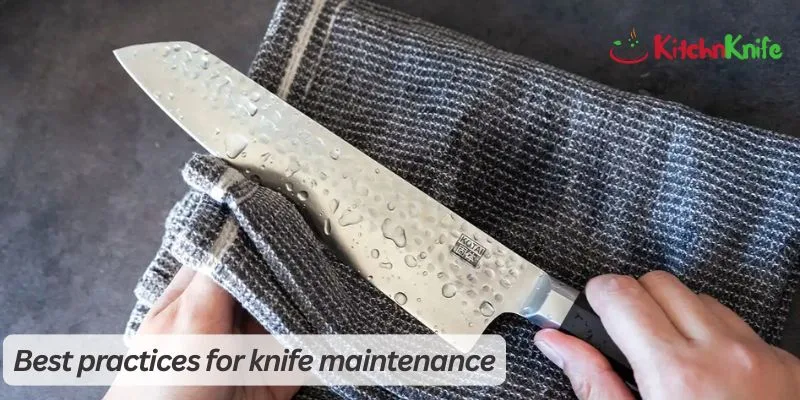
- Clean knives correctly. Dishwashers are the enemy of sharp edges. The high heat, harsh detergents, and jostling can ruin a knife’s temper (that’s the hardness of the steel) and cause premature dulling. Always hand-wash knives with mild soap and warm water, and dry them immediately to prevent rust. And whatever you do, don’t let them soak in the sink, it’s a safety hazard and a sure way to dull the edge.
The Maintenance Routine: Sharpening, Honing, and Everything In Between
Prevention is great, but even the best-stored knives will eventually need some TLC. That’s where the maintenance routine comes in. But here’s the thing: most people confuse sharpening with honing, and they’re not the same thing. Let me clarify.
- Honing is what you do daily (or even between tasks) to keep an edge aligned. It doesn’t remove metal; it just straightens the microscopic teeth of the blade. Think of it like combing your hair, it doesn’t make it grow, but it keeps it looking neat. For this, you’ll want a honing steel (preferably ceramic or diamond-coated for commercial use). A few swipes on each side of the blade before or after each shift can keep your knives performing at their best.
- Sharpening is what you do when honing isn’t enough. This removes metal to create a new edge, and it’s something you’ll need to do every few weeks or months, depending on usage. There are a few ways to sharpen knives:
- Whetstones: The gold standard for sharpening. They give you the most control and can produce a razor-sharp edge, but they require skill and practice. If you’re going this route, invest in a dual-grit stone (like 1000/6000 grit) and learn the proper technique. Pro tip: soak the stone in water before use to prevent the blade from dragging.
- Electric sharpeners: Fast and easy, but they can be aggressive and remove more metal than necessary. If you’re using one, choose a high-quality model with adjustable angles and follow the manufacturer’s instructions carefully. These are great for busy kitchens where time is of the essence.
- Professional sharpening services: If you don’t have the time or skill to sharpen in-house, outsourcing to a professional can be a great option. Just make sure you’re using a reputable service that understands commercial kitchen needs. Some services even offer on-site sharpening, which can be a game-changer for high-volume restaurants.
But here’s the kicker: sharpening isn’t a one-size-fits-all solution. The frequency and method depend on the knife, the tasks it’s used for, and the volume of your kitchen. For example, a sushi restaurant might sharpen their yanagiba knives weekly, while a pizzeria might only need to sharpen their pizza wheels monthly. The key is to develop a schedule that works for your specific needs, and stick to it.
The Education Piece: Because a Program Is Only as Good as the People Using It
Here’s where most knife maintenance programs fall apart: they don’t train the staff. You can have the best knives, the fanciest sharpening setup, and a perfectly designed storage system, but if your team doesn’t know how to use or care for them, it’s all for nothing. Education is the glue that holds a maintenance program together.
So what does good education look like? It starts with onboarding. Every new hire should learn:
- How to hold and use a knife safely (grip, posture, cutting techniques).
- How to hone a knife (angle, pressure, number of swipes).
- How to identify when a knife needs sharpening (the paper test, the tomato test, visual inspection).
- The dos and don’ts of knife care (no dishwashers, no cutting on hard surfaces, etc.).
But education doesn’t stop at onboarding. It should be an ongoing conversation. Hold regular knife skills workshops where your team can practice techniques and ask questions. Post reminders and tips in the kitchen (like a “Knife Care of the Week” board). And most importantly, lead by example. If your chefs and managers prioritize knife maintenance, your staff will too.
I’ll never forget the restaurant where the executive chef made knife care a daily ritual. At the start of every shift, the team would gather for a quick “knife check”. Each cook would hone their knife, test the edge, and make sure it was ready for service. It took five minutes, but it set the tone for the entire shift. And guess what? Their prep times were faster, their food was more consistent, and their knives lasted longer. Coincidence? I think not.
Building a Knife Maintenance Program That Actually Works (And Won’t Break the Bank)
Okay, so we’ve covered the why and the what. Now let’s talk about the how. How do you build a commercial kitchen knife maintenance program that’s effective, sustainable, and, most importantly, actually gets used? Here’s a step-by-step guide to creating a program that fits your restaurant’s needs and budget.
Step 1: Assess Your Current Situation
Before you can improve your knife maintenance, you need to understand where you’re starting from. Take an inventory of your current knives and ask yourself:
- How many knives do you have, and what types are they? (Chef’s knives, paring knives, serrated knives, etc.)
- What condition are they in? (Dull, chipped, rusted, etc.)
- How are they currently stored and cleaned?
- Who is responsible for sharpening and maintenance?
- What’s your current sharpening schedule (if any)?
This audit will give you a clear picture of your strengths and weaknesses. For example, you might find that your chef’s knives are in decent shape but your paring knives are neglected. Or you might realize that your storage system is causing more damage than your cutting techniques. Whatever you discover, this step is crucial for building a targeted program.
Step 2: Set Clear Goals
What do you want your knife maintenance program to achieve? Here are some common goals to consider:
- Reduce prep time: Faster, more efficient cutting.
- Improve food consistency: Uniform cuts and portions.
- Lower food waste: Less bruising and damage to ingredients.
- Enhance safety: Fewer accidents and injuries.
- Extend knife lifespan: Get more use out of your existing knives.
- Save money: Lower replacement costs and reduced labor waste.
Your goals will shape your program. For example, if safety is a top priority, you might focus on daily honing and regular inspections. If efficiency is key, you might invest in higher-quality knives and professional sharpening services. Whatever your goals, make sure they’re specific, measurable, and realistic.
Step 3: Choose Your Tools and Equipment
Now it’s time to stock your maintenance toolkit. Here’s what you’ll need:
- Honing steels: At least one per station, preferably ceramic or diamond-coated for durability.
- Sharpening tools: This could be a whetstone, an electric sharpener, or a professional sharpening service. Choose based on your budget, skill level, and volume.
- Cutting boards: Replace any hard or damaged boards with wood or plastic options.
- Storage solutions: Magnetic strips, knife blocks, or sheaths to protect blades when not in use.
- Cleaning supplies: Mild soap, warm water, and drying towels for hand-washing knives.
- Safety gear: Cut-resistant gloves and first aid kits for accidents.
Don’t feel like you need to buy everything at once. Start with the essentials (honing steels, storage, cutting boards) and add to your toolkit as your program evolves. And remember: quality matters. Cheap tools might save you money upfront, but they’ll cost you more in the long run.
Step 4: Create a Maintenance Schedule
A good maintenance schedule is the backbone of your program. It ensures that knives are cared for consistently and prevents small issues from becoming big problems. Here’s a sample schedule to get you started:
- Daily:
- Hone knives before or after each shift.
- Hand-wash and dry knives immediately after use.
- Inspect knives for damage (chips, nicks, rust).
- Weekly:
- Test knife edges (paper test, tomato test).
- Sharpen knives as needed (using a whetstone or electric sharpener).
- Clean and sanitize storage areas (magnetic strips, knife blocks).
- Monthly:
- Deep-clean knives and storage areas.
- Inspect all knives for wear and tear.
- Send knives out for professional sharpening (if using a service).
- Quarterly:
- Replace any damaged or worn-out knives.
- Review and update your maintenance program as needed.
This schedule is just a starting point. Adjust it based on your kitchen’s volume, the types of knives you use, and your specific needs. For example, a high-volume steakhouse might need to sharpen their butcher knives weekly, while a vegetarian café might only need to sharpen their chef’s knives monthly.
Step 5: Train Your Team (And Make It Stick)
We’ve already talked about the importance of education, but it’s worth repeating: your program is only as good as the people using it. Here’s how to train your team effectively:
- Start with the basics: Teach your team how to hold, use, and care for knives safely. Cover grip, posture, cutting techniques, and honing.
- Make it hands-on: Theory is great, but practice is better. Set up training sessions where your team can practice honing, sharpening, and cutting techniques.
- Create cheat sheets: Post reminders and tips in the kitchen, like a “Knife Care 101” guide or a honing angle chart.
- Lead by example: If your chefs and managers prioritize knife maintenance, your staff will too. Make it part of your kitchen culture.
- Encourage feedback: Ask your team what’s working and what’s not. They’re the ones using the knives every day, so their input is invaluable.
And here’s a pro tip: make training fun. Turn it into a competition (who can hone their knife the fastest?) or a game (guess how many swipes it takes to sharpen a knife). The more engaged your team is, the more likely they are to stick with the program.
Step 6: Monitor and Adjust
A knife maintenance program isn’t a set-it-and-forget-it kind of thing. It’s a living, breathing system that needs to evolve with your kitchen. Here’s how to keep it on track:
- Track your progress: Are your knives staying sharper longer? Is prep time improving? Are accidents decreasing? Keep an eye on these metrics to see if your program is working.
- Solicit feedback: Ask your team what’s working and what’s not. Are they noticing a difference? Do they have suggestions for improvement?
- Adjust as needed: If something isn’t working, don’t be afraid to change it. Maybe your sharpening schedule needs tweaking, or maybe your team needs more training. Whatever it is, be flexible and willing to adapt.
- Celebrate wins: When your program succeeds, celebrate it! Share the results with your team, and recognize their hard work. Positive reinforcement goes a long way.
Remember, the goal is continuous improvement. Even the best programs can get better, so keep refining and optimizing as you go.
The ROI of a Knife Maintenance Program (Or: How to Sell This to Your Boss)
Let’s be real: implementing a commercial kitchen knife maintenance program takes time, effort, and money. And if you’re not the one signing the checks, you’ll need to make a case for why it’s worth the investment. Here’s how to sell it to your boss, your investors, or even just to yourself.
1. The Labor Savings
We’ve already talked about how dull knives slow down prep time. But let’s put some numbers to it. Say your prep team spends 10 hours a week on vegetable prep. If dull knives are adding 40% to that time, that’s an extra 4 hours a week-208 hours a year. At $15 an hour, that’s $3,120 in wasted labor costs. And that’s just for one task. Imagine the savings if you apply that to all your prep work.
But it’s not just about prep. Dull knives also slow down service, which can lead to longer ticket times and fewer covers. In a busy restaurant, every minute counts. A sharp knife might not seem like a big deal, but over the course of a year, it can add up to thousands of dollars in lost revenue.
2. The Food Cost Savings
Remember the farm-to-table restaurant that was wasting 15% of their greens? Let’s say they spend $1,000 a week on produce. A 15% waste rate means they’re throwing away $150 a week-$7,800 a year. After implementing a knife maintenance program, their waste dropped to 8%, saving them $3,640 annually. That’s a significant chunk of change, especially for a small business.
But it’s not just about greens. Dull knives can damage all kinds of ingredients, from bruising herbs to tearing meat. And in a world where food costs are only going up, every ounce of waste hurts. A good maintenance program can help you get the most out of your ingredients, which means lower food costs and higher profits.
3. The Safety Savings
Workers’ comp claims are a nightmare. They’re expensive, time-consuming, and disruptive. And in a kitchen, they’re often caused by dull knives. According to the Occupational Safety and Health Administration (OSHA), cuts and lacerations are one of the most common injuries in restaurants, and many of them are preventable with proper knife maintenance.
Let’s say a line cook cuts their hand and needs stitches. The direct costs (medical bills, workers’ comp premiums) might be a few thousand dollars. But the indirect costs (lost productivity, training a replacement, morale issues) can be much higher. And if the injury is severe enough to require surgery or time off, the costs can skyrocket. A good maintenance program can help prevent these injuries, which means lower costs and a safer workplace.
4. The Knife Lifespan Savings</h
Knives aren’t cheap. A good chef’s knife can cost anywhere from $50 to $200, and a set of high-quality knives can run into the thousands. But with proper maintenance, those knives can last years, even decades. Without it, they might only last a few months.
Let’s say you spend $1,000 on a set of knives. If you replace them every year because they’re dull or damaged, that’s $1,000 a year. But if you implement a maintenance program and extend their lifespan to five years, that’s only $200 a year. That’s an 80% savings-and that’s not even counting the cost of downtime while you’re waiting for new knives to arrive.
5. The Intangible Benefits
Not all benefits are easy to quantify, but they’re just as important. A good knife maintenance program can:
- Improve food consistency: Uniform cuts mean better presentation and happier customers.
- Boost morale: Sharp knives make prep work easier and more enjoyable, which can improve job satisfaction and reduce turnover.
- Enhance your reputation: A well-run kitchen is a sign of professionalism, and that can attract better staff and more customers.
- Reduce stress: Dull knives are frustrating to use, and that frustration can spill over into other areas of the kitchen. Sharp knives make for a smoother, more pleasant work environment.
So how do you sell this to your boss? Start with the numbers. Show them the labor savings, food cost savings, and knife lifespan savings. Then talk about the safety benefits and intangible perks. And finally, remind them that a knife maintenance program isn’t a cost, it’s an investment. One that pays for itself many times over.
Common Mistakes (And How to Avoid Them)
Even the best-intentioned knife maintenance programs can go off the rails. Here are some of the most common mistakes I’ve seen, and how to avoid them.
Mistake 1: Over-Sharpening
Sharpening removes metal, and every time you sharpen a knife, you’re shortening its lifespan. Some restaurants sharpen their knives so often that they wear them out in a matter of months. The fix? Hone regularly and sharpen only when necessary. Use the paper test (a sharp knife should slice through paper easily) or the tomato test (a sharp knife should cut a tomato without crushing it) to determine when it’s time to sharpen.
Mistake 2: Using the Wrong Sharpening Tools
Not all sharpening tools are created equal. Using the wrong one can damage your knives or produce a subpar edge. For example, pull-through sharpeners (the kind with the V-shaped slots) can be too aggressive and remove too much metal. And dull whetstones can actually make your knives duller. The fix? Invest in high-quality tools and learn how to use them properly. If you’re not sure, consult a professional or take a sharpening class.
Mistake 3: Neglecting Honing
Honing is just as important as sharpening, but many restaurants skip it altogether. They wait until a knife is completely dull before sharpening it, which means it’s performing poorly for days or even weeks. The fix? Make honing a daily habit. A few swipes on a honing steel before or after each shift can keep your knives performing at their best.
Mistake 4: Poor Storage
Storing knives improperly is a fast track to dullness and damage. Tossing them in a drawer or leaving them loose in a bin can cause nicks, dings, and premature wear. The fix? Use a proper storage solution, like a magnetic strip, knife block, or sheaths. And make sure your team knows how to store knives safely and correctly.
Mistake 5: Not Training the Staff
A knife maintenance program is only as good as the people using it. If your team doesn’t know how to care for knives properly, all your efforts will be for nothing. The fix? Make training a priority. Teach your team how to hone, sharpen, and store knives safely. And make sure they understand why it’s important.
Mistake 6: Ignoring the Cutting Surface
Cutting on hard surfaces like glass, stone, or metal will dull your knives faster than you can say “where’s the honing steel?” The fix? Use the right cutting boards. Wood and plastic are the best options, as they’re gentle on edges but durable enough to last.
Mistake 7: Not Tracking Results
If you’re not tracking the results of your knife maintenance program, how do you know if it’s working? The fix? Set clear goals and monitor your progress. Are your knives staying sharper longer? Is prep time improving? Are accidents decreasing? Keep an eye on these metrics to see if your program is delivering results.
Putting It All Together: Your 30-Day Knife Maintenance Challenge
Alright, let’s bring this all home. If you’ve made it this far, you’re probably thinking, “This all sounds great, but where do I even start?” Fair question. Implementing a commercial kitchen knife maintenance program can feel overwhelming, especially if you’re starting from scratch. So here’s a 30-day challenge to help you get your program off the ground. Think of it as a sprint, not a marathon. By the end of the month, you’ll have a solid foundation in place, and you can build from there.
Week 1: Assess and Plan
Day 1-2: Audit Your Knives
Take inventory of your current knives. How many do you have? What types are they? What condition are they in? Make a list and note any issues (dullness, chips, rust, etc.). This will give you a clear picture of where you’re starting from.
Day 3-4: Set Your Goals
What do you want your knife maintenance program to achieve? Faster prep times? Lower food waste? Fewer accidents? Write down your goals and make sure they’re specific, measurable, and realistic.
Day 5-7: Choose Your Tools
Based on your audit and goals, decide what tools and equipment you’ll need. At a minimum, you’ll want:
- Honing steels (one per station)
- A sharpening tool (whetstone, electric sharpener, or professional service)
- Proper storage (magnetic strips, knife blocks, or sheaths)
- Cutting boards (wood or plastic)
If you’re on a tight budget, start with the essentials and add to your toolkit over time.
Week 2: Implement the Basics
Day 8-10: Train Your Team
Gather your team and teach them the basics of knife care. Cover:
- How to hold and use a knife safely
- How to hone a knife
- How to identify when a knife needs sharpening
- The dos and don’ts of knife care
Make it hands-on. Have your team practice honing and cutting techniques. And post reminders in the kitchen to keep the information top of mind.
Day 11-14: Establish a Daily Routine
Start small. Implement a daily honing routine. Have your team hone their knives before or after each shift. Make it a habit, like checking the walk-in or setting up the line. And remind them to hand-wash and dry knives immediately after use.
Week 3: Sharpen and Store
Day 15-17: Sharpen Your Knives
Now that your knives are being honed regularly, it’s time to sharpen them. If you’re using a whetstone, take your time and follow the proper technique. If you’re using an electric sharpener, make sure to follow the manufacturer’s instructions. And if you’re outsourcing to a professional service, schedule a pickup or on-site visit.
Day 18-21: Upgrade Your Storage
If your knives are currently stored in a drawer or bin, it’s time to upgrade. Install magnetic strips, set up knife blocks, or invest in sheaths. Make sure your team knows how to store knives safely and correctly.
Week 4: Monitor and Adjust
Day 22-24: Track Your Progress
Now that your program is up and running, it’s time to see if it’s working. Track your progress against the goals you set in Week 1. Are your knives staying sharper longer? Is prep time improving? Are accidents decreasing? Keep an eye on these metrics to see if your program is delivering results.
Day 25-28: Solicit Feedback
Ask your team what’s working and what’s not. Are they noticing a difference? Do they have suggestions for improvement? Their feedback is invaluable, so make sure to listen and adjust as needed.
Day 29-30: Celebrate and Plan Next Steps
You’ve made it to the end of the challenge! Take a moment to celebrate your progress. Share the results with your team, and recognize their hard work. Then, start planning your next steps. Maybe you want to expand your toolkit, refine your schedule, or invest in more training. Whatever it is, keep the momentum going.
Final Thoughts: The Knife Maintenance Mindset
Here’s the thing about commercial kitchen knife maintenance programs: they’re not just about knives. They’re about respect. Respect for your tools, respect for your ingredients, and respect for your team. When you take care of your knives, you’re not just keeping them sharp, you’re showing your staff that you value their time, their safety, and their craft. And that’s something that pays dividends in ways you can’t always measure.
I’ll leave you with this: the best kitchens I’ve ever worked in weren’t the ones with the fanciest equipment or the most expensive knives. They were the ones where the team took pride in their tools. Where knife care was a daily ritual, not an afterthought. Where dull knives were seen as a sign of neglect, not just a fact of life. And that’s the mindset I want you to take away from this article.
So here’s my challenge to you: pick one thing from this article and implement it this week. Maybe it’s starting a daily honing routine. Maybe it’s upgrading your storage. Maybe it’s training your team on proper knife care. Whatever it is, just start. Because the best knife maintenance program isn’t the one that’s perfect, it’s the one that’s used.
And who knows? Maybe next time I walk into your kitchen, I’ll see a team of cooks with sharp knives, confident smiles, and a prep line that’s humming like a well-oiled machine. Now that’s a sight worth writing about.
FAQ: Your Knife Maintenance Questions, Answered
Q: How often should we sharpen our knives in a commercial kitchen?
A: It depends on usage, but a good rule of thumb is to sharpen your knives every 2-4 weeks for high-volume kitchens, and every 1-3 months for lower-volume operations. However, the best way to determine sharpening frequency is to test the edge regularly. If a knife struggles to slice through paper or crushes a tomato instead of cutting it cleanly, it’s time to sharpen. Remember, honing should be done daily or even between tasks to keep edges aligned.
Q: What’s the difference between honing and sharpening, and why does it matter?
A: Honing and sharpening serve different purposes. Honing uses a honing steel to straighten the microscopic teeth of the blade, keeping the edge aligned. It doesn’t remove metal, so it can be done frequently, even daily. Sharpening, on the other hand, removes metal to create a new edge, and it’s something you’ll need to do less often (every few weeks or months). Using both techniques in tandem will keep your knives performing at their best for longer. Skipping honing and only sharpening can wear down your knives prematurely.
Q: Is it better to sharpen knives in-house or use a professional service?
A: Both options have pros and cons. Sharpening in-house gives you more control and can be more cost-effective in the long run, but it requires skill, time, and the right tools. Professional services are convenient and can produce excellent results, but they can be expensive and may require you to be without your knives for a period of time. For most restaurants, a hybrid approach works best: hone daily in-house and use a professional service for sharpening every few weeks or months. If you’re just starting out, a professional service can help you get a feel for what a well-sharpened knife should look and feel like.
Q: How can we tell if our knife maintenance program is working?
A: The best way to measure the success of your program is to track key performance indicators (KPIs). Here are a few to consider:
- Prep time: Are your prep tasks taking less time than before?
- Food waste: Are you seeing less bruising, crushing, or damage to ingredients?
- Accidents: Have the number of knife-related injuries decreased?
- Knife lifespan: Are your knives lasting longer before needing replacement?
- Staff feedback: Is your team noticing a difference in knife performance?
You can also conduct regular knife edge tests (like the paper test or tomato test) to ensure your knives are staying sharp. If you’re seeing improvements in these areas, your program is likely working. If not, it may be time to adjust your approach.
@article{why-your-restaurants-knife-maintenance-program-might-be-costing-you-more-than-you-think-and-how-to-fix-it,
    title   = {Why Your Restaurant’s Knife Maintenance Program Might Be Costing You More Than You Think (And How to Fix It)},
    author  = {Chef's icon},
    year    = {2026},
    journal = {Chef's Icon},
    url     = {https://chefsicon.com/commercial-kitchen-knife-maintenance-programs-for-restaurants/}
}