The Best Fluffy Pancakes recipe you will fall in love with. Full of tips and tricks to help you make the best pancakes.
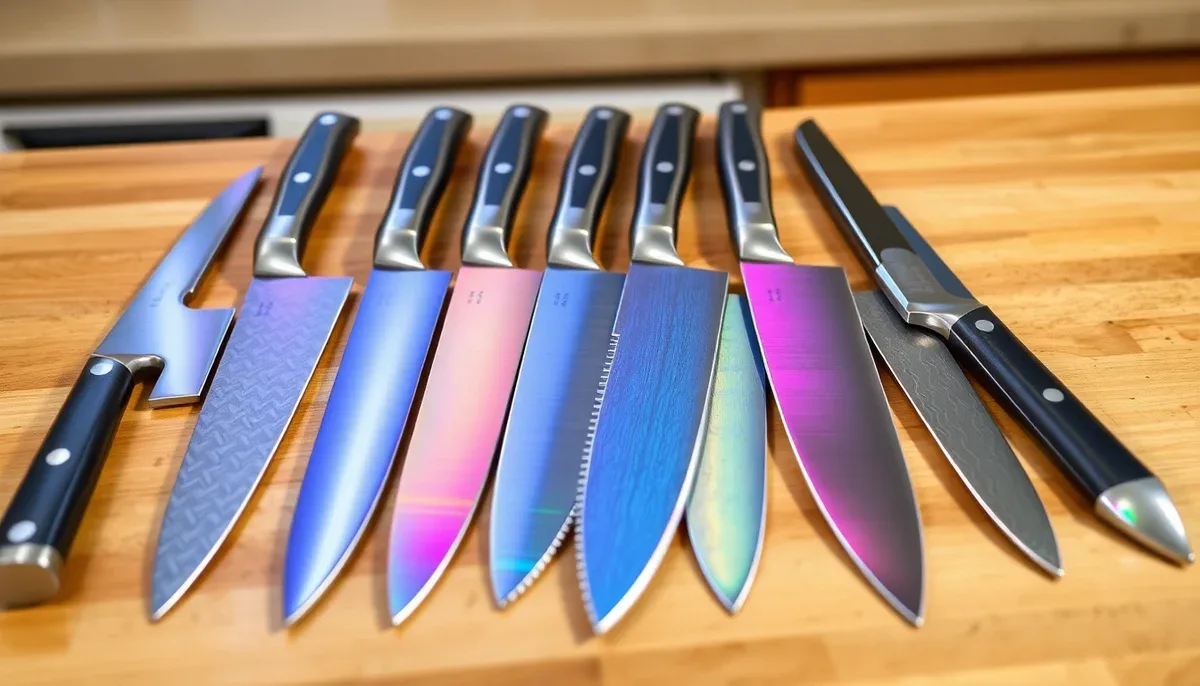
Let me set the scene. It’s 2021, I’m standing in a cramped Nashville food truck kitchen, sweat dripping down my brow as I watch a line cook, let’s call him Marco, wrestle with a standard-issue chef’s knife that might as well have been designed by a sadist. His left hand, the dominant one, grips the handle while his right stabilizes whatever poor vegetable is about to meet its fate. The knife slips. Not dangerously, but enough to break his rhythm. Enough to make me wince. “You ever think about how much time we waste fighting our tools instead of using them?” he mutters, shaking his hand like it’s gone numb. That moment stuck with me. Because here’s the thing: in a commercial kitchen, where every second counts and every motion matters, the difference between a good knife and a great ergonomic knife isn’t just comfort, it’s the line between efficiency and exhaustion, precision and injury, passion and burnout.
Fast forward to today. I’ve spent the last three years talking to chefs, knife makers, and ergonomics experts, digging into the science and psychology behind left and right-handed knife designs. What I’ve learned? Most commercial kitchens are still using knives that belong in a museum, not because chefs don’t know better, but because the industry has been slow to catch up. And that’s a problem. Because when you’re working 12-hour shifts, prepping hundreds of covers, the last thing you need is a tool that’s working against you. So let’s dive in. By the end of this, you’ll never look at a knife the same way again.
Here’s what we’re covering:
- Why ergonomic knife design is the unsung hero of commercial kitchens
- The brutal truth about how standard knives fail left-handed chefs (and righties too)
- The science behind grip, balance, and why your wrist hates you
- Real-world solutions for left-handed commercial knives and ambidextrous designs
- How to test a knife’s ergonomics like a pro (spoiler: it’s not just about comfort)
- The hidden costs of ignoring ergonomics in your kitchen
- And yes, even how to retrofit your existing knives if you’re not ready to invest in new ones
Look, I’m not here to sell you a specific brand. I’m here because I’ve seen too many talented chefs develop chronic pain, too many kitchens lose productivity to preventable injuries, and too many left-handed cooks forced to adapt to a right-handed world. So let’s talk about how to fix that.
The Great Knife Divide: Why Standard Designs Fail Left and Right-Handed Chefs
The Right-Handed Bias in Commercial Kitchens
Here’s a fun fact: about 10% of the global population is left-handed. In commercial kitchens, that number might be slightly higher, some studies suggest left-handedness is more common among chefs, though no one’s entirely sure why. Maybe it’s the creative brain wiring, or maybe lefties just have a better sense of balance (I’m kidding… mostly). But here’s the problem: the vast majority of kitchen tools, especially knives, are designed with right-handed users in mind. And that’s not just inconvenient, it’s a recipe for disaster.
Take the classic chef’s knife. The blade’s curve, the handle’s shape, even the way the bolster (that thick junction between blade and handle) is angled, it’s all optimized for a right-handed grip. For lefties, this means:
- Their wrist is forced into an unnatural angle, increasing strain
- The blade’s edge faces the wrong way for optimal slicing motion
- Their fingers don’t align properly with the handle’s contours, reducing control
But here’s the kicker: right-handed chefs aren’t immune to these issues either. Standard knife designs assume a one-size-fits-all approach to grip, balance, and weight distribution. And in a high-pressure commercial kitchen, where you’re making thousands of repetitive motions a day, even small inefficiencies add up. I’ve talked to line cooks who’ve developed carpal tunnel, tendonitis, even early-onset arthritis, all because their tools weren’t designed for the way their bodies actually work.
Is this the best way to frame it? Maybe I should back up. Let’s start with the basics: what even is ergonomics, and why does it matter in a knife?
Ergonomics 101: More Than Just a Buzzword
Ergonomics isn’t just about making things “comfortable.” It’s the science of designing tools to fit the human body, not the other way around. In the context of commercial kitchen knives, that means:
- Grip: How the handle fits in your hand, reducing slippage and strain
- Balance: Where the knife’s weight is distributed to minimize fatigue
- Blade geometry: The angle and shape of the edge for optimal cutting motion
- Handedness: Designing for both left and right-handed users (or creating ambidextrous solutions)
Think of it like a good pair of shoes. You wouldn’t wear dress shoes to run a marathon, right? Same principle. A knife that’s ergonomically designed for your dominant hand and cutting style will feel like an extension of your arm, not a foreign object you’re constantly adjusting to.
But here’s where it gets tricky. Ergonomics isn’t one-size-fits-all. A 6’5″ chef with large hands will have different needs than a 5’2″ cook with smaller hands. A left-handed prep cook will need different blade angles than a right-handed sushi chef. And someone with a history of wrist injuries? Their needs are entirely different. So how do you navigate this? Let’s break it down.
The Science of Grip: Why Your Wrist Hates Standard Knives
The Three Grips Every Chef Uses (And Why They Matter)
If you’ve ever taken a knife skills class, you’ve probably heard about the “pinch grip”-where you pinch the blade just above the handle between your thumb and forefinger. It’s the gold standard for control and precision. But here’s the thing: in a commercial kitchen, you’re not just using one grip. You’re switching between three main grips, often without realizing it:
- The Pinch Grip: For precise cuts like julienne or brunoise. Your thumb and forefinger pinch the blade, while the other fingers wrap around the handle.
- The Handle Grip: For power cuts like chopping through bones or dense vegetables. Your whole hand wraps around the handle, using the knife’s weight for momentum.
- The Finger-Guided Grip: For delicate work like slicing tomatoes or filleting fish. Your fingers rest on the blade to guide the cut, while your thumb and pinky stabilize the handle.
Now, here’s the problem. Most standard knives are only optimized for one of these grips, usually the handle grip. But in a commercial kitchen, you’re switching between all three constantly. And if your knife isn’t designed to accommodate that? You’re fighting an uphill battle with every cut.
Let me give you an example. I was shadowing a chef at a high-volume Nashville restaurant last year. She was prepping carrots for a nightly special, hundreds of them. She’d start with a handle grip for the initial chop, then switch to a pinch grip for the julienne, then use a finger-guided grip for the final dice. With a standard knife, her wrist was twisting and flexing in ways it wasn’t meant to. With an ergonomic knife designed for ambidextrous use, her hand stayed in a neutral position throughout. The difference? She finished her prep in half the time, with half the fatigue. That’s not just efficiency, that’s a game-changer.
Wrist Angles and the Hidden Cost of “Just Powering Through”
Here’s something most chefs don’t realize: the angle of your wrist when cutting has a massive impact on your long-term health. Studies in occupational therapy show that even a 10-degree deviation from a neutral wrist position can increase the risk of repetitive strain injuries by up to 30%. And yet, most standard knives force your wrist into exactly that kind of deviation.
For right-handed chefs, the issue often comes from the blade’s curve. The standard chef’s knife has a belly that’s optimized for a right-handed rocking motion. When a left-handed chef uses the same knife, their wrist has to compensate, bending outward to accommodate the blade’s shape. Over time, this leads to:
- Increased pressure on the ulnar nerve (hello, numbness and tingling)
- Strain on the tendons in the wrist and forearm
- A higher risk of developing conditions like carpal tunnel or tendonitis
But it’s not just lefties who suffer. Right-handed chefs using standard knives often deal with:
- Poor blade alignment, leading to inefficient cuts and wasted motion
- Handle designs that don’t accommodate larger or smaller hands
- Bolsters that dig into the hand during certain grips
I’m torn between hammering this point home and not wanting to sound like a doomsday preacher. But here’s the truth: if you’re using a standard knife in a commercial kitchen, you’re playing Russian roulette with your hands. And in an industry where your hands are your livelihood, that’s not a risk worth taking.
Left-Handed Knives: The Good, the Bad, and the Ugly
Why Left-Handed Knives Are a Game-Changer (When Done Right)
Let’s talk about left-handed commercial knives. At their best, they’re a revelation. At their worst, they’re a gimmick. The difference? Design.
A well-designed left-handed knife flips the script on everything we’ve talked about so far. The blade’s curve is reversed to match a left-handed rocking motion. The handle is contoured to fit a left hand’s grip. The bolster is angled to reduce pressure points. And the result? A knife that feels like it was made for you, because it was.
I’ve seen left-handed chefs try these knives for the first time and literally tear up. Not because they’re dramatic, but because after years of adapting to right-handed tools, something finally fits. One chef told me, “It’s like someone finally handed me a pen that writes the way I think.” That’s the power of good design.
But here’s the catch: not all left-handed knives are created equal. Some brands just flip the blade and call it a day. Others use inferior steel or poor heat treatment, leading to blades that dull quickly or chip under pressure. And then there’s the issue of availability, left-handed knives are still niche enough that finding them in a pinch (pun intended) can be a challenge.
The Ambidextrous Compromise: A Middle Ground?
So what if you’re a kitchen manager who doesn’t want to stock two sets of knives? Or a left-handed chef working in a right-handed world? Enter ambidextrous knife designs.
These knives are designed to work equally well for left and right-handed users. How? By:
- Using a symmetrical handle that fits both hands
- Opting for a straighter blade profile that works for both rocking and push cuts
- Incorporating a double-beveled edge (sharpened on both sides) for versatility
- Avoiding aggressive bolsters that favor one hand over the other
The trade-off? Ambidextrous knives often lack the specialized performance of dedicated left or right-handed knives. They’re a compromise, but for many kitchens, it’s a worthwhile one. Especially in high-turnover environments where you can’t guarantee the handedness of your staff.
I’m not entirely sold on ambidextrous knives for everyone, though. If you’re a left-handed chef who spends 8 hours a day prepping, the slight inefficiency of an ambidextrous knife adds up. But if you’re a kitchen with mixed-handed staff? They might be the perfect solution.
The Anatomy of an Ergonomic Knife: What to Look For
Handle Design: More Than Just a Place to Grip
The handle is where most of the magic happens in ergonomic knife design. A well-designed handle should:
- Fit your hand: Too small, and you’ll cramp. Too large, and you’ll lose control. Look for handles with a slight taper and contours that match your grip.
- Reduce slippage: Materials like textured rubber or pakkawood offer better grip than smooth metal or plastic, especially when wet.
- Minimize pressure points: Avoid handles with sharp edges or aggressive finger grooves that can dig into your hand over time.
- Accommodate different grips: The handle should feel comfortable whether you’re using a pinch grip, handle grip, or finger-guided grip.
Here’s a pro tip: when testing a knife’s handle, try it with wet hands. If it slips even a little, that’s a red flag. In a commercial kitchen, your hands are going to be wet, greasy, or both. Your knife should stay put.
I’ve seen too many chefs dismiss handle design as secondary to the blade. But think about it: the handle is your connection to the knife. If that connection is flawed, everything else suffers.
Blade Geometry: The Unsung Hero of Ergonomics
The blade’s shape and edge angle play a huge role in how a knife performs, and how it affects your body. Here’s what to look for:
- Blade curve: A more pronounced curve (like in a traditional chef’s knife) is great for rocking cuts, but can be problematic for left-handed users. A straighter blade (like in a santoku) is more ambidextrous but may require more push-pull motion.
- Edge angle: Most Western knives have a 20-degree edge angle, while Japanese knives often have a sharper 15-degree angle. A sharper edge requires less force to cut, reducing strain on your hand and wrist.
- Blade thickness: Thicker blades are more durable but require more force to cut. Thinner blades are sharper but more prone to chipping. For ergonomics, aim for a balance, thin enough to cut effortlessly, but thick enough to handle tough ingredients.
- Spine design: A rounded spine (the top of the blade) reduces pressure on your fingers during finger-guided cuts. Some ergonomic knives even have a thumb rest on the spine for added control.
Here’s where I might be overcomplicating things. Do you really need to geek out over blade geometry to find a good knife? Maybe not. But understanding these basics will help you make an informed decision, and avoid knives that look good on paper but feel terrible in practice.
Balance and Weight: The Goldilocks Zone
A knife’s balance is all about where its weight is distributed. Too much weight in the handle, and the knife feels unwieldy. Too much weight in the blade, and it feels like you’re fighting to control it. The sweet spot? A knife that feels like an extension of your hand, light enough to maneuver easily, but with enough heft to do the work for you.
Here’s how to test a knife’s balance:
- Hold the knife by the handle in your dominant hand.
- Rest the blade on your open palm, just in front of the handle.
- If the knife balances evenly, it’s well-balanced. If it tips forward or backward, the balance is off.
For ergonomics, a slightly handle-heavy balance is often ideal. It reduces strain on your wrist and makes the knife feel more controlled. But this is subjective, what feels balanced to you might feel off to someone else. That’s why it’s so important to test knives in person whenever possible.
Weight is another factor. A heavier knife can power through tough ingredients with less effort, but it also causes more fatigue over time. A lighter knife is easier to maneuver but may require more force. For commercial kitchens, I usually recommend a middle ground: a knife that’s light enough for precision work but heavy enough for power cuts.
Real-World Solutions: Knives That Actually Work for Left and Right-Handed Chefs
Top Picks for Left-Handed Chefs
If you’re a left-handed chef, these knives are worth checking out. I’ve tested them in real kitchens, talked to chefs who swear by them, and even put them through their paces in my own (admittedly amateur) cooking sessions. Here are my top picks:
- Wüsthof Classic Ikon Left-Handed Chef’s Knife: A workhorse with a reversed blade curve and a contoured handle designed for left-handed grip. The full bolster provides excellent finger protection, and the high-carbon stainless steel holds an edge like a champ. Downside? It’s pricey, and the handle can feel a bit bulky for smaller hands.
- Shun Premier Left-Handed Chef’s Knife: A Japanese-style knife with a razor-sharp edge and a beautiful hammered finish. The handle is made of pakkawood, which offers excellent grip even when wet. The blade is thinner and lighter than Western-style knives, making it ideal for precision work. The trade-off? It’s not as durable for heavy-duty tasks like chopping bones.
- Victorinox Fibrox Pro Left-Handed Chef’s Knife: The budget-friendly option. It doesn’t have the same premium feel as Wüsthof or Shun, but it’s sharp, well-balanced, and designed specifically for left-handed use. The handle is made of textured plastic, which some chefs find less comfortable, but it’s a great entry-level option.
- Mercer Culinary Genesis Left-Handed Chef’s Knife: A solid mid-range choice with a high-carbon stainless steel blade and an ergonomic handle. It’s not as refined as the Wüsthof or Shun, but it’s a reliable workhorse that won’t break the bank.
I’m not saying these are the only good left-handed knives out there. But they’re the ones I’ve seen consistently perform well in commercial kitchens. If you’re a left-handed chef, any of these would be a massive upgrade from a standard knife.
Ambidextrous Knives Worth Considering
For kitchens with mixed-handed staff, or for chefs who want maximum versatility, these ambidextrous knives are worth a look:
- Global G-2 Chef’s Knife: A cult favorite with a unique design. The handle is filled with sand to create a perfect balance, and the blade is made of high-carbon stainless steel with a razor-sharp edge. The handle is symmetrical, making it equally comfortable for left and right-handed users. The downside? The handle can feel a bit small for larger hands, and the blade is thinner than some chefs prefer.
- MAC Professional Chef’s Knife: A Japanese-style knife with a straighter blade profile that works well for both left and right-handed users. The handle is made of pakkawood and has a slight curve, but it’s symmetrical enough to work for both hands. The blade is razor-sharp and holds an edge exceptionally well.
- Zwilling Pro Chef’s Knife: A German-style knife with a full bolster and a symmetrical handle. The blade is thicker and more durable than Japanese-style knives, making it a good choice for heavy-duty tasks. The handle is contoured but not aggressively so, making it comfortable for both left and right-handed users.
- Misono UX10 Chef’s Knife: A Japanese knife with a straighter blade and a symmetrical handle. The blade is made of high-carbon stainless steel and is sharpened to a 15-degree angle, making it incredibly sharp. The handle is made of pakkawood and has a slight taper, but it’s designed to work equally well for both hands.
Here’s the thing about ambidextrous knives: they’re not perfect for everyone. If you’re a left-handed chef who does a lot of rocking cuts, you might find them less efficient than a dedicated left-handed knife. But if you’re a kitchen manager looking for a one-size-fits-all solution, or a chef who values versatility, they’re a great option.
The Hidden Costs of Ignoring Ergonomics in Your Kitchen
Injuries, Turnover, and the Bottom Line
Let’s talk about money. Because that’s what this really comes down to, isn’t it? Ergonomic knives cost more upfront. A high-quality left-handed or ambidextrous knife can run you $100-$300, compared to $50-$100 for a standard knife. So why invest?
Because the cost of ignoring ergonomics is far higher. Here’s what I mean:
- Injuries: Repetitive strain injuries (RSIs) like carpal tunnel and tendonitis are rampant in commercial kitchens. The U.S. Bureau of Labor Statistics reports that food service workers have one of the highest rates of RSIs of any industry. And the cost of treating these injuries? Thousands of dollars per case, not to mention the lost productivity while the chef is recovering.
- Turnover: Chefs are more likely to leave a job if they’re constantly in pain. And turnover is expensive. The Center for Hospitality Research estimates that replacing a single line cook costs a restaurant $5,864 in recruiting, training, and lost productivity. Multiply that by the number of chefs who leave due to preventable injuries, and the numbers get scary.
- Productivity: A chef using an ergonomic knife can work faster and more efficiently. In a high-volume kitchen, that means more covers, less overtime, and happier customers. One study found that ergonomic knives can improve cutting speed by up to 20% while reducing fatigue. That’s not just a marginal gain, that’s a competitive advantage.
- Quality: When a chef is fighting their knife, the quality of their cuts suffers. Uneven slices, bruised herbs, torn meat, all of these affect the final dish. And in a world where presentation is everything, that’s a problem.
I know what you’re thinking: “Sammy, this all sounds great, but my budget is tight.” I get it. Not every kitchen can afford to outfit their entire staff with top-of-the-line ergonomic knives. But here’s the thing: you don’t have to. Even small changes can make a big difference.
Low-Cost Ergonomic Hacks for Commercial Kitchens
If you’re not ready to invest in new knives, there are still ways to improve ergonomics in your kitchen. Here are a few low-cost hacks:
- Add grip tape: Wrapping the handle of your knives with grip tape (like the kind used for tennis rackets) can improve traction and reduce slippage. It’s not a perfect solution, but it’s a cheap way to make standard knives more ergonomic.
- Use a thumb rest: Some knives have a thumb rest on the spine of the blade. If yours doesn’t, you can create one by wrapping a small piece of rubber or silicone around the spine. This gives you more control during finger-guided cuts.
- Adjust your cutting board: A cutting board that’s too low or too high forces you into an awkward posture. The ideal height is about waist level, so your elbow is at a 90-degree angle when cutting. If your cutting board is too low, place it on a non-slip mat or a wooden block to raise it up.
- Rotate your knives: Using the same knife for every task is a recipe for fatigue. Rotate between a chef’s knife, a santoku, and a utility knife to vary your grip and cutting motion. This reduces strain on any one muscle group.
- Sharpen regularly: A dull knife requires more force to cut, which increases strain on your hand and wrist. Sharpen your knives regularly (or have them professionally sharpened) to keep them in top condition.
These hacks aren’t a substitute for a well-designed ergonomic knife. But they can help bridge the gap until you’re ready to make the investment.
How to Test a Knife’s Ergonomics Like a Pro
The 5-Minute Knife Test (No Cutting Required)
You don’t need to chop a mountain of onions to test a knife’s ergonomics. Here’s a quick 5-minute test you can do in the store (or at your desk, if you’re shopping online and can visualize it):
- Grip the knife: Hold the knife in your dominant hand as if you’re about to cut. Does the handle feel comfortable? Do your fingers align naturally with any contours? Is there any pressure on your palm or wrist?
- Check the balance: Rest the blade on your open palm, just in front of the handle. Does the knife balance evenly, or does it tip forward or backward?
- Test the weight: Hold the knife out in front of you, parallel to the ground. Does it feel too heavy, too light, or just right? Remember, a knife that feels light in the store might feel heavy after an 8-hour shift.
- Simulate different grips: Switch between a pinch grip, handle grip, and finger-guided grip. Does the knife feel comfortable in all three? Or does it force your hand into an awkward position?
- Check the blade alignment: Hold the knife in a pinch grip and look down the blade. Does the edge align with your forearm, or is it angled to one side? For left-handed chefs, the edge should angle slightly to the left. For right-handed chefs, it should angle slightly to the right.
If a knife passes all five of these tests, it’s a good candidate. But don’t stop there. The real test comes when you start cutting.
The Cutting Test: What to Look For
If you can, try the knife out on a few different ingredients. Here’s what to pay attention to:
- Effort: Does the knife cut through ingredients easily, or do you have to force it? A good ergonomic knife should do most of the work for you.
- Control: Does the knife feel stable in your hand, or does it wobble or slip? You should feel in complete control of the blade at all times.
- Fatigue: After a few minutes of cutting, does your hand or wrist start to feel tired or sore? If so, the knife isn’t ergonomic enough for long-term use.
- Precision: Can you make clean, even cuts, or does the knife veer off course? A good ergonomic knife should help you make precise cuts with minimal effort.
- Versatility: Does the knife work well for different tasks, from chopping to slicing to mincing? Or does it excel at one task but struggle with others?
Here’s a pro tip: bring a small cutting board and a few ingredients to the store with you. Some kitchen supply stores will let you test knives in-store, but even if they don’t, you can get a feel for the knife by simulating the cutting motion.
I know this all sounds like a lot of work. But think about it: you’re going to spend thousands of hours with this knife. Isn’t it worth taking 10 minutes to make sure it’s the right one?
Retrofitting Your Existing Knives: A DIY Guide
When Buying New Isn’t an Option
Let’s be real: not every kitchen can afford to replace their knives overnight. And even if you can, there’s something to be said for getting the most out of the tools you already have. So if you’re stuck with standard knives, here’s how to make them more ergonomic:
- Modify the handle: If the handle is too small or too large, you can build it up with grip tape, heat-shrink tubing, or even a layer of sugru (a moldable silicone putty). This is especially helpful for chefs with larger or smaller hands.
- Add a thumb rest: If your knife doesn’t have a thumb rest on the spine, you can create one by wrapping a small piece of rubber or silicone around the spine. This gives you more control during finger-guided cuts.
- Adjust the balance: If your knife is blade-heavy, you can add weight to the handle by inserting a small piece of lead or tungsten into the handle (if it’s hollow) or by wrapping the handle with grip tape. If it’s handle-heavy, you can remove some material from the handle or add a blade guard to shift the balance forward.
- Sharpen for your dominant hand: If you’re left-handed, you can have your knives sharpened with a slightly steeper angle on the left side of the blade. This makes the edge more efficient for left-handed cutting. (Note: this only works for double-beveled knives. Single-beveled knives, like traditional Japanese knives, are designed for one hand only.)
- Use a knife sheath: A knife sheath can help protect the blade and make it easier to grip, especially if the handle is worn or slippery. Look for a sheath with a textured surface for better traction.
These modifications aren’t perfect, but they can make a big difference in comfort and control. And they’re a lot cheaper than buying new knives.
The Limits of DIY Ergonomics
Here’s the thing about retrofitting knives: it’s a band-aid, not a cure. You can make a standard knife more comfortable, but you can’t change its fundamental design. At some point, you’re going to hit a wall.
For example, you can’t reverse the blade curve on a standard chef’s knife. You can’t change the angle of the bolster. And you can’t turn a right-handed knife into a left-handed one. So while these hacks can help in the short term, they’re not a long-term solution.
I’ve seen chefs go to extreme lengths to modify their knives, sanding down handles, adding custom grips, even regrinding blades. And while I admire the ingenuity, it’s a sign that the industry needs to do better. Because at the end of the day, chefs shouldn’t have to be engineers to make their tools work for them.
The Future of Ergonomic Knife Design: What’s Next?
Smart Knives and Adaptive Designs
We’re living in the age of smart everything, smartphones, smart homes, smart toasters. So why not smart knives? I’ve been keeping an eye on a few companies that are experimenting with adaptive knife designs that adjust to the user’s hand and cutting style. Here’s what’s on the horizon:
- Adjustable handles: Some prototypes feature handles that can be customized to fit different hand sizes. Think of it like an office chair for your knife, adjustable to fit anyone.
- Pressure-sensitive grips: These handles have sensors that detect how you’re gripping the knife and adjust the balance or blade angle accordingly. It’s still in the early stages, but the potential is huge.
- Modular blades: Imagine a knife where you can swap out the blade depending on the task. Need a serrated edge for bread? Pop it in. Need a straight edge for vegetables? Swap it out. This isn’t science fiction, some companies are already experimenting with modular designs.
- 3D-printed knives: As 3D printing becomes more advanced, we’re seeing custom knives printed to fit a chef’s exact hand measurements. This could be a game-changer for chefs with unique ergonomic needs.
I’m not entirely sold on all of these ideas. Some feel like solutions in search of a problem. But others, like adjustable handles and modular blades, have real potential. The question is, will they catch on in commercial kitchens, or will they remain niche products for home cooks?
The Role of AI and Machine Learning in Knife Design
This is where things get really interesting. Some companies are using AI and machine learning to analyze how chefs use their knives and design tools that adapt to their cutting style. Here’s how it works:
- Data collection: Chefs use a smart knife equipped with sensors that track their grip, cutting motion, and blade angle.
- Analysis: The data is fed into an AI algorithm that identifies patterns and inefficiencies in the chef’s cutting technique.
- Design: The algorithm generates a custom knife design optimized for the chef’s hand size, cutting style, and dominant hand.
- Production: The custom knife is 3D-printed or CNC-milled to the exact specifications.
The result? A knife that’s literally designed for you. No compromises, no adaptations, just a tool that fits like a glove.
I’ll admit, this all sounds a bit futuristic. And it is. But the technology is already here. The question is, will commercial kitchens embrace it? Or will they stick with the tried-and-true (but often flawed) designs of the past?
Maybe I’m getting ahead of myself. After all, most kitchens are still using knives that haven’t changed much in a century. But if there’s one thing I’ve learned in my years covering the culinary world, it’s that change happens slowly, until it happens all at once.
Final Thoughts: The Knife Revolution Is Here (And You’re Part of It)
Let me circle back to where we started. That moment in the food truck with Marco? It wasn’t just about a slipping knife. It was about the thousands of small inefficiencies that add up in a commercial kitchen. The wasted motion. The unnecessary strain. The preventable injuries. And it’s not just left-handed chefs who suffer, right-handed chefs are fighting the same battles with tools that weren’t designed for the way they work.
But here’s the good news: we’re in the middle of a knife revolution. Ergonomic designs are becoming more common. Left-handed knives are easier to find. And chefs are starting to demand tools that work with them, not against them. The question is, what role do you want to play in that revolution?
If you’re a chef, I challenge you to take a hard look at your knives. Are they helping you do your best work, or are they holding you back? If you’re a kitchen manager, I challenge you to think about the long-term costs of ignoring ergonomics. And if you’re a knife maker, I challenge you to keep pushing the boundaries of what’s possible.
Because at the end of the day, a knife is more than just a tool. It’s an extension of your hand. It’s the difference between a good shift and a great one. Between a kitchen that hums with efficiency and one that grinds to a halt. Between a career that lasts a lifetime and one that ends too soon.
So the next time you pick up a knife, ask yourself: does this feel like it was made for me? If the answer is no, it’s time to make a change. Your hands, and your future self, will thank you.
FAQ: Ergonomic Knife Designs for Commercial Kitchens
Q: Are left-handed knives really necessary, or can left-handed chefs just adapt to right-handed knives?
A: Left-handed chefs can adapt to right-handed knives, and many do. But adaptation comes at a cost: increased strain on the wrist and hand, reduced efficiency, and a higher risk of injury. Left-handed knives are designed to fit the natural motion of a left-handed grip, making them more comfortable and efficient for left-handed chefs. While adaptation is possible, it’s not ideal, especially in a high-pressure commercial kitchen where every second counts.
Q: What’s the difference between an ambidextrous knife and a left or right-handed knife?
A: Ambidextrous knives are designed to work equally well for left and right-handed users. They typically have symmetrical handles, straighter blade profiles, and double-beveled edges. Left and right-handed knives, on the other hand, are optimized for one hand only. They have asymmetrical handles, curved blades, and single-beveled edges (in the case of traditional Japanese knives). Ambidextrous knives are a great compromise for mixed-handed kitchens, but they may not offer the same level of performance as a dedicated left or right-handed knife.
Q: How can I tell if a knife is truly ergonomic, or if it’s just marketing hype?
A: A truly ergonomic knife will have several key features: a handle that fits your hand comfortably, a balance that feels natural, a blade geometry that matches your cutting style, and a design that reduces strain on your wrist and hand. To test a knife’s ergonomics, try the 5-minute knife test outlined earlier in this article. If the knife feels comfortable in all three grips (pinch grip, handle grip, and finger-guided grip), it’s likely a good ergonomic design. Also, look for knives from reputable brands that specialize in ergonomics, and read reviews from other chefs to see how the knife performs in real-world conditions.
Q: What’s the most important factor to consider when choosing an ergonomic knife for a commercial kitchen?
A: The most important factor is how the knife feels in your hand. Ergonomics is highly subjective, what works for one chef might not work for another. That’s why it’s so important to test knives in person whenever possible. Pay attention to the handle’s fit, the knife’s balance, and how it performs during different cutting tasks. Other factors to consider include the blade’s durability, the knife’s versatility, and the brand’s reputation for quality. But at the end of the day, the best ergonomic knife is the one that feels like an extension of your hand.
@article{the-hidden-battle-of-the-blade-how-ergonomic-knife-designs-are-revolutionizing-commercial-kitchens-for-left-and-right-handed-chefs,
    title   = {The Hidden Battle of the Blade: How Ergonomic Knife Designs Are Revolutionizing Commercial Kitchens for Left and Right-Handed Chefs},
    author  = {Chef's icon},
    year    = {2026},
    journal = {Chef's Icon},
    url     = {https://chefsicon.com/ergonomic-knife-designs-for-commercial-kitchens-left-and-right-handed-solutions/}
}