The Best Fluffy Pancakes recipe you will fall in love with. Full of tips and tricks to help you make the best pancakes.
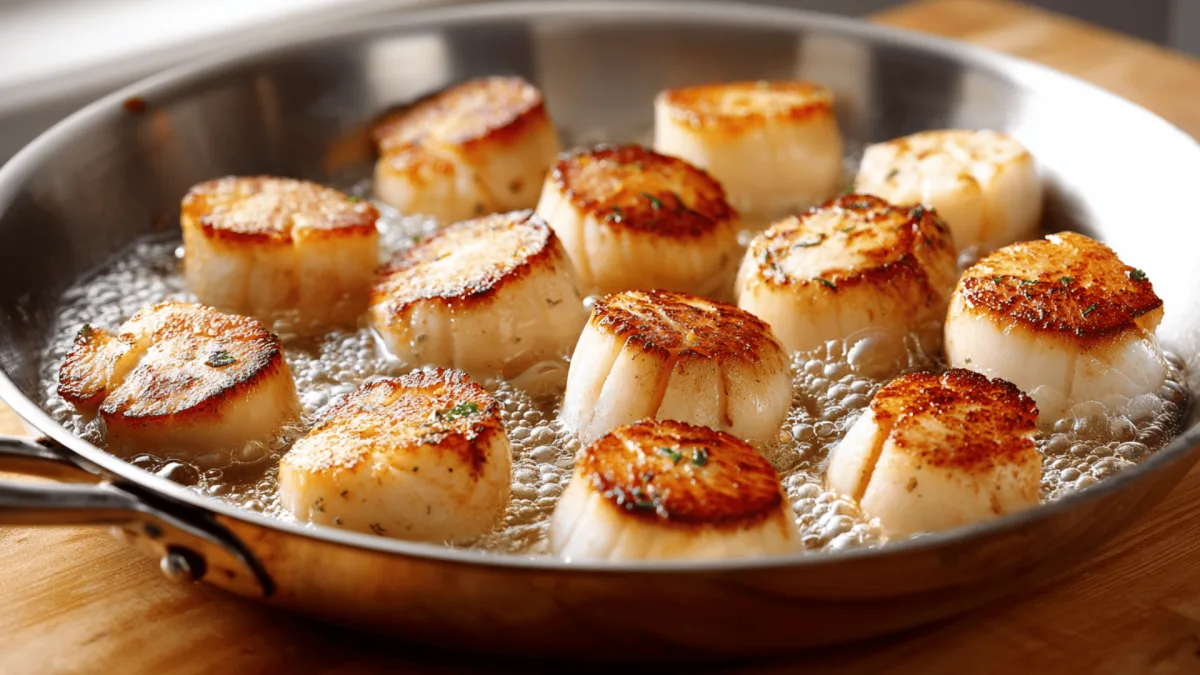
How to Sear Scallops Perfectly: The Commercial Kitchen Secrets You’re Probably Missing
Let me tell you something, I’ve burned more scallops than I care to admit. There was this one night at a high-volume seafood restaurant in Nashville where I was running the line during a Saturday dinner rush. The chef had just stepped out for a smoke break (don’t judge, it was 2018), and suddenly, the expediter was screaming for 12 orders of seared scallops. My hands were shaking, the pan was too small, and I could feel the heat radiating off the stove like a furnace. By the time the chef returned, half the scallops were either rubbery or stuck to the pan like they’d been superglued. He took one look, sighed, and said, “Kid, you’re treating them like chicken.” That was the day I learned scallops aren’t just another protein, they’re a high-stakes gamble between perfection and disaster.
Fast forward to today, and I’ve seared enough scallops to fill a small swimming pool. But here’s the thing: most home cooks and even some professionals get it wrong. They overcrowd the pan, use the wrong oil, or, God forbid, flip them too soon. And don’t even get me started on the myth that you need a blowtorch or some fancy gadget to get that golden crust. In this guide, I’m going to break down the commercial kitchen techniques that actually work, the mistakes that’ll ruin your scallops faster than you can say “medium-rare,” and the little details that separate a good sear from a restaurant-quality masterpiece. By the end, you’ll know how to sear scallops so perfectly that your dinner guests will think you’ve been hiding a Michelin-starred chef in your kitchen.
Here’s what you’ll learn:
- Why dryness is non-negotiable (and how to achieve it without turning your scallops into hockey pucks)
- The exact pan temperature that guarantees a crust without overcooking the inside
- How to season like a pro-because salt isn’t just salt when it comes to scallops
- The one tool most commercial kitchens use that home cooks ignore (spoiler: it’s not a thermometer)
- What to do when things go wrong (because they will, and that’s okay)
Let’s dive in. And hey, if you mess up? That’s fine. I did too. More than once.
The Science of a Perfect Sear: Why Scallops Are Different
Understanding the Maillard Reaction (Or: Why Your Scallops Taste Like Cardboard)
First things first: if you’re not familiar with the Maillard reaction, you’re missing out on the secret to every great sear. Named after French chemist Louis-Camille Maillard, this chemical reaction is what gives seared scallops (and steaks, and onions, and bread) that irresistible golden-brown crust and deep, complex flavor. It’s not just about browning, it’s about creating hundreds of new flavor compounds that didn’t exist before. Sounds fancy, right? Here’s the catch: the Maillard reaction only happens under very specific conditions.
For scallops, this means three things:
- High heat: You need a pan that’s screaming hot, we’re talking 400°F to 450°F (204°C to 232°C). Anything less, and you’ll steam the scallops instead of searing them.
- Dry surface: Water is the enemy of the Maillard reaction. If your scallops are wet, they’ll release steam when they hit the pan, which lowers the temperature and prevents browning. This is why patting them dry is on-negotiable.
- Protein + sugar: Scallops have natural sugars and amino acids that react under heat. But if they’re coated in water or oil, those sugars can’t caramelize properly.
I remember the first time I really understood this. I was working at a seafood-focused restaurant in the Bay Area, and the chef made me sear the same scallop three times: once with a wet surface, once with a dry surface but a lukewarm pan, and once with a dry surface and a screaming-hot pan. The difference was night and day. The first two were edible, sure, but they lacked that deep, nutty, almost buttery flavor that makes seared scallops so addictive. The third? It was like someone had flipped a switch. That’s when I realized searing isn’t just about cooking, it’s about transforming.
Why Scallops Are Trickier Than Steak (And What to Do About It)
Here’s the thing about scallops: they’re delicate. Unlike a steak, which can handle a little overcooking and still be tender, scallops are mostly water and protein, with very little connective tissue or fat to keep them juicy. Overcook them by even 30 seconds, and they turn from silky to rubbery faster than you can say “medium-rare.” But undercook them, and you’re left with a slimy, translucent center that’s about as appealing as raw chicken.
So how do commercial kitchens nail it every time? They treat scallops like the divas they are. Here’s what that means in practice:
- Uniform size: Scallops cook at different rates depending on their size. In a commercial kitchen, we often sort them by weight-10/20 count (10 to 20 scallops per pound) for large, 20/30 count for medium, and so on. If you’re cooking at home, try to pick scallops that are roughly the same size so they finish at the same time.
- Controlled environment: Home kitchens can be unpredictable, drafts, uneven burners, you name it. Commercial kitchens use heavy-gauge stainless steel or cast-iron pans that retain heat evenly, and they often have high-BTU burners that can maintain consistent temperatures. If you don’t have a commercial-grade stove, don’t panic. A heavy-bottomed pan (like cast iron) and a little patience will get you 90% of the way there.
- Timing is everything: Scallops cook in 90 seconds to 2 minutes per side, depending on their size. In a restaurant, we often use a timer or even just count in our heads. At home? Set a timer. Seriously. It’s the difference between perfection and disaster.
I’ll be honest: I used to think timing was overrated. “I can eyeball it,” I’d say. Then I served a table of food critics scallops that were slightly overcooked, and let’s just say the Yelp review wasn’t kind. Now? I set a timer. Every. Single. Time.
Prepping Scallops Like a Pro: The Steps Most People Skip
Dry Them Like Your Reputation Depends on It (Because It Does)
If there’s one step that separates the amateurs from the pros, it’s this: drying your scallops. I can’t stress this enough, if your scallops are wet when they hit the pan, you’re already behind. Water creates steam, steam lowers the pan’s temperature, and suddenly, you’re not searing; you’re boiling. And nobody wants boiled scallops.
Here’s how to do it right:
- Start with the right scallops: If you’re buying fresh scallops, ask for ”dry-packed” scallops. These haven’t been treated with preservatives like sodium tripolyphosphate (STP), which makes them retain water. Wet-packed scallops can lose up to 25% of their weight in water when cooked, which means you’re paying for water, not scallop. Not ideal.
- Pat them down: Lay the scallops on a paper towel-lined tray and gently press another paper towel on top. Don’t rub, you’re not trying to exfoliate them. Just press lightly to absorb any surface moisture. If they’re really wet, you might need to repeat this step once or twice.
- Let them air-dry: This is the step most people skip. After patting them dry, let the scallops sit uncovered in the fridge for 15 to 30 minutes. This allows any remaining moisture to evaporate, giving you a surface that’s as dry as the Sahara. Trust me, it makes a difference.
I learned this the hard way during a catering gig where I was prepping 200 scallops for a wedding. I patted them dry once, figured that was good enough, and started searing. Halfway through, I realized the pan was steaming like a sauna, and the scallops were refusing to brown. I had to start over, which meant sending someone to the store for more scallops (and let’s just say the bride wasn’t thrilled). Now? I air-dry them every time, no exceptions.
To Remove the Side Muscle or Not? The Great Debate
If you’ve ever cooked scallops, you’ve probably noticed that little tough, chewy muscle on the side. It’s called the ”foot” or “side muscle,” and it’s what the scallop uses to attach itself to surfaces. Some chefs swear by removing it; others say it’s fine to leave it on. So what’s the truth?
Here’s my take: remove it. Here’s why:
- Texture: That muscle is tough and chewy, even when cooked. It’s like finding a rubber band in your otherwise perfect bite of scallop. Not a good look.
- Aesthetics: A scallop with the side muscle removed looks cleaner and more professional. If you’re plating for guests, this matters.
- Even cooking: The side muscle is denser than the rest of the scallop, which means it cooks at a different rate. Removing it ensures the scallop cooks evenly.
Removing it is easy:
- Gently pull the muscle away from the scallop with your fingers. It should come off in one piece.
- If it doesn’t, use a small paring knife to carefully cut it off. Don’t dig into the scallop, just slice along the natural seam where the muscle attaches.
- Discard the muscle (or save it for stock if you’re feeling thrifty).
Now, I know what you’re thinking: “Is this really necessary?” And the answer is no, it’s not ecessary. But if you want scallops that look and taste like they came from a restaurant, it’s worth the extra 30 seconds. I’ve served scallops both ways, and the ones with the muscle removed always get better feedback.
Choosing the Right Pan: Why Your Cookware Matters More Than You Think
Cast Iron vs. Stainless Steel: The Great Showdown
If you’ve ever read a recipe for seared scallops, you’ve probably seen the words “use a heavy-bottomed pan.” But what does that even mean? And does it really matter whether you use cast iron or stainless steel? The short answer: yes, it matters a lot. Here’s why.
Cast Iron:
- Pros:
- Retains heat like a champ. Once it’s hot, it stays hot, which is crucial for getting that perfect crust.
- Naturally non-stick when properly seasoned. This means you can use less oil, which is great for getting a clean sear.
- Affordable and durable. A good cast-iron pan will last a lifetime (and then some).
- Cons:
- Heavy. Like, “I-think-I-pulled-a-muscle” heavy. If you’re searing a lot of scallops, your arm will feel it.
- Can be slow to heat up. You’ll need to preheat it for at least 10 minutes to get it screaming hot.
- Requires seasoning. If you don’t maintain it, it can rust or lose its non-stick properties.
Stainless Steel:
- Pros:
- Heats up quickly and evenly. Great for high-volume cooking where you need to adjust the heat fast.
- Lighter than cast iron. Easier to maneuver, especially if you’re cooking a lot of scallops.
- Non-reactive. This means it won’t impart any flavors into your food, which is important for delicate proteins like scallops.
- Cons:
- Less heat retention. If you’re not careful, the pan can cool down too much when you add the scallops.
- Can be sticky. Stainless steel isn’t naturally non-stick, so you’ll need to use more oil and get the pan really hot to prevent sticking.
- More expensive. A high-quality stainless steel pan can cost as much as a small car (okay, maybe not that much, but it’s not cheap).
So which one should you use? In a commercial kitchen, we often use stainless steel because it’s easier to control the heat and it’s lighter for high-volume cooking. But at home? I reach for my cast iron 90% of the time. It’s forgiving, it retains heat beautifully, and it’s practically indestructible. Plus, there’s something satisfying about the way scallops sizzle when they hit a well-seasoned cast-iron pan.
If you’re in the market for a new pan, I’d recommend checking out suppliers like Chef’s Deal, who offer a wide range of commercial-grade cookware. They’ve got everything from heavy-duty stainless steel to cast-iron pans, and their free kitchen design services can help you figure out the best setup for your space. Plus, their competitive pricing and financing options make it easier to invest in quality equipment without breaking the bank.
The One Pan You Should Never Use (And What to Use Instead)
Let’s talk about the elephant in the room: on-stick pans. I know, I know, non-stick pans are convenient. They’re easy to clean, they require less oil, and they’re great for eggs. But for searing scallops? They’re a disaster. Here’s why:
- They can’t handle high heat: Most non-stick pans have a maximum temperature of around 500°F (260°C). But to get a proper sear on scallops, you need a pan that’s closer to 450°F (232°C) before you add the scallops. If you try to crank the heat up to get that crust, you risk damaging the non-stick coating (and potentially releasing toxic fumes).
- They don’t develop a fond: Fond is that browned, caramelized stuff that sticks to the bottom of the pan. It’s packed with flavor, and it’s the base for pan sauces. Non-stick pans don’t develop fond because, well, nothing sticks to them. That means you’re missing out on one of the best parts of searing scallops.
- They’re too slippery: Scallops need a little friction to develop that golden crust. In a non-stick pan, they just slide around, which means you don’t get that even sear you’re looking for.
So what should you use instead? If you don’t have cast iron or stainless steel, here are a few alternatives:
- Carbon steel: It’s like the lighter, more responsive cousin of cast iron. It heats up quickly, retains heat well, and develops a natural non-stick patina over time. It’s a great option if you want something lighter than cast iron but with similar performance.
- Blue steel: This is a type of carbon steel that’s been heat-treated to develop a blue oxide layer, which makes it more resistant to rust. It’s popular in professional kitchens for its durability and heat retention.
- Clad stainless steel: This is stainless steel with an aluminum or copper core, which helps it heat up evenly. It’s a good middle ground between stainless steel and non-stick, but it can be pricey.
I’ll admit, I used to be a non-stick evangelist. Back in my early days of cooking, I thought they were the answer to everything. Then I tried searing scallops in one, and it was like trying to start a fire with wet wood. The scallops steamed instead of seared, and the crust was nonexistent. Lesson learned: on-stick pans have their place, but searing scallops isn’t one of them.
The Perfect Sear: Step-by-Step (With All the Little Details That Matter)
Preheating the Pan: How Hot Is Hot Enough?
Here’s where most people go wrong: they don’t preheat the pan long enough. You can’t just crank the heat to high, throw in the scallops, and hope for the best. Scallops need a screaming-hot pan to develop that crust, and that means preheating the pan for at least 5 to 10 minutes (longer if you’re using cast iron).
But how do you know when the pan is hot enough? Here are a few methods:
- The water test: Flick a few drops of water into the pan. If they sizzle and evaporate immediately, the pan is ready. If they just sit there or boil slowly, it’s not hot enough.
- The hand test: Hold your hand about 2 inches above the pan. If you can only keep it there for 2 to 3 seconds before it gets too hot, the pan is ready. (Note: This is not the most scientific method, and it’s easy to burn yourself, so use caution.)
- The oil test: Add a small amount of oil to the pan. If it shimmers and flows like water, the pan is hot enough. If it just sits there or smokes immediately, it’s either not hot enough or too hot.
I prefer the oil test because it’s the most reliable. Here’s how to do it:
- Add about 1 tablespoon of high-smoke-point oil (more on that later) to the pan.
- Heat the pan over medium-high to high heat until the oil shimmers. This usually takes about 5 minutes, depending on your stove.
- If the oil starts smoking, the pan is too hot. Remove it from the heat for a minute or two to let it cool slightly.
One thing I’ve learned the hard way: don’t rush this step. I’ve tried searing scallops in a pan that wasn’t quite hot enough, and the results were sad. The scallops stuck, they didn’t brown, and they ended up tasting like they’d been boiled. Not good.
Choosing the Right Oil: Smoke Point Matters More Than You Think
Not all oils are created equal, especially when it comes to searing scallops. You need an oil with a high smoke point-that is, an oil that can handle high heat without breaking down and releasing acrid smoke. Here’s a quick breakdown of some common oils and their smoke points:
| Oil | Smoke Point (°F / °C) | Best For |
|---|---|---|
| Avocado oil | 520°F / 271°C | High-heat searing, frying |
| Refined safflower oil | 510°F / 266°C | High-heat searing, deep-frying |
| Refined peanut oil | 450°F / 232°C | Searing, stir-frying |
| Refined coconut oil | 450°F / 232°C | Searing, baking |
| Grapeseed oil | 420°F / 216°C | Searing, sautéing |
| Vegetable oil | 400°F / 204°C | General cooking, frying |
| Extra-virgin olive oil | 325–375°F / 163–190°C | Low-heat cooking, dressings |
For searing scallops, I recommend using avocado oil, refined peanut oil, or grapeseed oil. These oils have high smoke points and neutral flavors, which means they won’t overpower the delicate taste of the scallops. I’ve also had good results with refined coconut oil, but it does have a slight coconut flavor, which might not be ideal for all dishes.
One oil I don’t recommend? Extra-virgin olive oil. It has a low smoke point, which means it can break down and release smoke (and unpleasant flavors) when exposed to high heat. Save it for dressings or low-heat cooking.
Here’s a pro tip: don’t reuse oil for searing scallops. Once oil has been heated to high temperatures, it starts to break down and can develop off flavors. If you’re searing multiple batches of scallops, use fresh oil for each batch.
Seasoning Scallops: The Right Way (And the Wrong Way)
Seasoning scallops seems simple, right? Salt, pepper, done. But if you want restaurant-quality results, there’s a little more to it. Here’s how to do it right:
- Use the right salt: Not all salt is created equal. For scallops, I recommend using kosher salt or sea salt. These salts have larger, flakier crystals that dissolve more slowly, which means you get a more even seasoning. Table salt is too fine and can make the scallops taste overly salty.
- Season at the right time: You want to season the scallops just before they go into the pan. If you season them too early, the salt will draw out moisture, which can make the scallops steam instead of sear. If you season them too late, the salt won’t have time to dissolve and penetrate the scallops.
- Don’t overdo it: Scallops are delicate, and too much salt can overpower their natural sweetness. A good rule of thumb is to use about ½ teaspoon of kosher salt per pound of scallops. For pepper, a light dusting is all you need.
Here’s how I season scallops in a commercial kitchen:
- Pat the scallops dry (again, this is crucial).
- Place them on a tray and sprinkle them lightly with kosher salt. I like to hold the salt about 12 inches above the scallops and sprinkle it evenly over the surface. This ensures the salt is distributed evenly.
- Let them sit for about 1 minute to allow the salt to dissolve slightly.
- Sprinkle them lightly with freshly ground black pepper.
- Add them to the pan immediately.
I’ll be honest: I used to season my scallops way too early. I thought it would give the salt more time to penetrate, but all it did was make the scallops release moisture. Now, I season them right before they hit the pan, and the difference is night and day.
Adding the Scallops to the Pan: The Moment of Truth
This is it, the moment where all your prep work pays off (or doesn’t). Here’s how to add the scallops to the pan like a pro:
- Don’t overcrowd the pan: This is the #1 mistake people make. If you add too many scallops to the pan at once, the temperature will drop, and the scallops will steam instead of sear. In a commercial kitchen, we usually cook scallops in batches to avoid overcrowding. At home, you should aim for no more than 4 to 6 scallops per batch, depending on the size of your pan.
- Leave space between them: Scallops release moisture as they cook, and if they’re too close together, that moisture can create steam. Leave at least ½ inch of space between each scallop to ensure they sear properly.
- Add them gently: Don’t toss them in like you’re playing basketball. Instead, use tongs to place them gently in the pan, starting from the edge and working your way toward the center. This helps prevent oil splatter, which can be dangerous (and messy).
Once the scallops are in the pan, don’t touch them. I know it’s tempting to poke them or move them around, but resist the urge. Scallops need time to develop that crust, and if you move them too soon, they’ll stick to the pan and tear. Give them 90 seconds to 2 minutes per side, depending on their size. You’ll know they’re ready to flip when they release easily from the pan and have a golden-brown crust.
Here’s a trick I learned from a chef in New Orleans: listen to the scallops. When they first hit the pan, they should sizzle loudly. If they don’t, the pan isn’t hot enough. As they cook, the sizzle should soften slightly, but it should still be audible. If the sizzle stops completely, the pan has cooled down too much, and you’ll need to adjust the heat.
Flipping Scallops: The Right Way (And the Wrong Way)
Flipping scallops seems straightforward, but there’s a right way and a wrong way to do it. Here’s how to do it right:
- Use the right tool: A thin, flexible spatula is ideal for flipping scallops. It allows you to get under the scallop without tearing it. Tongs can work, but they can be too aggressive and damage the crust.
- Flip them once: Scallops only need to be flipped once. If you flip them multiple times, you’ll disrupt the crust and prevent them from cooking evenly.
- Don’t press down: I know it’s tempting to press down on the scallops with the spatula to get a better sear, but don’t do it. Pressing down squeezes out the juices, which can make the scallops dry and tough.
Here’s how I flip scallops in a commercial kitchen:
- Slide the spatula under the scallop at a 45-degree angle. This helps you get under the crust without tearing it.
- Lift the scallop gently and flip it in one smooth motion. Don’t drop it, you want to preserve that crust.
- Let the scallop cook for another 90 seconds to 2 minutes, depending on its size. You’ll know it’s done when it’s golden-brown on the second side and the center is just opaque.
I’ll admit, I used to be a serial flipper. I thought flipping the scallops multiple times would help them cook evenly, but all it did was make them stick to the pan and lose their crust. Now, I flip them once and let them be. It’s made a huge difference.
Knowing When They’re Done: The Touch Test (And Why It’s Not Foolproof)
So how do you know when scallops are done? There are a few methods, but the most reliable is the touch test. Here’s how to do it:
- Gently press the center of the scallop with your finger. If it feels soft and squishy, it’s undercooked. If it feels firm and springy, it’s done. If it feels hard and dense, it’s overcooked.
- For a more precise test, compare the firmness of the scallop to the fleshy part of your palm at the base of your thumb. When you touch your thumb to your index finger, your palm should feel soft and squishy (like an undercooked scallop). When you touch your thumb to your middle finger, your palm should feel slightly firmer (like a perfectly cooked scallop). When you touch your thumb to your ring finger, your palm should feel firm (like an overcooked scallop).
But here’s the thing: the touch test isn’t foolproof. It takes practice to get a feel for it, and even then, it’s easy to misjudge. That’s why I also recommend using a thermometer. Scallops are done when they reach an internal temperature of 125°F to 130°F (52°C to 54°C). At this temperature, they’ll be opaque in the center but still tender and juicy.
One thing I’ve learned: scallops continue to cook after you remove them from the pan. This is called carryover cooking, and it can raise the internal temperature by 5°F to 10°F (3°C to 6°C). To account for this, I usually pull the scallops off the heat when they’re about 5°F (3°C) below the desired temperature. This ensures they don’t overcook while they rest.
Troubleshooting: What to Do When Things Go Wrong
My Scallops Stuck to the Pan, Now What?
Sticking is one of the most common problems when searing scallops, and it’s usually caused by one of three things:
- The pan wasn’t hot enough: If the pan isn’t screaming hot when you add the scallops, they’ll stick. Make sure the pan is preheated for at least 5 to 10 minutes, and use the oil test to check the temperature.
- The scallops weren’t dry enough: If the scallops are wet when they hit the pan, they’ll release steam, which lowers the temperature and prevents browning. Pat them dry thoroughly before cooking.
- You moved them too soon: Scallops need time to develop a crust before they release from the pan. If you try to flip them too soon, they’ll stick. Give them 90 seconds to 2 minutes per side before attempting to flip.
If your scallops do stick, don’t panic. Here’s what to do:
- Let them cook for another 30 seconds to a minute. Often, they’ll release on their own once the crust has formed.
- If they’re still stuck, use a thin, flexible spatula to gently lift them off the pan. Be careful not to tear the crust.
- If all else fails, scrape off the stuck bits and start over. It’s not ideal, but it’s better than serving torn scallops.
I’ve had my fair share of stuck scallops, and I’ve learned that prevention is the best cure. Make sure the pan is hot, the scallops are dry, and you give them time to develop that crust. If you do that, sticking shouldn’t be an issue.
My Scallops Are Rubbery, What Happened?
Rubbery scallops are the result of overcooking. Scallops are mostly water and protein, and when they’re overcooked, the proteins tighten up and squeeze out the moisture, leaving you with a tough, chewy mess. Here’s how to prevent it:
- Don’t overcrowd the pan: If you add too many scallops to the pan at once, the temperature will drop, and the scallops will take longer to cook. This increases the risk of overcooking. Cook them in batches if necessary.
- Use a timer: Scallops cook quickly, usually 90 seconds to 2 minutes per side, depending on their size. Set a timer to avoid overcooking.
- Pull them off the heat early: Scallops continue to cook after you remove them from the pan. To account for this, pull them off the heat when they’re about 5°F (3°C) below the desired temperature.
If your scallops are already rubbery, there’s not much you can do to salvage them. But you can repurpose them in a dish where texture isn’t as important, like a scallop chowder or pasta. Just don’t serve them as-is, your guests will notice.
My Scallops Are Undercooked, Can I Fix It?
Undercooked scallops are less common than overcooked ones, but they can happen if the pan isn’t hot enough or if the scallops are very large. Here’s how to fix it:
- Return them to the pan: If the scallops are undercooked, you can return them to the pan and cook them for another 30 seconds to a minute. Just be careful not to overcook them.
- Use residual heat: If the pan is still hot, you can remove it from the heat and let the scallops cook in the residual heat for another minute or two.
- Finish them in the oven: If you’re worried about overcooking, you can transfer the scallops to a 350°F (175°C) oven for a few minutes to finish cooking. This is a gentler way to cook them through without risking overcooking.
Here’s a pro tip: if you’re unsure whether the scallops are done, cut one open to check. The center should be opaque but still tender. If it’s translucent, it needs more time.
Plating and Serving: How to Make Your Scallops Look as Good as They Taste
The Art of Plating: Less Is More (But Details Matter)
In a commercial kitchen, plating is almost as important as cooking. A beautifully plated dish can elevate the dining experience and make the food taste even better. But here’s the thing: you don’t need to be a Michelin-starred chef to plate scallops like a pro. You just need to pay attention to a few key details.
Here’s how to plate scallops like a pro:
- Use the right plate: A white or light-colored plate is ideal for scallops because it makes the golden crust pop. Avoid dark plates, they can make the scallops look dull.
- Arrange them thoughtfully: Don’t just dump the scallops on the plate. Arrange them in a circular pattern or a straight line, depending on the dish. Leave space between them so they don’t look crowded.
- Add height: Scallops are naturally flat, so adding height can make the dish more visually interesting. You can do this by placing them on a bed of puréed vegetables, stacking them with other ingredients, or using a ring mold to create a tower.
- Garnish with intention: A garnish should add flavor, texture, or color to the dish, not just look pretty. For scallops, I like to use microgreens, citrus zest, or a drizzle of sauce to add a pop of color and freshness.
I’ll be honest: I used to overcomplicate plating. I’d spend 10 minutes arranging a single scallop just so, only to have it ruined when the server picked up the plate. Now, I keep it simple. A clean plate, a few well-placed scallops, and a thoughtful garnish are all you need.
Sauces and Pairings: What Goes Best with Seared Scallops
Scallops are delicate and sweet, so they pair well with flavors that complement their natural taste without overpowering them. Here are a few of my favorite sauces and pairings:
- Brown butter sauce: This is a classic pairing for scallops. The nutty, rich flavor of brown butter complements the sweetness of the scallops perfectly. To make it, melt butter in a pan over medium heat, then cook it until it turns golden-brown and nutty. Add a splash of lemon juice and a pinch of salt, and you’re good to go.
- Citrus beurre blanc: A beurre blanc is a French butter sauce made with white wine, vinegar, and shallots. Adding citrus zest or juice gives it a bright, fresh flavor that pairs beautifully with scallops. To make it, reduce white wine, vinegar, and shallots until syrupy, then whisk in cold butter until the sauce is smooth and creamy.
- Lemon-caper sauce: This is a simple, tangy sauce that adds a bright, briny contrast to the sweetness of the scallops. To make it, sauté capers and garlic in olive oil, then add lemon juice and a splash of white wine. Reduce until slightly thickened, then drizzle over the scallops.
- Bacon or pancetta: The salty, smoky flavor of bacon or pancetta pairs beautifully with scallops. Cook the bacon or pancetta until crispy, then use it as a garnish or mix it into a sauce.
- Herbs: Fresh herbs like parsley, chives, or tarragon add a pop of color and freshness to seared scallops. Sprinkle them over the scallops just before serving.
When it comes to pairings, scallops are versatile. They work well with:
- Pasta: Scallops pair beautifully with linguine, fettuccine, or spaghetti. Toss them with a light garlic-and-white-wine sauce for a simple but elegant dish.
- Risotto: The creamy texture of risotto complements the tender, sweet flavor of scallops. Try a lemon-herb risotto for a bright, fresh pairing.
- Vegetables: Scallops pair well with asparagus, spinach, or roasted Brussels sprouts. The earthy flavors of the vegetables balance the sweetness of the scallops.
- Wine: A crisp, dry white wine like Sauvignon Blanc or Chardonnay pairs beautifully with scallops. The acidity cuts through the richness of the scallops and enhances their natural sweetness.
One of my favorite scallop dishes is a simple seared scallop with brown butter, lemon, and capers. It’s quick, elegant, and packed with flavor. Here’s how to make it:
- Sear the scallops using the techniques outlined above.
- In the same pan, melt 4 tablespoons of butter over medium heat. Cook until the butter turns golden-brown and nutty, about 3 to 5 minutes.
- Add 1 tablespoon of capers and the juice of ½ lemon to the butter. Stir to combine.
- Drizzle the brown butter sauce over the scallops and garnish with fresh parsley.
It’s simple, but it’s one of those dishes that tastes like it came from a high-end restaurant. And the best part? It takes less than 20 minutes to make.
Final Thoughts: The Secret to Perfect Scallops Every Time
Searing scallops perfectly isn’t rocket science, but it does require attention to detail. It’s about understanding the science behind the sear, prepping the scallops properly, choosing the right equipment, and executing with precision. But here’s the thing: even if you follow all the steps perfectly, you’re still going to mess up sometimes. I know I have. More times than I can count.
But that’s okay. Cooking is as much about the journey as it is about the destination. Every burned scallop, every stuck pan, every overcooked batch is a lesson. And the more you cook, the better you’ll get. So don’t be afraid to experiment. Try different oils, different pans, different seasonings. See what works and what doesn’t. And most importantly, have fun with it.
Here’s my challenge to you: next time you’re at the store, pick up a pound of dry-packed scallops. Take them home, pat them dry, and sear them using the techniques you’ve learned here. Don’t overcomplicate it, just focus on the basics. And when you take that first bite of a perfectly seared scallop, golden-brown on the outside and tender on the inside, you’ll know it was worth the effort.
And hey, if it doesn’t turn out perfectly? That’s fine. Even the pros mess up sometimes. The important thing is that you tried. And who knows? Maybe next time, you’ll nail it.
FAQ
Q: Can I sear scallops from frozen?
A: Technically, yes, but I wouldn’t recommend it. Frozen scallops release a lot of moisture when they thaw, which can prevent them from browning properly. If you must cook frozen scallops, thaw them in the fridge overnight, then pat them dry thoroughly before searing. Even then, they won’t sear as well as fresh scallops.
Q: Why do my scallops taste fishy?
A: Fresh scallops shouldn’t taste fishy. If they do, it’s usually a sign that they’re not fresh or that they’ve been treated with preservatives like sodium tripolyphosphate (STP). To avoid this, buy dry-packed scallops from a reputable seafood market. If you’re unsure, ask the fishmonger when the scallops were caught and whether they’ve been treated with any preservatives.
Q: Can I sear scallops in olive oil?
A: You can, but I wouldn’t recommend it. Extra-virgin olive oil has a low smoke point, which means it can break down and release smoke (and unpleasant flavors) when exposed to high heat. If you want to use olive oil, opt for a refined version with a higher smoke point. Otherwise, stick with oils like avocado, grapeseed, or refined peanut oil.
Q: How do I store leftover seared scallops?
A: Leftover seared scallops are best eaten within 24 hours. Store them in an airtight container in the fridge, and reheat them gently in a pan over low heat or in a 300°F (150°C) oven. Be careful not to overcook them, they’ll dry out quickly. If you’re not planning to eat them within a day, it’s better to freeze them (raw) for later use.
@article{how-to-sear-scallops-perfectly-commercial-kitchen-techniques-that-actually-work,
    title   = {How to Sear Scallops Perfectly: Commercial Kitchen Techniques That Actually Work},
    author  = {Chef's icon},
    year    = {2026},
    journal = {Chef's Icon},
    url     = {https://chefsicon.com/how-to-sear-scallops-perfectly-commercial-kitchen-techniques/}
}