The Best Fluffy Pancakes recipe you will fall in love with. Full of tips and tricks to help you make the best pancakes.
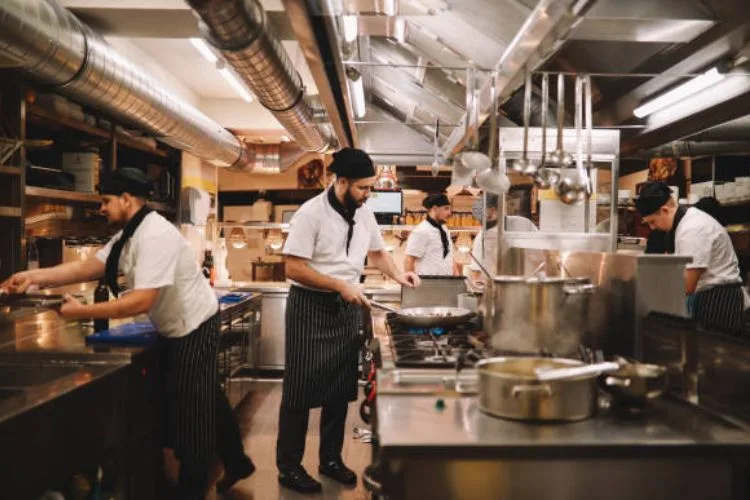
I’ll never forget the first time I walked into a high-volume commercial kitchen during the dinner rush. The air was thick with the sizzle of proteins hitting hot grates, the rhythmic *thwack* of knives on cutting boards, and the occasional shout of “Behind!” as line cooks maneuvered through the chaos. What struck me wasn’t just the speed, it was the precision. Every ingredient was prepped, every tool was within arm’s reach, and every cook moved with the kind of muscle memory that only comes from relentless repetition. That, my friends, is mise en place in its purest form, not just a fancy French term for “putting things in place,” but the backbone of efficiency in any commercial kitchen.
But here’s the thing: most of us think we’ve got mise en place down. We chop our onions, measure our spices, and line up our pans like we’re starring in our own cooking show. Yet, when the tickets start flying and the expediter’s voice cracks with urgency, even the best-laid plans can unravel. I’ve seen it happen, kitchens that swear by prep lists still descend into controlled chaos when the system isn’t *truly* optimized. So, is there a better way? Or are we all just one poorly labeled container away from disaster?
In this deep dive, I’m not just going to regurgitate the same old advice about “prepping your ingredients.” No, we’re going beyond the basics. We’ll explore the psychology behind mise en place, the hidden inefficiencies most kitchens ignore, and the game-changing hacks that separate the pros from the amateurs. Whether you’re running a 20-seat bistro or a 500-cover banquet hall, these are the strategies that will save you time, reduce waste, and, most importantly, keep your sanity intact when the heat is on. Let’s get into it.
The Philosophy of Mise en Place: Why It’s More Than Just Prep Work
It’s Not Just About the Ingredients, It’s About the Mindset
I’ll admit, I used to think mise en place was just a fancy way of saying “get your shit together before service.” And sure, on the surface, that’s not wrong. But after years of observing (and occasionally fumbling in) commercial kitchens, I’ve come to realize it’s so much more than that. Mise en place is a mental framework-a way of thinking that turns chaos into order, panic into focus, and mistakes into learning opportunities.
Think about it: when you’re in the weeds, your brain is already taxed. The last thing you need is to waste cognitive energy searching for a damn spoon or realizing halfway through a dish that you forgot to thaw the scallops. Mise en place isn’t just about having everything ready; it’s about eliminating decision fatigue. It’s the difference between a cook who’s reacting to the rush and one who’s orchestrating it. And let’s be real, when tickets are piling up, orchestration is what keeps you from losing your mind.
But here’s where it gets interesting: the best kitchens don’t just prep ingredients, they prep systems. They have a mise en place for their mise en place. Labels aren’t just slapped on containers; they’re color-coded, standardized, and placed at eye level. Tools aren’t just within reach; they’re arranged in the order they’ll be used. And don’t even get me started on the flow of movement. Ever notice how some cooks seem to glide through service while others look like they’re playing a game of kitchen Twister? That’s not luck, that’s intentional design.
So, is mise en place just a set of tasks, or is it a way of life? I’m still torn on that one. But what I do know is this: if you treat it like a chore, you’ll never unlock its full potential. Treat it like a ritual, though, and suddenly, it becomes the difference between a kitchen that survives the rush and one that thrives in it.
The Hidden Costs of Poor Mise en Place (Spoiler: It’s Not Just Time)
We all know that poor prep leads to wasted time. But what about the other costs? The ones that don’t show up on a P&L but still eat away at your bottom line, and your team’s morale?
First, there’s waste. Not just the obvious stuff, like over-prepped ingredients that go bad, but the hidden waste. The extra steps taken when a cook has to walk across the kitchen for a missing ingredient. The overcooked proteins because someone was scrambling to find a thermometer. The comped dishes because the server had to apologize for a 45-minute wait. These things add up, fast. I’ve seen kitchens where poor mise en place accounts for as much as 15% of food costs. That’s not just money down the drain; that’s profit you could be reinvesting in better equipment, higher wages, or (let’s be honest) a much-needed team happy hour.
Then there’s team burnout. Nothing kills morale faster than a kitchen that’s constantly in crisis mode. When cooks are spending more time searching for tools than actually cooking, frustration builds. And when frustration builds, mistakes happen. And when mistakes happen, tempers flare. It’s a vicious cycle, and it’s one that starts with one poorly organized station. I’ve worked in kitchens where the turnover rate was through the roof, and more often than not, it wasn’t the pay or the hours that drove people away, it was the constant stress of inefficiency.
And let’s not forget reputation. In an era where a single bad Yelp review can tank a business, consistency is everything. Poor mise en place leads to inconsistent dishes, which leads to unhappy customers, which leads to… well, you get the idea. I’ve seen restaurants with amazing food fail because they couldn’t execute during peak hours. On the flip side, I’ve seen solid (but not mind-blowing) concepts thrive because they ailed the fundamentals. Mise en place isn’t just about efficiency, it’s about reliability. And in this industry, reliability is currency.
So, how do you avoid these pitfalls? Is it as simple as “prep more”? Not quite. It’s about prepping smarter. And that starts with rethinking how you approach the entire process.
The 10 Commandments of Commercial Kitchen Mise en Place (That No One Talks About)
1. The 80/20 Rule of Prep: Focus on What Actually Moves the Needle
Let’s be real: not all prep is created equal. Some ingredients are the linchpins of your menu, without them, service grinds to a halt. Others? They’re just taking up space in your walk-in. The key is figuring out which is which.
Enter the 80/20 rule. In most kitchens, 20% of your ingredients account for 80% of your prep work. Think about it: how many dishes on your menu rely on diced onions? Or minced garlic? Or chopped herbs? These are your high-impact ingredients, and they should be your top priority when it comes to mise en place. Yet, I’ve seen kitchens waste hours prepping obscure garnishes or specialty items that only get used once a week. Don’t get me wrong, those things have their place. But if you’re short on time (and let’s face it, when aren’t you?), they shouldn’t be your focus.
So, how do you identify your 20%? Start by auditing your menu. List every ingredient used in every dish, then rank them by frequency. The ones at the top? Those are your on-negotiables. Everything else? Prep them after the essentials are locked and loaded. And here’s a pro tip: if an ingredient is only used in one dish, consider prepping it à la minute (that’s fancy chef talk for “right before service”). It might seem counterintuitive, but sometimes, the most efficient prep is less prep.
Is this the best approach? I’m not entirely sure. I’ve seen kitchens that swear by prepping everything in advance, and others that thrive on minimal prep. But what I do know is this: if you’re not strategic about your prep, you’re leaving efficiency on the table.
2. The Psychology of Color-Coding: Why Your Brain Loves Rainbows
Here’s a question: how many times have you grabbed the wrong container because everything in your walk-in looks the same? If your answer is “more than I’d like to admit,” you’re not alone. The human brain is wired to recognize patterns and colors faster than text. That’s why color-coding isn’t just a nice-to-have, it’s a game-changer.
But here’s the thing: most kitchens do color-coding wrong. They slap a red label on the chicken and call it a day. That’s not a system, that’s a band-aid. A true color-coding system is intuitive, consistent, and scalable. It should tell you at a glance what’s inside a container, how it’s prepped, and (if applicable) what station it belongs to. For example:
- Red: Proteins (raw)
- Green: Vegetables (prepped)
- Blue: Dairy (cheese, cream, etc.)
- Yellow: Carbs (rice, potatoes, pasta)
- White: Pantry staples (oils, vinegars, spices)
But why stop there? You can take it a step further by using color-coded cutting boards (red for raw meat, green for veggies, etc.) or even colored tape on knives to designate which station they belong to. The goal is to create a system where anyone-even a new hire, can walk into your kitchen and know exactly where things go.
Now, I know what you’re thinking: “Sammy, that sounds like overkill.” And maybe it is, for some kitchens. But if you’ve ever wasted time searching for something that should’ve been obvious, or worse, cross-contaminated ingredients because of a mix-up, you’ll understand why this matters. The best systems aren’t just efficient; they’re idiot-proof. And let’s be honest, we’ve all been idiots in the kitchen at one point or another.
3. The Flow of Movement: How to Turn Your Kitchen into a Well-Oiled Machine
Ever watched a line cook during service? If you pay close attention, you’ll notice something fascinating: the best ones don’t just move fast, they move efficiently. They’re not taking extra steps, reaching across each other, or backtracking. They’re operating like a well-oiled machine, and that’s no accident. It’s the result of intentional station design.
Here’s the thing: most kitchens are designed based on space constraints, not workflow. Stations are crammed wherever they fit, tools are stored wherever there’s room, and suddenly, your sauté cook is walking 10 feet to grab a pan. That might not seem like a big deal, but when you’re doing it 50 times a night, those steps add up. In fact, studies have shown that unnecessary movement can account for up to 30% of a cook’s time during service. That’s time you could be using to plate dishes, communicate with the team, or (let’s be real) catch your breath.
So, how do you design a station for maximum efficiency? Start by mapping out the flow of movement for each dish. What’s the first step? Where does the cook need to be to execute it? What tools will they need? Then, arrange your station so that everything is within a one-step reach. Here’s a simple rule of thumb: if a cook has to take more than one step to grab something, it’s too far away.
But it’s not just about proximity, it’s also about ergonomics. Ever notice how some cooks seem to hunch over their stations while others stand tall? That’s not just posture, that’s station height. If your counters are too low or too high, it forces cooks into awkward positions, which slows them down and increases the risk of injury. The ideal height? Around 36 inches for most tasks, but it can vary depending on the cook’s height. Pro tip: if you’re designing a new kitchen, consider adjustable-height stations. They’re a bit more expensive, but they’re a game-changer for efficiency and comfort.
And here’s a bonus tip: mirror your stations. If you have multiple sauté stations, for example, arrange them identically. That way, if a cook has to jump between stations, they don’t have to waste time reorienting themselves. It’s a small detail, but in a high-volume kitchen, small details make all the difference.
4. The Forgotten Art of Tool Organization: Why Your Knife Roll Isn’t Enough
Let’s talk about tools. Not just knives, though those are important, but all the tools that make a kitchen run. Tongs, spoons, thermometers, microplanes, peelers, whisks… the list goes on. And yet, in most kitchens, these tools are treated like an afterthought. They’re tossed in a drawer, left in a bucket of sanitizer, or (worst of all) shared between stations like some kind of culinary hot potato.
Here’s the problem: when tools aren’t organized, cooks waste time searching for them. And when they’re shared, they become bottlenecks. I’ve seen kitchens where the entire line grinds to a halt because someone is waiting for the one pair of tongs. It’s ridiculous, but it happens all the time. So, how do you fix it?
First, assign tools to stations. Every station should have its own set of essential tools, and they should be stored in a way that’s immediately accessible. For example, a sauté station might have a magnetic strip for knives, a hanging rack for tongs and spoons, and a small container for thermometers. The goal is to create a system where a cook never has to leave their station to grab a tool.
But what about tools that are used across multiple stations? That’s where color-coding comes in again. Assign a color to each station, then mark shared tools with that color. For example, if your grill station is blue, all the tools that belong to the grill should have blue handles or tape. That way, if a tool ends up in the wrong place, it’s easy to return it to its home.
And here’s a pro tip: invest in duplicates. If a tool is used frequently, buy two (or three). It might seem like overkill, but when you’re in the weeds, having a backup can be a lifesaver. I’ve seen kitchens where the only thing standing between them and disaster was an extra pair of tongs. Don’t underestimate the power of redundancy.
Oh, and one more thing: clean as you go. It’s not just a catchphrase, it’s a survival tactic. When tools are left dirty, they become unusable, which means cooks have to waste time cleaning them or finding replacements. Encourage your team to clean tools immediately after use. It’s a small habit, but it makes a big difference.
5. The Pre-Service Meeting: Why It’s the Most Important 10 Minutes of Your Day
Here’s a confession: for the longest time, I thought pre-service meetings were a waste of time. I mean, we all know what we’re doing, right? Wrong. So, so wrong. Turns out, those 10 minutes before service are some of the most valuable time you’ll spend all day.
Think about it: how many times have you started service only to realize that someone didn’t prep the special, or the fish delivery didn’t arrive, or the fryer is acting up? These are the kinds of things that derail a service before it even begins. A pre-service meeting is your chance to catch them before they become problems.
So, what should you cover in a pre-service meeting? Here’s a quick checklist:
- Specials and 86s: What’s on the menu today? What’s sold out? Are there any last-minute changes?
- Prep status: Is everything ready to go? Are there any gaps that need to be filled?
- Equipment check: Are all the stations functional? Is the grill hot? Are the fryers working?
- Staffing: Who’s on the line? Who’s expediting? Are there any call-outs or last-minute changes?
- Expectations: What’s the goal for today? Are we pushing for speed? Accuracy? Presentation?
- Communication: How will the team communicate during service? Are there any new signals or codes?
But here’s the thing: a pre-service meeting isn’t just about logistics, it’s also about morale. It’s a chance to get the team on the same page, to pump them up, and to remind them that they’re not just cooks, they’re a team. I’ve seen kitchens where the pre-service meeting is a quick, perfunctory affair, and others where it’s a full-blown pep rally. Guess which ones tend to perform better?
And don’t forget to listen. A pre-service meeting isn’t just a time for you to talk, it’s also a time for your team to voice concerns, ask questions, or share ideas. I’ve seen cooks hesitate to speak up during service because they don’t want to slow things down, but a pre-service meeting is the perfect time for them to share their thoughts. Encourage it. You never know when a seemingly small idea could make a big difference.
Is 10 minutes enough? Maybe not. But it’s a start. And in a busy kitchen, a start is all you need.
6. The Power of Standardized Recipes: Why Your “Pinch of Salt” Isn’t Cutting It
Let’s talk about recipes. Not the kind you find in cookbooks, the kind that actually get used in commercial kitchens. The ones that are scribbled on index cards, taped to walls, or (worst of all) committed to memory. The problem? Most of them are vague, inconsistent, and open to interpretation. And that’s a recipe for disaster.
Here’s the thing: in a commercial kitchen, consistency is king. Customers don’t just want good food, they want the same good food every time they visit. And yet, I’ve seen kitchens where the same dish tastes different depending on who’s cooking it. Why? Because the recipe says things like “season to taste” or “cook until done.” What does that even mean? If you’re not quantifying your ingredients and techniques, you’re leaving room for error.
So, how do you fix it? Start by standardizing your recipes. That means:
- Precise measurements: No more “pinches” or “handfuls.” Use grams, ounces, or (at the very least) teaspoons and tablespoons.
- Clear instructions: Instead of “cook until done,” specify a temperature or time. For example, “cook to an internal temperature of 165°F” or “simmer for 20 minutes.”
- Visual cues: If a step is hard to quantify, include a photo or description. For example, “reduce until the sauce coats the back of a spoon.”
- Station-specific notes: If a dish requires input from multiple stations, break it down by station. For example, “Sauté: Sear the chicken. Grill: Finish in the oven. Expo: Plate with sauce and garnish.”
But here’s the kicker: a standardized recipe isn’t just about consistency, it’s also about efficiency. When cooks know exactly what they’re supposed to do, they don’t waste time second-guessing or asking questions. They just do. And in a busy kitchen, that’s worth its weight in gold.
Oh, and one more thing: update your recipes regularly. If you notice that a dish is consistently over- or under-seasoned, adjust the recipe. If a technique isn’t working, change it. A recipe isn’t set in stone, it’s a living document. Treat it that way.
7. The Walk-In Audit: How to Turn Your Refrigerator into a Well-Oiled Machine
Let’s talk about the walk-in. That cold, cavernous space where ingredients go to live (and sometimes die). In most kitchens, the walk-in is a black hole-a place where things go in and never come out. But it doesn’t have to be that way. With a little organization and maintenance, your walk-in can become one of your kitchen’s greatest assets.
First, let’s address the elephant in the room: FIFO. You’ve heard it a million times-”First In, First Out”-but how many kitchens actually follow it? Not enough. FIFO isn’t just a suggestion; it’s a survival tactic. When ingredients aren’t rotated properly, they go bad. And when they go bad, you waste money. It’s that simple.
So, how do you implement FIFO? Start by labeling everything. Every container, every bag, every box should have a label with the date it was prepped or received. Then, arrange your walk-in so that the oldest items are in the front and the newest are in the back. That way, cooks are forced to use the oldest items first. And here’s a pro tip: use color-coded labels for different days of the week. For example, Monday’s prep could be blue, Tuesday’s could be green, and so on. That way, it’s easy to see at a glance what needs to be used up.
But FIFO is just the beginning. To truly optimize your walk-in, you need to organize by station. That means grouping ingredients by where they’re used. For example, all the sauté station ingredients should be together, all the grill station ingredients should be together, and so on. This might seem like a no-brainer, but I’ve seen kitchens where ingredients are scattered willy-nilly, forcing cooks to waste time searching for what they need.
And don’t forget about shelving. Walk-in shelves aren’t one-size-fits-all. Some ingredients need to be stored at eye level, while others can be stored on lower or higher shelves. Here’s a quick guide:
- Eye level: High-use ingredients (e.g., proteins, prepped veggies, sauces)
- Middle shelves: Medium-use ingredients (e.g., dairy, eggs, some produce)
- Lower shelves: Low-use ingredients (e.g., backup stock, bulk items)
- Top shelves: Rarely used items (e.g., specialty ingredients, holiday items)
And here’s a bonus tip: use clear containers. When ingredients are stored in opaque containers, cooks have to open them to see what’s inside. That’s a waste of time. Clear containers let them see at a glance what they’re grabbing, which speeds up the process.
Finally, clean your walk-in regularly. I know, I know, it’s a pain. But a dirty walk-in is a breeding ground for bacteria, and bacteria is the enemy of efficiency. Set aside time each week to deep-clean your walk-in. Wipe down shelves, scrub spills, and toss anything that’s past its prime. It’s not glamorous, but it’s necessary.
8. The Art of the Prep List: How to Turn Chaos into Clarity
If there’s one thing that separates the pros from the amateurs, it’s the prep list. A good prep list isn’t just a to-do list, it’s a roadmap for the day. It tells your team what needs to be done, when it needs to be done, and (most importantly) who’s responsible for doing it. And yet, most kitchens treat prep lists like an afterthought. They’re scribbled on scraps of paper, forgotten in the chaos of service, or (worst of all) ignored entirely.
So, how do you create a prep list that actually works? Start by breaking it down by station. Every station should have its own prep list, tailored to its specific needs. For example, the sauté station’s prep list might include dicing onions, mincing garlic, and prepping proteins, while the pastry station’s list might include baking desserts and prepping garnishes. The key is to make each list specific to the station it’s for.
But it’s not just about what needs to be prepped, it’s also about when it needs to be prepped. Some ingredients can be prepped days in advance, while others need to be done the day of service. Your prep list should reflect that. Here’s a simple way to organize it:
- Day Before: Ingredients that can be prepped in advance (e.g., stocks, sauces, marinated proteins)
- Morning Of: Ingredients that need to be fresh (e.g., chopped herbs, diced veggies, prepped garnishes)
- Service Prep: Ingredients that need to be prepped à la minute (e.g., last-minute sauces, fresh pasta)
And here’s a pro tip: assign tasks to specific people. A prep list is useless if no one knows who’s responsible for what. Assign each task to a cook, and hold them accountable. That way, there’s no confusion about who’s supposed to do what.
But what about quantities? How do you know how much to prep? That’s where historical data comes in. If you’re not already tracking how much of each ingredient you use during service, start now. Over time, you’ll start to see patterns. For example, you might notice that you go through 10 pounds of diced onions every Friday night. Use that data to inform your prep list. And don’t forget to adjust for specials. If you’re running a lobster special, you’ll need to prep more butter. If it’s Taco Tuesday, you’ll need extra cilantro. Your prep list should reflect the menu for the day.
Finally, review your prep list regularly. If you notice that you’re consistently over- or under-prepping certain ingredients, adjust your quantities. A prep list isn’t set in stone, it’s a living document. Treat it that way.
9. The Role of Technology: Can Apps and Gadgets Actually Improve Mise en Place?
Let’s talk about technology. In an industry that’s still dominated by analog processes, it’s easy to dismiss tech as a gimmick. But here’s the thing: when used correctly, technology can be a game-changer for mise en place. It can streamline prep, reduce waste, and even improve communication. And yet, most kitchens are still stuck in the Stone Age, relying on pen and paper to manage their prep lists and inventory.
So, what kind of technology are we talking about? Here are a few tools that are worth considering:
- Inventory management software: Tools like MarketMan or Toast Inventory can help you track ingredient usage, reduce waste, and even automate ordering. They’re not cheap, but they can pay for themselves in a matter of months.
- Digital prep lists: Apps like KitchenSync or ChefSheet allow you to create and manage prep lists digitally. You can assign tasks, set deadlines, and even track progress in real time. And because they’re cloud-based, your team can access them from anywhere.
- Smart scales: Scales like the Escali Primo or OXO Good Grips can connect to apps via Bluetooth, allowing you to track ingredient usage and reduce waste. They’re a small investment, but they can make a big difference.
- Label printers: Tools like the Brother QL-820NWB can print professional-looking labels in seconds. They’re a game-changer for walk-in organization.
- Kitchen display systems (KDS): Systems like Toast KDS or Square for Restaurants can replace paper tickets with digital displays, reducing clutter and improving communication. They’re not cheap, but they can pay for themselves in improved efficiency.
But here’s the thing: technology isn’t a magic bullet. It’s a tool, and like any tool, it’s only as good as the person using it. If you’re not willing to put in the time to learn how to use it properly, it’s not going to help you. And if you’re not willing to adapt your processes to take advantage of it, it’s not going to make a difference.
So, should you invest in technology? Maybe. It depends on your kitchen, your budget, and your willingness to adapt. But if you’re serious about improving your mise en place, it’s worth considering. Just don’t expect it to do the work for you.
10. The Human Element: How to Train Your Team to Embrace Mise en Place
Let’s be real: no matter how well-designed your mise en place system is, it’s only as good as the people using it. And if your team doesn’t buy into it, it’s not going to work. So, how do you get them on board?
First, lead by example. If you’re not following your own system, why should they? Make sure you’re prepping your station the way you expect them to prep theirs. And don’t just go through the motions-embrace it. Show them that mise en place isn’t just a chore; it’s a way of life.
Second, explain the why. Most cooks know that mise en place is important, but they don’t always understand why. Take the time to explain the benefits, how it saves time, reduces waste, and improves consistency. And don’t just tell them-show them. Walk them through a service where everything is prepped and organized, then compare it to one where it’s not. The difference will be obvious.
Third, make it easy. If your mise en place system is complicated or time-consuming, your team isn’t going to use it. Keep it simple, keep it intuitive, and keep it consistent. And don’t be afraid to iterate. If something isn’t working, change it. The best systems are the ones that evolve over time.
Fourth, hold them accountable. If a cook isn’t following the system, call them out on it. But don’t just criticize-coach. Show them how to do it properly, and explain why it matters. And if they’re still not getting it, consider whether they’re the right fit for your team.
Finally, reward good behavior. When a cook goes above and beyond with their mise en place, acknowledge it. A little recognition can go a long way. And if you really want to incentivize them, consider offering bonuses or other rewards for consistent performance.
At the end of the day, mise en place is a team effort. It’s not just about individual performance, it’s about collective performance. And the best teams are the ones that work together, support each other, and hold each other accountable. So, if you want to improve your mise en place, start by improving your team.
Putting It All Together: Your Mise en Place Action Plan
Alright, let’s take a step back. We’ve covered a lot of ground here, from the philosophy of mise en place to the nitty-gritty of walk-in organization. But how do you actually put it all into practice? Where do you even start?
First, audit your current system. Take a hard look at your kitchen and ask yourself: what’s working? What’s not? Where are the bottlenecks? Where are the inefficiencies? Be honest. It’s the only way to identify areas for improvement.
Second, start small. You don’t have to overhaul your entire kitchen overnight. Pick one area to focus on, maybe it’s your prep lists, or your walk-in organization, or your tool storage. Make a change, see how it works, and then iterate. Small changes add up over time.
Third, get your team on board. Mise en place isn’t a one-person job, it’s a team effort. Explain the changes you’re making, why you’re making them, and how they’ll benefit the team. And don’t forget to listen to their feedback. They’re the ones on the front lines, and they might have insights you haven’t considered.
Fourth, train, train, train. A new system is only as good as the people using it. Take the time to train your team on the changes you’re making, and make sure they understand how to use them properly. And don’t just train once, train regularly. Mise en place is a skill, and like any skill, it takes practice to master.
Finally, measure your results. Keep track of key metrics, like food waste, ticket times, and customer satisfaction, and see how they change over time. If something isn’t working, don’t be afraid to pivot. The best systems are the ones that evolve.
So, what’s the end goal? A kitchen that runs like a well-oiled machine-where cooks move with purpose, where ingredients are always within reach, and where service is smooth and efficient. It’s not an easy goal to achieve, but it’s worth the effort. Because at the end of the day, mise en place isn’t just about efficiency, it’s about pride. It’s about taking ownership of your kitchen, your menu, and your team. And that’s something worth striving for.
Now, I’ll be the first to admit: this is a lot to take in. And I’m not saying you have to implement all of it at once. But if you take just one thing away from this article, let it be this: mise en place is a mindset. It’s not just about prepping ingredients, it’s about prepping your kitchen, your team, and yourself for success. So, start small, stay consistent, and don’t be afraid to experiment. Because the best kitchens aren’t the ones with the fanciest equipment or the most expensive ingredients, they’re the ones that execute.
And with that, I’ll leave you with a question: what’s one change you can make to your mise en place system today? It doesn’t have to be big, just something that moves the needle. Because in this industry, every second counts. And the kitchens that thrive are the ones that make every second count.
FAQ
Q: How do I convince my team to buy into a new mise en place system?
A: Start by explaining the “why” behind the changes. Show them how the new system will save time, reduce waste, and make their jobs easier. Lead by example, if they see you embracing the system, they’re more likely to follow suit. And don’t forget to listen to their feedback. They might have insights or concerns you haven’t considered. Finally, hold them accountable. If someone isn’t following the system, address it directly and explain why it matters. Over time, the benefits will become obvious, and your team will start to embrace the changes.
Q: What’s the biggest mistake kitchens make when implementing mise en place?
A: The biggest mistake is treating mise en place as a one-time task rather than an ongoing process. Mise en place isn’t just about prepping ingredients, it’s about maintaining organization, communication, and efficiency throughout service. Many kitchens prep everything in advance but then let things slide during service, leading to chaos and inefficiency. The key is to treat mise en place as a continuous practice, not just a pre-service chore.
Q: How do I balance mise en place with the need for flexibility in a fast-paced kitchen?
A: Flexibility is key in any commercial kitchen, but that doesn’t mean you have to sacrifice organization. The trick is to build flexibility into your mise en place system. For example, use modular containers that can be easily rearranged, or keep a small stock of backup ingredients on hand for last-minute changes. And don’t forget to communicate. If the menu changes unexpectedly, make sure your team knows what’s different and how to adapt. The best mise en place systems are the ones that can bend without breaking.
Q: What’s the most underrated tool for improving mise en place in a commercial kitchen?
A: Hands down, it’s the label printer. A good label printer can transform your walk-in from a black hole into a well-organized machine. It allows you to label containers quickly and consistently, which reduces waste, improves communication, and speeds up service. And because the labels are professional-looking, they’re more likely to be used (and respected) by your team. If you’re not already using one, it’s a small investment that can make a big difference.
@article{mise-en-place-for-commercial-kitchens-the-ultimate-efficiency-hacks-youre-probably-overlooking,
    title   = {Mise en Place for Commercial Kitchens: The Ultimate Efficiency Hacks You’re Probably Overlooking},
    author  = {Chef's icon},
    year    = {2026},
    journal = {Chef's Icon},
    url     = {https://chefsicon.com/mise-en-place-for-commercial-kitchens-efficiency-hacks/}
}