The Best Fluffy Pancakes recipe you will fall in love with. Full of tips and tricks to help you make the best pancakes.
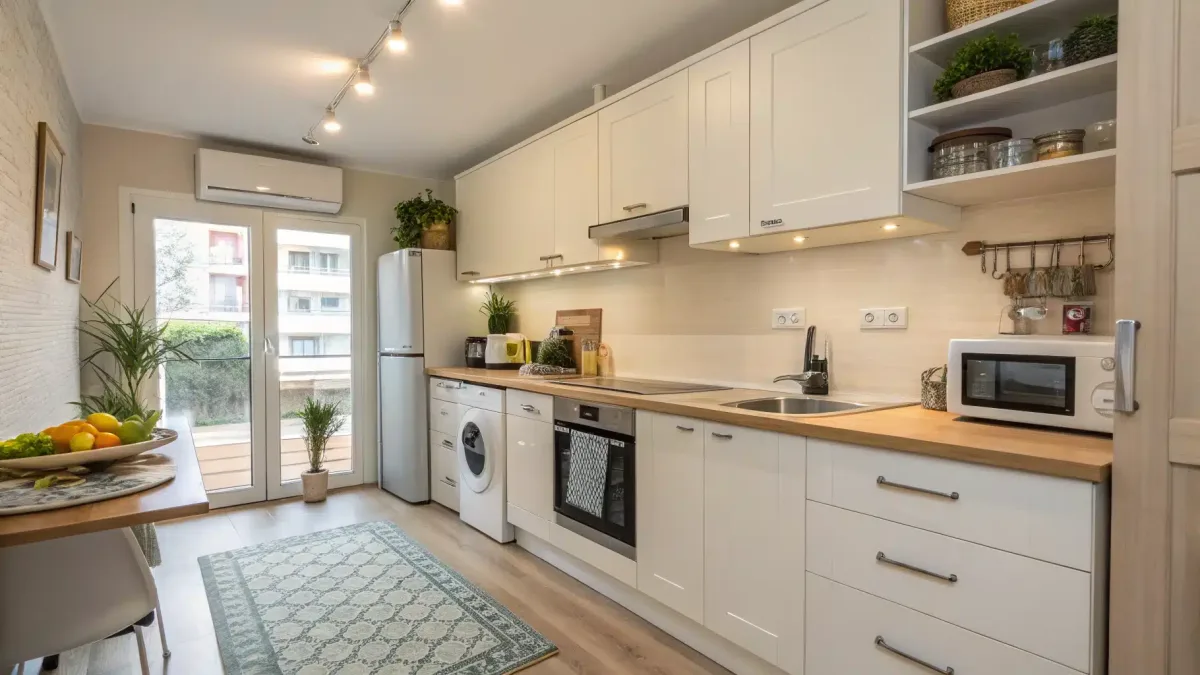
Small Kitchen Solutions for Big Results: The Art of Doing More with Less
Let me tell you something, I’ve lived in my fair share of tiny kitchens. There was the shoebox-sized galley in my first apartment in San Francisco, where the fridge door couldn’t fully open if the oven was on. Then there was the Nashville rental with a kitchen so narrow I could stir a pot of gumbo and reach for a spice jar without taking a step. And don’t even get me started on the time Luna, my rescue cat, decided to nap inside the lower cabinet I’d left open while reorganizing. (Spoiler: She fit better than I did.)
But here’s the thing, small kitchens don’t have to feel like a punishment. In fact, they can be some of the most efficient, creative, and downright cozy spaces in a home or restaurant. The key? Stop thinking about what you *don’t* have and start focusing on what you *can* do with what you’ve got. That’s what this guide is all about: small kitchen solutions for big results. We’re talking strategies that save space, boost workflow, and maybe, just maybe, make you fall in love with your kitchen all over again.
By the end of this, you’ll know how to:
- Assess your kitchen’s hidden potential (yes, even that awkward corner counts)
- Choose multi-functional tools that do the work of three gadgets
- Organize like a pro with vertical storage hacks and clever cabinet tweaks
- Design a layout that speeds up your workflow instead of slowing you down
- Pick appliances and materials that look good *and* work hard
Sound good? Let’s dive in. And fair warning: By the time you’re done reading, you might start eyeing your kitchen with the same excitement I feel when I find a new farmers’ market. (Okay, maybe that’s a stretch. But you’ll definitely see it in a new light.)
The Psychology of Small Kitchens: Why We Love (and Hate) Them
Before we get into the nuts and bolts of small kitchen solutions, let’s talk about why these spaces drive us crazy, and why, deep down, we might actually kind of love them. There’s a weird paradox here: Small kitchens can feel claustrophobic and chaotic, but they can also feel intimate and efficient. It’s like the difference between a crowded subway car and a cozy diner booth. One makes you want to bolt; the other makes you want to linger over coffee.
I remember the first time I cooked in a truly tiny kitchen. It was a friend’s studio apartment in Oakland, and the kitchen was essentially a counter with a hot plate and a mini-fridge squeezed into a nook. No oven, barely any prep space, and a sink so small I had to wash dishes in batches. At first, I panicked. How was I supposed to make a proper meal in this? But then something interesting happened. Because I *had* to be efficient, I prepped everything before I started cooking. I cleaned as I went. I used every inch of counter space like a chessboard, moving ingredients and tools in a precise dance. By the end of the night, I’d made a surprisingly good stir-fry, and I’d done it faster than I would have in my larger kitchen back home.
That’s the thing about small kitchens: They force you to be intentional. There’s no room for clutter, no space for gadgets you use once a year, no real estate for half-finished projects. You either use it or lose it. And while that can feel limiting at first, it’s also liberating. When you strip away the excess, what’s left is the pure joy of cooking, no distractions, no wasted motion, just you and the food.
Of course, that’s the ideal. The reality is that small kitchens can also be a nightmare if they’re not set up right. Ever tried to cook a holiday meal in a kitchen where the fridge, stove, and sink form a triangle the size of a postage stamp? Or opened a cabinet only to have a landslide of pots and pans bury your foot? Yeah. Not fun. The difference between a small kitchen that works and one that doesn’t often comes down to three things:
- Layout: Is the space arranged in a way that makes sense for how you actually cook?
- Storage: Are you using every inch of vertical and hidden space, or are you just stacking things on the counter?
- Tools: Do you have the right equipment for the job, or are you trying to make do with what you’ve got?
We’ll tackle all three of these in this guide. But first, let’s talk about how to audit your kitchen-because before you can fix a problem, you need to understand it.
How to Audit Your Kitchen (Without Losing Your Mind)
Alright, let’s get real for a second. When you’re standing in a small kitchen, it’s easy to feel overwhelmed. The counters are cluttered, the cabinets are bursting, and you’re pretty sure that if you open the fridge one more time, something’s going to fall out and hit you in the face. Where do you even start?
Here’s the thing: You don’t need to overhaul your entire kitchen in one weekend. In fact, trying to do that is a recipe for burnout (pun absolutely intended). Instead, start with an audit. Think of it like a doctor’s checkup for your kitchen. You’re going to assess what’s working, what’s not, and where the biggest opportunities for improvement are. And the best part? It doesn’t require any tools, just a notebook, a pen, and maybe a glass of wine for moral support.
Here’s how to do it:
Step 1: Empty Everything Out (Yes, Everything)
I know, I know. This sounds like a nightmare. But trust me, it’s the only way to really see what you’re working with. Start with one section at a time, maybe the cabinets above the sink, or the drawer where you keep your utensils. Take everything out and lay it on the counter or the floor. As you do this, ask yourself:
- When was the last time I used this?
- Does this item have a specific home, or does it just live wherever it lands?
- Is this something I *love* using, or is it just taking up space?
- Could I replace this with something smaller or more versatile?
Be ruthless. If you haven’t used that garlic press in six months, it’s probably not essential. Same goes for the three spatulas you own but only use one of. Small kitchens thrive on minimalism, so if it’s not earning its keep, it’s got to go.
Pro tip: As you empty things out, group similar items together. All your baking tools in one pile, all your spices in another, and so on. This will make it easier to see what you have, and what you might be missing.
Step 2: Measure Your Space (Like, Actually Measure It)
Here’s where things get a little more technical. Grab a measuring tape and document every inch of your kitchen. We’re talking:
- Counter space (length, depth, and height)
- Cabinet dimensions (width, depth, and height between shelves)
- Appliance sizes (fridge, stove, microwave, etc.)
- Walkways and door clearances (you’d be surprised how often this gets overlooked)
- Wall space (for shelves, hooks, or magnetic strips)
Why does this matter? Because when you’re working with limited space, every inch counts. Knowing exactly how much room you have will help you make smarter decisions about what to keep, what to buy, and how to arrange it all. For example, if you realize your upper cabinets are only 10 inches deep, you might decide to swap out bulky dishes for stackable ones that fit better. Or if you notice that your counter is 24 inches deep, you might look for a slimline toaster that doesn’t eat up all your prep space.
I’ll admit, this part isn’t the most exciting. But it’s essential. Think of it like mapping out a road trip before you hit the road. You wouldn’t just start driving and hope you end up in the right place, would you? (Okay, maybe you would. But you’d probably get lost.)
Step 3: Identify Your Pain Points
Now that you’ve got everything out in the open, it’s time to get honest about what’s not working. This is where you channel your inner kitchen therapist. Ask yourself:
- What’s the one thing that drives me crazy about this kitchen?
- Where do I waste the most time or energy?
- What tasks feel awkward or difficult because of the layout?
- What’s always in the way, no matter how I organize it?
For me, it’s usually the lack of prep space. I’ll be chopping vegetables, and suddenly I realize I need to move the cutting board to make room for the pan I’m about to use. Or I’ll be trying to assemble a sandwich, and the bread keeps sliding off the edge of the counter because there’s not enough room. These might seem like small annoyances, but they add up. In a small kitchen, friction is the enemy. The more you have to stop and think about where to put something or how to maneuver around it, the less enjoyable (and efficient) cooking becomes.
Write down your top three pain points. These are the things you’ll want to tackle first when you start implementing small kitchen solutions. Because let’s be real: You can’t fix everything at once. But if you can solve the biggest headaches, the rest will start to fall into place.
Step 4: Map Your Workflow
Here’s where things get a little more abstract. You’re going to track how you move through your kitchen when you’re cooking. This isn’t about judging yourself, it’s about identifying patterns and inefficiencies. For example:
- Do you find yourself walking back and forth between the fridge and the stove a dozen times?
- Do you have to reach over a pile of dishes to get to the spices?
- Is your cutting board always in the way when you’re trying to use the sink?
One way to do this is to draw a simple floor plan of your kitchen and mark your movements with a highlighter. Or, if you’re more of a tech person, you can use an app to create a digital map. The goal is to see where you’re wasting steps or where things are just awkwardly placed.
This is also a great time to think about the kitchen work triangle-the imaginary line between your fridge, stove, and sink. In an ideal world, these three points should form a triangle that’s not too big and not too small. If your triangle is more like a straight line (or a pretzel), you might need to rethink your layout.
I’ll be honest: This step takes a little time and patience. But it’s worth it. Once you see how you’re actually using your kitchen, you can start making changes that save you time, energy, and frustration.
The Golden Rules of Small Kitchen Design
Alright, now that you’ve audited your kitchen and identified your pain points, it’s time to talk about design principles. These are the rules that will guide every decision you make, from what appliances to buy to how to arrange your cabinets. Think of them as the North Star of your small kitchen journey. Follow them, and you’ll end up with a space that’s not just functional, but downright delightful to cook in.
Rule 1: Prioritize the Work Triangle
I mentioned the kitchen work triangle earlier, but it’s so important that it deserves its own section. This is the holy grail of kitchen design, and it’s especially critical in small spaces. The idea is simple: Your fridge, stove, and sink should form a triangle that allows you to move easily between them. In a small kitchen, this triangle should be compact but not cramped. Here’s what to aim for:
- The sum of the three sides of the triangle should be between 13 and 26 feet.
- No single side should be less than 4 feet or more than 9 feet.
- There should be no major obstructions (like islands or cabinets) cutting through the triangle.
Why does this matter? Because these are the three spots you’ll be visiting the most when you’re cooking. If they’re too far apart, you’ll waste time and energy walking back and forth. If they’re too close, you’ll feel cramped and claustrophobic. The work triangle is all about efficiency-and in a small kitchen, efficiency is everything.
Now, I know what you’re thinking: “But my kitchen is so small, there’s no way I can fit a perfect triangle!” And you might be right. But even if you can’t hit the ideal measurements, you can still optimize the flow. For example, if your sink and stove are on the same wall, try to keep them close together so you’re not running back and forth. If your fridge is across the room, consider moving it (if possible) or at least keeping a small prep station nearby.
Rule 2: Go Vertical (Like, Really Vertical)
When you’re working with limited square footage, the only way to go is up. Vertical space is the most underutilized real estate in most kitchens, and it’s a game-changer in small spaces. Here’s how to make the most of it:
- Install open shelving: Swap out upper cabinets for open shelves to create a sense of openness. Plus, it forces you to keep things organized (because no one wants to look at a cluttered shelf).
- Use wall-mounted racks: Hang pots, pans, and utensils on the wall to free up cabinet space. A pegboard is a great option because you can customize the layout to fit your needs.
- Add hooks everywhere: Inside cabinet doors, under shelves, on the sides of your fridge, anywhere you can hang something, do it. Mugs, measuring cups, and even small baskets can all live on hooks.
- Stack things high: Use stackable containers for dry goods, and opt for appliances that can be stored vertically (like a toaster oven that can sit on its side).
- Invest in a tall, narrow pantry: If you have a sliver of space between cabinets or appliances, a slim pantry can hold a surprising amount of stuff.
I’ll admit, I was skeptical about open shelving at first. I worried that my kitchen would look cluttered or that I’d spend all my time dusting. But then I tried it, and I was hooked. There’s something satisfying about being able to see everything at a glance. Plus, it forces you to edit your belongings-because if it’s not pretty or useful, it doesn’t belong on the shelf.
Rule 3: Embrace Multi-Functional Everything
In a small kitchen, every item needs to earn its keep. That means no single-use gadgets, no appliances that only do one thing, and no furniture that doesn’t serve a purpose. Instead, look for multi-functional tools that can do double (or triple) duty. Here are some of my favorites:
- A cutting board that fits over the sink: This gives you extra prep space when you need it, and it’s easy to clean up afterward.
- A rolling island with storage: It can serve as a prep station, a dining table, or even a bar cart. Plus, it can be moved out of the way when you don’t need it.
- A pressure cooker/multi-cooker: These things are magic. They can sauté, steam, slow-cook, and even make yogurt. Plus, they take up way less space than a slow cooker, rice cooker, and stovetop pot combined.
- Stackable mixing bowls: They take up half the space of regular bowls and can double as serving dishes.
- A fold-down table or counter: This is a great option if you need extra prep space but don’t have room for a permanent island.
The key here is to think creatively. For example, that pretty cake stand on your counter? It can also hold fruit or spices. The step stool you use to reach the top shelf? It can double as a seat when you’re waiting for the water to boil. The more you can maximize the functionality of each item, the less cluttered your kitchen will feel.
Rule 4: Light It Up (Like, Really Light It Up)
Lighting is one of those things that can make or break a small kitchen. Too little light, and the space will feel dark and cramped. Too much harsh light, and it’ll feel like a fluorescent-lit hospital. The goal is to create a warm, inviting glow that makes the space feel bigger than it is. Here’s how:
- Layer your lighting: Use a mix of ambient, task, and accent lighting. Ambient lighting (like recessed lights or a central fixture) provides overall illumination. Task lighting (like under-cabinet lights or a pendant over the sink) helps you see what you’re doing. Accent lighting (like LED strips under shelves) adds depth and warmth.
- Use warm tones: Cool white light can make a space feel sterile. Opt for warm white or soft white bulbs to create a cozy atmosphere.
- Add mirrors or reflective surfaces: Mirrors bounce light around the room, making it feel larger. If you don’t want to hang a mirror, consider glossy backsplashes, stainless steel appliances, or even a shiny countertop.
- Install dimmer switches: This gives you control over the mood of the space. Bright light for cooking, softer light for dining.
I made the mistake of skimping on lighting in my first tiny kitchen. I thought one overhead light would be enough, but it just made the space feel like a cave. Once I added under-cabinet lights and a small pendant over the sink, everything changed. The kitchen felt brighter, bigger, and more inviting. It was a small change with a big impact.
Rule 5: Keep It Clutter-Free (Like, Obsessively Clutter-Free)
This might be the hardest rule of all, but it’s also the most important. In a small kitchen, clutter is the enemy. It makes the space feel smaller, it slows you down, and it’s just plain stressful. The good news? There are plenty of ways to keep clutter at bay. Here’s how:
- Adopt a “one in, one out” policy: For every new item you bring into the kitchen, get rid of something else. This keeps your belongings in check and prevents the space from feeling overcrowded.
- Use drawer dividers and organizers: These keep utensils, spices, and other small items from turning into a jumbled mess. I like the adjustable kind because you can customize them to fit your stuff.
- Store things where you use them: If you always reach for the olive oil when you’re at the stove, keep it in a cabinet near the stove. If you use the blender every morning, store it on the counter (if you have the space) or in an easy-to-reach cabinet.
- Do a weekly “clutter check”: Every Sunday (or whatever day works for you), take 10 minutes to scan your kitchen for anything that doesn’t belong. Mail on the counter? Toss it. Appliances you haven’t used in weeks? Put them away (or get rid of them).
- Hide the ugly stuff: If you have appliances or tools that are functional but not pretty, store them in cabinets or bins. Out of sight, out of mind.
I’ll be honest: I’m not naturally a tidy person. I’m the kind of guy who leaves a trail of socks and coffee cups wherever he goes. But in a small kitchen, clutter is ot an option. It’s like trying to cook in a minefield, you’re constantly dodging obstacles, and it’s only a matter of time before something explodes (metaphorically, of course). Once I embraced the clutter-free mindset, cooking became so much more enjoyable. No more digging through drawers for the can opener. No more moving piles of mail to make room for the cutting board. Just a clean, functional space where I can focus on what I love: making food.
Small Kitchen Layouts That Actually Work
Alright, let’s talk about layout. This is where the rubber meets the road in small kitchen design. A good layout can make a tiny kitchen feel spacious and efficient, while a bad one can make even a decent-sized kitchen feel cramped and awkward. The key is to choose a layout that fits your space and your cooking style. Here are the most common small kitchen layouts, along with their pros and cons:
The Galley Kitchen
This is the classic small kitchen layout, and for good reason: It’s efficient, straightforward, and works well in narrow spaces. In a galley kitchen, the cabinets and appliances are arranged along two parallel walls, creating a corridor-like workspace. Here’s what you need to know:
- Pros:
- Maximizes every inch of space
- Creates a natural work triangle (if arranged properly)
- Easy to keep everything within reach
- Works well in rental apartments (since it doesn’t require major renovations)
- Cons:
- Can feel claustrophobic if not designed well
- Limited counter space (since everything is along the walls)
- Not ideal for multiple cooks (unless it’s very wide)
Small kitchen solutions for galley kitchens:
- Use light colors to make the space feel bigger.
- Install open shelving on one wall to create a sense of openness.
- Add a rolling island (if there’s enough room) for extra prep space.
- Use mirrors or glossy finishes to reflect light and make the space feel larger.
I lived in a galley kitchen for years, and I’ll admit, it took some getting used to. At first, it felt like cooking in a hallway. But once I optimized the layout, it became one of my favorite kitchens. The key was keeping the work triangle tight and making sure I had enough storage on both sides. If you’re working with a galley kitchen, don’t fight it, embrace it. It’s one of the most efficient layouts out there.
The L-Shaped Kitchen
If you have a little more space to work with, an L-shaped kitchen can be a great option. In this layout, the cabinets and appliances are arranged along two adjacent walls, forming an L shape. This creates a atural workflow and leaves room for a small dining table or island in the center. Here’s the breakdown:
- Pros:
- More counter space than a galley kitchen
- Can accommodate multiple cooks
- Leaves room for a small dining area or island
- Feels more open and less claustrophobic
- Cons:
- Not ideal for very narrow spaces
- Can feel awkward if the L is too deep or too shallow
- Corner cabinets can be hard to access
Small kitchen solutions for L-shaped kitchens:
- Use a lazy Susan or pull-out shelves in corner cabinets to maximize storage.
- Add a peninsula or small island (if space allows) for extra prep space.
- Install under-cabinet lighting to brighten up the countertops.
- Use glass-front cabinets to create a sense of openness.
The L-shaped kitchen is a great middle ground between a galley and a larger kitchen. It’s flexible, efficient, and feels more open than a galley layout. If you have the space for it, it’s definitely worth considering.
The U-Shaped Kitchen
This is the big daddy of small kitchen layouts. In a U-shaped kitchen, the cabinets and appliances are arranged along three walls, forming a U shape. This creates a ton of storage and counter space, but it can also feel a little closed-in if not designed well. Here’s what you need to know:
- Pros:
- Lots of storage and counter space
- Creates a natural work triangle
- Can accommodate multiple cooks
- Feels more like a “real” kitchen than a galley or L-shaped layout
- Cons:
- Can feel claustrophobic if the U is too tight
- Corner cabinets can be hard to access
- Not ideal for very small spaces
Small kitchen solutions for U-shaped kitchens:
- Use light colors and open shelving to make the space feel bigger.
- Install pull-out shelves or lazy Susans in corner cabinets.
- Add a skylight or large window to bring in natural light.
- Use glass-front cabinets to create a sense of openness.
The U-shaped kitchen is a great option if you have a little more space to work with. It’s efficient, functional, and feels more like a “real” kitchen than some of the other layouts. But it’s not for everyone, if your kitchen is very small, it might feel too closed-in. If you’re considering a U-shaped layout, make sure to test the workflow before committing.
The One-Wall Kitchen
This is the smallest of the small. In a one-wall kitchen, all the cabinets and appliances are arranged along a single wall. This is a common layout in studio apartments, tiny homes, and some modern open-plan spaces. Here’s the breakdown:
- Pros:
- Maximizes floor space
- Works well in open-plan layouts
- Easy to keep everything within reach
- Can be very stylish and modern
- Cons:
- Very limited counter and storage space
- Can feel cramped if not designed well
- Not ideal for multiple cooks
Small kitchen solutions for one-wall kitchens:
- Use vertical storage (like open shelving or wall-mounted racks) to maximize space.
- Add a rolling island or cart for extra prep space.
- Install under-cabinet lighting to brighten up the countertops.
- Use multi-functional appliances to save space.
The one-wall kitchen is the ultimate small space challenge. But with the right design, it can be surprisingly functional. The key is to think vertically and make every inch count. If you’re working with a one-wall kitchen, don’t despair, it’s a chance to get creative and design a space that’s uniquely yours.
Storage Hacks That Will Change Your Life
Alright, let’s talk about storage. This is where most small kitchens fall apart. You can have the perfect layout, the best appliances, and the prettiest countertops, but if your storage is a mess, your kitchen will still feel chaotic and cramped. The good news? There are tons of clever storage hacks that can help you make the most of every inch. Here are some of my favorites:
Hack 1: Use the Inside of Cabinet Doors
This is one of those “why didn’t I think of this sooner?” hacks. The inside of your cabinet doors is prime real estate, and most people don’t use it at all. Here’s how to make the most of it:
- Hang a spice rack: If you’re tired of digging through a cabinet for the cumin, install a spice rack on the inside of a cabinet door. This keeps your spices organized and within reach.
- Add hooks for measuring cups or utensils: This is a great way to free up drawer space. Just make sure the hooks are sturdy enough to hold the weight.
- Install a paper towel holder: If you don’t have room for a freestanding paper towel holder, mount one on the inside of a cabinet door.
- Use a magnetic strip for knives or tools: This is a great option if you don’t have room for a knife block on the counter.
I installed a spice rack on the inside of my cabinet door a few years ago, and it’s been a game-changer. No more digging through a cluttered cabinet for the paprika. No more knocking over bottles every time I open the door. Just a neat, organized row of spices, all within reach. It’s one of those small changes that makes a big difference.
Hack 2: Invest in Stackable Containers
If you’re still storing your dry goods in their original packaging, it’s time to upgrade. Those bags of flour, sugar, and pasta take up way more space than they need to, and they’re not exactly airtight. Instead, invest in a set of stackable containers. Here’s why they’re awesome:
- They save space by stacking neatly on top of each other.
- They keep your food fresh by sealing out air and moisture.
- They look uniform and organized, which makes your kitchen feel more put-together.
- They make it easy to see how much you have left (no more surprise “oh no, I’m out of rice” moments).
I’ll admit, I was skeptical about stackable containers at first. I thought they were just another gimmick, like those infomercial gadgets that promise to change your life but end up collecting dust in the back of a cabinet. But then I tried them, and I was hooked. There’s something satisfying about opening a cabinet and seeing a neat row of containers, all labeled and organized. Plus, they make it so much easier to find what you’re looking for.
Pro tip: If you’re short on cabinet space, store your stackable containers on the counter. Just make sure they’re pretty enough to double as decor.
Hack 3: Use Tension Rods to Create Dividers
Tension rods aren’t just for curtains. They’re also a cheap and easy way to create dividers in your cabinets. Here’s how to use them:
- Divide baking sheets and cutting boards: Install a tension rod vertically in a cabinet to create separate slots for baking sheets, cutting boards, and trays. This keeps them from sliding around and makes them easier to grab.
- Organize pot lids: Install a tension rod horizontally in a cabinet to create a slot for pot lids. This keeps them from sliding around and makes them easier to find.
- Create a makeshift pantry: Install a tension rod in a cabinet and hang baskets or bins from it to create extra storage for snacks, spices, or small appliances.
I used a tension rod to organize my baking sheets, and it’s been a lifesaver. Before, they were just stacked on top of each other in a cabinet, and every time I needed one, I had to dig through the whole pile. Now, they’re neatly separated, and I can grab the one I need without making a mess. It’s one of those small changes that makes a big difference.
Hack 4: Hang Everything You Can
If you’re not using your walls for storage, you’re missing out. Walls are some of the most underutilized real estate in a small kitchen, and they’re a great place to hang things like:
- Pots and pans: Install a pot rack or a few hooks to free up cabinet space.
- Utensils: Use a wall-mounted utensil holder or a pegboard to keep your tools within reach.
- Mugs: Install hooks under a shelf or cabinet to hang mugs.
- Spices: Use a wall-mounted spice rack to free up counter or cabinet space.
- Cutting boards: Install a few hooks to hang cutting boards vertically.
I installed a pegboard in my kitchen a few years ago, and it’s been one of the best decisions I’ve made. It’s customizable, functional, and looks great. I can hang pots, pans, utensils, and even small baskets for spices or snacks. Plus, it’s easy to rearrange if my needs change. If you’re short on space, a pegboard is a game-changer.
Hack 5: Use the Space Above Your Cabinets
This is one of those “out of sight, out of mind” spaces that most people don’t think to use. But the area above your cabinets is prime real estate for storing things you don’t use every day. Here’s how to make the most of it:
- Store seasonal items: Things like holiday dishes, special occasion serving platters, or that fondue set you use once a year can live up here.
- Display pretty dishes or decor: If you have open shelving or glass-front cabinets, use the space above them to display pretty dishes, vases, or other decor.
- Add baskets or bins: Use these to corral smaller items and keep them from looking cluttered.
I use the space above my cabinets to store my less frequently used appliances, like my waffle maker and my slow cooker. It keeps them out of the way but still within reach when I need them. Plus, it frees up cabinet space for things I use more often. It’s a small change, but it makes a big difference.
Appliances for Small Kitchens: Big Performance in a Tiny Package
Let’s talk about appliances. This is where a lot of small kitchens go wrong. You either end up with bulky, space-hogging machines that make your kitchen feel even smaller, or you sacrifice functionality for size and end up with appliances that don’t do what you need them to. The key is to find compact, multi-functional appliances that pack a punch without taking up too much space. Here are some of my favorites:
The Mini Fridge (But Make It Fancy)
If you’re working with a tiny kitchen, a full-sized fridge might not be an option. But that doesn’t mean you have to settle for a sad little dorm fridge. There are plenty of compact fridges out there that are stylish, functional, and perfect for small spaces. Here’s what to look for:
- Size: Measure your space before you buy. A fridge that’s too big will overwhelm the room, while one that’s too small won’t hold enough food.
- Features: Look for a fridge with adjustable shelves, a freezer compartment, and a crisper drawer. These features will help you maximize storage.
- Style: Just because it’s small doesn’t mean it has to be ugly. Look for a fridge with a sleek design and a finish that matches your kitchen.
I’ve had a compact fridge in my last two apartments, and I love it. It’s big enough to hold a week’s worth of groceries, but small enough to fit in a tight space. Plus, it’s energy-efficient, which is a bonus. If you’re in the market for a new fridge, don’t overlook the compact options, they might be just what you need.
The Multi-Cooker That Does It All
If you’ve never used a multi-cooker (like an Instant Pot or a Ninja Foodi), you’re missing out. These things are magic. They can pressure cook, slow cook, sauté, steam, and even air fry. Plus, they take up way less space than a slow cooker, rice cooker, and stovetop pot combined. Here’s why they’re perfect for small kitchens:
- Multi-functional: One appliance, multiple uses. It’s like having a whole kitchen in one pot.
- Compact: Most multi-cookers are about the size of a large slow cooker, so they don’t take up much counter space.
- Energy-efficient: They use less energy than a stovetop or oven, which is great for small spaces (and your utility bill).
- Easy to store: If you don’t have room to keep it on the counter, it’s easy to store in a cabinet or on a shelf.
I got an Instant Pot a few years ago, and it’s been a game-changer. I use it to make everything from soups and stews to rice and yogurt. It’s saved me so much time and energy, and it’s freed up space in my cabinets. If you’re short on space, a multi-cooker is a must-have.
The Slimline Dishwasher (Yes, It’s a Thing)
If you’re washing dishes by hand because you don’t have room for a full-sized dishwasher, I have good news: Slimline dishwashers exist. These compact machines are designed for small kitchens, and they’re a lifesaver if you hate doing dishes (who doesn’t?). Here’s what to look for:
- Size: Slimline dishwashers are typically 18 inches wide, compared to the standard 24 inches. This makes them a great option for tight spaces.
- Capacity: Even though they’re smaller, most slimline dishwashers can hold 8-10 place settings, which is plenty for a small household.
- Features: Look for a dishwasher with adjustable racks, a delay start option, and a quiet operation. These features will make your life easier.
I installed a slimline dishwasher in my last apartment, and it was one of the best decisions I’ve made. It freed up so much time and energy, and it made my kitchen feel more like a “real” kitchen. If you’re on the fence about getting one, I highly recommend it. It’s a small change that makes a big difference.
The Compact Toaster Oven (That’s Also an Air Fryer)
If you’re still using a full-sized oven for everything, it’s time to upgrade. A compact toaster oven can do everything a big oven can do, bake, broil, toast, and even air fry, but it takes up a fraction of the space. Here’s why it’s perfect for small kitchens:
- Compact: Most toaster ovens are about the size of a large toaster, so they don’t take up much counter space.
- Multi-functional: Many toaster ovens come with air fryer and dehydrator functions, so you can do even more with one appliance.
- Energy-efficient: They use less energy than a full-sized oven, which is great for small spaces (and your utility bill).
- Fast: They heat up quickly, so you can get dinner on the table faster.
I’ve had a toaster oven/air fryer combo for a few years now, and I use it more than my full-sized oven. It’s perfect for everything from toast and bagels to roasted vegetables and even small pizzas. Plus, it’s easy to clean, which is a bonus. If you’re short on space, a toaster oven is a must-have.
The Portable Induction Burner (For When You Need an Extra Burner)
If you’re cooking in a tiny kitchen, you might not have room for a full-sized stove. Or maybe you have a stove, but it only has two burners, and you need more. Either way, a portable induction burner is a great solution. Here’s why:
- Compact: Most induction burners are about the size of a large skillet, so they don’t take up much space.
- Portable: You can move it around as needed, so it’s great for small kitchens or even outdoor cooking.
- Energy-efficient: Induction burners use less energy than gas or electric stoves, which is great for small spaces (and your utility bill).
- Safe: They don’t get as hot as gas or electric burners, so they’re safer to use in tight spaces.
I’ve used a portable induction burner in a few different kitchens, and it’s been a lifesaver. It’s perfect for when I need an extra burner for a big meal, or when I’m cooking in a space that doesn’t have a stove. Plus, it’s easy to clean and store. If you’re short on space, an induction burner is a great investment.
Materials and Finishes That Make Small Kitchens Look Bigger
Alright, let’s talk about materials and finishes. This is where small kitchen design gets really fun. The right materials can make a tiny kitchen feel spacious, bright, and downright luxurious. The wrong ones? Well, let’s just say they can make a small kitchen feel even smaller. Here’s how to choose materials that maximize space and style:
Light Colors (But Not Just White)
You’ve probably heard that light colors make a space feel bigger, and it’s true. But that doesn’t mean you have to paint your kitchen white (unless you want to, of course). There are plenty of light colors that can make a small kitchen feel bright and airy without feeling sterile. Here are some of my favorites:
- Soft gray: A warm gray can make a space feel modern and sophisticated without feeling cold.
- Pale blue: A light blue can make a kitchen feel fresh and calming, like a beachy retreat.
- Warm beige: A beige with warm undertones can make a space feel cozy and inviting.
- Light green: A pale green can make a kitchen feel fresh and natural, like a garden oasis.
I painted my last kitchen a soft gray, and it made a huge difference. The space felt brighter, bigger, and more modern. Plus, it was a great backdrop for colorful dishes and decor. If you’re not sure what color to choose, start with a light, neutral shade and add pops of color with accessories.
Glossy Finishes (For a Reflective Boost)
Glossy finishes are magic in small kitchens. They reflect light, which makes the space feel brighter and bigger. Here’s how to use them:
- Glossy cabinets: Swap out matte cabinets for glossy ones to create a sleek, modern look.
- Glossy backsplash: A glossy tile backsplash can make a small kitchen feel more spacious.
- Glossy countertops: A glossy countertop (like quartz or polished granite) can reflect light and make the space feel larger.
- Glossy appliances: Stainless steel appliances have a reflective surface that can make a small kitchen feel more open.
I installed a glossy subway tile backsplash in my last kitchen, and it made a huge difference. The space felt brighter and more open, and the glossy finish made it easy to clean. If you’re looking for a way to make your small kitchen feel bigger, glossy finishes are a great option.
Large-Format Tiles (For a Seamless Look)
If you’re tiling your floors or backsplash, consider using large-format tiles. These tiles are bigger than standard tiles, which means they have fewer grout lines. Fewer grout lines = a seamless, spacious look. Here’s what to know:
- Size: Large-format tiles are typically 12×24 inches or larger. The bigger the tile, the fewer grout lines you’ll have.
- Color: Light-colored tiles will make the space feel bigger, while dark-colored tiles can make it feel cozier.
- Layout: Consider laying the tiles diagonally to create the illusion of more space.
I used large-format tiles in my last kitchen, and I was amazed at how much bigger the space felt. The tiles made the floor look seamless and expansive, and the light color reflected even more light. If you’re tiling a small kitchen, large-format tiles are a great choice.
Mirrored or Glass Surfaces (For a Reflective Boost)
Mirrors and glass are secret weapons in small kitchen design. They reflect light, which makes the space feel brighter and bigger. Here’s how to use them:
- Mirrored backsplash: A mirrored backsplash can make a small kitchen feel more spacious.
- Glass-front cabinets: Swap out solid cabinet doors for glass ones to create a sense of openness.
- Mirrored cabinet doors: If you don’t want to go full glass, consider mirrored cabinet doors. They’ll reflect light and make the space feel larger.
- Glass countertops: A glass countertop can make a small kitchen feel more open and modern.
I installed glass-front cabinets in my last kitchen, and it made a huge difference. The space felt brighter and more open, and the glass made it easy to see what was inside. Plus, it forced me to keep the cabinets organized (because no one wants to look at a cluttered shelf). If you’re looking for a way to make your small kitchen feel bigger, mirrors and glass are a great option.
Open Shelving (For a Spacious Feel)
Open shelving is one of my favorite small kitchen solutions. It creates a sense of openness, makes it easy to see what you have, and forces you to edit your belongings. Here’s how to make it work:
- Keep it organized: Open shelving only works if it’s neat and tidy. Use baskets, bins, and trays to corral smaller items.
- Display pretty dishes: Open shelving is a great place to show off your favorite dishes, glasses, and serving pieces.
- Use it for everyday items: Store things you use often (like spices, oils, and utensils) on open shelves for easy access.
- Mix it up: Combine open shelving with closed cabinets to create a balanced look.
I swapped out my upper cabinets for open shelving a few years ago, and I’ve never looked back. The space feels brighter, bigger, and more modern, and I love being able to see everything at a glance. Plus, it forces me to keep things organized (because no one wants to look at a cluttered shelf). If you’re on the fence about open shelving, I highly recommend giving it a try.
Small Kitchen, Big Style: How to Make It Look Like a Million Bucks
Alright, let’s talk about style. Just because your kitchen is small doesn’t mean it has to look cheap or thrown together. With the right design choices, you can make a tiny kitchen feel luxurious, modern, and downright Instagram-worthy. Here’s how:
Invest in Statement Lighting
Lighting is one of the easiest ways to elevate a small kitchen. A statement light fixture can make the space feel designer and intentional, even if it’s tiny. Here’s what to look for:
- Size: In a small kitchen, you don’t want a light fixture that’s too big or too small. Aim for something that’s proportional to the space.
- Style: Choose a fixture that matches the overall aesthetic of your kitchen. A modern pendant light can make a small kitchen feel sleek and contemporary, while a vintage chandelier can add a touch of elegance.
- Function: Make sure the fixture provides enough light for cooking and prep work. A dimmer switch is a great option if you want to adjust the lighting for different tasks.
I installed a modern pendant light in my last kitchen, and it made a huge difference. The space felt more polished and intentional, and the light fixture became a focal point. If you’re looking for a way to elevate your small kitchen, statement lighting is a great place to start.
Add a Pop of Color (But Keep It Cohesive)
Just because your kitchen is small doesn’t mean it has to be boring. A pop of color can make the space feel vibrant and personality-packed. Here’s how to do it right:
- Choose one accent color: Pick a bold color (like navy blue, emerald green, or mustard yellow) and use it sparingly. Too many colors can make a small space feel chaotic.
- Use it in small doses: Paint one cabinet, add a colorful backsplash, or swap out your hardware for something bold. A little goes a long way.
- Keep the rest neutral: Use light, neutral colors for the walls, cabinets, and countertops to balance out the bold accent.
I painted one of my cabinets avy blue in my last kitchen, and it made a huge difference. The space felt more dynamic and interesting, and the navy blue added a touch of sophistication. If you’re looking for a way to add personality to your small kitchen, a pop of color is a great option.
Upgrade Your Hardware
Hardware might seem like a small detail, but it can make a big difference in a small kitchen. Swapping out old, dated hardware for something new can make the space feel fresh and modern. Here’s what to look for:
- Style: Choose hardware that matches the overall aesthetic of your kitchen. Sleek, modern pulls can make a small kitchen feel contemporary, while vintage knobs can add a touch of charm.
- Finish: Opt for a finish that complements the rest of your kitchen. Brushed nickel, matte black, and brass are all great options.
- Size: In a small kitchen, you don’t want hardware that’s too big or too small. Aim for something that’s proportional to the cabinets.
I swapped out my old, dated hardware for matte black pulls in my last kitchen, and it made a huge difference. The space felt more modern and cohesive, and the new hardware tied everything together. If you’re looking for a quick and easy way to upgrade your small kitchen, new hardware is a great option.
Add Greenery (For a Fresh, Natural Vibe)
Plants are a game-changer in small kitchens. They add a touch of life and freshness, and they can make the space feel more inviting. Here’s how to make them work:
- Choose low-maintenance plants: If you’re not great at keeping plants alive (like me), opt for something hardy, like a snake plant, pothos, or succulents.
- Use hanging planters: Hanging plants are a great way to add greenery without taking up counter space.
- Group them together: Cluster a few small plants together to create a mini indoor garden.
- Add herbs: If you love to cook, consider adding a few herb plants (like basil, mint, or rosemary) to your windowsill.
I added a snake plant and a pothos to my last kitchen, and it made a huge difference. The space felt more alive and inviting, and the plants added a touch of natural beauty. Plus, they were easy to care for, which is a bonus. If you’re looking for a way to add life to your small kitchen, plants are a great option.
Display Art or Decor (For a Personal Touch)
Just because your kitchen is small doesn’t mean it has to be devoid of personality. Adding art or decor can make the space feel more personal and intentional. Here’s how to do it right:
- Hang a gallery wall: Create a gallery wall with small prints, photos, or postcards. This is a great way to add personality without taking up too much space.
- Add a small sculpture or vase: A small sculpture, vase, or decorative object can add a touch of elegance to your countertops or shelves.
- Use a statement clock: A bold, stylish clock can make a small kitchen feel more put-together.
- Display your favorite dishes: If you have pretty dishes or serving pieces, use them as decor. They’ll add a personal touch and make the space feel more lived-in.
I hung a small gallery wall in my last kitchen, and it made a huge difference. The space felt more personal and intentional, and the art added a touch of creativity. Plus, it was a great conversation starter when I had guests over. If you’re looking for a way to add personality to your small kitchen, art and decor are a great option.
Final Thoughts: Small Kitchen, Big Potential
Alright, let’s wrap this up. If you’ve made it this far, you’ve probably realized that small kitchens aren’t a curse, they’re an opportunity. An opportunity to get creative, to streamline your cooking process, and to design a space that’s uniquely yours. Sure, they come with challenges (like the time I tried to fit a Thanksgiving turkey in my tiny oven and nearly set off the smoke alarm), but they also come with big rewards.
When you embrace small kitchen solutions, you’re not just making the most of a tight space, you’re redefining what a kitchen can be. You’re creating a place that’s efficient, stylish, and maybe even a little bit magical. A place where every tool has a purpose, every inch has a plan, and every meal feels like a victory. (Because let’s be real: Cooking in a tiny kitchen and not burning down the house is a victory.)
So here’s my challenge to you: Don’t just tolerate your small kitchen, celebrate it. Start with one or two of the ideas in this guide. Maybe it’s swapping out your bulky appliances for something sleeker, or finally installing that pegboard you’ve been eyeing. Maybe it’s painting your cabinets a bold new color or just doing a deep clean and declutter. Whatever it is, take that first step. Because once you do, you’ll start to see your kitchen in a whole new light. And who knows? You might just fall in love with it all over again.
Now, if you’ll excuse me, I’ve got a date with my own tiny kitchen. Luna’s already claimed her spot on the counter (as usual), and I’ve got a pot of gumbo that’s not going to stir itself. Here’s to small spaces, and the big results they can bring.
FAQ: Small Kitchen Solutions for Big Results
Q: What’s the biggest mistake people make when designing a small kitchen?
A: The biggest mistake is trying to cram too much into the space. It’s tempting to want all the bells and whistles, but in a small kitchen, less is more. Focus on the essentials, and don’t be afraid to get rid of things that aren’t serving you. Another common mistake is ignoring vertical space, walls and cabinet doors are prime real estate in a small kitchen, so use them wisely!
Q: How can I make my small kitchen feel bigger without renovating?
A: There are plenty of low-cost, no-reno ways to make a small kitchen feel bigger. Start with lighting, add under-cabinet lights or a statement pendant to brighten up the space. Then, declutter like your sanity depends on it (because it does). Swap out bulky appliances for compact ones, and use open shelving or glass-front cabinets to create a sense of openness. Finally, add mirrors or glossy finishes to reflect light and make the space feel larger.
Q: What’s the best layout for a small kitchen?
A: The best layout for a small kitchen depends on the shape of your space, but the galley and L-shaped layouts are usually the most efficient. The key is to prioritize the kitchen work triangle (the imaginary line between your fridge, stove, and sink) and keep it as tight as possible. If you’re working with a one-wall kitchen, focus on vertical storage and multi-functional appliances to maximize space.
Q: How do I keep my small kitchen organized on a daily basis?
A: The secret to keeping a small kitchen organized is consistency. Do a quick clutter check every day, put things back where they belong, wipe down counters, and deal with dishes as soon as you’re done with them. Invest in drawer dividers and organizers to keep small items in check, and use baskets or bins to corral similar items. Finally, adopt a “one in, one out” policy, if you bring something new into the kitchen, get rid of something else. This keeps your belongings in check and prevents the space from feeling overcrowded.
@article{small-kitchen-solutions-for-big-results-how-to-maximize-every-inch-without-sacrificing-style-or-function,
    title   = {Small Kitchen Solutions for Big Results: How to Maximize Every Inch Without Sacrificing Style or Function},
    author  = {Chef's icon},
    year    = {2026},
    journal = {Chef's Icon},
    url     = {https://chefsicon.com/small-kitchen-solutions-for-big-results/}
}