The Best Fluffy Pancakes recipe you will fall in love with. Full of tips and tricks to help you make the best pancakes.

The Kitchen Island Dilemma: Why Your High-Volume Restaurant Can’t Afford to Get This Wrong
Let me tell you about the first time I walked into a high-volume restaurant kitchen that was running on fumes. It was a Friday night at a downtown Nashville hotspot, the kind of place where reservations are booked weeks in advance and the bar is three-deep by 6 PM. The chef, let’s call him Marco, was a friend of a friend, and he’d invited me to see his “state-of-the-art” kitchen in action. What I saw wasn’t state-of-the-art. It was chaos.
Marco’s team was working in what I can only describe as a culinary obstacle course. The line cooks were dodging each other like they were in a pinball machine, the expediter was shouting orders over the din of clattering pans, and the poor dishwasher looked like he was one dropped plate away from walking out. The problem? Their kitchen island layout was a mess. It was a Frankenstein’s monster of equipment, workflows, and half-baked ideas that had been cobbled together over years of “making it work.” And here’s the kicker: Marco knew it. He just didn’t know how to fix it.
That night stuck with me. Not just because of the near-miss collisions or the fact that I left smelling like fryer oil (which, by the way, is not a great look for a food writer), but because it highlighted something I’d been thinking about for a while: in high-volume restaurants, the kitchen island isn’t just a piece of equipment, it’s the backbone of your operation. Get it wrong, and you’re setting your team up for burnout, inefficiency, and a dining experience that’s more “survival mode” than “fine dining.” Get it right, and you’ve got a well-oiled machine that can turn out hundreds of covers a night without breaking a sweat.
So, if you’re reading this, chances are you’re either in Marco’s shoes, staring at your kitchen layout and wondering where it all went wrong, or you’re starting from scratch and want to avoid his mistakes. Either way, you’re in the right place. In this guide, we’re going to dive deep into commercial kitchen island layouts for high-volume restaurants. We’ll cover everything from the basics of ergonomic design to the nitty-gritty of equipment placement, workflow optimization, and even how to future-proof your setup. By the end, you’ll have a clear roadmap for designing (or redesigning) a kitchen island that doesn’t just work, it thrives.
Fair warning: This isn’t a one-size-fits-all solution. Every restaurant is different, and what works for a 200-seat steakhouse might be a disaster for a fast-casual burrito joint. But that’s the beauty of it. We’re going to explore the principles behind great kitchen island design, so you can adapt them to your specific needs. Ready? Let’s get started.
The Foundations: What Makes a Kitchen Island Layout “High-Volume” Worthy?
1. The Golden Rule of Kitchen Island Design: Flow Over Everything
If there’s one thing I’ve learned from talking to chefs, kitchen designers, and restaurant owners, it’s this: flow is king. A high-volume kitchen isn’t just about having the right equipment, it’s about how that equipment is arranged to create a seamless, intuitive workflow. Think of your kitchen island as the conductor of an orchestra. Every section, prep, cooking, plating, expediting, needs to be in harmony. If one part is out of sync, the whole performance falls apart.
But what does “flow” actually look like in practice? It’s not just about putting things in a straight line (though that helps). It’s about minimizing cross-traffic, reducing unnecessary steps, and creating logical pathways for your team. For example, in a high-volume kitchen, you don’t want your prep cooks walking across the line to grab ingredients from the walk-in. That’s a recipe for bottlenecks, and potentially, accidents. Instead, your island should be designed so that ingredients flow naturally from storage to prep to cooking to plating, with as few detours as possible.
Here’s where I get a little philosophical: flow isn’t just about efficiency, it’s about psychology. A well-designed kitchen island reduces stress. When your team isn’t constantly dodging each other or backtracking, they can focus on what really matters: cooking great food. And let’s be real, in a high-volume restaurant, stress is the silent killer of morale. A chaotic kitchen is a miserable kitchen, and miserable kitchens don’t retain talent. So, if you’re designing (or redesigning) your island, ask yourself: Does this layout make my team’s job easier, or harder?
I’ll admit, I’m torn on this one. On the one hand, flow is critical. On the other, I’ve seen kitchens where the “flow” was so rigid that it stifled creativity. There’s a balance to be struck here. Maybe the key is to design for efficiency first, then leave room for flexibility. What do you think?
2. The Triangle of Power: Prep, Cook, Serve
You’ve probably heard of the kitchen work triangle-the idea that the three main work areas (sink, stove, fridge) should form a triangle to maximize efficiency. In a high-volume commercial kitchen, that concept gets a major upgrade. Instead of a triangle, think of your kitchen island as the hub of a power triangle: prep, cook, serve.
Here’s how it works:
- Prep Zone: This is where ingredients are prepped, portioned, and staged before cooking. In a high-volume kitchen, this zone needs to be close to the cooking line but not so close that it creates congestion. It should also have easy access to refrigeration and dry storage. Think of it as the “launchpad” for your dishes.
- Cook Zone: The heart of the kitchen. This is where the magic happens, grilling, sautéing, frying, you name it. The cook zone should be the most accessible part of your island, with clear sightlines to both the prep and serve zones. In high-volume kitchens, this area often includes multiple stations (e.g., grill, sauté, fryer) arranged in a way that allows cooks to move between them seamlessly.
- Serve Zone: This is where dishes are plated, garnished, and handed off to the expediter or servers. In a high-volume kitchen, the serve zone needs to be fast. That means having everything within arm’s reach, plates, garnishes, sauces, and a clear path to the pass-through window or expediter station.
The key here is proximity. The closer these zones are to each other, the faster your team can move. But, and this is a big but, you also need to account for traffic patterns. For example, if your prep zone is directly behind the cook zone, you’re asking for collisions every time a cook needs to grab something from prep. Instead, consider an L-shaped or U-shaped layout, where the zones are adjacent but not overlapping.
I’ve seen this work beautifully in some kitchens and fail spectacularly in others. The difference? Space. If your kitchen is tight, you might need to get creative. Maybe your prep zone is on a separate island, or maybe your serve zone is a mobile station that can be moved as needed. The point is, there’s no one-size-fits-all solution. You’ve got to work with what you’ve got.
3. Equipment Placement: The Devil’s in the Details
Alright, let’s talk equipment. This is where things get real. In a high-volume kitchen, your island isn’t just a countertop, it’s a battle station, packed with the tools your team needs to get the job done. But here’s the thing: ot all equipment is created equal. Some pieces are workhorses, used constantly throughout the shift. Others are specialty items that only come out for specific dishes. Your job is to figure out which is which and place them accordingly.
First, let’s talk about the essentials. These are the pieces of equipment that will be in constant use:
- Range or Grill: The centerpiece of most kitchen islands. In a high-volume kitchen, you’ll likely need multiple burners or a large griddle to keep up with demand. Place this in the cook zone, where it’s easily accessible to the line cooks.
- Fryers: If your menu includes fried items (and let’s be honest, whose doesn’t?), fryers are a must. They should be close to the cook zone but not so close that they create a fire hazard. Also, consider the ventilation-fryers generate a lot of heat and smoke, so they need to be under a hood.
- Prep Sinks: These are non-negotiable. Your prep cooks need easy access to water for washing produce, thawing ingredients, and cleaning as they go. Place these in the prep zone, ideally near the refrigeration units.
- Hot Holding: In a high-volume kitchen, you can’t afford to have dishes sitting out waiting to be served. Hot holding units keep food at the right temperature until it’s ready to go. These should be in the serve zone, within easy reach of the expediter.
- Refrigeration: This one’s tricky. You need refrigeration in both the prep and cook zones, but you also need to think about walk-in access. If your walk-in is on the other side of the kitchen, you’re setting your team up for a lot of unnecessary steps. Consider under-counter refrigeration or reach-in units that can be placed near the prep and cook zones.
Now, let’s talk about the ice-to-haves. These are the pieces of equipment that aren’t used constantly but are still important for your menu:
- Salamander or Broiler: Great for finishing dishes or melting cheese. These can be placed in the cook zone, but they don’t need to be front and center.
- Steamers: If your menu includes steamed items, these should be near the cook zone but not in the way of the main workflow.
- Food Processors or Mixers: These are prep zone items. Place them where they’re easily accessible but not in the way of the main prep workflow.
- Dough Sheeters or Rollers: If you’re running a bakery or pizzeria, these need to be in the prep zone, ideally near the refrigeration units.
Here’s where I get stuck: How do you balance essentials and nice-to-haves without overcrowding your island? It’s a tough question. On the one hand, you want to give your team everything they need to do their jobs well. On the other, too much equipment can create clutter and slow things down. Maybe the answer is to prioritize the essentials and find creative ways to incorporate the nice-to-haves. Or maybe it’s about modular design, equipment that can be moved or reconfigured as needed. What’s your take?
4. The Human Factor: Ergonomics and Comfort
Let’s talk about the people who actually use your kitchen island: your team. If your layout isn’t ergonomic, you’re not just hurting efficiency, you’re hurting your staff. And in a high-volume kitchen, where shifts can stretch to 12 hours or more, that’s a big deal.
Ergonomics in a commercial kitchen isn’t just about comfort, it’s about safety and productivity. A well-designed kitchen island should minimize the need for bending, reaching, or twisting. Here’s how to make that happen:
- Counter Height: Standard counter height is 36 inches, but that’s not always ideal for every task. For example, prep work might be easier at a slightly lower height (34 inches), while cooking might be better at a slightly higher height (38 inches). Consider adjustable-height counters if your budget allows.
- Reach Zones: The most frequently used items should be within easy reach, no more than 18 inches from the edge of the counter. This includes utensils, spices, and small equipment. Less frequently used items can be stored further back, but they should still be accessible without stretching.
- Anti-Fatigue Mats: Standing on concrete for hours is brutal. Anti-fatigue mats can make a huge difference in comfort and reduce the risk of injuries like plantar fasciitis. Place these in high-traffic areas, like in front of the range or prep sinks.
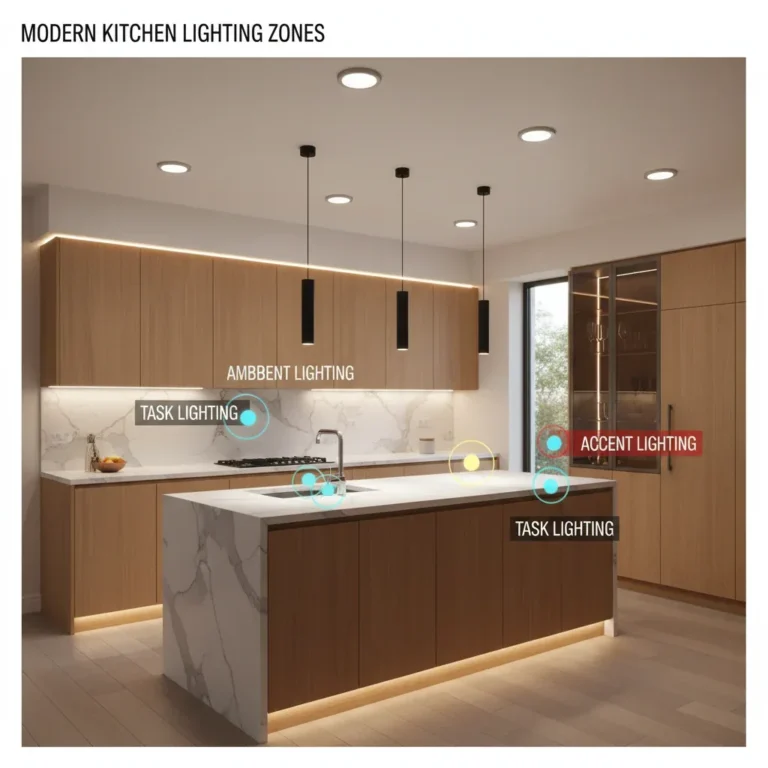
- Lighting: This is often overlooked, but poor lighting is a recipe for mistakes (and accidents). Your kitchen island should be well-lit, with task lighting focused on key areas like the cook zone and prep zone. Avoid harsh overhead lighting, it creates glare and shadows that can make it hard to see.
- Ventilation: Heat and smoke are inevitable in a high-volume kitchen, but they don’t have to be unbearable. Make sure your island is under a properly sized hood with adequate ventilation. This isn’t just about comfort, it’s about safety. Poor ventilation can lead to heat exhaustion, respiratory issues, and even fires.
I’ll be honest: I’ve worked in kitchens where ergonomics were an afterthought. The result? Aches, pains, and a team that was constantly exhausted. It’s not just about the physical toll, it’s about morale. When your team is comfortable, they’re happier, more productive, and less likely to make mistakes. And in a high-volume kitchen, mistakes can be costly.
Here’s a question I’ve been wrestling with: How do you balance ergonomics with the need for speed? For example, a lower counter might be more comfortable for prep work, but it could slow down your team if they’re constantly bending down. Maybe the answer is to design for the average height of your team, or to use adjustable-height counters. Or maybe it’s about training, teaching your team how to move efficiently within the space. What do you think?
Advanced Strategies: Taking Your Kitchen Island to the Next Level
5. The Art of Zoning: Divide and Conquer
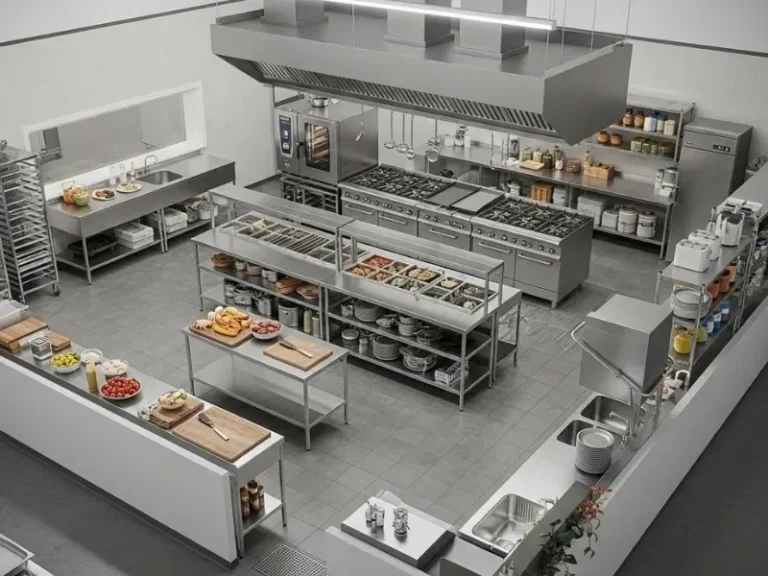
In a high-volume kitchen, zoning is your best friend. The idea is simple: divide your island into distinct zones, each with a specific purpose. This not only improves efficiency but also reduces cross-traffic and confusion. Here’s how to do it right:
- Hot Zone: This is where all the cooking happens, grills, ranges, fryers, and so on. In a high-volume kitchen, you might have multiple hot zones, each dedicated to a specific type of cooking (e.g., grill, sauté, fry).
- Cold Zone: This is where cold prep happens, salads, desserts, cold appetizers. It should be close to refrigeration and away from the heat of the hot zone.
- Prep Zone: As we discussed earlier, this is where ingredients are prepped and staged. It should be close to both the hot and cold zones, with easy access to refrigeration and dry storage.
- Plating Zone: This is where dishes are plated and garnished before being handed off to the expediter. It should be close to the hot zone but not so close that it creates congestion.
- Expediter Zone: This is the command center of your kitchen. The expediter calls out orders, coordinates between the kitchen and front of house, and ensures that dishes go out on time. This zone should have a clear view of the entire kitchen island, as well as easy access to the pass-through window.
The key to zoning is clarity. Each zone should have a distinct purpose, and your team should know exactly what happens where. This reduces confusion and keeps things moving smoothly. But, and this is a big but, you also need to account for flexibility. In a high-volume kitchen, things change fast. Maybe you’re slammed with appetizers one night and entrees the next. Your zones should be designed so that they can adapt to different needs.
Here’s where I get stuck: How do you balance zoning with the need for collaboration? For example, if your hot zone is completely separate from your cold zone, how do you handle dishes that require both? Maybe the answer is to design zones that overlap slightly, or to use mobile stations that can be moved as needed. Or maybe it’s about training your team to communicate effectively across zones. What’s your take?
6. The Power of Modular Design: Flexibility for the Future
Let’s talk about the future. No, not flying cars or robot chefs (though that would be cool). I’m talking about modular design. In a high-volume kitchen, your needs can change fast. Maybe you’re adding a new menu item that requires a specialized piece of equipment. Maybe you’re expanding your catering business and need more prep space. Or maybe you’re just trying to keep up with the latest trends. Whatever the case, your kitchen island should be able to adapt.
Modular design is all about flexibility. Instead of a fixed, permanent layout, you design your island with components that can be moved, reconfigured, or replaced as needed. Here’s how to make it work:
- Mobile Stations: These are workstations on wheels that can be moved around the kitchen as needed. For example, you might have a mobile prep station that can be rolled to the prep zone during peak hours and then moved out of the way when things slow down.
- Adjustable Counters: Counters that can be raised or lowered to accommodate different tasks or team members. This is especially useful in kitchens where multiple shifts use the same space.
- Modular Equipment: Equipment that can be reconfigured or expanded. For example, a modular range that can be extended with additional burners, or a refrigeration unit that can be expanded with additional shelves.
- Plug-and-Play Utilities: Electrical, gas, and water lines that can be easily reconfigured. This allows you to move equipment around without major renovations.
The beauty of modular design is that it future-proofs your kitchen. Instead of tearing everything out and starting from scratch every time your needs change, you can simply reconfigure what you’ve got. But, and this is a big but, modular design isn’t cheap. It requires upfront investment in flexible infrastructure, like adjustable counters and plug-and-play utilities. Is it worth it? That depends on your budget and your long-term plans.
I’ll admit, I’m torn on this one. On the one hand, modular design is a game-changer for high-volume kitchens. On the other, it’s a big investment, and not every restaurant can afford it. Maybe the answer is to start small, focus on the areas where you need the most flexibility, like prep and plating, and build from there. What do you think?
7. The Role of Technology: Smart Kitchens for Smart Chefs
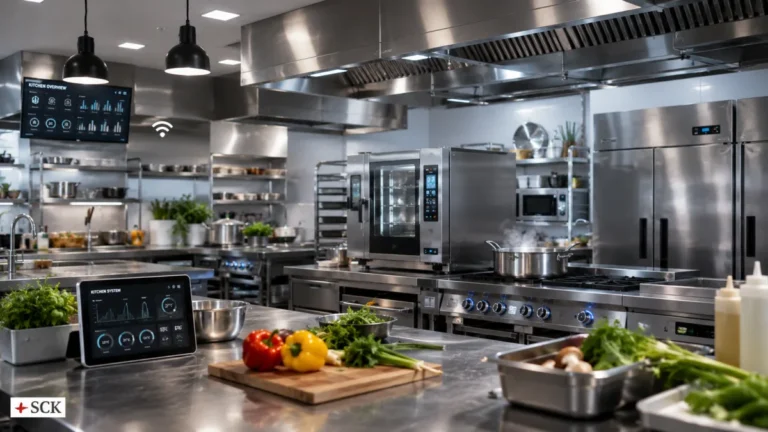
Let’s talk tech. In 2026, commercial kitchens aren’t just about knives and pans, they’re about smart technology. From automated ordering systems to AI-powered inventory management, technology is changing the way high-volume kitchens operate. And your kitchen island? It’s the perfect place to integrate these tools.
Here’s how technology can take your kitchen island to the next level:
- Digital Ordering Systems: These systems integrate with your POS to display orders in real-time on screens mounted above the kitchen island. This reduces the need for paper tickets and makes it easier for your team to stay on top of orders. Some systems even prioritize orders based on urgency, so your team knows what to focus on first.
- Inventory Management: Smart scales and sensors can track ingredient usage in real-time, alerting you when it’s time to reorder. This reduces waste and ensures that you never run out of a key ingredient during a busy shift.
- Temperature Monitoring: Wireless sensors can monitor the temperature of your refrigeration units, hot holding stations, and even individual dishes. This ensures food safety and reduces the risk of spoilage.
- Automated Cooking: Some high-volume kitchens are using automated cooking equipment, like robotic arms or smart ovens, to handle repetitive tasks. This frees up your team to focus on more complex dishes.
- Energy Management: Smart thermostats and energy monitors can optimize your kitchen’s energy usage, reducing costs and environmental impact.
The key here is integration. Your technology should work seamlessly with your kitchen island layout, not against it. For example, if you’re using a digital ordering system, make sure the screens are mounted where your team can see them without having to turn away from their workstations. If you’re using automated cooking equipment, make sure it’s placed where it won’t create bottlenecks.
I’ll be honest: I’m still wrapping my head around some of this tech. It’s exciting, but it’s also a lot to take in. And let’s not forget the learning curve. Your team will need training to use these tools effectively, and that takes time. Is it worth it? For some kitchens, absolutely. For others, maybe not. It all depends on your needs and your budget.
Here’s a question I’ve been pondering: How do you balance technology with the human element? A kitchen is a place of creativity and collaboration, and I worry that too much tech could make it feel sterile or impersonal. Maybe the answer is to use technology to handle the repetitive tasks, freeing up your team to focus on the creative aspects of cooking. What’s your take?
8. The Importance of Safety: Don’t Let Your Kitchen Island Become a Hazard
Let’s talk about safety. In a high-volume kitchen, hazards are everywhere, hot surfaces, sharp knives, slippery floors. Your kitchen island is no exception. If it’s not designed with safety in mind, it can become a liability-for your team, your customers, and your business.
Here’s how to design a kitchen island that’s safe as well as efficient:
- Non-Slip Surfaces: The last thing you want is for your team to slip and fall while carrying a hot pan. Use non-slip flooring around your island, and consider non-slip mats in high-traffic areas.
- Clear Pathways: Your island should have clear pathways for your team to move around. This means no obstacles (like trash cans or equipment) in the way, and enough space between stations to avoid collisions.
- Fire Safety: Your island should be equipped with fire suppression systems, especially in the hot zone. This includes fire extinguishers, sprinklers, and hood suppression systems. Make sure these are easily accessible and well-maintained.
- Ergonomic Design: As we discussed earlier, ergonomics isn’t just about comfort, it’s about safety. A well-designed island reduces the risk of repetitive strain injuries, like carpal tunnel or back pain.
- Proper Ventilation: Poor ventilation can lead to heat exhaustion, respiratory issues, and even fires. Make sure your island is under a properly sized hood with adequate ventilation.
- Emergency Exits: In case of an emergency, your team needs to be able to get out quickly. Make sure your island doesn’t block any emergency exits, and that pathways to exits are clear.
Safety isn’t just about avoiding accidents, it’s about compliance. Most cities and states have strict regulations for commercial kitchens, and failing to comply can result in fines, shutdowns, or even lawsuits. For example, the National Fire Protection Association (NFPA) has specific guidelines for fire suppression systems, and the Occupational Safety and Health Administration (OSHA) has regulations for ergonomics and workplace safety. Make sure you’re familiar with these regulations before designing your island.
I’ll be honest: safety isn’t the most exciting topic, but it’s one of the most important. A safe kitchen is a productive kitchen, and a productive kitchen is a profitable kitchen. So, if you’re designing (or redesigning) your island, don’t skimp on safety. It’s not worth the risk.
Here’s a question I’ve been grappling with: How do you balance safety with efficiency? For example, wider pathways might be safer, but they also take up valuable space. Maybe the answer is to prioritize safety in high-risk areas, like the hot zone, and optimize efficiency in lower-risk areas, like the prep zone. What do you think?
Putting It All Together: Designing Your High-Volume Kitchen Island
9. Step-by-Step: From Concept to Reality
Alright, let’s get practical. You’ve got the principles, the strategies, and the inspiration. Now it’s time to design your kitchen island. Here’s a step-by-step guide to turning your vision into reality:
- Assess Your Needs: Start by assessing your menu, your volume, and your team. What dishes do you serve most often? How many covers do you do on a busy night? What are your team’s biggest pain points? This will help you identify your priorities.
- Map Your Space: Measure your kitchen and create a scale drawing. This will help you visualize your layout and identify potential challenges. Don’t forget to account for things like doorways, windows, and utility lines.
- Define Your Zones: Based on your needs assessment, define your zones (e.g., hot, cold, prep, plating). Think about how these zones will interact with each other and with the rest of your kitchen.
- Choose Your Equipment: Make a list of the equipment you’ll need in each zone. Prioritize the essentials, and think about how you can incorporate the nice-to-haves without overcrowding your island.
- Design for Flow: Arrange your zones and equipment to create a seamless workflow. Remember the power triangle: prep, cook, serve. The closer these zones are to each other, the faster your team can move.
- Incorporate Ergonomics: Design your island with your team’s comfort and safety in mind. This means adjustable-height counters, non-slip surfaces, and clear pathways.
- Plan for Technology: If you’re incorporating smart technology, plan for it now. This includes things like digital ordering screens, inventory sensors, and automated cooking equipment.
- Future-Proof Your Design: Think about how your needs might change in the future. Can your island adapt to new menu items, increased volume, or new technology? Modular design can help here.
- Consult the Experts: Before finalizing your design, consult with a kitchen designer, an equipment specialist, and your team. They can offer valuable insights and help you avoid costly mistakes.
- Test and Iterate: Once your island is installed, test it out. Run a few busy shifts and see how it performs. Are there bottlenecks? Are your team members comfortable? Be prepared to make adjustments as needed.
I’ll admit, this process can feel overwhelming. There’s a lot to consider, and it’s easy to get bogged down in the details. But here’s the thing: you don’t have to get it perfect on the first try. The best kitchen islands evolve over time, adapting to the needs of the team and the demands of the business. So, start with the basics, test it out, and iterate as needed.
Here’s a question I’ve been asking myself: How do you know when your design is “good enough”? At what point do you stop tweaking and start trusting the process? Maybe the answer is to set clear goals, like reducing ticket times by 20% or improving team morale, and measure your progress against those goals. What do you think?
10. Common Mistakes to Avoid (And How to Fix Them)
Even the best-laid plans can go awry. Here are some common mistakes I’ve seen in high-volume kitchen island layouts, and how to avoid them:
- Overcrowding: It’s tempting to pack as much equipment as possible into your island, but this can create clutter and slow things down. Instead, prioritize the essentials and leave room for your team to move.
- Ignoring Traffic Patterns: If your island doesn’t account for the natural flow of traffic in your kitchen, you’re asking for collisions. Map out your team’s movements and design your island accordingly.
- Poor Ventilation: Heat and smoke are inevitable in a high-volume kitchen, but they don’t have to be unbearable. Make sure your island is under a properly sized hood with adequate ventilation.
- Neglecting Ergonomics: A kitchen island that’s not ergonomic is a recipe for injuries and burnout. Design your island with your team’s comfort and safety in mind.
- Forgetting About Flexibility: Your needs will change over time, and your island should be able to adapt. Incorporate modular design elements, like mobile stations or adjustable counters, to future-proof your layout.
- Skipping the Testing Phase: Once your island is installed, test it out. Run a few busy shifts and see how it performs. Be prepared to make adjustments as needed.
- Not Consulting Your Team: Your team knows your kitchen better than anyone. Before finalizing your design, consult with them. They can offer valuable insights and help you avoid costly mistakes.
Here’s the thing: mistakes are inevitable. Even the best-designed kitchens have flaws. The key is to learn from them and make adjustments as needed. So, if you’re in the middle of designing your island and you realize you’ve made a mistake, don’t panic. It’s all part of the process.
I’ll be honest: I’ve made my fair share of mistakes in the kitchen. But each one has taught me something valuable. Maybe that’s the real lesson here-don’t be afraid to fail. The best kitchens are the ones that evolve, adapt, and improve over time.
Final Thoughts: The Kitchen Island as a Living, Breathing Entity
Let’s take a step back for a second. We’ve covered a lot of ground in this guide, from the basics of flow and zoning to the nitty-gritty of equipment placement and safety. But here’s the thing: your kitchen island isn’t just a static piece of equipment. It’s a living, breathing entity that evolves with your restaurant.
Think about it. Your menu changes. Your volume fluctuates. Your team grows and adapts. Your kitchen island should do the same. That’s why it’s so important to design for flexibility, to test and iterate, and to listen to your team. The best kitchen islands aren’t the ones that are perfect on day one, they’re the ones that get better over time.
So, if you’re in the middle of designing (or redesigning) your kitchen island, don’t stress about getting it perfect. Start with the basics, test it out, and be prepared to make adjustments. And most importantly, listen to your team. They’re the ones who use the island every day, and they’ll know what’s working and what’s not.
Here’s a question to leave you with: What’s one small change you could make to your kitchen island today that would have a big impact on your team’s efficiency and morale? Maybe it’s rearranging a few pieces of equipment, or adding a mobile station, or even just clearing out some clutter. Whatever it is, I encourage you to give it a try. You might be surprised by the results.
And hey, if you’re feeling overwhelmed, remember Marco. His kitchen wasn’t perfect, but it was a starting point. And with a little time, effort, and creativity, he turned it into a well-oiled machine. You can do the same.
FAQ: Your Burning Questions About Commercial Kitchen Island Layouts
Q: How much space do I need for a high-volume kitchen island?
A: The amount of space you need depends on your menu, your volume, and your team. As a general rule, you’ll want at least 4-5 feet of clearance around your island to allow for movement and safety. For a high-volume kitchen, aim for an island that’s at least 8-10 feet long and 3-4 feet deep. This gives you enough space for multiple stations without overcrowding. If you’re tight on space, consider a U-shaped or L-shaped layout to maximize efficiency.
Q: What’s the best material for a commercial kitchen island?
A: The best material for your kitchen island depends on your needs and budget. Stainless steel is the most popular choice for commercial kitchens because it’s durable, easy to clean, and resistant to heat and bacteria. However, it can be expensive. Other options include butcher block (great for prep work but requires more maintenance) and granite (durable and heat-resistant but heavy and expensive). If you’re on a tight budget, you can also consider laminate or solid surface materials, but keep in mind that they may not hold up as well in a high-volume environment.
Q: How do I balance efficiency with flexibility in my kitchen island layout?
A: Balancing efficiency and flexibility is all about modular design. Start by designing your island for efficiency, prioritize the essentials, create clear zones, and optimize your workflow. Then, incorporate flexible elements, like mobile stations, adjustable-height counters, and plug-and-play utilities. This allows you to adapt your island to changing needs without sacrificing efficiency. It’s also a good idea to leave some open space for future additions, like new equipment or technology.
Q: What’s the biggest mistake you see in commercial kitchen island layouts?
A: The biggest mistake I see is overcrowding. It’s tempting to pack as much equipment as possible into your island, but this can create clutter, slow things down, and increase the risk of accidents. Instead, prioritize the essentials and leave room for your team to move. Remember, your kitchen island isn’t just a countertop, it’s a workspace. The more open and uncluttered it is, the more efficient your team will be.
@article{the-ultimate-guide-to-commercial-kitchen-island-layouts-for-high-volume-restaurants-efficiency-meets-innovation,
    title   = {The Ultimate Guide to Commercial Kitchen Island Layouts for High-Volume Restaurants: Efficiency Meets Innovation},
    author  = {Chef's icon},
    year    = {2026},
    journal = {Chef's Icon},
    url     = {https://chefsicon.com/commercial-kitchen-island-layouts-for-high-volume-restaurants/}
}