The Best Fluffy Pancakes recipe you will fall in love with. Full of tips and tricks to help you make the best pancakes.

Let me tell you something, I’ve seen my fair share of kitchen disasters. Not the kind where someone burns the garlic bread (though that’s tragic enough), but the kind where a neglected hood system turns a busy restaurant into a fire hazard. A few years back, I was consulting for a small bistro in Nashville, and their hood system was, well, let’s just say it was more grease than metal. The owner shrugged it off-”It’s been fine so far”-until the health inspector walked in. Needless to say, that was a *very* expensive shrug.
That’s why I’m writing this. A hood system safety audit isn’t just about ticking boxes for compliance; it’s about keeping your staff safe, your kitchen running smoothly, and your insurance premiums from skyrocketing. If you’re reading this, you probably already know that. But where do you even start? Is it as simple as wiping down the filters and calling it a day? (Spoiler: No.) Or is there a method to the madness? I’m still figuring some of this out myself, to be honest. But after working with dozens of kitchens, from food trucks to high-end hotels, I’ve pieced together a step-by-step process that actually works. And today, I’m sharing it with you.
By the end of this guide, you’ll know:
- Why hood system audits are non-negotiable (and what happens when you skip them)
- How to prep your kitchen and team for a thorough audit
- The exact tools and checklists you’ll need
- A detailed walkthrough of every component to inspect
- How to document findings and create an action plan
- Common mistakes even pros make (and how to avoid them)
So, grab a notebook, or, let’s be real, your phone, and let’s dive in. And if you’re thinking, *”This seems like a lot of work,”* well, yeah. It is. But trust me, it’s a lot less work than explaining to the fire marshal why your kitchen looks like a scene from *Backdraft*.
Why Hood System Audits Are a Big Deal (And What Happens When You Ignore Them)
Before we get into the nitty-gritty, let’s talk about why this matters. I get it, hood systems aren’t exactly the sexiest topic in the culinary world. They’re not the sourdough starter everyone’s Instagramming or the sous vide machine that makes steaks taste like heaven. But here’s the thing: your hood system is the unsung hero of your kitchen. It’s the reason your staff isn’t choking on smoke, your walls aren’t covered in grease, and your customers aren’t complaining about the “interesting” smell wafting from the kitchen.
A hood system safety audit is essentially a health check for this hero. It’s about making sure every part of the system, from the filters to the fans, the ductwork to the fire suppression system, is doing its job. And when it’s not? That’s when things get dangerous. I’ve seen kitchens where the hood system was so clogged with grease that the fans were working at half capacity, pulling smoke and heat *into* the kitchen instead of out. I’ve seen ductwork so neglected that it was basically a grease bomb waiting to go off. And I’ve seen the aftermath of fires that started because someone thought, *”Eh, it’ll be fine.”* (Spoiler: It wasn’t.)
But it’s not just about fire hazards. A poorly maintained hood system can lead to:
- Poor air quality: Ever walked into a kitchen and immediately started coughing? That’s not just the onions, it’s likely a hood system that’s not pulling its weight. Over time, that kind of air quality can lead to respiratory issues for your staff, not to mention an unpleasant experience for customers.
- Health code violations: Health inspectors don’t mess around when it comes to hood systems. A clogged filter or a malfunctioning fan can earn you a violation faster than you can say “line check.” And those violations? They add up. Fines, temporary closures, even lawsuits if someone gets hurt.
- Higher energy costs: A hood system that’s not working efficiently has to work harder to do its job. That means higher energy bills, which, let’s be honest, no one wants. Especially not when you’re already operating on razor-thin margins.
- Equipment damage: Grease buildup doesn’t just stay in the hood, it can seep into your equipment, shortening its lifespan and leading to costly repairs or replacements. I’ve seen grills, fryers, and even refrigeration units ruined because the hood system wasn’t doing its job.
So, is a hood system safety audit really worth the time and effort? Absolutely. But here’s the thing, I’m not going to sugarcoat it. Conducting a thorough audit isn’t a quick 10-minute task. It’s a process. And if you’ve never done one before, it can feel overwhelming. But that’s why we’re breaking it down step by step. Because the more you know, the less intimidating it becomes. And the less intimidating it is, the more likely you are to actually do it. Which, at the end of the day, is what matters.
Prepping for Your Hood System Safety Audit: The Checklist You Can’t Skip
Alright, let’s talk prep. You wouldn’t jump into a deep fryer without preheating it first, right? (Please tell me you wouldn’t.) The same goes for a hood system audit. Rushing in without preparation is a recipe for missing critical issues, or worse, causing new ones. So, before you even think about climbing a ladder or poking around in the ductwork, let’s get your ducks in a row.
1. Gather Your Tools (And No, a Flashlight Isn’t Enough)
First things first: you need the right tools. And no, your phone’s flashlight app isn’t going to cut it. Here’s what you’ll actually need:
- Inspection mirror: A telescoping mirror with a light is a game-changer for getting a look at those hard-to-reach spots in the ductwork. Trust me, you don’t want to be the person who tries to eyeball it from below.
- Grease gauge: This little tool measures grease buildup on surfaces. It’s not just about how *thick* the grease is, it’s about how *sticky* it is. A gauge will tell you when it’s time to clean (or when you’re already past due).
- Anemometer: Fancy word, simple tool. This measures airflow velocity, which is crucial for making sure your fans are pulling air at the right speed. If the airflow is too weak, your system isn’t doing its job. Too strong? You’re wasting energy (and money).
- Thermometer: Not just any thermometer, a probe thermometer to check temperatures in the ductwork. High temps can indicate a fire hazard, especially if there’s grease buildup.
- Camera: A good camera (or your phone, if it’s decent) is essential for documenting issues. Take photos of everything, especially the stuff that looks *fine*. You’ll thank me later when you’re reviewing your notes.
- Personal protective equipment (PPE): Gloves, safety glasses, and a respirator. Grease is gross, and ductwork can be full of dust, mold, and other nasties. Protect yourself.
- Ladder or lift: Depending on how high your hood system is, you might need a ladder. If you’re dealing with a large commercial kitchen, a lift might be necessary. Don’t skimp here, safety first.
- Checklist: More on this in a second, but you’ll want a physical or digital checklist to keep track of what you’re inspecting and what you find.
Is this the best tool list? Maybe, maybe not. I’ve seen some kitchens get by with less, but I’ve also seen audits go sideways because someone thought they could wing it. If you’re serious about this, invest in the right tools. They’re not cheap, but they’re a lot cheaper than a fire.
2. Schedule the Audit (And Tell Your Team What’s Up)
Timing is everything. You don’t want to conduct an audit during peak hours, your staff will be stressed, the kitchen will be chaotic, and you won’t get an accurate read on how the system performs under normal conditions. But you also don’t want to do it when the kitchen is completely shut down. Why? Because some issues, like airflow problems, only show up when the system is under load. So, when’s the best time?
Ideally, schedule the audit during a slow period, like a weekday morning or afternoon. That way, you can run the hood system with a few appliances on (a grill, a fryer, etc.) without overwhelming the kitchen. And here’s a pro tip: if you can, schedule it right before a deep clean. That way, if you find major issues, you can address them immediately.
But here’s the thing, you can’t just spring this on your team. Communication is key. Let your staff know what’s happening, why it’s happening, and how it might affect their workflow. If you’re shutting down certain appliances for testing, make sure they know in advance. And if you’re bringing in an outside inspector (more on that later), introduce them to the team. The last thing you want is for someone to freak out because there’s a stranger poking around the kitchen.
I’ve seen audits go south because the team wasn’t prepared. One time, a line cook unknowingly turned on a fryer while I was inspecting the hood above it. Let’s just say I got a *very* up-close look at how well the grease filters were working. (Spoiler: They weren’t.)
3. Review the Manuals (Yes, Really)
I know, I know. Manuals are boring. But here’s the thing: every hood system is different. The manufacturer’s guidelines will tell you what’s *normal* for your specific system, things like the correct airflow velocity, the recommended cleaning schedule, and the signs of wear and tear to watch for. Skipping this step is like trying to diagnose a car problem without knowing what model it is. You might get lucky, but you’re more likely to miss something critical.
If you don’t have the manuals on hand (and let’s be honest, who does?), most manufacturers post them online. A quick search with your system’s model number should do the trick. If you can’t find it, call the manufacturer. They’ll either send you a copy or walk you through the key details over the phone.
And while you’re at it, pull up any previous inspection reports. If you’ve had audits done in the past, review them. What issues were noted? Were they addressed? If not, why? This is your chance to follow up on past problems and make sure they’re actually fixed.
4. Create (Or Steal) a Checklist
You wouldn’t cook a complicated dish without a recipe, right? The same goes for an audit. A checklist keeps you organized, ensures you don’t miss anything, and gives you a clear record of what you inspected and what you found. You can create your own, or you can use one of the many templates available online. The National Fire Protection Association (NFPA) and the International Kitchen Exhaust Cleaning Association (IKECA) both offer checklists that are pretty comprehensive.
Here’s what your checklist should include, at a minimum:
- Hood and filters: Are they clean? Are they damaged? Are they properly installed?
- Ductwork: Is there grease buildup? Are there any gaps or leaks? Is the insulation intact?
- Fans and motors: Are they running smoothly? Are there any unusual noises or vibrations? Is the airflow correct?
- Fire suppression system: Is it functional? Are the nozzles clear? Is the system properly connected to the gas and electrical shutoffs?
- Makeup air system: Is it providing enough air to replace what’s being exhausted? Are the vents clear?
- Exhaust outlets: Are they clear of obstructions? Are they properly directed away from the building and other air intakes?
- Electrical components: Are the wires intact? Are there any signs of overheating or corrosion?
I’m torn between keeping this simple and making sure you don’t miss anything. Ultimately, I think it’s better to over-prepare. So, if you’re not sure what to include, err on the side of more detail. You can always streamline later.
The Step-by-Step Hood System Safety Audit: What to Inspect and How
Alright, now that you’re prepped, let’s get into the actual audit. This is where the rubber meets the road, or, in this case, where the grease meets the filter. I’m going to walk you through each component of the hood system, what to look for, and how to test it. And don’t worry, I’ll call out the red flags along the way.
1. Inspecting the Hood and Filters: The First Line of Defense
The hood and filters are the most visible parts of your system, but that doesn’t mean they’re the easiest to inspect. In fact, because they’re so accessible, they’re often overlooked. But here’s the thing: if your filters are clogged or your hood is damaged, the rest of your system is already compromised.
Start by turning off the hood system. I know, I know, you’re thinking, *”But how will I know if it’s working?”* Trust me, you don’t want to be poking around in there while the fans are running. Safety first.
Now, let’s talk filters. Most hoods use baffle filters, which are designed to trap grease while allowing air to flow through. Here’s what you’re looking for:
- Grease buildup: Use your grease gauge to measure how much grease is on the filters. If it’s more than 1/8 inch thick, it’s time to clean them. If it’s sticky or dripping, that’s a sign they’ve been neglected for a while.
- Damage: Look for dents, warping, or holes in the filters. Even small damage can reduce their effectiveness. And if they’re not fitting snugly in the hood, they’re not doing their job.
- Proper installation: Filters should be installed at a slight angle (usually around 45 degrees) to allow grease to drain into the collection tray. If they’re flat or upside down, they’re not working correctly.
- Collection tray: Check the tray at the bottom of the hood. Is it full of grease? Is it leaking? If so, it’s time to empty and clean it. And while you’re at it, check for any signs of corrosion or damage.
Now, let’s move to the hood itself. Here’s what to inspect:
- Grease buildup: Use your inspection mirror to check the interior of the hood. Grease should not be dripping from the hood or pooling on surfaces. If it is, that’s a fire hazard.
- Damage: Look for dents, cracks, or holes in the hood. Even small damage can affect airflow and create fire risks.
- Seals and gaskets: Check the seals around the edges of the hood. Are they intact? Are they properly attached? If not, air (and grease) can escape, reducing the system’s efficiency.
- Fire suppression system: Most hoods have a fire suppression system built in. Check the nozzles to make sure they’re not clogged or damaged. And test the system (more on that later).
Is this the best way to inspect the hood and filters? Maybe not. But it’s a start. And honestly, the biggest mistake I see people make is rushing through this part. They assume that because the filters *look* clean, they’re fine. But grease buildup isn’t always visible. That’s why tools like the grease gauge are so important, they give you an objective measure of what’s going on.
2. Diving Into the Ductwork: Where Grease Goes to Hide
If the hood and filters are the first line of defense, the ductwork is the unsung hero. It’s also the part of the system that’s most likely to be neglected. Why? Because it’s out of sight, out of mind. But here’s the thing: grease doesn’t just disappear. It builds up in the ductwork, and if it’s not cleaned regularly, it can turn into a serious fire hazard.
Inspecting the ductwork is trickier than inspecting the hood, but it’s not impossible. Here’s how to do it:
First, turn off the hood system and make sure it’s locked out. You don’t want anyone accidentally turning it on while you’re in there. Then, grab your inspection mirror and flashlight. You’re going to need them.
Start at the hood and work your way toward the exhaust outlet. Here’s what to look for:
- Grease buildup: Use your grease gauge to measure the thickness of the grease on the walls of the ductwork. If it’s more than 1/8 inch thick, it’s time for a deep clean. And if it’s dripping or pooling, that’s a major red flag.
- Damage: Look for dents, holes, or gaps in the ductwork. Even small damage can affect airflow and create fire risks. And if the ductwork is insulated, check for signs of wear or damage to the insulation.
- Leaks: Check the seams and joints in the ductwork. Are they sealed properly? Are there any gaps where air (and grease) can escape? If so, that’s a problem.
- Obstructions: Make sure there’s nothing blocking the ductwork. I’ve seen everything from dead birds to construction debris in there. If something’s blocking the airflow, it’s not just a fire hazard, it’s also making your system work harder than it needs to.
- Corrosion: Check for signs of rust or corrosion, especially in older systems. Corrosion can weaken the ductwork and create leaks.
Now, here’s the thing about ductwork: it’s not always accessible. In some kitchens, the ductwork runs through walls or ceilings, making it impossible to inspect without cutting into the structure. If that’s the case, you’ll need to rely on other signs, like airflow velocity and temperature, to gauge whether there’s a problem. But if you *can* access the ductwork, don’t skip this step. It’s one of the most important parts of the audit.
I’m torn between telling you to be thorough and telling you to be safe. Ductwork can be dangerous, it’s dark, it’s cramped, and it’s full of grease and other nasties. If you’re not comfortable inspecting it yourself, hire a professional. It’s not worth the risk.
3. Testing the Fans and Motors: The Heart of the System
The fans and motors are what keep your hood system running. If they’re not working properly, the whole system fails. And here’s the thing: fans and motors don’t always give you obvious warning signs. They might be running, but they might not be running *well*. That’s why testing them is so important.
Start by turning the hood system on. Listen to the fans, are they making any unusual noises? A grinding or squealing sound could indicate a problem with the bearings or belts. A rattling sound could mean something’s loose. And if the fan isn’t spinning at all? Well, that’s a problem.
Next, use your anemometer to measure the airflow velocity. Here’s how:
- Turn on the hood system and let it run for a few minutes to stabilize.
- Hold the anemometer in the airflow path, making sure it’s not obstructed by anything.
- Take multiple readings at different points in the hood to get an average.
The airflow velocity should match the manufacturer’s recommendations. If it’s too low, that could mean the filters are clogged, the ductwork is blocked, or the fan isn’t working properly. If it’s too high, that could mean the system is overcompensating for a problem elsewhere (like a leak in the ductwork).
Now, let’s talk about the motors. Here’s what to check:
- Temperature: Use your thermometer to check the temperature of the motor. If it’s too hot to touch, that’s a sign it’s working too hard. Overheating can lead to motor failure, so if it’s too hot, you’ll need to figure out why.
- Vibration: Place your hand on the motor housing. Does it feel like it’s vibrating more than usual? Excessive vibration can indicate a problem with the bearings or belts.
- Belts and pulleys: If your system uses belts and pulleys, check them for signs of wear or damage. Are the belts cracked or frayed? Are the pulleys aligned properly? If not, they’ll need to be replaced.
- Electrical connections: Check the wires and connections for signs of overheating or corrosion. If the wires are discolored or the connections are loose, that’s a fire hazard.
Testing the fans and motors is one of those things that seems simple but can be surprisingly complex. I’ve seen kitchens where the fans were running, but the airflow was all wrong because the belts were slipping. And I’ve seen motors that were overheating because the ductwork was clogged. The point is, don’t assume that because the system is *on*, it’s working properly. Test it.
4. Checking the Fire Suppression System: Your Last Line of Defense
If all else fails, your fire suppression system is what keeps a small grease fire from turning into a full-blown disaster. And yet, it’s one of the most overlooked parts of the hood system. Why? Because it’s not something you use every day. But here’s the thing: when you *do* need it, you *really* need it to work.
Testing the fire suppression system is a two-part process: visual inspection and functional testing. Let’s start with the visual inspection.
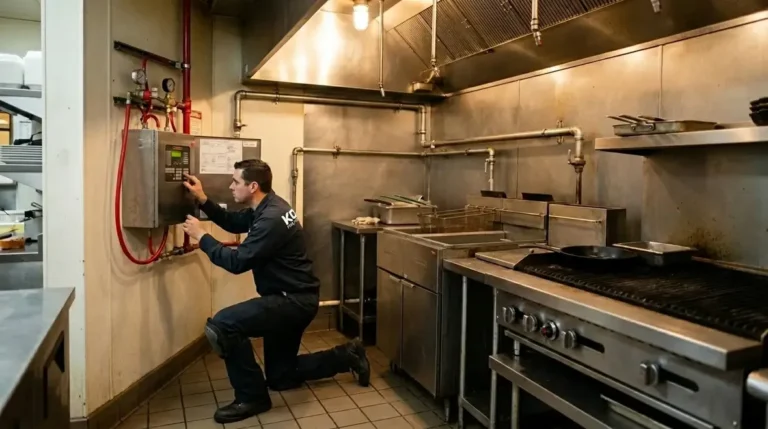
First, turn off the hood system and make sure the gas and electrical shutoffs are accessible. Then, check the following:
- Nozzles: Are they clear of obstructions? Are they properly aimed at the appliances they’re supposed to protect? If they’re clogged or misaligned, they won’t work when you need them.
- Piping: Check the piping for signs of damage or corrosion. Are there any leaks or cracks? If so, the system won’t function properly.
- Tank pressure: Most fire suppression systems use a pressurized tank. Check the gauge to make sure the pressure is within the manufacturer’s recommended range. If it’s too low, the system won’t work.
- Activation mechanism: Is the pull station or automatic activation mechanism accessible and unobstructed? If it’s blocked or damaged, you won’t be able to activate the system when you need it.
- Signage: Are the warning signs and instructions clearly visible? If not, someone might not know how to use the system in an emergency.
Now, let’s talk about functional testing. This is where things get a little tricky. Most fire suppression systems are designed to be tested by professionals, and for good reason, if something goes wrong, you could accidentally discharge the system, which is messy, expensive, and potentially dangerous. But that doesn’t mean you can’t do a basic test.
Here’s how:
- Notify everyone: Make sure your staff knows you’re testing the system. The last thing you want is for someone to think there’s a real fire.
- Turn off the gas and electrical supply: You don’t want the system to actually shut off the gas or electricity during the test.
- Activate the system: Pull the manual activation handle or trigger the automatic activation (if your system has one). The system should discharge a small amount of agent (usually water or a chemical) to test the nozzles.
- Check the shutoffs: The system should automatically shut off the gas and electrical supply to the appliances. Make sure this happens.
- Reset the system: After the test, reset the system according to the manufacturer’s instructions.
If the system doesn’t activate, or if it activates but doesn’t shut off the gas and electricity, you’ve got a problem. And if the nozzles don’t discharge properly, that’s another red flag. In either case, you’ll need to call a professional to inspect and repair the system.
I’m torn between telling you to test the system yourself and telling you to leave it to the pros. Ultimately, I think a basic visual inspection is something you can (and should) do yourself. But when it comes to functional testing, it’s better to err on the side of caution. If you’re not 100% sure what you’re doing, call a professional. It’s not worth the risk.
5. Evaluating the Makeup Air System: The Unsung Hero of Airflow
Here’s something a lot of people don’t realize: your hood system doesn’t just pull air *out* of the kitchen, it also relies on air being pulled *in*. That’s where the makeup air system comes in. If it’s not working properly, your hood system won’t work properly either. And yet, it’s one of the most overlooked parts of the audit.
The makeup air system is designed to replace the air that’s being exhausted by the hood. Without it, your kitchen would be under negative pressure, which can cause a whole host of problems, like doors slamming shut, smoke lingering in the kitchen, and even carbon monoxide buildup. So, how do you know if it’s working?
Start by turning on the hood system and letting it run for a few minutes. Then, check the following:
- Airflow: Stand near the makeup air vents. Can you feel air being pulled in? If not, there’s a problem. Use your anemometer to measure the airflow velocity. It should match the manufacturer’s recommendations.
- Vents: Are the vents clear of obstructions? Are they properly sized for the kitchen? If they’re too small or blocked, they won’t provide enough air.
- Temperature: Use your thermometer to check the temperature of the air coming in. If it’s too hot or too cold, that could indicate a problem with the system.
- Noise: Listen to the makeup air system. Is it making any unusual noises? A grinding or squealing sound could indicate a problem with the fan or motor.
Now, here’s the thing: makeup air systems can be tricky. They’re often tied into the building’s HVAC system, which means they’re not always under your control. If you’re renting your space, you might need to coordinate with your landlord or building manager to inspect and maintain the system. But even if you don’t have direct control, it’s still important to know how it works and what to look for.
I’ve seen kitchens where the makeup air system was completely blocked by construction debris, and no one even realized it. And I’ve seen kitchens where the system was undersized for the space, leading to poor airflow and smoke-filled dining rooms. The point is, don’t assume that because you can’t see the makeup air system, it’s not important. It is. And it’s worth inspecting.
6. Inspecting the Exhaust Outlets: The Final Frontier
The exhaust outlets are where all the air (and grease) from your hood system finally escapes. And yet, they’re often the most neglected part of the system. Why? Because they’re usually on the roof or the side of the building, far away from the daily hustle and bustle of the kitchen. But here’s the thing: if the exhaust outlets are blocked or damaged, your entire hood system is compromised.
Inspecting the exhaust outlets is a two-part process: visual inspection and airflow testing. Let’s start with the visual inspection.
First, locate the exhaust outlets. They’re usually on the roof or the side of the building, near the kitchen. Once you’ve found them, check the following:
- Obstructions: Are the outlets clear of debris, bird nests, or other obstructions? If not, the airflow will be restricted, and your system won’t work properly.
- Damage: Look for signs of damage or corrosion. Are there any holes or gaps in the outlets? If so, air (and grease) can escape, reducing the system’s efficiency.
- Direction: Make sure the outlets are properly directed away from the building and other air intakes. If they’re blowing air back into the building, that’s a problem.
- Grease buildup: Use your grease gauge to measure the thickness of the grease on the outlets. If it’s more than 1/8 inch thick, it’s time to clean them.
Now, let’s talk about airflow testing. Turn on the hood system and let it run for a few minutes. Then, use your anemometer to measure the airflow velocity at the exhaust outlets. It should match the manufacturer’s recommendations. If it’s too low, that could mean there’s a blockage in the ductwork or the fans aren’t working properly. If it’s too high, that could mean the system is overcompensating for a problem elsewhere.
Inspecting the exhaust outlets is one of those things that seems simple but can be surprisingly complex. I’ve seen kitchens where the outlets were completely blocked by bird nests, and no one even realized it. And I’ve seen kitchens where the outlets were blowing air back into the building, leading to smoke-filled dining rooms. The point is, don’t assume that because the outlets are *out of sight*, they’re *out of mind*. They’re not. And they’re worth inspecting.
7. Documenting Your Findings: The Good, the Bad, and the Ugly
Alright, you’ve inspected every part of your hood system. You’ve found some things that are working well, some things that need a little TLC, and maybe a few things that are downright scary. Now what? It’s time to document your findings.
Documentation is crucial for a few reasons. First, it gives you a clear record of what you inspected and what you found. That’s important for tracking progress over time, if you find the same issues year after year, you know you’re not addressing them properly. Second, it’s essential for compliance. If you’re ever inspected by the health department or the fire marshal, they’ll want to see your documentation. And third, it helps you create an action plan. Once you know what’s wrong, you can figure out how to fix it.
Here’s what your documentation should include:
- Date and time of the audit: When did you conduct the audit? Who was present?
- Inspection checklist: What did you inspect? What did you find? Be as detailed as possible. If you took photos, include them in your documentation.
- Airflow and temperature readings: Include the readings from your anemometer and thermometer. Compare them to the manufacturer’s recommendations.
- Grease measurements: Include the measurements from your grease gauge. Note where the grease buildup was the worst.
- Issues found: List every issue you found, no matter how small. Include photos if possible.
- Action plan: What needs to be done to fix the issues? Who’s responsible for doing it? When will it be done?
I’m torn between telling you to keep it simple and telling you to be thorough. Ultimately, I think it’s better to over-document. The more detail you include, the easier it will be to track progress and address issues. And if you’re ever inspected, you’ll be glad you have a clear record of what you’ve done.
Now, here’s the thing: documentation isn’t just about writing things down. It’s about creating a system for tracking and addressing issues. That means setting deadlines, assigning responsibilities, and following up to make sure things get done. If you find a problem, don’t just note it, fix it. And if you can’t fix it yourself, hire someone who can.
8. Creating an Action Plan: Turning Findings Into Fixes
You’ve documented your findings. Now it’s time to turn them into an action plan. This is where the rubber meets the road, where you go from *”We have a problem”* to *”Here’s how we’re going to fix it.”*
Start by prioritizing the issues. Not all problems are created equal. Some are minor and can be fixed with a little elbow grease. Others are major and require professional help. Here’s how to prioritize:
- Fire hazards: Anything that poses an immediate fire risk should be at the top of your list. That includes grease buildup, damaged ductwork, and malfunctioning fire suppression systems.
- Health code violations: If an issue is likely to earn you a violation from the health department or the fire marshal, it should be a priority. That includes things like clogged filters, poor airflow, and damaged hoods.
- Equipment damage: If an issue is causing damage to your equipment (like grease buildup on grills or fryers), it should be addressed sooner rather than later.
- Energy efficiency: If an issue is causing your system to work harder than it needs to (like leaks in the ductwork or clogged filters), it should be fixed to save on energy costs.
Once you’ve prioritized the issues, it’s time to create an action plan. Here’s what that should include:
- What needs to be done: Be specific. Don’t just say *”Clean the filters.”* Say *”Remove and soak the filters in degreaser, then scrub and rinse them.”*
- Who’s responsible: Assign each task to a specific person. If you’re hiring a professional, include their contact information.
- Deadline: Set a deadline for each task. Be realistic, some things will take longer than others.
- Follow-up: Schedule a follow-up inspection to make sure the issues have been addressed. If they haven’t, figure out why and adjust your plan accordingly.
I’m torn between telling you to tackle everything at once and telling you to take it one step at a time. Ultimately, I think it’s better to focus on the most critical issues first. If you try to fix everything at once, you might get overwhelmed and end up not fixing anything. But if you focus on the biggest problems first, you’ll make the most impact.
And here’s a pro tip: don’t just fix the issues, prevent them from happening again. That means creating a maintenance schedule, training your staff, and investing in the right tools. If you find that your filters are clogging too quickly, maybe it’s time to upgrade to higher-quality filters. If your ductwork is constantly getting blocked, maybe it’s time to install a grease interceptor. The point is, don’t just put a band-aid on the problem. Fix it for good.
9. Scheduling Regular Audits: The Key to Long-Term Safety
Here’s the thing about hood system safety audits: they’re not a one-and-done deal. They’re something you need to do regularly. How regularly? That depends on a few factors, like how often you use your kitchen, what kind of cooking you do, and what the manufacturer recommends. But as a general rule, you should conduct a full audit at least once a year. And you should do a quick visual inspection every month.
Why? Because things change. Filters get clogged. Ductwork gets damaged. Fans wear out. And if you’re not inspecting your system regularly, you won’t catch these issues until it’s too late. I’ve seen kitchens that passed their annual audit with flying colors, only to have a major issue pop up a few months later because they weren’t doing regular inspections.
So, how do you create a schedule that works? Here’s what I recommend:
- Monthly visual inspections: Once a month, do a quick walkthrough of your hood system. Check the filters, the hood, and the ductwork for any obvious signs of damage or grease buildup. If you find anything, address it immediately.
- Quarterly deep cleans: Every three months, do a deep clean of your hood system. That means removing and soaking the filters, scrubbing the hood and ductwork, and checking the fans and motors. If you’re not comfortable doing this yourself, hire a professional.
- Annual full audits: Once a year, conduct a full audit of your hood system. That means inspecting every component, testing the airflow and temperature, and documenting your findings. If you’re not comfortable doing this yourself, hire a professional.
I’m torn between telling you to do it all yourself and telling you to hire a professional. Ultimately, I think it’s a mix of both. Some things, like monthly visual inspections, you can (and should) do yourself. But other things, like annual full audits, are best left to the pros. They have the tools, the experience, and the knowledge to do a thorough job.
And here’s the thing: regular audits aren’t just about safety. They’re also about efficiency. A well-maintained hood system runs more efficiently, which means lower energy costs and longer equipment life. So, while it might seem like a hassle, it’s actually an investment in your kitchen’s future.
10. Common Mistakes (And How to Avoid Them)
Alright, let’s talk about the elephant in the room: mistakes. We all make them. I’ve made plenty over the years, like the time I assumed a hood system was fine because the filters looked clean, only to find out later that the ductwork was clogged with grease. Or the time I forgot to test the fire suppression system, only to have it fail during an inspection. (That was a *very* awkward conversation with the fire marshal.)
The point is, mistakes happen. But the good news is, most of them are avoidable. Here are some of the most common mistakes I see, and how to avoid them:
- Skipping the prep work: I get it, prep is boring. But skipping it is a recipe for disaster. Always gather your tools, schedule the audit, and review the manuals before you start. It’ll save you time (and headaches) in the long run.
- Rushing through the inspection: A thorough audit takes time. Don’t rush it. Take your time, be methodical, and don’t skip anything. If you’re in a hurry, you’ll miss things.
- Assuming everything is fine: Just because something *looks* fine doesn’t mean it *is* fine. Use your tools, like the grease gauge and anemometer, to get an objective measure of what’s going on. And if you’re not sure, ask a professional.
- Ignoring the small stuff: Small issues can turn into big problems if they’re not addressed. Don’t ignore things like minor grease buildup or small dents in the ductwork. Fix them before they get worse.
- Not documenting your findings: Documentation is crucial. If you don’t write it down, it didn’t happen. Always document your findings, create an action plan, and follow up to make sure things get done.
- Doing it all yourself: Some things are best left to the pros. If you’re not comfortable inspecting the ductwork or testing the fire suppression system, hire someone who is. It’s not worth the risk.
- Forgetting to follow up: An audit is only as good as the action plan that follows it. If you find issues, don’t just note them, fix them. And if you can’t fix them yourself, hire someone who can.
I’m torn between telling you to be perfect and telling you to be realistic. Ultimately, I think it’s better to aim for progress, not perfection. You’re going to make mistakes. We all do. But the key is to learn from them and do better next time. And if you’re not sure about something, ask for help. There’s no shame in that.
Wrapping Up: The Audit Is Over, Now What?
Alright, you’ve made it to the end. You’ve inspected every part of your hood system, documented your findings, and created an action plan. Now what? Well, now it’s time to put that plan into action. And here’s the thing: the audit isn’t the end, it’s the beginning. It’s the first step in a long-term commitment to safety, efficiency, and compliance.
So, what’s next? Here’s what I recommend:
- Fix the critical issues first: Start with the things that pose an immediate fire risk or health code violation. Don’t put them off, address them now.
- Schedule regular maintenance: Create a maintenance schedule for your hood system. That means monthly visual inspections, quarterly deep cleans, and annual full audits.
- Train your staff: Make sure your staff knows how to use and maintain the hood system. That means training them on how to clean the filters, how to spot issues, and what to do in an emergency.
- Invest in the right tools: If you don’t already have them, invest in the tools you need to conduct regular audits. That includes things like a grease gauge, an anemometer, and a thermometer.
- Hire a professional when needed: Some things are best left to the pros. If you’re not comfortable inspecting the ductwork or testing the fire suppression system, hire someone who is.
- Stay up to date on regulations: Health and safety regulations change. Stay up to date on the latest requirements for hood systems in your area.
I’m torn between telling you to celebrate and telling you to get back to work. Ultimately, I think it’s a little of both. Celebrate the fact that you’ve taken the first step toward a safer, more efficient kitchen. But don’t rest on your laurels. Safety is an ongoing commitment, not a one-time event.
And here’s the thing: this isn’t just about compliance. It’s about taking care of your team, your customers, and your business. A well-maintained hood system keeps your kitchen running smoothly, your staff safe, and your customers happy. And that’s something to be proud of.
So, what’s your next move? Are you going to tackle that action plan head-on, or are you going to put it off until the next inspection? I hope it’s the former. Because at the end of the day, a hood system safety audit isn’t just about ticking boxes, it’s about making your kitchen the best it can be.
FAQ: Your Hood System Safety Audit Questions, Answered
Q: How often should I conduct a hood system safety audit?
A: At a minimum, you should conduct a full audit once a year. But I recommend doing a quick visual inspection every month and a deep clean every three months. The more often you inspect your system, the less likely you are to have major issues pop up.
Q: Can I do the audit myself, or do I need to hire a professional?
A: You can do a basic audit yourself, especially if you’re just checking the filters, hood, and visible parts of the ductwork. But for a thorough audit, especially one that involves inspecting the entire ductwork or testing the fire suppression system, it’s best to hire a professional. They have the tools, the experience, and the knowledge to do a thorough job.
Q: What’s the biggest mistake people make when conducting a hood system audit?
A: The biggest mistake is assuming that because something *looks* fine, it *is* fine. Grease buildup isn’t always visible, and airflow problems aren’t always obvious. That’s why it’s so important to use tools like a grease gauge and an anemometer to get an objective measure of what’s going on. And if you’re not sure, ask a professional.
Q: What should I do if I find a major issue during the audit?
A: If you find a major issue, like a fire hazard or a health code violation, address it immediately. Don’t put it off. If you can’t fix it yourself, hire a professional. And if it’s something that poses an immediate risk, shut down the affected appliances until the issue is resolved. Safety first.
@article{how-to-conduct-a-hood-system-safety-audit-a-step-by-step-guide-for-commercial-kitchens,
    title   = {How to Conduct a Hood System Safety Audit: A Step-by-Step Guide for Commercial Kitchens},
    author  = {Chef's icon},
    year    = {2026},
    journal = {Chef's Icon},
    url     = {https://chefsicon.com/how-to-conduct-hood-system-safety-audit-step-by-step/}
}