The Best Fluffy Pancakes recipe you will fall in love with. Full of tips and tricks to help you make the best pancakes.

Let me tell you about the time I walked into a chain restaurant in Nashville, one of those places with locations in every major city, and ordered their signature dish. The first bite took me back to the exact same meal I’d had in San Francisco two years earlier. Same texture, same balance of spices, same *je ne sais quoi* that made me fall in love with it the first time. How? That’s the magic of recipe consistency at scale, and it’s not magic at all. It’s science, strategy, and a whole lot of commercial kitchen ingenuity.
I’ll admit, when I first started writing about food and culinary trends, I assumed consistency was just about following a recipe. You know, measure twice, cook once, repeat. But after spending time in professional kitchens, from bustling hotel kitchens to high-volume catering operations, I realized it’s so much more than that. It’s about systems, equipment, and processes working in harmony to eliminate the variables that turn a great dish into a mediocre one. And honestly? It’s kind of beautiful when you see it in action.
In this deep dive, we’re going to explore how commercial kitchens elevate recipe consistency in ways home cooks can only dream of. We’ll talk about the tools that make it possible, the psychology behind why consistency matters, and the small but critical details that separate the amateurs from the pros. By the end, you’ll never look at a fast-casual meal the same way again. (And if you’re a chef or restaurant owner, you might just pick up a few tricks to refine your own operation.)
Is this the best way to approach this topic? I’m not entirely sure. Maybe I should’ve started with the history of standardization in food service. Or perhaps a case study of a specific chain. But here’s the thing: I’ve seen too many articles treat recipe consistency like a dry, technical subject. It’s not. It’s the backbone of trust between a restaurant and its customers. It’s the reason you can walk into a place 3,000 miles from home and still get the same comfort food that feels like a hug. So let’s dig in.
The Foundation: Why Recipe Consistency Matters More Than You Think
The Psychology of Predictability
Think about the last time you had a meal that was *almost* perfect, but not quite. Maybe the fries were a little soggy, or the sauce was just a touch too sweet. That tiny deviation didn’t just affect the taste, it shook your confidence in the restaurant. And that’s the thing about predictability: it’s not boring. It’s reassuring. Studies have shown that humans crave consistency in their experiences, especially when it comes to food. It’s why we return to the same coffee shops, the same diners, the same takeout spots. We want to know what we’re getting, and we want it to be *exactly* what we expect.
But here’s where it gets interesting. Commercial kitchens don’t just aim for consistency because it’s what customers want, they do it because it’s good business. Inconsistent food leads to waste (when dishes don’t meet standards), lost customers (when expectations aren’t met), and operational chaos (when chefs are constantly adjusting recipes on the fly). I remember talking to a chef at a high-volume catering company who put it this way: “Consistency isn’t about perfection. It’s about control. And control is what keeps us in business.”
So how do commercial kitchens achieve this level of control? It starts with understanding the variables that can throw a recipe off course. Temperature fluctuations, ingredient substitutions, human error, these are the enemies of consistency. And commercial kitchens? They’ve got an arsenal of tools to fight back.
The Three Pillars of Consistency
If you’ve ever tried to replicate a restaurant dish at home and failed, you’ve probably blamed it on “secret ingredients” or “chef’s intuition.” But the truth is, commercial kitchens rely on three core pillars to keep their recipes on track:
- Standardized Recipes: These aren’t just lists of ingredients and steps. They’re living documents that include exact measurements, cooking times, plating instructions, and even troubleshooting tips. (More on this later.)
- Precision Equipment: From combi ovens that maintain exact humidity levels to blast chillers that stop cooking at the perfect moment, commercial kitchens use tools that home cooks can’t even dream of.
- Process Control: This is where the magic happens. It’s about designing workflows that minimize human error, from mise en place stations to color-coded cutting boards that prevent cross-contamination.
I’m torn between diving deeper into each of these pillars right now or saving them for later. Maybe I should clarify: these aren’t just standalone concepts. They’re interconnected, like gears in a machine. A standardized recipe is useless without the right equipment to execute it, and even the best equipment won’t save you if your processes are a mess. So let’s tackle them one by one, starting with the backbone of consistency: standardized recipes.
The Art and Science of Standardized Recipes
What Makes a Recipe “Standardized”?
If you’ve ever worked in a professional kitchen, you know that a recipe isn’t just a list of ingredients and steps. It’s a blueprint. A standardized recipe includes:
- Exact measurements: Not “a pinch of salt” but “1.5 grams of kosher salt.”
- Specific equipment: “Use a 10-inch nonstick skillet” instead of “use a pan.”
- Detailed techniques: “Sauté on medium-high heat until golden brown, approximately 4-5 minutes” instead of “cook until done.”
- Yield and portion size: How many servings does the recipe make, and what’s the exact portion per plate?
- Plating instructions: Where does the sauce go? How should the garnish be arranged?
- Allergen information: Critical for both safety and customer trust.
I’ll be honest: when I first saw a standardized recipe in action, I was a little intimidated. It looked more like a scientific formula than something you’d use to make, say, a burger. But then I watched a line cook follow it step by step, and the result was flawless. Every. Single. Time. That’s when it clicked: standardization isn’t about stifling creativity. It’s about creating a foundation so strong that creativity can thrive within it.
The Hidden Details That Make or Break a Recipe
Here’s something most people don’t realize: standardized recipes often include troubleshooting guides. What if the sauce is too thin? What if the meat is undercooked? What if the dish comes out bland? A well-written recipe doesn’t just tell you what to do, it tells you how to fix it when things go wrong. And in a commercial kitchen, where time is money, those fixes need to be quick and reliable.
Let me give you an example. I once observed a chef at a high-volume pizza chain making their signature marinara sauce. The recipe included a note: “If sauce is too acidic, add 1/4 teaspoon of baking soda per gallon and stir gently.” That’s not something you’d find in a home cook’s recipe, but in a commercial setting, it’s a game-changer. It’s these little details that separate the pros from the amateurs.
But standardized recipes aren’t just about the words on the page. They’re also about how they’re used. In many commercial kitchens, recipes are stored digitally, with access controlled by management. This ensures that everyone is working from the same version and that no unauthorized changes are made. Some systems even include photos or videos of the finished dish, so there’s no ambiguity about what it should look like.
The Role of Training in Recipe Execution
Here’s the thing about standardized recipes: they’re only as good as the people using them. That’s why training is such a critical part of the equation. In a commercial kitchen, new hires don’t just get handed a recipe and told to “figure it out.” They go through a structured training process that includes:
- Hands-on demonstrations: Watching a chef prepare the dish step by step.
- Practice runs: Making the dish under supervision until they get it right.
- Taste tests: Comparing their version to a reference sample to identify any differences.
- Feedback loops: Getting real-time corrections from more experienced staff.
I remember sitting in on a training session at a chain restaurant where the chef trainer had a simple but effective method. He’d make a batch of the dish himself, then have the trainee make their own batch. Afterward, they’d taste both side by side and discuss the differences. It wasn’t about criticism, it was about calibration. Over time, the trainee’s palate would align with the restaurant’s standards, and their dishes would become indistinguishable from the chef’s.
Is this the best way to train staff? Maybe, maybe not. But it’s a system that works, and that’s what matters in a commercial kitchen. Because at the end of the day, consistency isn’t about one person’s skill, it’s about everyone’s ability to execute the same way, every time.
The Equipment That Makes Consistency Possible
Precision Cooking: The Backbone of Commercial Kitchens
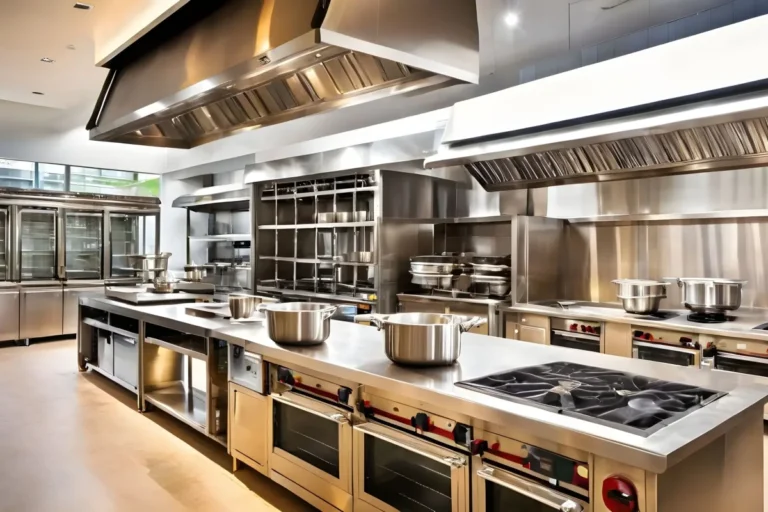
If you’ve ever tried to cook a steak at home, you know how easy it is to overcook or undercook it. Now imagine trying to do that for 200 steaks in a single shift. That’s where commercial-grade equipment comes in. These aren’t just bigger versions of home appliances, they’re designed for precision, durability, and repeatability.
Take combi ovens, for example. These versatile machines combine steam and convection cooking to maintain exact humidity and temperature levels. Want a perfectly crispy exterior with a juicy interior? A combi oven can do that, and it can do it the same way every single time. Or consider sous vide machines, which cook food in vacuum-sealed bags at precise temperatures. In a commercial kitchen, sous vide isn’t just a fancy technique, it’s a way to ensure that every piece of protein is cooked to the exact same doneness, regardless of who’s operating the equipment.
And let’s not forget about blast chillers. These machines rapidly cool food to safe temperatures, stopping the cooking process at the perfect moment. In a home kitchen, you might let a dish cool on the counter, which can lead to uneven temperatures and overcooking. In a commercial kitchen, blast chillers eliminate that variable entirely.
The Unsung Heroes: Scales, Thermometers, and Timers
You might think that high-tech equipment is the key to consistency, but some of the most important tools in a commercial kitchen are surprisingly simple. Digital scales, for example, are a game-changer. In a home kitchen, you might measure ingredients by volume (cups, tablespoons), but in a commercial setting, weight is king. Why? Because a cup of flour can weigh different amounts depending on how it’s packed, but 120 grams is always 120 grams. That level of precision is critical when you’re scaling a recipe up to feed hundreds of people.
Then there are infrared thermometers, which allow chefs to check the temperature of a dish without touching it. This is especially useful for things like griddles or fryers, where surface temperature can make or break a dish. And let’s not forget about timers. In a commercial kitchen, every second counts, and timers ensure that dishes are cooked for the exact right amount of time, every time.
I’ll admit, when I first started writing about commercial kitchens, I underestimated the importance of these small tools. But after seeing them in action, I realized they’re the unsung heroes of consistency. They’re not flashy, but they’re the reason a dish can taste the same in Nashville as it does in New York.
Automation: The Future of Consistency
If you’ve been to a fast-food restaurant lately, you’ve probably noticed that some of the cooking is done by machines. Automated fryers, for example, can drop, cook, and drain fries with the push of a button. Robotic arms can assemble burgers or pizzas with precision. And AI-powered ovens can adjust cooking times and temperatures in real time based on the food’s internal temperature.
Is this the future of commercial kitchens? Maybe. But it’s not without its challenges. For one thing, automation can be expensive, and not every restaurant can afford to invest in it. For another, there’s something to be said for the human touch. A machine can cook a burger perfectly every time, but can it adjust for the subtle variations in meat quality or customer preferences? That’s where the debate gets interesting.
I’m torn between embracing automation as the ultimate tool for consistency and worrying about what it might mean for the art of cooking. But here’s the thing: automation isn’t about replacing chefs, it’s about augmenting their skills. It’s about taking the guesswork out of the equation so that chefs can focus on creativity, presentation, and customer experience. And in a high-volume kitchen, that’s a win-win.
The Process: How Workflow Design Ensures Consistency
Mise en Place: The Secret Weapon of Commercial Kitchens
If you’ve ever watched a cooking show, you’ve probably heard the term mise en place. It’s a French phrase that means “everything in its place,” and it’s the foundation of efficiency in a commercial kitchen. But it’s not just about organization, it’s about eliminating variables.
In a commercial kitchen, mise en place means that every ingredient is prepped, measured, and ready to go before the cooking begins. This isn’t just about saving time, it’s about ensuring that every dish is made with the exact same ingredients, in the exact same way. No last-minute substitutions, no rushing to chop an onion, no guessing about measurements. Everything is controlled.
I remember visiting a catering kitchen where the chef had a system for mise en place that was almost obsessive. Every station had a color-coded tray with pre-portioned ingredients, and every tray had a label with the recipe name and step number. It looked like a military operation, but it worked. The chef told me that since implementing this system, their waste had dropped by 20%, and their consistency had improved dramatically.
The Power of Checklists and SOPs
In a commercial kitchen, standard operating procedures (SOPs) are the rulebook. They’re step-by-step instructions for everything from how to clean a grill to how to plate a dish. And they’re not just for new hires, even experienced chefs follow them to ensure consistency.
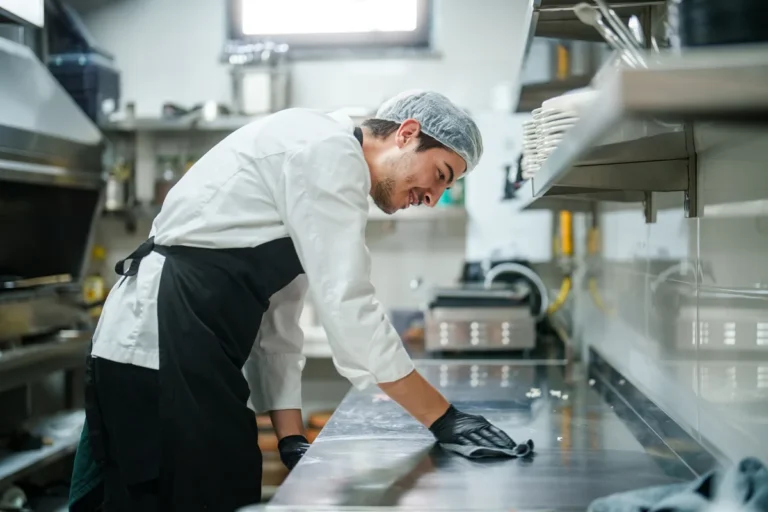
One of the most effective tools I’ve seen in commercial kitchens is the checklist. Before service starts, chefs go through a checklist to make sure everything is in place: equipment is calibrated, ingredients are prepped, and stations are stocked. During service, they use checklists to track cooking times, temperatures, and plating. And after service, they use checklists to clean and reset the kitchen for the next day.
It might sound tedious, but checklists are a game-changer. They eliminate the risk of human error and ensure that nothing is overlooked. And in a high-pressure environment like a commercial kitchen, that’s invaluable.
Color-Coding and Cross-Contamination Prevention
Here’s something you might not think about: color-coding. In many commercial kitchens, cutting boards, knives, and even storage containers are color-coded to prevent cross-contamination. For example, red might be for raw meat, green for vegetables, and blue for seafood. This might seem like a small detail, but it’s a critical part of maintaining consistency and safety.
Cross-contamination isn’t just a food safety issue, it’s a consistency issue. If a dish is contaminated with allergens or bacteria, it’s not just unsafe, it’s also not the same dish that the customer expects. And in a commercial kitchen, where reputation is everything, that’s a big deal.
I once toured a large-scale commissary kitchen where they took color-coding to the next level. They had separate prep areas for different types of ingredients, each with its own set of tools and equipment. It was like a well-oiled machine, and it was clear that this level of organization was key to their success.
The Human Element: Training, Culture, and Accountability
Why Training Never Stops
In a commercial kitchen, training isn’t a one-time event, it’s an ongoing process. New hires go through an initial training period, but even experienced chefs participate in regular refresher courses. Why? Because consistency requires constant reinforcement.
I’ve seen kitchens where chefs participate in weekly taste tests, comparing their dishes to reference samples to ensure they’re on track. I’ve seen others where managers conduct random audits, checking that recipes are being followed exactly as written. And I’ve seen kitchens where chefs are encouraged to give feedback on recipes, suggesting tweaks to improve consistency or efficiency.
This might sound like overkill, but it’s not. In a commercial kitchen, even small deviations can add up over time. A chef who’s been with the company for years might start to cut corners, or a new hire might misinterpret a recipe. Ongoing training ensures that everyone stays on the same page.
The Role of Kitchen Culture in Consistency
Here’s something that surprised me: the best commercial kitchens don’t just focus on processes and equipment, they also focus on culture. A kitchen with a strong culture of consistency is one where everyone understands the importance of following recipes, where chefs hold each other accountable, and where mistakes are seen as opportunities to learn.
I remember talking to a chef at a chain restaurant who said, “We don’t just train our staff to follow recipes, we train them to believe in the recipes.” That’s a powerful idea. When chefs understand the why behind a recipe, the science, the history, the customer expectations, they’re more likely to execute it consistently.
But culture isn’t just about belief, it’s also about accountability. In a commercial kitchen, chefs are expected to taste their dishes before they go out, to check for consistency and quality. If a dish doesn’t meet standards, it’s sent back, and the chef is expected to fix it. This level of accountability ensures that consistency is everyone’s responsibility, not just the manager’s.
The Feedback Loop: How Customer Input Shapes Consistency
Here’s something you might not realize: commercial kitchens don’t just rely on internal checks and balances, they also listen to customer feedback. Whether it’s through comment cards, online reviews, or direct conversations, customer input is a critical part of maintaining consistency.
I’ve seen kitchens where managers review customer feedback daily, looking for patterns or trends. If multiple customers complain that a dish is too salty, for example, the kitchen might adjust the recipe or retrain the staff. And if customers rave about a particular dish, the kitchen might double down on the elements that make it great.
This feedback loop is what keeps commercial kitchens evolving. It’s not about chasing trends, it’s about refining and perfecting the dishes that customers love. And in a competitive industry, that’s what sets the best kitchens apart.
The Challenges: Why Consistency Is Harder Than It Looks
The Ingredient Variable: When Suppliers Let You Down
One of the biggest challenges in maintaining consistency is ingredient variability. No matter how precise your recipes are, if your ingredients aren’t consistent, your dishes won’t be either. This is especially true for fresh ingredients like produce, meat, and dairy, which can vary in quality, size, and flavor depending on the season, the supplier, or even the batch.
I’ve seen kitchens struggle with this firsthand. A chef at a farm-to-table restaurant once told me, “We can have the best recipe in the world, but if the tomatoes are watery or the basil is wilted, the dish won’t be the same.” That’s why many commercial kitchens work closely with their suppliers, setting strict quality standards and conducting regular audits to ensure consistency.
Some kitchens even go a step further, prepping ingredients in-house to control quality. For example, they might make their own stocks, sauces, or spice blends instead of relying on pre-made products. This adds an extra layer of work, but it also gives them more control over the final product.
The Human Factor: When Chefs Get Creative
Here’s a dirty little secret of commercial kitchens: chefs love to improvise. It’s in their nature. They’re creative people, and they’re always looking for ways to improve a dish or put their own spin on it. But in a commercial kitchen, improvisation can be the enemy of consistency.
I’ve seen this happen more times than I can count. A chef tweaks a recipe to make it “better,” and suddenly the dish is different from what customers expect. Or a line cook adds a little extra spice because they think it needs it, and the dish becomes too hot. These small changes might seem harmless, but they can add up over time, eroding the consistency that customers rely on.
That’s why many commercial kitchens have strict policies about recipe changes. Some require chef approval for any modifications, while others have a formal process for testing and approving changes. And in some cases, chefs are encouraged to submit their ideas for consideration, but they’re not allowed to make changes on the fly.
Is this the best approach? I’m not entirely sure. On one hand, it’s important to maintain consistency. On the other hand, creativity is what keeps a kitchen vibrant and exciting. Maybe the key is finding a balance, encouraging innovation while also protecting the core elements that make a dish great.
The Scale Problem: When Volume Works Against You
Here’s something that’s easy to overlook: scaling a recipe isn’t just about multiplying ingredients. When you’re cooking for 10 people, you can adjust on the fly. When you’re cooking for 1,000, every decision has to be precise. That’s why commercial kitchens invest so much time and effort into scaling recipes correctly.
I remember talking to a chef at a large-scale catering company who said, “Scaling a recipe isn’t just about math, it’s about understanding how ingredients behave at different volumes.” For example, a sauce that thickens perfectly in a small batch might become too thin when scaled up, or a spice blend that works in a small quantity might become overpowering in a large one. That’s why commercial kitchens often test recipes at different volumes before rolling them out to the entire operation.
And then there’s the issue of equipment capacity. A recipe that works in a home kitchen might not work in a commercial setting, where you’re dealing with larger quantities and different equipment. For example, a dish that cooks perfectly in a small skillet might burn in a large griddle, or a sauce that emulsifies beautifully in a small pot might break when made in a large kettle.
This is where the expertise of a commercial kitchen really shines. It’s not just about following a recipe, it’s about understanding how to adapt it to different volumes and equipment. And that’s a skill that takes years to master.
The Future of Consistency: Technology, Trends, and What’s Next
AI and Machine Learning: The Next Frontier
If you’ve been paying attention to tech trends, you’ve probably heard about AI and machine learning in the food industry. From recipe development to inventory management, AI is starting to play a bigger role in commercial kitchens. And when it comes to consistency, it’s a game-changer.
Imagine a system that can analyze customer feedback in real time, identifying trends and suggesting recipe adjustments. Or a machine that can taste a dish and compare it to a reference sample, flagging any inconsistencies. These aren’t just pipe dreams, they’re technologies that are already being tested in some commercial kitchens.
I’m torn between excitement and skepticism about this. On one hand, AI has the potential to take consistency to the next level, eliminating human error and ensuring that every dish is perfect. On the other hand, I worry about what it might mean for the art of cooking. Can a machine really understand the nuances of flavor and texture? Or will it reduce cooking to a series of algorithms?
Maybe I should clarify: AI isn’t about replacing chefs, it’s about empowering them. It’s about giving them the tools they need to maintain consistency while also freeing them up to focus on creativity and innovation. And in a high-volume kitchen, that’s a powerful combination.
The Rise of Ghost Kitchens and Delivery-Only Brands
Here’s something that’s changing the game for commercial kitchens: ghost kitchens. These are delivery-only restaurants that operate out of commercial kitchens without a traditional storefront. They’re popping up everywhere, and they’re forcing commercial kitchens to rethink how they maintain consistency.
In a traditional restaurant, consistency is maintained through a combination of in-person training, visual checks, and customer feedback. But in a ghost kitchen, where the only interaction with customers is through a delivery app, those checks and balances are harder to maintain. That’s why ghost kitchens are investing in digital tools to track consistency, from temperature-monitoring systems to AI-powered quality control.
I’ve seen ghost kitchens where every dish is photographed before it goes out, with the photos stored in a database for quality control. I’ve seen others where customers are asked to rate their meals for consistency, with the data used to identify trends and make adjustments. And I’ve seen ghost kitchens where chefs use virtual reality to train staff, simulating the cooking process in a digital environment.
Is this the future of commercial kitchens? Maybe. But it’s not without its challenges. For one thing, ghost kitchens rely heavily on third-party delivery services, which can introduce variables like delivery time and packaging quality. For another, they lack the in-person customer interaction that traditional restaurants rely on for feedback.
But here’s the thing: ghost kitchens are forcing commercial kitchens to innovate, and that’s a good thing. Whether it’s through AI, digital tools, or new training methods, they’re finding ways to maintain consistency in an increasingly digital world.
Sustainability and Consistency: Can They Coexist?
Here’s a question that’s been on my mind lately: can you maintain consistency while also prioritizing sustainability? It’s a tough one, because sustainability often means using local, seasonal ingredients, which can vary in quality and availability. But some commercial kitchens are finding ways to make it work.
I’ve seen kitchens that partner with local farms, working closely with them to ensure a consistent supply of high-quality ingredients. I’ve seen others that adjust their menus seasonally, swapping out ingredients as they become available. And I’ve seen kitchens that use alternative proteins, like plant-based meats, which are more consistent than their animal-based counterparts.
But sustainability isn’t just about ingredients, it’s also about waste reduction. And this is where commercial kitchens have a real opportunity to shine. By maintaining consistency, they can reduce waste from overproduction, spoilage, and customer returns. And by using digital tools to track inventory and production, they can minimize waste even further.
Is this the best approach? I’m not entirely sure. But it’s clear that sustainability and consistency don’t have to be mutually exclusive. With the right systems and processes in place, commercial kitchens can achieve both.
Conclusion: The Recipe for Success
So, what’s the takeaway from all this? If there’s one thing I’ve learned from writing about commercial kitchens, it’s that consistency isn’t accidental. It’s the result of careful planning, precise execution, and a relentless commitment to quality. It’s about understanding the variables that can throw a recipe off course and having the tools and processes in place to eliminate them.
But here’s the thing: consistency isn’t just about perfection, it’s about trust. It’s about giving customers the confidence to walk into a restaurant and know exactly what they’re going to get. And in an industry where competition is fierce and customer expectations are higher than ever, that trust is invaluable.
So, if you’re a chef or restaurant owner, I challenge you to take a closer look at your own operation. Are your recipes standardized? Is your equipment calibrated? Are your processes designed to minimize human error? If not, it might be time to make some changes. Because at the end of the day, consistency isn’t just a goal, it’s the foundation of a successful business.
And if you’re a customer, I hope this deep dive has given you a new appreciation for the work that goes into every meal. The next time you bite into a dish that tastes exactly like you remember, take a moment to think about the systems, the equipment, and the people who made it possible. Because that’s the magic of recipe consistency at scale.
FAQ
Q: What’s the biggest challenge commercial kitchens face in maintaining recipe consistency?
A: The biggest challenge is often ingredient variability. Even with standardized recipes and precise equipment, ingredients can vary in quality, size, and flavor depending on the supplier, the season, or the batch. Commercial kitchens combat this by working closely with suppliers, setting strict quality standards, and sometimes prepping ingredients in-house to control quality.
Q: How do commercial kitchens train staff to maintain consistency?
A: Training is an ongoing process in commercial kitchens. New hires go through hands-on demonstrations, practice runs, and taste tests to align their palates with the restaurant’s standards. Even experienced chefs participate in regular refresher courses, weekly taste tests, and random audits to ensure they’re following recipes exactly as written. The goal is to create a culture where consistency is everyone’s responsibility.
Q: What role does technology play in maintaining consistency in commercial kitchens?
A: Technology is a game-changer for consistency. Combi ovens maintain exact humidity and temperature levels, sous vide machines cook proteins to precise doneness, and blast chillers stop the cooking process at the perfect moment. Digital tools like scales, thermometers, and timers ensure precision, while AI and machine learning are starting to play a role in recipe development, inventory management, and quality control. Automation, like robotic arms and automated fryers, is also becoming more common in high-volume kitchens.
Q: Can small restaurants or home cooks apply any of these consistency techniques?
A: Absolutely! While small restaurants and home cooks might not have access to the same equipment as commercial kitchens, they can still adopt many of the same principles. Standardized recipes with exact measurements and detailed techniques are a great place to start. Using digital scales and thermometers can improve precision, and mise en place (prepping ingredients before cooking) can help eliminate variables. Even something as simple as a checklist can make a big difference in maintaining consistency. The key is to focus on controlling the variables you can, even if you can’t control everything.
@article{how-commercial-kitchens-elevate-recipe-consistency-at-scale-the-unsung-heroes-of-flavor-perfection,
    title   = {How Commercial Kitchens Elevate Recipe Consistency at Scale: The Unsung Heroes of Flavor Perfection},
    author  = {Chef's icon},
    year    = {2026},
    journal = {Chef's Icon},
    url     = {https://chefsicon.com/how-commercial-kitchens-elevate-recipe-consistency-at-scale/}
}