The Best Fluffy Pancakes recipe you will fall in love with. Full of tips and tricks to help you make the best pancakes.
How to Source Fiddleheads for Commercial Kitchens Without Losing Your Mind (or Your Budget)
Let me set the scene: It’s early May, and my phone is blowing up with texts from chef friends. “Dude, where the hell do you get fiddleheads this year?” “My supplier just ghosted me, help!” “I paid $28 a pound and they’re all sandy. Never again.” Sound familiar? If you’re running a commercial kitchen and trying to get your hands on these curly little springtime treasures, you’re not alone. Fiddleheads are one of those ingredients that chefs either love or avoid like a bad Yelp review, there’s no in-between.
I remember the first time I tried to source them for a pop-up dinner in Nashville. I called three foragers, two distributors, and one very confused Whole Foods manager before finally scoring a 10-pound box that arrived looking like it had been dug up by a raccoon. Half of them were past their prime, and the other half tasted like dirt (because, well, they *were* dirt). Lesson learned: Sourcing fiddleheads isn’t just about finding them, it’s about finding the *right* ones, at the right time, from the right people. And that’s what this guide is all about.
By the end of this, you’ll know:
- Why fiddleheads are worth the hassle (and when they’re not)
- How to identify the best varieties for commercial kitchens
- The pros and cons of different sourcing methods (foragers vs. distributors vs. DIY)
- How to vet suppliers so you don’t end up with a box of sad, sandy ferns
- Storage and prep tips to maximize shelf life and flavor
- Creative ways to menu them without scaring off customers
So grab a coffee (or something stronger, no judgment), and let’s dive in. And if you’re reading this in July, well… maybe bookmark it for next year.
1. Why Bother with Fiddleheads? The Case for (and Against) This Fussy Ingredient
First, let’s address the elephant in the room: Fiddleheads are a pain in the ass. They’re seasonal (like, *really* seasonal), they’re labor-intensive to prep, and they’re not exactly a pantry staple. So why do chefs keep chasing them like they’re the culinary equivalent of a white whale?
For starters, there’s the flavor. When they’re good, fiddleheads taste like a cross between asparagus, green beans, and artichoke hearts, bright, earthy, and slightly nutty. They’ve got this unique texture that’s both tender and snappy, like a cross between a pea shoot and a baby broccoli stem. And then there’s the ostalgia factor. In New England, Atlantic Canada, and parts of the Midwest, they’re a rite of spring, like ramps or morels. Serving them is a way to signal that your kitchen is in tune with the seasons, and that’s a big deal in today’s food culture.
But here’s the thing: They’re not for every kitchen. If you’re running a high-volume, low-margin operation (looking at you, chain restaurants), fiddleheads might not be worth the logistical nightmare. They’re perishable (like, *really* perishable), they require specialized prep (more on that later), and they’re expensive. We’re talking $15–$30 per pound at peak season, and that’s *before* factoring in labor costs. So before you commit, ask yourself:
- Do my customers care about seasonal, foraged ingredients? (If you’re in a farm-to-table hotspot, the answer is probably yes. If you’re in a mall food court, maybe not.)
- Do I have the staff and time to prep them properly? (Spoiler: If you’re short-staffed, this is a bad idea.)
- Can I menu them in a way that justifies the cost? (More on this in Section 9.)
I’m torn on this one, to be honest. Part of me wants to say, “Just go for it! They’re delicious and fun!” But the pragmatic side of me knows that fiddleheads can be a money pit if you’re not careful. Maybe I should clarify: They’re worth it *if* you’ve got the right setup. If not, there’s no shame in sticking to asparagus.
2. Know Your Fiddleheads: A Quick Guide to Varieties
Not all fiddleheads are created equal. There are over 10,000 species of ferns out there, but only a handful are edible, and even fewer are worth serving in a commercial kitchen. Here’s the breakdown of what you’re most likely to encounter:
Ostrich Fern (Matteuccia struthiopteris)
This is the gold standard for fiddleheads. Ostrich fern fiddleheads are the ones you’ll find in farmers’ markets and high-end restaurants, and for good reason. They’ve got a mild, slightly nutty flavor and a tender yet crisp texture. They’re also the most widely available (relatively speaking) and the safest to eat raw or lightly cooked (though I’d still recommend blanching them, more on that later).
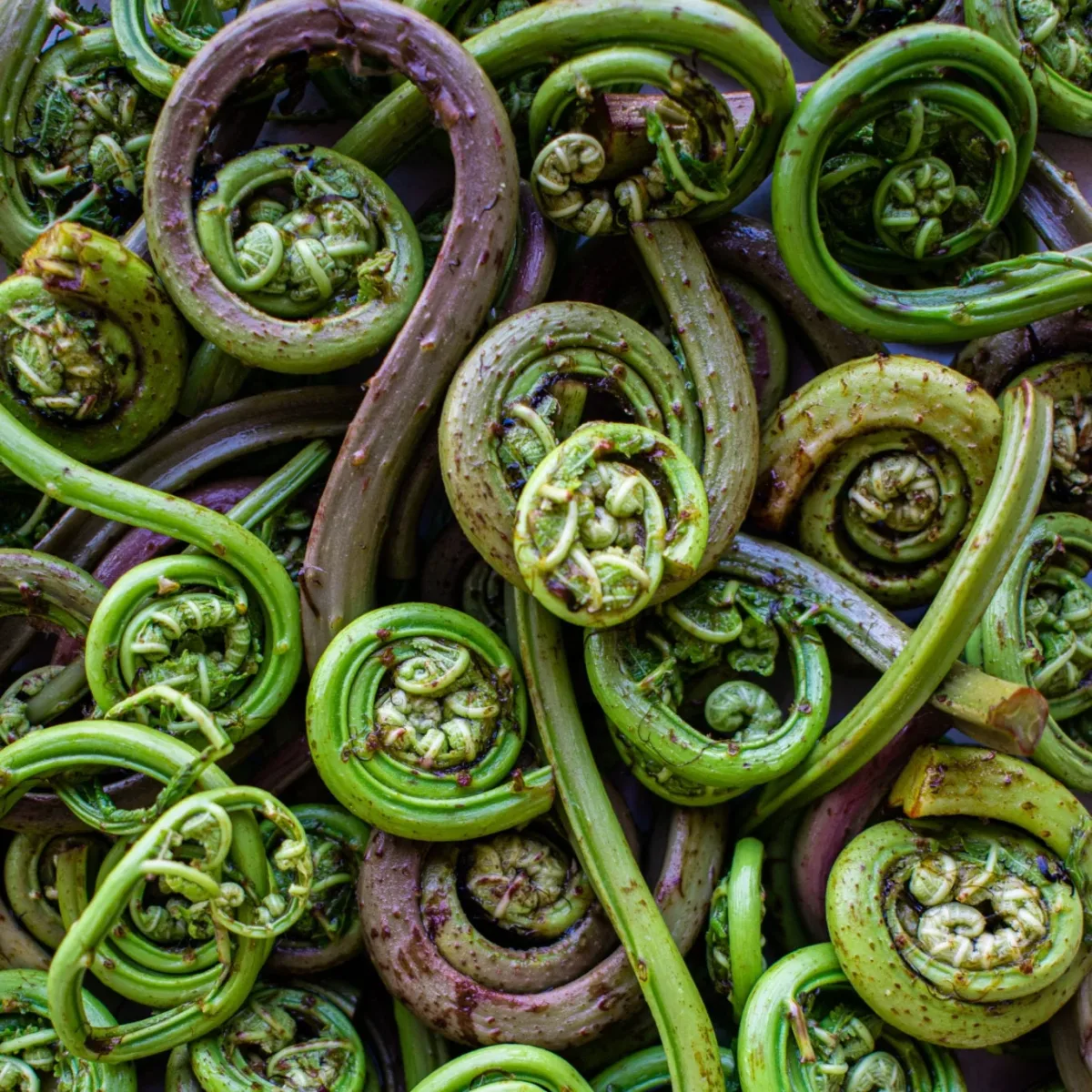
How to spot them: Ostrich fern fiddleheads have a deep green color, a tight coil, and a papery brown husk at the base. They’re usually about 1–2 inches in diameter when harvested. If you see fiddleheads that are bright green and tightly coiled, they’re probably ostrich ferns.
Lady Fern (Athyrium filix-femina)
Lady fern fiddleheads are edible, but they’re ot as flavorful as ostrich ferns. They’ve got a milder, slightly bitter taste and a softer texture. They’re also smaller and more delicate, which makes them a pain to prep in large quantities. Some foragers harvest them, but they’re not as popular with chefs. If you’re offered lady fern fiddleheads, ask for a sample first, you might find they’re not worth the effort.
Bracken Fern (Pteridium aquilinum)
Do not serve these. Bracken fern fiddleheads are toxic when raw and have been linked to stomach cancer in some studies. They’re also bitter and tough, even when cooked. Some cultures eat them after extensive processing (like soaking in wood ash), but unless you’re working with a very specific traditional recipe, it’s not worth the risk. If a forager tries to sell you bracken fern fiddleheads, run the other way.
Is this the best approach? Let’s consider: Maybe I should’ve led with the “don’t eat this” part. But honestly, most commercial kitchens aren’t going to encounter bracken ferns unless they’re sourcing from a very niche forager. Still, it’s good to know what to avoid.
3. When and Where to Source Fiddleheads: Timing Is Everything
Fiddleheads are hyper-seasonal. They’re only available for a few weeks each year, and the window varies depending on where you are. Here’s what you need to know:
Timing
- New England and Atlantic Canada: Late April to early June. This is the sweet spot for fiddleheads, especially in Maine, New Brunswick, and Quebec. If you’re sourcing from this region, aim for mid-May, you’ll get the best quality and the most options.
- Pacific Northwest: Early May to late June. The season starts a little later here, and the fiddleheads tend to be smaller and more delicate than their East Coast counterparts.
- Midwest: Early to mid-May. The season is shorter here, so you’ll need to act fast.
- Europe: April to May. If you’re sourcing from the UK or France, the season is similar to New England’s, but availability can be spotty.
Pro tip: Fiddleheads are weather-dependent. A late frost can delay the season by a week or two, while an early warm spell can make them pop up earlier than expected. If you’re working with a forager or distributor, ask them to give you a heads-up when the fiddleheads start coming in. Don’t wait until the last minute, by then, the best ones will be gone.
Where to Look
Fiddleheads grow in moist, shaded areas, like riverbanks, forests, and wetlands. They’re most common in temperate climates, but they can pop up in unexpected places. Here’s where to focus your search:
- New England: Maine, Vermont, New Hampshire, and Massachusetts are fiddlehead hotspots. Maine, in particular, is known for its high-quality ostrich fern fiddleheads.
- Atlantic Canada: New Brunswick, Quebec, and Nova Scotia are major producers. If you’re on the East Coast, this is your best bet for large quantities.
- Pacific Northwest: Washington and Oregon have a growing fiddlehead scene, though the season is shorter and the fiddleheads are smaller.
- Midwest: Michigan, Wisconsin, and Minnesota have some fiddlehead activity, but availability is inconsistent.
I’m torn between recommending you stick to the East Coast or branch out. On one hand, the East Coast has the most established fiddlehead industry, so you’re more likely to find reliable suppliers. On the other hand, if you’re on the West Coast, it might be worth exploring local options to reduce your carbon footprint. Ultimately, it depends on your priorities: consistency or sustainability?
4. Sourcing Methods: Foragers vs. Distributors vs. DIY
So, you’ve decided to take the plunge and source fiddleheads for your kitchen. Now what? You’ve got three main options: foragers, distributors, or DIY. Each has its pros and cons, so let’s break them down.
Option 1: Foragers (The Wildcard)
Foragers are the OGs of the fiddlehead world. They’re the ones out in the woods at dawn, harvesting fiddleheads by hand. If you can find a good forager, you’ll get fresh, high-quality fiddleheads that haven’t been sitting in a warehouse for days. But, and this is a big but, foragers are unpredictable. They might show up with 50 pounds one week and nothing the next. They might not answer their phones. They might send you fiddleheads that are past their prime.
If you’re going the forager route, here’s what you need to do:
- Find a reputable forager. Ask other chefs for recommendations, or check out local farmers’ markets. A good forager will have a consistent supply and a good reputation. Avoid anyone who can’t tell you what kind of fern they’re harvesting (remember: ostrich ferns only!).
- Visit their operation. If possible, take a trip to see where they’re harvesting. Are they picking in a clean, unpolluted area? Are they handling the fiddleheads properly? If they won’t let you visit, that’s a red flag.
- Negotiate terms. Foragers often work on a cash basis, so be prepared to pay upfront. Ask about their harvesting practices-do they pick sustainably? Do they clean the fiddleheads before delivering them? (Spoiler: You’ll probably still need to clean them yourself.)
- Be flexible. Foragers work on nature’s schedule, not yours. If they say they’ll deliver on Tuesday but show up on Thursday, try not to lose your mind. It’s part of the deal.
I’ve had mixed experiences with foragers. Some are amazing, like the guy in Maine who delivers perfectly cleaned fiddleheads in reusable crates. Others… not so much. One time, a forager showed up with a garbage bag full of fiddleheads that were half-rotten and covered in dirt. Lesson learned: Always ask for a sample first.
Option 2: Distributors (The Safe Bet)
If you don’t have the time or patience to deal with foragers, distributors are a more reliable (but often more expensive) option. They source fiddleheads from multiple foragers, clean and package them, and deliver them to your door. The quality can be hit or miss, but if you find a good distributor, you’ll get consistent supply and service.
Here’s what to look for in a distributor:
- Reputation. Ask other chefs who they use. Check online reviews (though take them with a grain of salt, people are more likely to complain than praise).
- Transparency. A good distributor will tell you where their fiddleheads come from, how they’re harvested, and how they’re handled. If they’re vague about their sourcing, that’s a red flag.
- Quality control. Ask how they clean and store the fiddleheads. Do they blanch them before shipping? Do they use ice packs? The best distributors will have a cold chain in place to keep the fiddleheads fresh.
- Pricing. Distributors mark up their prices, so expect to pay 20–50% more than you would with a forager. That said, you’re paying for convenience, so it might be worth it.
I’ve worked with a few distributors over the years, and my favorite is a company in Maine that specializes in wild foraged ingredients. They deliver fiddleheads that are pre-cleaned, pre-blanched, and vacuum-sealed, which saves me a ton of time. The downside? They’re expensive, and they sell out fast. If you go this route, place your order early.
Option 3: DIY (The Risky Move)
If you’re feeling adventurous (or cheap), you could try harvesting fiddleheads yourself. I’ve done it a few times, and let me tell you: It’s ot as easy as it looks. For starters, you need to know where to look. Fiddleheads grow in moist, shaded areas, like riverbanks and forests. They’re often hidden under leaves and debris, so you’ll need to get on your hands and knees to find them. And once you do find them, you need to harvest them properly-picking too many from one plant can kill it, and picking the wrong kind of fern can make you sick.
If you’re determined to go the DIY route, here’s what you need to know:
- Get a guide. If you’ve never harvested fiddleheads before, go with someone who knows what they’re doing. A local forager or naturalist can show you where to look and how to identify ostrich ferns.
- Harvest sustainably. Only pick one or two fiddleheads per plant, and never take all of them. Leave some to grow into mature ferns. This isn’t just about being eco-friendly, it’s about ensuring you’ll have fiddleheads to harvest next year.
- Clean them properly. Fiddleheads are dirty. Like, *really* dirty. You’ll need to rinse them multiple times and pick out any debris. Some chefs soak them in salt water to remove bugs, but I’ve found that a vigorous rinse under cold water works just as well.
- Blanch them immediately. Fiddleheads don’t keep well raw, so you’ll need to blanch them in boiling water for 2–3 minutes before storing them. This stops the enzymatic process that causes them to spoil.
I’ll be honest: DIY harvesting is ot for the faint of heart. It’s time-consuming, physically demanding, and a little risky (what if you pick the wrong fern?). But if you’re up for the challenge, it can be a rewarding experience. Just don’t expect to harvest enough to feed a restaurant, this is more of a fun side project than a serious sourcing strategy.
5. How to Vet Suppliers: Don’t Get Scammed by Sandy Fiddleheads
Whether you’re working with a forager or a distributor, you need to vet them carefully. The last thing you want is to pay top dollar for fiddleheads that are past their prime, covered in dirt, or, worst of all, inedible. Here’s how to separate the pros from the amateurs:
Questions to Ask
Before you commit to a supplier, ask them these questions:
- What kind of fern are you harvesting? (The answer should be ostrich fern. If they say anything else, walk away.)
- Where do you harvest? (They should be able to tell you the general region, if not the exact location. If they’re vague, that’s a red flag.)
- How do you clean and store the fiddleheads? (Ideally, they should be rinsed, blanched, and packed in ice or vacuum-sealed. If they’re just throwing them in a bag and calling it a day, keep looking.)
- What’s your harvesting process? (They should be picking sustainably-no clear-cutting entire patches. They should also be harvesting young, tightly coiled fiddleheads, not mature ones.)
- Can I get a sample? (Any reputable supplier should be willing to send you a small sample before you commit to a large order. If they refuse, that’s a red flag.)
Red Flags to Watch For
Not all suppliers are created equal. Here are some warning signs that you’re dealing with an amateur:
- They can’t tell you what kind of fern they’re harvesting. (This is a huge red flag. If they don’t know the difference between ostrich ferns and bracken ferns, they’re not someone you want to work with.)
- They’re vague about their sourcing. (If they won’t tell you where they harvest, or if they dodge the question, that’s a sign they’re not being transparent.)
- They don’t clean the fiddleheads. (Fiddleheads are dirty. If they’re not rinsing them at the very least, you’re going to spend hours cleaning them yourself.)
- They don’t blanch them before shipping. (Raw fiddleheads spoil fast. If they’re not blanching them before shipping, they’re not going to last long in transit.)
- They’re selling them out of season. (Fiddleheads are a springtime ingredient. If someone is selling them in July, they’re either freeze-dried (which is fine, but not the same) or lying.)
How to Test Quality
Once you’ve got a sample, here’s how to tell if the fiddleheads are high-quality:
- Color: They should be bright green with no yellowing or browning. If they’re dull or discolored, they’re past their prime.
- Texture: They should be firm and crisp, not limp or mushy. If they bend easily, they’re old.
- Coil: The coil should be tight and compact. If it’s starting to unfurl, the fiddlehead is too mature.
- Smell: They should smell fresh and earthy, not sour or musty. If they smell off, they’re spoiled.
- Taste: After blanching, they should taste mild and slightly nutty, with no bitterness. If they taste bitter or soapy, they’re not good quality.
I’ve been burned by bad fiddleheads more times than I’d like to admit. One time, I ordered 20 pounds from a new supplier, and when they arrived, half of them were yellow and slimy. I had to throw them all out, which was a huge waste of money. Lesson learned: Always get a sample first.
6. Pricing and Budgeting: How Much Should You Expect to Pay?
Fiddleheads are expensive, and the price fluctuates depending on the season, the supplier, and the quality. Here’s what you need to know about pricing:
Average Prices
- Foragers: $10–$20 per pound. This is the cheapest option, but you’re paying for the fiddleheads raw and unprocessed. You’ll need to clean, blanch, and store them yourself, which adds to the labor cost.
- Distributors: $20–$35 per pound. Distributors mark up the price, but you’re paying for convenience. The fiddleheads are usually pre-cleaned and pre-blanched, which saves you time.
- Farmers’ markets: $15–$25 per pound. Farmers’ markets are a good option if you only need a small quantity, but the selection can be hit or miss. You’ll also need to clean and prep them yourself.
- Online retailers: $30–$50 per pound. Online retailers are the most expensive option, but they’re convenient if you don’t have a local supplier. Just make sure they ship the fiddleheads fresh and on ice.
Hidden Costs
When budgeting for fiddleheads, don’t forget to factor in these hidden costs:
- Labor: Cleaning and prepping fiddleheads is time-consuming. If you’re paying staff to do it, that’s an added cost.
- Waste: Fiddleheads have a high waste factor. You’ll lose about 20–30% of the weight during cleaning and trimming. So if you order 10 pounds, you’ll end up with about 7–8 pounds of usable product.
- Storage: Fiddleheads need to be stored properly to stay fresh. If you don’t have space in your walk-in, you might need to invest in extra refrigeration.
- Spoilage: Fiddleheads spoil fast. If you don’t use them within a few days, you’ll lose money.
How to Save Money
If you’re on a tight budget, here are some ways to save money on fiddleheads:
- Order in bulk. The more you order, the lower the price per pound. If you’ve got the storage space, order a large quantity at the beginning of the season.
- Work with a forager. Foragers are usually cheaper than distributors, but you’ll need to put in the time to clean and prep the fiddleheads yourself.
- Buy frozen. Frozen fiddleheads are cheaper than fresh, and they’re available year-round. The quality isn’t as good, but they’re a good option if you’re on a budget.
- Menu them creatively. Instead of serving a large portion of fiddleheads as a side dish, use them as a garnish or accent. A little goes a long way, and you’ll save money by using less.
I’m torn between recommending you splurge on fresh fiddleheads or save money with frozen. On one hand, fresh fiddleheads are so much better-they’ve got that bright, snappy texture and that unique flavor. On the other hand, frozen fiddleheads are more consistent and easier to work with. Ultimately, it depends on your budget and your menu. If you’re serving a high-end dish, go fresh. If you’re just adding them to a salad, frozen might be fine.
7. Storage and Prep: How to Keep Them Fresh (and Edible)
Fiddleheads are otoriously finicky. They spoil fast, they’re hard to clean, and they require specialized prep to make them safe and delicious. Here’s how to handle them like a pro:
Storage
If you’re storing fiddleheads for more than a day, you need to blanch them first. Raw fiddleheads spoil fast-they’ll start to yellow and get slimy within 24 hours. Blanching stops the enzymatic process that causes spoilage, and it also makes them easier to clean.
Here’s how to blanch fiddleheads:
- Rinse them thoroughly. Fiddleheads are dirty, so you’ll need to rinse them multiple times under cold water. Pick out any debris, bugs, or brown husks.
- Trim the ends. Use a sharp knife to trim the woody ends. You don’t need to cut much, just enough to remove the tough part.
- Blanch in boiling water. Bring a large pot of salted water to a boil. Add the fiddleheads and blanch for 2–3 minutes. You want them to be bright green and slightly tender, but not mushy.
- Shock in ice water. Immediately transfer the fiddleheads to a bowl of ice water to stop the cooking process. This keeps them crisp and bright.
- Drain and dry. Drain the fiddleheads and pat them dry with a clean towel. You can store them in the fridge for 3–4 days or freeze them for up to 6 months.
If you’re storing blanched fiddleheads in the fridge, keep them in a sealed container with a paper towel to absorb any excess moisture. If you’re freezing them, pack them in airtight bags or vacuum-sealed containers. Frozen fiddleheads will keep for 6 months, but they’re best used within 3 months for optimal quality.
Prep
Once you’re ready to use the fiddleheads, here’s how to prep them:
- Thaw if frozen. If you’re using frozen fiddleheads, thaw them in the fridge overnight. Don’t microwave them, they’ll get mushy.
- Rinse again. Even if you cleaned them before blanching, give them another rinse to remove any lingering dirt or debris.
- Trim as needed. If the ends are still tough, trim them again. You can also cut the fiddleheads in half lengthwise if you’re using them in a stir-fry or salad.
- Cook thoroughly. Fiddleheads should be cooked thoroughly to ensure they’re safe to eat. Sauté them, roast them, or add them to soups and stews. Just don’t eat them raw, they can cause stomach upset.
I’ve made the mistake of not blanching fiddleheads before storing them, and let me tell you: It’s ot pretty. They turned yellow and slimy within a day, and I had to throw them all out. Lesson learned: Always blanch them first.
8. Safety First: How to Avoid Foodborne Illness (and Lawsuits)
Fiddleheads are delicious, but they can also be dangerous if not handled properly. Here’s what you need to know to keep your customers (and your kitchen) safe:
Potential Risks
Fiddleheads can cause foodborne illness if they’re not cooked properly. The most common issues are:
- Stomach upset: Raw or undercooked fiddleheads can cause ausea, vomiting, and diarrhea. This is usually mild and goes away on its own, but it’s not something you want your customers dealing with.
- Toxicity: Some ferns (like bracken ferns) contain toxic compounds that can cause more serious health issues. That’s why it’s so important to know what kind of fern you’re serving.
- Contamination: Fiddleheads grow in the wild, so they can be contaminated with bacteria, parasites, or pesticides. Always rinse them thoroughly and cook them properly to kill any pathogens.
How to Minimize Risks
Here’s how to reduce the risk of foodborne illness:
- Only serve ostrich fern fiddleheads. This is the safest and most widely available variety. Avoid bracken ferns and other toxic species.
- Cook them thoroughly. Fiddleheads should be cooked to an internal temperature of 165°F (74°C). This kills any bacteria or parasites. Don’t serve them raw or lightly cooked.
- Rinse them thoroughly. Fiddleheads are dirty, so you’ll need to rinse them multiple times under cold water. Pick out any debris, bugs, or brown husks.
- Store them properly. Raw fiddleheads spoil fast, so blanch them before storing. Keep them in the fridge for o more than 3–4 days or freeze them for up to 6 months.
- Train your staff. Make sure everyone in your kitchen knows how to handle and prep fiddleheads safely. This includes proper cleaning, cooking, and storage.
What to Do If Someone Gets Sick
Even if you follow all the safety guidelines, there’s still a small risk of foodborne illness. Here’s what to do if a customer complains of feeling sick after eating fiddleheads:
- Listen to their concerns. Don’t dismiss them, even if you think the fiddleheads were safe, it’s important to take their complaint seriously.
- Ask for details. Find out what they ate, when they ate it, and what symptoms they’re experiencing. This will help you identify the cause and prevent future issues.
- Offer to cover their medical expenses. If they’re experiencing severe symptoms, offer to pay for their doctor’s visit or medication. This shows that you take their health seriously.
- Investigate the issue. Try to figure out what went wrong. Did you undercook the fiddleheads? Did you store them improperly? Did you use the wrong kind of fern? Once you identify the problem, you can fix it and prevent it from happening again.
- Report the incident. If the customer’s symptoms are severe, you may need to report the incident to your local health department. This is a legal requirement in many areas, so check your local regulations.
I’m torn between wanting to scare you off fiddleheads entirely and reassuring you that they’re safe if handled properly. The truth is, they’re safe if you follow the guidelines, but there’s always a small risk. If you’re not comfortable with that risk, it’s okay to skip them. There are plenty of other seasonal ingredients out there.
9. Menu Ideas: How to Serve Fiddleheads Without Scaring Off Customers
Fiddleheads are ot a mainstream ingredient. Most customers have never heard of them, let alone eaten them. So how do you menu them in a way that’s approachable and appealing? Here are some ideas:
Start Simple
If you’re introducing fiddleheads to your menu for the first time, start with a simple preparation. Something like:
- Sautéed Fiddleheads: Sauté them with garlic, butter, and a squeeze of lemon. Serve them as a side dish or a garnish.
- Fiddlehead Salad: Toss them with mixed greens, cherry tomatoes, and a light vinaigrette. The bright, earthy flavor pairs well with fresh greens.
- Fiddlehead Soup: Blend them into a creamy soup with potatoes, leeks, and a touch of cream. This is a great way to showcase their flavor without overwhelming the dish.
Get Creative
Once you’ve introduced fiddleheads to your customers, you can start experimenting with more creative preparations. Here are some ideas:
- Fiddlehead Risotto: Stir them into a creamy risotto with Parmesan and white wine. The utty flavor pairs well with the richness of the risotto.
- Fiddlehead Pasta: Toss them with pasta, garlic, olive oil, and chili flakes. Add a sprinkle of Parmesan and a squeeze of lemon for brightness.
- Fiddlehead Pizza: Top a pizza with fiddleheads, goat cheese, and caramelized onions. The earthy flavor pairs well with the tangy goat cheese.
- Fiddlehead Tempura: Dip them in a light batter and fry them until crispy. Serve them with a dipping sauce for a fun, shareable appetizer.
- Fiddlehead Pickles: Pickle them in vinegar, sugar, and spices for a tangy, crunchy condiment. Serve them on sandwiches or charcuterie boards.
How to Describe Them on the Menu
Fiddleheads are ot a familiar ingredient, so you’ll need to describe them in a way that’s appealing and approachable. Here are some ideas:
- “Foraged spring fiddleheads” – This sounds exotic and seasonal, but it’s still clear what they are.
- “Tender young fern shoots” – This is a more descriptive option that highlights their texture.
- “Spring’s first green” – This is a poetic option that emphasizes their seasonality.
- “Wild-harvested fiddleheads” – This sounds rustic and authentic, which can be appealing to customers.
Avoid using the word “fern” on its own, it can sound too scientific or intimidating. And don’t call them “fiddlehead ferns”-it’s redundant and clunky.
I’m torn between recommending you go all-in on fiddleheads or keep them as a special feature. On one hand, they’re a unique and seasonal ingredient that can set your menu apart. On the other hand, they’re expensive and labor-intensive, so you don’t want to overcommit. Ultimately, it depends on your kitchen and your customers. If you’re serving a high-end, farm-to-table crowd, go for it. If you’re running a casual diner, maybe start with a small batch and see how it goes.
10. The Future of Fiddleheads: Trends and Predictions
Fiddleheads are having a moment. They’re popping up on menus at high-end restaurants, in farmers’ markets, and even in meal kits and grocery stores. But is this a passing trend, or are fiddleheads here to stay? Here’s what I think:
Why Fiddleheads Are Gaining Popularity
There are a few reasons why fiddleheads are becoming more popular:
- Seasonal eating: More and more customers are interested in seasonal, foraged ingredients. Fiddleheads are the ultimate seasonal delicacy-they’re only available for a few weeks each year, which makes them feel special and exclusive.
- Farm-to-table movement: The farm-to-table movement is still going strong, and fiddleheads fit right in. They’re wild-harvested, local, and sustainable, which appeals to customers who care about where their food comes from.
- Social media: Fiddleheads are photogenic. Their unique shape and bright green color make them perfect for Instagram, which has helped spread the word about them.
- Chef-driven trends: Chefs are always looking for ew and exciting ingredients, and fiddleheads fit the bill. They’re versatile, flavorful, and fun to work with, which makes them appealing to creative chefs.
Challenges Ahead
Despite their growing popularity, fiddleheads still face some challenges:
- Supply chain issues: Fiddleheads are seasonal and perishable, which makes them hard to source and distribute. If demand continues to grow, we could see shortages and price spikes.
- Sustainability concerns: Fiddleheads are wild-harvested, which means they’re not as sustainable as farmed ingredients. If too many people start harvesting them, we could see ecological damage in the areas where they grow.
- Lack of awareness: Most customers still don’t know what fiddleheads are, let alone how to cook them. This means chefs have to educate their customers, which can be a challenge.
- Food safety risks: Fiddleheads can cause foodborne illness if not handled properly. As they become more popular, we could see more outbreaks if chefs don’t follow proper safety protocols.
Predictions for the Future
So, what does the future hold for fiddleheads? Here are my predictions:
- More mainstream availability: As demand grows, we’ll see more distributors and retailers carrying fiddleheads. This will make them easier to source, but it could also lead to lower quality as suppliers cut corners to meet demand.
- Increased sustainability efforts: To address sustainability concerns, we’ll see more foragers and distributors adopting sustainable harvesting practices. This could include certification programs or quotas to limit overharvesting.
- More creative preparations: As chefs become more familiar with fiddleheads, we’ll see more creative and innovative preparations. Expect to see them in everything from cocktails to desserts.
- More education: To address the lack of awareness, we’ll see more chefs and food media educating customers about fiddleheads. This could include cooking demos, blog posts, and social media campaigns.
- More regulation: As fiddleheads become more popular, we could see more regulation around their harvesting and sale. This could include food safety guidelines, sustainability standards, or labeling requirements.
I’m torn about the future of fiddleheads. On one hand, I love seeing them gain popularity, they’re delicious, unique, and seasonal, and they deserve a place on more menus. On the other hand, I worry about what will happen if demand outpaces supply. Will we see overharvesting and ecological damage? Will food safety issues become more common? Only time will tell, but I hope we can find a way to enjoy fiddleheads sustainably and safely.
Conclusion: Should You Take the Fiddlehead Plunge?
So, should you add fiddleheads to your menu? The answer, as with most things in life, is: it depends.
If you’re running a high-end, seasonal kitchen with a well-trained staff and a customer base that appreciates foraged ingredients, then yes, fiddleheads are absolutely worth the effort. They’re a unique, flavorful, and photogenic ingredient that can set your menu apart. Just make sure you source them carefully, handle them safely, and menu them creatively.
If you’re running a high-volume, low-margin operation with a tight budget and a short-staffed kitchen, then maybe skip them. They’re expensive, labor-intensive, and perishable, and there are plenty of other seasonal ingredients that are easier to work with.
And if you’re somewhere in between? Maybe start small. Order a small batch, experiment with a few dishes, and see how your customers respond. If they love them, you can scale upext season. If they don’t, you haven’t lost much.
At the end of the day, fiddleheads are ot a necessity. They’re a luxury, a delicacy, a seasonal treat. And like all good things, they’re best enjoyed in moderation. So go ahead, take the plunge. Just don’t say I didn’t warn you.
FAQ: Your Burning Fiddlehead Questions, Answered
Q: Can you eat fiddleheads raw?
A: No, you should ever eat fiddleheads raw. They can cause stomach upset and may contain harmful bacteria or parasites. Always cook them thoroughly, blanching, sautéing, or roasting are all good options. If you’re serving them in a salad, blanch them first to make them safe to eat.
Q: How do you know if fiddleheads have gone bad?
A: Fiddleheads spoil fast, so it’s important to know the signs of spoilage. Here’s what to look for:
- Color: Fresh fiddleheads are bright green. If they’re yellow, brown, or slimy, they’ve gone bad.
- Texture: Fresh fiddleheads are firm and crisp. If they’re limp, mushy, or slimy, they’re no good.
- Smell: Fresh fiddleheads smell earthy and fresh. If they smell sour, musty, or off, they’ve spoiled.
- Taste: If you’re unsure, taste a small piece after cooking. If it tastes bitter, soapy, or off, don’t serve it.
Q: Can you freeze fiddleheads?
A: Yes, you can freeze fiddleheads, but you need to blanch them first. Here’s how:
- Rinse and trim the fiddleheads.
- Blanch them in boiling water for 2–3 minutes.
- Shock them in ice water to stop the cooking process.
- Drain and pat them dry.
- Pack them in airtight bags or containers and freeze for up to 6 months.
Frozen fiddleheads are ot as good as fresh, but they’re a good option if you want to enjoy them year-round. Just remember to thaw them in the fridge before using them, don’t microwave them, or they’ll get mushy.
Q: What’s the best way to cook fiddleheads?
A: Fiddleheads are versatile, so you can cook them in a variety of ways. Here are some of my favorite methods:
- Sautéed: Sauté them with garlic, butter, and a squeeze of lemon for a simple and delicious side dish.
- Roasted: Toss them with olive oil, salt, and pepper, and roast them in the oven until crispy. This brings out their utty flavor.
- Blanched: Blanch them in boiling water for 2–3 minutes, then shock them in ice water. This is a good way to preserve their color and texture before using them in salads or other dishes.
- Pickled: Pickle them in vinegar, sugar, and spices for a tangy, crunchy condiment. Serve them on sandwiches or charcuterie boards.
- In soups and stews: Add them to soups, stews, or risottos for a boost of flavor and texture.
No matter how you cook them, make sure to cook them thoroughly to ensure they’re safe to eat. And don’t be afraid to experiment-fiddleheads are a fun ingredient to play with!
@article{how-to-source-fiddleheads-for-commercial-kitchens-a-chefs-guide-to-seasonal-foraged-delicacies,
    title   = {How to Source Fiddleheads for Commercial Kitchens: A Chef’s Guide to Seasonal Foraged Delicacies},
    author  = {Chef's icon},
    year    = {2026},
    journal = {Chef's Icon},
    url     = {https://chefsicon.com/how-to-source-fiddleheads-for-commercial-kitchens/}
}