The Best Fluffy Pancakes recipe you will fall in love with. Full of tips and tricks to help you make the best pancakes.
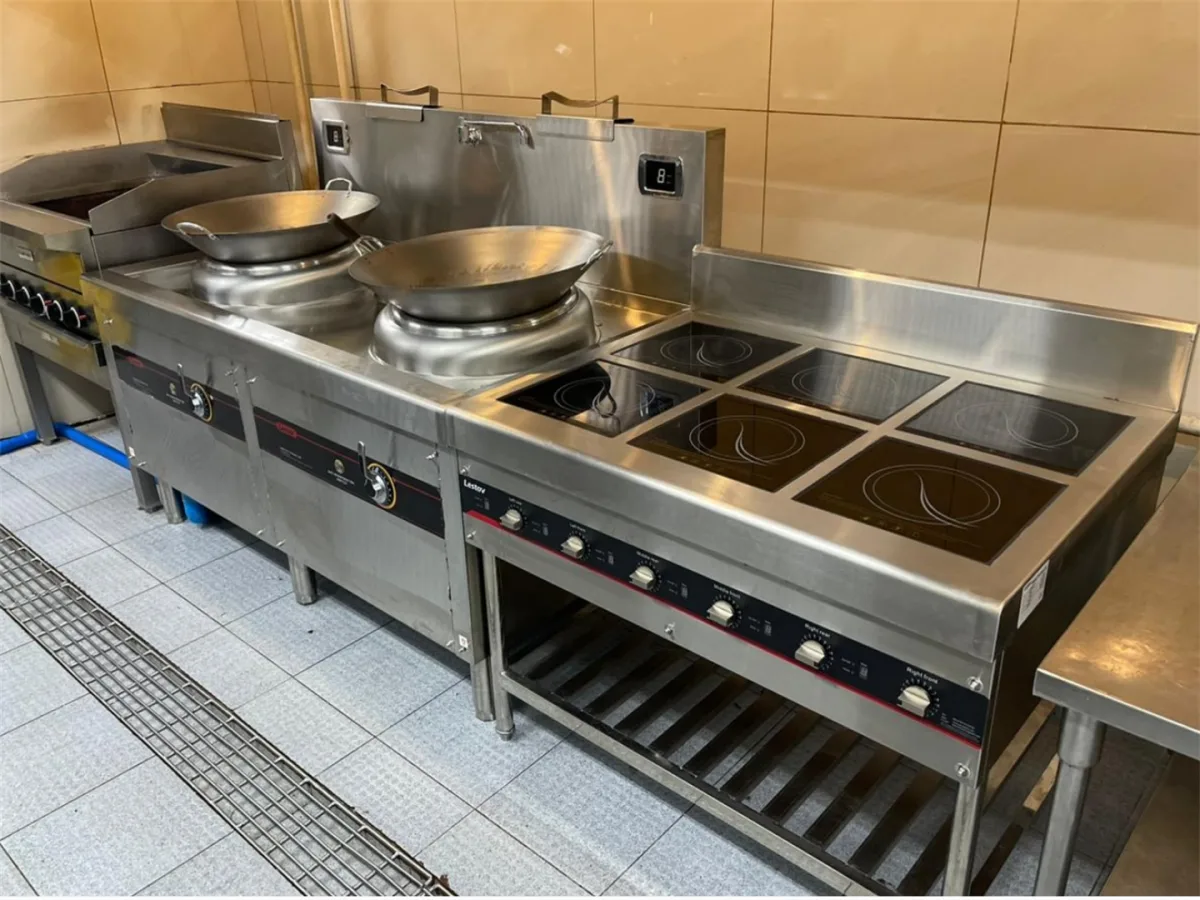
Why Induction Cooking is the Secret Weapon You’re Probably Underusing
Let me tell you about the first time I really *got* induction cooking. It was at a pop-up dinner in Nashville’s Germantown neighborhood, where a chef friend had converted an old warehouse into a temporary kitchen. I walked in expecting the usual gas-fueled chaos, flames licking at pans, the hiss of burners, the occasional curse when someone singed their eyebrows. Instead, I found a row of sleek, silent induction burners humming away, and a line cook searing scallops with the precision of a surgeon. No fire. No smoke. Just perfect, even heat. I stood there like an idiot, watching a pot of water boil in half the time it takes on my home stove, and thought: *Why isn’t every kitchen using this?*
That was three years ago, and since then, I’ve become a bit obsessed with induction cooking, not just as a novelty, but as a game-changer for efficiency, safety, and consistency in professional kitchens. If you’re still on the fence about induction, or you’ve dabbled but haven’t unlocked its full potential, this guide is for you. We’re going to dive deep into the *how* and *why* of induction efficiency, from the science behind the magic to the practical tips that’ll make your kitchen run smoother. And yes, I’ll admit upfront: I’m not a chef. I’m a guy who talks to chefs, tests equipment, and geeks out over kitchen tech. So if I miss something, call me out in the comments. Deal?
By the end of this, you’ll know:
- Why induction is faster, safer, and more precise than gas or electric (and where it falls short).
- How to optimize your workflow around induction’s quirks, because it *does* have quirks.
- The best cookware for induction and why your favorite pan might be sabotaging you.
- Pro tips from chefs who’ve made the switch, including how to train your team without mutiny.
- How to save money on energy costs without sacrificing performance (spoiler: induction is already cheaper to run, but you can squeeze out even more savings).
Let’s start with the basics, because even if you think you know induction, there’s a good chance you’re missing a key detail that could make or break your efficiency.
The Science of Induction: Why It’s Not Just “Electric Cooking 2.0”
How Induction Actually Works (And Why It’s Not Magic, Just Physics)
Induction cooking feels like magic because it *looks* like nothing’s happening. No flames, no glowing coils, just a pan getting hot while the burner stays cool to the touch. But it’s not magic, it’s electromagnetism. Here’s the simplified version: When you turn on an induction burner, an electric current runs through a coil beneath the cooktop, creating a magnetic field. When you place a pan with a ferromagnetic base (more on that later) on the burner, the magnetic field induces an electric current in the pan itself, which generates heat. The pan heats up, not the burner. That’s why you can touch an induction cooktop seconds after removing a pan and not get burned (though I don’t recommend testing this, some residual heat transfers back).
This is fundamentally different from gas or traditional electric cooking, where heat is transferred *to* the pan from an external source. With induction, the pan *is* the heat source. This has a few massive implications for efficiency:
- Instant response: Turn the burner up or down, and the pan reacts immediately. No waiting for a flame to adjust or a coil to cool. This is a huge time-saver for tasks that require quick temperature changes, like deglazing or tempering chocolate.
- No wasted heat: With gas, up to 60% of the heat can escape into the air. With induction, 90% of the energy goes directly into the pan. That’s not just efficient, it’s *revolutionary* for busy kitchens.
- Precision control: Induction burners can maintain temperatures within 1-2°F of your target, which is nearly impossible with gas. This is a game-changer for delicate sauces, sous vide-style cooking, or anything that requires a gentle simmer.
But, and this is a big but, induction isn’t perfect. There are trade-offs, and if you don’t account for them, you’ll end up frustrated. Let’s talk about the downsides, because ignoring them is like pretending your knife doesn’t need sharpening: it’ll catch up with you.
The Induction Trade-Offs: What You Give Up (And How to Work Around It)
I’ll be honest: the first time I used induction in a high-volume setting, I wanted to throw the burner out the window. Not because it didn’t work, but because it worked *too well*-and in ways I wasn’t prepared for. Here are the biggest challenges, and how to mitigate them:
- Cookware compatibility: Not all pans work with induction. If your pan isn’t ferromagnetic (i.e., it doesn’t stick to a magnet), it won’t heat up. This is the #1 complaint I hear from chefs making the switch. The fix? Invest in induction-ready cookware (more on this later), and test your existing pans with a magnet before you commit to induction. If it sticks, you’re golden. If not, it’s time to upgrade.
- Heat distribution: Induction heats the *base* of the pan, not the sides. This can lead to uneven cooking if you’re not careful, especially with thicker foods like steaks or whole fish. The solution? Use pans with thick, flat bases and preheat them properly. Also, consider stirring or flipping more frequently than you would with gas.
- Learning curve: Induction requires a different mindset. With gas, you can gauge heat by looking at the flame. With induction, you’re relying on numbers and muscle memory. This can be jarring for chefs used to the tactile feedback of gas. The fix? Train your team (we’ll cover this in detail later) and start with simple tasks to build confidence.
- Power requirements: Induction burners draw a lot of electricity, which can be an issue in older kitchens with outdated wiring. If you’re retrofitting a kitchen, you *might* need to upgrade your electrical panel. The good news? Most modern kitchens can handle it, and the energy savings usually offset the upfront cost.
- Noise: Some induction burners emit a low hum or whine, which can be annoying in a quiet kitchen. Higher-end models are quieter, so if this is a dealbreaker, test before you buy.
Is induction worth the trade-offs? In my experience, absolutely, but only if you go in with your eyes open. The efficiency gains far outweigh the downsides, but you have to *adapt* to induction, not just swap it in for gas and expect everything to work the same. Which brings me to my next point: induction isn’t a drop-in replacement for gas. It’s a different tool, and it requires a different approach.
Optimizing Your Workflow for Induction: How to Stop Fighting the Tech and Start Using It
Preheating Like a Pro: The Induction Advantage (And How to Mess It Up)
One of the biggest mistakes I see chefs make with induction is over-preheating. With gas, you can toss a pan on a burner and walk away while it heats up. With induction, the pan heats up *so fast* that you can easily overshoot your target temperature. I’ve seen chefs burn oil, scorch garlic, and even warp pans because they weren’t paying attention. Here’s how to preheat like a pro:
- Start low: Set the burner to a low setting (around 200°F) and let the pan warm up gradually. This ensures even heating and prevents hot spots.
- Use the timer: Most induction burners have a timer function. Set it for 2-3 minutes to avoid forgetting about the pan. This is especially useful when you’re multitasking (which, let’s be real, is always).
- Test with water: A drop of water should sizzle and evaporate immediately when the pan is ready. If it beads up and dances, the pan is too hot. If it just sits there, it’s not hot enough.
- Preheat with oil: Add a thin layer of oil to the pan *before* preheating. This helps distribute heat evenly and gives you a visual cue (the oil will shimmer when it’s ready).
I know what you’re thinking: *This sounds like more work than gas.* And yeah, it can be, at first. But once you get the hang of it, preheating with induction becomes second nature, and you’ll appreciate the control. The key is to embrace the precision. With gas, you’re guessing. With induction, you’re measuring. And in a professional kitchen, measurement beats guesswork every time.
Temperature Control: Why Your Gas Intuition is Holding You Back
Here’s a hard truth: If you’re used to gas, your temperature intuition is probably wrong. With gas, you’re relying on flame size and color to gauge heat. With induction, you’re relying on numbers. And those numbers don’t always align with what you *think* you know. For example:
- A medium flame on gas might be 350°F on induction.
- A low simmer on gas could be 180°F on induction.
- A high sear on gas might require 450°F on induction (or higher, depending on the pan).
This disconnect can lead to frustration, especially when you’re trying to replicate a gas-cooked dish on induction. The solution? Forget what you know about gas and start fresh. Here’s how:
- Use an infrared thermometer: This is your new best friend. Point it at the pan to see the actual temperature, and adjust the burner accordingly. Over time, you’ll start to associate the induction settings with the temperatures you need.
- Create a cheat sheet: Write down the induction settings that correspond to common tasks (e.g., “Sear steak = 450°F,” “Simmer sauce = 180°F”). Post it near the burners until it becomes muscle memory.
- Practice with simple tasks: Start with something forgiving, like boiling water or making scrambled eggs. This will help you get a feel for how quickly induction responds to changes.
- Embrace the “boost” function: Most induction burners have a boost setting that delivers maximum power for a short time. This is great for bringing water to a boil quickly or searing meat. Just don’t leave it on too long, or you’ll overheat the pan.
Is this the best approach? Let’s consider the alternative: You could just wing it and hope for the best. But in a professional kitchen, “winging it” is a recipe for inconsistency, wasted food, and unhappy customers. Induction gives you the tools to be precise, so why not use them?
Multitasking with Induction: How to Juggle Multiple Burners Without Losing Your Mind
One of the biggest advantages of induction is the ability to control each burner independently. With gas, adjusting one burner can affect the heat on adjacent burners (thanks, radiant heat). With induction, each burner is its own island. This is a *huge* efficiency boost for multitasking, but it also requires a different approach to kitchen organization. Here’s how to make the most of it:
- Group tasks by temperature: Place dishes that require similar temperatures near each other. For example, if you’re simmering a sauce and melting butter, put them on adjacent burners so you can monitor them easily.
- Use the timer function: Most induction burners have a timer that will automatically shut off the burner when time’s up. This is a lifesaver for dishes that require precise cooking times, like risotto or caramel.
- Assign burners to stations: If you’re working in a team, assign specific burners to specific tasks. For example, one burner for sauces, one for proteins, one for sides. This reduces confusion and keeps everyone on the same page.
- Label your burners: Use dry-erase markers or labels to note what’s cooking on each burner. This might seem like overkill, but in a busy kitchen, it’s easy to lose track of what’s where.
- Take advantage of the “pause” button: Some induction burners have a pause function that temporarily lowers the heat. This is great for when you need to step away for a minute but don’t want to lose your temperature setting.
I’m torn between two schools of thought here. On one hand, induction’s precision makes multitasking easier. On the other hand, it’s easy to get overwhelmed if you’re not organized. Maybe I should clarify: Induction *can* make multitasking easier, but only if you treat it like a tool, not a crutch. It’s not a substitute for good kitchen organization, it’s an amplifier. Use it wisely, and it’ll make your life easier. Use it recklessly, and you’ll end up with a mess.
The Right Tools for the Job: Cookware That Doesn’t Suck (And Where to Find It)
Why Your Favorite Pan Might Be Sabotaging Your Induction Efficiency
Not all cookware is created equal, and this is especially true for induction. Remember how I said induction only works with ferromagnetic pans? That’s true, but it’s not the whole story. Even among induction-compatible pans, there’s a huge difference in performance. Here’s what to look for:
- Material: Stainless steel and cast iron are the gold standards for induction. They’re durable, heat evenly, and retain heat well. Aluminum and copper pans can work if they have a ferromagnetic base, but they won’t perform as well as stainless or cast iron.
- Base thickness: Thicker bases heat more evenly and retain heat better. Look for pans with a base that’s at least 3mm thick. Thin pans can warp or develop hot spots, which defeats the purpose of induction’s precision.
- Flatness: Induction requires a flat base to make full contact with the burner. If your pan is warped, it won’t heat evenly. Test your pans by placing them on a flat surface, if they wobble, they’re not induction-friendly.
- Size: The pan should match the burner size. If the pan is too small, you’re wasting energy. If it’s too large, the heat won’t distribute evenly. Most induction burners have a minimum and maximum pan size-check your manual to be sure.
- Weight: Heavier pans retain heat better, which is great for searing or frying. But they’re also harder to handle, so find a balance that works for you.
So, where do you find cookware that checks all these boxes? If you’re outfitting a commercial kitchen, you’ll want to work with a supplier that understands the demands of high-volume cooking. Chef’s Deal is a great option here, they offer a wide range of induction-compatible cookware, from heavy-duty stainless steel to cast iron, and their team can help you choose the right tools for your specific needs. Plus, they offer free kitchen design services, which can be a lifesaver if you’re retrofitting an existing space for induction. More on that later.
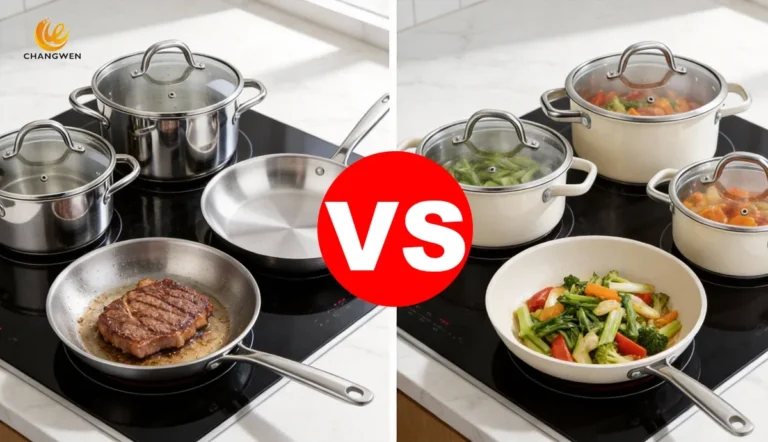
Cast Iron vs. Stainless Steel: The Great Debate (And Why Both Have a Place in Your Kitchen)
I’ve had this argument with chefs more times than I can count. Cast iron or stainless steel, which is better for induction? The answer, of course, is it depends. Here’s the breakdown:
| Cast Iron | Stainless Steel |
|---|---|
Pros:
|
Pros:
|
Cons:
|
Cons:
|
So, which should you choose? Both. Seriously. Cast iron is great for tasks that require high heat retention, like searing steaks or frying chicken. Stainless steel is better for tasks that require quick temperature changes, like sautéing vegetables or making sauces. If you’re outfitting a kitchen from scratch, I’d recommend a mix of both. For example:
- Cast iron skillets for searing and frying.
- Stainless steel sauté pans for general cooking.
- Stainless steel stock pots for soups and sauces.
- Cast iron Dutch ovens for braising and slow cooking.
And if you’re buying in bulk, suppliers like Chef’s Deal can help you find the right balance. They offer competitive pricing and financing options, which is great if you’re working with a tight budget. Plus, their team can provide expert consultation to make sure you’re getting the best tools for your specific needs.
Non-Stick Pans and Induction: A Match Made in Heaven (If You Do It Right)
Non-stick pans and induction are a great combo, if you choose the right pan. The problem? Not all non-stick pans are induction-compatible. Here’s what to look for:
- Induction-compatible base: The pan must have a ferromagnetic base. Look for the induction symbol (a coil or the word “induction”) on the packaging.
- Durable non-stick coating: Cheap non-stick pans can scratch or degrade quickly, especially in a high-volume kitchen. Look for pans with PFOA-free coatings and a reputation for durability.
- Even heat distribution: Non-stick pans are often made with aluminum, which doesn’t conduct heat as well as stainless steel or cast iron. Look for pans with a thick, encapsulated base to improve heat distribution.
- Oven-safe: If you plan to finish dishes in the oven, make sure the pan is oven-safe. Some non-stick coatings can’t handle high heat.
Non-stick pans are great for delicate tasks like cooking eggs or fish, but they’re not a substitute for stainless steel or cast iron. Use them for what they’re good at, and save the heavy-duty pans for everything else.
I’ll admit, I was skeptical about non-stick pans in a professional kitchen. They always seemed too delicate, too prone to scratching or warping. But after testing a few high-end models, I’ve changed my tune. The key is to treat them like the specialty tools they are. Don’t use metal utensils, don’t overheat them, and don’t expect them to last forever. If you do that, they can be a valuable addition to your induction arsenal.
Energy Efficiency: How to Save Money Without Sacrificing Performance
The Hidden Costs of Gas (And Why Induction is Cheaper in the Long Run)
Let’s talk money, because at the end of the day, that’s what matters most in a professional kitchen. Induction burners are more energy-efficient than gas, but the upfront cost can be a barrier. Here’s the breakdown:
- Energy efficiency: Induction converts 90% of its energy into heat, while gas converts only 40-55%. This means you’re using less energy to achieve the same results, which translates to lower utility bills.
- Faster cooking times: Because induction heats up so quickly, you’re using the burner for less time. This adds up over the course of a shift, especially in a busy kitchen.
- Less waste: With gas, a lot of heat escapes into the air. With induction, almost all the heat goes into the pan. This means less energy wasted, and less money down the drain.
- Lower maintenance costs: Induction burners have no moving parts, so they’re less prone to breakdowns than gas burners. They’re also easier to clean, which saves on labor costs.
But what about the upfront cost? Induction burners are more expensive than gas burners, and if you’re retrofitting a kitchen, you might need to upgrade your electrical panel. This can add up quickly. The good news? The energy savings usually offset the upfront cost within a few years. Plus, many suppliers offer financing options to help spread out the cost. Chef’s Deal, for example, offers competitive pricing and flexible payment plans, which can make the transition to induction more manageable.
Is induction really cheaper in the long run? The math says yes, but it depends on your kitchen’s specific needs. If you’re running a high-volume operation, the energy savings will add up quickly. If you’re a small café with low energy usage, the savings might not be as dramatic. Either way, it’s worth crunching the numbers to see if induction makes sense for you.
How to Maximize Energy Savings with Induction (Without Sacrificing Performance)
Induction is already more energy-efficient than gas, but there are ways to squeeze out even more savings. Here’s how:
- Use the right pan size: The pan should match the burner size. If the pan is too small, you’re wasting energy. If it’s too large, the heat won’t distribute evenly. Most induction burners have a minimum and maximum pan size-check your manual to be sure.
- Preheat efficiently: Induction heats up so quickly that you don’t need to preheat for long. A few minutes is usually enough. Over-preheating wastes energy and can damage your pans.
- Use the timer function: Most induction burners have a timer that will automatically shut off the burner when time’s up. This prevents energy waste and reduces the risk of overcooking.
- Turn off burners when not in use: This might seem obvious, but it’s easy to forget in a busy kitchen. Induction burners cool down quickly, so there’s no need to leave them on between tasks.
- Use residual heat: Induction burners cool down quickly, but the pan retains heat for a while. Use this residual heat to finish cooking or keep food warm. For example, turn off the burner a minute before your pasta is done, and let the residual heat finish the job.
- Optimize your workflow: Induction’s precision makes it easier to multitask, but it’s also easy to get overwhelmed. Plan your tasks to minimize burner usage. For example, cook multiple dishes that require the same temperature at the same time.
- Invest in energy-efficient cookware: Thicker, heavier pans retain heat better, which means you can use lower settings and still achieve the same results. This saves energy and reduces wear and tear on your burners.
I’m torn between two approaches here. On one hand, you could micromanage every burner to maximize efficiency. On the other hand, you could focus on the big picture and let the small stuff slide. Maybe I should clarify: Efficiency isn’t about perfection, it’s about progress. Start with the low-hanging fruit (like using the right pan size and turning off burners when not in use), and build from there. The savings will add up, even if you’re not doing everything perfectly.
Induction vs. Gas: The Real-World Energy Comparison
Let’s put this into real-world terms. Imagine you’re running a busy restaurant kitchen with 10 burners. Here’s how induction and gas compare in terms of energy usage:
| Metric | Induction | Gas |
|---|---|---|
| Energy efficiency | 90% | 40-55% |
| Average daily energy cost (10 burners, 8 hours/day) | $12-$15 | $25-$35 |
| Annual energy cost (365 days) | $4,380-$5,475 | $9,125-$12,775 |
| Upfront cost (10 burners, including installation) | $15,000-$25,000 | $8,000-$12,000 |
| Payback period (based on energy savings) | 2-4 years | N/A |
These numbers are estimates, but they give you an idea of the potential savings. The exact figures will depend on your kitchen’s specific needs, but the trend is clear: Induction is cheaper to run, even if it’s more expensive upfront.
But what about performance? Can induction really match gas for high-heat cooking? The answer is yes, but it takes practice. Induction can reach higher temperatures than gas, but it does so differently. With gas, you’re relying on an open flame. With induction, you’re relying on the pan’s ability to conduct and retain heat. This means you might need to adjust your techniques, but the results can be just as good, if not better.
Training Your Team: How to Get Your Staff on Board (Without Mutiny)
The Psychology of Change: Why Chefs Resist Induction (And How to Win Them Over)
Let’s be real: Chefs are creatures of habit. They’ve spent years mastering gas burners, and the idea of switching to induction can feel like a betrayal. I’ve seen it happen, chefs who refuse to use induction, or worse, sabotage it by using the wrong pans or settings. So how do you get your team on board? Here’s what’s worked for me:
- Start with the “why”: Don’t just tell your team to use induction, explain *why* it’s better. Talk about the energy savings, the precision, the safety benefits. Make it about *them*, not just the bottom line.
- Involve them in the process: If you’re retrofitting your kitchen, involve your team in the decision-making. Ask for their input on cookware, burner placement, and workflow. This gives them a sense of ownership and makes them more likely to embrace the change.
- Start small: Don’t switch everything at once. Start with one or two burners and let your team get comfortable with them. Gradually phase out gas as they build confidence.
- Provide training: Induction requires a different approach than gas. Provide hands-on training to help your team get comfortable with the new equipment. Focus on the basics, like preheating and temperature control, before moving on to more advanced techniques.
- Address their concerns: Chefs will have questions (and complaints). Listen to them, and address their concerns honestly. If they’re worried about performance, show them the data. If they’re concerned about cost, explain the long-term savings. If they’re just resistant to change, give them time to adjust.
- Lead by example: If you’re the head chef, use induction yourself. Show your team that it works, and that it’s not as scary as it seems. If you’re not the head chef, find an ally who can champion the cause.
I’ll admit, this isn’t always easy. Change is hard, especially in a high-pressure environment like a kitchen. But if you approach it with empathy and patience, you can get your team on board. And once they see the benefits of induction, they’ll wonder how they ever lived without it.
Induction Training 101: A Step-by-Step Guide for Your Team
Training your team on induction doesn’t have to be complicated. Here’s a step-by-step guide to get them up to speed:
- Introduce the basics: Start with a demo of how induction works. Show them how to turn the burner on and off, adjust the temperature, and use the timer function. Explain the importance of using the right pans and preheating properly.
- Hands-on practice: Give your team time to play with the burners. Start with simple tasks, like boiling water or making scrambled eggs. This helps them get a feel for how quickly induction responds to changes.
- Focus on temperature control: Induction’s precision is one of its biggest advantages, but it can also be intimidating. Show your team how to use the temperature settings to achieve consistent results. Create a cheat sheet with common tasks and their corresponding settings (e.g., “Sear steak = 450°F,” “Simmer sauce = 180°F”).
- Teach multitasking: Induction’s ability to control each burner independently is a game-changer for multitasking. Show your team how to group tasks by temperature and use the timer function to keep track of multiple dishes.
- Address common mistakes: Induction is forgiving, but it’s not foolproof. Teach your team how to avoid common mistakes, like over-preheating, using the wrong pans, or leaving burners on when not in use.
- Provide ongoing support: Training doesn’t end after the first session. Check in with your team regularly to see how they’re adjusting. Address any concerns or questions, and provide additional training as needed.
Maybe I should clarify: This isn’t a one-size-fits-all approach. Every kitchen is different, and every team has different needs. The key is to tailor the training to your team’s specific challenges. If they’re struggling with temperature control, focus on that. If they’re having trouble with multitasking, provide more hands-on practice. The goal is to make induction feel like a natural extension of their skills, not a replacement for them.
How to Troubleshoot Common Induction Problems (And Keep Your Team from Freaking Out)
Even with the best training, things can go wrong. Here’s how to troubleshoot common induction problems and keep your team from panicking:
- The burner won’t turn on:
- Check that the pan is induction-compatible (it should stick to a magnet).
- Make sure the pan is centered on the burner.
- Check that the burner is plugged in and turned on.
- If the burner still won’t turn on, it might be a power issue. Check the circuit breaker or consult an electrician.
- The pan isn’t heating evenly:
- Check that the pan has a flat base. If it’s warped, it won’t make full contact with the burner.
- Make sure the pan is the right size for the burner. If it’s too small or too large, the heat won’t distribute evenly.
- Try a different pan. Some pans just don’t work well with induction.
- The burner is overheating:
- Check that the pan isn’t too small for the burner. A small pan on a large burner can overheat.
- Make sure the burner isn’t set too high. Induction heats up quickly, so you don’t need to crank it to the max.
- If the burner is still overheating, it might be a malfunction. Consult the manufacturer or a technician.
- The burner is making noise:
- Some induction burners emit a low hum or whine. This is normal, but if it’s loud or persistent, it might be a sign of a problem.
- Check that the pan is centered on the burner. If it’s off-center, it can cause vibration and noise.
- If the noise is excessive, consult the manufacturer or a technician.
- The burner is shutting off unexpectedly:
- Check that the pan is induction-compatible and centered on the burner.
- Make sure the burner isn’t set too low. Some induction burners have a safety feature that shuts off the burner if the temperature is too low.
- If the burner is still shutting off, it might be a power issue. Check the circuit breaker or consult an electrician.
The key to troubleshooting is to stay calm and methodical. Induction problems are usually easy to fix, but they can be frustrating if you don’t know what to look for. Teach your team to approach problems systematically, and they’ll be less likely to freak out when something goes wrong.
Induction in the Real World: Case Studies and Lessons Learned
How a Nashville Bistro Cut Energy Costs by 40% with Induction
Let me tell you about Le Petit Auberge, a French bistro in Nashville’s 12 South neighborhood. When the owner, Marie, decided to renovate her kitchen, she was torn between sticking with gas or making the switch to induction. She’d heard the hype about induction’s efficiency, but she was skeptical. Could it really match the performance of gas? And would her team adapt?
Marie reached out to Chef’s Deal for help. Their team provided a free kitchen design consultation, which included a cost-benefit analysis of induction vs. gas. The numbers were compelling: Induction would cost more upfront, but the energy savings would pay for itself within three years. Plus, the kitchen would be safer and easier to clean. Marie decided to take the plunge.
Here’s what happened:
- Energy savings: Within six months, Marie’s energy bills dropped by 40%. The bistro was using less energy, and the induction burners were more efficient than gas.
- Faster service: The induction burners heated up so quickly that Marie’s team was able to shave minutes off each dish. This meant faster service and happier customers.
- Easier cleaning: With no open flames or gas grates, the kitchen was easier to clean. Marie’s team spent less time scrubbing and more time cooking.
- Team adaptation: Marie’s team was initially resistant to induction, but after a few weeks of training, they started to see the benefits. The precision of induction made their jobs easier, and they appreciated the safety features.
Marie’s story isn’t unique. I’ve heard similar success stories from chefs across the country. Induction isn’t a magic bullet, but it’s a powerful tool that can transform your kitchen, if you’re willing to adapt.
The Pitfalls of Induction: Lessons from a Chef Who Regretted the Switch
Not every induction story has a happy ending. Let me tell you about Carlos, a chef in San Francisco who made the switch to induction and regretted it. Carlos ran a high-volume taqueria, and he was drawn to induction’s energy efficiency and precision. He outfitted his kitchen with induction burners and trained his team on the new equipment. At first, everything seemed great. The kitchen was cleaner, the energy bills were lower, and the food was consistent.
But then the problems started:
- Cookware issues: Carlos had assumed that all his existing pans would work with induction. He was wrong. Half his pans weren’t induction-compatible, and the ones that were didn’t perform as well as his old gas pans. He ended up spending thousands of dollars on new cookware.
- Power problems: Carlos’s kitchen had outdated wiring, and the induction burners kept tripping the circuit breaker. He had to hire an electrician to upgrade his electrical panel, which added to the cost.
- Team resistance: Carlos’s team struggled to adapt to induction. They missed the tactile feedback of gas, and they found the temperature settings confusing. Some of them refused to use the induction burners, which created tension in the kitchen.
- Performance issues: Carlos found that induction couldn’t match gas for high-heat cooking. He struggled to get a good sear on his carne asada, and his tortillas didn’t cook evenly on the induction plancha.
In the end, Carlos switched back to gas. He didn’t regret the experiment, but he wished he’d done more research before making the switch. His story is a cautionary tale: Induction isn’t for everyone. It’s a powerful tool, but it’s not a one-size-fits-all solution. If you’re considering induction, do your homework. Talk to other chefs, test the equipment, and make sure it’s the right fit for your kitchen.
Induction in High-Volume Kitchens: What Works (And What Doesn’t)
Induction isn’t just for small bistros and food trucks. It’s also making inroads in high-volume kitchens, from hotels to catering operations. Here’s what works, and what doesn’t, in these settings:
- What works:
- Precision: Induction’s ability to maintain consistent temperatures is a game-changer for high-volume kitchens. It reduces waste and ensures that every dish is cooked to perfection.
- Safety: With no open flames, induction is safer than gas. This is especially important in high-volume kitchens, where accidents can happen quickly.
- Energy efficiency: High-volume kitchens use a lot of energy, so the savings from induction can be substantial. This is a big selling point for hotels and catering operations, where energy costs can eat into profits.
- Cleanliness: Induction burners are easier to clean than gas burners, which saves time and labor. This is a major advantage in high-volume kitchens, where cleanliness is paramount.
- What doesn’t work:
- Cookware compatibility: High-volume kitchens go through a lot of cookware, and not all of it is induction-compatible. This can be a major headache if you’re not prepared.
- Power requirements: High-volume kitchens require a lot of power, and induction burners can strain outdated electrical systems. This can lead to power outages or the need for costly upgrades.
- Learning curve: High-volume kitchens are fast-paced, and induction requires a different approach than gas. This can be a challenge for teams that are used to the tactile feedback of gas.
- Performance: Induction can struggle with high-heat tasks, like searing or wok cooking. This can be a dealbreaker for kitchens that rely on these techniques.
The key to success in high-volume kitchens is preparation. If you’re considering induction, do your research. Talk to other chefs, test the equipment, and make sure it’s the right fit for your kitchen. And if you’re retrofitting an existing kitchen, work with a supplier that can help you navigate the challenges. Chef’s Deal, for example, offers professional installation services and expert consultation to help you make the transition as smooth as possible.
Induction Hacks: Pro Tips to Take Your Cooking to the Next Level
The “Boost” Function: How to Use It (And When to Avoid It)
Most induction burners have a boost function that delivers maximum power for a short time. This is great for bringing water to a boil quickly or searing meat, but it’s not a substitute for proper temperature control. Here’s how to use it effectively:
- Use it for quick tasks: The boost function is perfect for tasks that require a lot of heat for a short time, like boiling water or searing meat. Just don’t leave it on too long, or you’ll overheat the pan.
- Don’t use it for delicate tasks: The boost function is too powerful for delicate tasks, like melting butter or tempering chocolate. Stick to lower settings for these tasks.
- Monitor the pan: The boost function can heat up a pan quickly, so keep an eye on it to avoid burning your food.
- Use it sparingly: The boost function draws a lot of power, so don’t overuse it. Save it for when you really need it.
I’ll admit, I was skeptical about the boost function at first. It seemed like a gimmick, something to make induction seem more exciting. But after using it a few times, I’ve changed my tune. It’s a powerful tool, but like any tool, it’s only as good as the person using it. Use it wisely, and it’ll make your life easier. Use it recklessly, and you’ll end up with a burnt mess.
Induction and Sous Vide: A Match Made in Efficiency Heaven
If you’re using sous vide in your kitchen, induction is a natural fit. Here’s why:
- Precision: Induction’s ability to maintain consistent temperatures is perfect for sous vide cooking. You can set the burner to the exact temperature you need and walk away, knowing that it won’t fluctuate.
- Efficiency: Induction heats up quickly, so you can get your water bath up to temperature in no time. This saves energy and reduces wait times.
- Safety: With no open flames, induction is safer than gas for sous vide cooking. This is especially important if you’re using a large water bath, where a gas flame could pose a fire hazard.
Here’s how to use induction for sous vide:
- Fill a large pot with water: The pot should be deep enough to fully submerge your sous vide bags.
- Set the induction burner to the desired temperature: Most induction burners have a temperature range of 100°F to 450°F, which covers most sous vide applications.
- Use a circulator: A sous vide circulator will help maintain a consistent temperature throughout the water bath. This is especially important for large pots, where the temperature can vary from top to bottom.
- Add your food: Place your food in a sous vide bag and submerge it in the water bath. Use a clip or weight to keep it from floating to the surface.
- Monitor the temperature: Use a thermometer to check the water temperature periodically. Adjust the induction burner as needed to maintain the desired temperature.
Induction and sous vide are a match made in efficiency heaven. If you’re not using them together, you’re missing out.
Induction for Baking: Yes, It’s a Thing (And It Works Surprisingly Well)
Induction isn’t just for stovetop cooking. It’s also great for baking. Here’s why:
- Precision: Induction’s ability to maintain consistent temperatures is perfect for baking, where even small temperature fluctuations can ruin a dish.
- Efficiency: Induction heats up quickly, so you can preheat your oven or baking sheet in no time. This saves energy and reduces wait times.
- Safety: With no open flames, induction is safer than gas for baking. This is especially important if you’re using a lot of flammable ingredients, like butter or oil.
Here’s how to use induction for baking:
- Preheat your baking sheet or pan: Place your baking sheet or pan on the induction burner and set it to the desired temperature. Most induction burners have a temperature range that covers common baking temperatures (300°F to 450°F).
- Use a thermometer: Induction burners can vary in accuracy, so use a thermometer to check the temperature of your baking sheet or pan. Adjust the burner as needed to maintain the desired temperature.
- Bake as usual: Once your baking sheet or pan is preheated, you can bake as usual. Just keep an eye on the temperature to make sure it stays consistent.
- Experiment with different pans: Some pans work better than others for induction baking. Cast iron and stainless steel are great choices, but you can also use ceramic or glass pans if they’re induction-compatible.
I’ll admit, I was skeptical about induction baking at first. It seemed like a stretch, something that might work in theory but not in practice. But after trying it a few times, I’ve been pleasantly surprised. It’s not a substitute for a good oven, but it’s a great tool to have in your arsenal.
Conclusion: Is Induction Right for You? (And How to Make the Switch)
So, is induction right for you? The answer depends on your kitchen, your team, and your budget. Here’s a quick recap of the pros and cons:
- Pros:
- Faster, safer, and more precise than gas.
- More energy-efficient, which saves money in the long run.
- Easier to clean and maintain.
- Better for the environment (no gas emissions).
- Cons:
- More expensive upfront.
- Requires induction-compatible cookware.
- Learning curve for chefs used to gas.
- Can strain outdated electrical systems.
If you’re still on the fence, here’s my advice: Start small. Try induction in one part of your kitchen, like a prep station or a food truck. See how it works for you, and go from there. If you’re retrofitting an existing kitchen, work with a supplier that can help you navigate the challenges. Chef’s Deal, for example, offers free kitchen design services and professional installation, which can make the transition smoother.
And if you’re still not sure, ask yourself this: What’s holding you back? Is it the cost? The learning curve? The fear of change? Whatever it is, there’s a solution. Induction isn’t perfect, but it’s a powerful tool that can transform your kitchen, if you’re willing to adapt.
So, what’s next? If you’re ready to make the switch, start by testing induction in a small part of your kitchen. If you’re not ready, that’s okay too. The important thing is to keep learning, keep experimenting, and keep pushing the boundaries of what’s possible in your kitchen. Because at the end of the day, that’s what cooking is all about.
FAQ: Your Induction Questions, Answered
Q: Can I use my existing cookware with induction?
A: It depends. Induction only works with ferromagnetic cookware (i.e., pans that stick to a magnet). Test your pans with a magnet, if it sticks, you’re good to go. If not, you’ll need to invest in induction-compatible cookware. Suppliers like Chef’s Deal offer a wide range of options, from stainless steel to cast iron, so you can find something that fits your budget and needs.
Q: Is induction really faster than gas?
A: Yes! Induction heats up much faster than gas because it transfers energy directly to the pan. For example, a pot of water will boil in half the time on induction compared to gas. This can be a huge time-saver in a busy kitchen.
Q: Do I need to upgrade my electrical panel for induction?
A: Maybe. Induction burners draw a lot of power, so if your kitchen has outdated wiring, you might need to upgrade your electrical panel. The good news is that most modern kitchens can handle induction without any issues. If you’re unsure, consult an electrician or a supplier like Chef’s Deal, which offers expert consultation and installation services to help you navigate the process.
Q: Can induction replace gas for high-heat cooking?
A: Yes, but it requires a different approach. Induction can reach higher temperatures than gas, but it does so differently. With gas, you’re relying on an open flame. With induction, you’re relying on the pan’s ability to conduct and retain heat. This means you might need to adjust your techniques, but the results can be just as good, if not better. For example, induction is great for searing steaks or stir-frying, but you’ll need to use the right pans and preheat properly.
@article{induction-cooking-efficiency-tips-for-chefs-mastering-the-magnetic-magic-in-your-kitchen,
    title   = {Induction Cooking Efficiency Tips for Chefs: Mastering the Magnetic Magic in Your Kitchen},
    author  = {Chef's icon},
    year    = {2026},
    journal = {Chef's Icon},
    url     = {https://chefsicon.com/induction-cooking-efficiency-tips-for-chefs/}
}