The Best Fluffy Pancakes recipe you will fall in love with. Full of tips and tricks to help you make the best pancakes.
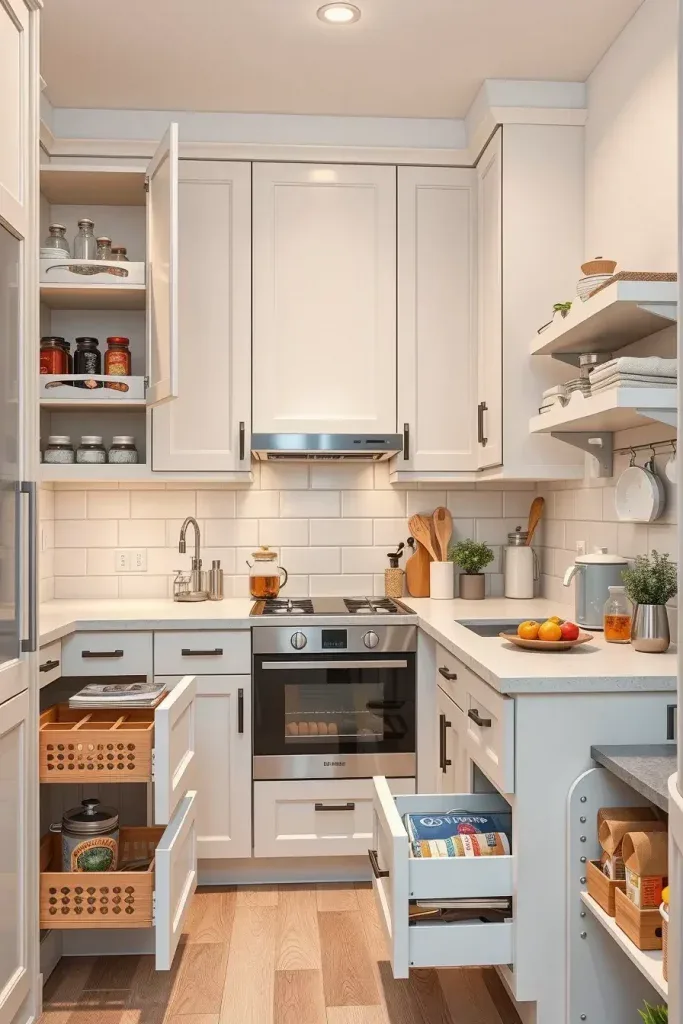
Let’s be real, tiny kitchens are the ultimate test of patience. One minute you’re chopping onions, the next you’re playing Tetris with your spice rack because there’s literally nowhere else to put the damn thing. I learned this the hard way when I moved from a Bay Area shoebox (which, in hindsight, had a *generous* kitchen) to a Nashville apartment where the fridge and stove seemed to be in a staring contest over who could claim the least floor space. Luna, my rescue cat, watches me with what I can only describe as pity as I attempt to cook anything more complex than scrambled eggs. “You’re doing this to yourself,” her judgmental little face seems to say. And she’s not wrong.
But here’s the thing: small kitchens don’t have to feel like a punishment. With the right space-saving strategies, you can turn even the most cramped culinary corner into a functional, almost *enjoyable* workspace. The key? Stop thinking about what you *don’t* have and start getting creative with what you *do*. Over the past few years, I’ve tested, failed, and retested more small kitchen solutions than I care to admit, some brilliant, some baffling, and a few that made me question my life choices. (Looking at you, over-the-sink cutting board that sent my knife into the abyss.) This isn’t just another list of “hang your pots from the ceiling” tips. These are the real-deal, battle-tested small kitchen solutions that’ll save you space, sanity, and maybe even a few dinner parties.
By the end of this, you’ll know how to:
- Maximize vertical space without turning your kitchen into a storage unit
- Choose multi-functional tools that don’t require a PhD to operate
- Organize your cabinets so you’re not excavating for the olive oil every time you cook
- Create illusions of space that’ll make your kitchen *feel* twice as big (even if it isn’t)
- Avoid the common mistakes that make tiny kitchens feel even smaller
So, if you’re ready to stop treating your kitchen like a puzzle you can’t solve, let’s dive in. And if you’re skeptical? Good. I was too. But trust me, some of these ideas might just change your mind. (And if they don’t, at least you’ll have a great story about the time you tried to install a pegboard in a rental.)
The Psychology of Small Kitchens: Why They Feel So Damn Overwhelming
Before we get into the nitty-gritty of space-saving hacks, let’s talk about why small kitchens feel like such a special kind of hell. It’s not just the lack of square footage, it’s the *psychology* of it. Kitchens are supposed to be the heart of the home, right? The place where you chop, sauté, and sip wine while pretending you’re on a cooking show. But when your kitchen is the size of a walk-in closet, that dream feels about as realistic as Luna learning to cook. (Spoiler: She’s more interested in knocking things off counters.)
Here’s the thing: our brains are wired to associate open space with freedom and possibility. When you’re crammed between a counter and a fridge that’s plotting to take over the world, your brain goes into “fight or flight” mode. Suddenly, even the simplest tasks, like boiling pasta, feel like a Herculean effort. And don’t even get me started on the clutter guilt. Every time you leave a dish in the sink or a pot on the stove, it’s like a tiny voice in your head screams, “THIS IS WHY YOU CAN’T HAVE NICE THINGS.”
But here’s the good news: once you understand *why* small kitchens feel so oppressive, you can start hacking your brain to make them feel more manageable. It’s not about magically creating more space (though we’ll get to that). It’s about changing your *relationship* with the space you have. For example:
- Lighting matters more than you think. A well-lit kitchen feels bigger, even if the dimensions haven’t changed. Swap out that harsh overhead light for warm, layered lighting, under-cabinet LEDs, a small pendant light, or even a strategically placed floor lamp can make a world of difference.
- Color is your secret weapon. Dark colors absorb light and make spaces feel smaller. Light, bright colors (think whites, soft grays, or pale blues) reflect light and create the illusion of openness. Even if you can’t paint your cabinets, a light-colored backsplash or countertop can help.
- Decluttering isn’t just about aesthetics. It’s about reducing decision fatigue. When every item has a home, you’re not wasting mental energy wondering where to put things. And when you’re not constantly dodging clutter, your brain perceives the space as larger.
Is this the be-all and end-all of small kitchen psychology? Probably not. But it’s a start. And honestly, sometimes just *acknowledging* why your kitchen feels like a war zone can make it feel a little less personal. (Though if your fridge is still judging you, that’s between you and the appliance gods.)
Vertical Space: The Final Frontier (And Why You’re Ignoring It)
If I had a dollar for every time someone told me to “use vertical space” in my tiny kitchen, I could afford a down payment on a house with a *normal* kitchen. But here’s the thing: most people *say* they’re using vertical space, but they’re doing it all wrong. Slapping a few hooks on the wall and calling it a day isn’t going to cut it. True vertical optimization is about thinking *three-dimensionally*-like you’re playing a game of kitchen Jenga where every move counts.
Let’s start with the most obvious (and often most wasted) vertical real estate: the walls. Most kitchens have at least one blank wall that’s just begging to be put to work. But before you start drilling holes, ask yourself: *What do I use most often, and what can I get off the counters?* For me, that was pots, pans, and utensils. I installed a pegboard (yes, like the ones in garages, but way cuter) and suddenly, my countertops were free of clutter. The key here is to *customize* it. Pegboards aren’t just for hanging things, they’re for *organizing* things. Use hooks, shelves, and even magnetic strips to create a system that works for *your* workflow.
But what if you’re renting and can’t drill into the walls? No problem. Tension rods are your new best friend. Hang them between cabinets or even inside cabinets to create instant storage for cutting boards, foil, or lightweight tools. And if you’re feeling fancy, you can use them to hang S-hooks for mugs, measuring cups, or even small baskets. It’s not permanent, it’s not expensive, and it’s *way* more effective than shoving everything into a drawer.
Now, let’s talk about the space above your cabinets. If you’ve got a gap between your upper cabinets and the ceiling, you’re sitting on prime real estate. Most people use this space to collect dust (guilty), but it’s actually perfect for storing items you don’t use daily. Think: holiday serving platters, backup appliances, or even a rolling cart that can be pulled down when needed. Just make sure whatever you store up there is lightweight and easy to access. The last thing you want is to knock over a tower of Tupperware every time you reach for the salt.
And here’s a pro tip: magnetic strips aren’t just for knives. Install them on the side of your fridge or even on the wall to hold spice jars, measuring spoons, or even small utensils. It’s like having a mini command center that’s always within reach. Plus, it looks weirdly satisfying to see everything lined up like a culinary army. (Yes, I just compared my spice rack to an army. No, I don’t regret it.)
Is this the most revolutionary advice ever? Probably not. But it’s the kind of thing that makes you wonder, *Why didn’t I think of this sooner?* And honestly, that’s half the battle with small kitchens, realizing that the solutions are often hiding in plain sight.
Multi-Functional Tools: The Swiss Army Knives of the Kitchen
Let’s talk about the multi-functional tool paradox: the more gadgets you have, the less space you have to use them. It’s a cruel irony, really. You buy a fancy spiralizer to make zucchini noodles, use it once, and then it sits in a drawer for the next six months, mocking you every time you open it. Meanwhile, your kitchen is so cluttered with single-use tools that you can barely find the one thing you *actually* need, a decent knife.
The solution? Stop buying tools that do one thing and one thing only. Instead, invest in multi-functional kitchen tools that pull double (or triple) duty. Not only will this save you space, but it’ll also save you money in the long run. And let’s be honest, most of us don’t have the square footage (or the budget) for a gadget graveyard.
Here’s the thing: the best multi-functional tools aren’t always the ones that *look* the fanciest. Sometimes, it’s the simplest items that end up being the most versatile. Take, for example, the humble cast-iron skillet. It’s a frying pan, a baking dish, a griddle, and even a serving platter all in one. Plus, it lasts forever. (Seriously, my grandmother’s cast-iron skillet is older than I am, and it’s still going strong.) Compare that to a single-use waffle maker that takes up half your cabinet and you’ll see why I’m a convert.
But let’s get specific. Here are some of my favorite space-saving, multi-functional tools that won’t leave you feeling like you’re compromising on functionality:
- Instant Pot (or any multi-cooker). It’s a pressure cooker, slow cooker, rice cooker, steamer, and even a yogurt maker. If you only have space for one appliance, this is the one to get. Plus, it’s a game-changer for meal prep in small kitchens. Just don’t tell Luna I said that, she’s still convinced the Instant Pot is plotting against her.
- Immersion blender. It’s a blender, a whisk, and a food processor all in one. And unlike a traditional blender, it takes up about as much space as a large spoon. Perfect for soups, sauces, and even homemade mayo (if you’re feeling fancy).
- Microplane. It’s a grater, a zester, and a cheese shredder. Plus, it’s small enough to fit in a drawer. Use it for everything from citrus zest to Parmesan cheese to ginger. Just be careful, those things are sharper than they look.
- Bench scraper. It’s a dough cutter, a vegetable chopper, a bench cleaner, and a makeshift spatula. It’s also one of those tools that you don’t realize you need until you have one. Suddenly, transferring chopped veggies to a pan is a breeze, and your counter stays cleaner.
- Adjustable measuring cup. Instead of a set of individual measuring cups, get one that adjusts to different sizes. It’s a space-saver and a lifesaver when you’re trying to measure out 1/3 cup of flour and don’t want to dig through a drawer.
Now, I know what you’re thinking: *But Sammy, what if I *like* my single-use gadgets?* And to that, I say: fair enough. If you’re a die-hard waffle enthusiast and can’t live without your waffle maker, I’m not here to judge. (Okay, maybe a little.) But ask yourself: *How often do I actually use this?* If the answer is “less than once a month,” it might be time to reconsider. Because in a small kitchen, every inch counts, and that includes the inches taken up by tools you never use.
And here’s a bonus tip: repurpose what you already have. That colander you use for pasta? It’s also a steamer. That baking sheet you use for cookies? It’s also a makeshift lid for pots. That mason jar you use for iced coffee? It’s also a measuring cup, a storage container, and a drinking glass. The more you can think outside the box (or in this case, outside the tool’s intended use), the less you’ll need to buy, and the more space you’ll save.
Cabinet Organization: Because Digging for the Olive Oil Shouldn’t Be an Archaeological Expedition
If there’s one thing that’ll make you want to scream in a small kitchen, it’s digging through a cabinet full of mismatched Tupperware lids, expired spices, and that one pot you *swear* you’ll use someday. (Spoiler: you won’t.) Cabinet organization isn’t just about aesthetics, it’s about sanity preservation. When you can actually *find* what you need without turning your kitchen into a disaster zone, cooking becomes less of a chore and more of a (dare I say) enjoyable experience.
But here’s the problem: most cabinet organization advice is either too generic (*”use bins!”)* or too specific (*”install custom pull-out shelves!”)*. And if you’re renting or on a budget, neither of those options is particularly helpful. So let’s talk about realistic, affordable ways to organize your cabinets so they work *for* you, not against you.
First, let’s tackle the Tupperware situation. We’ve all been there, you open a cabinet, and it’s like a plastic avalanche. The key to taming the beast? Nesting. But not just any nesting. You need a system that actually *works*. Here’s what I do:
- Match lids to containers. Sounds obvious, but most of us don’t do it. Store lids in a separate bin or even on a lid organizer that hangs on the inside of the cabinet door. That way, you’re not digging through a pile of plastic every time you need to store leftovers.
- Use the “one in, one out” rule. If you buy a new container, get rid of an old one. This keeps the clutter from spiraling out of control. And if you’re feeling brave, donate the extras to a local shelter or food bank.
- Stack vertically, not horizontally. Instead of stacking containers on top of each other (which inevitably leads to a Jenga-like collapse), store them side by side in a bin or on a shelf. This way, you can see what you have at a glance.
Next up: spices. If your spice cabinet looks like a bomb went off, you’re not alone. But here’s the thing: most of us don’t need 47 different spices. We just need the ones we *actually* use. So before you buy another organizer, do a spice audit. Toss anything that’s expired (yes, spices do expire), and donate duplicates. Then, organize what’s left in a way that makes sense for *your* cooking style. Some ideas:
- Alphabetical order. Simple, but effective. If you’re the type of person who knows exactly what you’re looking for, this is the way to go.
- By cuisine. Group spices by the type of food they’re used in, Italian, Mexican, Indian, etc. This works well if you tend to cook in themes (Taco Tuesday, anyone?).
- By frequency of use. Keep the spices you use most often in the front, and the ones you use occasionally in the back. This way, you’re not digging through a sea of cumin every time you need salt.
And here’s a pro tip: use a tiered spice rack. This way, you can see all your spices at once, and you’re not playing “guess which jar is paprika.” If you’re really tight on space, consider magnetic spice jars that stick to the side of your fridge or a metal backsplash. It’s a game-changer.
Now, let’s talk about pots and pans. If you’re storing them in a pile, you’re doing it wrong. Not only is it a pain to dig through, but it’s also a great way to scratch your non-stick coatings. Instead, try one of these methods:
- Hang them. If you have the space, a pot rack is a great way to free up cabinet space. Plus, it looks pretty damn cool. If you’re renting, consider a wall-mounted rack or even a ceiling-mounted one (if you’re feeling ambitious).
- Use a lid organizer. Store pots and pans vertically in a deep drawer or on a pull-out shelf, with the lids stored separately. This way, you can see what you have at a glance, and you’re not stacking heavy items on top of each other.
- Nest them. If you’re short on space, nesting is the way to go. Store smaller pots inside larger ones, and use dividers to keep them from scratching. Just make sure you’re not stacking too many, you don’t want to turn your cabinet into a Jenga tower.
Finally, let’s talk about the junk drawer. We all have one, and we all pretend it doesn’t exist. But here’s the thing: a junk drawer doesn’t have to be a black hole of randomness. With a little organization, it can actually be *useful*. Here’s how:
- Use small bins or dividers. Group like items together, batteries with batteries, pens with pens, etc. This way, you’re not digging through a sea of randomness every time you need a rubber band.
- Label everything. If you’re the type of person who forgets what’s in a bin, label it. It’s a small step, but it makes a big difference.
- Purge regularly. Junk drawers have a way of accumulating *stuff*. Set a reminder to clean yours out every few months. Trust me, you’ll thank yourself later.
Is this the most exciting topic in the world? No. But is it *necessary*? Absolutely. Because when your cabinets are organized, your kitchen feels bigger, your cooking becomes easier, and you’re not wasting time (and patience) digging for the damn olive oil.
The Illusion of Space: Tricks to Make Your Kitchen Feel Bigger (Without Moving Walls)
Let’s be honest: no amount of space-saving tips is going to turn a closet-sized kitchen into a chef’s paradise. But here’s the good news, you don’t *need* more square footage to make your kitchen *feel* bigger. With a few visual tricks, you can create the *illusion* of space, and suddenly, your tiny kitchen won’t feel quite so claustrophobic. It’s like magic, but with less top hats and more lighting and mirrors.
First, let’s talk about lighting. If your kitchen is dark and dingy, it’s going to feel small, no matter how much space you actually have. But if it’s bright and airy? Suddenly, it’s a *cozy* kitchen instead of a *cramped* one. The key is to layer your lighting-combine ambient, task, and accent lighting to create depth and dimension. Here’s how:
- Ambient lighting. This is your main light source, think overhead fixtures, recessed lighting, or even a large pendant light. The goal is to evenly illuminate the space without creating harsh shadows.
- Task lighting. This is where you focus on specific areas, like under-cabinet lighting for your countertops or a small lamp near your stove. Task lighting not only makes cooking easier but also draws the eye to specific areas, creating the illusion of more space.
- Accent lighting. This is the *cherry on top*-think LED strips under your cabinets, a small spotlight on a piece of art, or even a string of fairy lights. Accent lighting adds warmth and depth, making your kitchen feel more inviting.
Now, let’s talk about mirrors. Mirrors are one of the oldest tricks in the book for making a space feel larger, and for good reason, they reflect light and create the illusion of depth. But in a kitchen, you have to be strategic. A full-length mirror might not be practical (or sanitary), but there are other ways to incorporate mirrors into your space:
- Mirrored backsplash. If you’re feeling ambitious (and have the budget), a mirrored backsplash can make your kitchen feel twice as big. Plus, it’s a great way to reflect light and add a touch of glamour.
- Mirrored cabinet doors. Swap out your standard cabinet doors for mirrored ones. Not only will this make your kitchen feel larger, but it’ll also reflect the light from your windows, making the space feel brighter.
- Small decorative mirrors. If you’re renting or on a budget, a few small decorative mirrors can do the trick. Hang them on the wall or even lean them against the backsplash for a quick and easy illusion of space.
Next up: color. I touched on this earlier, but it’s worth repeating-light colors make a space feel larger. But it’s not just about white walls (though those are a great start). Here’s how to use color to your advantage:
- Monochromatic color scheme. Stick to one color family (whites, grays, or soft blues) for your walls, cabinets, and countertops. This creates a seamless look that makes the space feel larger.
- Contrasting accents. If you want to add a pop of color, do it with small accents, think a colorful backsplash, a bright rug, or even a few colorful dishes. Just don’t go overboard, too many colors can make a small space feel cluttered.
- Glossy finishes. Glossy paint, lacquered cabinets, and shiny countertops reflect light, making your kitchen feel brighter and more open. Just be aware that glossy finishes can show smudges and fingerprints, so they might not be the best choice if you have kids or pets.
And here’s a pro tip: keep your countertops clear. I know, I know, this is easier said than done. But countertops are prime real estate in a small kitchen, and the more clutter you have on them, the smaller your kitchen will feel. So, find a home for everything, and keep your counters as clear as possible. If you *must* have something on your counters, make it something useful and beautiful, like a fruit bowl or a small plant.
Finally, let’s talk about flooring. If your floors are dark or busy, they can make your kitchen feel smaller. But if they’re light and simple, they can create the illusion of more space. Here’s what to look for:
- Light-colored flooring. Light wood, tile, or vinyl can make your kitchen feel larger. Just make sure it complements the rest of your color scheme.
- Large tiles or planks. Small tiles or busy patterns can make a space feel cluttered. Instead, opt for large tiles or wide planks to create a seamless look.
- Continuous flooring. If possible, use the same flooring throughout your kitchen and adjacent spaces. This creates a sense of flow and makes your kitchen feel larger.
Is this going to magically double the size of your kitchen? No. But it *will* make it feel more open, more inviting, and, dare I say, more enjoyable to cook in. And at the end of the day, that’s what matters.
Furniture That Pulls Double Duty (And Doesn’t Scream “I Live in a Tiny Apartment”)
If your kitchen is so small that your dining table is also your prep station, your desk, and the place where you fold laundry, you’re not alone. But here’s the thing: multi-functional furniture doesn’t have to look like it belongs in a dorm room. With a little creativity (and maybe a trip to IKEA), you can find pieces that are as stylish as they are practical. The key is to think beyond the obvious-a table isn’t just a table, and a chair isn’t just a chair. They’re opportunities to save space and add personality to your kitchen.
Let’s start with the dining table. If you’re working with a tiny kitchen, a traditional dining table is probably out of the question. But that doesn’t mean you have to eat standing up. Instead, consider one of these space-saving alternatives:
- Drop-leaf table. This is a table with leaves that fold down when not in use. It’s perfect for small kitchens because it can be tucked against the wall when you’re not eating, and expanded when you have guests. Plus, it’s a great way to add a little charm to your space.
- Wall-mounted table. If you’re *really* tight on space, a wall-mounted table is a game-changer. It folds down when not in use, and when it’s up, it’s a fully functional dining surface. Just make sure it’s sturdy enough to hold your weight (and your wine glass).
- Bar cart. A bar cart isn’t just for cocktails, it’s also a great way to add extra surface space to your kitchen. Use it as a mini dining table, a prep station, or even a place to store snacks. Plus, it’s on wheels, so you can move it around as needed.
- Kitchen island on wheels. If you have a little more space, a rolling kitchen island is a great way to add storage and surface area. Use it as a prep station, a dining table, or even a bar. And when you’re not using it, just roll it out of the way.
Now, let’s talk about seating. If your kitchen is small, you probably don’t have room for a full dining set. But that doesn’t mean you have to eat on the floor. Instead, consider these space-saving seating options:
- Backless stools. Backless stools are a great way to save space because they can be tucked under a counter or table when not in use. Plus, they’re lightweight and easy to move around.
- Foldable chairs. Foldable chairs are a classic for a reason, they’re easy to store and can be pulled out when you have guests. Just make sure they’re comfortable enough for a full meal.
- Built-in benches. If you’re feeling ambitious, a built-in bench is a great way to add seating without taking up too much space. Plus, it doubles as storage. Just make sure it’s comfortable, no one wants to eat on a wooden plank.
- Ottomans with storage. Ottomans aren’t just for living rooms, they’re also a great way to add seating to your kitchen. Look for ones with storage inside, so you can stash extra napkins, placemats, or even snacks.
And here’s a bonus tip: use your walls. If you’re short on floor space, look up. A wall-mounted shelf or pegboard can be a great place to store dishes, glasses, or even a small microwave. Plus, it frees up valuable counter and cabinet space. Just make sure whatever you hang is secure, no one wants a shelf full of plates crashing down during dinner.
But what if you’re renting and can’t make any permanent changes? No problem. Temporary solutions can be just as effective. Here are a few ideas:
- Tension rods. Hang them between cabinets or even inside cabinets to create instant storage for cutting boards, foil, or lightweight tools.
- Over-the-door organizers. These are great for storing spices, snacks, or even cleaning supplies. Just make sure they’re sturdy enough to hold what you need.
- Command hooks. Use them to hang mugs, utensils, or even a small shelf. They’re easy to install and won’t damage your walls.
- Rolling carts. A rolling cart is a great way to add extra storage and surface space. Use it as a prep station, a bar, or even a mini pantry. And when you’re not using it, just roll it out of the way.
Is this the most glamorous solution? Maybe not. But is it *practical*? Absolutely. And at the end of the day, that’s what matters in a small kitchen. Because when you’re not tripping over furniture or playing Tetris with your dining table, cooking becomes a whole lot more enjoyable.
Common Mistakes That Make Small Kitchens Feel Even Smaller
You’d think that after years of living in tiny kitchens, I’d have this whole small kitchen thing figured out. But no, even now, I still catch myself making rookie mistakes that make my space feel even more cramped. And the worst part? Most of these mistakes are *totally avoidable*. So, let’s talk about the small kitchen pitfalls that are probably sabotaging your space (and how to fix them).
First up: overcrowding your countertops. I get it, when you’re short on cabinet space, the counters seem like the next best option. But here’s the thing: cluttered counters = cluttered mind. Every time you leave a dish, a tool, or a random bag of chips on the counter, you’re making your kitchen feel smaller. It’s like death by a thousand paper cuts, but with spatulas.
The fix? Find a home for everything. If you don’t have enough cabinet space, get creative, hang things on the wall, store them in bins, or even use a rolling cart that can be tucked away when not in use. And if you *must* have something on the counter, make it something useful and beautiful. A fruit bowl, a small plant, or even a pretty cutting board can add personality without making your kitchen feel like a storage unit.
Next: ignoring the power of decluttering. I’m not talking about a full-on Marie Kondo moment (though if that’s your thing, more power to you). I’m talking about regularly purging the stuff you don’t use. That waffle maker you used once? Gone. The set of measuring cups you never touch? Donated. The expired spices in the back of the cabinet? Tossed. The more you edit your belongings, the more space you’ll have for the things you *actually* need.
Here’s a hard truth: most of us use about 20% of our kitchen tools 80% of the time. The rest? They’re just taking up space. So, do a kitchen audit. Pull everything out of your cabinets and drawers, and ask yourself: *Do I use this? Do I love this? Would I buy this again today?* If the answer is no, it’s time to let it go. And if you’re feeling guilty about getting rid of something, remember, someone else might actually *use* that waffle maker.
Another common mistake: poor lighting. If your kitchen is dark and dingy, it’s going to feel small, no matter how much space you actually have. But if it’s bright and airy? Suddenly, it’s a *cozy* kitchen instead of a *cramped* one. The key is to layer your lighting-combine ambient, task, and accent lighting to create depth and dimension.
And here’s a mistake I see *all the time*: using dark colors. Dark colors absorb light and make spaces feel smaller. If your kitchen is already tiny, the last thing you want is to make it feel like a cave. Instead, opt for light, bright colors-whites, soft grays, or pale blues. They reflect light and create the illusion of openness. And if you *must* have a pop of color, do it with small accents, think a colorful backsplash, a bright rug, or even a few colorful dishes.
Finally, let’s talk about furniture that doesn’t fit. If your kitchen is small, you probably don’t have room for a full dining set. But that doesn’t mean you have to eat on the floor. Instead, opt for space-saving furniture-think a drop-leaf table, a wall-mounted table, or even a rolling cart. The key is to measure before you buy. The last thing you want is to bring home a new table, only to realize it doesn’t fit through the door.
Is this the most exciting topic in the world? No. But is it *necessary*? Absolutely. Because when you avoid these common mistakes, your kitchen will feel bigger, your cooking will be easier, and you won’t want to scream every time you open a cabinet.
Renter-Friendly Hacks: Because Landlords Hate Holes in the Walls
Ah, renting. The ultimate test of creativity when it comes to small kitchen solutions. You want to organize your space, but your landlord has made it *very* clear that holes in the walls are a no-go. So, what’s a renter to do? Get creative, that’s what. Because just because you can’t drill into the walls doesn’t mean you can’t maximize your space. Here are some renter-friendly hacks that’ll help you organize your kitchen without losing your security deposit.
First up: tension rods. These little lifesavers are a renter’s best friend. Hang them between cabinets or even inside cabinets to create instant storage for cutting boards, foil, or lightweight tools. And if you’re feeling fancy, you can use them to hang S-hooks for mugs, measuring cups, or even small baskets. The best part? They’re easy to install, and they won’t damage your walls.
Next: over-the-door organizers. These are great for storing spices, snacks, or even cleaning supplies. Just make sure they’re sturdy enough to hold what you need. And if you’re worried about scratching the door, opt for ones with soft backing or adhesive strips. They’re not as strong as the ones with hooks, but they’ll still get the job done.
And here’s a hack I *wish* I’d known about sooner: command hooks. These little guys are a game-changer. Use them to hang mugs, utensils, or even a small shelf. They’re easy to install, they won’t damage your walls, and they can hold a surprising amount of weight. Just make sure you follow the instructions, if you don’t let the adhesive set for the full amount of time, they *will* fall off. (Ask me how I know.)
But what if you need more than just hooks? Enter: freestanding shelves. These are a great way to add extra storage without drilling into the walls. Look for ones that are narrow and tall-they’ll take up less floor space, and they’ll give you plenty of vertical storage. And if you’re worried about them toppling over, opt for ones with wider bases or even wall anchors (if your landlord allows it).
And here’s a bonus tip: use your fridge. If you’re short on space, your fridge is prime real estate. Hang a magnetic spice rack on the side, or use magnetic bins to store small items. You can even use magnetic hooks to hang lightweight tools. Just make sure whatever you hang is secure, no one wants a spice rack crashing down during dinner.
Finally, let’s talk about rolling carts. These are a renter’s dream. Use them as a prep station, a bar, or even a mini pantry. And when you’re not using them, just roll them out of the way. The best part? They’re not permanent, so you can take them with you when you move. Just make sure they’re sturdy enough to hold what you need, no one wants a wobbly cart full of dishes.
Is this the most glamorous solution? Maybe not. But is it *practical*? Absolutely. And at the end of the day, that’s what matters in a small kitchen. Because when you’re not tripping over clutter or playing Tetris with your furniture, cooking becomes a whole lot more enjoyable. (And your landlord will thank you.)
The Future of Small Kitchens: Trends to Watch (And Which Ones to Ignore)
Let’s take a quick break from the here and now and talk about the future of small kitchens. Because if there’s one thing I’ve learned from years of writing about food and design, it’s that trends come and go faster than Luna’s interest in her catnip mouse. (Spoiler: it’s about 30 seconds.) But some trends? They stick around because they’re *actually* useful. So, what’s on the horizon for small kitchens, and which trends are worth your time (and which ones should you skip like last year’s avocado toast)?
First, let’s talk about smart storage. We’ve all seen those pull-out pantries and hidden cabinets in design magazines, but here’s the thing: they’re not just for show. Modular storage solutions are becoming more affordable and more accessible, and they’re a game-changer for small kitchens. Think customizable shelving, pull-out drawers, and even hidden compartments that maximize every inch of space. The key is to think vertically-the more you can store *up*, the more floor space you’ll have to work with.
But here’s the catch: not all smart storage is created equal. Some of it is *way* too complicated (looking at you, motorized cabinets that require an engineering degree to operate). And some of it is just plain *ugly*. So, before you invest in a fancy new storage system, ask yourself: *Is this actually going to make my life easier, or is it just going to make my kitchen look like a spaceship?* If the answer is the latter, it might be time to reconsider.
Next up: multi-functional appliances. We’ve already talked about the Instant Pot, but the future of small kitchens is all about appliances that do more with less. Think combo microwaves/air fryers, induction cooktops with built-in ventilation, and even countertop dishwashers that take up less space than a toaster. The goal is to consolidate functions so you’re not cluttering up your kitchen with a million different gadgets.
But here’s the thing: not all multi-functional appliances are worth the hype. Some of them are *way* too niche (looking at you, breakfast sandwich maker). And some of them are just plain *overpriced*. So, before you buy, ask yourself: *Is this something I’ll actually use, or is it just a gimmick?* If the answer is the latter, it might be time to stick with the classics.
Now, let’s talk about sustainability. The future of small kitchens isn’t just about saving space, it’s about saving the planet. And that means eco-friendly materials, energy-efficient appliances, and zero-waste storage solutions. Think bamboo cutting boards, reusable silicone bags, and compostable dish sponges. The key is to think long-term-the more sustainable your kitchen is, the less waste you’ll produce, and the more money you’ll save in the long run.
But here’s the catch: not all sustainable products are created equal. Some of them are *way* too expensive (looking at you, $50 reusable straws). And some of them are just plain *impractical*. So, before you go all-in on sustainability, ask yourself: *Is this something I’ll actually use, or is it just a status symbol?* If the answer is the latter, it might be time to start small, think reusable grocery bags or compostable trash bags.
Finally, let’s talk about minimalism. The future of small kitchens isn’t just about maximizing space-it’s about minimizing clutter. And that means editing your belongings, investing in quality over quantity, and embracing a “less is more” mindset. Think open shelving, hidden storage, and clean lines. The goal is to create a kitchen that feels calm, functional, and clutter-free.
But here’s the thing: minimalism isn’t for everyone. Some people *like* their clutter, it makes them feel cozy, lived-in, and *themselves*. And that’s okay! The key is to find a balance-keep the things you love, get rid of the things you don’t, and create a space that works for *you*. Because at the end of the day, your kitchen should reflect *your* personality, not some trendy ideal.
So, which trends are worth your time? Here’s my take:
- Smart storage. If it makes your life easier, go for it. Just make sure it’s *actually* smart, not just a gimmick.
- Multi-functional appliances. If it consolidates functions and saves space, it’s a win. Just make sure it’s something you’ll *actually* use.
- Sustainability. If it’s affordable and practical, it’s a no-brainer. Just don’t break the bank trying to save the planet.
- Minimalism. If it makes your kitchen feel calmer and more functional, embrace it. Just don’t feel like you have to get rid of everything you love.
And which trends should you skip? Here’s my hot take:
- Overly complicated storage. If it requires an engineering degree to operate, it’s not worth it.
- Niche appliances. If it only does one thing (and you’ll only use it once a year), it’s a waste of space.
- Expensive sustainable products. If it’s not practical, it’s not worth the hype.
- Forced minimalism. If it makes your kitchen feel sterile and unlived-in, it’s not for you.
At the end of the day, the future of small kitchens is all about balance. It’s about maximizing space without sacrificing functionality, embracing sustainability without breaking the bank, and **creating a space that works for *you***. Because the best kitchen isn’t the one that follows the latest trends, it’s the one that makes you *happy*.
Final Thoughts: Your Small Kitchen Doesn’t Have to Suck
Look, I’m not going to lie, small kitchens are a pain in the ass. There’s no getting around it. But here’s the thing: they don’t have to *feel* like a pain in the ass. With the right space-saving strategies, a little creativity, and a healthy dose of ”fuck it, I’ll make it work,” you can turn even the tiniest kitchen into a space that’s functional, enjoyable, and, dare I say-*yours*.
So, where do you go from here? Start small. Pick *one* area of your kitchen to tackle, maybe it’s the cluttered countertops, the chaotic cabinets, or the lack of vertical storage. Don’t try to do everything at once. Rome wasn’t built in a day, and your dream kitchen won’t be either. (And if it is, please teach me your ways.)
And remember: perfection is overrated. Your kitchen doesn’t have to look like it belongs in a magazine to be functional. It just has to work for *you*. So, if that means your spice rack is a little crooked or your pots are hanging from a tension rod, who cares? As long as it makes your life easier, it’s a win in my book.
Now, if you’ll excuse me, I have to go stop Luna from knocking my newly organized spice rack onto the floor. Wish me luck.
FAQ: Small Kitchen Solutions You’re Too Embarrassed to Ask About
Q: I’ve tried organizing my small kitchen, but it always ends up a mess again. What am I doing wrong?
A: You’re probably making one (or all) of these mistakes: 1) You’re not decluttering first. Organization doesn’t work if you’re trying to organize *too much stuff*. 2) You’re not designating a home for everything. If an item doesn’t have a specific place, it’ll end up wherever it lands. 3) You’re not maintaining the system. Organization is an ongoing process, not a one-time event. Set a reminder to tidy up once a week, and stick to it. And if all else fails, just remember: even the most organized kitchens look like a disaster zone after a dinner party. It’s not you, it’s the universe.
Q: My kitchen is so small that I don’t even have room for a dining table. What are my options?
A: First of all, take a deep breath, you’re not doomed to eat standing up forever. Here are a few space-saving dining solutions: 1) A drop-leaf table that folds down when not in use. 2) A wall-mounted table that folds down from the wall. 3) A bar cart that doubles as a dining surface. 4) A rolling kitchen island that can be moved around as needed. And if all else fails, embrace the floor picnic. Sometimes, the simplest solutions are the best.
Q: I’m renting, so I can’t make any permanent changes. How can I maximize my small kitchen without losing my security deposit?
A: Renting doesn’t mean you’re stuck with a dysfunctional kitchen. Here are some renter-friendly hacks: 1) Tension rods for hanging cutting boards, foil, or lightweight tools. 2) Over-the-door organizers for spices, snacks, or cleaning supplies. 3) Command hooks for hanging mugs, utensils, or small shelves. 4) Freestanding shelves for extra storage. 5) Rolling carts for additional surface space. The key is to think temporary-if you can’t drill into the walls, find solutions that don’t require it. And if your landlord gives you grief, just remind them that a well-organized kitchen is a happy kitchen (and a happy tenant).
Q: I keep hearing about “multi-functional tools,” but I’m not sure what that actually means. Can you give me some examples?
A: Absolutely! Multi-functional tools are exactly what they sound like, tools that do more than one thing. Here are a few of my favorites: 1) An Instant Pot (pressure cooker, slow cooker, rice cooker, steamer, and yogurt maker all in one). 2) An immersion blender (blender, whisk, and food processor in one). 3) A Microplane (grater, zester, and cheese shredder). 4) A bench scraper (dough cutter, vegetable chopper, bench cleaner, and makeshift spatula). 5) An adjustable measuring cup (replaces a set of individual measuring cups). The goal is to consolidate functions so you’re not cluttering up your kitchen with a million different gadgets. And if you’re not sure whether a tool is worth it, ask yourself: *Will I use this at least once a month?* If the answer is no, it’s probably not worth the space.
@article{small-kitchen-solutions-space-saving-tips-that-actually-work-and-wont-make-you-claustrophobic,
    title   = {Small Kitchen Solutions: Space-Saving Tips That Actually Work (And Won’t Make You Claustrophobic)},
    author  = {Chef's icon},
    year    = {2026},
    journal = {Chef's Icon},
    url     = {https://chefsicon.com/small-kitchen-solutions-space-saving-tips/}
}