The Best Fluffy Pancakes recipe you will fall in love with. Full of tips and tricks to help you make the best pancakes.
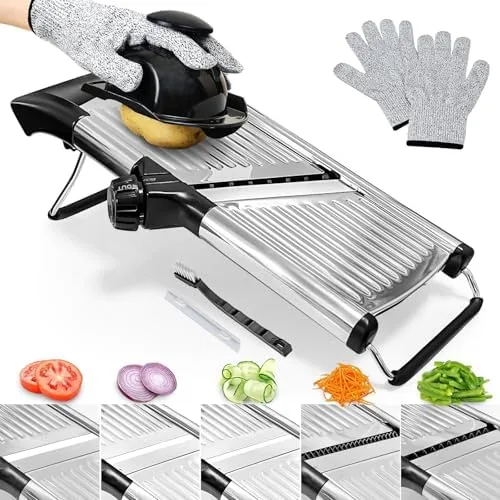
How to Choose the Best Commercial Mandoline for High-Volume Julienne Cuts
Let me set the scene: It’s 5:30 PM on a Friday, the dinner rush is in full swing, and your line cook just called in sick. The ticket rail is piling up, and the chef de cuisine is staring at you like you’re the only thing standing between him and a kitchen meltdown. You glance at the prep station, there’s a mountain of carrots, zucchini, and potatoes that need to be julienned yesterday. Your knife skills are solid, but even on your best day, you can’t match the speed of a good commercial mandoline. Problem is, you’ve never actually picked one out before, and the last thing you need is a tool that slows you down or, worse, sends someone to the ER.
I get it. I’ve been there, standing in front of a wall of shiny, intimidating mandolines at a restaurant supply store, wondering if I’m about to drop a grand on something that’ll either be a game-changer or a glorified paperweight. When I first moved to Nashville and started working with high-volume catering companies, I made the mistake of assuming all mandolines were created equal. Spoiler alert: they’re not. Some are built for delicate home cooks, others for industrial kitchens where speed and durability are non-negotiable. And when it comes to julienne cuts, those perfect, matchstick-thin strips that make salads, stir-fries, and garnishes sing, you need a tool that won’t quit on you mid-service.
So, how do you choose the right commercial mandoline for high-volume julienne cuts? It’s not just about picking the most expensive model or the one with the fanciest blades. You’ve got to consider blade material, adjustability, safety features, ease of cleaning, and, let’s be real, whether it’ll survive the chaos of a commercial kitchen. In this guide, I’ll walk you through everything I’ve learned from years of testing, breaking, and (occasionally) cursing at mandolines in professional kitchens. By the end, you’ll know exactly what to look for, and what to avoid, so you can make an informed decision that keeps your prep station running smoothly, your staff safe, and your dishes looking sharp.
Oh, and full disclosure: I’m not a gearhead. I don’t get starry-eyed over the latest gadgets just because they’ve got a sleek design or a celebrity chef’s name slapped on them. What I care about is whether a tool actually works-whether it saves time, reduces waste, and makes my life (and my team’s lives) easier. So if you’re looking for a fluff piece about the “top 10 mandolines of 2026,” you’re in the wrong place. This is about the nitty-gritty, the stuff that matters when you’re staring down a 50-pound bag of potatoes and a ticket for 200 covers. Let’s dive in.
The Anatomy of a Commercial Mandoline: What You’re Really Paying For
Before we get into the weeds, let’s break down what a commercial mandoline actually is. At its core, it’s a slicing tool with a flat, angled surface and interchangeable blades that allow you to cut vegetables (and sometimes fruits or even proteins) into uniform slices, juliennes, or other shapes. But not all mandolines are built for the same purpose. A home cook’s mandoline might look similar to a commercial one, but the differences under the hood are what separate a tool that’ll last a year from one that’ll last a decade.
First, let’s talk about the base. Commercial mandolines typically have a heavy-duty stainless steel or aluminum body that’s designed to withstand constant use without warping. Some models even come with non-slip feet or clamping mechanisms to keep them steady on a stainless steel prep table. I’ve seen too many mandolines slide around like a hockey puck on ice, trust me, you don’t want that when you’re trying to julienne a sweet potato at warp speed. The base should also have a wide, stable surface area to accommodate larger vegetables without wobbling. If it feels flimsy or lightweight, it’s probably not built for high-volume work.
Next up: the blade carriage. This is the part that holds the blade in place and slides back and forth as you cut. In commercial models, the carriage is usually reinforced with thicker metal and has a smooth, low-friction track to ensure consistent cuts without jamming. Some higher-end models even have ball-bearing systems to reduce resistance, which might sound like overkill until you’re trying to julienne 50 pounds of cucumbers in an hour. The carriage should also lock securely into place, nothing’s worse than a blade that shifts mid-cut, turning your perfect julienne into a lopsided mess.
Then there’s the blade itself. This is where things get interesting, and where a lot of people make mistakes. Commercial mandolines come with interchangeable blades for different cuts, but not all blades are created equal. For julienne cuts, you’ll want a blade that’s razor-sharp, durable, and easy to swap out. More on blades later, but for now, just know that the quality of the blade is what separates a mandoline that makes your prep faster from one that makes it a nightmare.
Finally, let’s talk about safety features. I’ll be honest: mandolines have a reputation for being dangerous. And yeah, if you’re not careful, you can turn a finger into a julienne strip faster than you can say “pass the bandages.” But modern commercial mandolines come with safety guards, hand protectors, and even automatic blade retractors to minimize the risk. Some models have adjustable thickness settings that keep your fingers away from the blade entirely. Safety isn’t just about avoiding injuries, it’s about keeping your team confident and efficient. If your cooks are constantly flinching or slowing down because they’re afraid of the mandoline, you’re losing time and money.
So, to recap: when you’re looking at a commercial mandoline, you’re really evaluating its base stability, blade carriage durability, blade quality, and safety features. Miss one of these, and you might as well be cutting by hand. Is this the most exciting part of the process? No. But it’s the foundation of everything else. Get this right, and the rest will fall into place.
Why Julienne Cuts Are a Different Beast
Now, let’s talk about julienne cuts specifically. Why are they so tricky, and why do they require a different approach than, say, basic slicing or dicing? For starters, julienne cuts are all about precision and uniformity. A julienne strip is typically 1/8-inch by 1/8-inch by 1 to 2 inches long, though some recipes call for slightly thicker or thinner variations. The key is consistency, every strip should look identical, whether you’re cutting carrots, bell peppers, or celery. This isn’t just for aesthetics (though, let’s be honest, presentation matters). Uniform julienne cuts ensure even cooking, whether you’re stir-frying, blanching, or tossing them into a salad. If some strips are thicker than others, you’ll end up with a mix of mushy and crunchy textures, and no one wants that.
But here’s the thing: julienne cuts are also labor-intensive. If you’re doing them by hand, you’re essentially making three cuts for every strip, one to create a flat surface, one to slice the vegetable into thin planks, and one to cut those planks into matchsticks. Multiply that by a few hundred strips, and you’re looking at a serious time investment. That’s where a mandoline comes in. A good commercial mandoline can turn a whole carrot into julienne strips in seconds, with minimal effort. But not all mandolines are up to the task. Some are designed for basic slicing and struggle with the fine, precise cuts required for julienne. Others have blades that dull quickly or jam under high volume. And then there are the ones that are just plain finicky, requiring constant adjustments or producing inconsistent results.
So, what makes a mandoline good for julienne cuts? First, it needs a dedicated julienne blade. Some mandolines come with a single blade that can do multiple cuts, but for high-volume work, you’ll want a blade that’s specifically designed for julienne. These blades usually have multiple small teeth that create the matchstick effect in one pass. The teeth should be sharp and evenly spaced-if they’re too far apart or too dull, you’ll end up with uneven strips or, worse, a mangled mess. I’ve seen mandolines that claim to do julienne cuts but end up producing something closer to a rough chop. Don’t fall for it.
Second, the mandoline needs to be adjustable. Not all julienne cuts are the same size, and you’ll need to switch between thicknesses depending on the recipe. Some mandolines have fixed settings, which can be limiting if you’re working with a variety of vegetables or recipes. Others have infinite adjustability, allowing you to dial in the exact thickness you need. This is especially important if you’re working with delicate vegetables like zucchini or cucumbers, which can turn to mush if cut too thin. I’ll dive deeper into adjustability later, but for now, just know that flexibility is key.
Third, the mandoline needs to handle high volume without jamming. This is where a lot of home-grade mandolines fall short. If you’re processing 20 pounds of carrots in an hour, you need a tool that can keep up. Look for mandolines with wide feed chutes and smooth, low-resistance carriages that won’t get bogged down by fibrous vegetables. Some models even have pusher mechanisms that help guide the vegetable through the blade, reducing the risk of jams. And speaking of jams, make sure the mandoline is easy to disassemble and clean, because if it’s clogged with vegetable debris, it’s not going to work efficiently.
Finally, let’s talk about versatility. While julienne cuts are the focus here, you’ll likely use your mandoline for other tasks, too, slicing, dicing, or even making waffle cuts. A good commercial mandoline should be able to handle all of these without requiring a complete overhaul. Some models come with multiple blade attachments, allowing you to switch between cuts quickly. Others have modular designs that let you add or remove blades as needed. The more versatile the mandoline, the more value you’ll get out of it. But don’t sacrifice julienne performance for the sake of versatility, if it can’t do julienne cuts well, it’s not the right tool for the job.
Is this starting to feel overwhelming? It’s okay if it is. Choosing a commercial mandoline isn’t like picking out a new knife, there are a lot of factors to consider, and it’s easy to get bogged down in the details. But here’s the thing: if you focus on blade quality, adjustability, durability, and safety, you’ll be 90% of the way there. The rest is just fine-tuning. And trust me, once you find the right mandoline, you’ll wonder how you ever lived without it.
Blade Material: The Heart of the Mandoline
If the mandoline is the engine of your prep station, the blade is the spark plug. It’s the part that does the actual work, and if it’s not up to snuff, nothing else matters. So, let’s talk about blades, what they’re made of, how they’re constructed, and why it matters for high-volume julienne cuts.
First, let’s address the elephant in the room: stainless steel. Most commercial mandoline blades are made from some form of stainless steel, but not all stainless steel is created equal. The quality of the steel determines how sharp the blade is, how long it stays sharp, and how resistant it is to corrosion. For high-volume work, you’ll want a blade made from high-carbon stainless steel. This type of steel is harder and more durable than standard stainless steel, which means it holds its edge longer and resists wear and tear. It’s also less prone to rusting, which is a big deal in a commercial kitchen where the blade is constantly exposed to moisture and acidic vegetables.
But here’s where things get tricky: not all high-carbon stainless steel blades are the same. Some manufacturers use cheaper alloys that don’t hold up under heavy use. These blades might start out sharp, but they’ll dull quickly, forcing you to stop and sharpen them mid-service. And let’s be real, no one has time for that when the tickets are flying in. So, how do you know if a blade is made from high-quality steel? Unfortunately, there’s no easy way to tell just by looking at it. You’ll have to rely on reviews, brand reputation, and, if you’re lucky-word of mouth from other chefs. I’ve had good luck with brands like Bron Coucke, De Buyer, and Mundial, but your mileage may vary.
Now, let’s talk about blade construction. There are two main types of julienne blades: fixed and modular. Fixed blades are permanently attached to the mandoline and can’t be removed or replaced. These are common in lower-end models, and while they’re simple to use, they’re not ideal for high-volume work. If the blade dulls or breaks, you’re out of luck, you’ll have to replace the entire mandoline. Modular blades, on the other hand, are interchangeable and can be swapped out as needed. This is a game-changer for commercial kitchens because it means you can keep a spare blade on hand and replace it in seconds if it dulls or gets damaged. Some high-end mandolines even come with multiple julienne blades in different sizes, so you can switch between cuts without missing a beat.
Another thing to consider is blade thickness. Thicker blades are more durable and less prone to bending or warping, but they can also be heavier and more expensive. Thinner blades are lighter and often sharper, but they’re more fragile and can break under heavy use. For high-volume julienne cuts, I recommend a blade that’s thick enough to withstand constant use but thin enough to make precise cuts. This usually means a blade that’s 2 to 3 millimeters thick-any thinner, and it might not hold up; any thicker, and it could struggle with delicate vegetables.
Let’s not forget about blade sharpness. A dull blade is worse than no blade at all, it’ll crush your vegetables instead of cutting them, leaving you with a mushy, unappetizing mess. Some mandolines come with pre-sharpened blades, while others require you to sharpen them yourself. If you’re not comfortable sharpening blades (and let’s be honest, most of us aren’t), look for a mandoline with self-sharpening blades or one that comes with a sharpening tool. And if you do go the DIY route, invest in a good honing steel or diamond sharpening stone-cheap sharpeners will do more harm than good.
Finally, let’s talk about blade maintenance. Even the best blade will dull over time, so you’ll need to know how to care for it. First, always clean the blade immediately after use. Vegetable debris can corrode the steel over time, so don’t let it sit. Most commercial mandolines are dishwasher-safe, but I recommend hand-washing the blade to prolong its life. Use warm, soapy water and a soft sponge, never abrasive pads or steel wool, which can scratch the blade and dull the edge. Second, dry the blade thoroughly after washing. Moisture is the enemy of stainless steel, so don’t let it air-dry. Use a clean towel to pat it dry, then store it in a dry, safe place. Some mandolines come with blade guards or storage cases to protect the blade when it’s not in use. If yours doesn’t, consider investing in one, it’s a small price to pay to keep your blade sharp and safe.
Is this starting to feel like a lot? It’s okay if it is. Blade material and construction are some of the most technical aspects of choosing a mandoline, and it’s easy to get lost in the weeds. But here’s the bottom line: if you invest in a mandoline with a high-carbon stainless steel blade, modular construction, and proper maintenance, you’ll be well on your way to julienne cuts that are fast, precise, and consistent. And isn’t that what we’re all after?
The Role of Adjustability in High-Volume Julienne Cuts
You’ve probably heard the phrase “one size fits all” thrown around in the kitchen equipment world. Spoiler alert: it’s a lie. When it comes to julienne cuts, adjustability isn’t just a nice-to-have, it’s a non-negotiable. Why? Because not all vegetables are created equal, and neither are all julienne cuts. A matchstick carrot for a salad might need to be 1/8-inch thick, while a julienne zucchini for a stir-fry might need to be 1/4-inch thick to hold its shape. If your mandoline can’t adjust to these different thicknesses, you’re either stuck with one-size-fits-none or constantly switching between tools. And in a high-volume kitchen, that’s a recipe for disaster.
So, what does adjustability look like in a commercial mandoline? There are a few different approaches, and each has its pros and cons. Let’s break them down.
First, there’s the fixed setting mandoline. These are the simplest (and usually the cheapest) models. They come with a few pre-set thickness options, usually something like thin, medium, and thick, and that’s it. The advantage? They’re easy to use. Just flip a switch or slide a lever, and you’re good to go. The downside? They’re inflexible. If you need a thickness that’s not one of the pre-set options, you’re out of luck. And in a commercial kitchen, where recipes change daily (or hourly), that’s a problem. I’ve seen chefs try to force a fixed-setting mandoline to do things it wasn’t designed for, and the results are never pretty, think uneven cuts, jams, and a whole lot of frustration.
Next, there’s the infinite adjustability mandoline. These models allow you to dial in the exact thickness you need, usually via a micrometer-style knob or sliding mechanism. The advantage? Precision. You can set the mandoline to cut at 1/16-inch, 1/8-inch, 3/16-inch, or any other thickness you need. This is especially useful for delicate vegetables like cucumbers or tomatoes, which can turn to mush if cut too thin. The downside? These models are usually more expensive, and they can be tricky to set up. If you’re not careful, you might end up with inconsistent cuts because the setting shifted mid-use. I’ve had this happen more times than I’d like to admit, you think you’ve got the perfect thickness dialed in, only to realize halfway through a batch that the cuts are getting thicker (or thinner) as you go. It’s maddening.
Then there’s the modular blade system. Some mandolines come with interchangeable blades that allow you to switch between different thicknesses and cuts. For example, you might have one blade for 1/8-inch julienne, another for 1/4-inch julienne, and a third for waffle cuts. The advantage? Versatility. You can switch between cuts quickly without having to adjust the mandoline itself. The downside? Storage and organization. If you’re not careful, you’ll end up with a drawer full of blades and no idea which one does what. I’ve seen kitchens where the mandoline blades are scattered across three different prep stations, and it’s a nightmare trying to find the right one when you need it. If you go this route, invest in a blade organizer or storage case to keep everything in one place.
Finally, there’s the hybrid approach. Some mandolines combine fixed settings with infinite adjustability. For example, they might have a few pre-set options for common cuts (like 1/8-inch and 1/4-inch julienne) but also allow you to fine-tune the thickness if needed. This is a good middle ground for kitchens that need both speed and precision. The advantage? You can quickly switch between common cuts without having to fiddle with the settings, but you still have the option to dial in something more specific if needed. The downside? These models can be more complex and more expensive than their simpler counterparts.
So, which approach is best for high-volume julienne cuts? It depends on your kitchen’s needs. If you’re working in a fast-casual restaurant where you mostly need 1/8-inch julienne for salads and garnishes, a fixed-setting mandoline might be all you need. But if you’re in a fine-dining kitchen where recipes change frequently and precision is key, an infinite adjustability mandoline or a modular blade system is probably the way to go. And if you’re somewhere in between, say, a catering company that does a mix of high-volume and high-precision work, a hybrid approach might be your best bet.
But here’s the thing: adjustability isn’t just about thickness. It’s also about blade angle. Some mandolines allow you to adjust the angle of the blade, which can affect the sharpness of the cut and the ease of use. A steeper angle (closer to 90 degrees) will give you a sharper cut but might be harder to push the vegetable through. A shallower angle (closer to 45 degrees) will be easier to use but might produce a less precise cut. Most commercial mandolines have a fixed blade angle, but some high-end models allow you to adjust it. If you’re working with hard vegetables like carrots or beets, a steeper angle might be worth the extra effort. But if you’re working with softer vegetables like zucchini or cucumbers, a shallower angle might be better.
Let’s not forget about feed chute size. This is another area where adjustability matters. A wider feed chute can accommodate larger vegetables, but it might be harder to control the cut. A narrower feed chute gives you more control but might slow you down if you’re working with big vegetables. Some mandolines come with adjustable feed chutes, allowing you to switch between sizes depending on the vegetable. This is a great feature if you’re working with a variety of produce, but it’s not a dealbreaker if your mandoline doesn’t have it.
Is this starting to feel like a lot to consider? It’s okay if it is. Adjustability is one of those things that seems simple on the surface but gets complicated fast. But here’s the good news: if you focus on thickness adjustability, blade angle, and feed chute size, you’ll be well on your way to finding a mandoline that can handle any julienne cut you throw at it. And once you’ve got that dialed in, the rest is just fine-tuning.
Safety Features: Because No One Wants to Lose a Finger
Let’s be real for a second: mandolines have a reputation. And not a good one. If you’ve ever worked in a kitchen, you’ve probably heard the horror stories, fingers sliced open, blood everywhere, the kind of thing that makes you wince just thinking about it. I’ll admit, I’ve had my share of close calls. There was that one time I was julienning a pile of carrots for a catering gig, and my hand slipped. I didn’t lose a finger, but I did end up with a nasty cut that took weeks to heal. And let me tell you, nothing puts a damper on your day like trying to explain to your chef why you’re bleeding all over the prep station.
So, let’s talk about safety. Because if there’s one thing that’ll make or break your experience with a commercial mandoline, it’s whether it keeps your team’s fingers intact. A fast, precise mandoline is useless if it’s also a hazard. And in a high-volume kitchen, where speed and efficiency are everything, it’s easy to get complacent. That’s why you need a mandoline with built-in safety features that make it hard to hurt yourself, even when you’re moving fast or not paying attention.
First up: the hand guard. This is the most basic safety feature, and it’s non-negotiable. A hand guard is a plastic or metal shield that sits between your hand and the blade, protecting your fingers from accidental cuts. Some hand guards are fixed, meaning they’re permanently attached to the mandoline. Others are removable, which can be convenient for cleaning but also means they can get lost or misplaced. I prefer fixed hand guards for commercial kitchens because they’re always there when you need them. But if you go with a removable one, make sure it locks securely into place, nothing’s worse than a hand guard that wobbles or falls off mid-cut.
But here’s the thing: not all hand guards are created equal. Some are flimsy and ineffective, barely covering your fingers at all. Others are bulky and cumbersome, making it hard to control the vegetable. The best hand guards strike a balance, they’re sturdy enough to protect your fingers but slim enough to give you a good grip. Look for a hand guard with a textured surface or non-slip coating to help you hold onto the vegetable. And make sure it’s large enough to cover your entire hand-if your fingers are hanging over the edge, you’re not protected.
Next, let’s talk about pusher mechanisms. These are plastic or metal tools that help you guide the vegetable through the blade without putting your fingers in harm’s way. Some mandolines come with built-in pushers, while others require you to buy them separately. Either way, they’re a must-have for high-volume work. A good pusher should be comfortable to hold, easy to maneuver, and large enough to handle big vegetables. Some pushers even have multiple slots for different-sized vegetables, which can be handy if you’re working with a variety of produce. And if you’re really serious about safety, look for a mandoline that comes with a pusher that locks into place-this ensures the vegetable stays in contact with the blade, reducing the risk of slips and jams.
But pushers aren’t just about safety, they’re also about efficiency. A good pusher can help you feed the vegetable through the blade faster, reducing the time you spend on each cut. This is especially important in a high-volume kitchen, where every second counts. Some pushers even have built-in measurements, so you can cut vegetables to a specific length without having to stop and measure. This is a small detail, but it can save you a ton of time in the long run.
Now, let’s talk about blade covers. These are plastic or metal shields that cover the blade when it’s not in use, protecting both the blade and your fingers. Some mandolines come with built-in blade covers, while others require you to buy them separately. Either way, they’re a good investment. A blade cover not only protects the blade from damage but also prevents accidental cuts when you’re cleaning or storing the mandoline. Look for a blade cover that locks securely into place, if it’s loose or flimsy, it won’t do much good. And make sure it’s easy to remove when you’re ready to use the mandoline, nothing’s more frustrating than struggling with a stubborn blade cover when you’re in the middle of service.
Another safety feature to consider is the automatic blade retractor. This is a mechanism that retracts the blade when it’s not in use, keeping it out of harm’s way. Some mandolines have manual retractors, which require you to push a button or flip a switch to retract the blade. Others have automatic retractors, which retract the blade as soon as you release the vegetable. Automatic retractors are more convenient, but they can also be more expensive. Either way, a blade retractor is a great safety feature, it ensures the blade is always protected when it’s not in use, reducing the risk of accidental cuts.
Let’s not forget about non-slip feet. These are rubber or silicone pads that keep the mandoline from sliding around on the prep table. This might seem like a small detail, but it’s a big deal in a high-volume kitchen. If your mandoline is wobbling or sliding, you’re more likely to lose control of the vegetable, which can lead to uneven cuts or, worse, accidents. Look for a mandoline with wide, sturdy feet that provide a stable base. And make sure the feet are easy to clean-if they’re caked with vegetable debris, they won’t do much good.
Finally, let’s talk about training. No matter how many safety features your mandoline has, it’s only as safe as the person using it. That’s why it’s so important to train your team on how to use the mandoline properly. Show them how to hold the hand guard, how to use the pusher, and how to feed the vegetable through the blade. And make sure they know what to do if something goes wrong, like if the vegetable gets stuck or the blade jams. A little training can go a long way in preventing accidents.
Is this starting to feel like a lot to consider? It’s okay if it is. Safety is one of those things that’s easy to overlook until something goes wrong. But here’s the thing: if you invest in a mandoline with good safety features and proper training, you’ll be well on your way to a prep station that’s both fast and safe. And isn’t that what we’re all after?
Ease of Cleaning: Because No One Has Time for a Mess
Let’s be honest: no one likes cleaning. Especially not in a commercial kitchen, where time is money and every second counts. But here’s the thing, if your mandoline is a pain to clean, it’s going to slow you down. And in a high-volume kitchen, that’s a problem. A mandoline that’s clogged with vegetable debris won’t cut efficiently, and a blade that’s caked with gunk will dull faster. So, let’s talk about ease of cleaning-because if your mandoline isn’t easy to clean, it’s not the right tool for the job.
First, let’s talk about dishwasher safety. Most commercial mandolines are dishwasher-safe, but that doesn’t mean they’re all created equal. Some models can handle the heat and pressure of a commercial dishwasher, while others will warp or corrode over time. If you’re planning to run your mandoline through the dishwasher, look for one that’s made from high-quality stainless steel and has dishwasher-safe plastic components. And make sure the manufacturer explicitly states that the mandoline is dishwasher-safe-if they don’t, it’s probably not.
But here’s the thing: even if your mandoline is dishwasher-safe, I still recommend hand-washing it. Why? Because dishwashers can be harsh on blades, especially if they’re made from high-carbon stainless steel. The heat and detergent can cause the blade to dull faster, and the high-pressure spray can knock loose any vegetable debris that’s stuck in the blade. Plus, dishwashers can be hard on plastic components, causing them to warp or crack over time. If you do run your mandoline through the dishwasher, make sure to remove the blade first and wash it separately. And always inspect the mandoline after it comes out of the dishwasher, if anything looks damaged or warped, it’s time to replace it.
So, if you’re not using the dishwasher, how do you clean your mandoline? The key is to clean it immediately after use. Vegetable debris can harden and stick to the blade, making it harder to remove later. So, as soon as you’re done using the mandoline, rinse it under warm water to remove any loose debris. Then, use a soft sponge or brush to scrub away any stuck-on gunk. Avoid abrasive pads or steel wool, which can scratch the blade and dull the edge. And if the debris is really stubborn, soak the mandoline in warm, soapy water for a few minutes to loosen it up.
But cleaning the blade is only half the battle. You also need to clean the blade carriage, the base, and any safety features like the hand guard or pusher. These parts can get just as dirty as the blade, and if they’re not cleaned properly, they can harbor bacteria or mold. So, make sure to disassemble the mandoline and clean each part separately. And don’t forget to dry everything thoroughly after washing, moisture is the enemy of stainless steel, and if you let the mandoline air-dry, it can rust or corrode over time.
Now, let’s talk about cleaning tools. Some mandolines come with built-in cleaning brushes or scrapers, which can be handy for removing stuck-on debris. Others require you to buy these tools separately. Either way, they’re a good investment. A soft-bristled brush can help you scrub away debris without damaging the blade, and a plastic scraper can help you remove any gunk that’s stuck in the blade carriage. And if you’re really serious about cleaning, consider investing in a ultrasonic cleaner. These devices use high-frequency sound waves to remove debris from hard-to-reach places, and they’re a game-changer for cleaning mandolines. They’re not cheap, but if you’re processing a lot of vegetables, they’re worth the investment.
Finally, let’s talk about storage. Once your mandoline is clean and dry, you need to store it properly to keep it in good condition. First, make sure the blade is covered-either with a blade guard or a storage case. This will protect the blade from damage and prevent accidental cuts. Second, make sure the mandoline is stored in a dry, safe place. Moisture can cause the blade to rust, and if the mandoline is stored in a cluttered drawer, it can get damaged or knocked around. And third, make sure the mandoline is easy to access. If it’s buried under a pile of other tools, you’re less likely to use it, and that defeats the purpose of having it in the first place.
Is this starting to feel like a lot of work? It’s okay if it is. Cleaning isn’t the most exciting part of using a mandoline, but it’s one of the most important. If you don’t clean your mandoline properly, it won’t cut efficiently, and it won’t last as long. But if you take the time to clean it properly, it’ll serve you well for years to come. And isn’t that what we’re all after?
Durability: Will It Survive the Chaos of a Commercial Kitchen?
Let’s cut to the chase: commercial kitchens are brutal. They’re hot, they’re humid, they’re chaotic, and they’re constantly under pressure. If your mandoline can’t handle the heat (literally and figuratively), it’s not going to last. And in a high-volume kitchen, durability isn’t just a nice-to-have, it’s a must-have. So, let’s talk about what makes a mandoline durable enough to survive the rigors of a commercial kitchen.
First, let’s talk about materials. As I mentioned earlier, most commercial mandolines are made from stainless steel or aluminum. But not all stainless steel is created equal. For high-volume work, you’ll want a mandoline made from 304 or 316 stainless steel. These are high-grade alloys that are resistant to corrosion, rust, and wear. They’re also strong enough to withstand constant use without warping or bending. Aluminum is another option, but it’s not as durable as stainless steel, it’s more prone to warping and corrosion, especially in a humid kitchen environment. That said, aluminum is lighter and cheaper than stainless steel, so it might be a good option if you’re on a budget. Just don’t expect it to last as long.
Next, let’s talk about construction. A durable mandoline should feel solid and sturdy-not flimsy or lightweight. The base should be thick and wide, with non-slip feet to keep it steady on the prep table. The blade carriage should be reinforced with thick metal and have a smooth, low-friction track to ensure consistent cuts without jamming. And the blade should be securely locked into place-if it wobbles or shifts mid-cut, it’s not going to last. I’ve seen too many mandolines that look great on paper but fall apart after a few weeks of heavy use. Don’t make the same mistake.
But durability isn’t just about materials and construction, it’s also about design. A well-designed mandoline should be easy to use, easy to clean, and easy to maintain. If it’s clunky, finicky, or hard to disassemble, it’s not going to last in a commercial kitchen. Look for a mandoline with a simple, intuitive design-one that doesn’t require a PhD to operate. And make sure it’s easy to disassemble and reassemble-because if it’s a pain to clean, your team won’t use it.
Now, let’s talk about brand reputation. Some brands are known for making durable, high-quality mandolines, while others are known for making cheap, flimsy ones. Do your research, read reviews, talk to other chefs, and ask for recommendations. I’ve had good luck with brands like Bron Coucke, De Buyer, and Mundial, but there are plenty of other great options out there. And don’t be afraid to invest in a high-quality mandoline-it’ll pay for itself in the long run.
But here’s the thing: even the most durable mandoline will eventually wear out. That’s just the nature of the beast. So, how do you know when it’s time to replace your mandoline? Here are a few signs to look out for:
- The blade is dull or damaged. If the blade isn’t cutting efficiently, it’s time to replace it (or the entire mandoline, if the blade isn’t removable).
- The blade carriage is warped or bent. If the carriage isn’t sliding smoothly, it’s not going to cut efficiently.
- The base is warped or damaged. If the base isn’t stable, the mandoline won’t cut evenly.
- The safety features are worn out. If the hand guard or pusher is cracked or broken, it’s not safe to use.
- The mandoline is constantly jamming or clogging. If it’s not cutting efficiently, it’s not worth the hassle.
If you notice any of these signs, it’s time to start shopping for a new mandoline. And don’t wait until it’s too late, if your mandoline fails mid-service, you’re going to be in a world of hurt.
Finally, let’s talk about maintenance. Even the most durable mandoline will wear out faster if it’s not properly maintained. So, make sure to clean it regularly, sharpen the blade as needed, and store it properly. And if you notice any issues, like a dull blade or a warped carriage, address them immediately. A little maintenance can go a long way in extending the life of your mandoline.
Is this starting to feel like a lot to consider? It’s okay if it is. Durability is one of those things that’s easy to overlook until something goes wrong. But here’s the thing: if you invest in a durable, high-quality mandoline and take care of it properly, it’ll serve you well for years to come. And isn’t that what we’re all after?
Versatility: Can It Do More Than Just Julienne?
Here’s the thing about commercial kitchens: they’re all about efficiency. The more tasks a single tool can handle, the more valuable it is. So, while julienne cuts might be your primary focus right now, it’s worth asking: can your mandoline do more? Can it slice, dice, or even make waffle cuts? The answer, in most cases, is yes, but not all mandolines are created equal when it comes to versatility. Let’s talk about what to look for if you want a mandoline that can pull double (or triple) duty.
First, let’s talk about blade attachments. Most commercial mandolines come with interchangeable blades that allow you to switch between different cuts. For julienne cuts, you’ll want a dedicated julienne blade, but it’s also nice to have blades for slicing, dicing, and waffle cuts. Some mandolines come with multiple julienne blades in different sizes, so you can switch between 1/8-inch, 1/4-inch, and 3/8-inch cuts without missing a beat. Others come with modular blade systems that allow you to mix and match cuts as needed. The more blade attachments a mandoline has, the more versatile it is, but also the more expensive it’s likely to be. So, think about what cuts you’ll actually use. If you’re mostly doing julienne and slicing, you might not need a mandoline with 10 different blade attachments. But if you’re working in a kitchen where versatility is key, it might be worth the investment.
Next, let’s talk about thickness adjustability. As I mentioned earlier, some mandolines have fixed thickness settings, while others have infinite adjustability. For versatility, infinite adjustability is the way to go. It allows you to dial in the exact thickness you need for any cut, whether you’re slicing tomatoes for a sandwich or julienning carrots for a salad. Some mandolines even allow you to adjust the angle of the blade, which can be handy for making waffle cuts or oblique cuts. If you’re looking for a mandoline that can do it all, infinite adjustability is a must.
But versatility isn’t just about the blades, it’s also about the feed chute. A wider feed chute can accommodate larger vegetables, but it might be harder to control the cut. A narrower feed chute gives you more control but might slow you down if you’re working with big vegetables. Some mandolines come with adjustable feed chutes, allowing you to switch between sizes depending on the vegetable. This is a great feature if you’re working with a variety of produce, but it’s not a dealbreaker if your mandoline doesn’t have it. What’s more important is that the feed chute is large enough to handle the vegetables you work with most often. If you’re mostly julienning carrots and zucchini, a standard feed chute should be fine. But if you’re working with larger vegetables like cabbage or butternut squash, you’ll want a mandoline with a wide feed chute.
Now, let’s talk about specialty cuts. Some mandolines come with specialty blades for cuts like waffle, oblique, or crinkle. These cuts can add a visual pop to your dishes, and they’re a great way to make your food stand out. But they’re not essential, if you’re mostly doing basic slicing and julienning, you might not need them. That said, if you’re working in a kitchen where presentation is key (like a fine-dining restaurant or a catering company), specialty cuts can be a game-changer. Just make sure the mandoline you choose has high-quality specialty blades-cheap blades can produce uneven or jagged cuts, which defeats the purpose.
Finally, let’s talk about ease of use. A versatile mandoline is only useful if it’s easy to switch between cuts. If it takes 10 minutes to change the blade or adjust the thickness, it’s not going to save you any time. Look for a mandoline with a simple, intuitive design-one that allows you to switch between cuts quickly and easily. Some mandolines come with color-coded blades or quick-release mechanisms, which can be handy if you’re switching between cuts frequently. Others have modular designs that allow you to add or remove blades as needed. The easier the mandoline is to use, the more versatile it’ll be.
Is this starting to feel like a lot to consider? It’s okay if it is. Versatility is one of those things that’s easy to overlook until you need it. But here’s the thing: if you invest in a versatile mandoline, you’ll be able to handle a wider range of prep tasks without having to switch between tools. And in a high-volume kitchen, that’s a game-changer. So, think about what cuts you’ll actually use, and choose a mandoline that can handle them all. And if you’re not sure, start with the basics, julienne, slicing, and dicing, and add specialty cuts later if you need them.
Speed vs. Precision: Finding the Right Balance
Let’s be real: in a commercial kitchen, speed is everything. The faster you can prep, the faster you can get food out the door, and the happier your customers (and your chef) will be. But here’s the catch: speed without precision is useless. If your julienne cuts are uneven or jagged, they won’t cook evenly, and they won’t look as good on the plate. So, how do you find the right balance between speed and precision? Let’s break it down.
First, let’s talk about blade sharpness. A sharp blade is the key to both speed and precision. A dull blade will crush your vegetables instead of cutting them, leaving you with a mushy, unappetizing mess. It’ll also slow you down, if you’re constantly having to stop and sharpen the blade, you’re not saving any time. So, invest in a mandoline with a high-quality, sharp blade, and make sure to sharpen it regularly. A good rule of thumb is to sharpen the blade every few weeks, or whenever you notice it’s not cutting as efficiently. And if you’re not comfortable sharpening the blade yourself, invest in a honing steel or diamond sharpening stone-cheap sharpeners will do more harm than good.
Next, let’s talk about blade design. Some mandolines have fixed blades, while others have modular blades that can be swapped out as needed. For speed, modular blades are the way to go, they allow you to switch between cuts quickly without having to stop and adjust the mandoline. But for precision, fixed blades can be better, they’re less likely to shift or wobble mid-cut, which can lead to uneven results. So, which is better? It depends on your needs. If you’re mostly doing high-volume prep where speed is key, modular blades are the way to go. But if you’re working in a fine-dining kitchen where precision is paramount, fixed blades might be a better option.
Now, let’s talk about feed chute size. A wider feed chute can accommodate larger vegetables, which can speed up your prep. But a wider feed chute can also make it harder to control the cut, leading to uneven results. A narrower feed chute gives you more control but might slow you down if you’re working with big vegetables. So, how do you find the right balance? It depends on the vegetables you’re working with. If you’re mostly julienning small to medium-sized vegetables like carrots or zucchini, a standard feed chute should be fine. But if you’re working with larger vegetables like cabbage or butternut squash, you’ll want a mandoline with a wide feed chute. And if you’re not sure, look for a mandoline with an adjustable feed chute-it’ll give you the best of both worlds.
Another factor to consider is blade angle. A steeper blade angle (closer to 90 degrees) will give you a sharper cut but might be harder to push the vegetable through. A shallower blade angle (closer to 45 degrees) will be easier to use but might produce a less precise cut. For speed, a shallower angle is usually better, it allows you to feed the vegetable through the blade faster. But for precision, a steeper angle is better, it gives you a cleaner, more consistent cut. So, how do you find the right balance? It depends on the vegetables you’re working with. If you’re julienning hard vegetables like carrots or beets, a steeper angle might be worth the extra effort. But if you’re working with softer vegetables like zucchini or cucumbers, a shallower angle might be better.
Finally, let’s talk about adjustability. As I mentioned earlier, some mandolines have fixed thickness settings, while others have infinite adjustability. For speed, fixed settings are usually better, they allow you to switch between cuts quickly without having to fiddle with the settings. But for precision, infinite adjustability is better, it allows you to dial in the exact thickness you need for any cut. So, how do you find the right balance? It depends on your needs. If you’re mostly doing high-volume prep where speed is key, fixed settings are the way to go. But if you’re working in a fine-dining kitchen where precision is paramount, infinite adjustability is a must.
Is this starting to feel like a lot to consider? It’s okay if it is. Finding the right balance between speed and precision is one of the trickiest parts of choosing a mandoline. But here’s the thing: if you focus on blade sharpness, blade design, feed chute size, blade angle, and adjustability, you’ll be well on your way to finding a mandoline that can handle both high-volume prep and precise cuts. And isn’t that what we’re all after?
Budget Considerations: How Much Should You Spend?
Let’s talk money. Because at the end of the day, that’s what it all comes down to. You could have the fanciest, most high-tech mandoline on the market, but if it’s outside your budget, it’s not going to do you any good. So, how much should you spend on a commercial mandoline for high-volume julienne cuts? Let’s break it down.
First, let’s talk about the price range. Commercial mandolines can range anywhere from $50 to $500 or more, depending on the brand, the materials, and the features. At the low end, you’ll find basic mandolines with fixed blades and limited adjustability. These are fine for occasional use, but they’re not built for high-volume work. At the high end, you’ll find premium mandolines with modular blades, infinite adjustability, and high-quality materials. These are built to last, but they’re also a significant investment. So, where should you land?
If you’re working in a small café or food truck, you might be able to get away with a mid-range mandoline in the $100 to $200 range. These mandolines are durable enough for occasional use, and they usually come with a few different blade attachments. But if you’re working in a high-volume kitchen, you’ll want to invest in a premium mandoline in the $200 to $500 range. These mandolines are built to last, and they come with all the features you need for high-volume julienne cuts-modular blades, infinite adjustability, and high-quality materials.
But here’s the thing: price isn’t everything. Just because a mandoline is expensive doesn’t mean it’s the best choice for your kitchen. You’ve got to consider value-what you’re getting for your money. A $500 mandoline might have all the bells and whistles, but if you’re only using it for basic slicing, it’s not worth the investment. On the other hand, a $100 mandoline might be all you need if you’re mostly doing julienne cuts and don’t need a lot of extra features. So, think about what you’ll actually use the mandoline for, and choose one that fits your needs and your budget.
Now, let’s talk about hidden costs. When you’re budgeting for a mandoline, don’t forget to factor in the cost of blade replacements, cleaning tools, and maintenance. Some mandolines come with lifetime warranties or free blade sharpening, which can save you money in the long run. Others require you to buy these services separately. And if you’re not careful, those costs can add up fast. So, make sure to read the fine print before you buy, it could save you a lot of money down the road.
Another thing to consider is durability. A cheap mandoline might save you money upfront, but if it breaks after a few months, it’s not worth the investment. On the other hand, a premium mandoline might cost more upfront, but if it lasts for years, it’s a better value in the long run. So, think about how long you expect the mandoline to last, and choose one that fits your budget and your needs.
Finally, let’s talk about financing. If you’re working with a tight budget, you might not be able to afford a premium mandoline upfront. But don’t worry, there are plenty of financing options available. Some manufacturers offer payment plans, while others work with third-party lenders. And if you’re buying from a restaurant supply store, they might offer in-house financing. Just make sure to read the fine print, some financing options come with high interest rates or hidden fees.
Is this starting to feel like a lot to consider? It’s okay if it is. Budgeting for a commercial mandoline isn’t as simple as picking the cheapest option or the most expensive one. You’ve got to consider value, hidden costs, durability, and financing options. But if you take the time to do your research, you’ll be able to find a mandoline that fits your needs and your budget. And isn’t that what we’re all after?
Top Picks: The Best Commercial Mandolines for High-Volume Julienne Cuts
Alright, let’s get down to brass tacks. After years of testing, breaking, and (occasionally) cursing at mandolines in commercial kitchens, I’ve narrowed down the field to a few standout models. These aren’t just the most expensive or the most popular, they’re the ones that actually work for high-volume julienne cuts. The ones that save time, reduce waste, and keep your prep station running smoothly. Let’s dive in.
1. Bron Coucke Professional Mandoline
If there’s one mandoline that’s become a staple in commercial kitchens, it’s the Bron Coucke Professional. This thing is a beast, built like a tank, with a stainless steel body that can withstand constant use without warping. The blade carriage is smooth and low-friction, so you can julienne vegetables at lightning speed without jamming. And the julienne blade? It’s razor-sharp and durable, producing perfect matchstick cuts every time. But what really sets the Bron Coucke apart is its modular blade system. It comes with multiple julienne blades in different sizes, so you can switch between cuts quickly and easily. And the infinite adjustability means you can dial in the exact thickness you need for any recipe.
But here’s the thing: the Bron Coucke isn’t perfect. It’s expensive-like, really expensive. And it’s heavy, which can be a pain if you’re moving it around the kitchen. But if you’re looking for a mandoline that can handle high-volume julienne cuts day in and day out, it’s worth the investment. I’ve seen Bron Couckes in kitchens that have been in use for 10+ years, and they’re still going strong. That’s the kind of durability you want in a commercial kitchen.
2. De Buyer Swing Plus Mandoline
If the Bron Coucke is the Cadillac of mandolines, the De Buyer Swing Plus is the sleek, European sports car. It’s lightweight, compact, and easy to use, but it’s also durable enough for high-volume work. The stainless steel blade is sharp and long-lasting, and the adjustable thickness settings allow you to switch between cuts quickly. But what really sets the Swing Plus apart is its unique blade design. Unlike most mandolines, which have a fixed blade, the Swing Plus has a swinging blade that adjusts to the thickness of the vegetable. This means you can julienne irregularly shaped vegetables (like bell peppers or zucchini) without having to stop and adjust the settings. It’s a small detail, but it can save you a ton of time in the long run.
But the Swing Plus isn’t without its flaws. It’s not as heavy-duty as the Bron Coucke, so it might not last as long in a high-volume kitchen. And the julienne blade isn’t as precise as some of the other models on this list. But if you’re looking for a versatile, easy-to-use mandoline that can handle a variety of cuts, it’s a great option. And at half the price of the Bron Coucke, it’s a lot easier on the wallet.
3. Mundial Professional Mandoline
The Mundial Professional Mandoline is the workhorse of the bunch. It’s not as flashy as the Bron Coucke or as sleek as the De Buyer, but it gets the job done, day in and day out. The stainless steel body is durable and easy to clean, and the blade carriage is smooth and low-friction. But what really sets the Mundial apart is its safety features. It comes with a large, sturdy hand guard and a pusher mechanism that keeps your fingers away from the blade. And the blade cover ensures the blade is always protected when it’s not in use. It’s not the most high-tech mandoline on the market, but it’s reliable, safe, and efficient-everything you want in a commercial kitchen tool.
But the Mundial isn’t perfect. It doesn’t have the modular blade system of the Bron Coucke or the swinging blade of the De Buyer, so it’s not as versatile. And the julienne blade isn’t as sharp as some of the other models on this list. But if you’re looking for a no-nonsense mandoline that can handle high-volume julienne cuts without breaking the bank, it’s a great option. And at a fraction of the price of the Bron Coucke, it’s a steal.
4. Matfer Bourgeat Exoglass Mandoline
If you’re looking for something a little different, check out the Matfer Bourgeat Exoglass Mandoline. This thing is wild-it’s made from tempered glass, which makes it lightweight, durable, and easy to clean. The blade is embedded in the glass, so there’s no risk of it coming loose or shifting mid-cut. And the adjustable thickness settings allow you to switch between cuts quickly and easily. But what really sets the Exoglass apart is its unique design. Unlike most mandolines, which have a flat base, the Exoglass has a curved base that allows you to julienne vegetables at an angle. This means you can cut longer strips without having to stop and readjust the vegetable. It’s a small detail, but it can make a big difference in a high-volume kitchen.
But the Exoglass isn’t for everyone. It’s expensive, and the glass base can be a pain to store. And while it’s durable, it’s not as heavy-duty as some of the other models on this list. But if you’re looking for a unique, high-quality mandoline that can handle a variety of cuts, it’s worth considering. And if you’re tired of the same old stainless steel mandolines, it’s a breath of fresh air.
Final Thoughts: Choosing the Right Mandoline for Your Kitchen
So, there you have it, my top picks for the best commercial mandolines for high-volume julienne cuts. But here’s the thing: the “best” mandoline is the one that works for your kitchen. If you’re working in a high-volume catering company, the Bron Coucke might be your best bet. If you’re running a fast-casual restaurant, the De Buyer Swing Plus could be the way to go. And if you’re on a tight budget, the Mundial Professional is a great option. The key is to think about your needs-what cuts you’ll be doing, how often you’ll be using the mandoline, and what your budget is. And don’t be afraid to test a few models before you buy. Most restaurant supply stores will let you try out a mandoline before you commit, so take advantage of that. And if you’re not sure, ask for recommendations, other chefs are usually happy to share their experiences.
But here’s the thing: no matter which mandoline you choose, it’s not going to be perfect. There will be jams, dull blades, and frustrating moments. That’s just the nature of the beast. But if you invest in a high-quality mandoline and take care of it properly, it’ll serve you well for years to come. And isn’t that what we’re all after?
So, go forth and julienne. And remember: the right mandoline can be a game-changer. It can save you time, reduce waste, and keep your prep station running smoothly. But the wrong one? It can be a nightmare. Choose wisely.
FAQ: Your Burning Questions About Commercial Mandolines
Q: How often should I sharpen the blade on my commercial mandoline?
A: It depends on how often you use it, but a good rule of thumb is to sharpen the blade every few weeks, or whenever you notice it’s not cutting as efficiently. If you’re using the mandoline daily, you might need to sharpen it more often. And if you’re not comfortable sharpening the blade yourself, invest in a honing steel or diamond sharpening stone. Cheap sharpeners can do more harm than good, so don’t skimp on this.
Q: Can I use a home-grade mandoline in a commercial kitchen?
A: Technically, yes, but I wouldn’t recommend it. Home-grade mandolines are designed for occasional use, not high-volume work. They’re usually made from cheaper materials, which means they’ll dull faster, jam more often, and break sooner. If you’re serious about julienne cuts, invest in a commercial-grade mandoline. It’ll pay for itself in the long run.
Q: What’s the best way to clean a commercial mandoline?
A: The best way to clean a commercial mandoline is to clean it immediately after use. Rinse it under warm water to remove any loose debris, then use a soft sponge or brush to scrub away any stuck-on gunk. Avoid abrasive pads or steel wool, which can scratch the blade and dull the edge. And always dry the mandoline thoroughly after washing, moisture is the enemy of stainless steel. If your mandoline is dishwasher-safe, you can run it through the dishwasher, but I recommend hand-washing the blade to prolong its life.
Q: How do I know when it’s time to replace my mandoline?
A: There are a few signs to look out for. If the blade is dull or damaged, it’s time to replace it (or the entire mandoline, if the blade isn’t removable). If the blade carriage is warped or bent, it’s not going to cut efficiently. If the base is warped or damaged, the mandoline won’t cut evenly. And if the safety features are worn out, it’s not safe to use. If you notice any of these signs, it’s time to start shopping for a new mandoline. And don’t wait until it’s too late, if your mandoline fails mid-service, you’re going to be in a world of hurt.
@article{how-to-choose-the-best-commercial-mandoline-for-high-volume-julienne-cuts-a-chefs-guide-to-speed-safety-and-precision,
    title   = {How to Choose the Best Commercial Mandoline for High-Volume Julienne Cuts: A Chef’s Guide to Speed, Safety, and Precision},
    author  = {Chef's icon},
    year    = {2026},
    journal = {Chef's Icon},
    url     = {https://chefsicon.com/how-to-choose-commercial-mandoline-for-high-volume-julienne-cuts/}
}